A small bathroom doesn’t lack storage. It lacks storage in the places anyone thinks to look first, the floor and the vanity counter, both of which run out fast in a room that’s already tight. The wall space, the vanity’s own interior, and a couple of underused surfaces usually hold more capacity than the whole rest of the room combined.
This guide works through four specific places a small bathroom actually has room to gain: the wall above the toilet, the inside of the vanity, towel storage that doesn’t eat floor space, and the medicine cabinet’s own door. None of it requires a renovation.
Claim the Wall Above the Toilet First
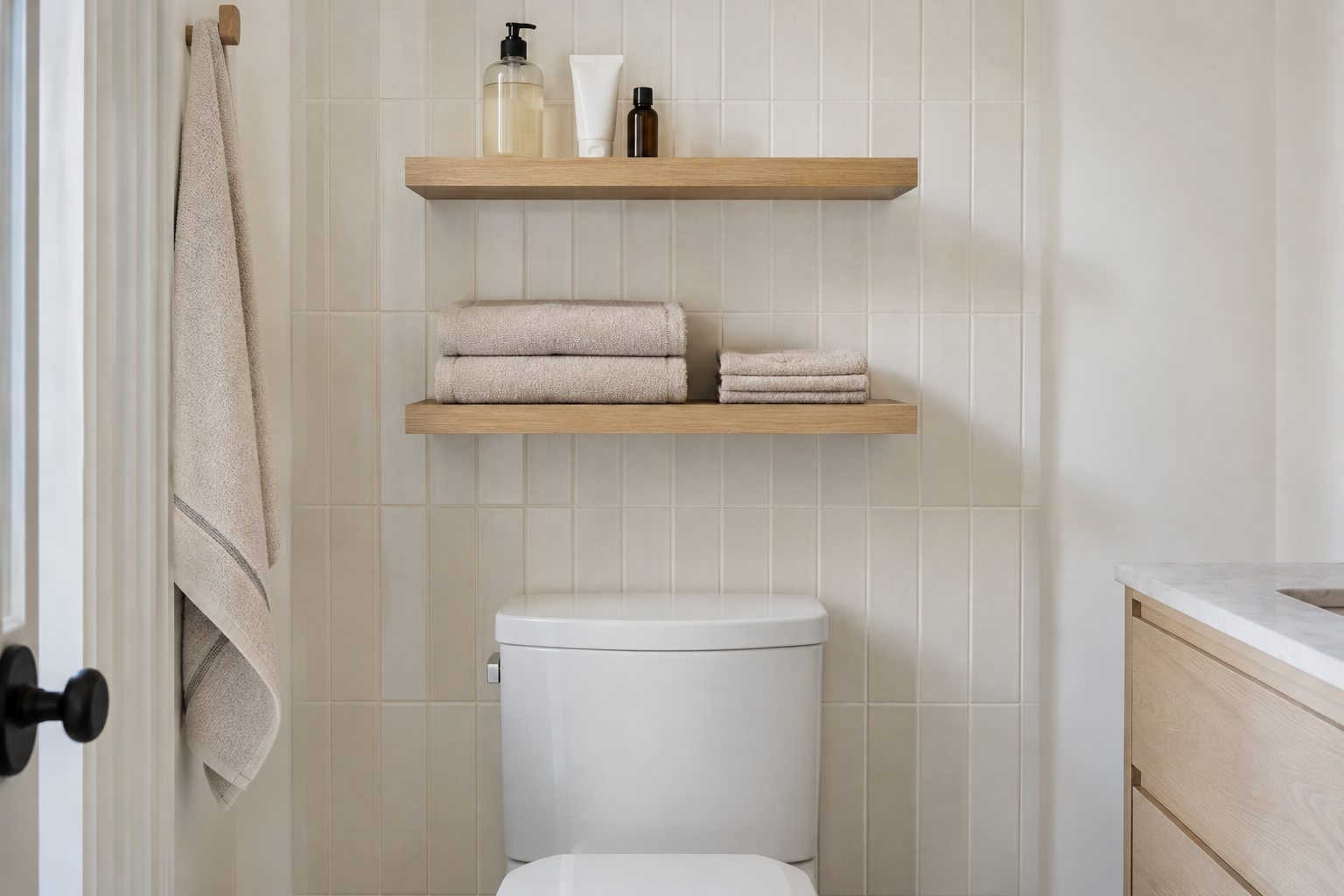
The wall above the toilet is the single most underused storage spot in a small bathroom, and it’s usually the highest-value place to start. A couple of open shelves, or a slim cabinet if more concealment is wanted, turns dead vertical space into real capacity for towels, toilet paper, and everyday toiletries, all without touching a single inch of floor space the room can’t spare.
Two shelves are usually enough. A stack that climbs much higher than reach height starts collecting things that never get used, which defeats the point of adding storage in the first place. Keeping the bottom shelf at a genuinely convenient height for daily items, and letting the top shelf hold overflow, matters more than the total number of shelves installed.
Let the Vanity Hold More Than What’s Under the Sink
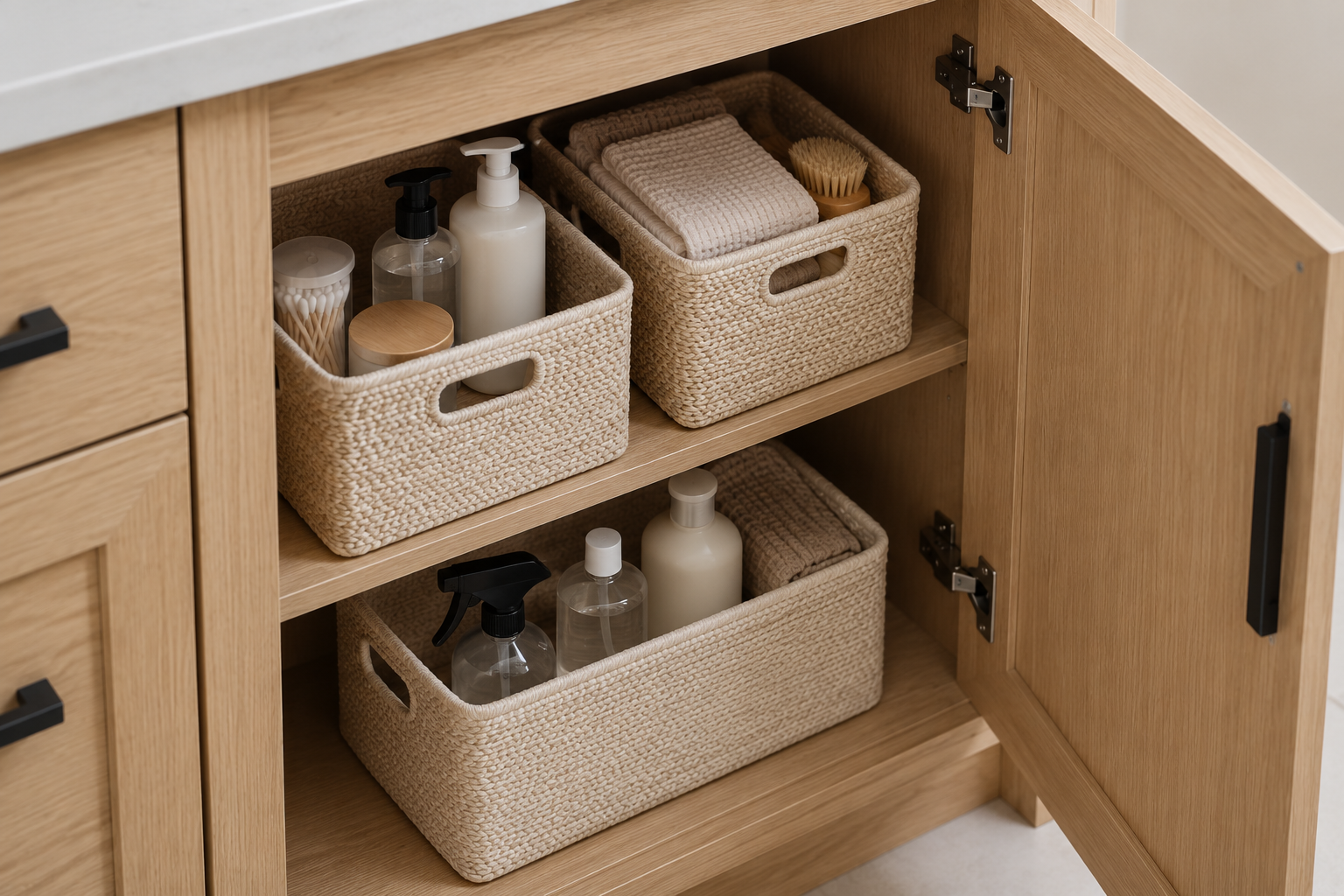
Most vanities get treated as one undivided cabinet, which means whatever’s easiest to reach in, cleaning supplies, extra toiletries, a hair dryer, ends up in a pile rather than a system. Splitting the interior with stackable bins or a small set of drawers turns that same cabinet into several specific homes instead of one general one, and it makes finding anything a matter of opening one bin, not digging through all of them.
Grouping by category rather than by size works better here than it sounds. Cleaning supplies in one bin, backup toiletries in another, keeps like items together even as individual products get used up and replaced. A vanity organized this way holds meaningfully more than the same cabinet left as open floor space, without adding a single new piece of furniture.
Hang Towels Where They Actually Dry
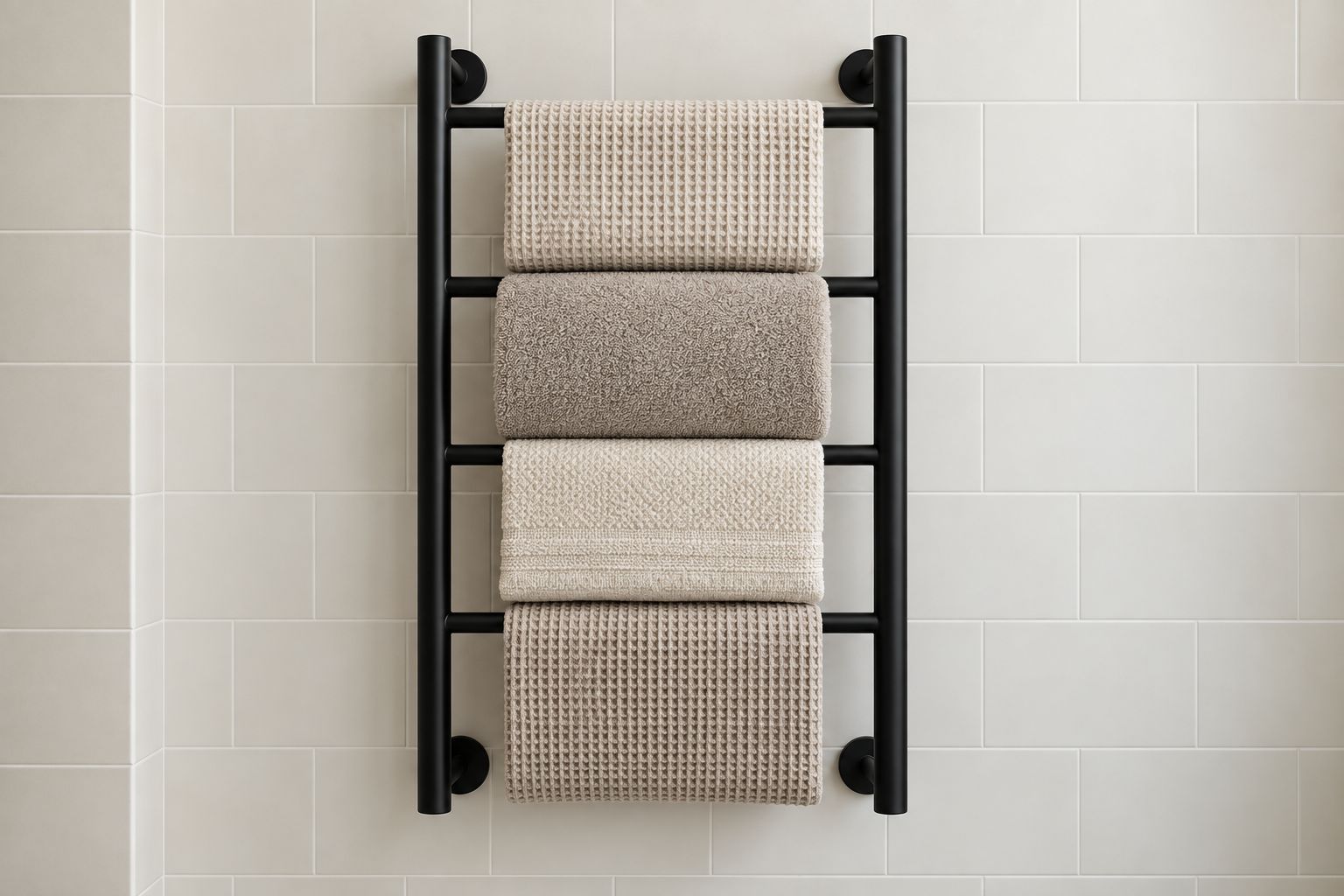
A towel bar holds one towel at a time and does nothing for the two or three backup towels most bathrooms actually keep on hand. A wall-mounted ladder or a multi-hook rail solves both problems: it holds several towels at once, and it does it vertically, which a small bathroom has more of than it has floor space.
Placement matters here too. A rail mounted too close to the shower keeps towels damp rather than drying, which defeats the purpose of hanging them in the first place. Somewhere with real airflow, even a few feet further from the water source, dries towels properly and keeps the bathroom from smelling like a rarely opened closet.
Turn the Medicine Cabinet Door Into Real Storage
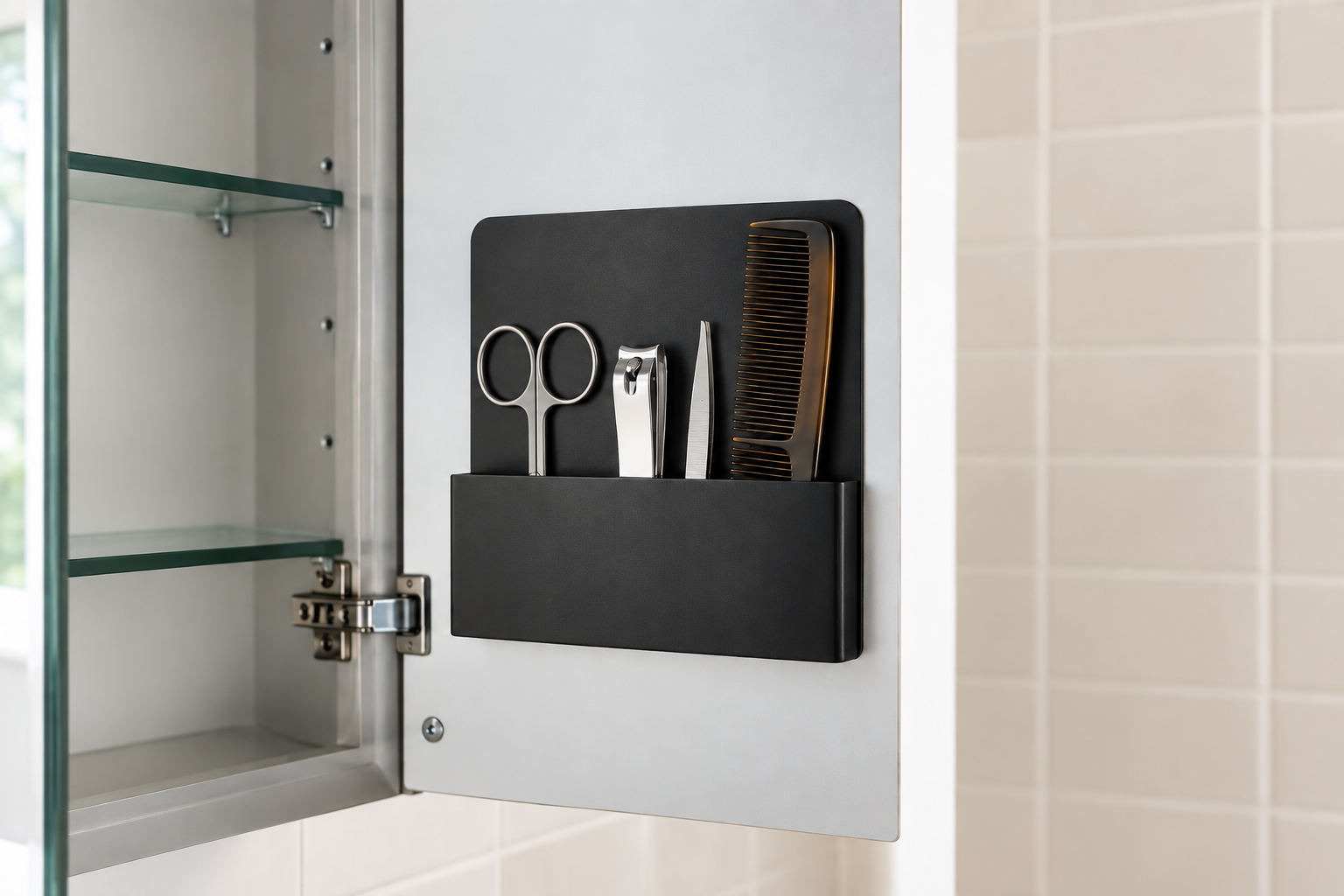
The inside of a medicine cabinet door is flat, mirrored, and almost always empty, which makes it one of the few places in a small bathroom where storage can be added with zero tradeoff against existing space. A slim magnetic strip or a small adhesive organizer turns that door into a home for tweezers, nail clippers, and other small grooming tools that otherwise end up loose in a drawer.
This works especially well for items used daily but awkward to store flat, since a magnetic or hook-based system keeps them upright and visible instead of buried under everything else in a shallow drawer. It’s a small change, but it’s one of the few storage upgrades in a bathroom that adds capacity without removing any.
None of these four changes require a renovation or a bigger bathroom. They require using the wall above the toilet, the vanity’s own interior, the airflow near the shower, and the back of a cabinet door, all space a small bathroom already has and usually leaves empty.
Frequently Asked Questions
Can any of this work in a rental without drilling into the tile?
Most of it. Tension-mounted shelving units and adhesive hook strips handle the over-toilet and towel-storage ideas without a single hole. Vanity organization needs no permanent changes at all, since bins and drawer dividers simply sit inside the existing cabinet. The medicine cabinet door idea depends on the cabinet already being there, but the organizer itself is almost always adhesive or magnetic, not drilled in.
What if the vanity itself is too small to hold bins?
A vanity under about 24 inches wide sometimes can’t fit a full bin system without losing all its usable depth. In that case, prioritizing the wall above the toilet and a towel ladder matters even more, since they add capacity the vanity physically can’t. A single slim drawer organizer, rather than multiple bins, is usually the better fit for a genuinely small cabinet.