Bathroom organization usually gets sold as a shopping problem. Buy the right bins, stack them the right way, done. That’s not what actually breaks down. The bins work fine on day one. What fails is the system underneath them, the sorting logic that decides what goes where and how often it gets used.
If the bathroom hasn’t been decluttered in a while, start there first, then build the system below on top of it. A system that matches storage to how you actually get ready, not how a photographed bathroom looks, holds up longer than any specific container.
Split the Counter Into Daily and Occasional Zones
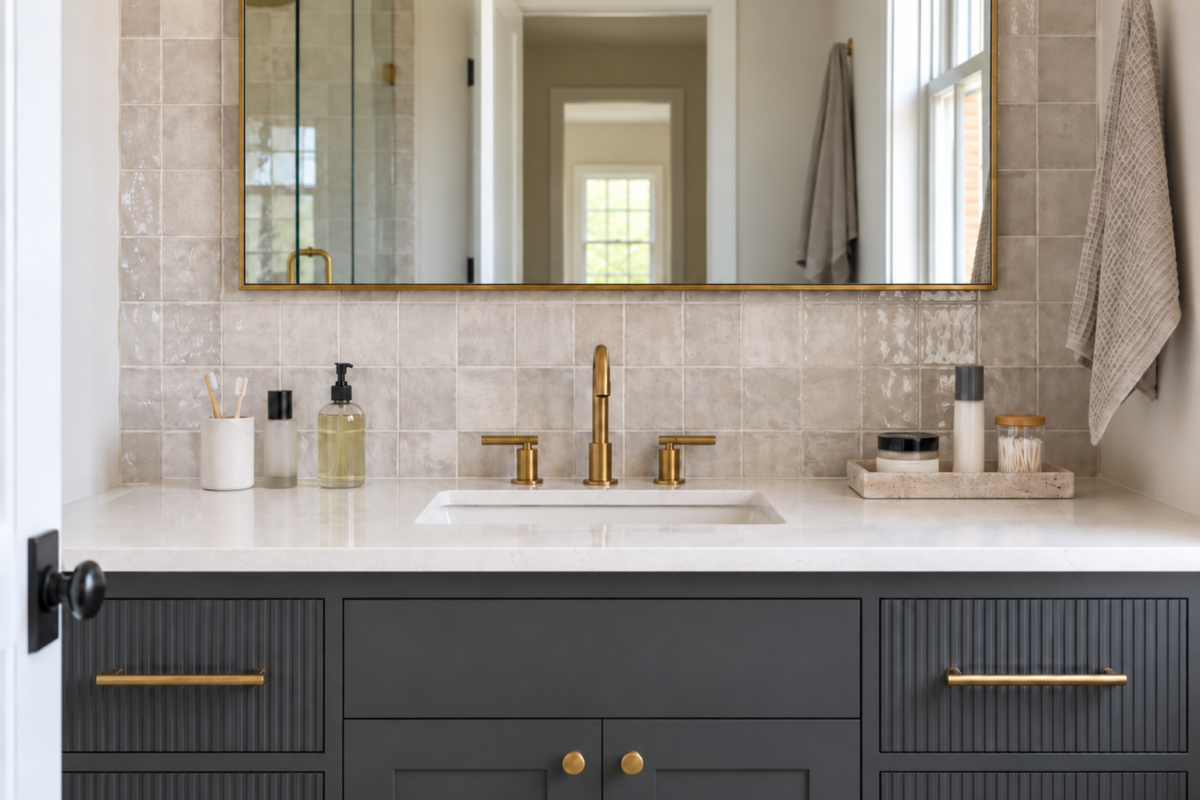
Everything you touch every morning belongs within arm’s reach on the counter. Everything you touch once a week or less doesn’t, even if there’s counter space free for it. Mixing the two is the most common reason a bathroom counter drifts back into clutter within a few weeks.
Keep the daily cluster small: a toothbrush holder, one or two products actually used every day. Put everything else, the occasional-use items, in a covered tray or drawer close by but out of the daily sightline. The goal isn’t an empty counter. It’s a counter where what’s visible is actually in rotation.
Let the Medicine Cabinet Do the Sorting, Not Just the Storing
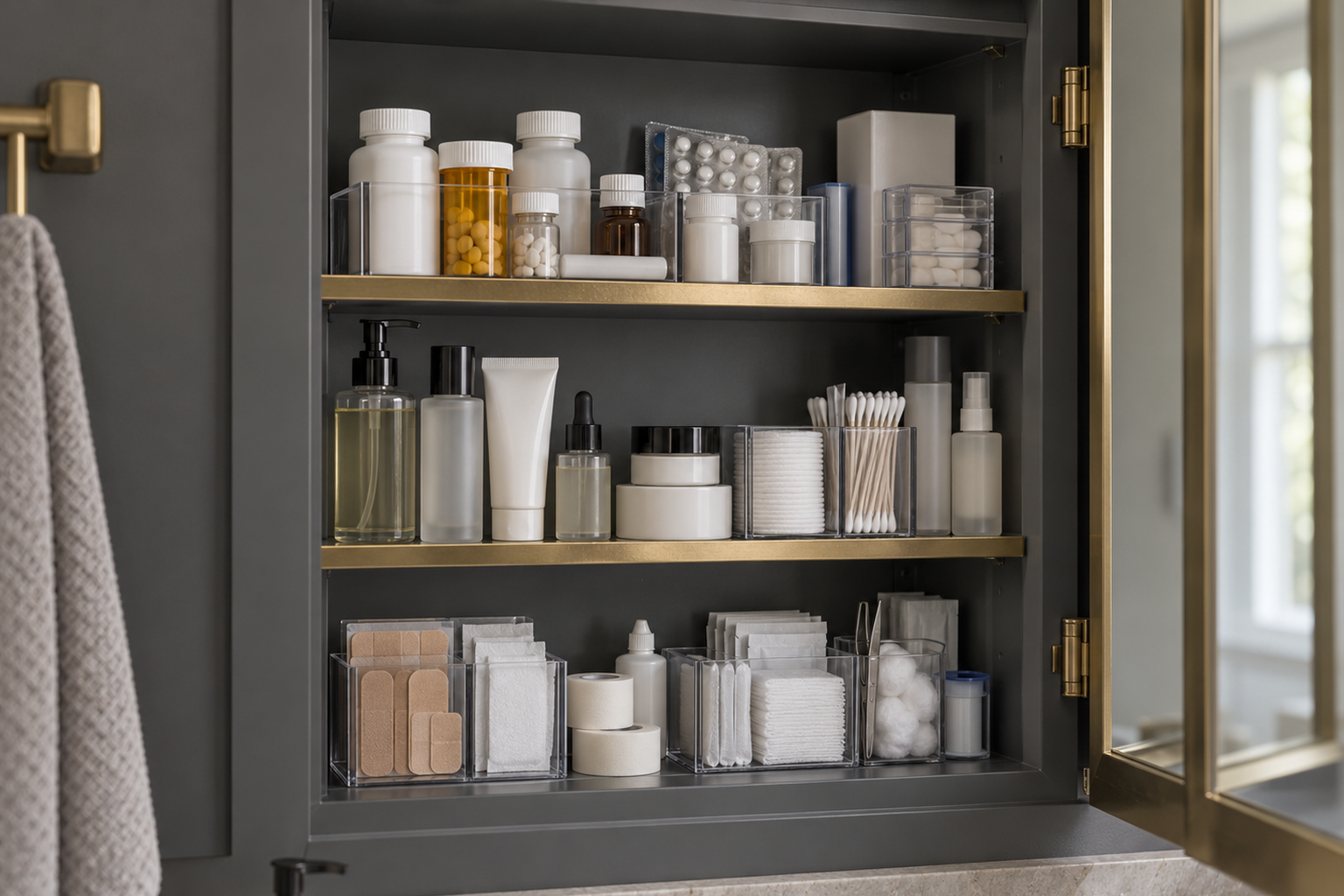
A medicine cabinet that’s just a shelf for whatever fits stops being useful the first time you need something specific in a hurry. Assign each shelf a category instead: medications on one, skincare on another, first-aid on a third. The cabinet does the sorting automatically after that, since putting something back in the wrong category becomes obviously wrong at a glance.
This matters more in a small bathroom than a large one, since there’s less room to spread things out elsewhere. If you’re sizing the cabinet as part of a vanity refresh, the mirror width usually gets decided at the same time.
Under-Sink Storage That Doesn’t Become a Junk Drawer
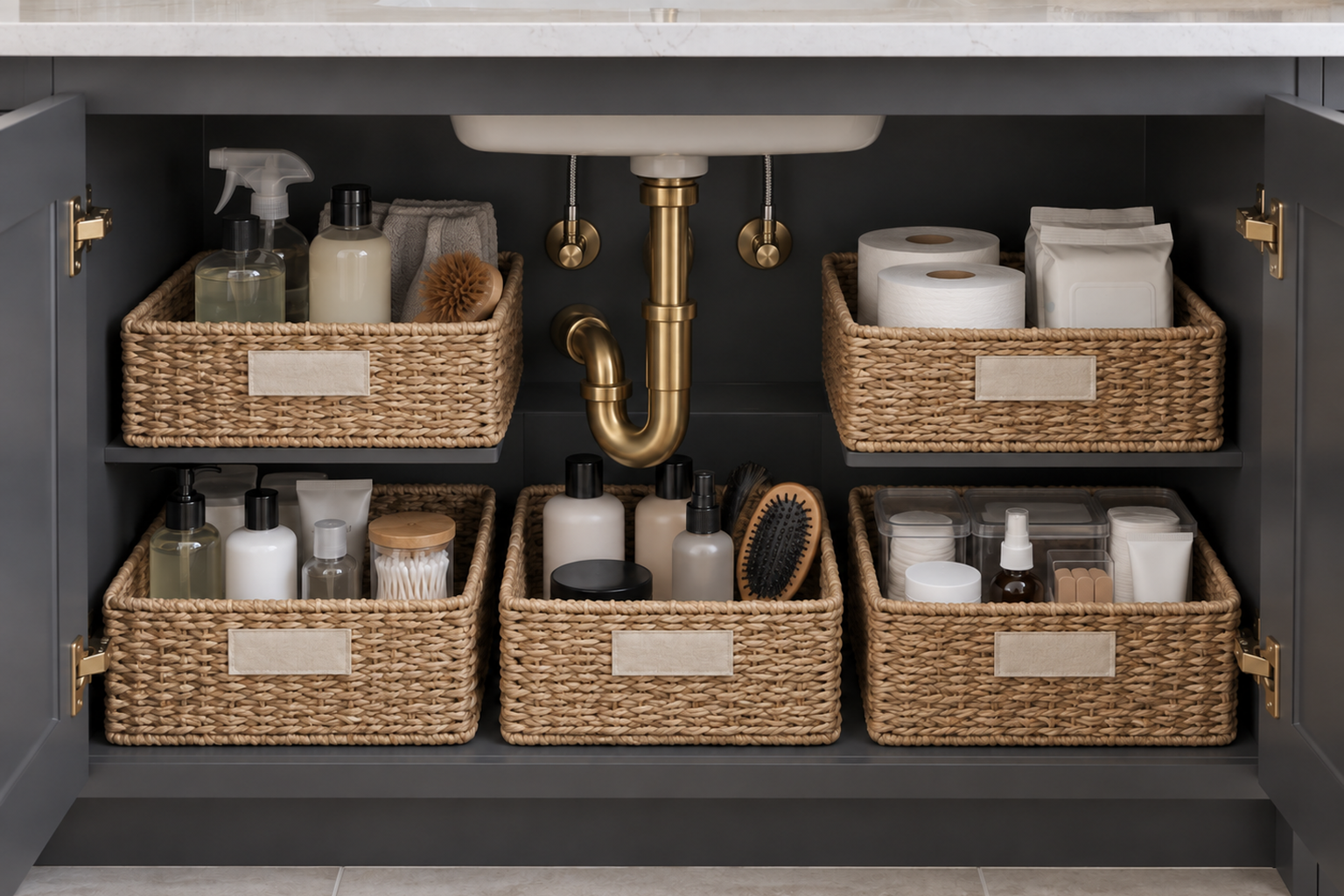
Most under-sink storage advice assumes a clear rectangular box. Most under-sink cabinets aren’t one, because of the drain pipe running through the middle of the space. Work around the actual plumbing instead of ignoring it. Bins sized to fit on either side of the pipe, rather than one large bin that has to be lifted out to reach anything behind it, keep the space usable instead of becoming a place things get shoved.
Label the bins by category, cleaning supplies, backup toiletries, whatever applies, so the system survives being used by more than one person in the house. If the cabinet itself is too small for what needs to live in it, that’s a fit problem, not a sorting one, and worth checking against a small bathroom storage plan first.
One Habit That Keeps the System From Collapsing
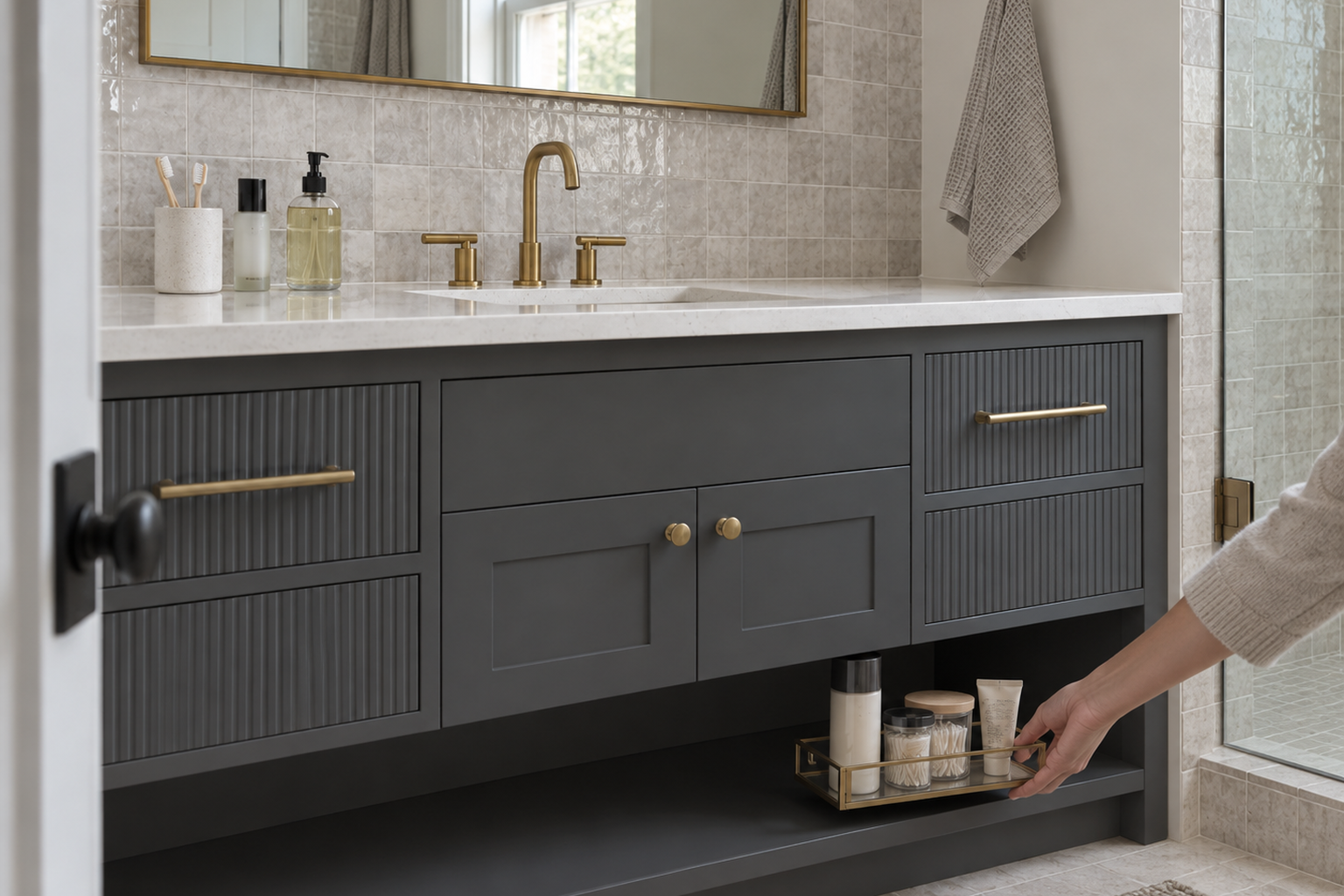
Every organized bathroom eventually drifts if nothing resets it. A 30-second reset before bed, putting the day’s daily-zone items back exactly where they belong instead of leaving them wherever they landed that morning, does more than a weekly deep clean.
It’s a smaller commitment and it happens often enough to prevent the small daily drift that turns into a weekend reorganizing project. The system holds up because someone resets it daily, not because the bins were labeled well to begin with.
Frequently Asked Questions
How often should I redo a bathroom organization system?
Rarely, if the daily-reset habit is actually followed. A full re-sort once or twice a year, usually when seasons or products change, is normal. More frequent than that usually means the zones weren’t set up around real daily use to begin with.
What if two people share the bathroom with different routines?
Give each person their own daily zone rather than one shared cluster. It takes more counter space up front but prevents the constant reshuffling that happens when routines genuinely differ.
Do I need matching bins for this to work?
No. Function matters more than matching here. A bin sized correctly for the space and labeled clearly does the job a coordinated set doesn’t automatically do better.