Every time the fridge door opens, warm kitchen air rolls in, and the shelves on the door take most of it. That’s why milk kept there can turn sooner than its date suggests, and why eggs keep better in their carton on a shelf inside. The inside varies too, and in many fridges the lower shelves toward the back run coldest while the door and top shelf run warmest.
Organizing a fridge comes down to matching each food to the part of it that suits it, and keeping raw meat where its juices can’t drip onto anything. The whole fridge should be at 40°F or below and the freezer at 0°F.
Check the Temperature First
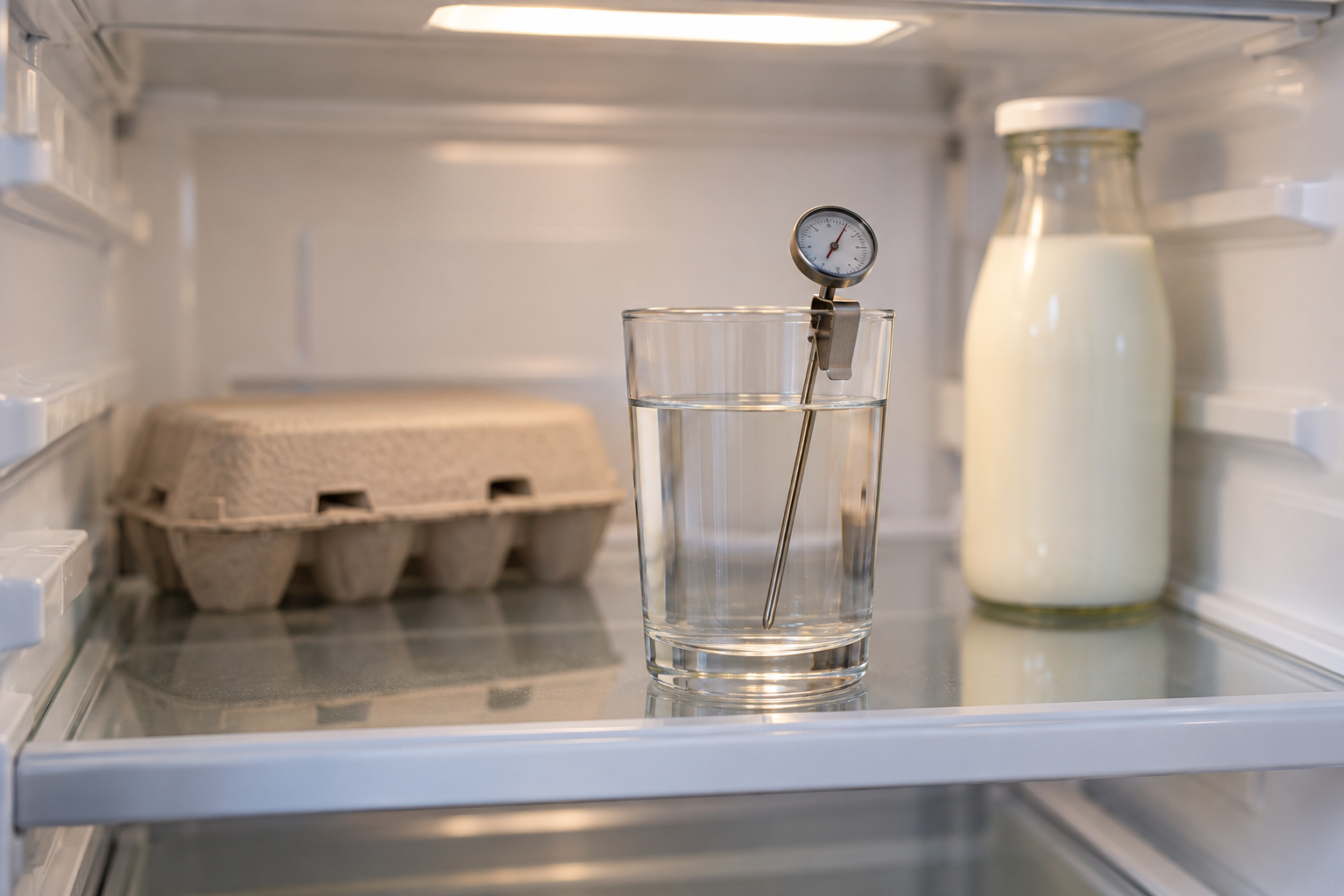
The numbers on a fridge’s dial are settings, not readings. An appliance thermometer, left overnight in a glass of water on the middle shelf, shows the temperature the food sits at. Adjust the setting until it reads 40°F or a little below, and check again after a hot spell or a big grocery run, when a load of room-temperature food warms everything for a while.
Packing the shelves tight works against the setting. Cold air has to move around food to keep it cold, so leave gaps between containers and keep the vents at the back clear.
The Door
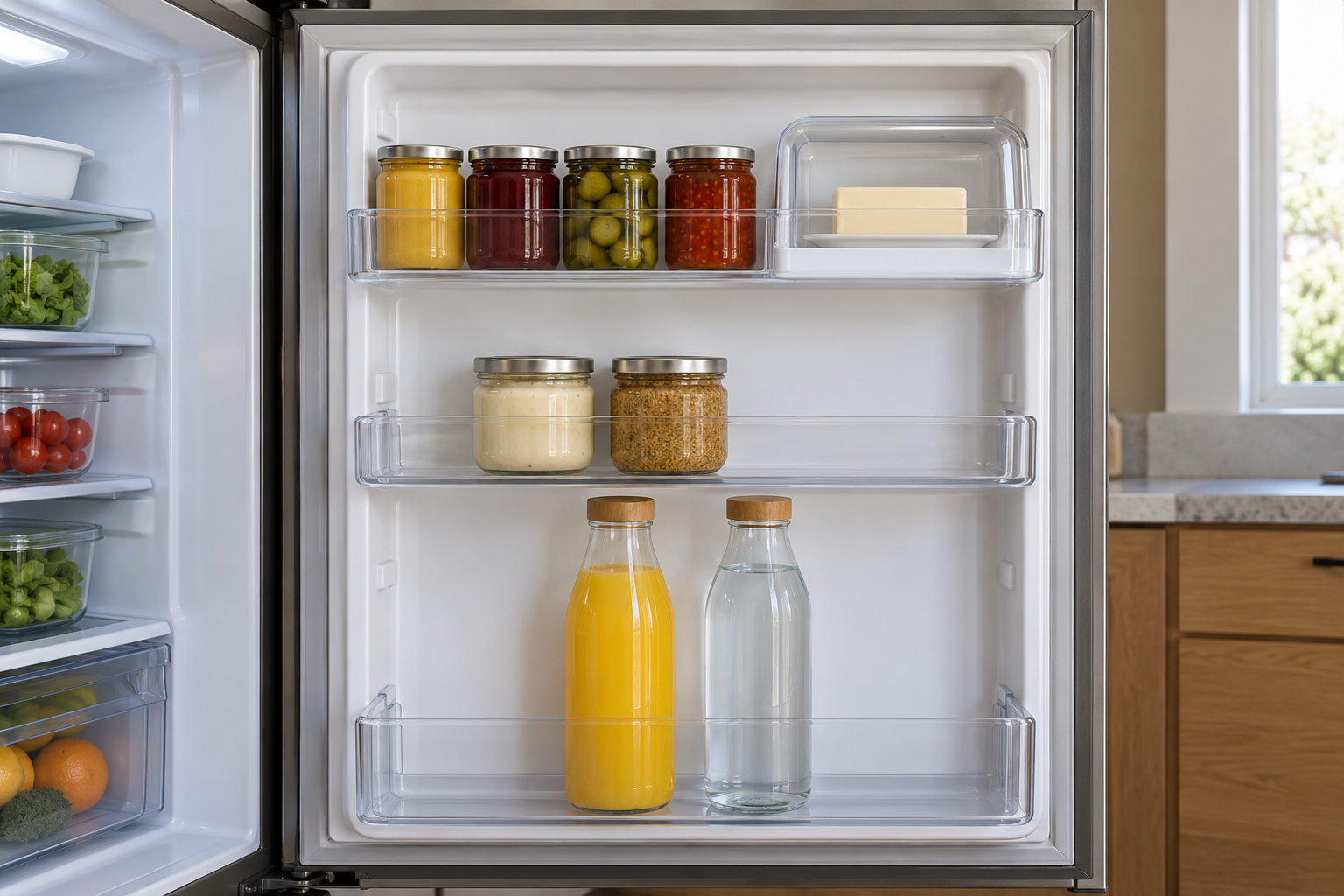
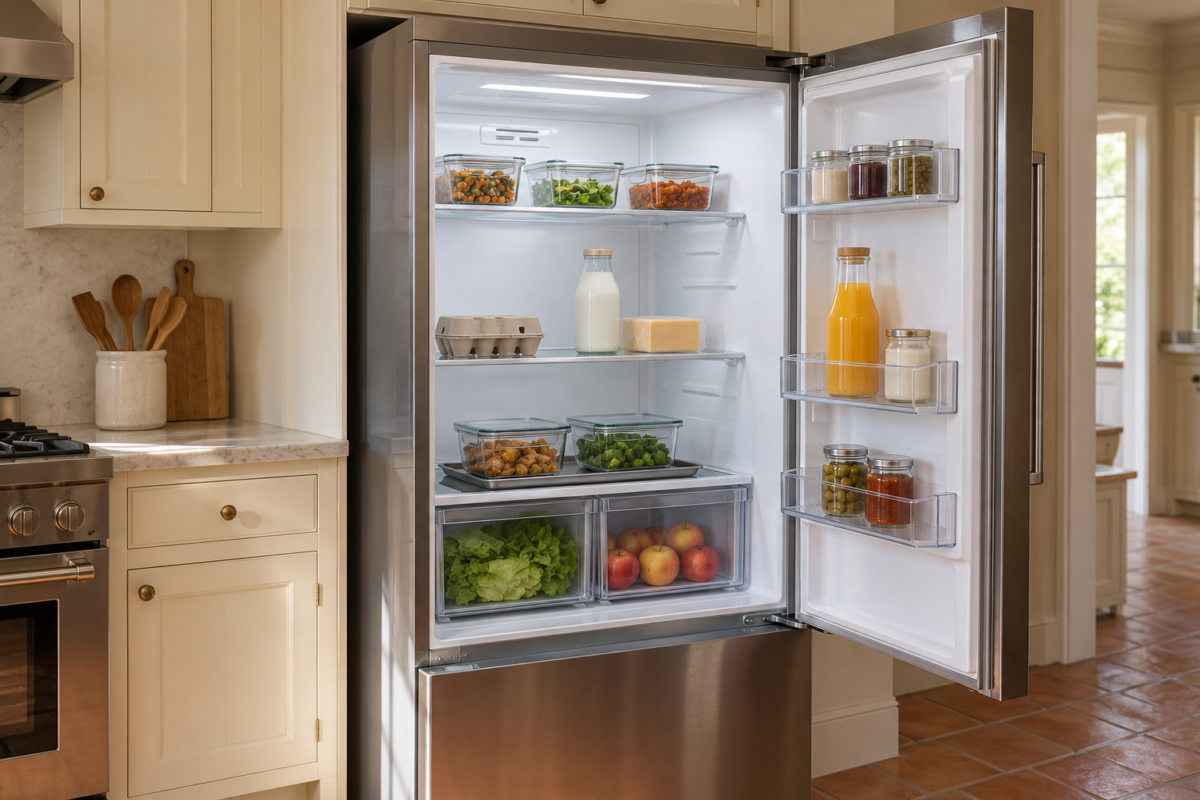
The door is the warmest part of the fridge and swings in temperature each time it opens, so it suits food that keeps well anyway: condiments, pickles, jams, sauces, butter in its covered compartment, juice, and water. Tall bottles go in the bottom bin, small jars in the top, and the middle bins hold what gets used daily.
Keep milk and eggs on a shelf inside, even though many fridges come with an egg tray in the door.
Upper and Middle Shelves
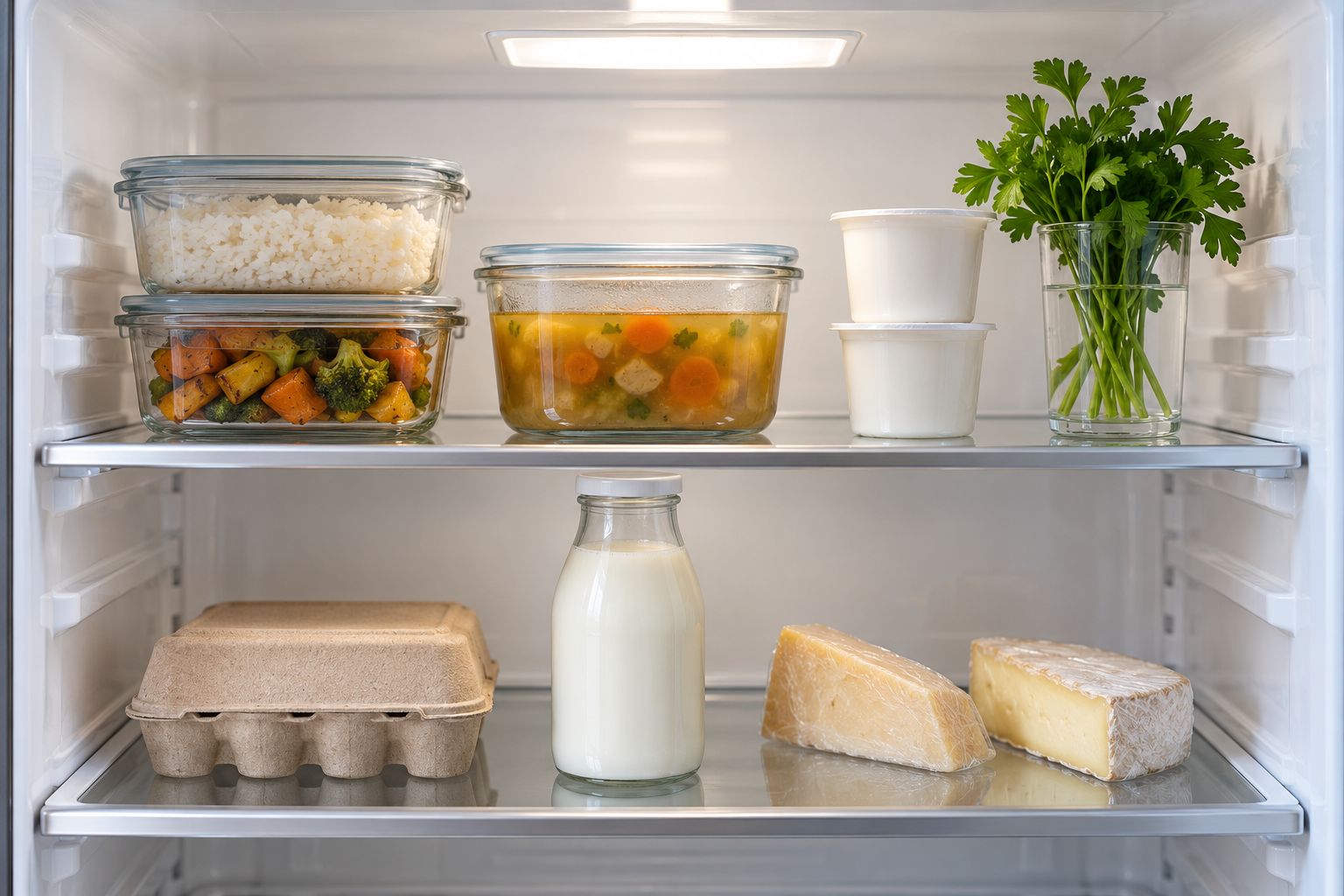
The upper shelves are for food that’s ready to eat and needs no cooking, such as leftovers, yogurt, deli food, drinks, and herbs standing in water. Store leftovers in shallow, clear, covered containers, so they cool quickly and you can see what’s in them, and eat cooked leftovers within 3 to 4 days.
The middle shelves hold dairy and eggs, where the temperature is steadier than on the door. Milk, cheese, and eggs in their carton go here, with the oldest at the front.
The Bottom Shelf

Raw meat, poultry, and fish go on the lowest shelf, sealed in containers or set on a rimmed tray, so any juice that leaks has nowhere to drip. In many fridges that shelf is also among the coldest. Meat thawing in the fridge goes there too, in a dish, never above food that’s ready to eat.
Raw poultry and ground meat keep only a day or two, so this shelf turns over fastest. Wash the tray along with the containers each time it empties.
The Crisper Drawers
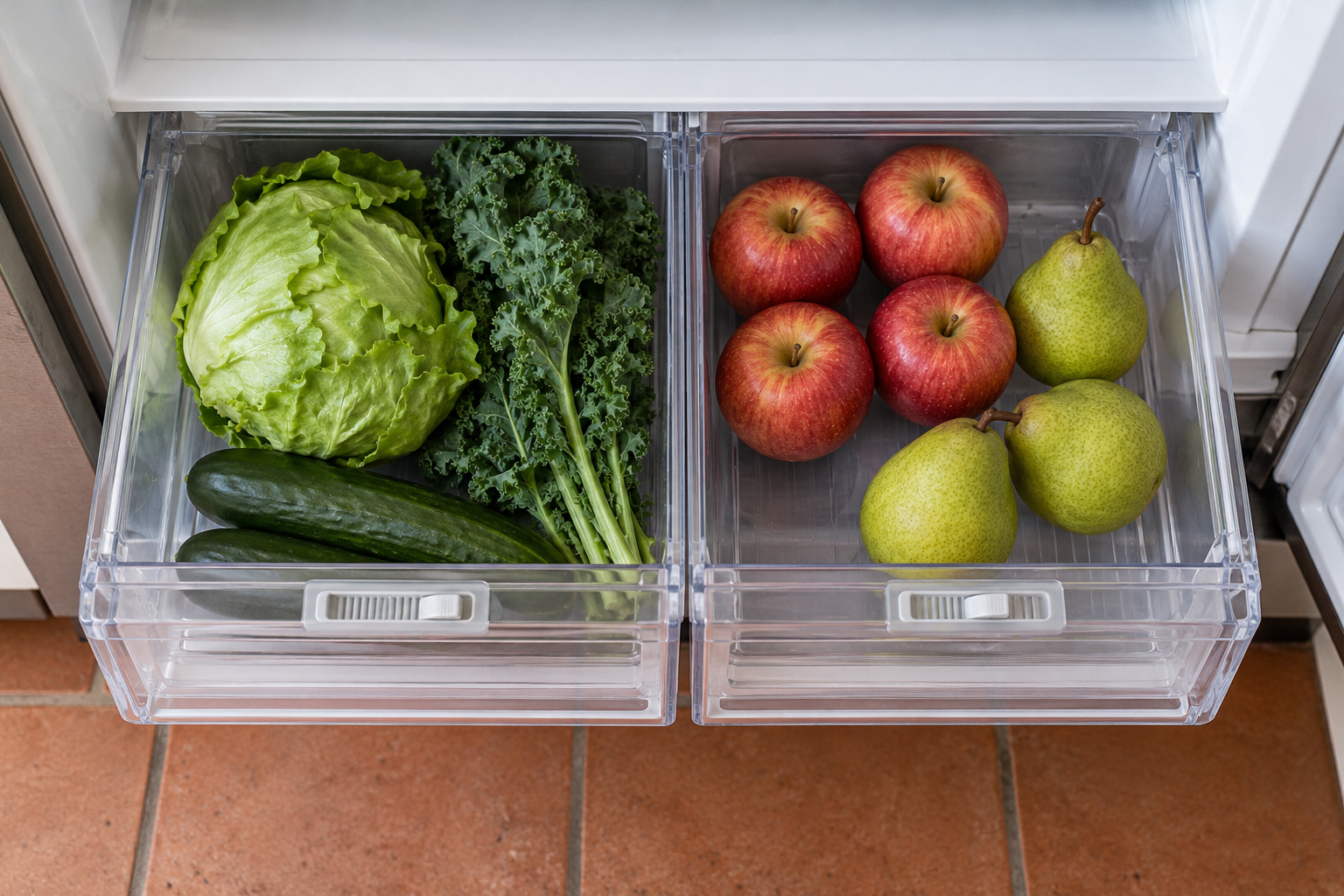
Most fridges have two drawers, each with a slider that opens or closes a small vent. Closed, a drawer holds humidity, which keeps leafy greens, herbs, cucumbers, and other vegetables that wilt from drying out. Open, it lets moisture escape along with the ethylene gas some fruit gives off, which suits apples, pears, avocados, and stone fruit.
Set one drawer to high humidity for vegetables and the other to low for fruit, and keep the two groups apart. Ethylene speeds the ripening of nearby produce, and greens and broccoli yellow sooner beside a bag of apples.