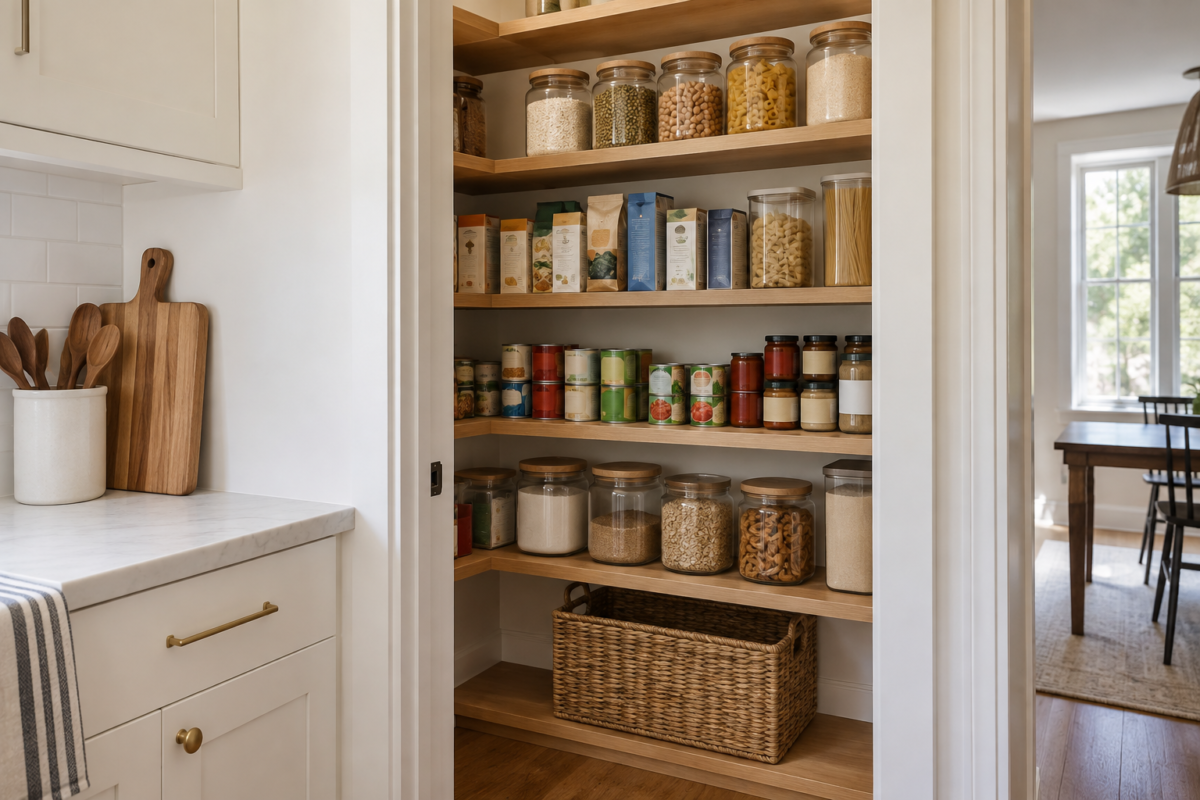
A cluttered pantry usually isn’t a container problem. It’s a zoning problem, and matching bins fix the second issue while leaving the first exactly where it was. Buying a full set of matching jars before deciding where anything actually goes just means organizing the containers instead of the pantry itself.
The real fixes are almost all sorting and placement rather than purchases: putting daily items at the easiest shelf to reach, grouping supplies by how they actually get used rather than a loose category, and containing only the things that genuinely need it. A few well-chosen containers can help once the system itself is right.
Sort Before Anything Goes Back On a Shelf
Everything comes out before anything goes back in, the same starting point that works for a closet. From there, everything gets sorted into what actually gets used regularly, what’s genuinely backstock worth keeping further back, and what’s expired or long forgotten and shouldn’t come back at all. This step alone, done honestly, usually clears a meaningful amount of shelf space before a single container gets involved.
A pantry sorted around what actually gets cooked and eaten, rather than what used to get bought, needs noticeably less storage to feel organized. Expired spices and the third half-used bag of a specialty flour bought for one recipe are the most common things this step turns up, and neither needs a place on the shelf at all.
Put the Shelf You’ll Actually Use at Eye Level
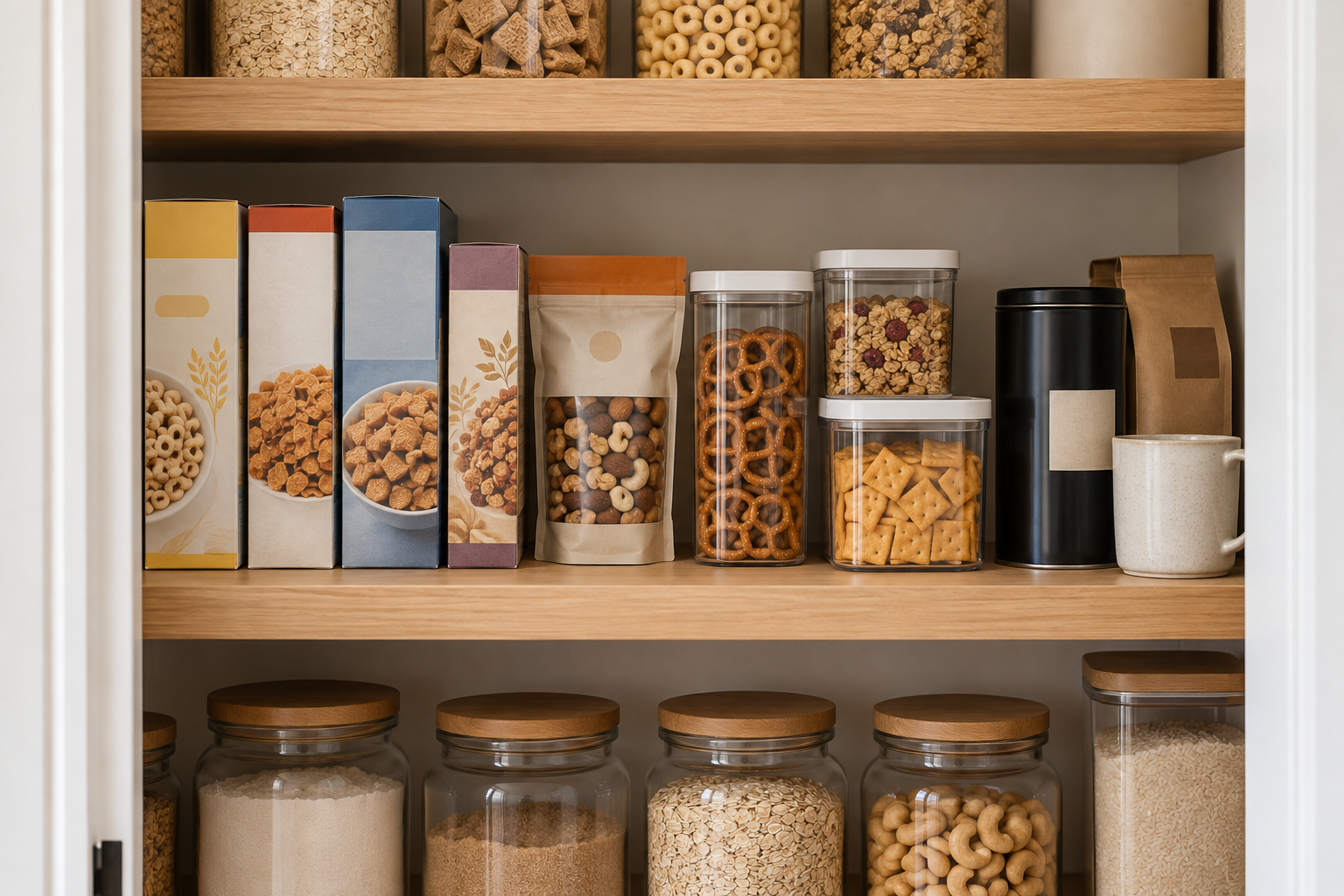
The shelf at eye level, roughly the middle of the pantry, is the most valuable real estate in the whole cabinet, and it’s routinely wasted on whatever happened to get put there first. Cereal, snacks, coffee, and anything reached for daily belongs on that shelf specifically, not the one above it or the one below the knees.
Backstock and rarely used items belong on the harder-to-reach top shelf or the floor level instead. The inconvenience barely matters for something grabbed a few times a year, and moving it out of the eye-level spot frees that space for what actually gets used every single day.
Group by How You Actually Cook, Not Just by Category
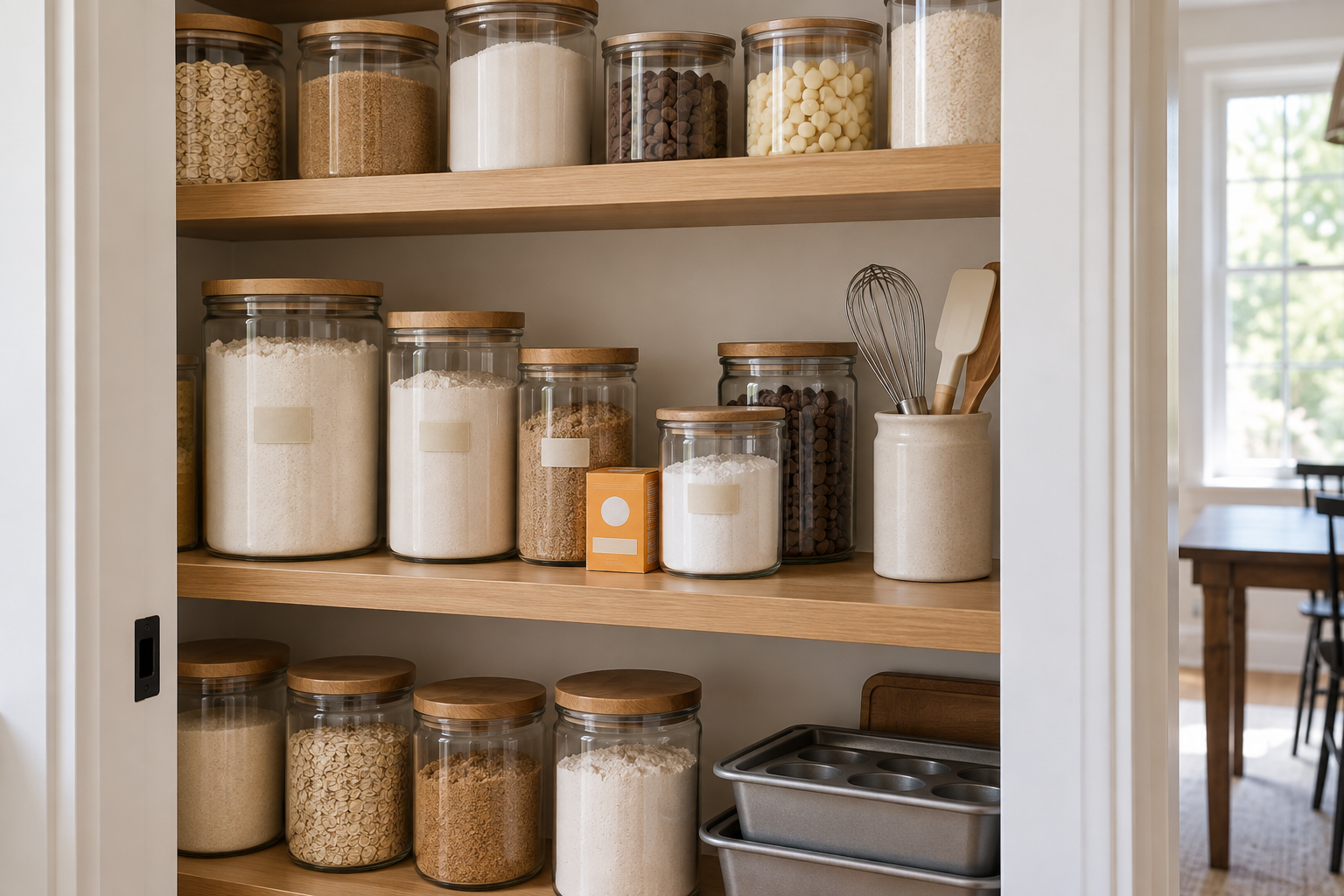
Sorting by category alone, all baking items in one spot, all canned goods in another, sounds organized but misses how most people actually cook. A baking zone that includes flour, sugar, baking soda, and the measuring cups used with them saves more real time than the same items split across a “baking” shelf and a separate “tools” drawer three steps away.
The same logic applies to any recurring meal or task: a breakfast zone with cereal and the bowl-adjacent items used every morning, a lunch-packing zone near whatever holds the snacks and containers. Grouping by the actual task, not just the ingredient category, is what makes a pantry fast to use rather than just tidy to look at.
Contain What Spills, Not Everything
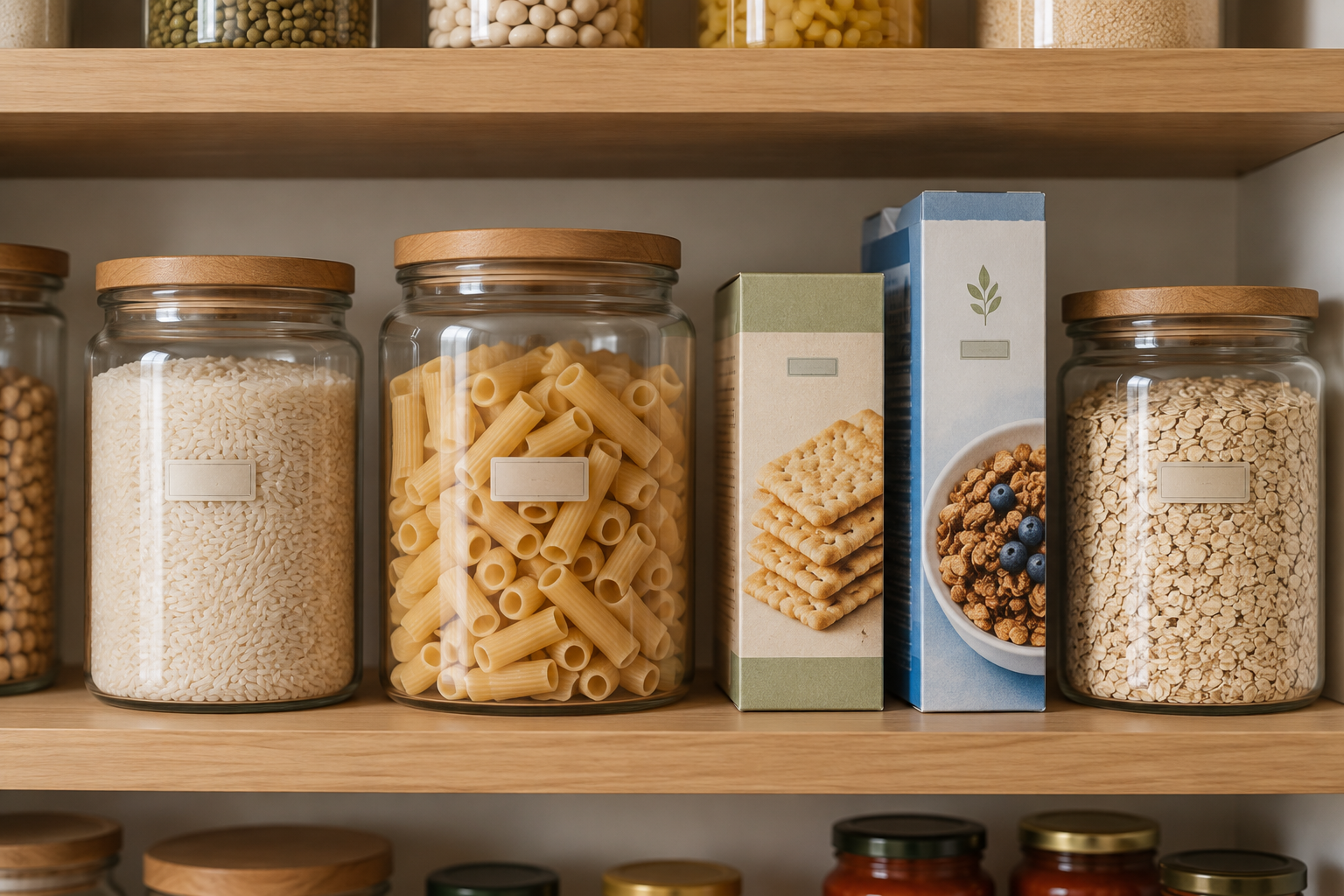
Loose rice, pasta, and flour genuinely benefit from a clear container: they spill, they attract pests in their original bags, and a labeled jar makes it obvious at a glance how much is left. Boxed cereal, crackers, and anything that already comes in a sealed, stackable package don’t need the same treatment. The box is already doing that job.
Containerizing everything regardless of whether it needs it is how a pantry project turns into an expensive shopping trip before any actual organizing happens. Starting with the handful of items that genuinely spill or go stale in their original packaging, and leaving everything else as-is, gets most of the real benefit for a fraction of the cost and effort.
None of these four changes require a full container overhaul. What they require is sorting honestly, putting the most-used items where they’re easiest to reach, grouping by how the pantry actually gets used, and containing only what genuinely needs it. A pantry organized this way stays that way longer than one organized around a matching set of jars alone.
Frequently Asked Questions
Are matching containers worth buying at all?
Sometimes, mostly for how a pantry looks rather than how it functions. Matching jars make an organized pantry look more polished, but a pantry with mismatched containers in a clear, consistent zoning system is just as functional, and often more so, since the money and effort went into the system instead of the packaging around it. Buying a full matching set before the underlying zones are right usually means redoing the containers once the system actually gets figured out.
How does any of this work in a genuinely tiny pantry cabinet?
The same logic, scaled down. Even a single narrow cabinet has an eye-level shelf worth prioritizing and can hold two or three genuine use-zones instead of one undivided pile. The sorting step matters even more in a small cabinet, since there’s less room to absorb items that don’t actually need to be there, and clearing those out first often solves more of the space problem than any container ever could.