Most closet organization advice starts with a shopping list: bins, matching hangers, a whole new shelving system. That’s usually the wrong first step. A closet that’s poorly organized rarely needs more storage products; it needs a system for where things go, and most of that system costs nothing to set up.
The real fixes are almost all rearrangement and categorization rather than purchases. That means using the vertical space that’s already there, grouping like items together, and making the highest-value real estate (eye level, easy reach) do the most work. A few well-chosen purchases can help once the system itself is right. Buying storage before deciding on a system, though, usually just means organizing the bins instead of the closet.
Sort Before You Store Anything
Everything comes out of the closet before anything goes back in. From there, everything gets sorted into what gets worn regularly, what’s seasonal and can move elsewhere temporarily, and what hasn’t been touched in over a year and probably shouldn’t come back at all. This step alone, done honestly, usually solves a meaningful chunk of a closet’s space problem before a single storage product gets involved. A closet organized around its current contents, rather than what used to be there, needs noticeably less storage to feel organized.
Use the Full Height, Not Just the Rod
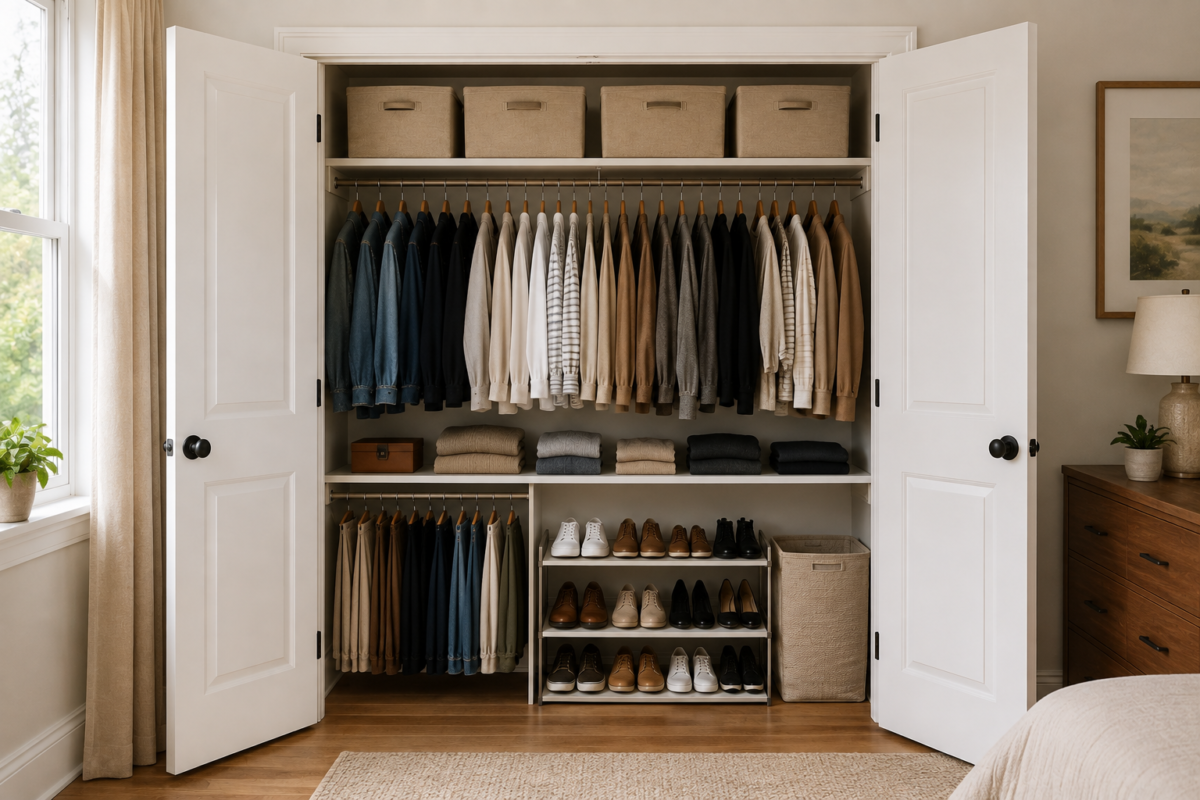
A standard closet uses maybe the middle half of its available height: the hanging rod and one shelf above it. The space above that shelf and the floor below the hanging clothes are both usable, and both usually sit empty. A stack of labeled bins on the top shelf works well for items that are only seasonal. A shoe rack or a few bins on the floor beneath shorter hanging items (shirts, folded pants) can add more storage too, without touching the closet’s physical footprint.
Double the Rod Where the Closet Allows It
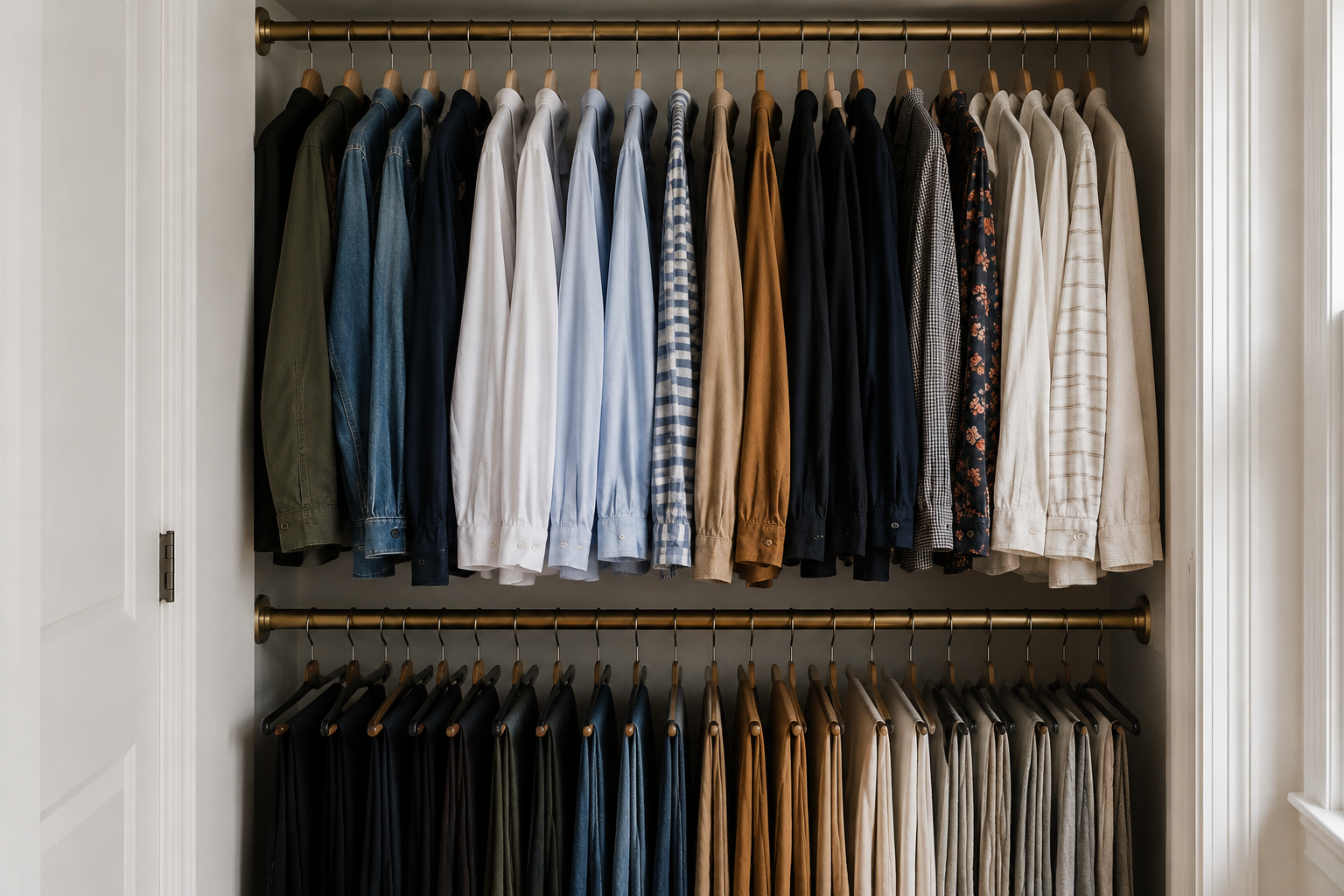
A single hanging rod wastes the space below shorter items like shirts and folded pants, which typically hang to about half the closet’s height. A second rod installed below the first, sized to the shorter items specifically, roughly doubles usable hanging space in that section of the closet without any structural change. This doesn’t work for dresses, coats, or anything long, which still need the full-height section. It is, though, one of the highest-value small changes for the shirts-and-pants portion of most closets.
Put High-Use Items at Eye Level, Not the Highest Shelf
The shelf at eye level and within easy arm’s reach is a closet’s most valuable real estate. It’s routinely wasted on the least-used items, though, simply because that’s where there happened to be room. Whatever gets worn or used weekly, not seasonally, belongs there. Off-season clothing, guest linens, and anything used a few times a year belong on the harder-to-reach top shelf instead. The inconvenience of reaching it barely matters for something accessed rarely.
Use the Back of the Door
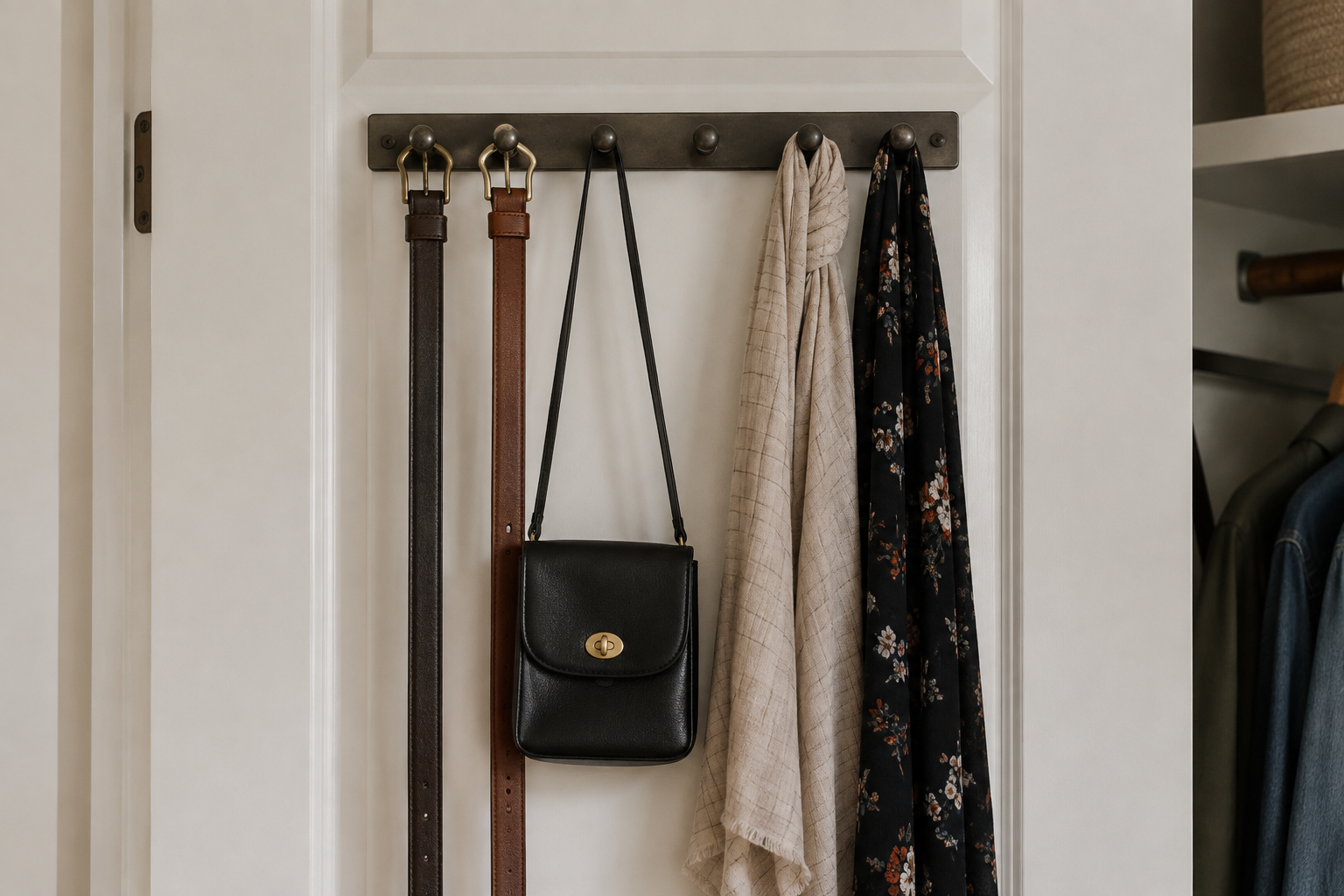
The inside of a closet door is extra space that most closets don’t use at all. A hanging organizer or a few hooks mounted there can hold accessories, belts, scarves, or shoes without taking up any of the closet’s interior footprint. It’s one of the few places in a small closet where storage can be added with zero tradeoff against existing space. Nothing else was using that surface to begin with.
The fastest, cheapest closet upgrade is almost never a purchase. It’s sorting honestly, using the height that’s already there, and putting the things used most often where they’re easiest to reach.
Frequently Asked Questions
Do I need matching bins and hangers for a closet to actually look organized?
No. A closet with mismatched bins in a clear, consistent system (labeled, grouped by category, stored in a logical place) reads as organized. Matching containers make an organized closet look more polished, but they don’t create the organization itself. Buying a full matching set before the underlying system is right is usually a wasted purchase.
What’s the single most impactful change for a genuinely tiny closet?
Doubling the rod for shorter hanging items is usually the highest-impact single change. It roughly doubles a closet’s most commonly used storage type without any structural work or lost floor space. It’s a fast, low-cost fix that makes a real difference in a closet too small for a bigger shelving overhaul.