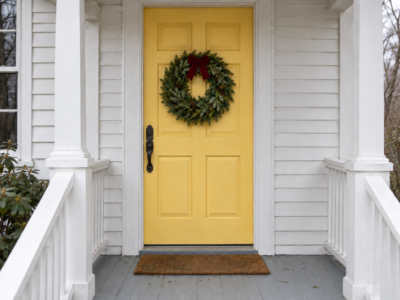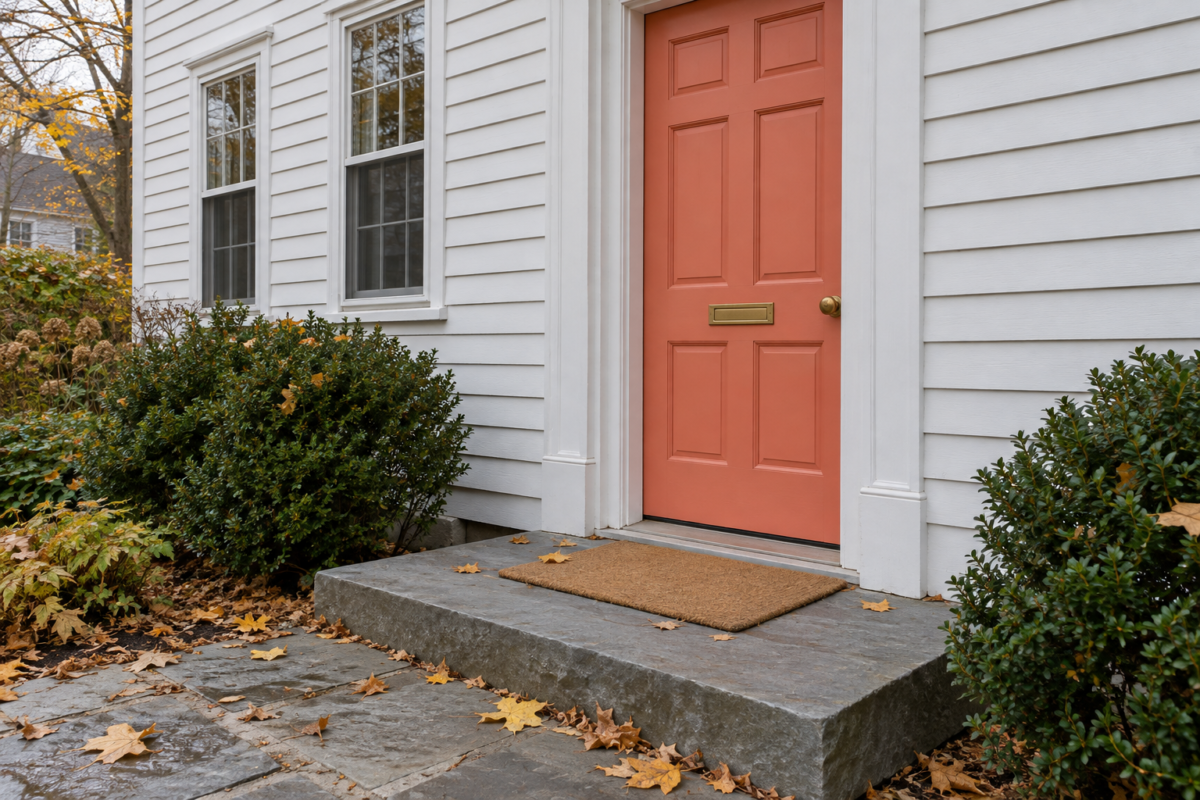
A doormat should be at least four fifths as wide as the door it lies in front of. For a standard 36 inch front door that means 29 inches or more. The common 18 by 30 inch mat is the smallest that fits, and a 24 by 36 suits the door better. An entry with sidelights or a second door needs a mat sized to the whole opening.
The rule is about proportion, and it matches use. A mat much narrower than the door gets stepped past as often as it gets stepped on, and the grit it was bought to stop walks into the house.
Measure the Whole Entry
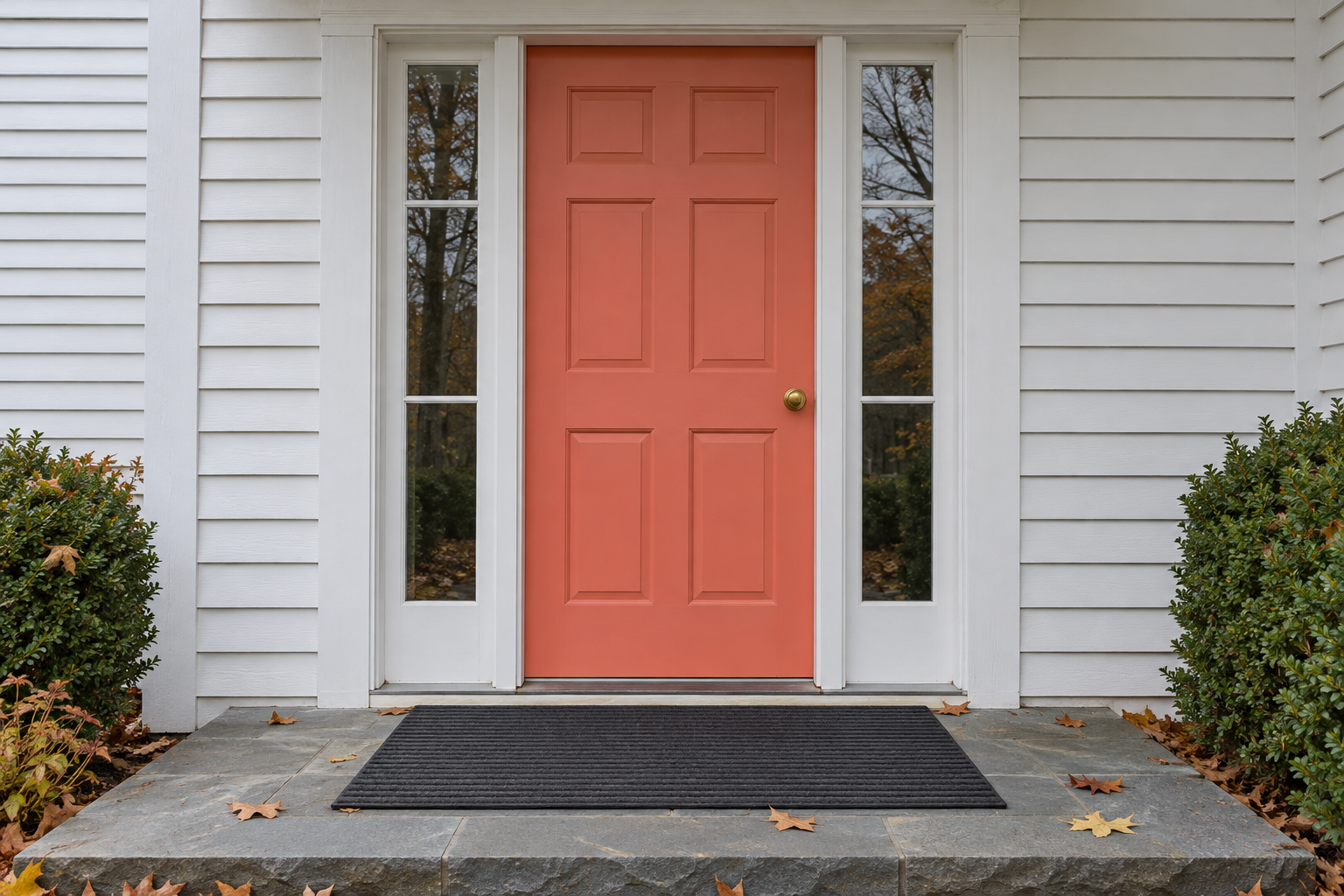
Measure across everything that makes up the entrance, which means the door, any glass panels beside it, and the trim around them. A door with a sidelight on each side can be 5 feet across, and a 30 inch mat in front of it looks as if it came from a smaller house.
| Entry | Typical width | Mat width | Sizes to look for |
|---|---|---|---|
| Single door | 32 to 36 inches | 29 to 36 inches | 18 by 30, 24 by 36 |
| Door with one sidelight | 46 to 50 inches | 38 to 48 inches | 24 by 48, 30 by 48 |
| Door with two sidelights | 60 to 64 inches | 48 to 60 inches | 30 by 48, 36 by 60 |
| Double doors | 60 to 72 inches | 48 to 72 inches | 36 by 60, 36 by 72 |
Entry widths are typical for American houses. The mat width is four fifths of the entry at the least and its full width at the most. The step sets the upper limit, since a mat should lie wholly on the landing with stone or boards showing around it. The door’s width also sets the size of a wreath, so one measurement serves both.
Leave Room for Both Feet
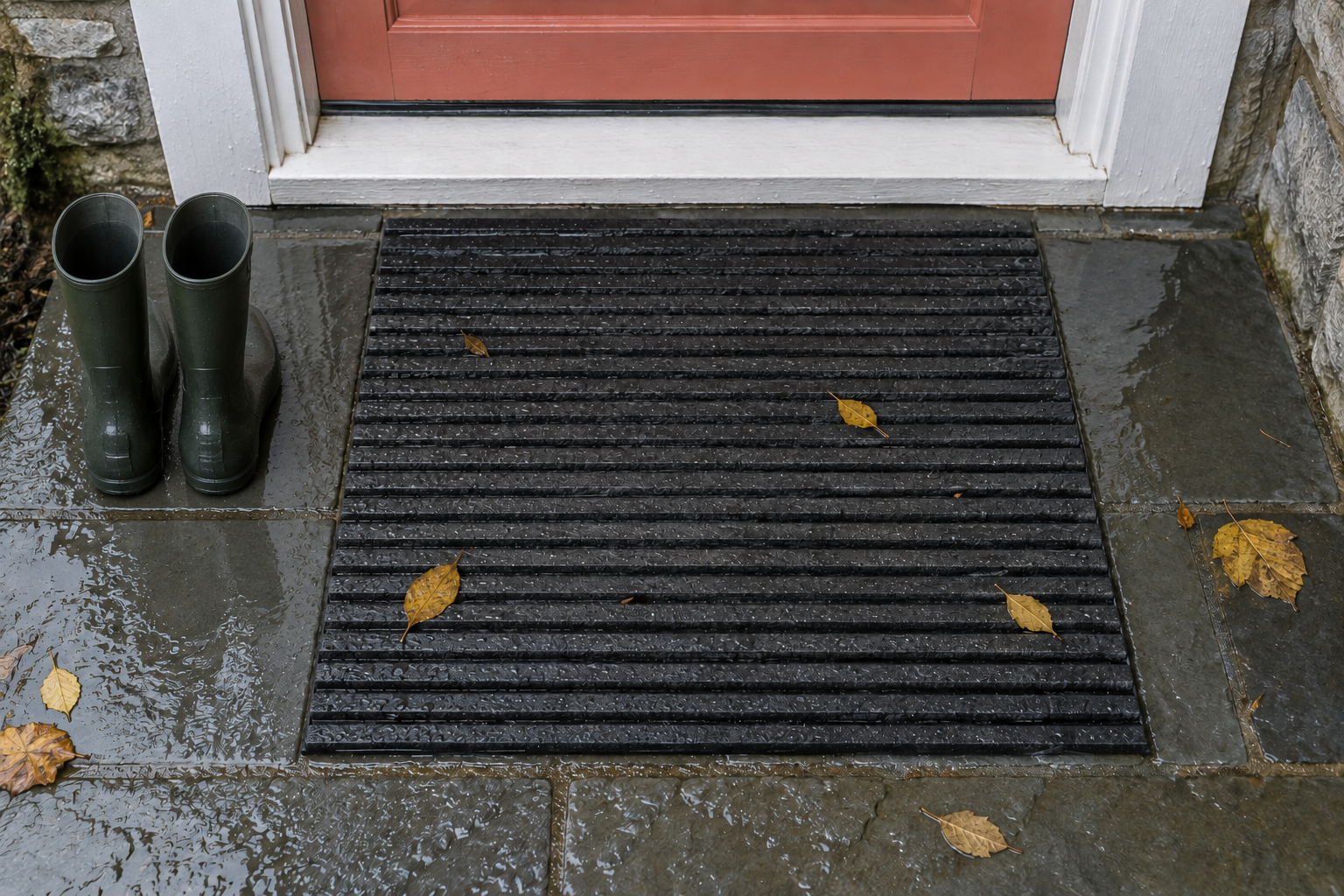
Width is for the eye, and depth is for the shoes. A mat 18 inches from front to back takes one footfall, and an adult usually crosses it in a single stride, with the other foot landing on the threshold. At 24 inches both feet touch it. On a step open to rain or snow, 36 inches allows two full steps, and more of what’s on the soles stays outside.
The landing limits depth as it limits width. Leave a few inches of the step showing in front of the mat, so its edge lies flat and nobody catches a corner that overhangs the top stair.
Put a Flat Rug Under It
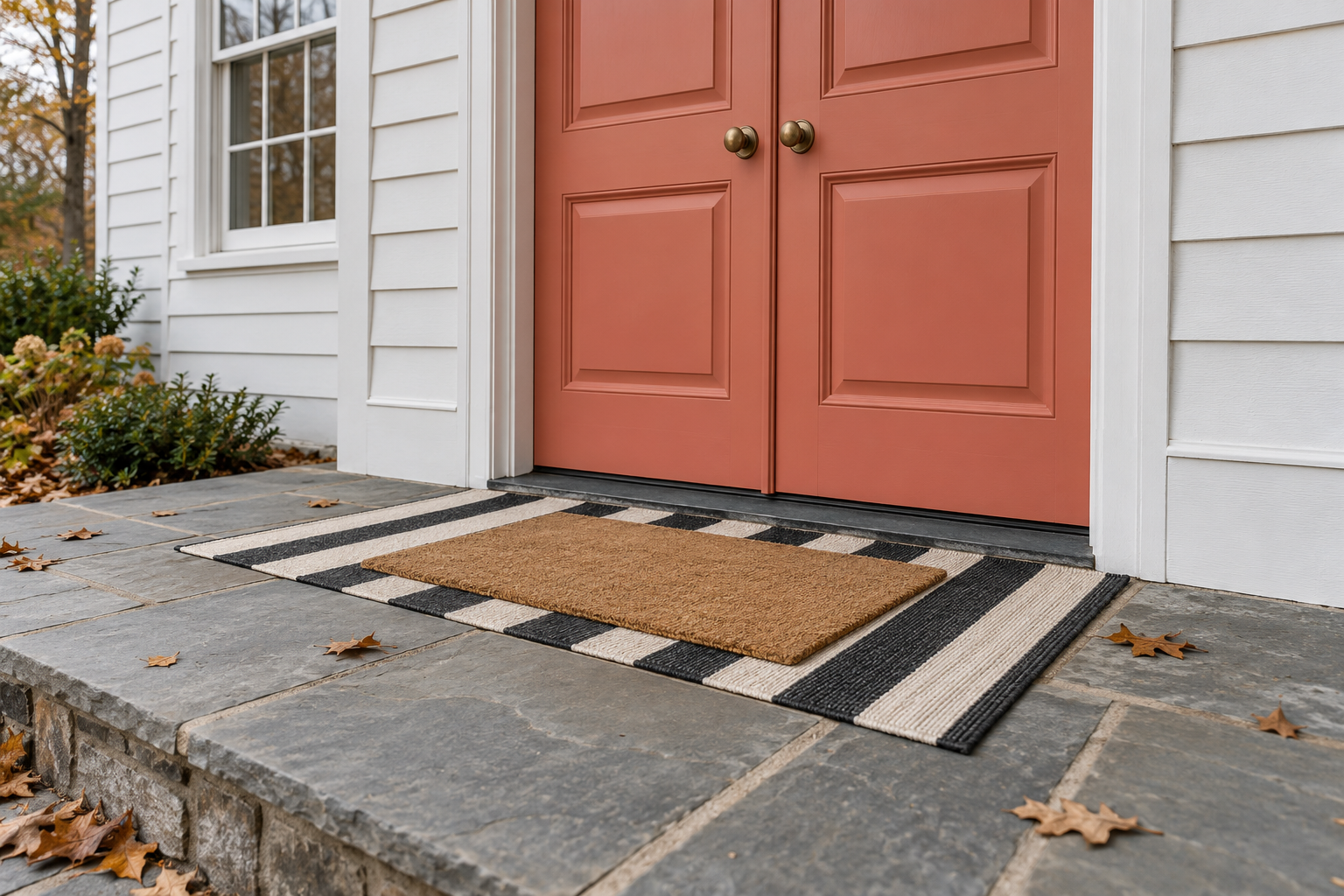
A second, larger rug under the doormat is a common way to make a standard mat suit a wide entry. The top mat stays at 18 by 30, the size most coir and patterned mats are made in, and a thin flat-woven outdoor rug beneath it supplies the width. At a single door, a 2 by 3 foot rug adds a border of a few inches all round. In front of sidelights or double doors, a 3 by 5 brings the pair close to the width of the opening.
Choose the lower rug for the weather. It has to be made for outdoors, in polypropylene or another fiber that sheds water, and thin enough that the two together still clear the door. Layering also doubles what there is to lift and shake, and grit collects between the layers. On an exposed step, one large mat is less work.
Check the Door Swing and the Weather
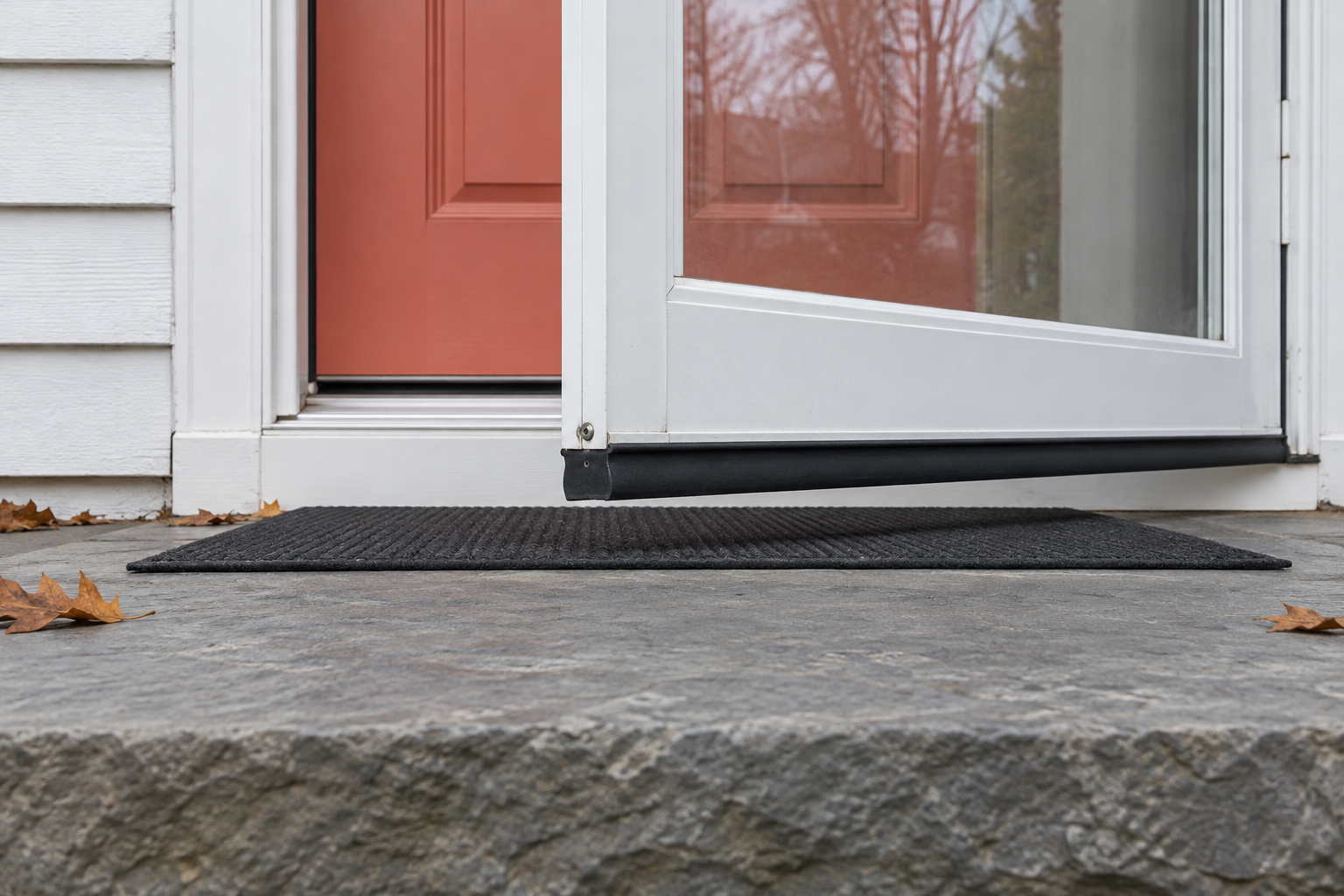
Thickness matters wherever a door passes over the mat. A storm door or screen door swings outward across it, and a mat indoors lies in the path of the main door. Measure the gap between the bottom of the door and the step, and buy a mat thinner than that. A thick coir mat can stop a storm door from opening at all.
Material follows exposure. Coir scrapes mud well, but it holds water and sheds fibers, so it lasts longest under a roof. On a step open to the rain, rubber or a ribbed synthetic mat drains and dries faster. A rough mat outside and an absorbent one just inside stop more than either does alone. Shake the outdoor one every week through fall, because a mat packed with grit no longer scrapes anything off.