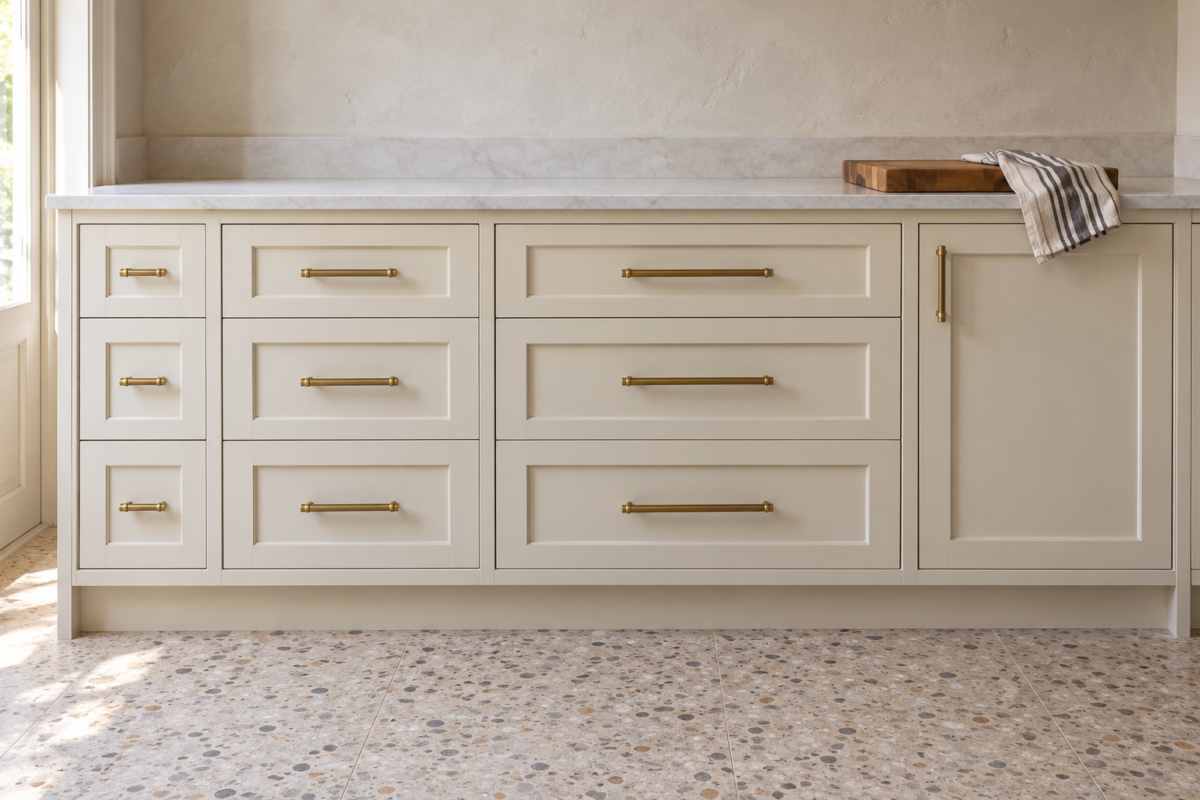
A kitchen has dozens of doors and drawers, and every one of them gets its handle at the same moment, usually near the end of a project when the cabinets are already in. The holes are permanent, so a pull that turns out too short for a wide drawer, or one mounted off the line of its neighbors, stays that way.
The sizing is simple once the labels make sense. Pulls are sold by the spacing of their screw holes, the length that suits a drawer is about a third of its width, and doors follow a separate rule. The numbers here are conventions, and each can bend toward the look you want.
The Size on the Label Is the Hole Spacing
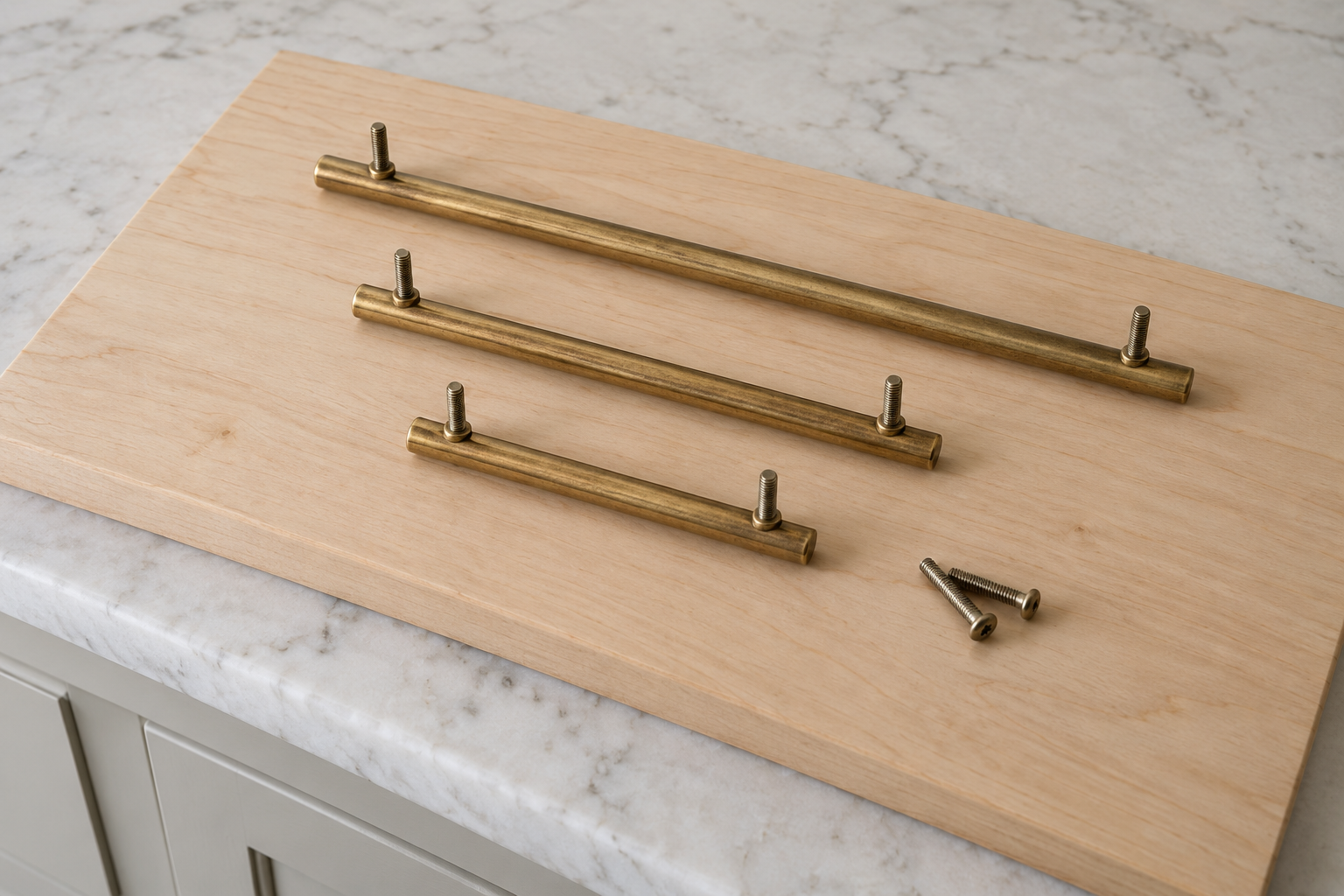
A pull described as 5 inches, or 128 millimeters, has that distance between the centers of its two screw holes. The measurement is called center to center. The pull itself is longer, often by an inch or more, and its overall length is listed separately.
Most pulls come in a set of standard spacings. The common ones are 3 inches, then 96, 128, 160, 192, and 224 millimeters, with longer bars at 320 millimeters and up. In inches those metric sizes are roughly 3 3/4, 5, 6 1/4, 7 1/2, 8 3/4, and 12 5/8.
If the cabinets already have holes, measure them before shopping, from the center of one hole to the center of the other, and buy that spacing. New pulls in the old holes take minutes to fit. A different spacing means filling and refinishing every front, or covering the old holes with backplates.
Start at a Third of the Drawer’s Width
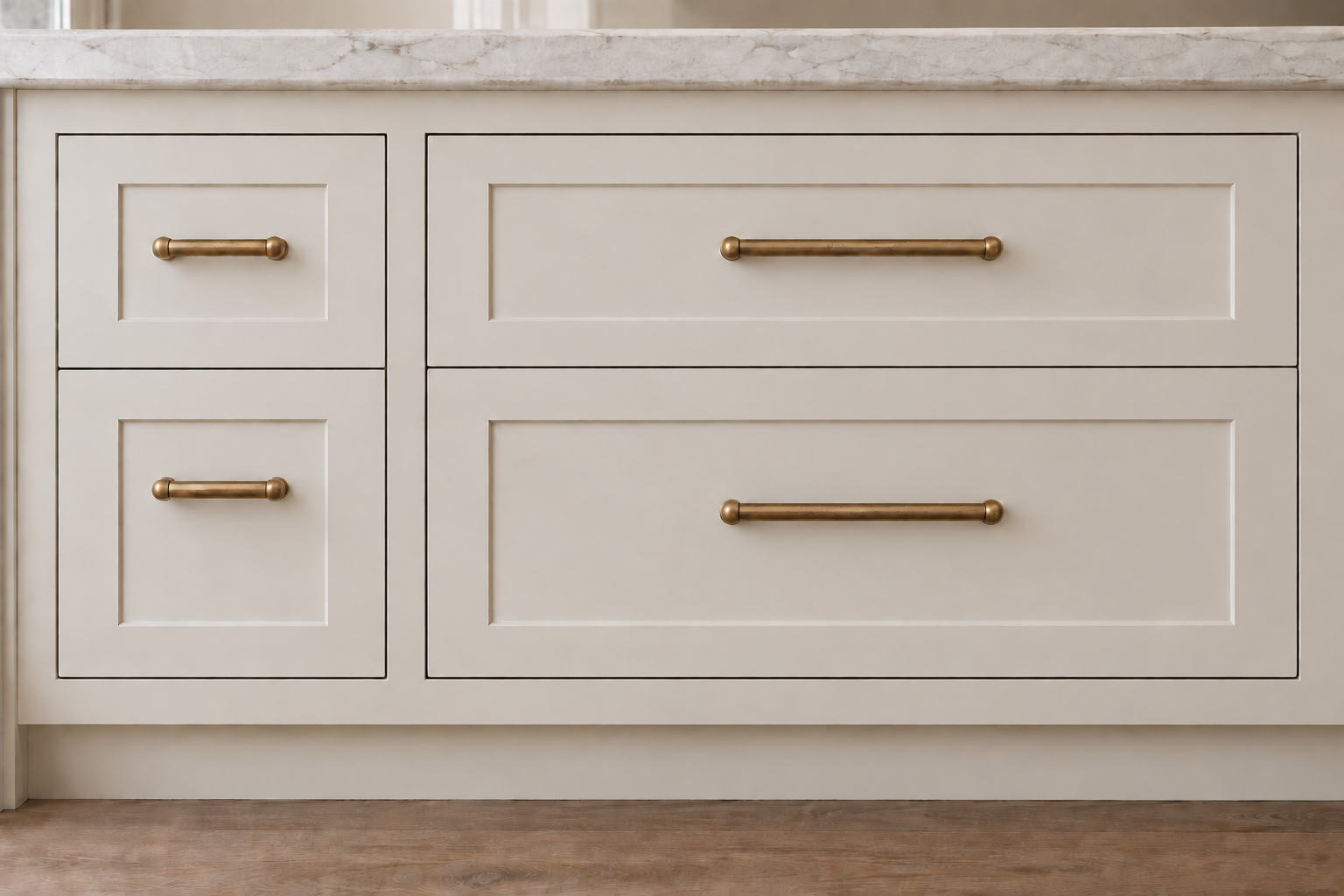
For drawers, the usual proportion is a pull about one third as long as the drawer front is wide, going by the pull’s overall length. On a 24 inch drawer that’s an 8 inch pull, and on an 18 inch drawer, 6 inches.
| Drawer front width | Pull length, overall | Typical hole spacing |
|---|---|---|
| Under 12 in | A knob, or a 3 to 4 in pull | 3 in or 96 mm |
| 12 to 18 in | 4 to 6 in | 96 or 128 mm |
| 18 to 24 in | 6 to 8 in | 128 or 160 mm |
| 24 to 36 in | 8 to 12 in, or two shorter pulls | 192 or 224 mm |
| Over 36 in | 12 in or more, or two pulls | 320 mm |
At a third, the pull occupies the middle of the drawer and leaves a margin of bare front on each side about as wide as the pull. Much shorter than a quarter of the width, a pull starts to look like a knob, and it gives a small grip on a heavy drawer. Longer is a matter of taste. Bars that run two thirds of the width, or nearly all of it, give a more linear look and are easy to find by feel.
One Length Everywhere, or Graduated
There are two sound ways to handle a kitchen with drawers of several widths. The first is a single pull length on everything, chosen to suit the most common drawer. It’s simpler to buy and to drill, and it looks consistent when the drawers fall within a narrow range, such as 15 to 24 inches. The second is to graduate, with two or three lengths of one design, each assigned by the one-third proportion. That suits a kitchen with a wide spread, a 12 inch drawer beside a 36 inch one, where a single length would be oversized on one and undersized on the other.
Knobs on doors with pulls on drawers is a third arrangement, and a traditional one. Whichever you choose, keep to one finish, or follow a plan for mixing metals if the faucet and the lights differ.
On Doors, Mount Pulls Vertically Near the Opening Corner
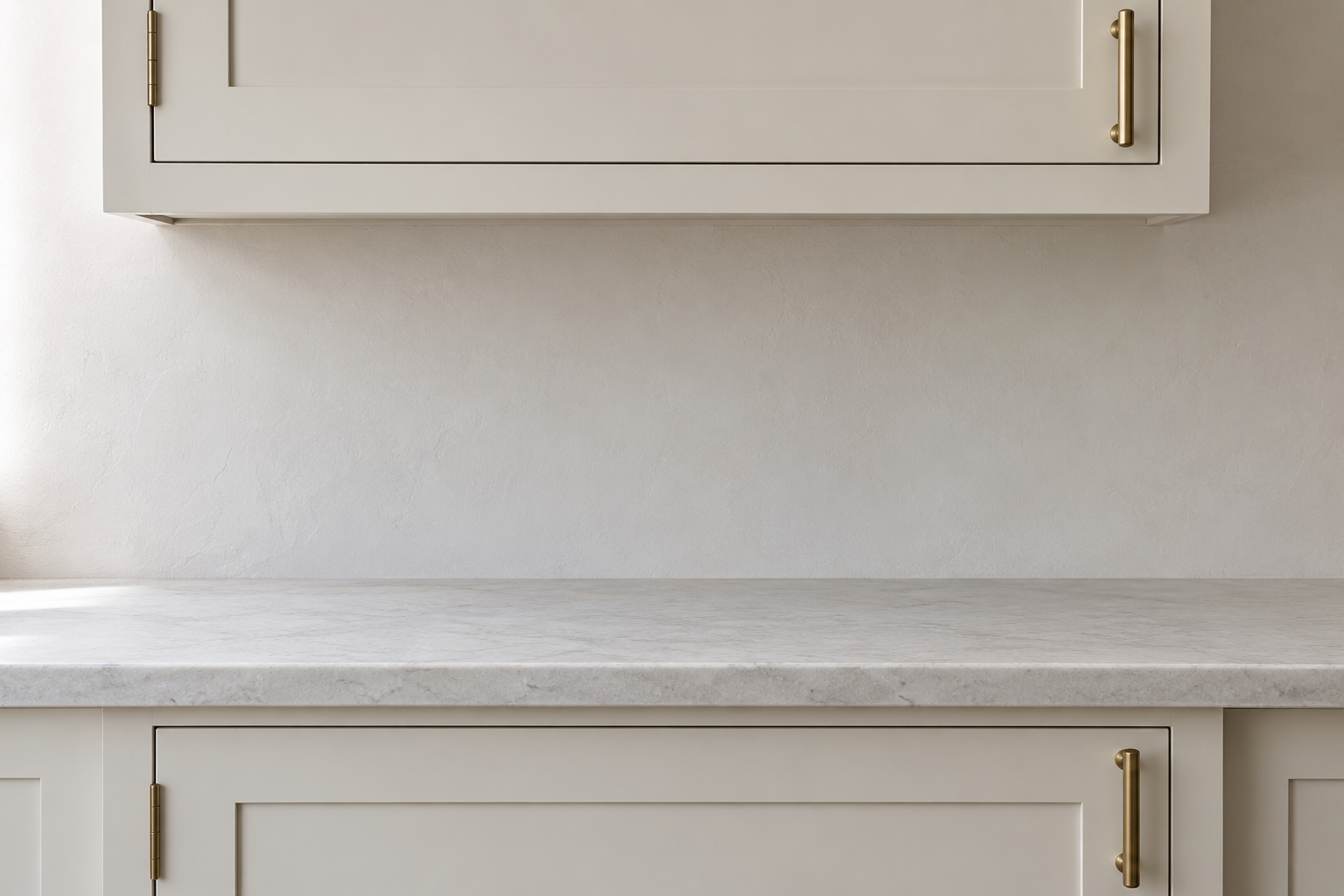
Door pulls run vertically, on the side opposite the hinges. On wall cabinets they go at the bottom corner, where a raised hand reaches first, and on base cabinets at the top corner. Set the near end of the pull 2 to 3 inches from the door’s bottom or top edge.
A Shaker door has a flat frame around a recessed panel. Center the pull on the width of the vertical frame piece, called the stile. A common refinement is to line up the end of the pull with the inside edge of the horizontal rail, so the pull begins where the panel begins. On a flat slab door, set the pull in from the side edge by about the same 2 to 3 inches.
Door pulls don’t follow the one-third proportion. A pull between 4 and 6 inches overall suits most wall and base doors, whatever length the drawers nearby carry, and using the shortest drawer pull on the doors keeps the order to fewer sizes. A tall pantry door can take a longer pull, mounted where a hand reaches without bending, a little above counter height.
On Drawers, Center the Pull
Drawer pulls run horizontally, centered side to side. Top to bottom there are two conventions. Centered on the drawer front is the default for shallow drawers and slab fronts. On Shaker drawer fronts, the pull can go on the top rail instead, and on deep drawers, 10 inches or more, a pull in the upper third is easier to reach than one at the center. Choose one convention and use it through the whole kitchen.
Fronts wider than about 24 inches can carry one long pull or two shorter ones. For two, divide the front into three equal parts and center a pull on each outer part. Two pulls ask for two hands. For a drawer opened one-handed many times a day, such as a trash pull-out or the pots drawer beside the range, one long pull is more practical.
Tape the Pulls Up Before Drilling
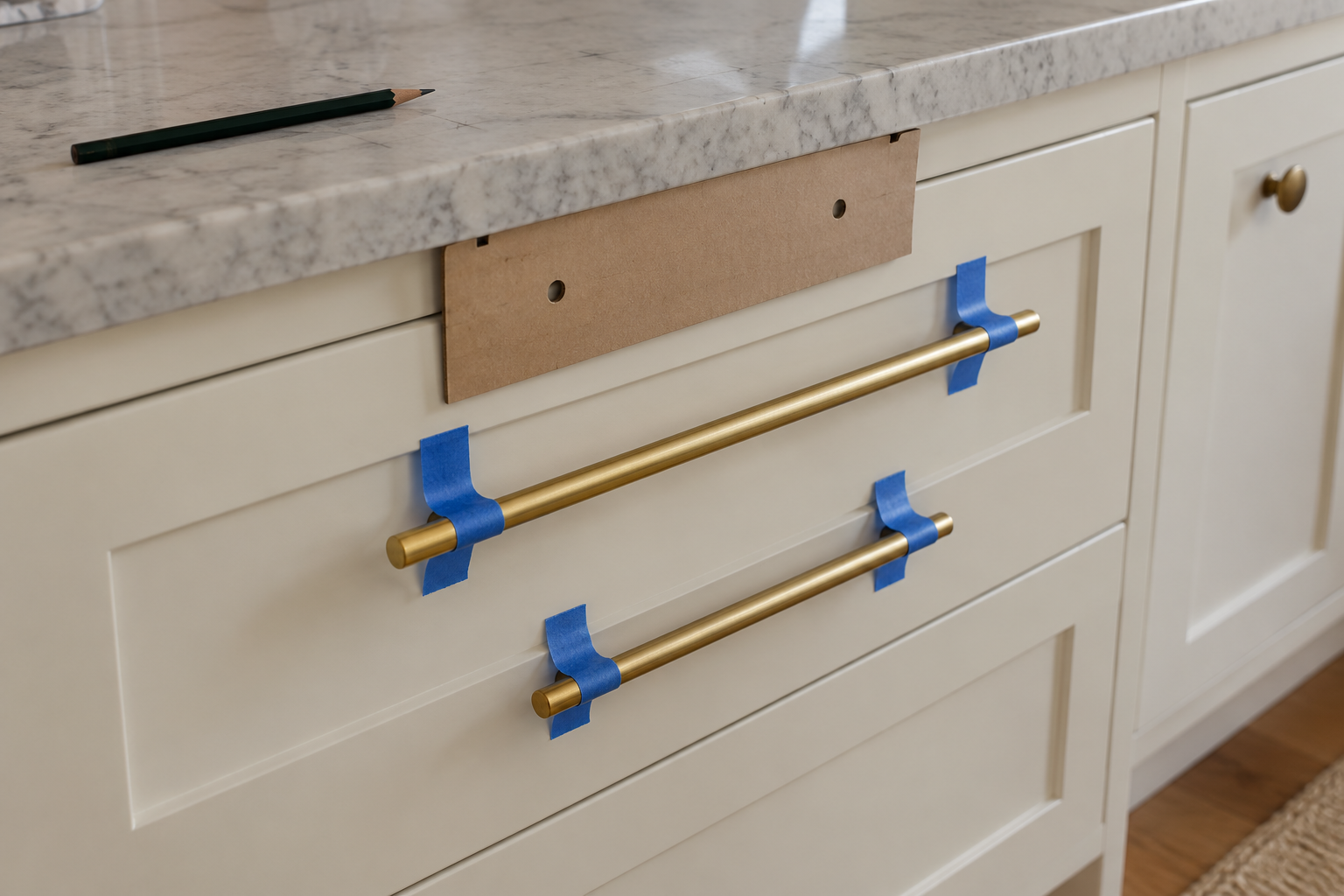
Stick the pulls in place with painter’s tape, on one run of cabinets at least, and step back to the doorway. This is the moment to compare a 6 inch pull with an 8 on the widest drawer, while changing your mind costs nothing.
Then check what the pulls will hit. At an inside corner, a pull on one drawer can strike the handle or the front of the cabinet at right angles to it. Next to a range or dishwasher, a pull that projects a long way can catch the appliance handle. Open each drawer and door with its taped pull in place.
For drilling, a marking jig, or a cardboard template made once and checked on a scrap, puts every hole in the same place. Drill from the front with a block of scrap wood held behind the panel, which keeps the back from splintering where the bit comes through.