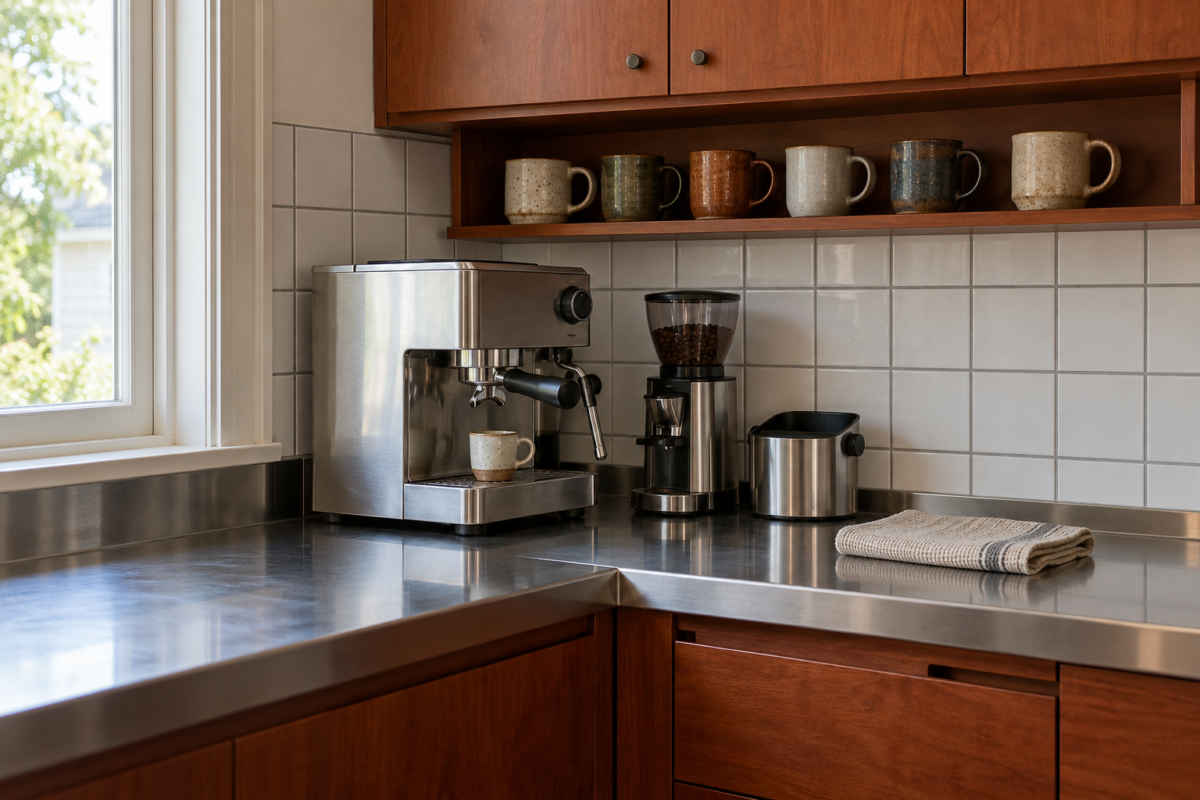
A coffee station gets used before anyone in the house is fully awake. The machine, the mugs, the coffee, and a spoon should all be within a step of each other, so that making a cup doesn’t mean crossing the kitchen three times.
Three requirements decide where a station can go. The machine needs an outlet within reach of its cord. It needs water, which means a short walk from the sink or a jug kept beside it. And the mugs need a home close by. The setups below all start from those limits. Some take ten minutes and a tray, and a couple need a carpenter or an electrician.
Start With the Space Under the Upper Cabinets
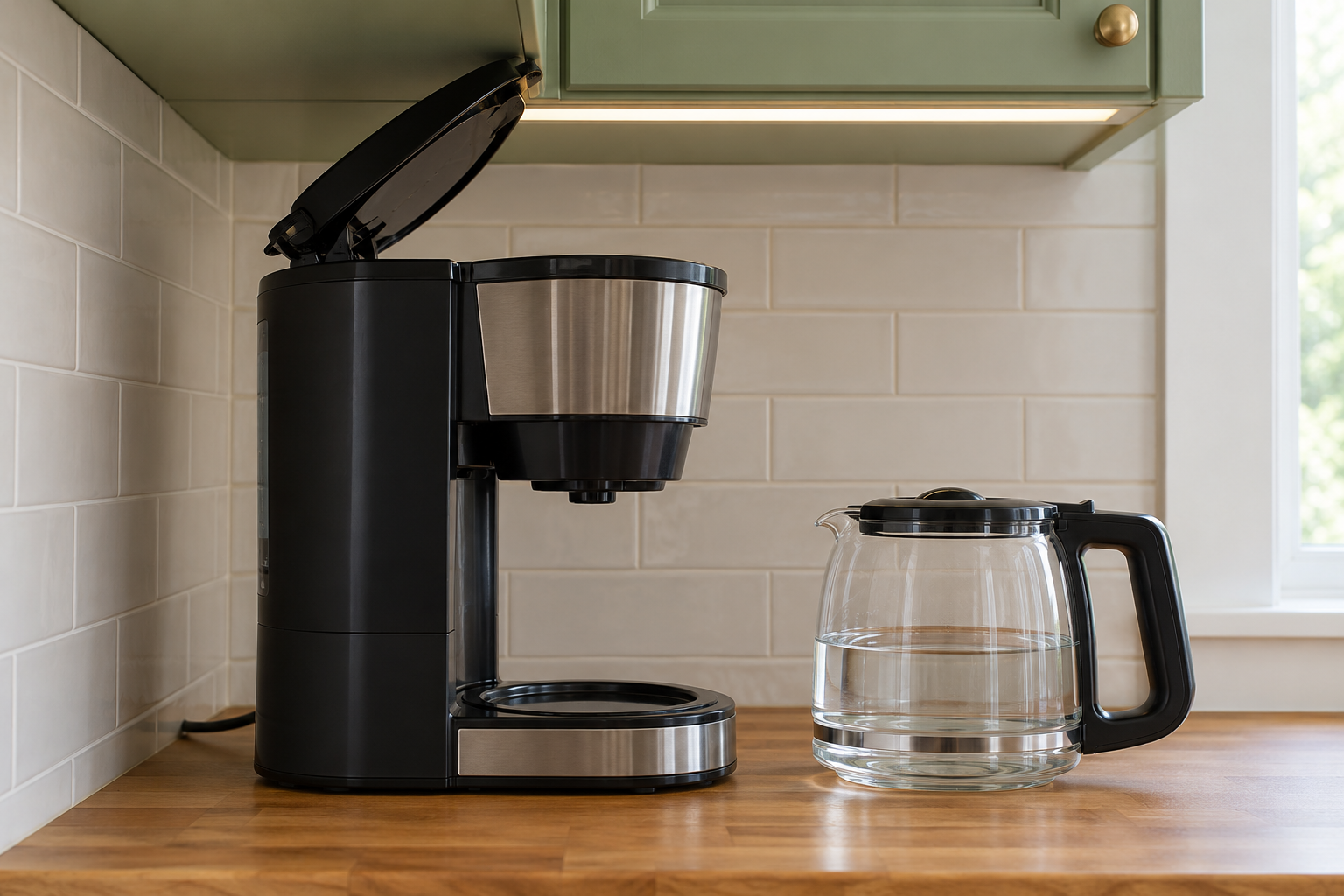
Upper cabinets usually hang about 18 inches above the counter, and plenty of coffee makers come close to that height. A machine that slides under with an inch to spare can still be a nuisance, because many fill from the top. A lid swings up or a water tank lifts out, and both need clear space above the machine.
Measure from the counter to the underside of the cabinet, including any trim or light rail that hangs below it. Then check the machine’s height with the lid fully open, a figure the listed height often leaves out. If the two don’t agree, the machine has to slide forward for every fill, and a tray or a sliding mat under it makes that a one-hand job. Steam is the other reason to pull it forward, since steam rising into the same spot every morning can mark a cabinet’s finish over time.
Set Up Between the Sink and the Refrigerator
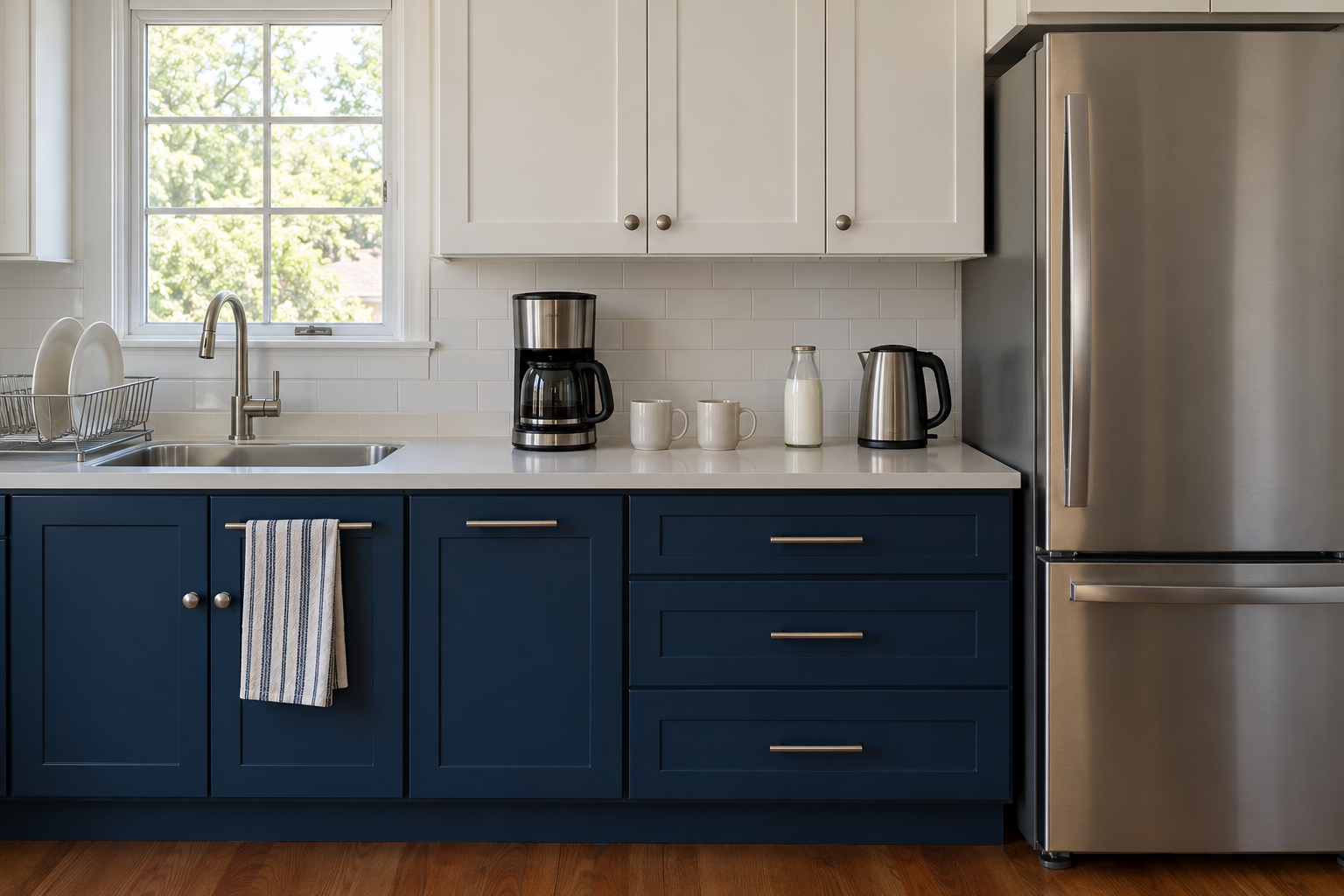
Coffee uses water at the start and, for many people, milk at the end. A station on the counter between the sink and the refrigerator keeps both within a step, and the carafe gets filled without carrying water across the room. It also keeps the coffee drinker out of the cook’s way, as long as that stretch isn’t the main prep counter. In a small kitchen with one clear run of counter, the end of it nearest the sink is the usual compromise.
Check the outlets before settling on the spot. A kettle and a coffee machine heating at the same moment on one circuit can trip the breaker, so if both live at the station, find out which outlets share a circuit.
A Tray Makes a Station on Any Counter
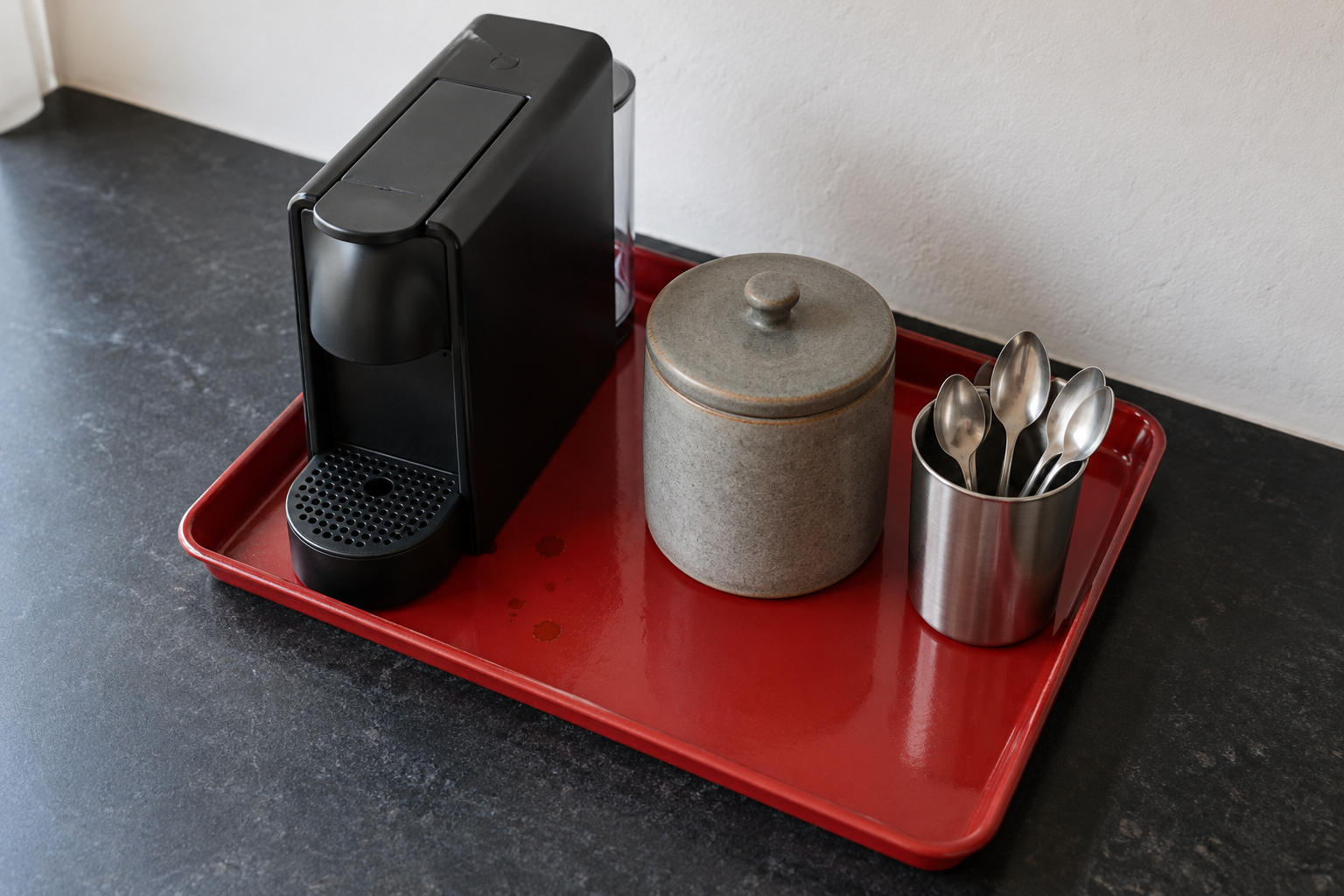
The smallest coffee station is a tray. Put the machine, the canister, and a tumbler of spoons on a tray with a raised edge, and that part of the counter has a boundary. Things that belong to coffee stay on it, and things that don’t get moved off. The same objects standing loose tend to spread along the counter over a week.
The tray also catches drips and grounds, and the whole station lifts in one move when the counter needs wiping. Choose metal, enamel, or sealed stone, because coffee stains bare wood and marble. Size the tray to the machine’s feet plus the two or three things used with every cup.
Hang Mugs on a Rail Below the Shelf
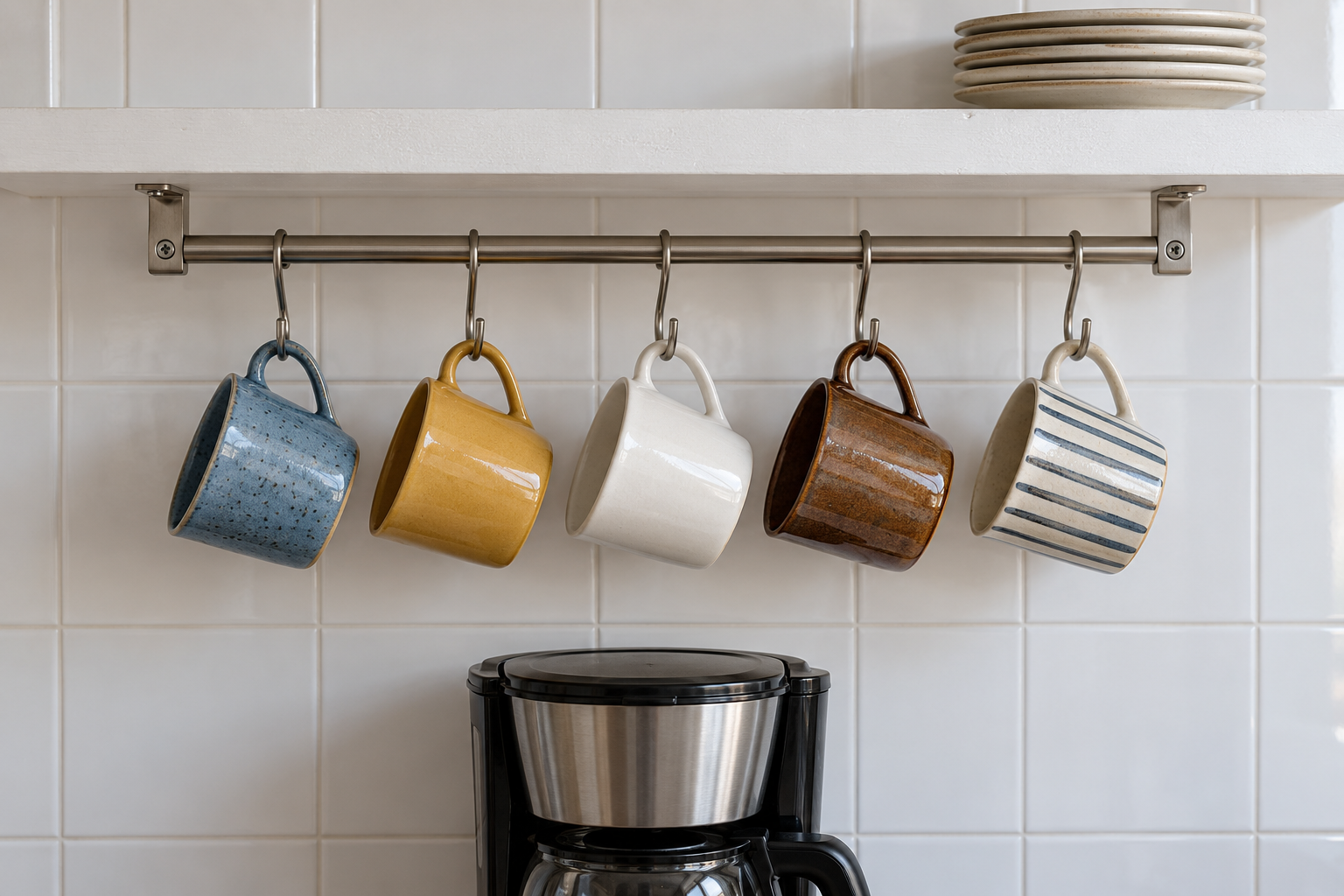
Mugs don’t stack well, so six of them can fill most of a cabinet shelf. On a rail with hooks, fixed to the wall or under a shelf above the machine, the same six use space that was empty, and they hang within reach of the hand that isn’t holding the carafe.
Hang only the mugs in daily use, usually one or two per person. The rest can stay in the cabinet nearest the dishwasher. Leave enough room below the rail for a hanging mug to clear the machine with its lid open. Fix the rail into studs, or with anchors rated for the load, since a row of stoneware mugs is heavier than it looks.
Give the Station the Drawer Underneath
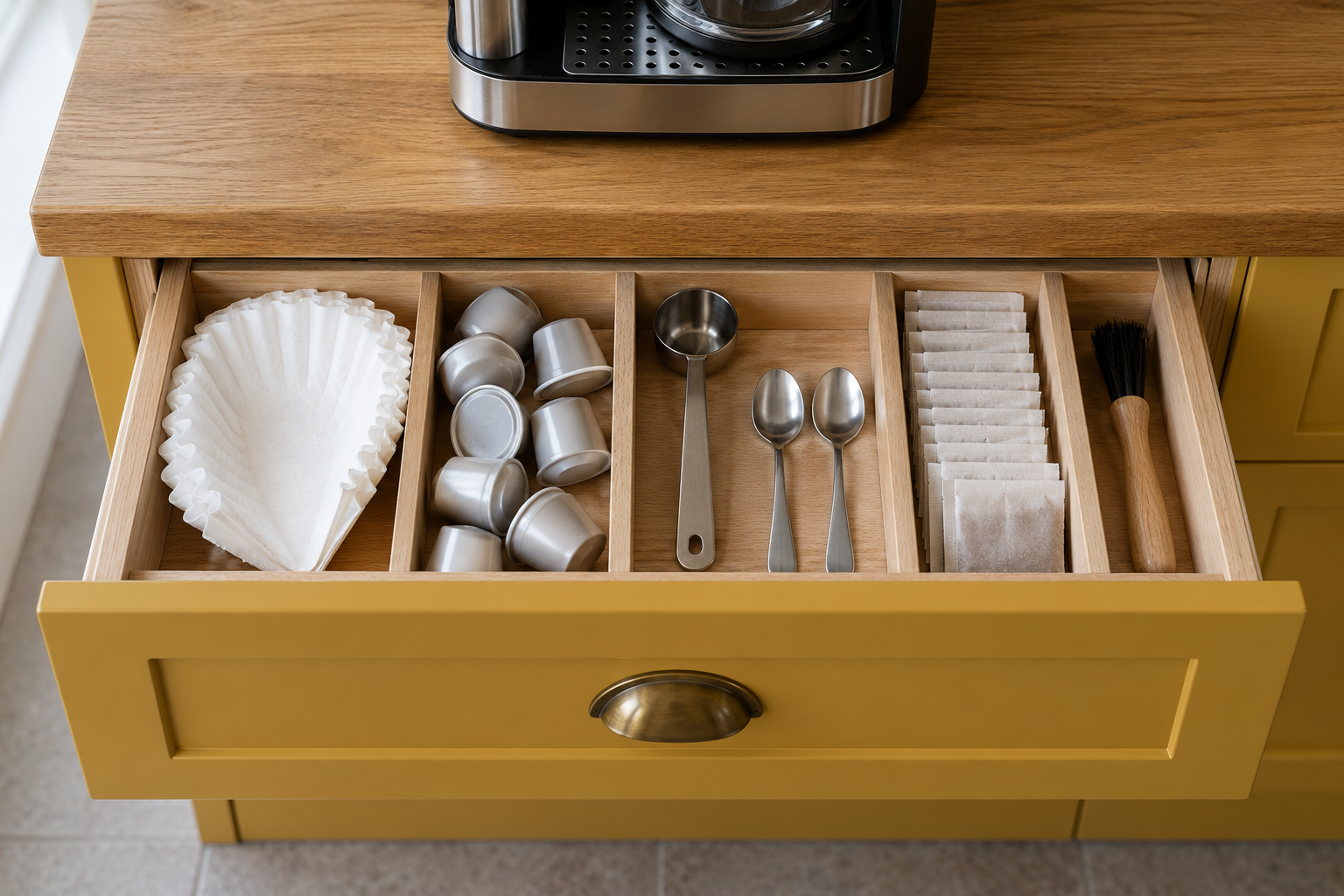
The counter holds what’s used with every cup. Filters, pods, the descaler, a spare scoop, and tea belong in the drawer directly below the machine, one movement away and out of sight. Without that drawer, they end up in a row behind the machine.
Divide the drawer so each thing has a compartment about its own size. Filters and pods are light and slide around when loose. If the drawer under the machine already holds cutlery or utensils, move those along by one drawer. When the coffee drawer is two steps from the machine it gets used less, and the supplies drift back onto the counter.
Close It Behind Cabinet Doors
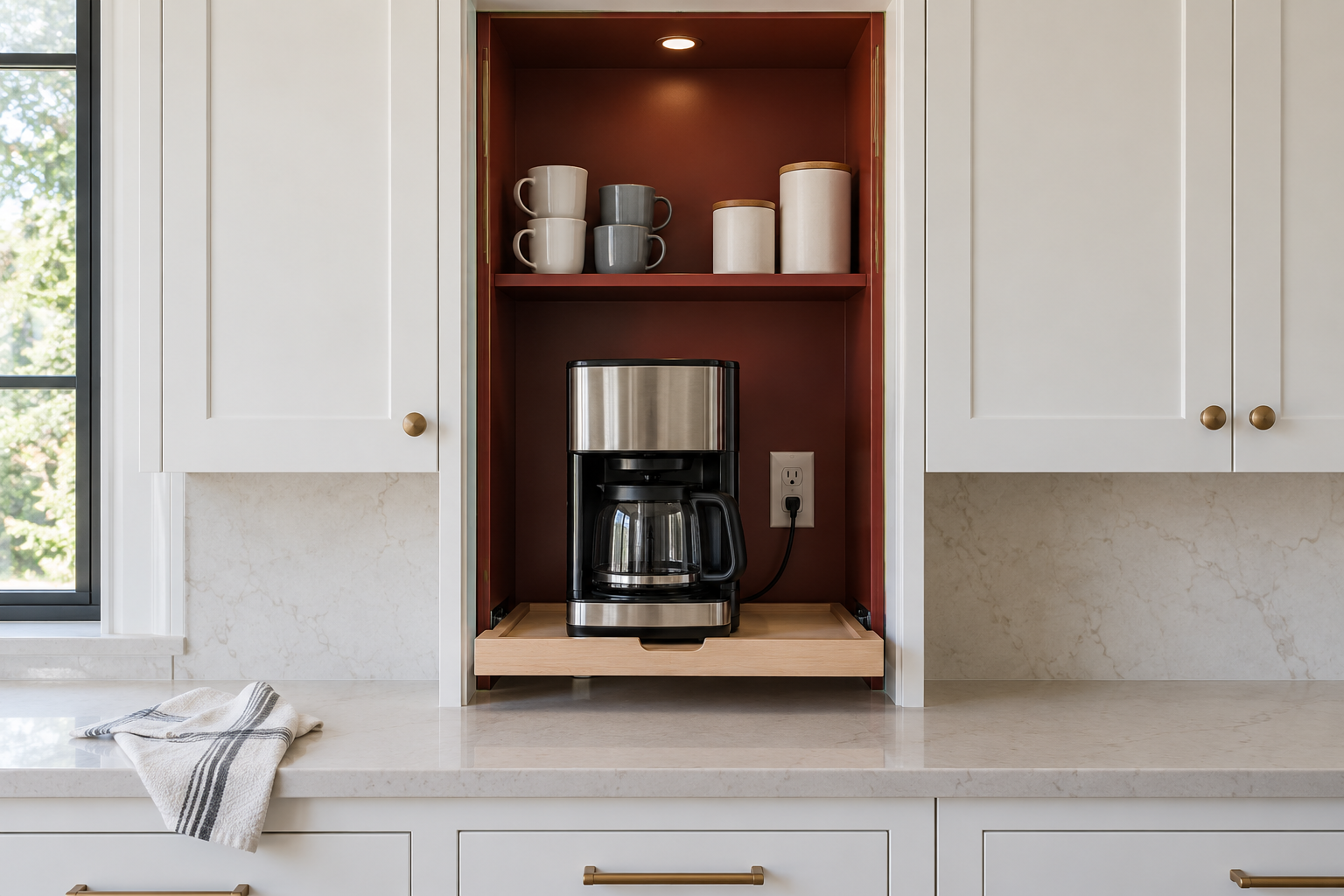
A cabinet that sits on the counter, with doors that fold or slide back into pockets, hides the whole station when it isn’t in use. Inside go the machine, a shelf or two for mugs and canisters, and an outlet on the back wall, which is a job for an electrician. It suits an open kitchen seen from the living room, where a counter of appliances stays in view all evening.
Two details decide whether it works. Doors that swing out the ordinary way block the counter on both sides while they’re open, so pocket, bifold, or lift-up doors are worth the extra cost. And the doors have to stay open while the machine runs, so that steam and heat can escape. A pull-out shelf under the machine solves the filling problem, because the machine rolls forward clear of the shelf above.
Move It to a Sideboard in the Dining Room
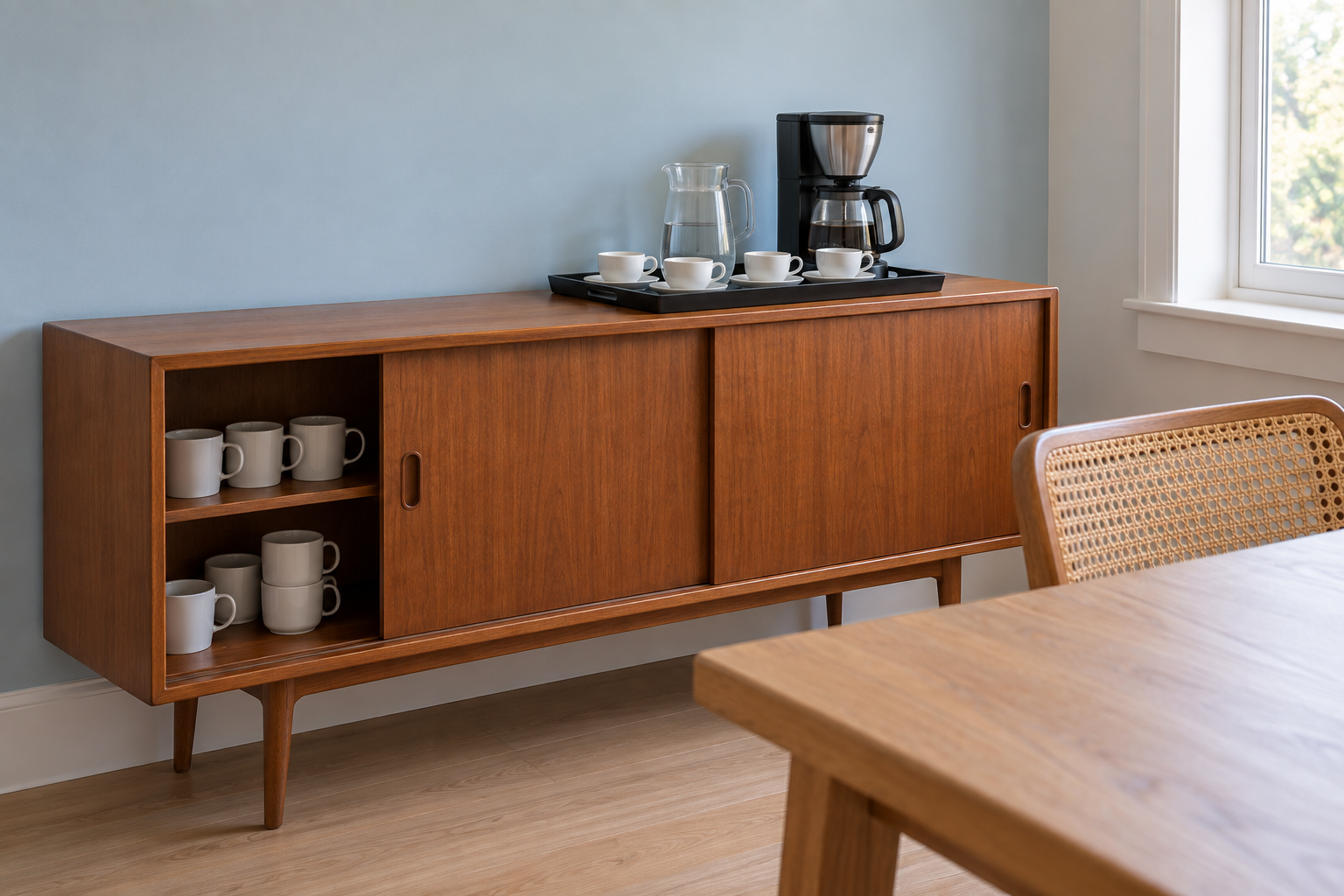
The station doesn’t have to be in the kitchen. A sideboard against a dining room wall is close to counter height, has cupboards below for mugs and supplies, and puts coffee where people sit to drink it. It also frees a stretch of kitchen counter, which can matter more than the extra walk.
There’s no sink, so the machine gets filled from a jug kept beside it, and a drip or pod machine suits the spot better than one with parts to rinse after every cup. Protect a wood top with a tray. Check for an outlet on that wall before moving anything, because a cord run across a doorway is a trip hazard.
Two Shelves on a Narrow Wall
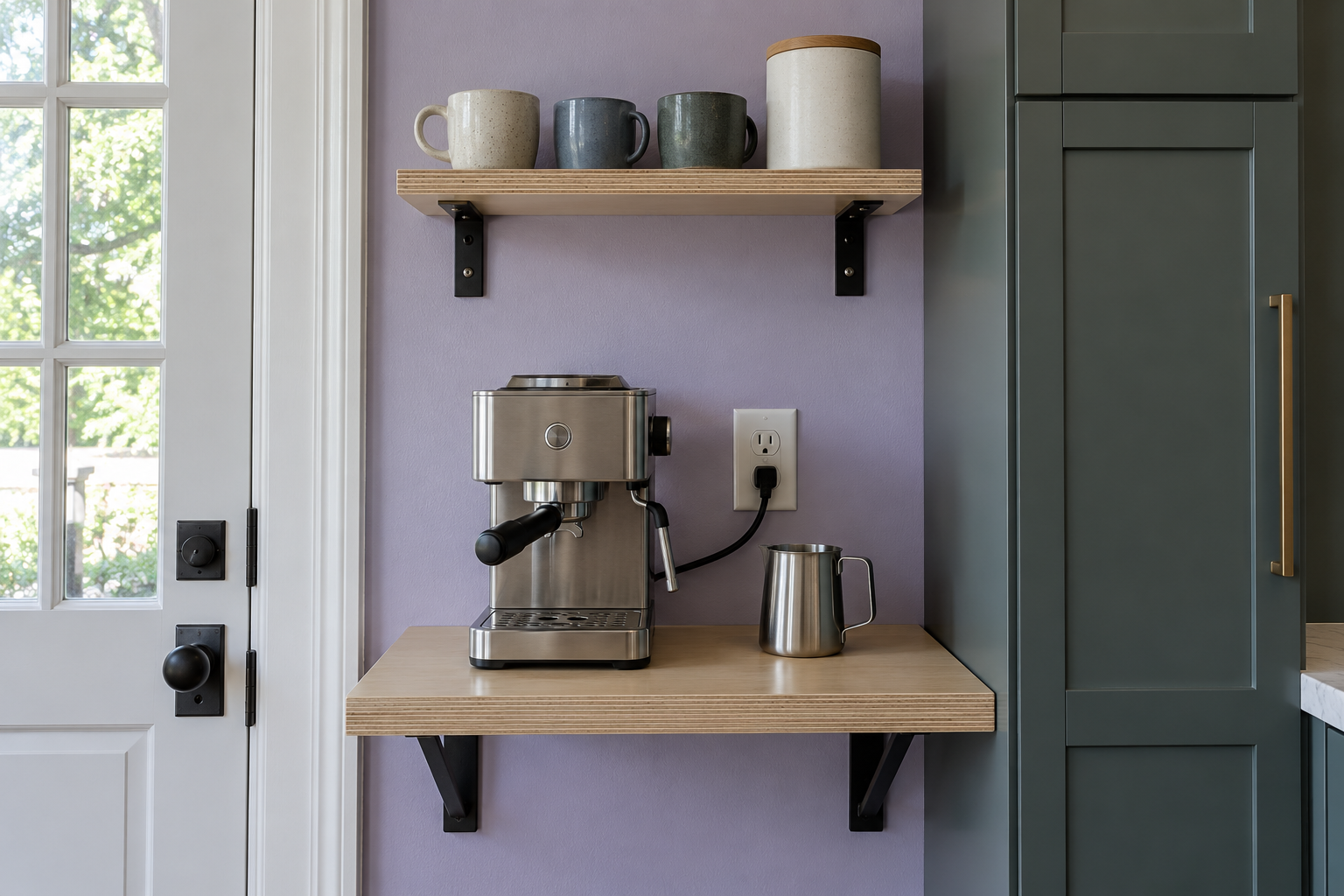
A strip of wall too narrow for a cabinet, beside a doorway or at the end of a run, can hold a station on two shelves. The lower shelf sits at counter height and carries the machine. The upper one holds mugs and canisters, and goes high enough to clear the machine with its lid open.
The lower shelf is the one to get right. Measure the machine front to back, add room for the plug behind it, and have the shelf cut to that depth, since an ordinary wall shelf is often too shallow. It also has to carry a machine full of water, which means brackets screwed into studs. An outlet between the two shelves keeps the cord short. Without one, the cord has to drop down the wall to the baseboard.
A Cart for a Kitchen With One Free Outlet
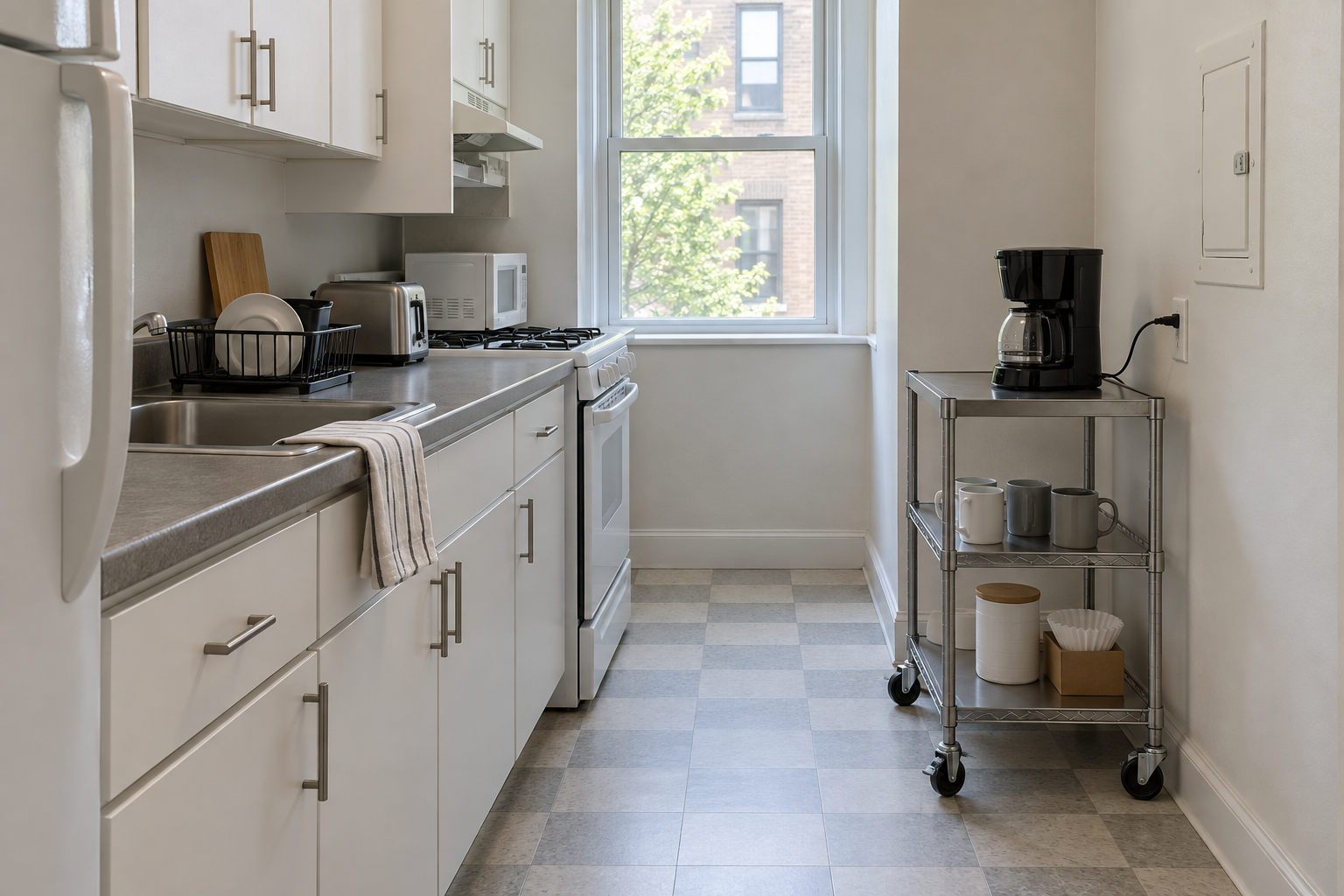
In a rental, or a kitchen where every inch of counter is taken, a cart holds the station and parks wherever the free outlet is. The machine goes on top, mugs on the middle shelf, and the bulk supplies on the bottom, where their weight keeps the cart steady.
Look for two things. The top should sit near counter height, so that filling the machine doesn’t mean lifting a full jug to shoulder level or bending to the knees. And at least two wheels should lock, because pressing a lever or a grinder button pushes sideways on a cart that’s free to roll. Compare the weight the top shelf is rated for with the machine’s weight when its tank is full.
Keep the Beans Away From the Heat
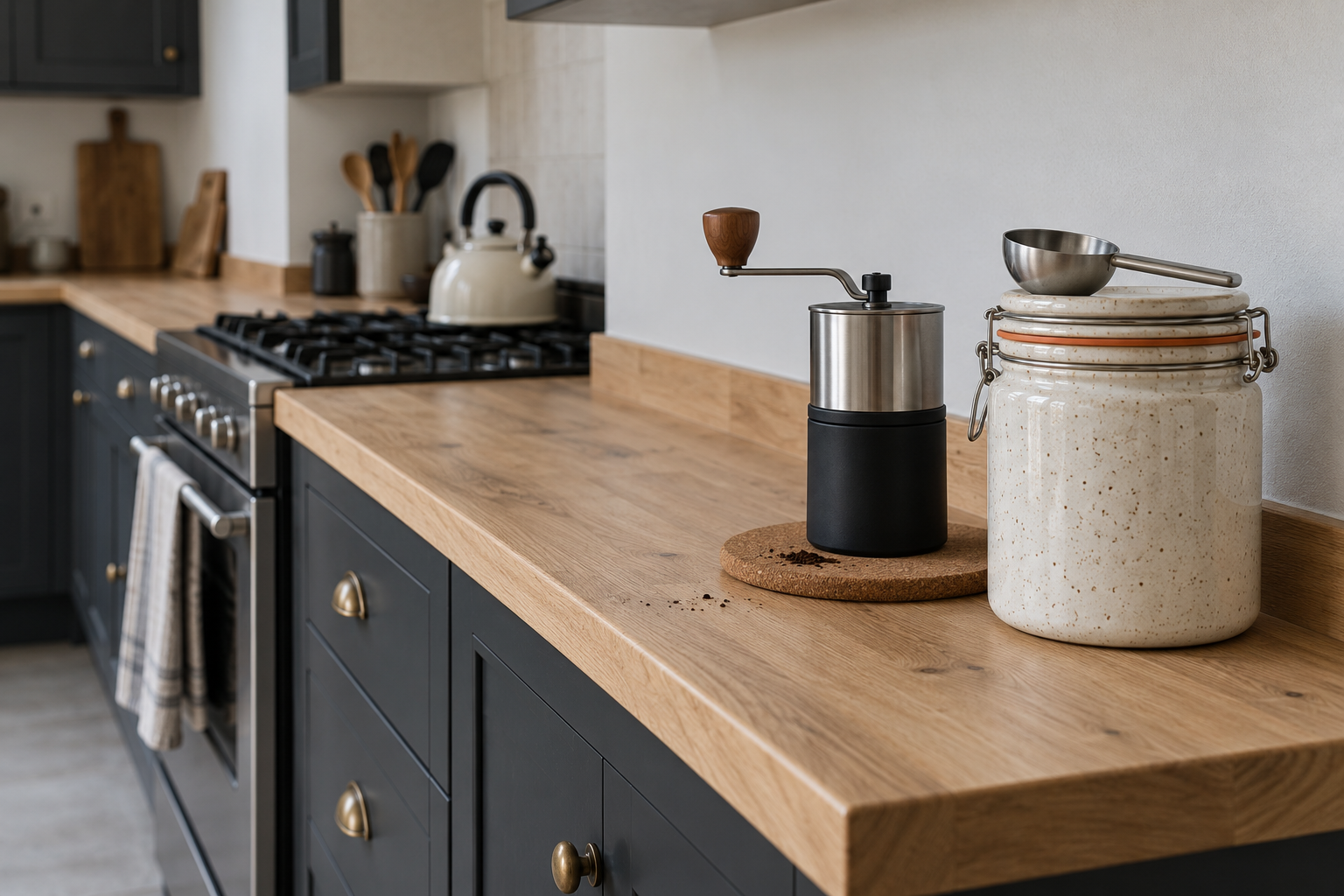
Roasted coffee keeps its flavor longest in an airtight, opaque container at room temperature, away from heat, light, and moisture. That rules out two popular spots, a clear glass jar on a sunny counter and the top of the machine, which warms up every time it runs. A shelf beside the range gets warm too.
Give the canister a place at the cool end of the station, and choose a size that holds a week or two of coffee, so it’s used while it’s fresh. The grinder belongs beside it, on the tray or on a mat of its own, because grounds scatter.