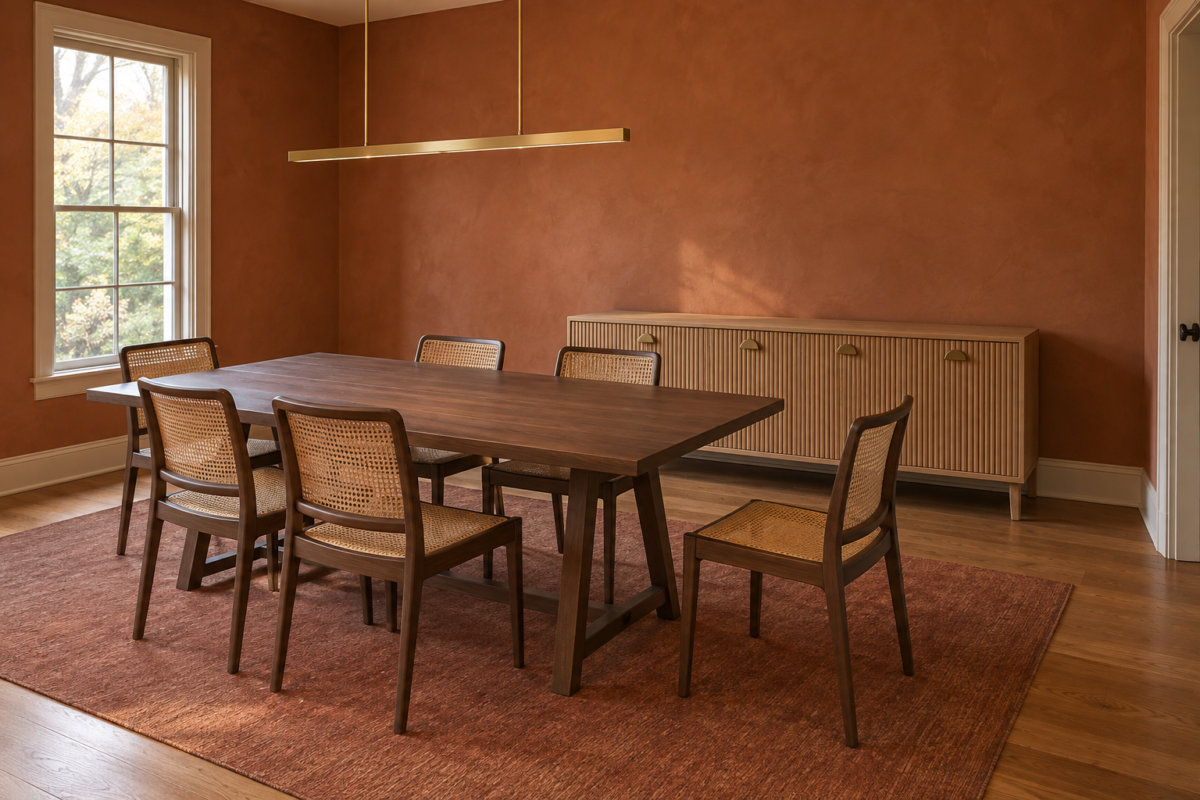
By the time a dining table’s shape and the chairs around it are settled, most of a room’s usable floor is already spoken for. A sideboard shows up looking for whatever’s left: a stretch of wall that isn’t blocking a doorway, a depth that doesn’t eat into the space a chair needs to slide back, a height that doesn’t compete with the table it’s meant to support. Furniture guides that treat a sideboard as its own standalone purchase skip that part. In a real dining room, the table and chairs already made most of the decision, and the sideboard just has to fit into what’s left.
Let the Table Decide the Width
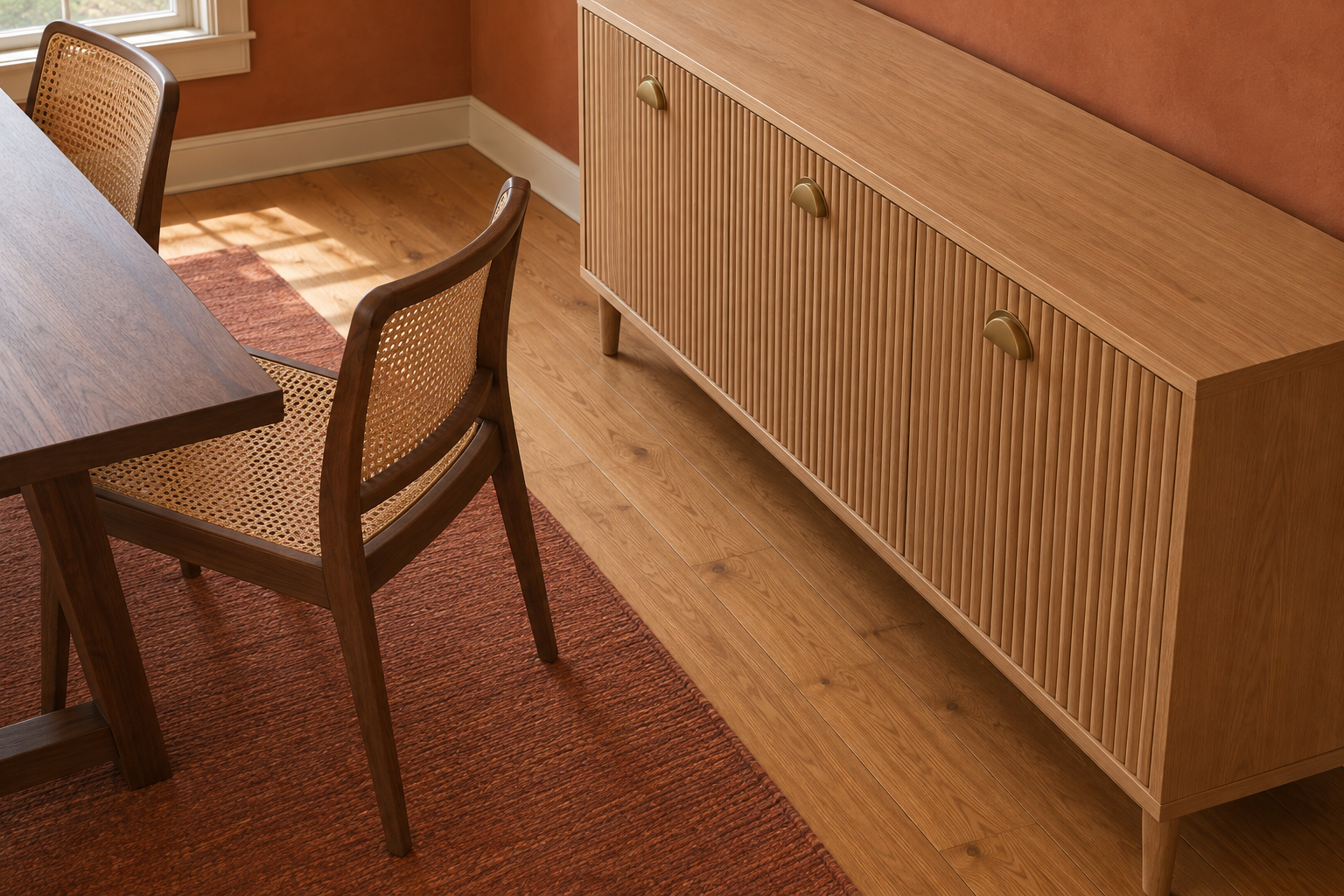
A sideboard reads as proportional when it runs roughly 60 to 75 percent of the dining table’s own length, not the full width of the wall it happens to sit against. A 72-inch table pairs comfortably with something in the 44 to 54 inch range. Go much longer than the table itself, and the sideboard starts to look like the room’s main anchor, with the table reduced to a supporting piece sitting in front of it.
That ratio is a useful starting point, not a fixed rule that holds regardless of the room. Picking the table’s shape for the room it’s in already decides how much length there is to work with. Once the table’s size is locked to the room, the sideboard’s own length follows from that decision instead of getting chosen first.
Depth Is Really a Clearance Question
Sideboard depth looks like a storage decision. It’s actually decided by how much floor a chair already needs. A shallow sideboard, 16 to 18 inches deep, suits linens, barware, and smaller serving pieces. Depth in the 20 to 24 inch range gives room for dinner plates and larger platters, but every extra inch of depth comes directly out of the same floor a chair needs to push back and a person needs to walk behind someone who’s seated.
How many chairs fit around a dining table already accounts for the space a chair needs to slide back from the table. A sideboard placed too deep against the opposite wall closes that same gap from the other direction, so the chair and the sideboard end up competing for floor that was only ever going to fit one of them comfortably.
Height Should Relate to the Table
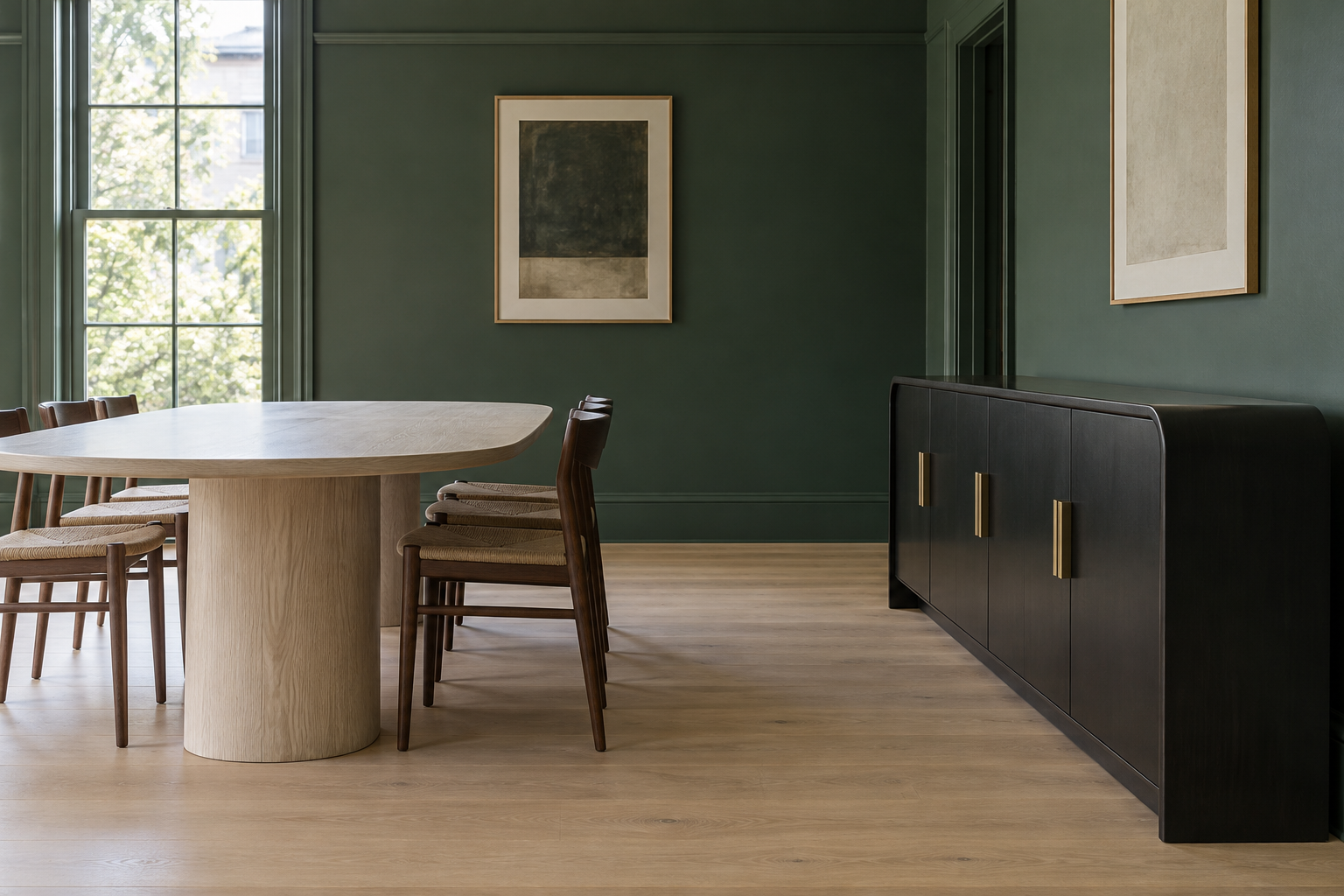
Most sideboards land somewhere between 30 and 36 inches tall, close enough to a standard dining table’s own height that serving from it doesn’t mean reaching up or bending down. A sideboard noticeably taller than the table it sits near starts to read as a piece of its own, unrelated to the room it’s serving, rather than as the table’s supporting player.
Height matters visually as much as functionally. A tall, heavy sideboard against a low table can make the whole wall feel top-heavy, especially in a room that’s already carrying a chandelier or a large mirror above it.
When the Room Doesn’t Have Space for One
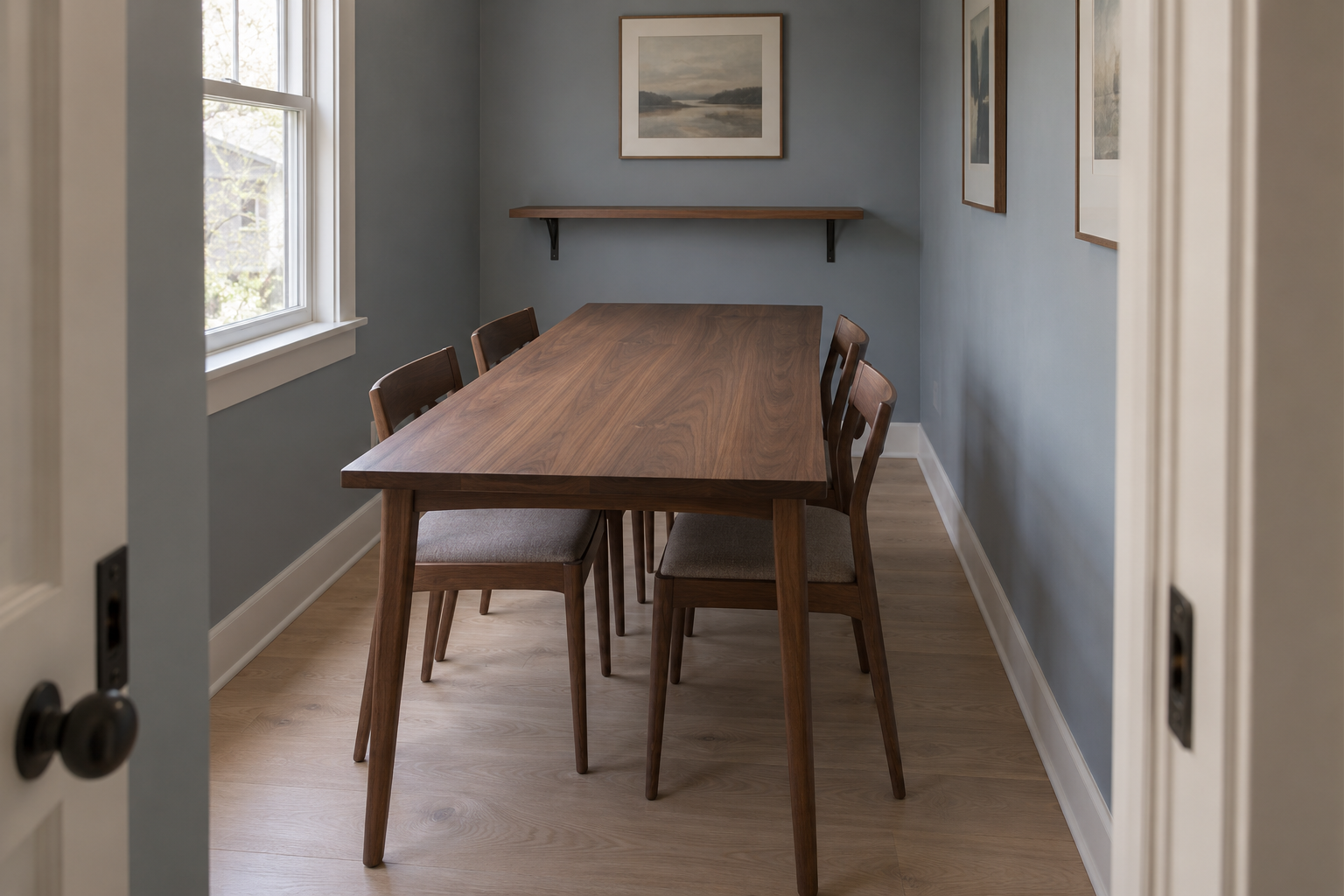
A genuinely narrow dining room doesn’t automatically have room for a sideboard too, even after the table and enough chair clearance are already accounted for. Sometimes there’s simply nothing left for a piece meant to sit against a wall on top of that.
A narrower option, in the 30 to 36 inch range, or a wall-mounted shelf that doesn’t need any floor clearance in front of it, usually solves the space problem better than shrinking a full sideboard down until it stops being useful. Skipping it entirely is also a legitimate answer. Not every dining room has room to serve from a piece of furniture, and a room that doesn’t shouldn’t force one in.
Frequently Asked Questions
Can a sideboard be longer than the dining table?
It can, but it usually stops looking proportional once it passes the table’s own length. A sideboard that runs noticeably longer than the table reads as the room’s main piece, with the table sitting in front of it instead of the other way around.
What if there’s only one usable wall in the room?
The table and the chairs’ clearance take priority over the sideboard every time. If the one usable wall is already carrying the table’s own path in and out of the room, the sideboard is the piece to shrink, move to a hallway or an adjacent room, or skip.
Does a sideboard need to match the dining table’s wood tone?
No, and matching it exactly often reads as less intentional than a considered contrast. Mixing two wood tones deliberately, a lighter sideboard under a darker table or the reverse, tends to look more like a real, collected room than furniture bought as a single matched set.