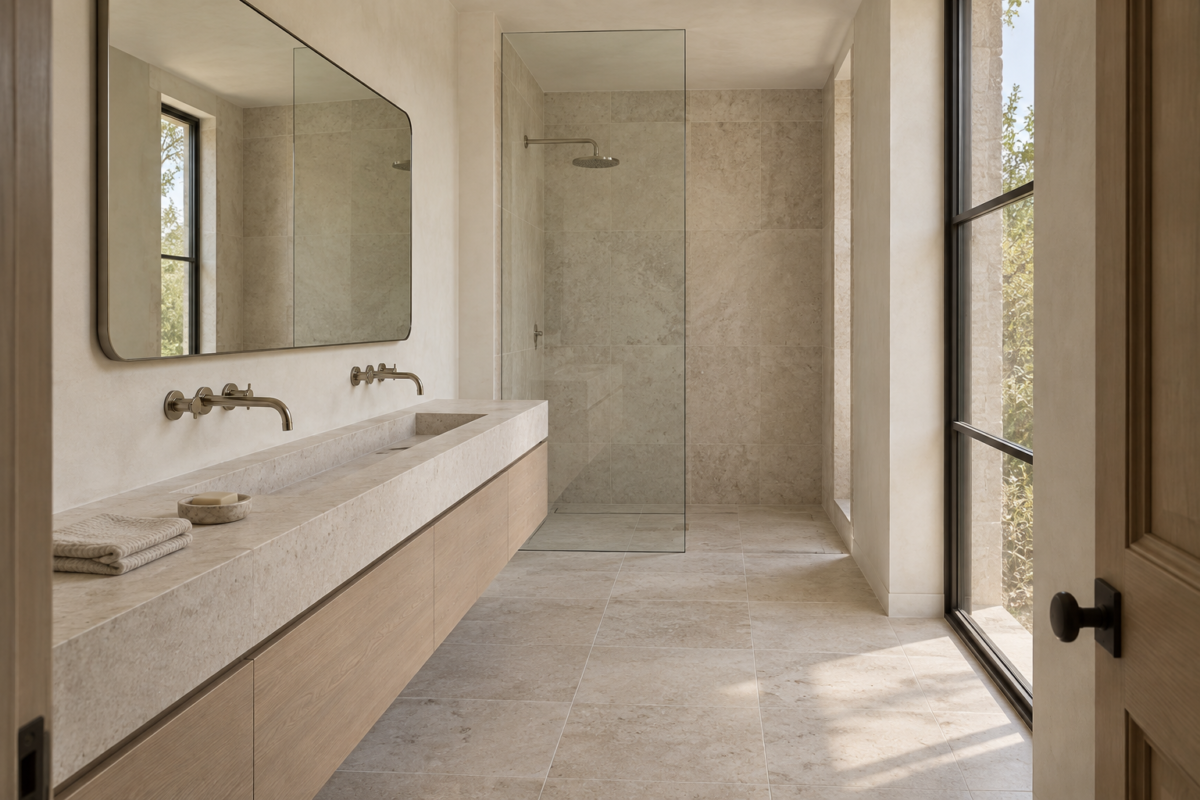
A bathroom that looked finished the day the tiler left can look tired five years later for reasons that have little to do with style. Grout darkens along the shower floor, the painted strip above the tile starts to bubble, the curtain gets replaced for the third time, and one light over the mirror still leaves a shadowed face every morning. Most of those problems were built in, and most are expensive to fix once the tile is up.
The thirteen ideas below look good on the first day and still make sense after years of steam and cleaning. Each one shows a different bathroom and notes what it asks of the room, from waterproofing to wiring. They’re written for rooms with a shower or tub. A powder room, with no steam to manage, can take bigger risks, and those have their own article.
Run One Floor Tile Into the Shower
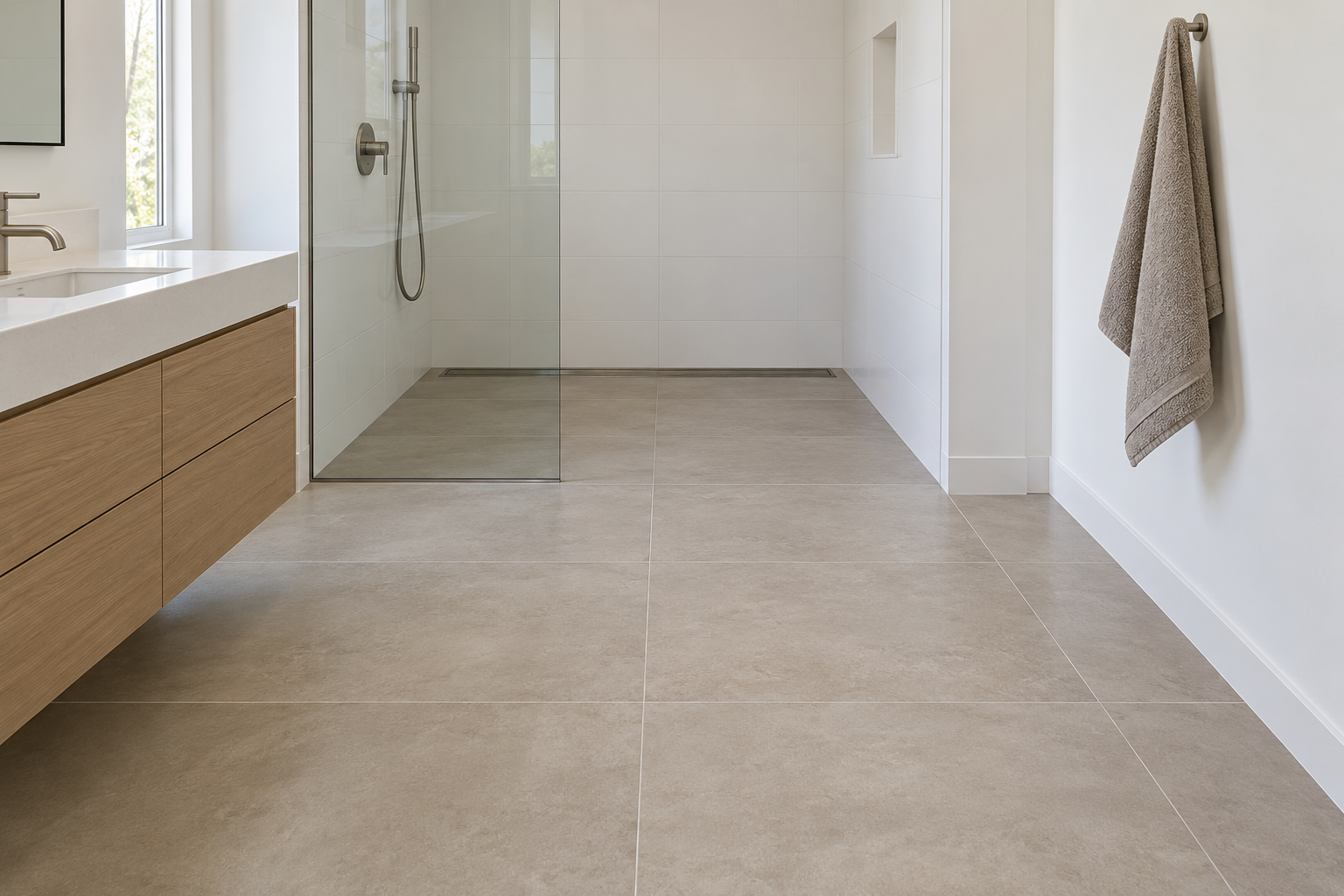
Every change of floor material at a shower entry is a line to clean and a joint where water looks for a way in. Running the same tile from the room straight into a curbless shower removes it. The floor reads as one surface, the room looks larger, and nothing catches a toe on the way in.
Large porcelain tiles suit this, with a linear drain along the back or side wall so the floor only has to slope one way. The slope and waterproofing are the installer’s job, and they matter more here than anywhere else in the room. Whether a curbless shower fits the space at all is its own question, covered in our guide to walk-in showers and tubs.
Take the Shower Tile All the Way to the Ceiling
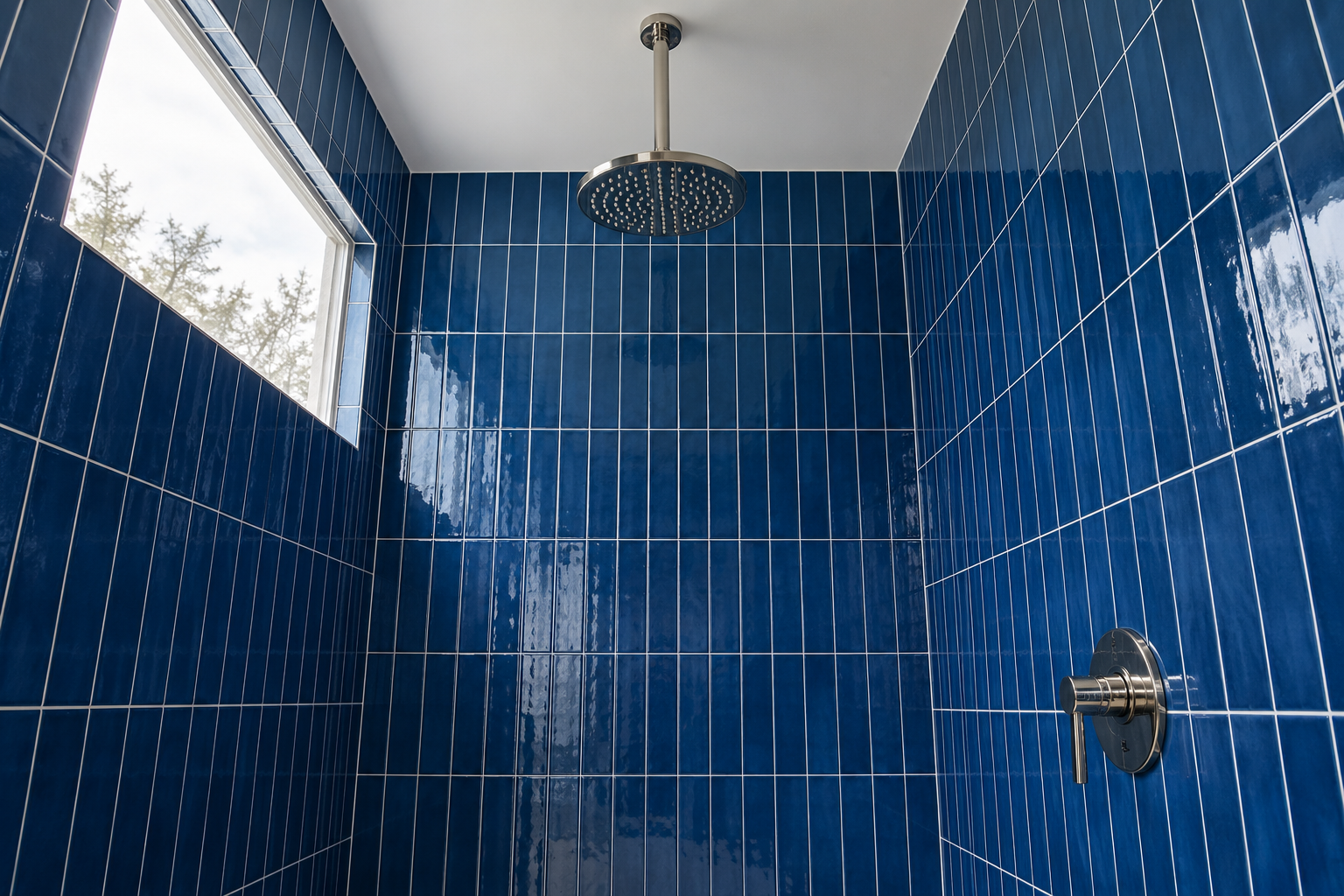
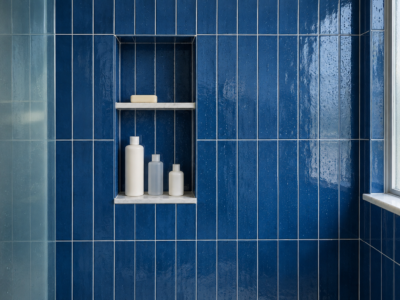
A shower tiled to seven feet with painted wall above it has a weak spot exactly where steam collects, and the paint in that band is usually the first thing in the bathroom to peel. Carrying the tile to the ceiling removes the band. In a small shower it also makes the walls read taller, because nothing interrupts them.
A vertical stack bond, with the tiles lined up in straight columns, pushes that height further. It also takes more tile and more cutting at the top, so budget for it at the start instead of deciding on the day.
Hang the Vanity to Show More Floor
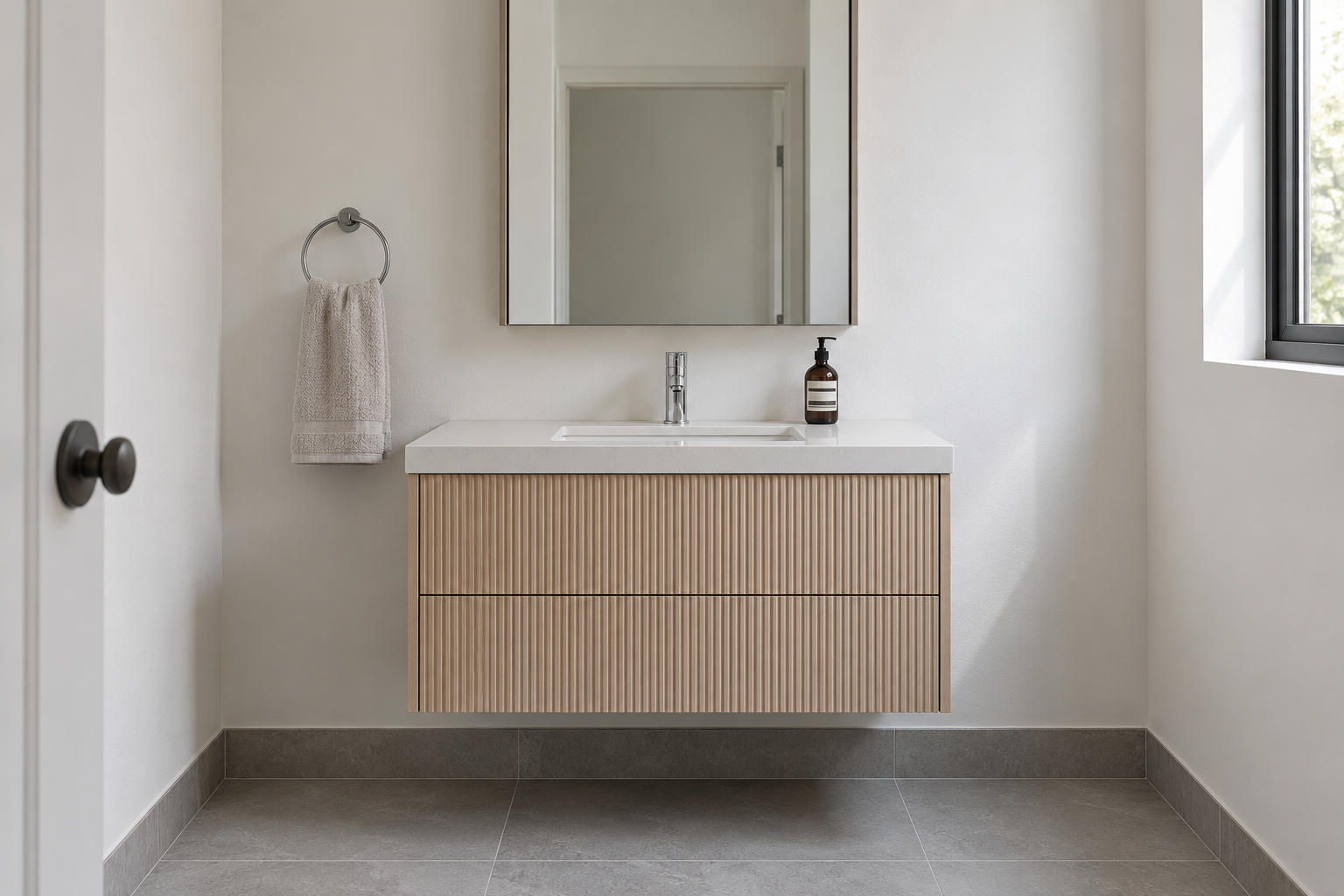
A vanity that sits on the floor creates a strip along its base that never gets properly clean. A vanity hung on the wall leaves the floor running underneath it to the wall, so a small bathroom looks wider and a mop reaches everything. Fluted drawer fronts in pale ash give a plain cabinet some texture without adding anything to dust.
It needs solid support. The cabinet hangs on a rail or brackets fixed into studs or wood blocking, which has to be planned before the wall is finished. About 10 to 12 inches of clear floor underneath is enough for it to read as open.
Put a Stone Slab Behind the Vanity
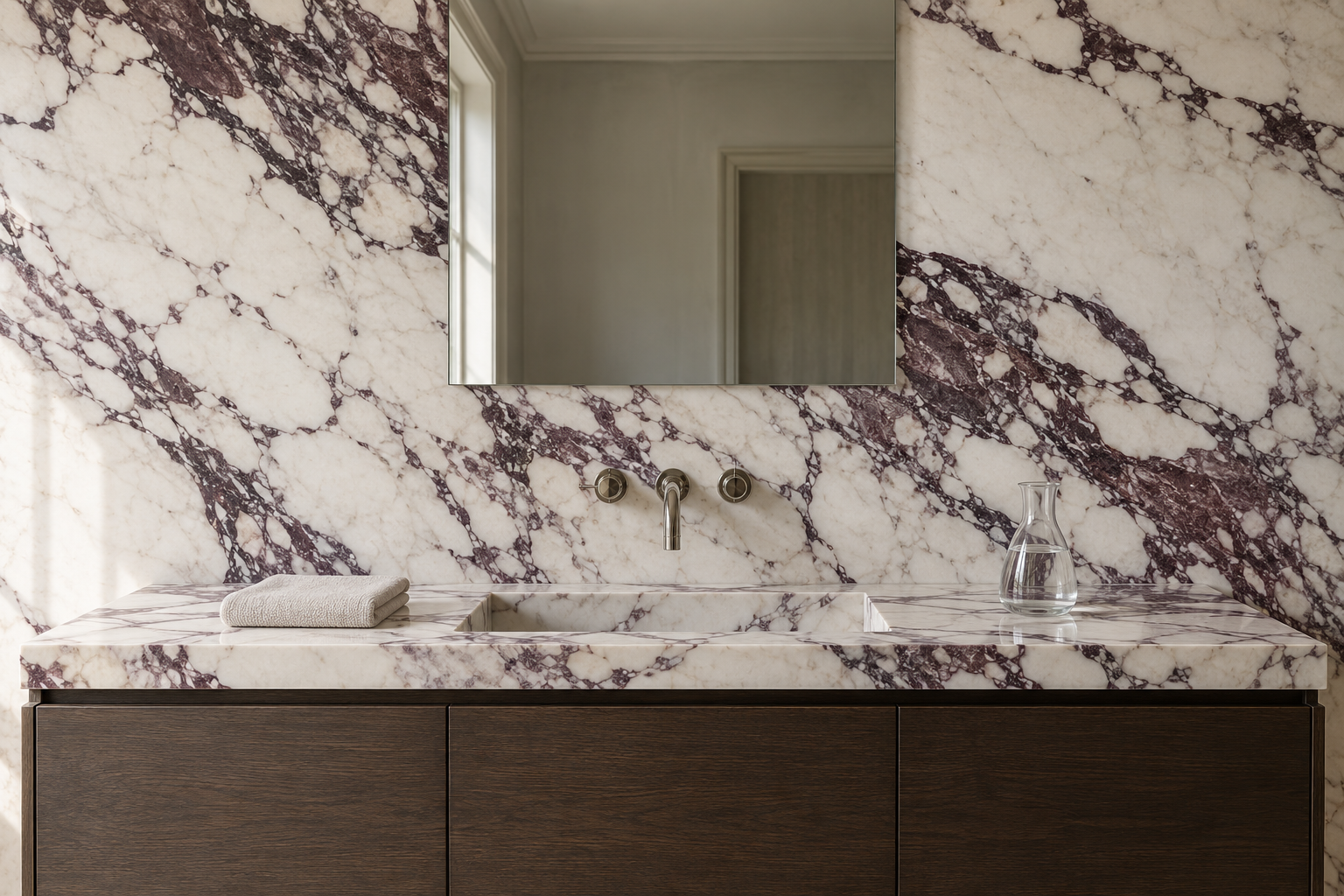
The wall behind a basin gets splashed more than any wall outside the shower. Tile there means grout lines, and grout lines are where soap and toothpaste settle. One slab of stone running from the vanity top up the wall has no joints to scrub. A strongly veined stone like this Calacatta Viola also turns the most functional wall in the room into its focal point.
Marble is soft and porous, so it will etch around the faucet over the years. A honed finish hides that better than a polished one, and sealing slows staining. If a slab is out of budget, the right grout color can make tile read almost as one surface, as our guide to grout color shows.
Light the Mirror From Both Sides
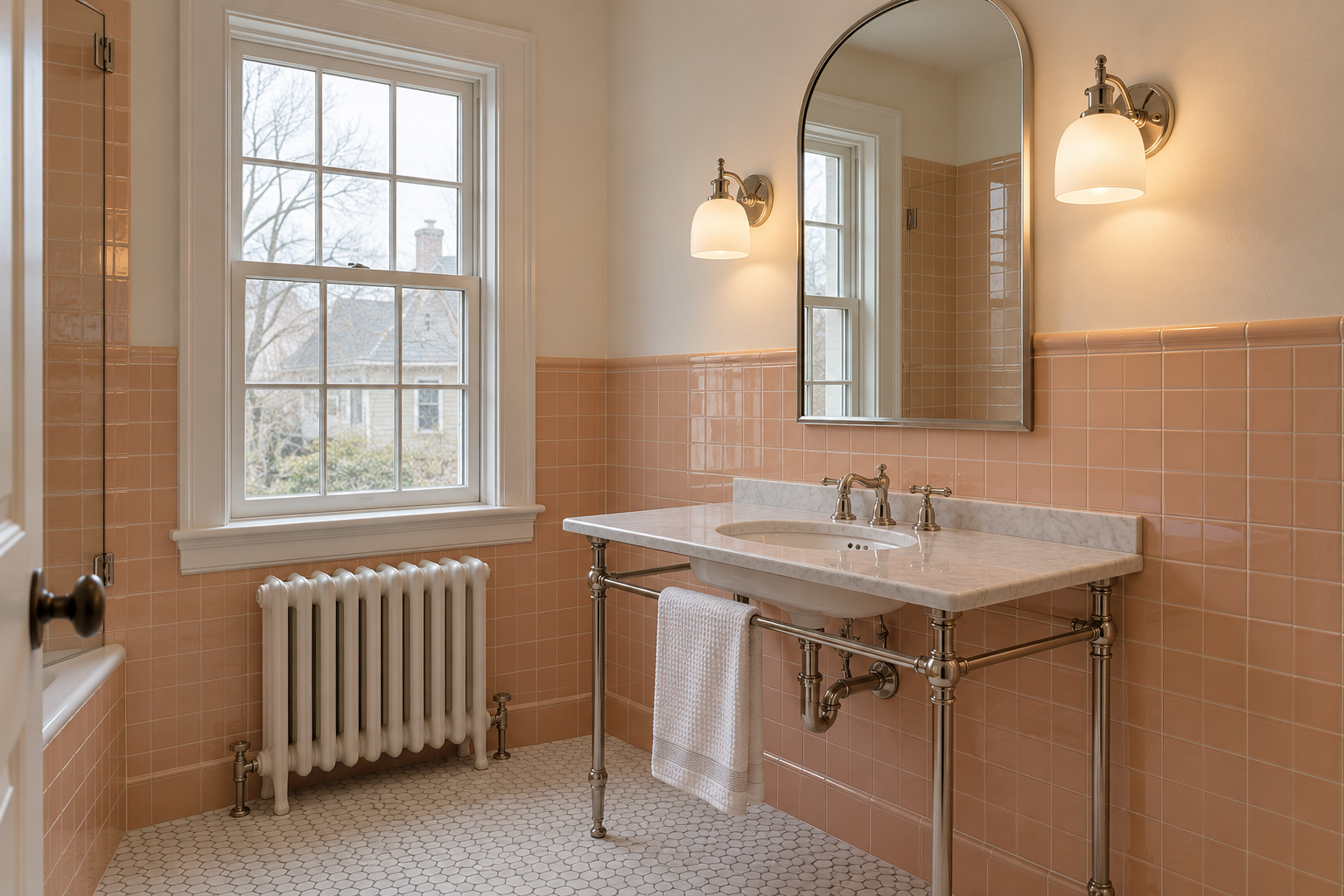
A single light above the mirror lights the top of the head and throws shadows under the eyes and chin. A sconce on each side of the mirror, at roughly face height, lights the face evenly from both directions, which is the light that matters for shaving or makeup. White or frosted glass shades spread it softly.
Sconces need a mirror narrow enough to leave room for them, so plan the two together. Mirror width against the vanity and how high to mount the lights are both worth settling before the electrician runs the wires.
Build a Niche Instead of Buying a Caddy
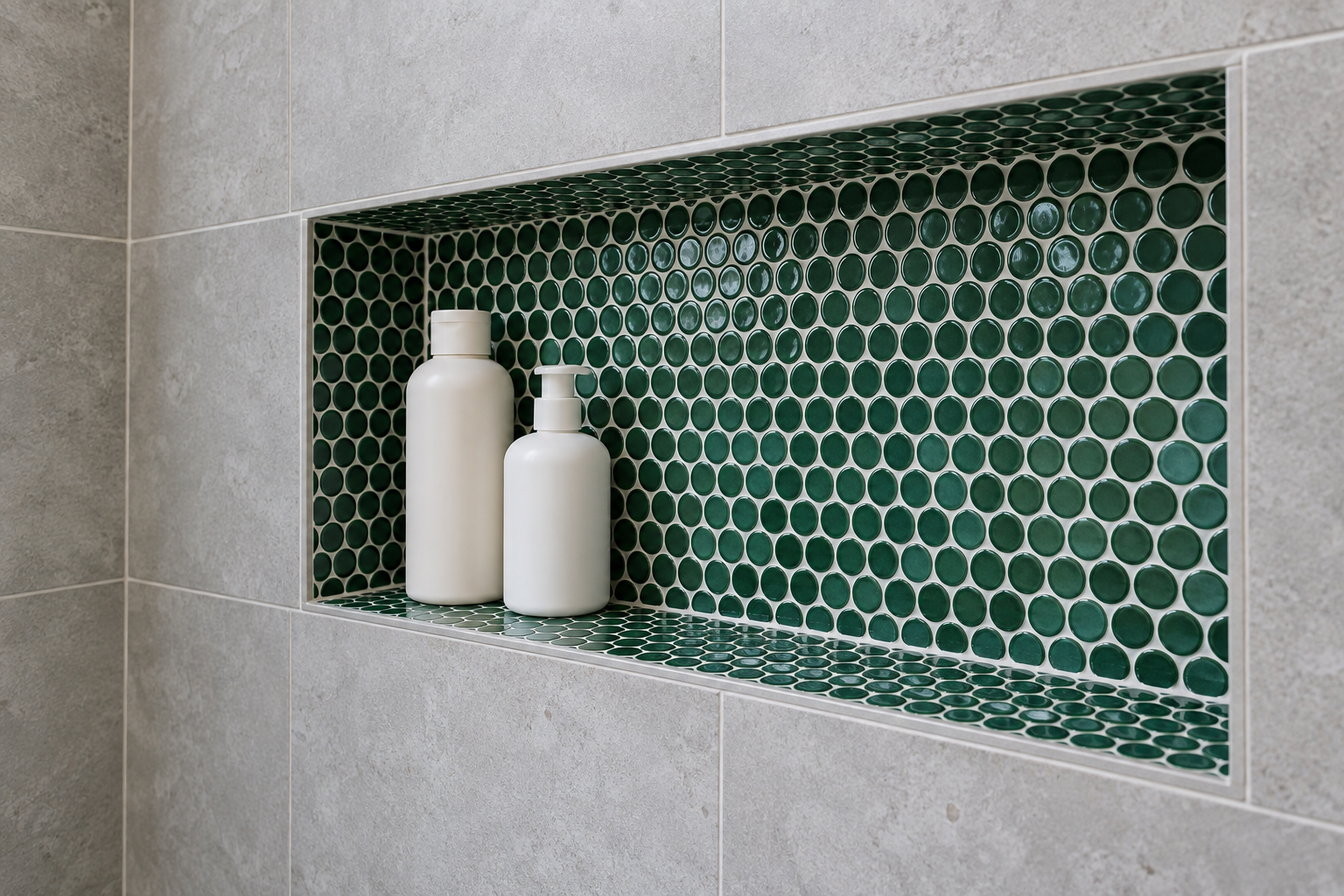
Shower caddies rust, slide down the pipe, and collect grime in their corners. A niche built into the wall holds the same bottles on a tiled shelf that wipes clean. Lining it in a contrasting tile, emerald penny tile here, turns a storage detail into a small design moment.
Put the niche on a wall that doesn’t take the direct spray, so it doesn’t fill with water, and give its bottom shelf a slight slope so it drains. Size it around the tallest bottle you buy, and keep it off an exterior wall, where it would cut into the insulation. For more storage in a tight room, see where small bathroom storage fits.
Swap the Curtain for a Fixed Glass Panel
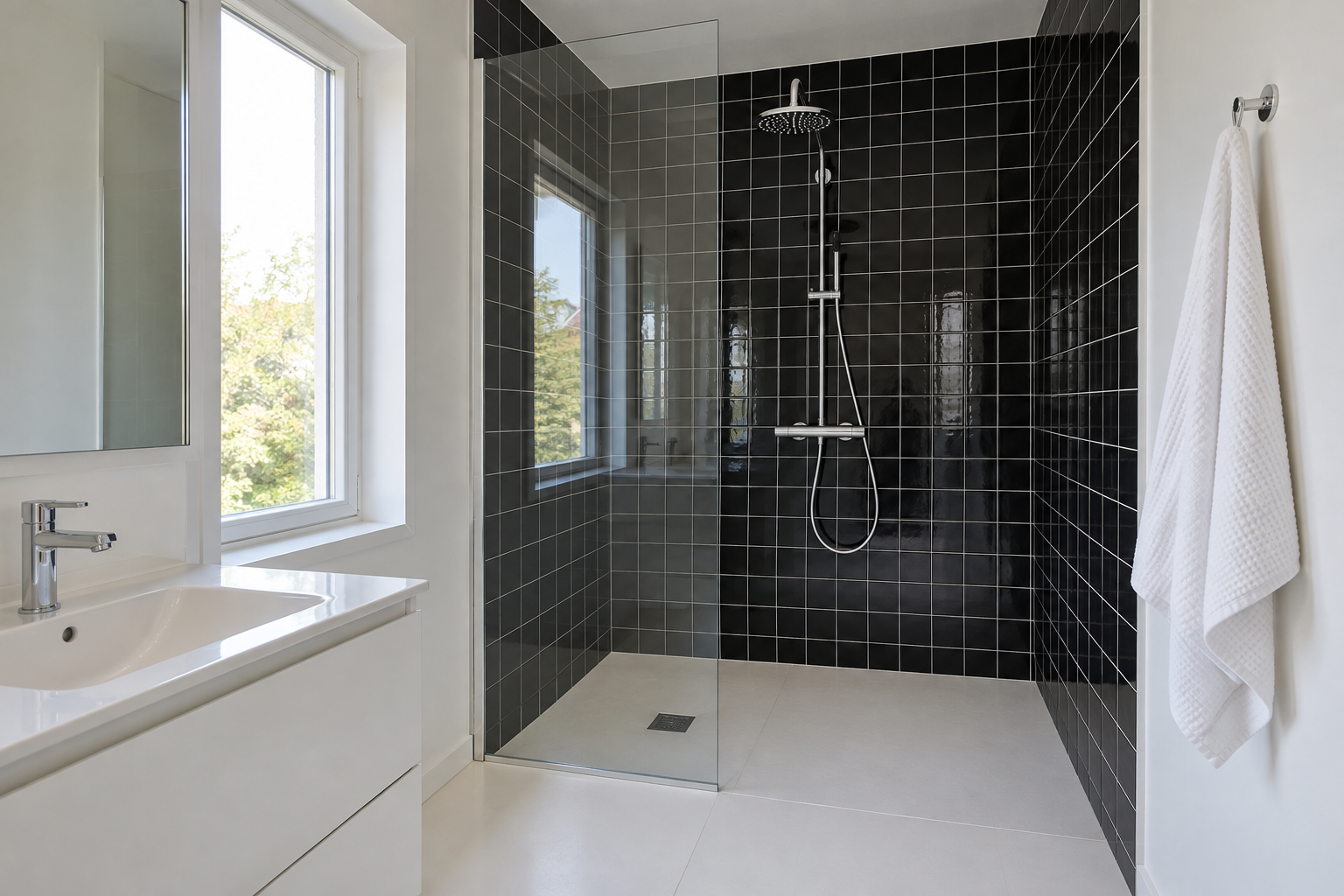
A shower curtain needs washing, mildews at the hem, and closes off half the room. A single fixed glass panel keeps most of the water in and leaves the rest of the room visible. With an open entry beside it and no door, there are no hinges, tracks, or seals to clean.
The trade is a little spray at the opening, so a panel works best in a shower at least 36 inches deep with the fixture at the far end. Clear glass shows water spots, so plan on a squeegee after each shower, or choose glass with a factory coating that helps water run off.
Give a Freestanding Tub Room Around It
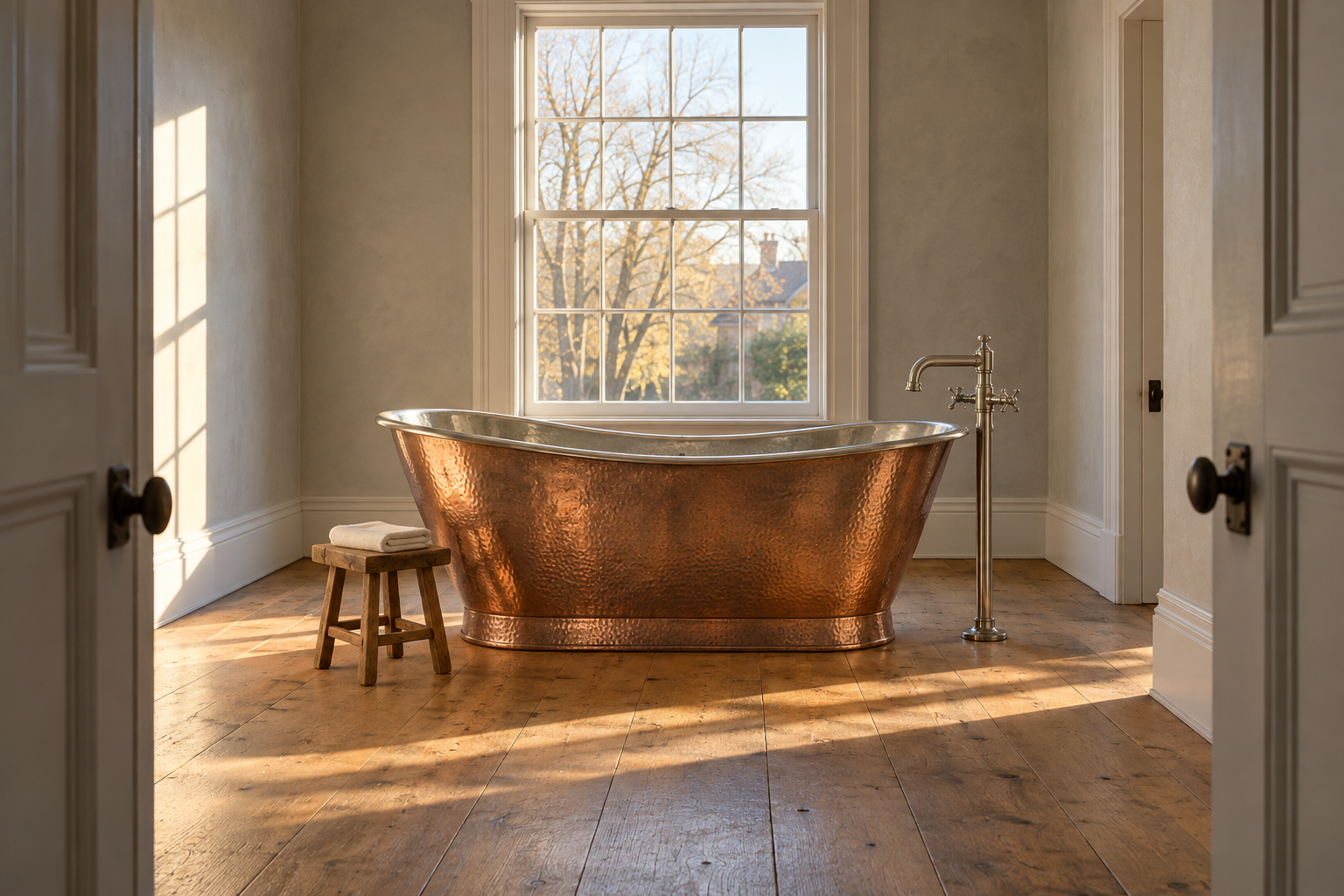
A freestanding tub looks like sculpture only when there’s space around it. Pushed into a corner or squeezed against a vanity, it becomes a tub with narrow gaps behind it that are hard to clean. Leave at least a couple of feet of open floor around it, enough to walk past and reach behind with a cloth.
A filler mounted on the floor keeps the tub fully clear of the wall, but its plumbing has to come up through the floor, which is easiest to plan before the subfloor is closed. Copper, like the tub here, darkens where hands and water touch it, so choose it if you like the patina, not if you want it to stay bright. If the room can’t give a tub that space, a built-in tub is the better choice.
Commit to a Colored Tub or Basin
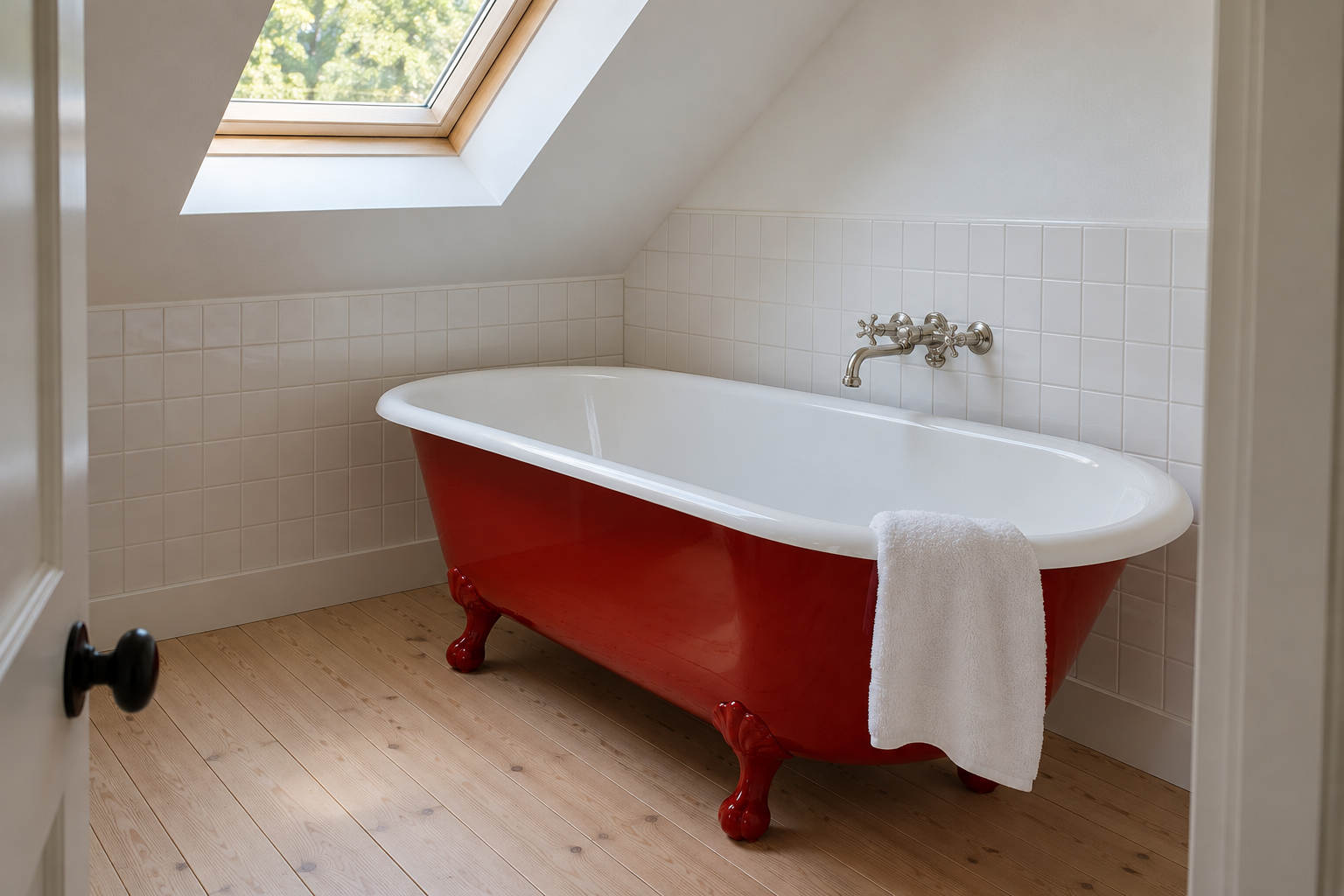
Color in a bathroom usually goes on the walls, where it can be repainted. Color in the fixture itself is a bigger commitment, and it lasts in a way paint doesn’t. A cast iron tub with a painted exterior cleans exactly like a white one and holds its color for years.
Choose it for the long term, and let the rest of the room stay quiet. The tomato red tub here, under a sloped attic ceiling with plain white tile around it, carries the whole room. The same idea works at a smaller scale with a colored basin, which is easier to change later.
Paint the Ceiling a Color Too
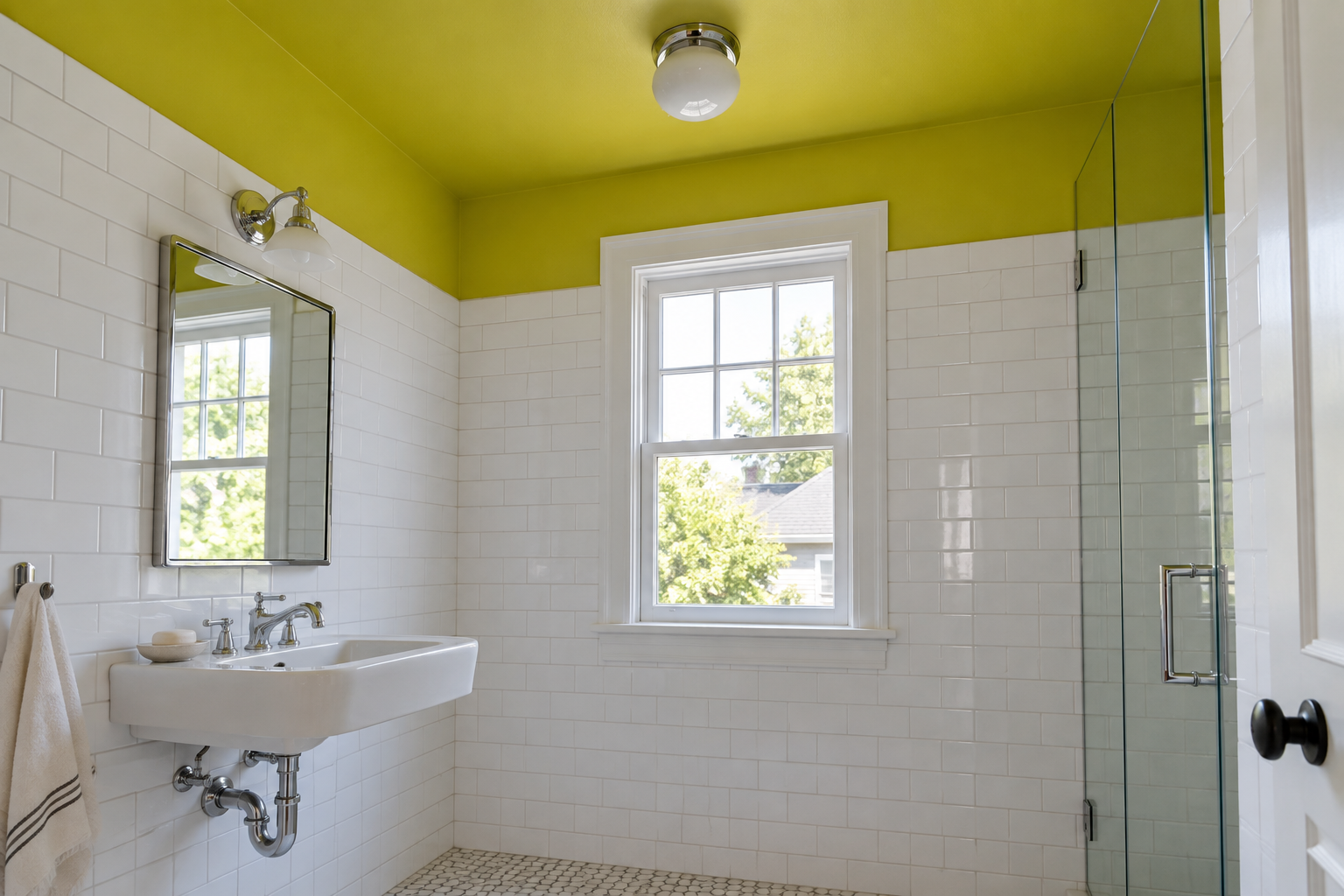
In a bathroom the ceiling takes more steam than any wall, and it’s usually the one surface left white. Painting it a clear color such as citron finishes the room and draws the eye up in a small space. Bringing the same color down to the top of the tile makes the tiled walls look deliberate instead of stopped short.
Use a paint made for bathrooms, with a formula that resists mildew and some sheen, since flat paint over a shower holds moisture and marks easily. Sheen changes what a surface shows, and on a bathroom ceiling it also changes how well the paint copes with steam. A fan that vents outside still does more for the ceiling than any paint.
Add a Heated Towel Rail
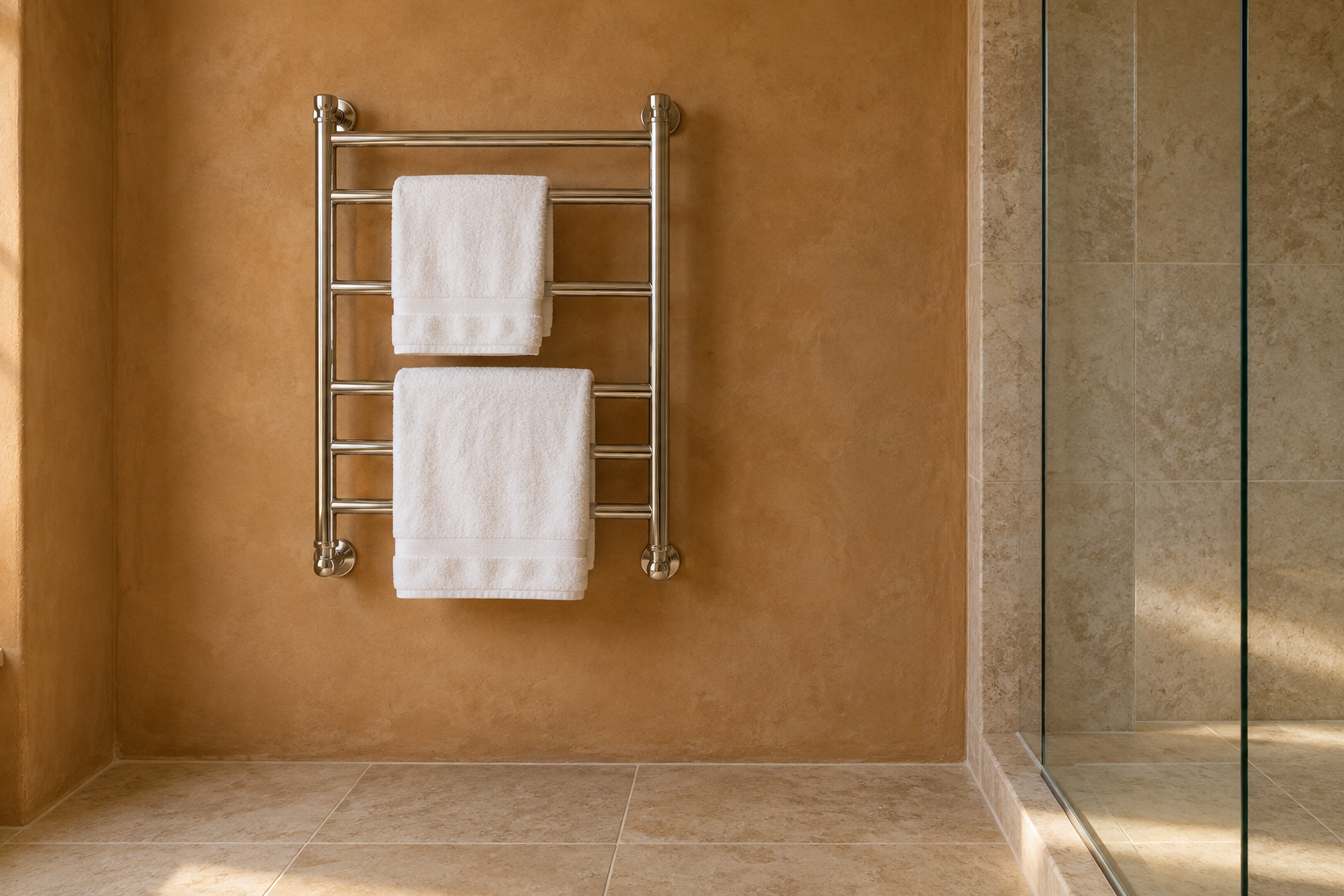
A heated rail dries towels between uses, which cuts the damp smell a bathroom picks up from towels that never fully dry. It also takes the chill off the room in winter, though it’s a towel dryer first and a heater second. A ladder rail with several bars holds more towels than a single bar.
A hardwired rail needs its wiring planned before the wall is closed. It should sit within a step of the shower but out of the spray, the same placement that works for ordinary towel bars and hooks.
Lay a Patterned Tile Floor
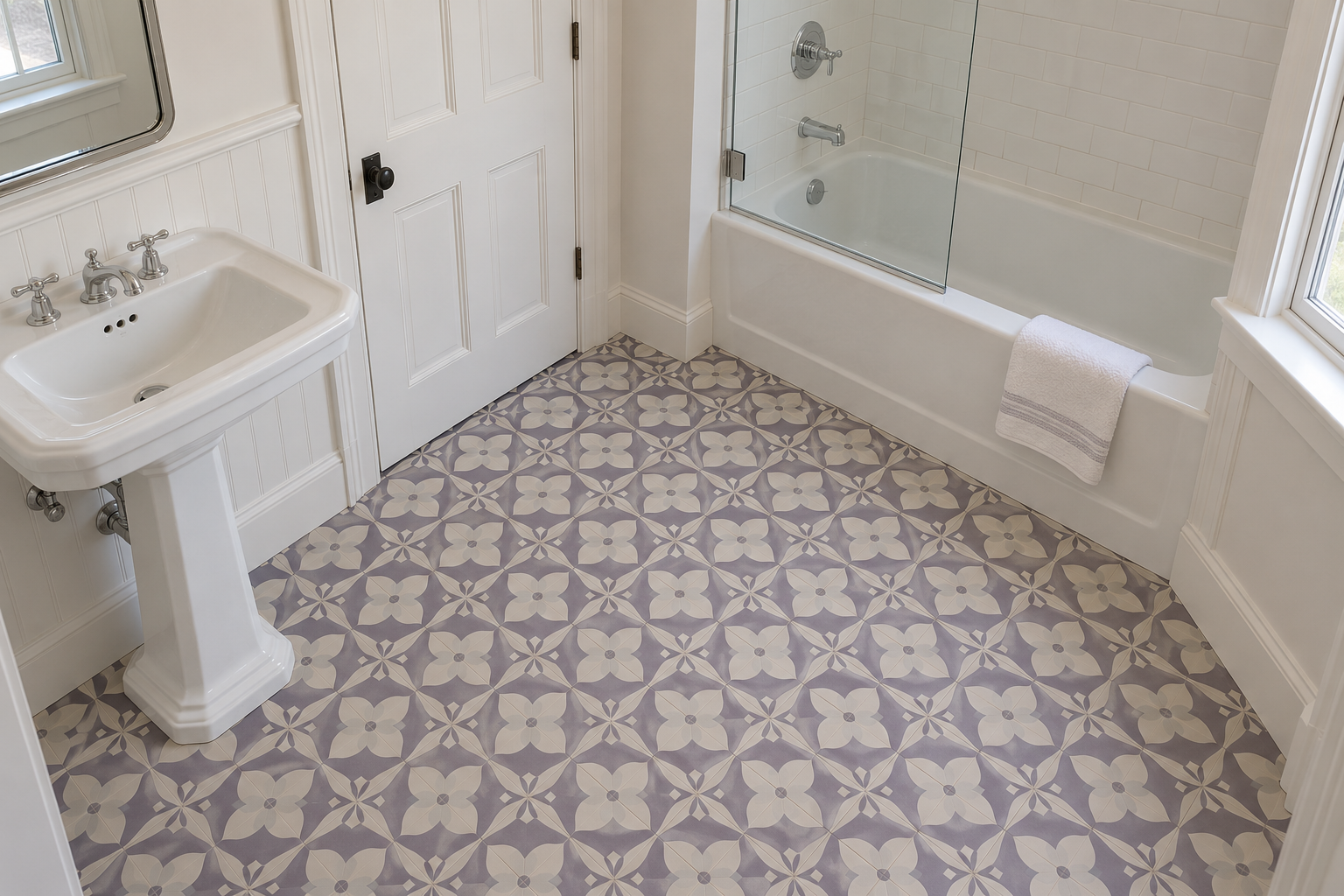
A plain pale floor shows every water spot and hair. A patterned floor hides them and gives a bathroom with simple white fixtures its character from the ground up. Encaustic cement tile, with the color set into the tile instead of printed on it, wears well and softens with age.
Real cement tile is porous, so it needs sealing when it’s laid and again every few years. Porcelain printed to look like cement needs none of that and is the easier choice for a busy family bathroom. Keep the walls calm when the floor carries a pattern this strong.
Repeat One Metal Finish Throughout
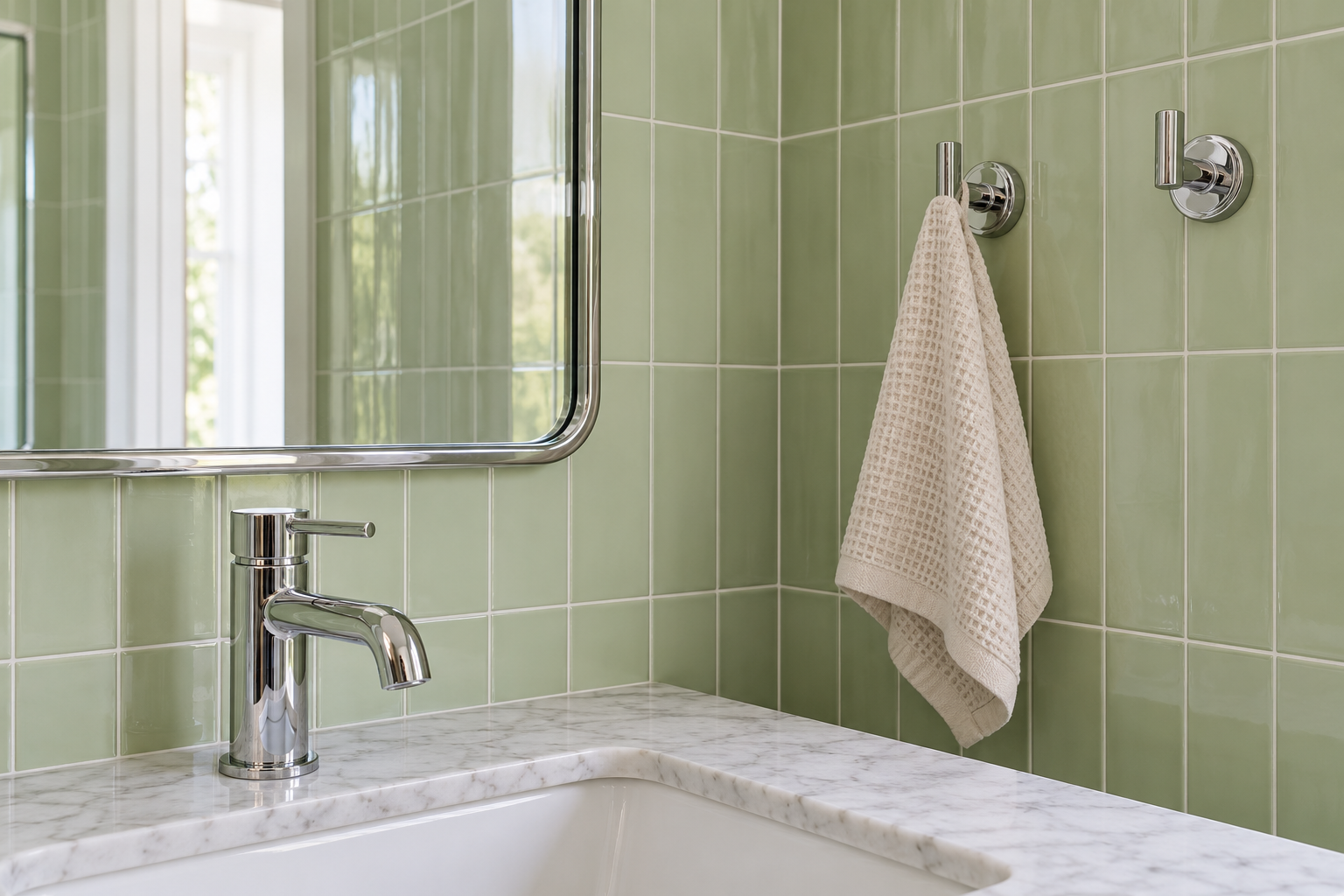
A bathroom has more small pieces of metal than almost any other room: faucets, shower trim, towel bars, hooks, a mirror frame, a drain cover. When the finishes mix by accident, the room looks assembled from different catalogs. Choosing one finish, such as polished chrome, and repeating it keeps a crowded wall calm.
Buying everything from one manufacturer’s line helps the finishes match, since two brands’ versions of the same finish rarely do. Mixing on purpose can work too, as our guide to mixing metal finishes explains, but in a small bathroom one finish is usually the calmer choice.