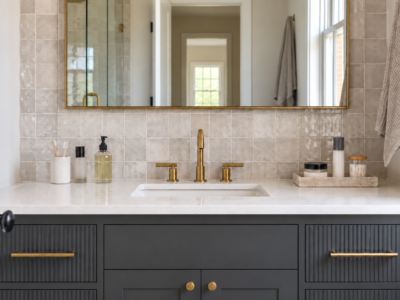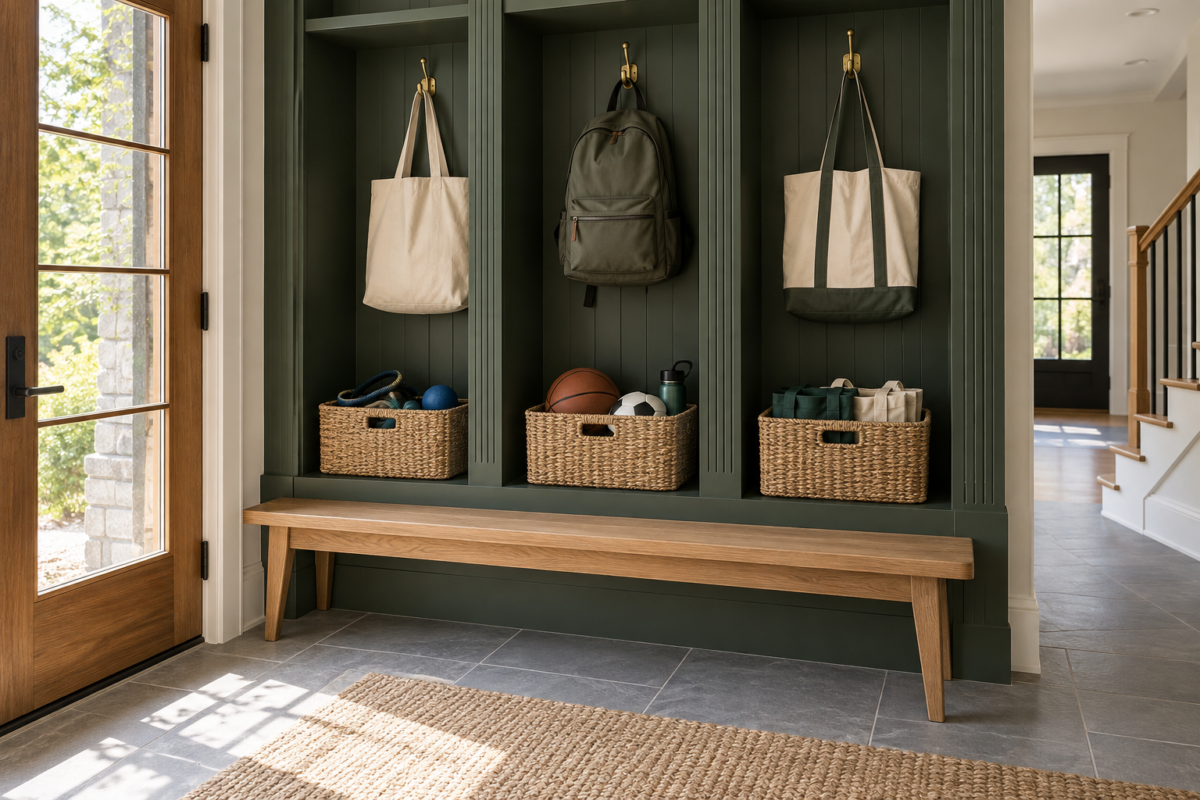
Most organizing advice is a list of tricks for one specific room: fold your shirts this way, sort your pantry that way. Useful, but it skips the part that actually matters, since the same four rules are doing the work underneath every one of those tricks, whether the mess in question is a closet, a pantry shelf, or a kitchen junk drawer.
Those four rules are the whole system: get rid of what isn’t staying before assigning anyone a home, give every category exactly one home instead of several scattered ones, put daily-use items where they’re actually easy to reach, and use containers for the specific things that need containing. Applied consistently, they work in any room in the house.
Declutter Before You Assign Anything a Home
Organizing a room that’s still full of things that shouldn’t be there just means arranging clutter more neatly. A home only makes sense for things worth keeping, which is why sorting always has to happen before a single bin or shelf gets assigned. Working in small, contained zones, one drawer or one shelf at a time, rather than pulling out an entire room at once, is what keeps that sorting pass from turning into a bigger mess than the one it’s meant to fix.
This part of the system already has its own dedicated guide: pick one zone, sort into piles small enough to actually see, and finish that zone completely before opening the next one. Everything after this point in the framework assumes that step already happened.
Give Every Category Exactly One Home
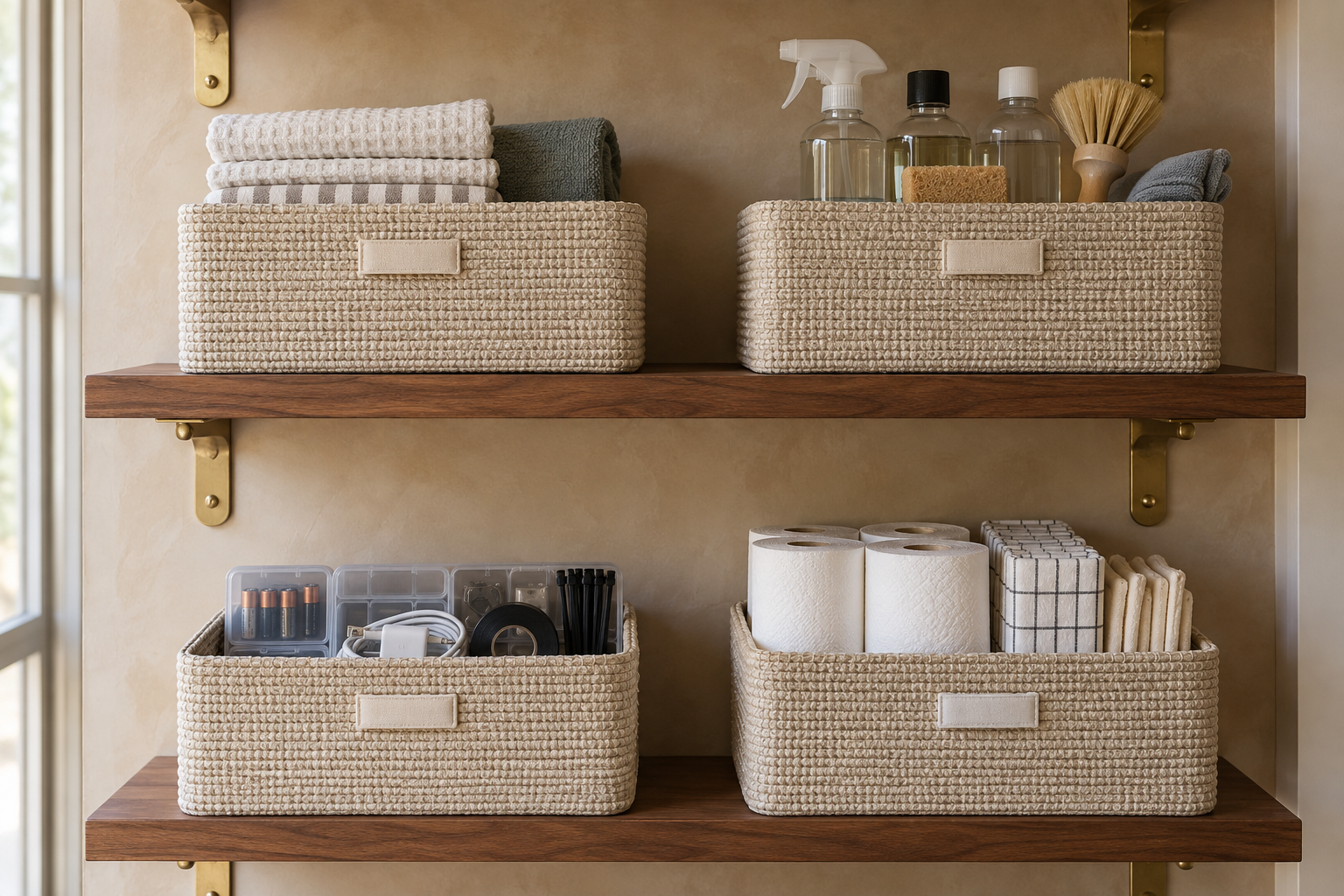
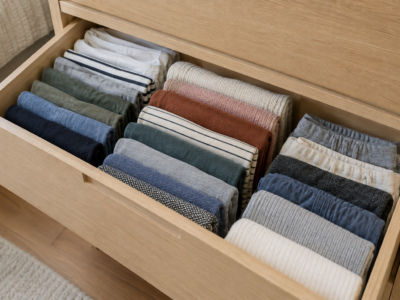
A category that’s split across two or three places, some shirts in the dresser, some in a closet bin, some on a chair, is a category without a real home at all. The fix isn’t more storage, it’s assigning one specific spot per category and keeping everything in that category there, nowhere else. A drawer, a shelf, or a bin with one clear job is easy to put things back into without thinking; one holding a loose mix of categories becomes the place everything gets shoved once the system starts slipping.
This is the exact logic behind giving a dresser drawer one job instead of a loose mix of categories, and it applies just as well to a closet shelf, a bathroom bin, or a kitchen cabinet.
Put Daily-Use Items Where They’re Easiest to Reach
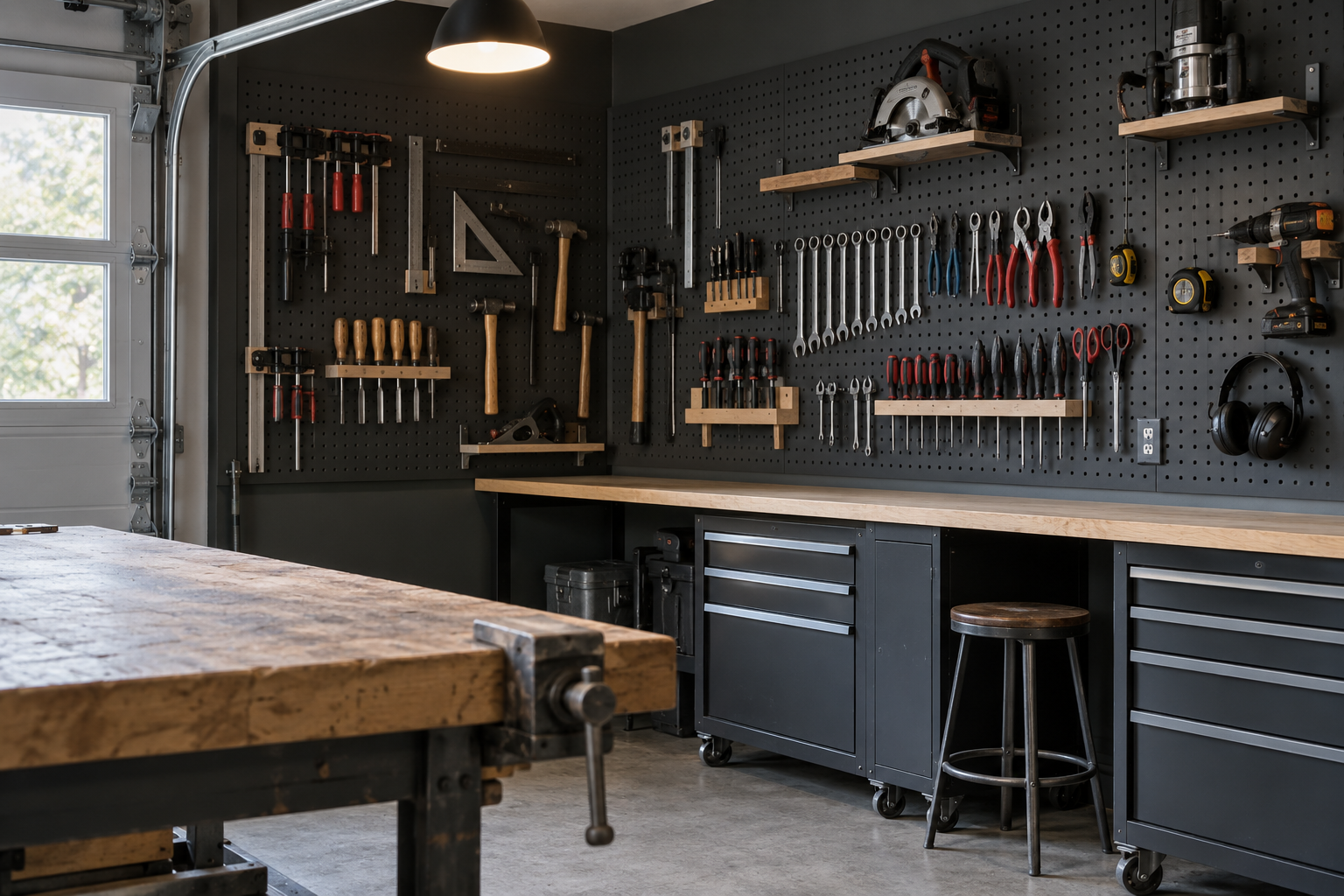
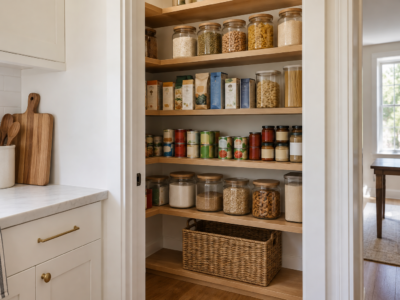
Storage should be assigned by how often something gets used, not by how it happens to fit or how tidy it looks. The most convenient spot in any storage area, the shelf at eye level, the drawer that opens easiest, belongs to whatever gets reached for daily. Backstock, seasonal items, and anything used a few times a year belong on the harder-to-reach top shelf or the back of a cabinet instead, since the inconvenience barely registers for something rarely touched.
A pantry’s eye-level shelf works this way for exactly this reason, reserved for cereal and coffee rather than backstock, and the same frequency-first logic holds in a garage, a linen closet, or a bathroom cabinet.
Find the Storage Hiding in Plain Sight
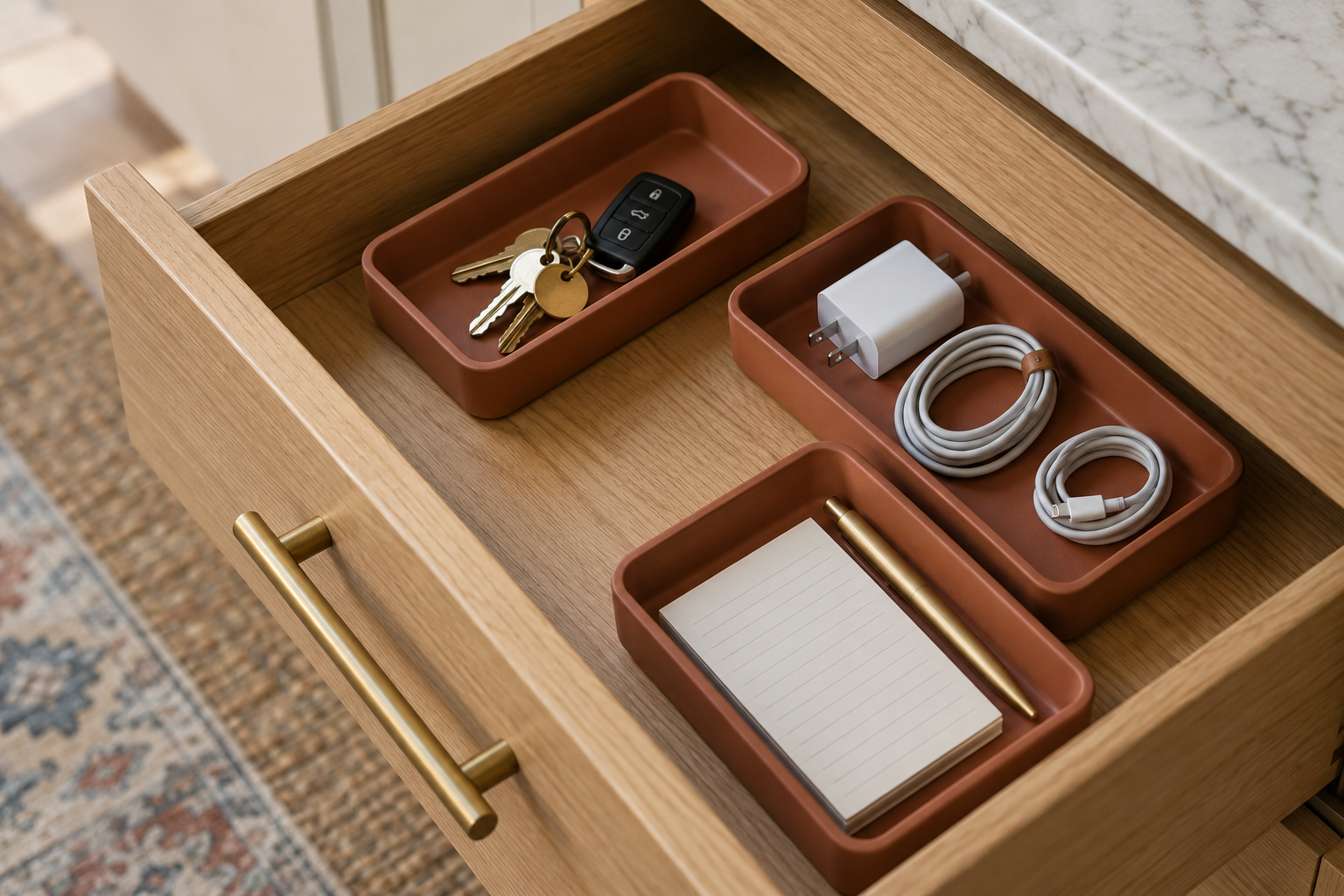
Every home has a handful of surfaces that add real storage capacity with zero tradeoff against existing space, because nothing was using them to begin with. The inside of a door, the wall above a toilet, the back of a cabinet, these spots don’t compete with anything else in the room, which makes them some of the easiest wins in the entire system.
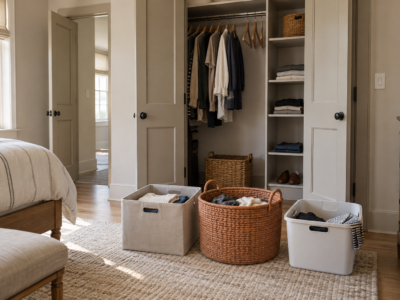
The back of a closet door is one of the clearest examples, and a bathroom’s medicine cabinet door and the wall above the toilet work the same way. Once the first four rules are in place, these underused surfaces are usually where the easiest remaining capacity is still sitting unused.
None of this depends on redoing an entire house in one weekend. Decluttering first, giving every category one home, placing by frequency, and using the underused surfaces already there are four rules that hold up whether they’re applied to a single drawer this weekend or one room at a time over a month. The system is the same either way; only the pace has to fit real life.
Frequently Asked Questions
Do I need to redo the whole house at once for this to work?
No. The system holds up applied to one zone at a time, the same small-zone approach that works for decluttering a single room. Starting with whichever space causes the most daily friction, a chaotic entry drawer, an overstuffed pantry shelf, tends to make the payoff feel immediate, which makes it easier to keep going.
What if two people share a space and organize differently?
The system still works, but the category assignments need to be agreed on by both people, not just one. A home for a category only holds if everyone using that space actually puts things back in it; a system one person built alone and the other never bought into tends to drift back to its old state within a few weeks.