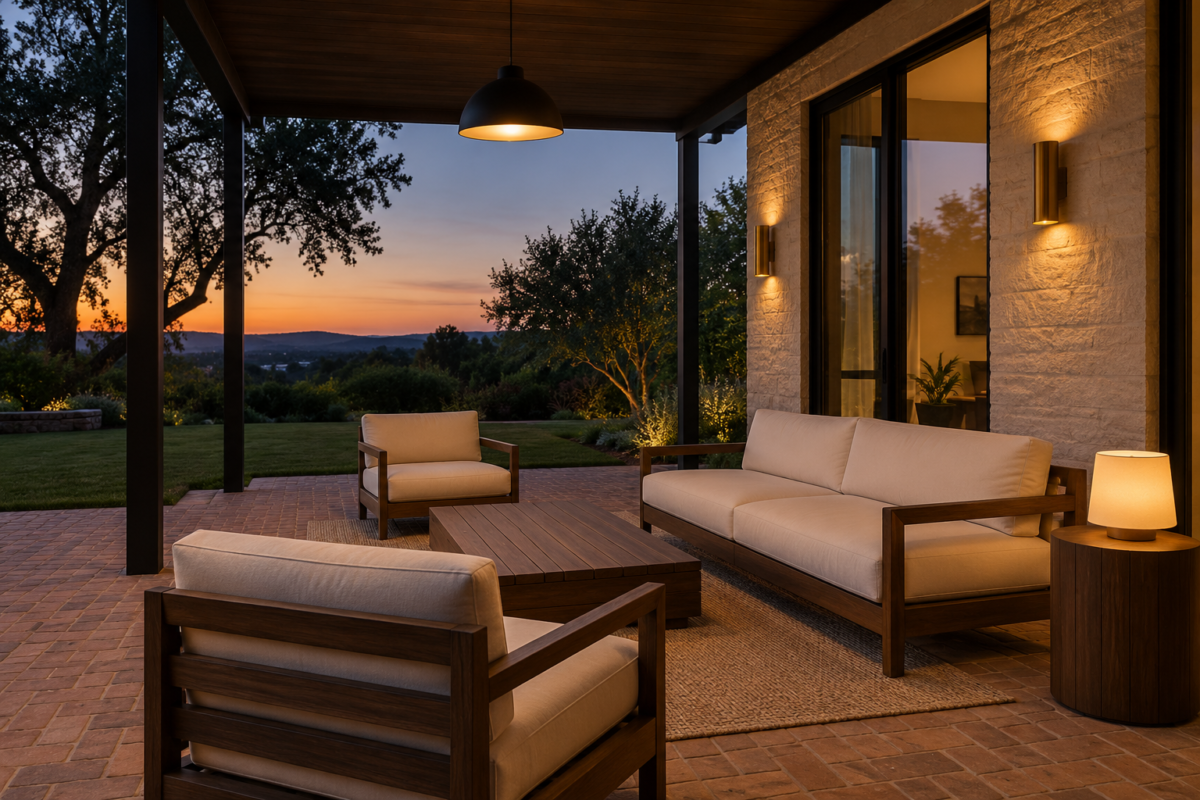
A patio usually gets planned around daylight, where the sun lands at 2pm, where the shade holds at 5. Once the sun goes down, most of that planning stops helping, and the fallback becomes a single porch light and maybe a string of bulbs picked up at the hardware store. The patio is still there. It just stops feeling like a room the moment it gets dark.
The fix is the same one that works indoors: give the space more than one kind of light, each doing its own job, instead of asking a single fixture to do everything. A wall light near a door, a pendant over the spot people actually gather, a lamp that can move with the evening, some quiet light where the ground changes, and, where a patio wants it, one restrained run of string lights rather than the entire plan. None of it requires rewiring the house. It requires deciding what each light is actually for.
Add Wall Lights to Frame the Space Without Losing Floor Room
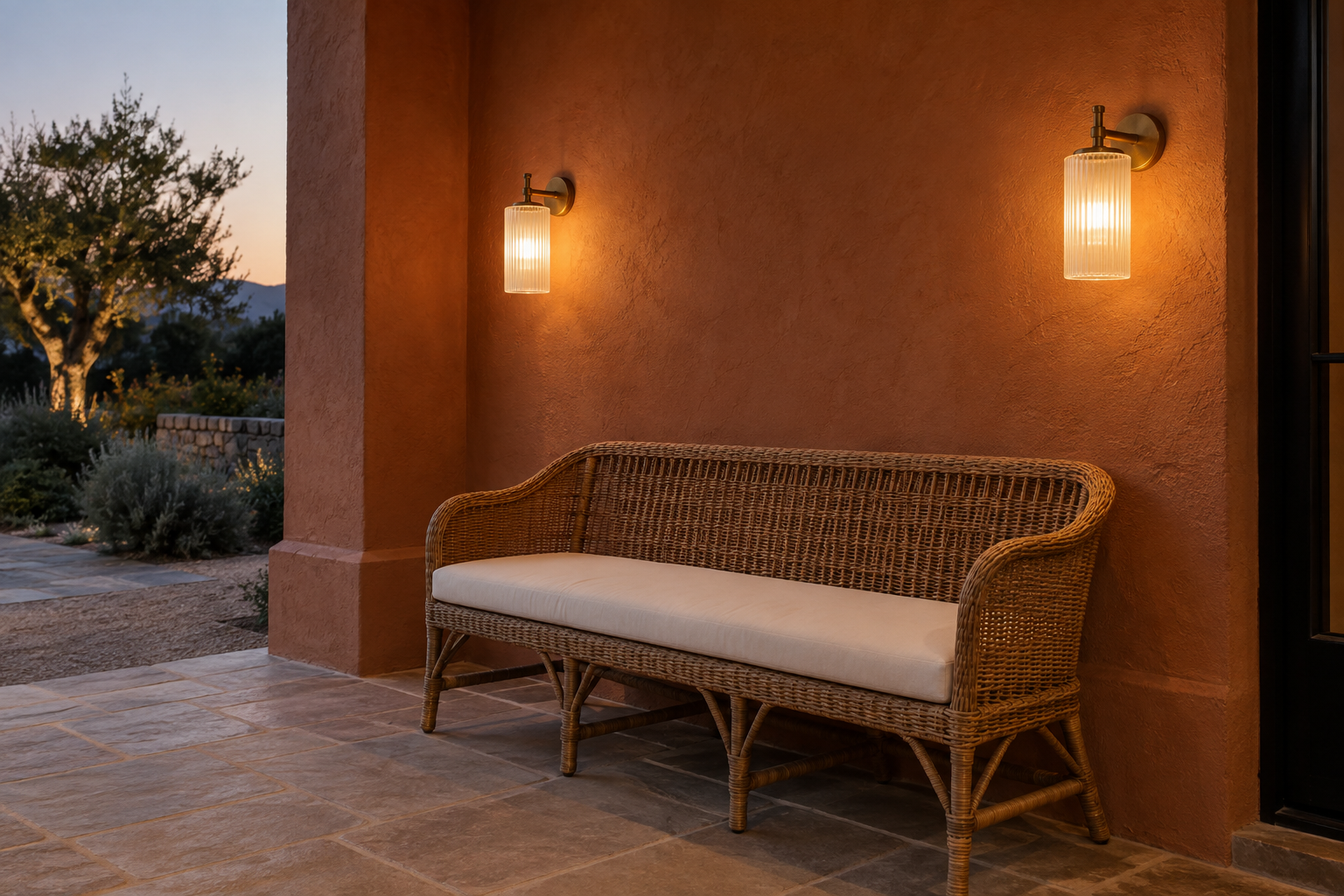
Floor and table space on a patio usually goes to furniture first, which is exactly why wall-mounted fixtures earn their place before anything else. Mounted on either side of a door, or centered above a bench, a pair of sconces adds usable light without taking up a single inch of the surface underneath it. That matters most on a narrow patio or covered porch, where a floor lamp or a lantern on a side table has nowhere obvious to sit without blocking the path people actually walk.
A frosted or ribbed glass shade throws a softer, more diffused pool of light than an exposed bulb, and it reads calmer against brick, stucco, or painted siding once it’s dark. Two fixtures mounted at a consistent height, roughly eye level or just above, frame a seating area or a doorway better than a single brighter one placed off to the side. Anything meant to live outside year-round needs hardware built to handle that exposure, since a fixture designed for indoor use won’t hold up to real rain and temperature swings the way an outdoor-rated one will.
Hang a Pendant Where People Gather
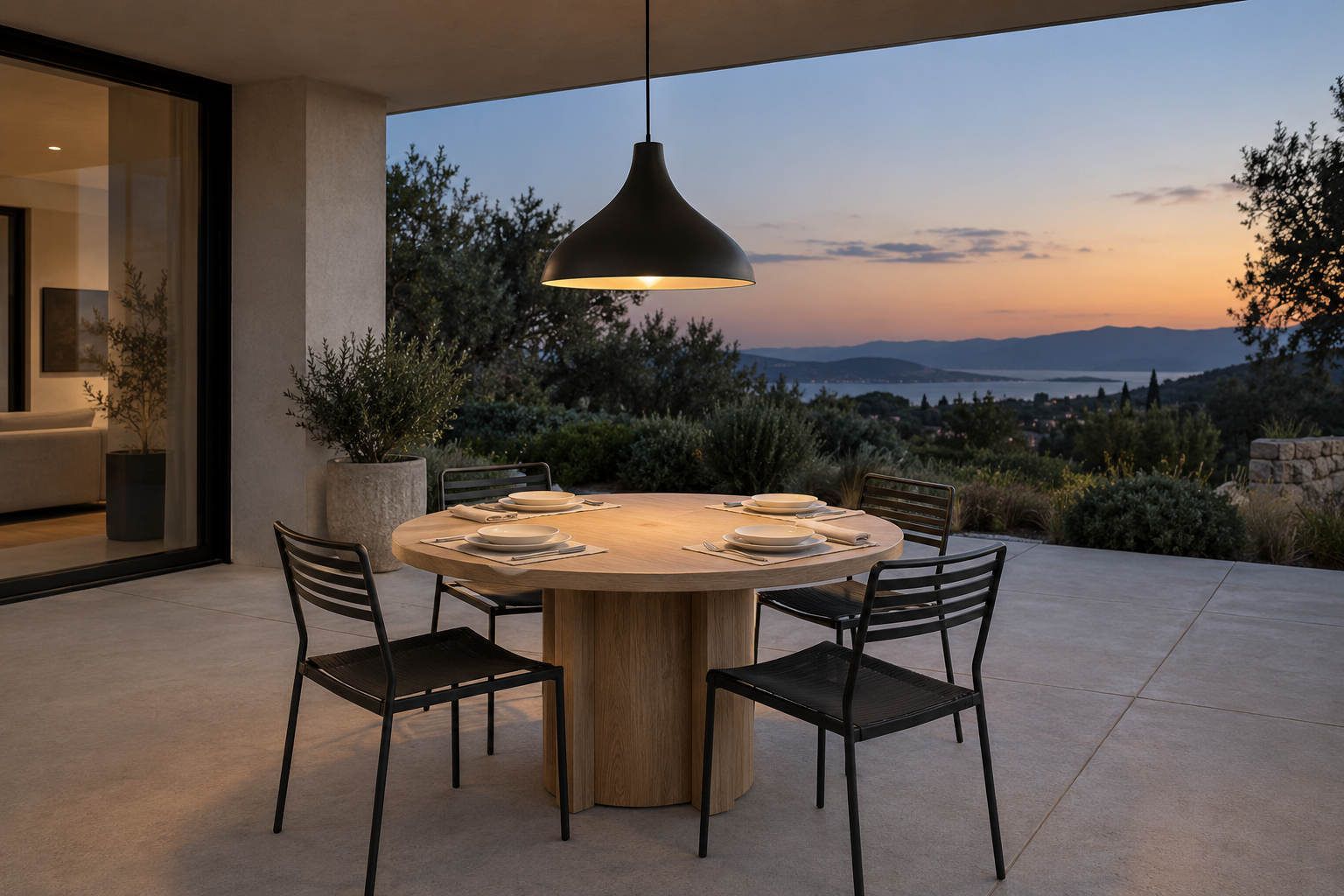
A pendant does outside what it already does inside: it marks one specific spot as the center of the space, rather than lighting the whole patio evenly. Hung over a dining table or a cluster of lounge chairs, it draws people toward that spot the way a lamp on a side table rarely manages on its own.
Placement matters more than the fixture itself. Hung too high, a pendant reads as decorative rather than functional; hung at eye level, it gets in the way every time someone stands up. Somewhere between 30 and 36 inches above the tabletop usually lights the surface without becoming an obstacle. A covered patio or a solid roof overhang makes this layer straightforward, since the fixture and its wiring stay protected. An open patio with no overhead structure at all usually isn’t a good candidate for a hanging pendant.
Keep a Portable Lamp Ready for Nights You Didn’t Plan For
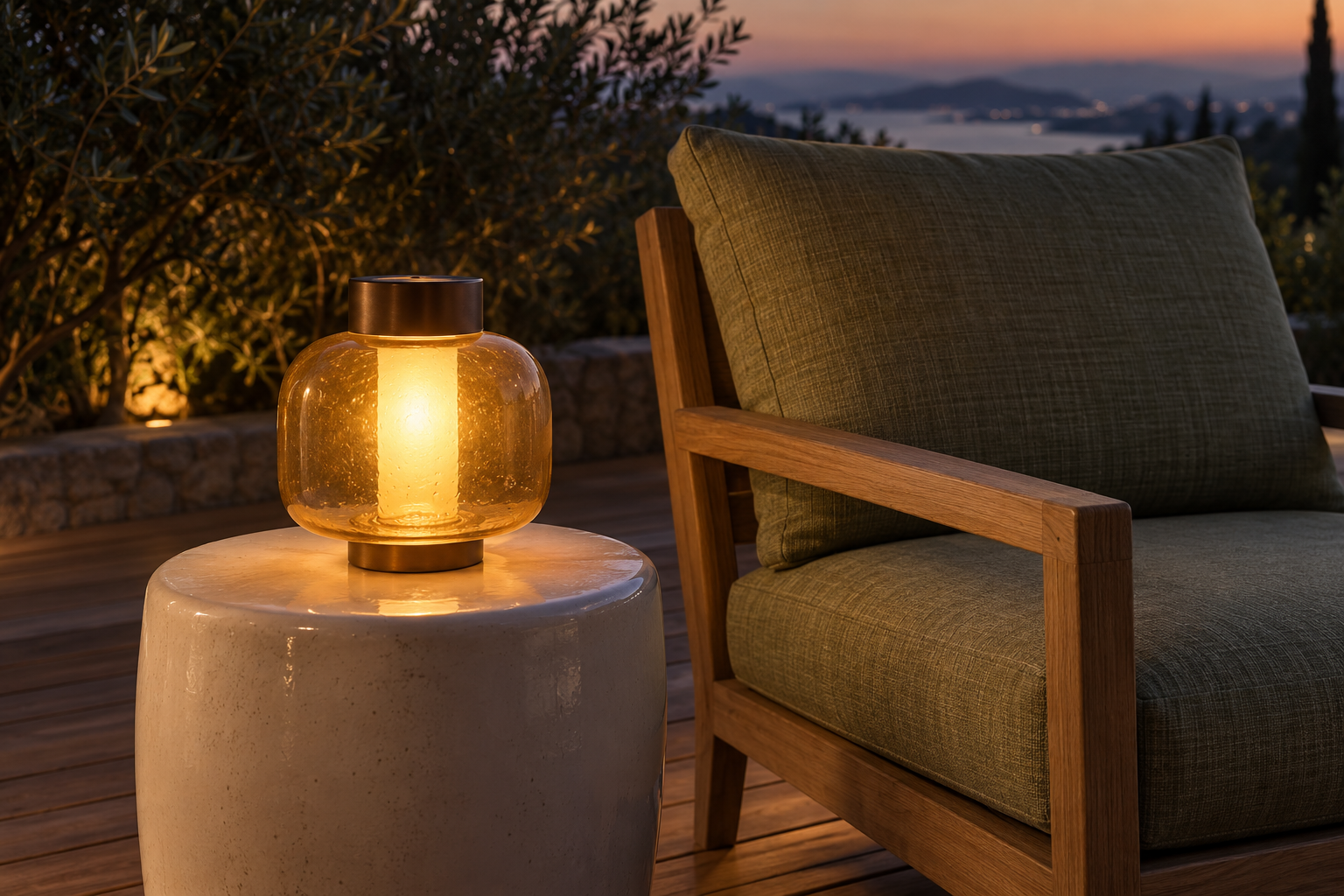
Not every evening on the patio happens exactly where the fixed lighting is. A cordless, rechargeable lamp covers the nights that don’t follow the plan: a chair pulled to a different corner, a conversation that drifts to the low table instead of the dining set. It moves with the evening instead of anchoring people to wherever the wiring happens to be.
A rechargeable lamp with a warm, diffused glow reads as considered furniture rather than a flashlight standing in for actual lighting, which a stark white LED lantern rarely manages. Most run for several hours on a full charge, long enough for a normal night outside, and bringing it in afterward avoids leaving something battery-powered exposed to weather it wasn’t necessarily built to sit in indefinitely.
Let Path and Step Lights Do Quiet Work at Ground Level
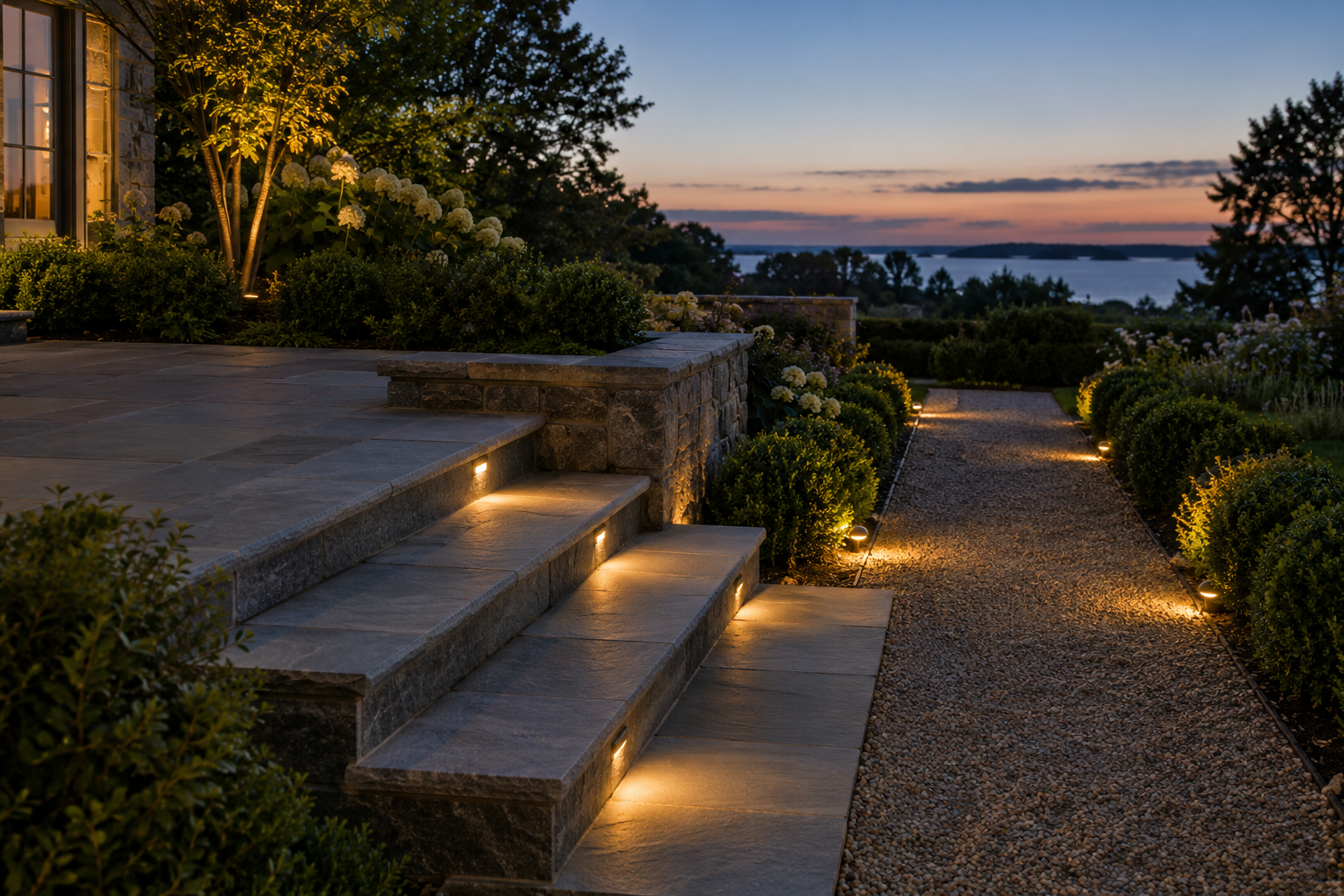
The ground doesn’t need much light after dark, but the places where it changes elevation or direction do. A run of low, warm landscape lights along a path edge, plus small fixtures set into the step risers themselves, handles safety work that a single porch light aimed at the seating area usually misses.
The goal is a soft glow at ankle height, not a runway. Fixtures spaced every few feet along a path edge are usually enough; crowding them closer creates glare without making the path any easier to see. On steps, a small light recessed into or mounted under the riser lights the tread directly below it, which does more for safe footing after dark than a bright fixture aimed down from somewhere above.
Keep String Lights as One Layer, Not the Whole Plan
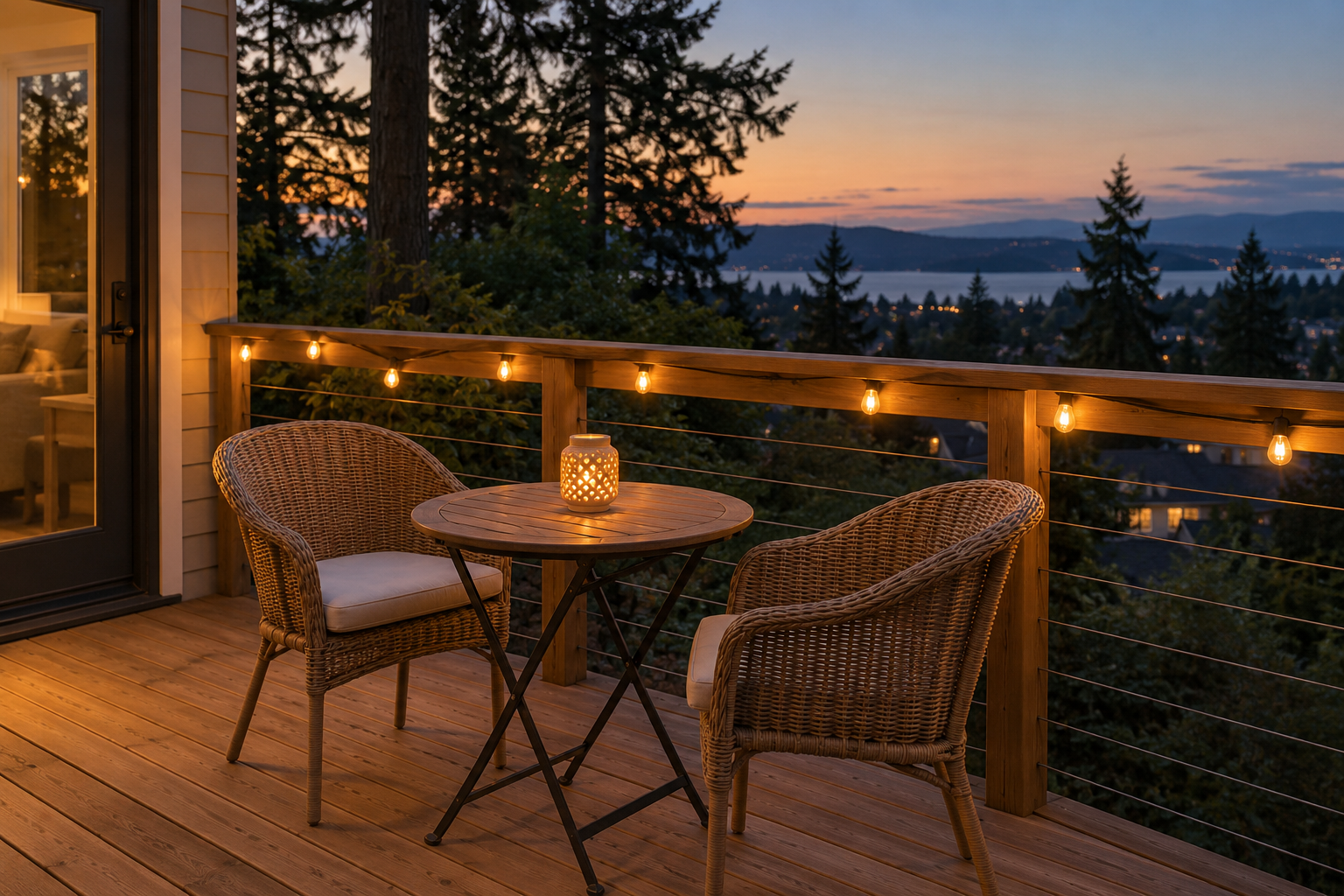
String lights are the layer most patios reach for first, and the one that quietly ends up doing all the work if nothing else gets added. Strung along a single railing or one pergola edge, they add a warm glow, but a patio lit only by one string of bulbs still feels unfinished the moment someone needs to read a menu, find a dropped fork, or check a phone.
Used as one layer among several, kept to a single run rather than crossed overhead in multiple directions, string lights do a specific job well: a soft ambient wash that still has personality. The mistake isn’t using them. It’s stopping there.
Match the Bulb Temperature Across Every Fixture
The same logic that keeps an indoor room from looking mismatched after dark works outside too. Pick one warm bulb temperature, roughly 2700K to 3000K, and use it across every fixture, the same range that keeps a living room’s layered lighting from reading as accidental, and skip the cooler daylight-toned bulbs some solar fixtures ship with by default. A patio lit by a warm pendant next to a bluish-white landscape light looks like two separate projects finished at different times, not one considered plan.
Buying bulbs and fixtures in one pass, rather than adding them individually over a few seasons, makes this easier to get right. Warm and cool LEDs increasingly look identical on the shelf, and the difference only shows up once they’re switched on.
None of these five layers require rewiring the house or replacing furniture that already works. A wall light or two, one pendant hung with intention, a portable lamp for nights that don’t go as planned, quiet light where the ground changes, and string lights kept to one restrained run all work independently of each other, which means a patio can pick them up one season at a time instead of all at once. Paired with the material and furniture choices covered in patio decorating ideas generally, a patio lit this way keeps working long after the sun goes down instead of quietly closing for the night at dusk.
Frequently Asked Questions
What color temperature works best for outdoor lighting at night?
Something in the 2700K to 3000K range, the warm end of the scale, reads as inviting the way most indoor lamps do. Cooler bulbs in the 4000K-plus range, common on budget solar landscape lights, throw a bluish-white light that feels more like a parking lot than a patio. Checking the Kelvin number on the packaging before buying, rather than assuming a bulb that looks warm on the shelf will read the same way once it’s installed, avoids a mismatched fixture showing up months after the rest of the layers are in place.
Do these lighting layers need an electrician, or can they go in without rewiring?
Plug-in and battery-powered options cover most of this without any electrical work. Portable lamps, plug-in string lights, and solar or battery landscape and step lights all install without touching a home’s wiring. A hardwired pendant, a wall sconce tied into an existing porch circuit, or a low-voltage landscape lighting kit (a transformer that steps standard household current down to a safer voltage for outdoor runs) is worth hiring an electrician for, since a wiring mistake outdoors is a real safety issue, not a place to save money by doing it alone.
What are good renter-friendly options that don’t require any permanent changes?
Solar stake lights along a path, battery-powered step lights that stick on with outdoor-rated adhesive pads, plug-in string lights run along an existing railing, and a cordless rechargeable lamp cover four of the five layers without a single hole drilled or a security deposit at risk. The harder layer to fake is wall sconces, since those genuinely depend on a fixed mounting point; a clip-on or plug-in sconce alternative exists, but it reads more like a lamp than a true wall fixture, and it’s fine to skip that one layer entirely in a rental rather than force a compromise version of it.