A coffee table is the one surface in a living room that everyone uses. Cups go down on it, feet go up on it, the remote lives on it, and a laptop or a board game spreads across it on a weekend afternoon. Styling it starts there. The arrangement has to leave space for all of that, and anything in it has to cope with being moved aside.
What goes on the rest of the top comes down to scale, height, and material. A few things grouped together, low enough to see over and different enough from the tabletop to stand out, stay put while the table is used. Small objects spread across the whole surface get knocked and shifted every time someone puts down a cup.
Leave Half the Top Clear
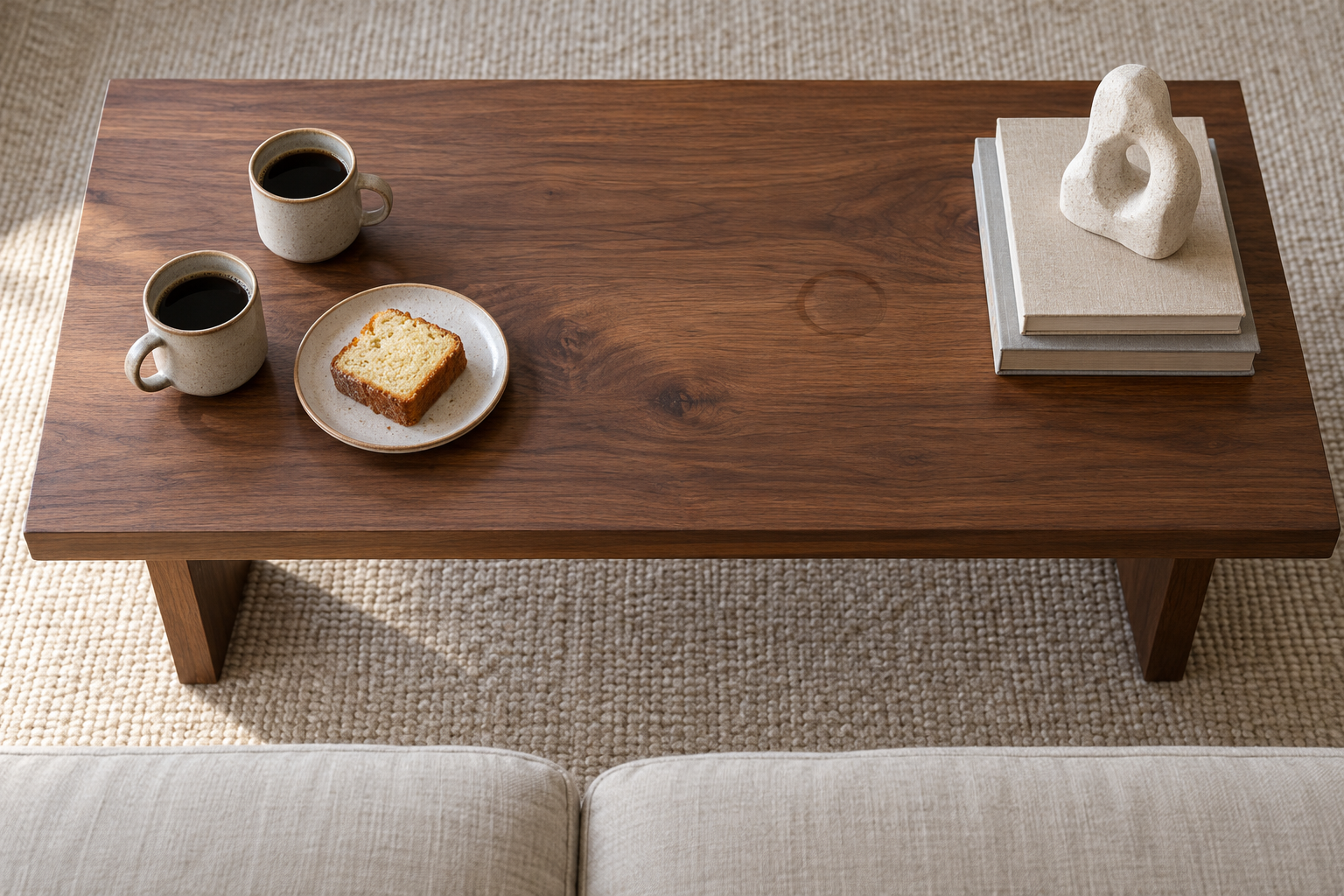
Group the decorative things at one end or in one corner and leave the rest of the table bare. On a rectangular table about 48 inches long, that usually means a group covering one end, roughly a third of the top, with the middle and the near end free. On a table that gets used for dinner in front of the TV, or one surrounded by small children, the clear part can be most of the top.
How much stays clear is a choice about how the room is used, and there is a simple test. Put down two mugs and a plate. If nothing has to be moved to make room for them, the arrangement fits the table.
A Tray for the Small Things
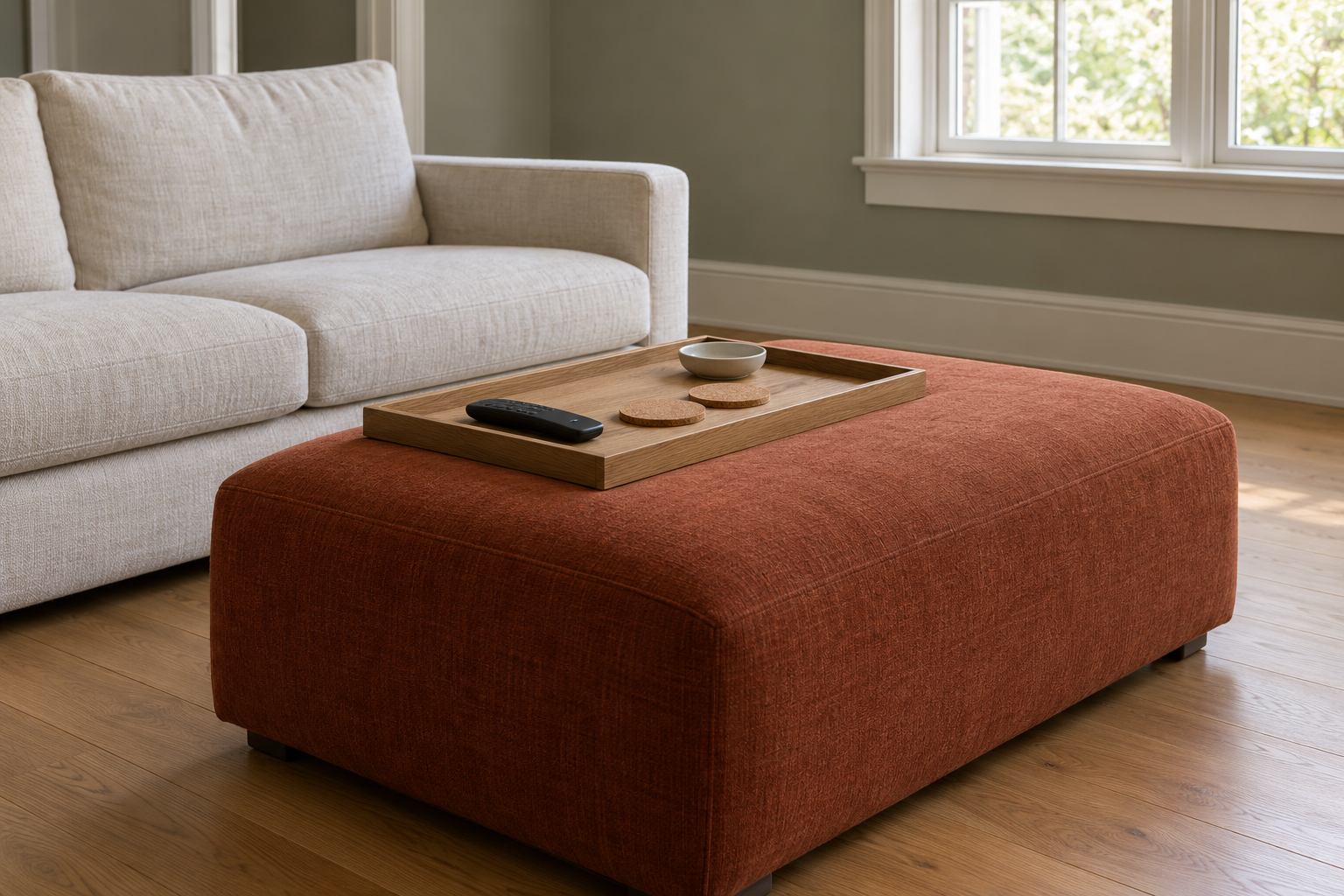
Coasters, the remote, a candle, and a small dish look scattered when each sits on its own, and they get pushed around every time the table is used. A tray collects them into one shape, and the whole group lifts off in one move when the table is needed for something larger.
Choose one big enough to hold the group with a little space around it, with a low rim so nothing slides off when it is carried. On an upholstered ottoman a tray matters more, since it gives cups and candles the flat, firm surface the cushion lacks.
Books Laid Flat as a Base
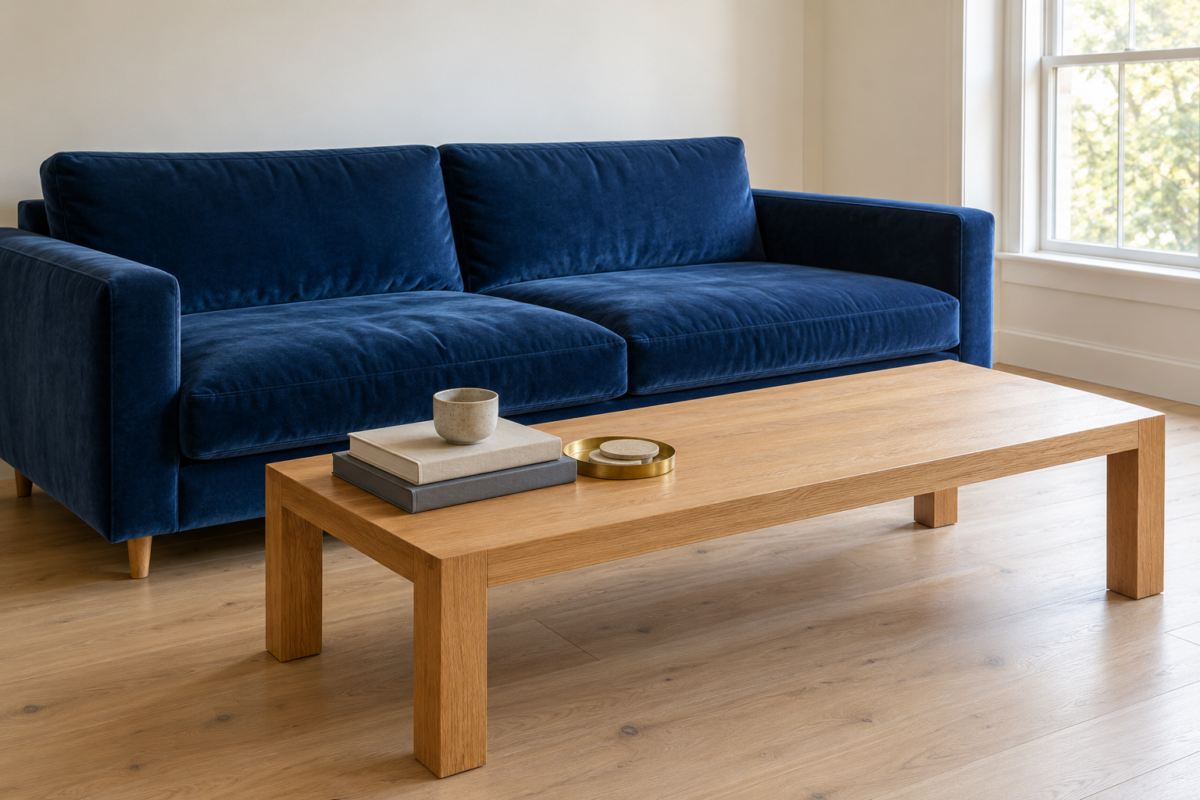
Two or three large books laid flat, the biggest at the bottom, give a small object a raised base and add a block of color to the table. Art, design, and photography books are the usual choice because their covers are made to be seen, but books you would pick up and open belong there as much as any bought for their covers.
Turn the spines toward the sofa, where they can be read, and put one small thing on top, a ceramic cup, a box, or a stone. Stacked higher than three or four, books start to look like storage.
Keep It Below Eye Level
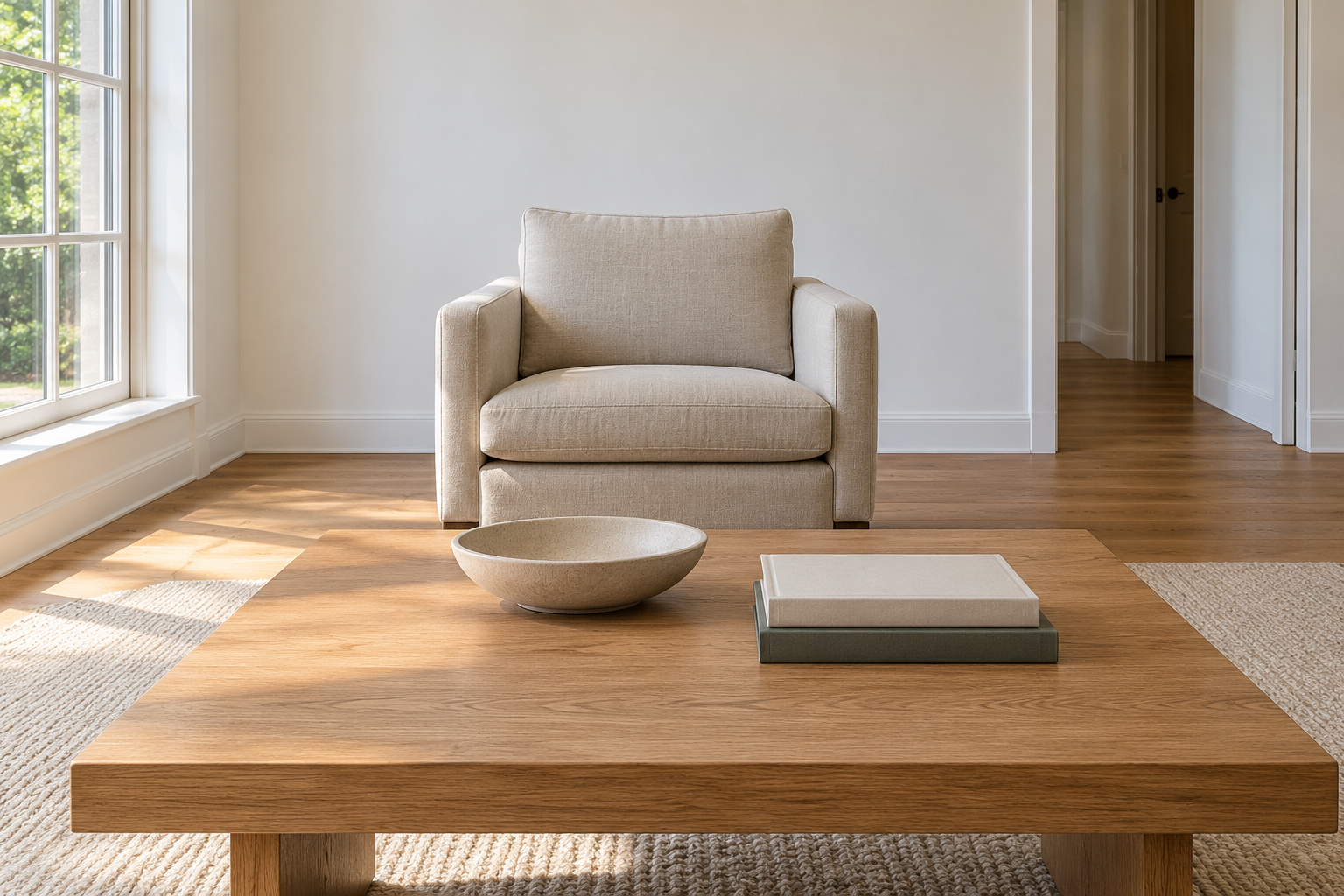
A coffee table sits between people. Anything tall on it, a vase of branches or a table lamp, crosses the view from the sofa to the chairs opposite or to the TV, and people end up leaning around it to talk. Taller things belong on a side table or a console, where nobody has to look past them.
Sit on the sofa and look across the table. If the top of the arrangement cuts across the face of someone in the chair opposite, or the bottom of the TV screen, it is too tall for that spot. A shallow bowl, a short stack of books, and flowers cut short all stay below that line.
Round, Long, and Glass Tables
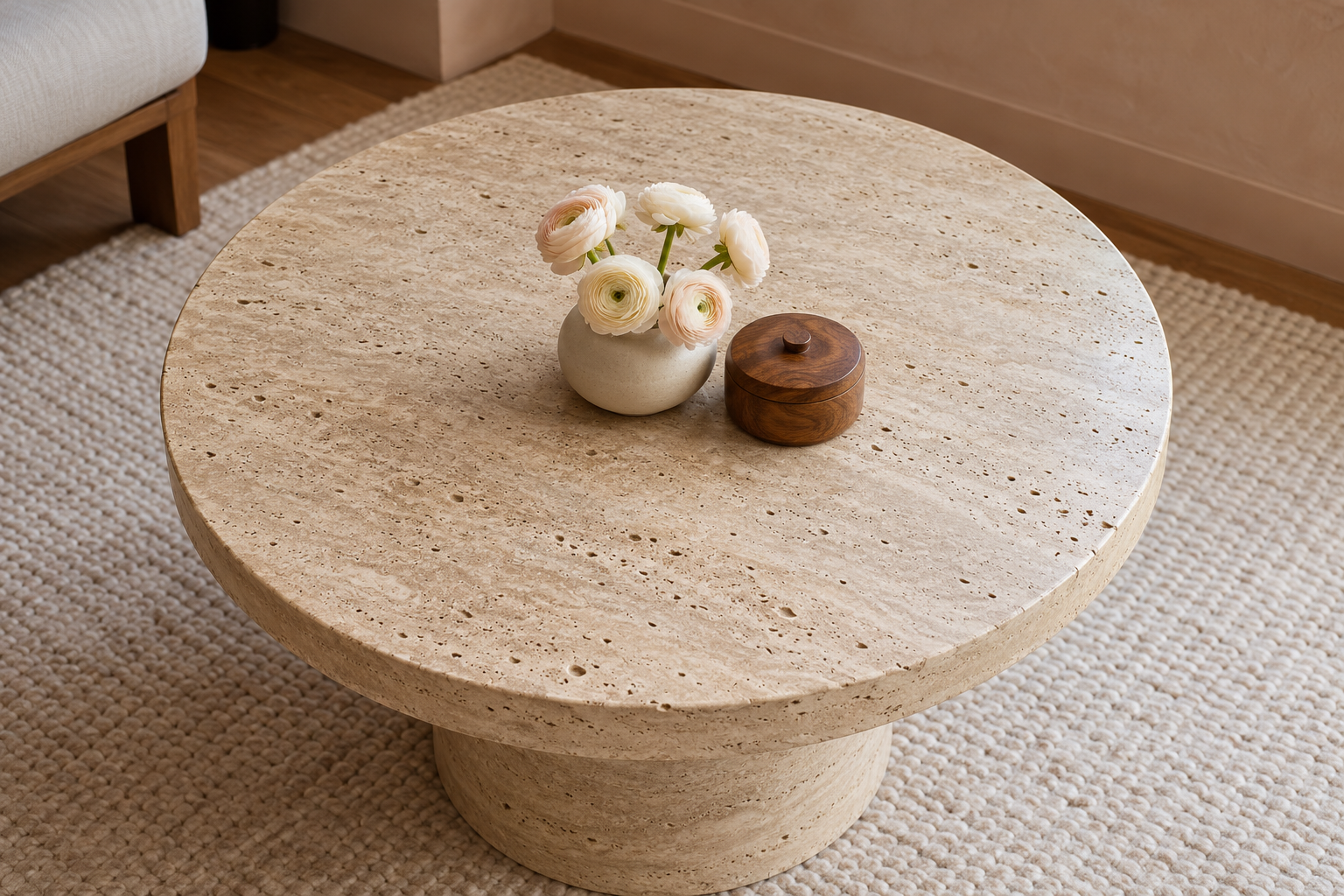
A round table has no ends, so the group goes in the center, a little smaller than seems necessary, with a clear ring of top around it that can be reached from every seat. On a long rectangle, the group sits toward one end, or splits into two small clusters at opposite ends with the middle left free. A square table can take a single group set into one quarter.
Glass and acrylic tops change the count. The rug, the table legs, and anything on a lower shelf all show through, so a glass top usually looks settled with fewer objects than a solid table of the same size.
Objects That Stand Out From the Tabletop
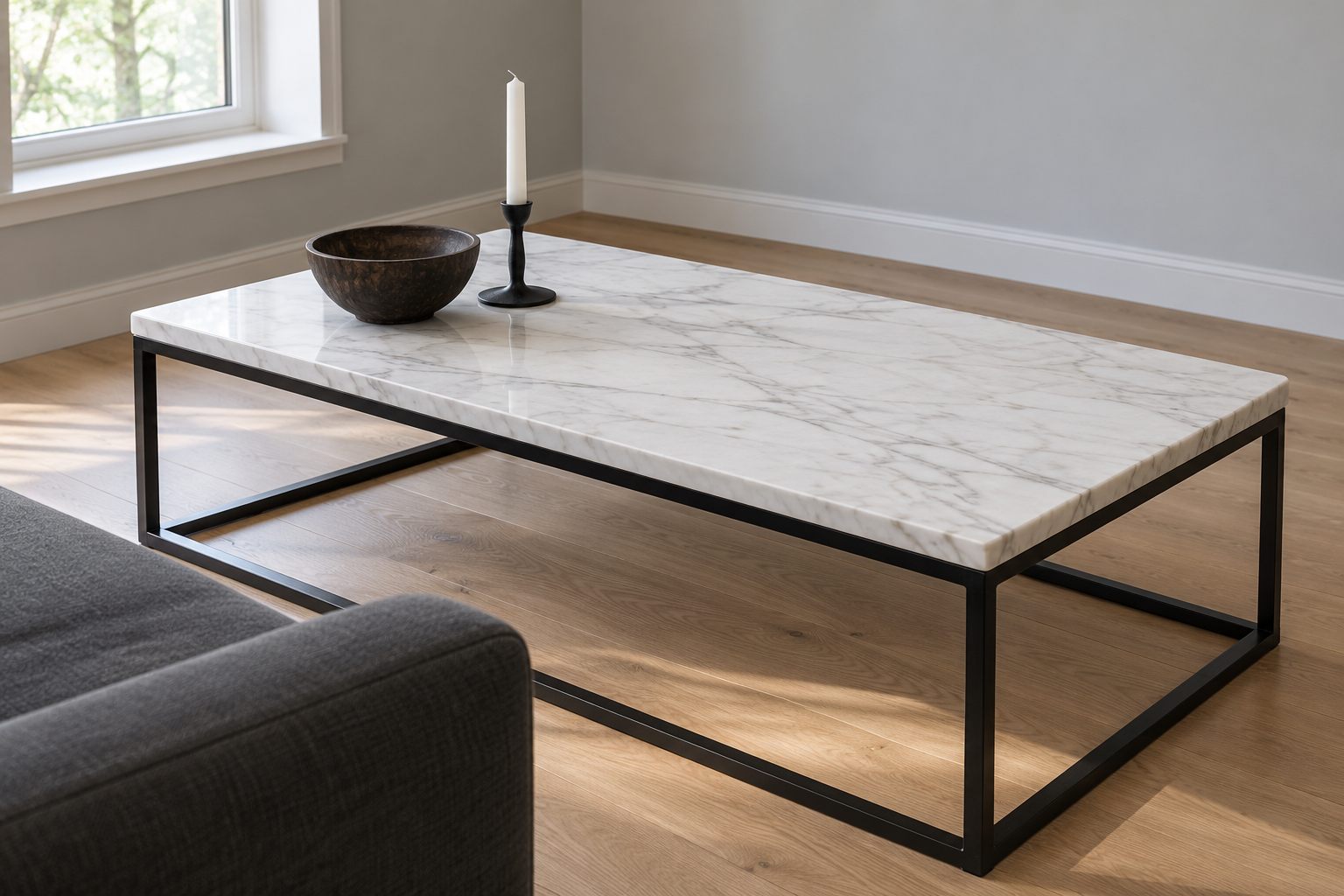
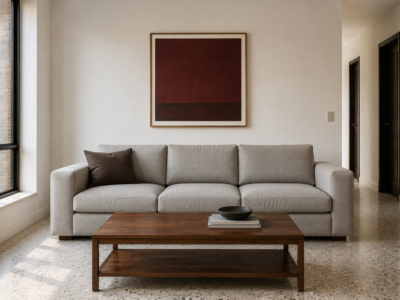
An object the same color and finish as the table loses its outline against it. A dark wood bowl on a dark wood table, or white ceramic on white marble, is hard to see from across the room. Choose the opposite, such as a pale stone or ceramic piece on walnut, or a dark wood bowl or a black iron candleholder on travertine or marble.
The difference can be in sheen as much as color. On a honed, matte stone top, a glazed ceramic catches the light. On a lacquered or glass top, rough surfaces such as unglazed clay, woven grass, and raw wood show more clearly.
Change One Thing With the Season
The base of the arrangement, the tray and the books, can stay all year. What changes is the object on top: a few small gourds in October, pine cones and clementines in a shallow bowl in December, a single cut stem in spring. Swapping one piece keeps the table usable and saves rebuilding the whole arrangement every few months.
In December the coffee table is often where the candles go. A lit candle needs about a foot of clear space on every side, away from greenery, paper, and a reaching hand, and it is blown out whenever the room is left empty.