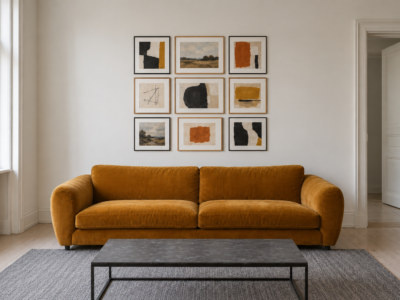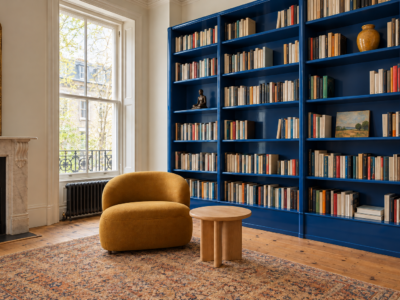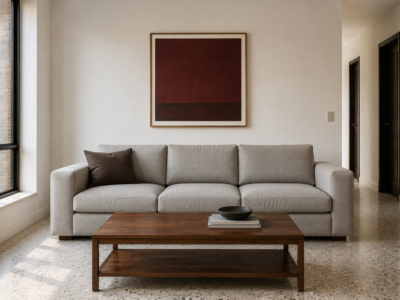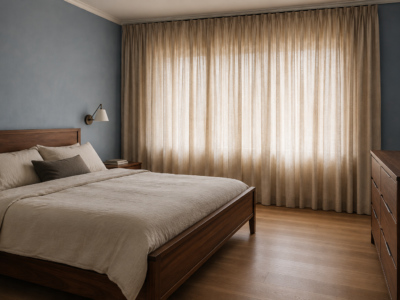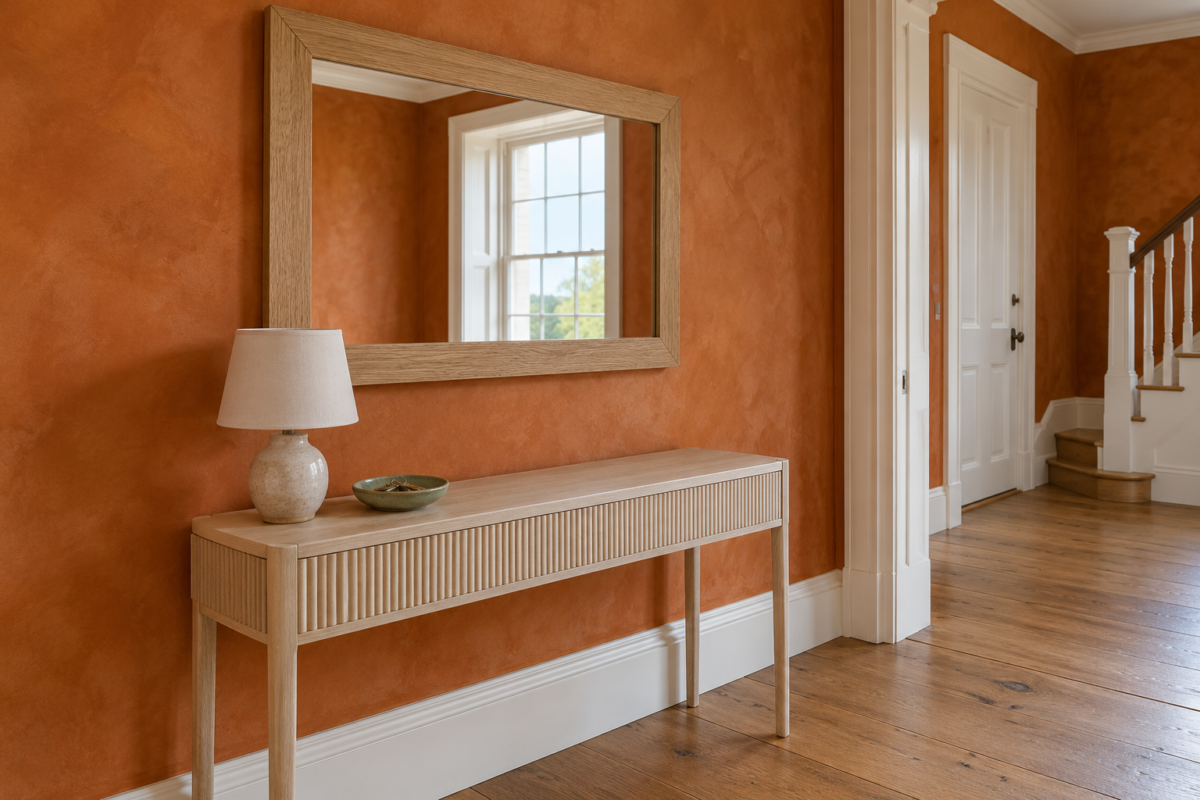
A mirror goes up the way a painting does, with its center around eye height or a few inches above the furniture under it, and those figures get it close. The difference is that a painting looks the same from anywhere in the room, and a mirror doesn’t. What it shows depends on where you stand, your face from the hall, the window from the dining table, the ceiling from the sofa if it hangs too high.
So the height of a mirror is checked twice, once against the wall and the furniture, and again from the places people will look into it. That second check matters most for a mirror people use, in a hall or a bedroom, and for a full-length mirror, which has its own geometry.
On an Open Wall

On a wall with nothing under it, hang a mirror with its center 57 to 60 inches from the floor, the same height used for art on an open wall. That puts the middle of the glass near the eye level of a standing adult, so a mirror in a hall shows a face without anyone stooping or stretching.
Then check it against the people who use it. Adult eye heights run from about 58 to 68 inches, so a small mirror centered at 58 can cut off the top of a tall person’s head. A mirror 24 inches tall, centered at 60, runs from 48 to 72 inches and covers almost every adult face. A narrow arched or oval mirror often looks better slightly taller than that, since the curve at the top takes up glass.
Over a Console or Dresser
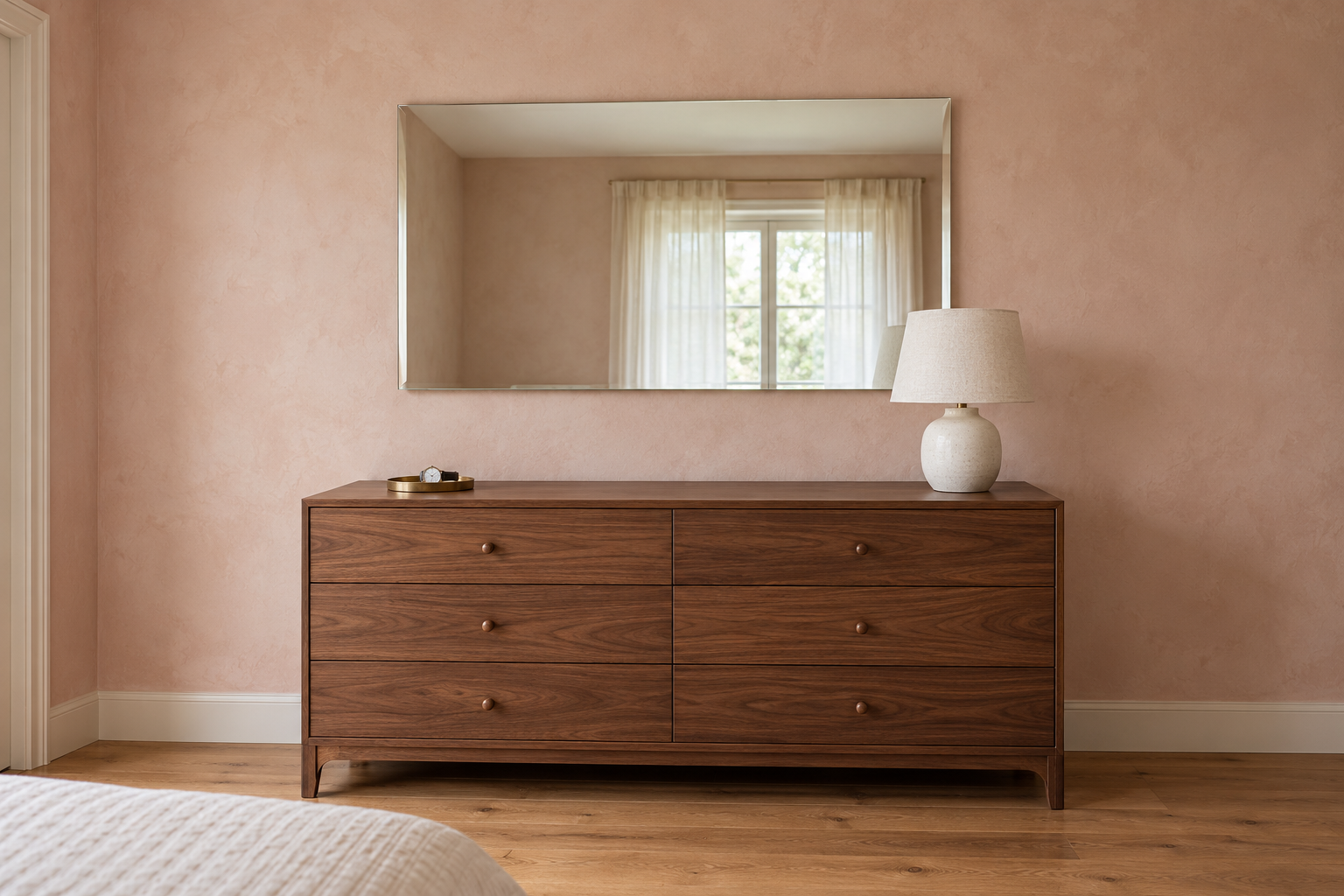
Over furniture, the gap matters more than the center. Hang the mirror with its bottom edge 6 to 8 inches above the top of a console or dresser, so the two look like a pair and not two things that happen to share a wall. A lamp on the console can overlap the bottom of the frame slightly, which ties them together further.
Size it to the furniture as well, about two thirds to three quarters of its width. On a dresser 34 inches tall, a 6 inch gap puts the bottom of the mirror at 40 inches, and a mirror 30 inches tall reaches 70, with its center at 55, close to eye height. On a taller dresser the center rises above eye level. Keep the gap and let the center move, or choose a shorter mirror, since the gap is what makes the mirror belong to the furniture. For a narrow hall, the console’s depth and height come first.
Above a Mantel

A mantel shelf gives two choices. Hang the mirror on the wall above it, with the same 6 to 8 inch gap, or stand it on the shelf and lean it against the wall. Leaning is the easier and more forgiving of the two, since the bottom of the frame sits behind whatever is on the shelf, and nothing has to be measured to the inch. Keep the mirror narrower than the mantel shelf, about the width of the fireplace opening or a little more.
A mirror over a fireplace often hangs above eye level, and that changes what it shows. From a sofa, the eye looks up into it and sees the ceiling and the top of the opposite wall, which works well when the ceiling has a cornice or the wall has a window, and less well with a ceiling fan or a smoke alarm in the view. A leaning mirror tilts its face up slightly, so it shows a little more ceiling than one hung flat, and the effect grows on a mantel set high.
A Full-Length Mirror
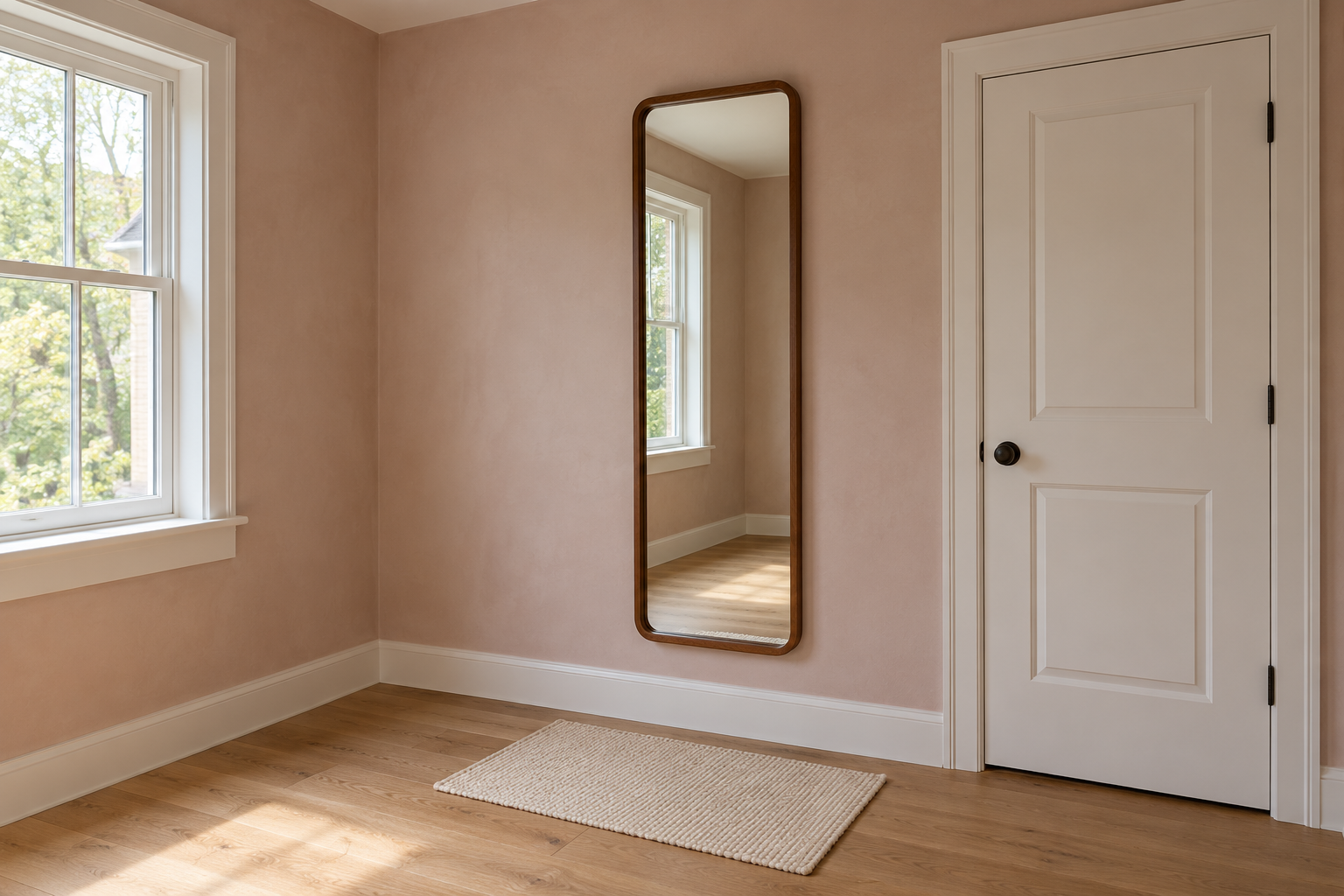
A flat mirror only needs to be half your height to show you from head to foot, whatever distance you stand from it. Light from your feet reaches your eyes by bouncing off the glass at a point halfway between them, and the same is true at the top of your head. So for a person 5 feet 10 inches tall, a mirror 35 inches tall is enough, if it hangs at the right height: its bottom edge at half the height of the eyes, about 33 inches, and its top a couple of inches above eye level.
A household of different heights needs more glass. A mirror about 60 inches tall, hung with its bottom edge about a foot above the floor, reaches about 72 inches, above the eyes of nearly every adult, and shows everyone whole. A full-length mirror leaned against the wall needs fixing at the top, since a mirror on its edge tips easily, and it should be tied to the wall in a house with children.
What It Reflects
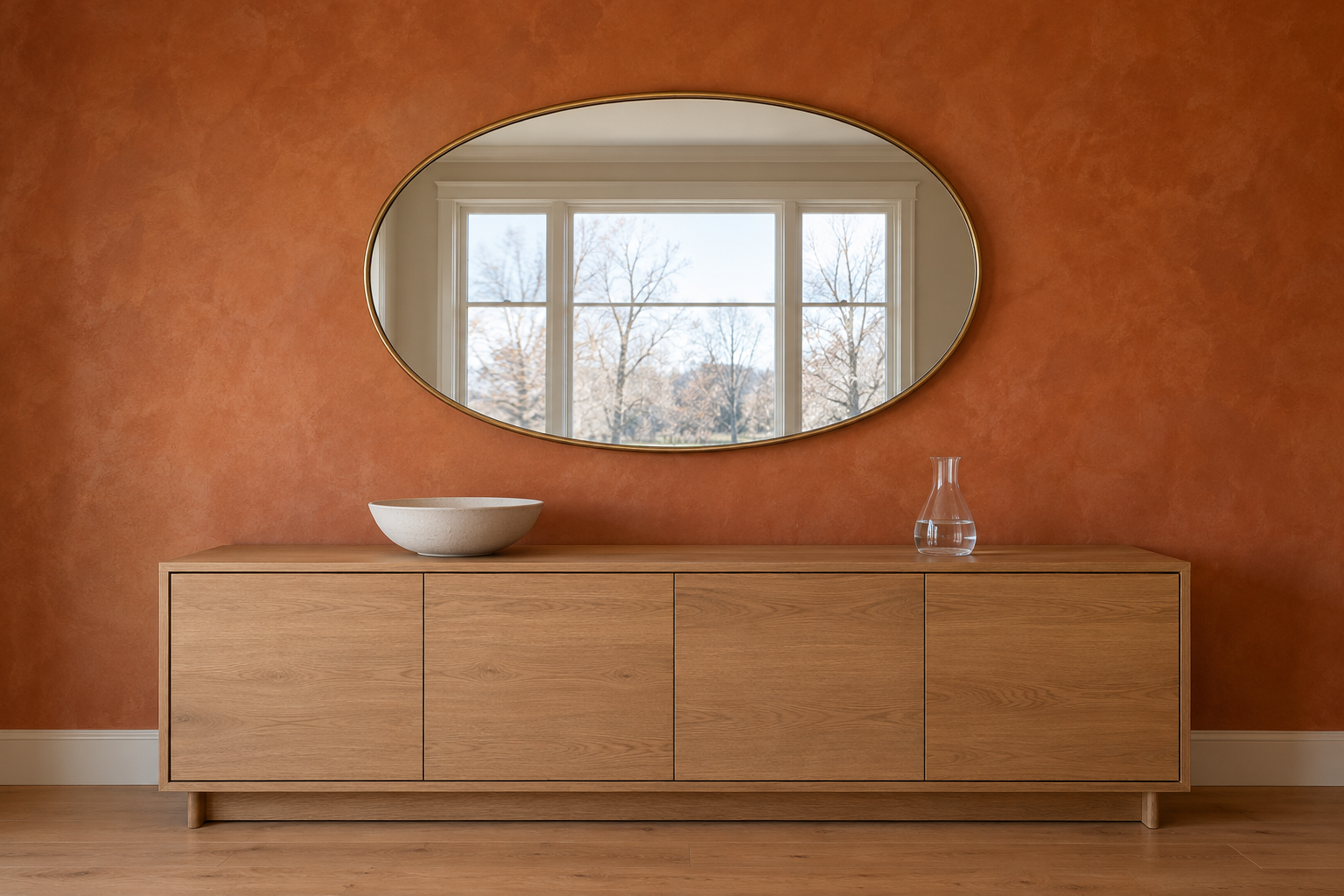
The reflection follows a simple rule. You see what lies at the same angle on the other side of the mirror. Before hanging one, ask someone to hold a hand mirror flat against the wall in the spot, and look into it from each place it will be seen from, the doorway, the sofa, the table.
Opposite or beside a window, a mirror carries the daylight across the room, and in a hall without a window of its own that can be most of the light it gets. Avoid lining one up with a bathroom door, a television, or a cluttered shelf, which the mirror doubles. Hung high, a mirror shows the ceiling, and hung low, the floor.
Hanging It So It Stays Level
Most mirrors come with a wire across the back, which sags when hung. Measure from the top of the frame to the wire pulled taut toward the top, and mark the hook that distance below where you want the top to be, or the mirror will hang an inch or two lower than planned. Two hooks spaced apart along the wire, instead of one in the middle, keep the frame from tilting.
A heavy mirror is better on two D-rings and two screws, or on a French cleat, a pair of interlocking angled strips that holds the weight along its whole length. Screw into studs where they fall, or use anchors rated for the mirror’s weight, and check the weight against the rating before the mirror goes up, since glass is heavier than it looks.