A two-car garage often holds one car, and a one-car garage often holds none. What fills the space is rarely one big thing. It’s bikes leaning on the wall, a mower, bags of soil, a stack of boxes from the last move, and tools on every flat surface, each taking a little of the floor the car needs.
Getting the car back in means clearing the floor and keeping it clear, which comes down to the walls, the ceiling, and a few rules about what goes where. The ideas below start by measuring the car’s space, then sort everything else by how often it leaves the garage, and end with what shouldn’t be stored there at all. The same approach works through the rest of the house in a home organization system.
Mark Out the Car’s Space First
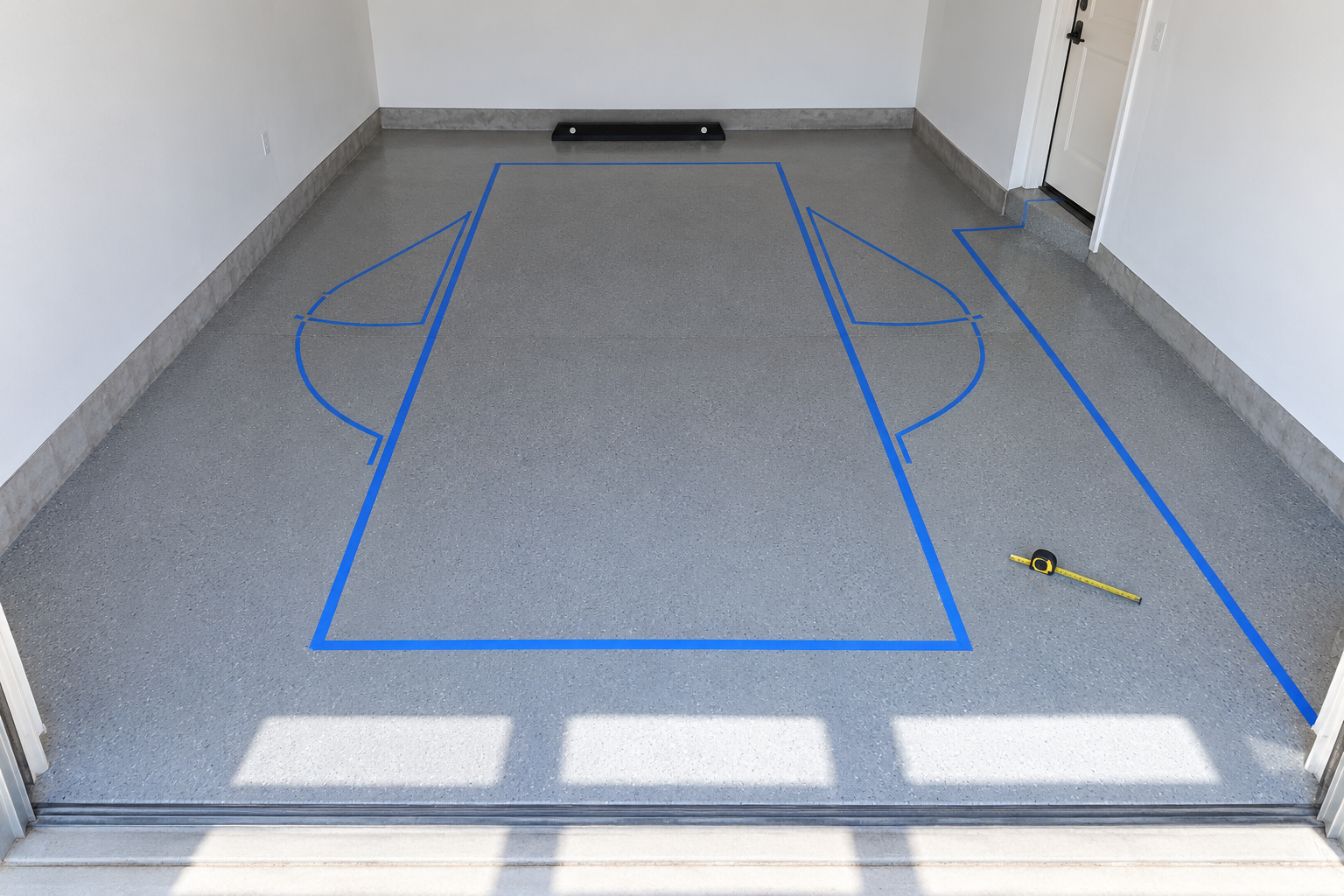
Before anything moves, measure where the car has to go. Most cars are about 6 feet wide without their mirrors, and each door needs another 2 to 3 feet to open far enough to climb out. Add a path at least 3 feet wide from the driver’s door to the door into the house. Mark the whole footprint on the floor with painter’s tape. That rectangle stays clear from now on.
A parking stop on the back wall, or a bumper fixed at the height of the car’s front, tells the driver where to stop, so the car doesn’t creep forward into the storage a few inches at a time.
Sort Everything by How Often It Leaves
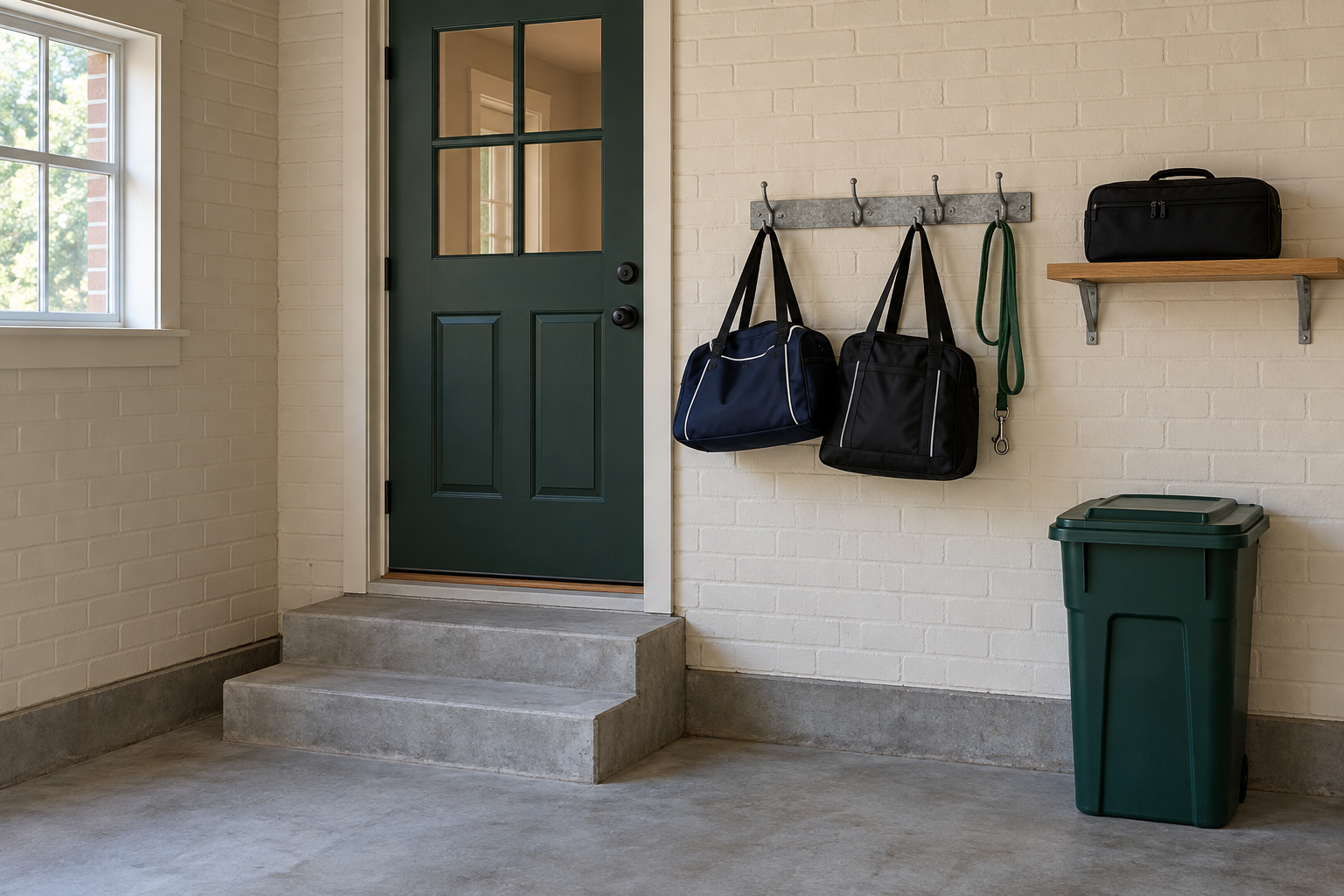
A garage works best in three bands. Things that leave every day or week (the recycling, sports bags, the dog’s leash, a car kit) go by the door to the house. Things used every month or season, like garden tools, bikes, and the grill, go on the walls. Things used once a year, like holiday decorations, camping gear, and spare tiles, go overhead.
Sorting before buying any storage shows how much wall and ceiling each band needs. It’s also the moment to get rid of whatever hasn’t left the garage in years, and the method for decluttering a room works just as well out here.
Clear the Floor With One Wall System
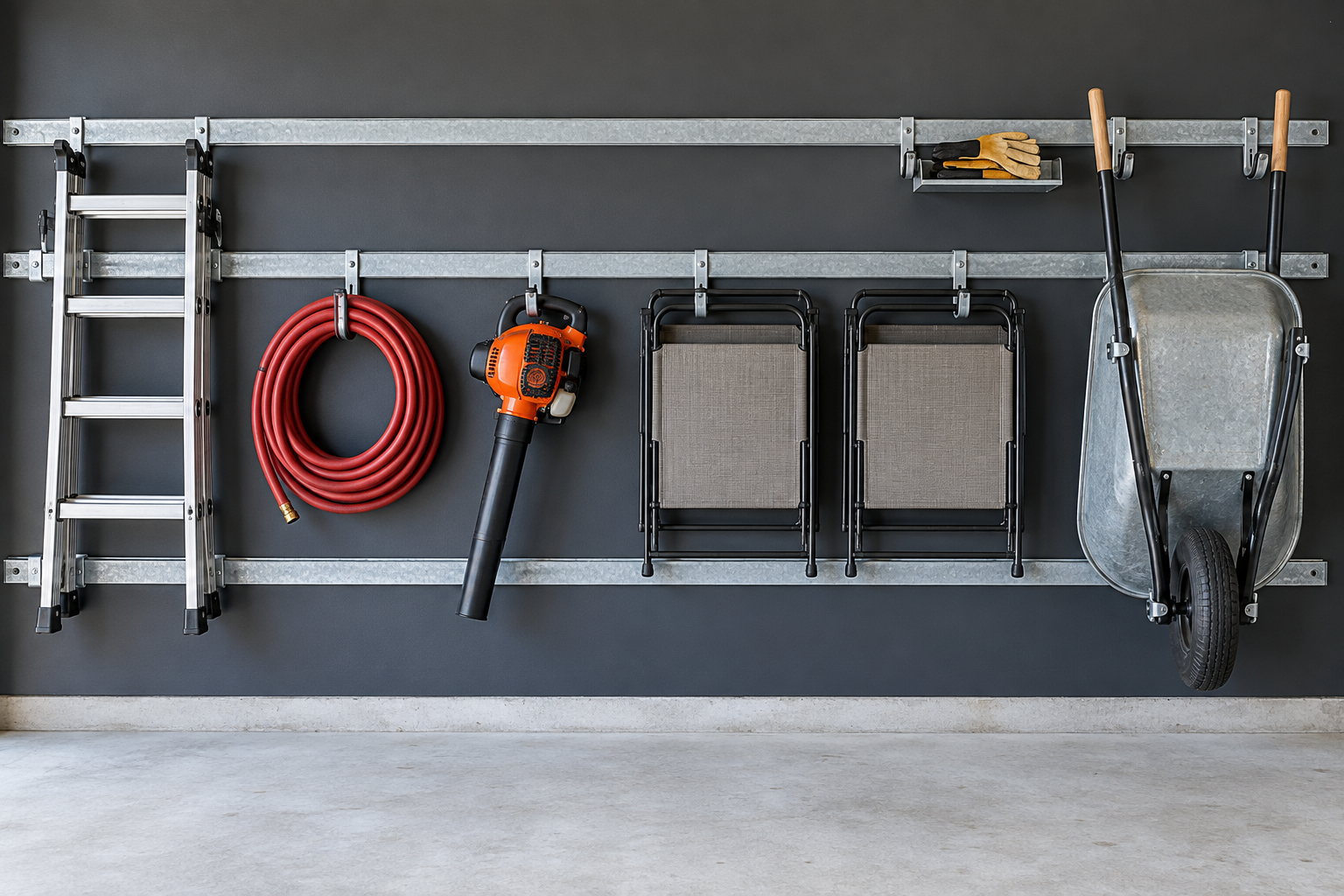
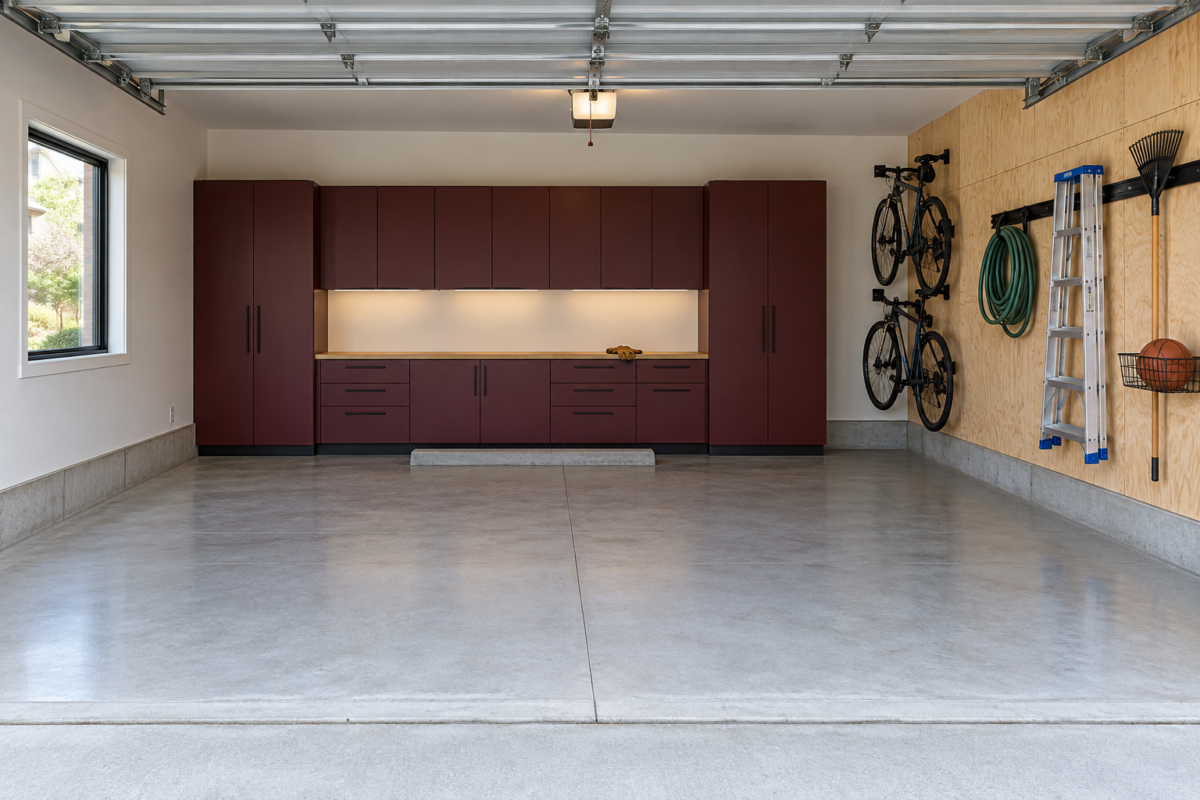
A wall system of rails, slatwall panels, or heavy pegboard lets hooks, shelves, and baskets move as needs change. Choose one and run it along a whole wall, so every hook fits anywhere on it. Mixing systems leaves hooks that only fit half the wall.
Fix rails and panels into the studs with the fixings the maker specifies, since a wall of loaded hooks carries far more weight than a shelf indoors. Keep the lowest hooks about a foot off the floor so it can be swept underneath, and put the heaviest things between knee and shoulder height.
The wall in front of the car’s hood is often the deepest storage space in the garage. Shelves or cabinets there can start just above the height of the hood, so the front of the car tucks in under them when it parks. Measure the hood at its highest point and leave a few inches over it.
Hang Bikes on the Wall or From the Ceiling
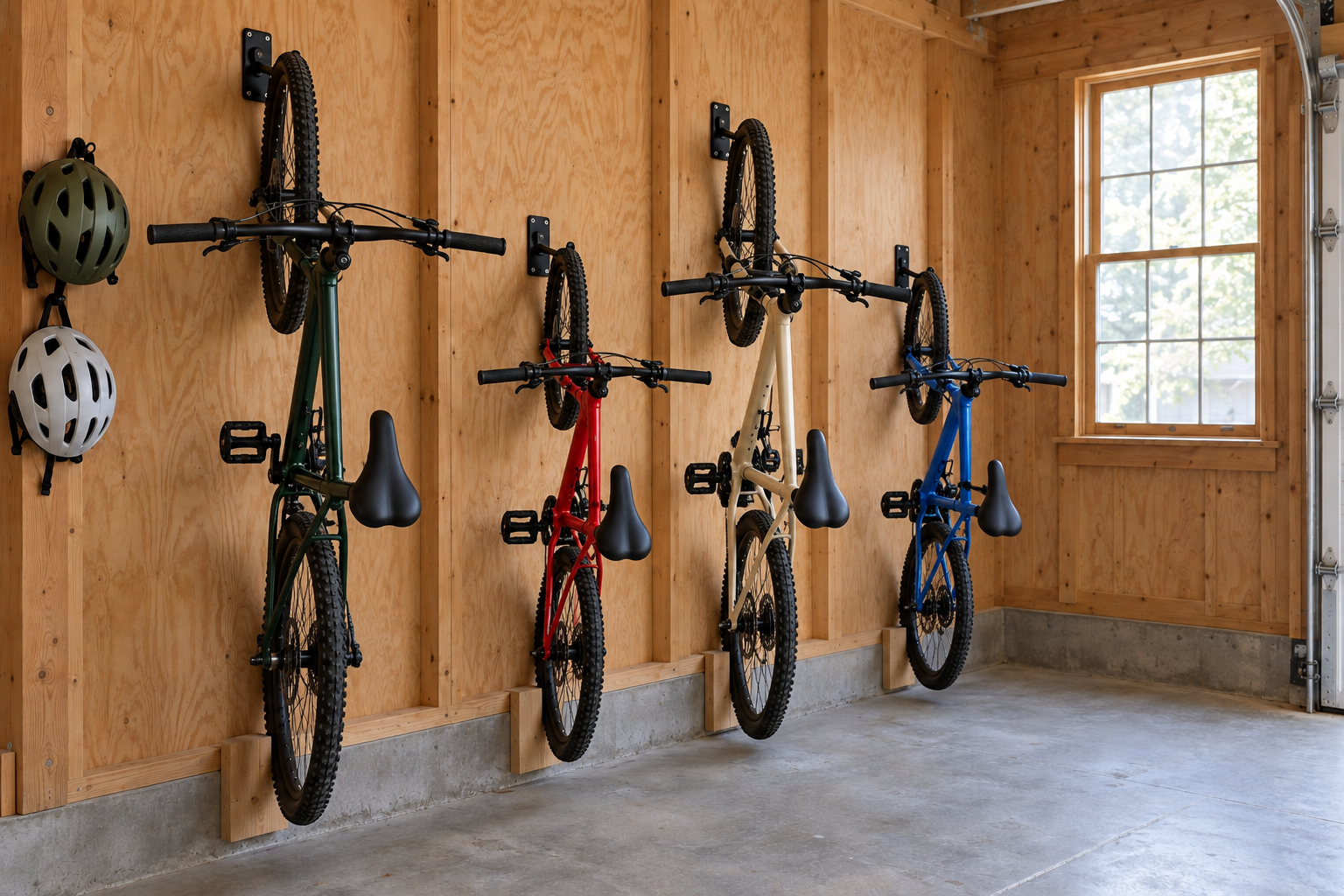
Bikes take more floor than anything else in most garages. Hung vertically by the front wheel on a wall hook, a bike sticks out from the wall about as far as its wheel is tall, 2 to 2.5 feet, and several fit side by side a foot or so apart if they alternate high and low so the handlebars clear. Hang children’s bikes low enough for the children to lift down.
For bikes ridden rarely, a ceiling hoist lifts them flat above the car. It suits a high ceiling and a light bike. A heavy electric bike needs a floor stand or a hook rated for its weight.
Put Once-a-Year Things on Overhead Racks
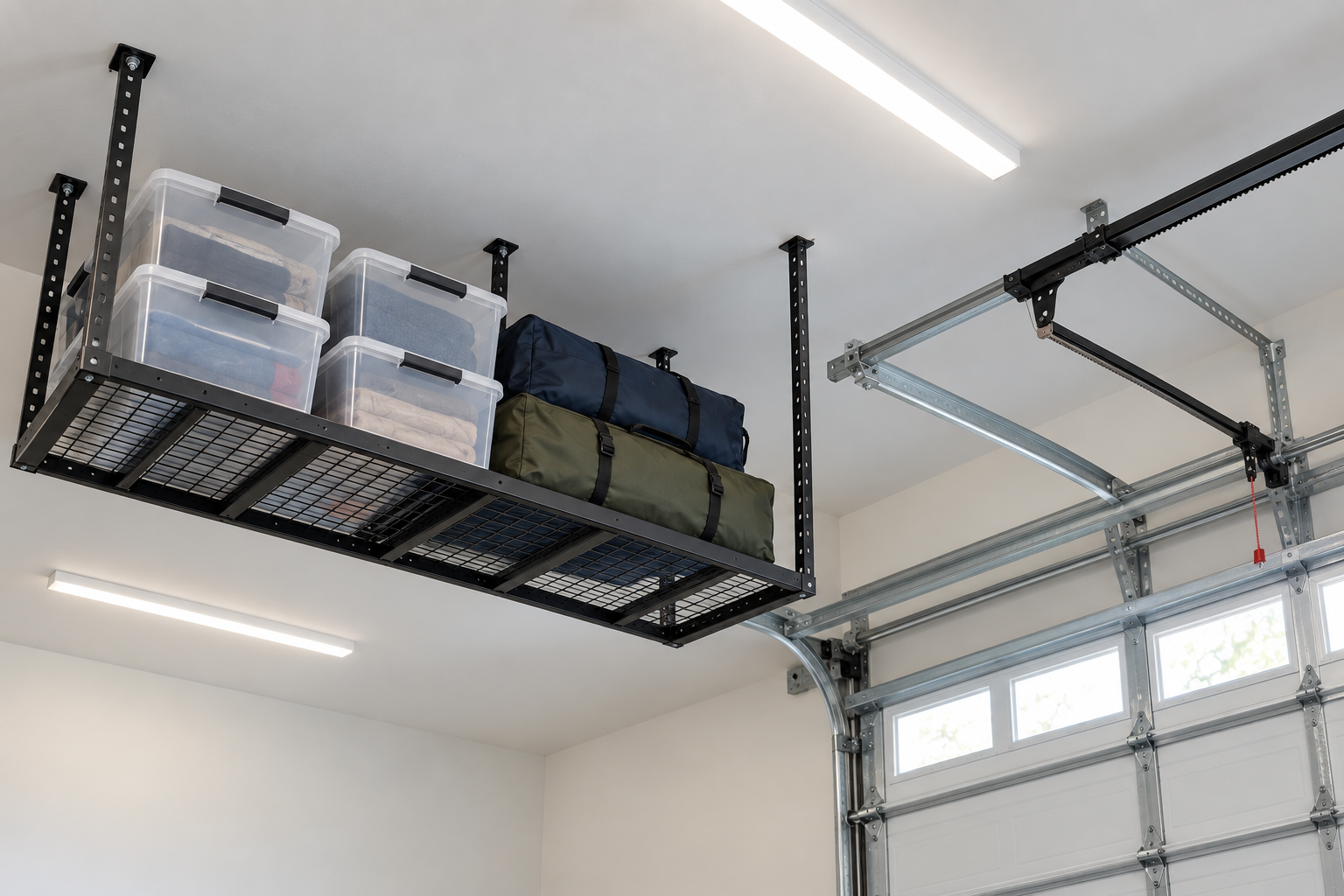
The space above the car is usually the largest empty volume in a garage. Racks bolted into the ceiling joists hold bins of decorations and camping gear there. Before installing one, open the garage door and look at where the door and its tracks travel and where the opener hangs. The rack has to clear both, as well as the car’s roof and an open tailgate.
Every rack has a weight rating, and full bins weigh more than they look. Use clear or labeled bins so you can see what’s up there from the floor, and keep a sturdy stepladder nearby for getting them down.
Keep Garden Tools by the Door to the Yard
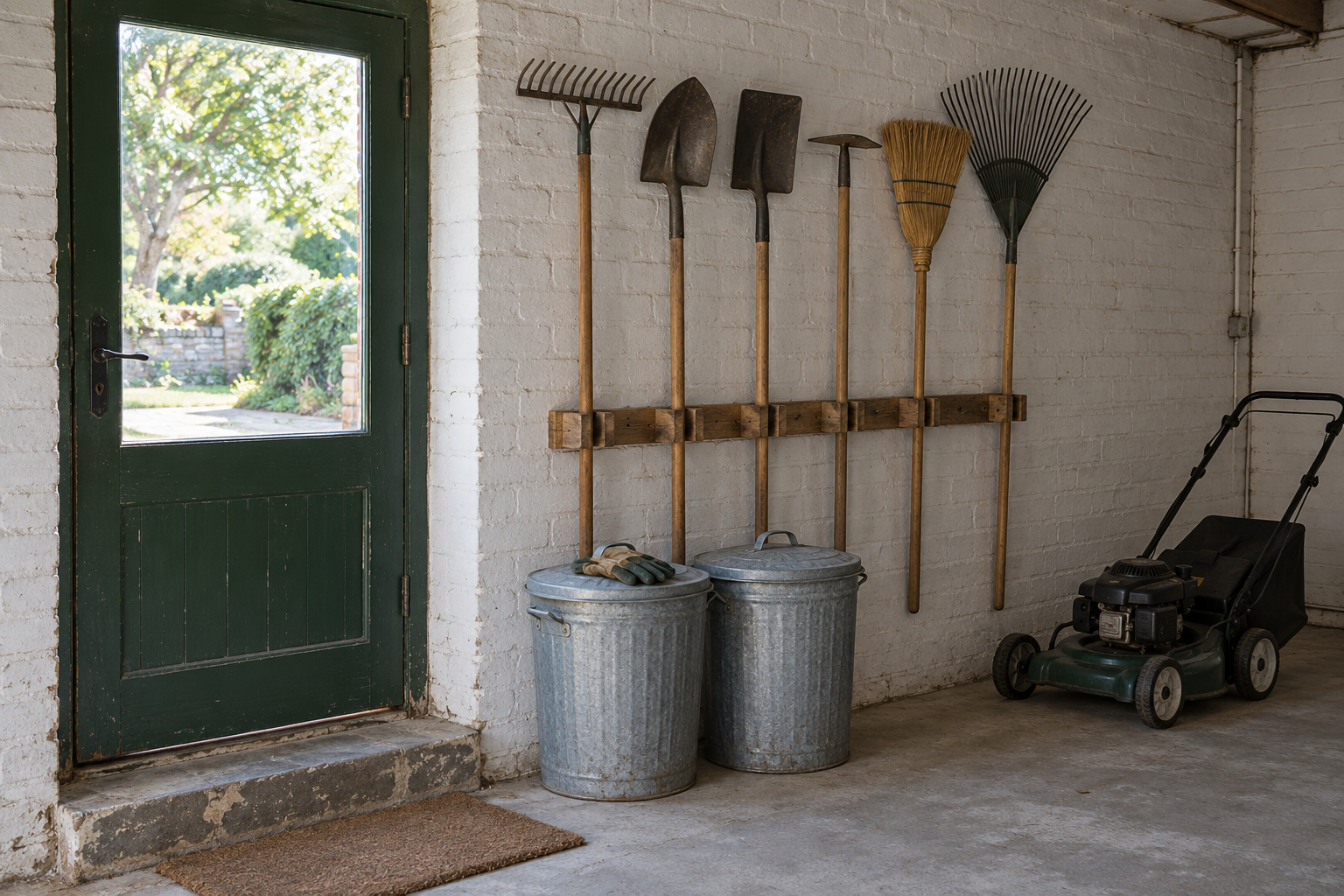
Rakes and shovels leaned in a corner fall over, usually across the car’s path. A wall rack by the side door or the door nearest the garden holds long handles upright, each in its own slot, and puts them one step from where they’re used.
Keep bags of soil, fertilizer, and birdseed in lidded metal bins on the floor below the rack, which keeps them dry and stops mice getting into them. The mower and wheelbarrow go at the end of the same wall, where they roll straight out.
Park the Trash and Recycling in One Spot
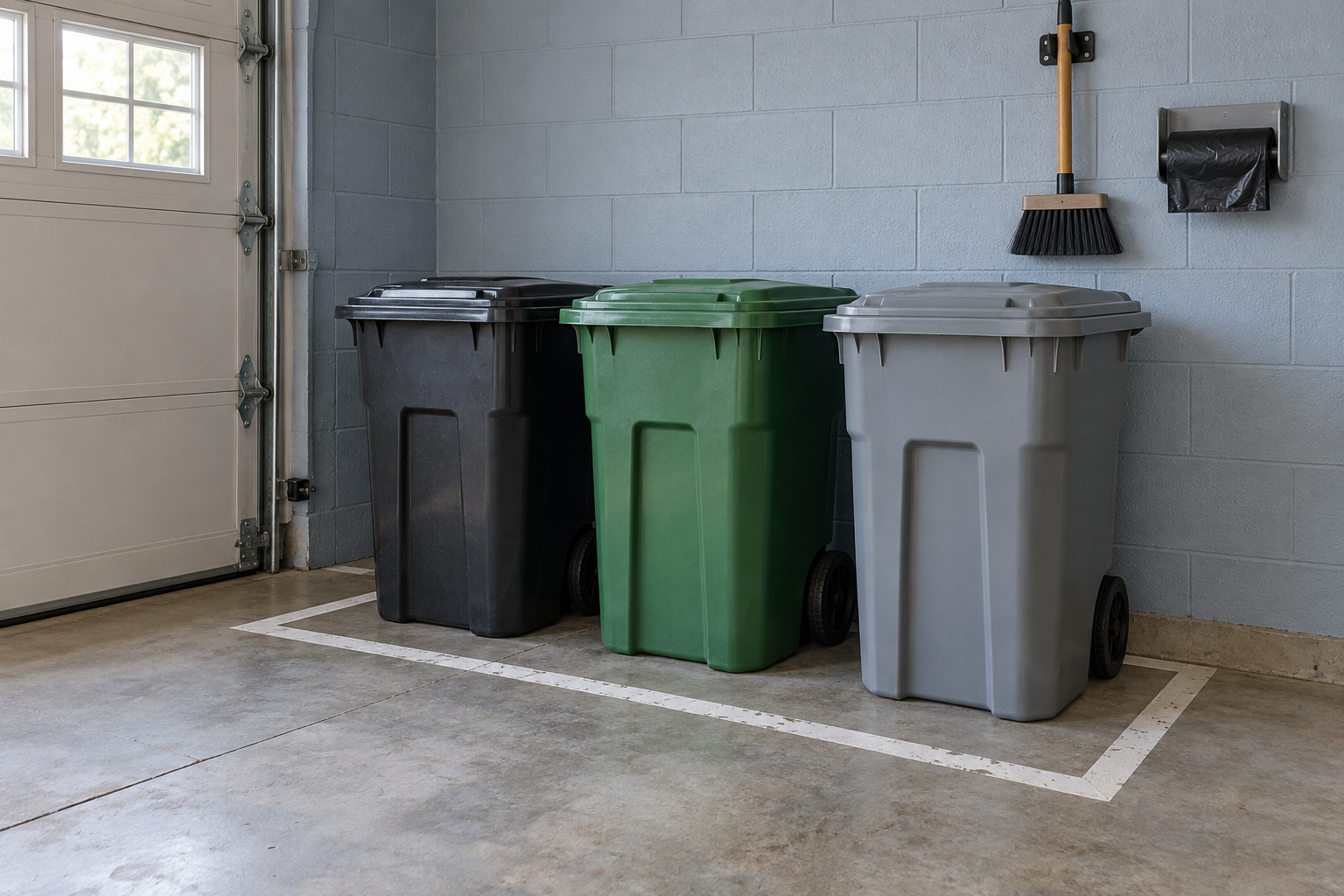
Bins that move around end up wherever there’s room, often beside a car door. Give them one marked spot on the side they leave by on collection day, and use the wall above for a broom and a roll of bags. A painted line on the floor keeps them from drifting.
A lid on every bin keeps smells in and animals out. If the main bins live outside, keep only the recycling and the overflow from the kitchen in the garage.
Fit a Workbench Along the Short Wall
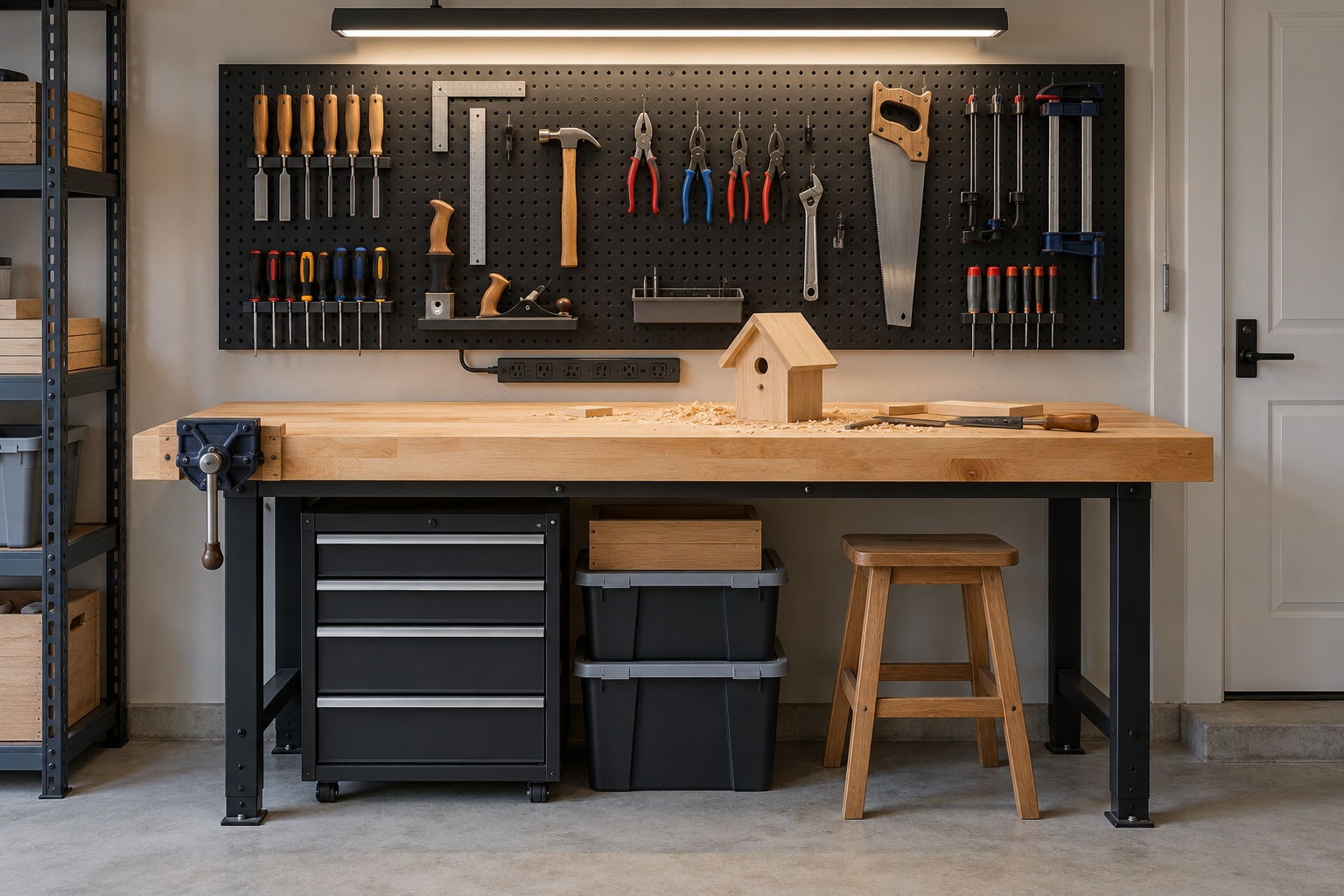
A workbench needs a wall the car doesn’t pass, usually the back or short wall. A bench about 24 inches deep and 34 to 38 inches high suits most work, with a rail or pegboard above for the tools used there. Put a light directly over the bench, since a ceiling light behind you throws your shadow onto the work.
If there’s no spare wall, a fold-down bench on wall brackets gives a work surface that folds flat when the car comes in. Fix a power strip above the bench so extension cords don’t run across the floor.
Lock Chemicals Away and Keep Fuel Apart
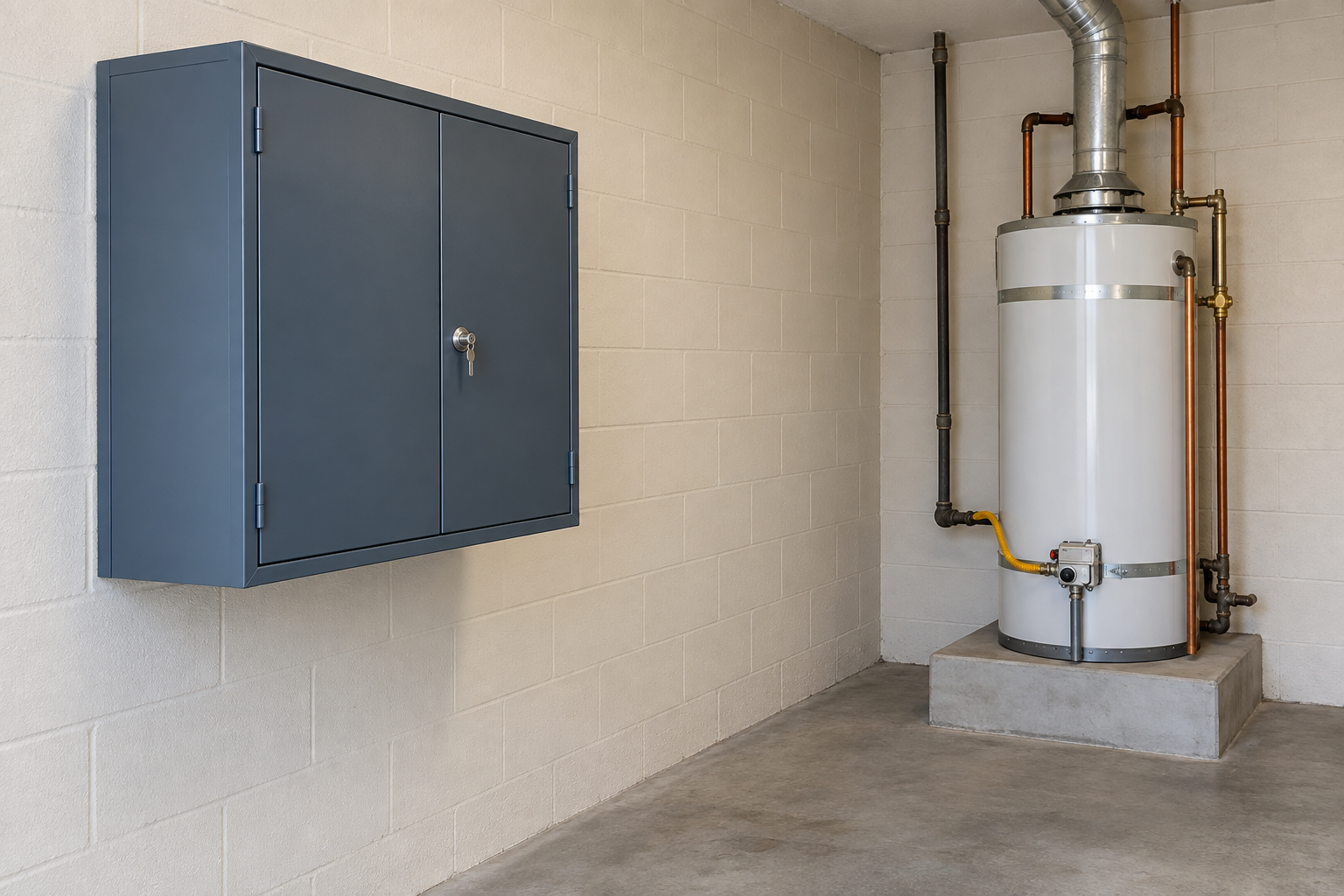
Paint thinner, pesticides, pool chemicals, and car fluids belong in a cabinet with a lock or a childproof latch, on a high shelf or wall, in their original containers with their labels on. Keep pool chemicals apart from everything else, since some react dangerously if they mix.
Store gasoline only in an approved fuel can, only as much as the mower needs, and well away from anything with a pilot light or a flame, such as a gas water heater or furnace. Propane cylinders for the grill don’t belong in the garage at all. Keep them outdoors, upright, and away from doors and windows.
Leave Some Things Out of the Garage Entirely
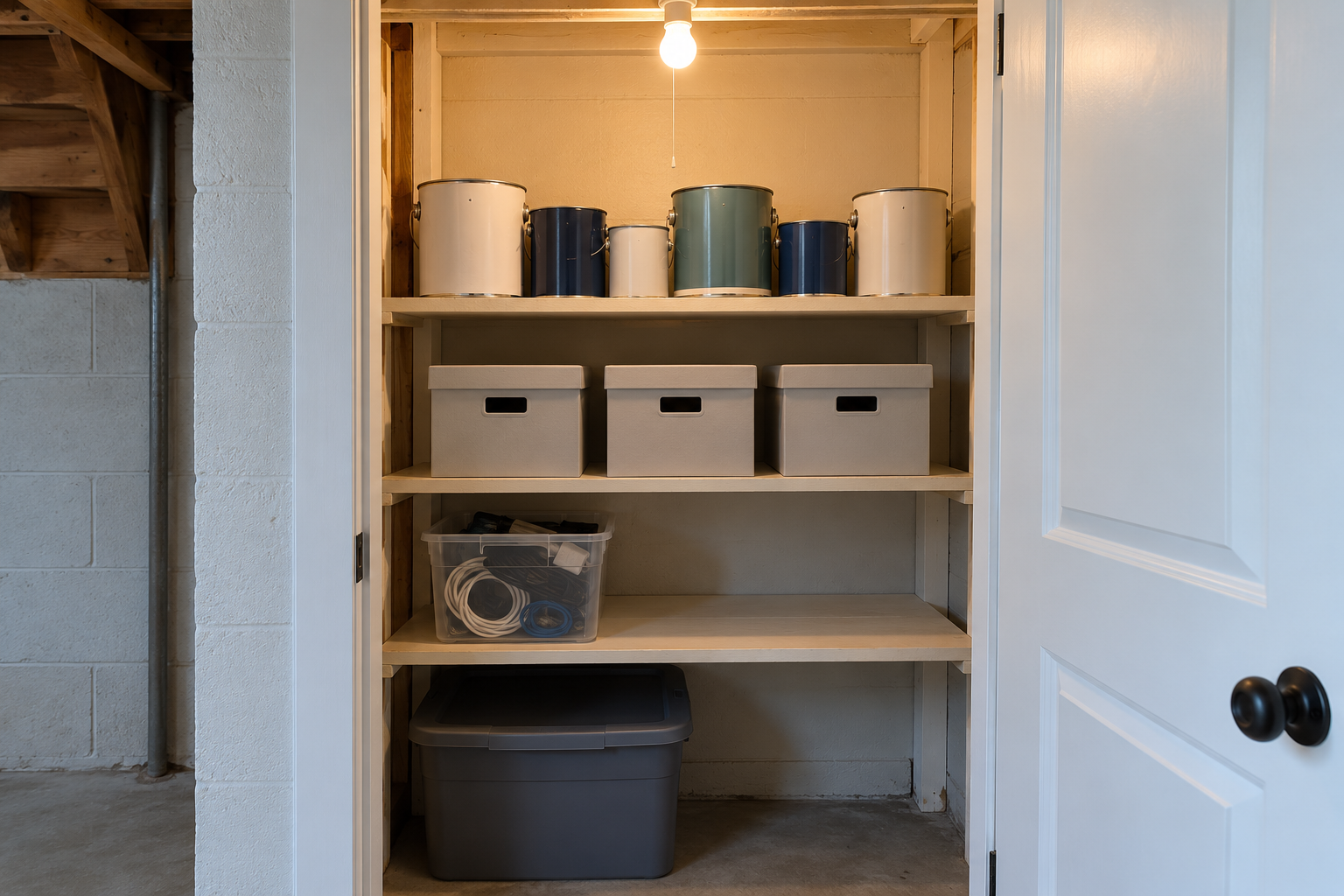
Most garages aren’t heated or insulated, so they swing between hot and cold, damp and dry. Latex paint can be ruined if it freezes, so bring the cans indoors for winter. Paper, photographs, books, and fabrics pick up damp and mildew. Electronics suffer from condensation and heat. Food and pet food left in bags attract mice and insects.
Outdoor furniture is the borderline case. Metal and resin frames store well in a garage, while cushions do better indoors, and putting patio furniture away for winter covers which pieces go where.