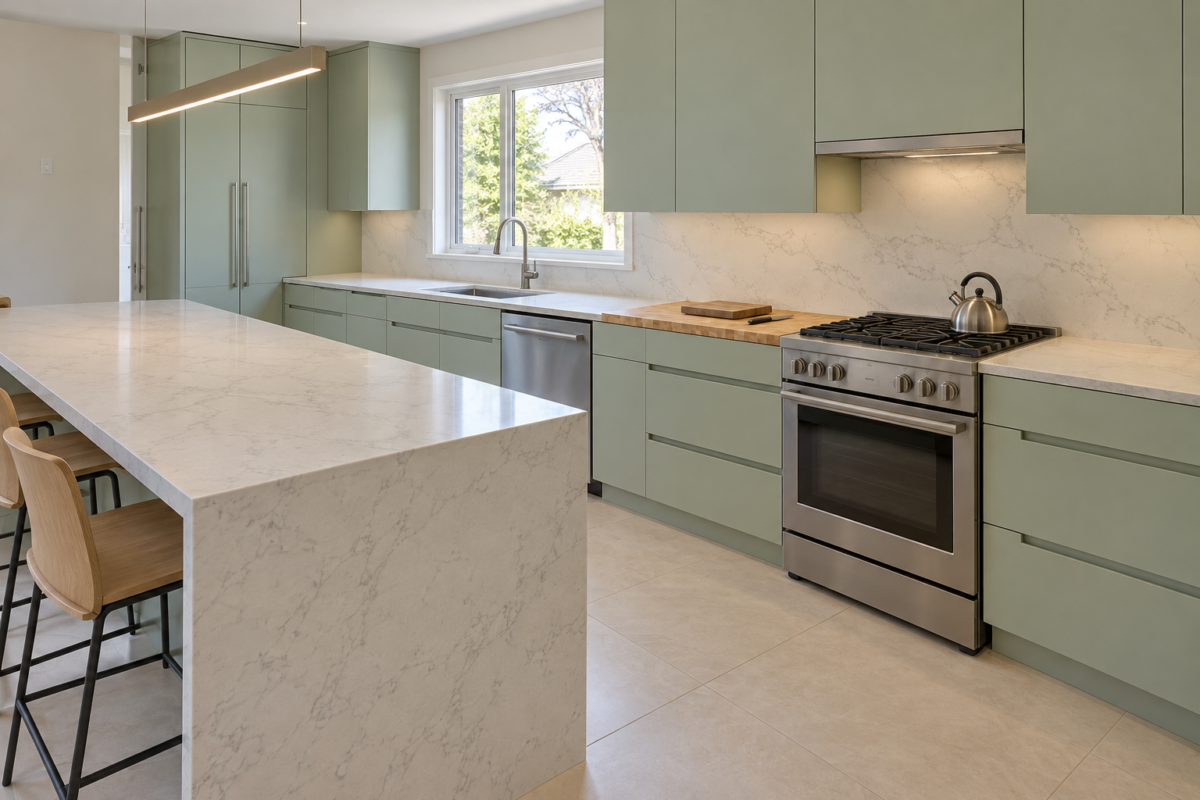
Put each thing in the cabinet nearest the place it gets used. Dishes go beside the dishwasher, pots and pans by the stove, knives and cutting boards at the counter where you chop, and cleaning supplies under the sink. Whatever comes out only a few times a year goes up high or into the awkward corners.
Most kitchens aren’t set up that way, because they were filled in the order the moving boxes were opened. The mugs end up across the room from the kettle, and unloading the dishwasher turns into a dozen trips back and forth. The sections below start by dividing the kitchen into zones, then go through them one at a time. Food storage has its own logic, and the pantry is covered separately.
Map the Kitchen Into Zones
Most kitchens divide into five working zones. Cleanup is the sink and dishwasher. Cooking is the stove and oven. Prep is the longest stretch of clear counter, ideally between the sink and the stove. Dishes and serving can sit near the dishwasher or near the table. Food is the pantry, the fridge, and whatever cabinet holds dry goods, and organizing the pantry is its own job.
Walk through an ordinary dinner before moving anything. Notice where you stand to chop, which pan you reach for first, and where plates go once they’re clean. Each of those spots is a zone, and the cabinets nearest each one should hold what that step needs.
Keep Everyday Dishes Beside the Dishwasher
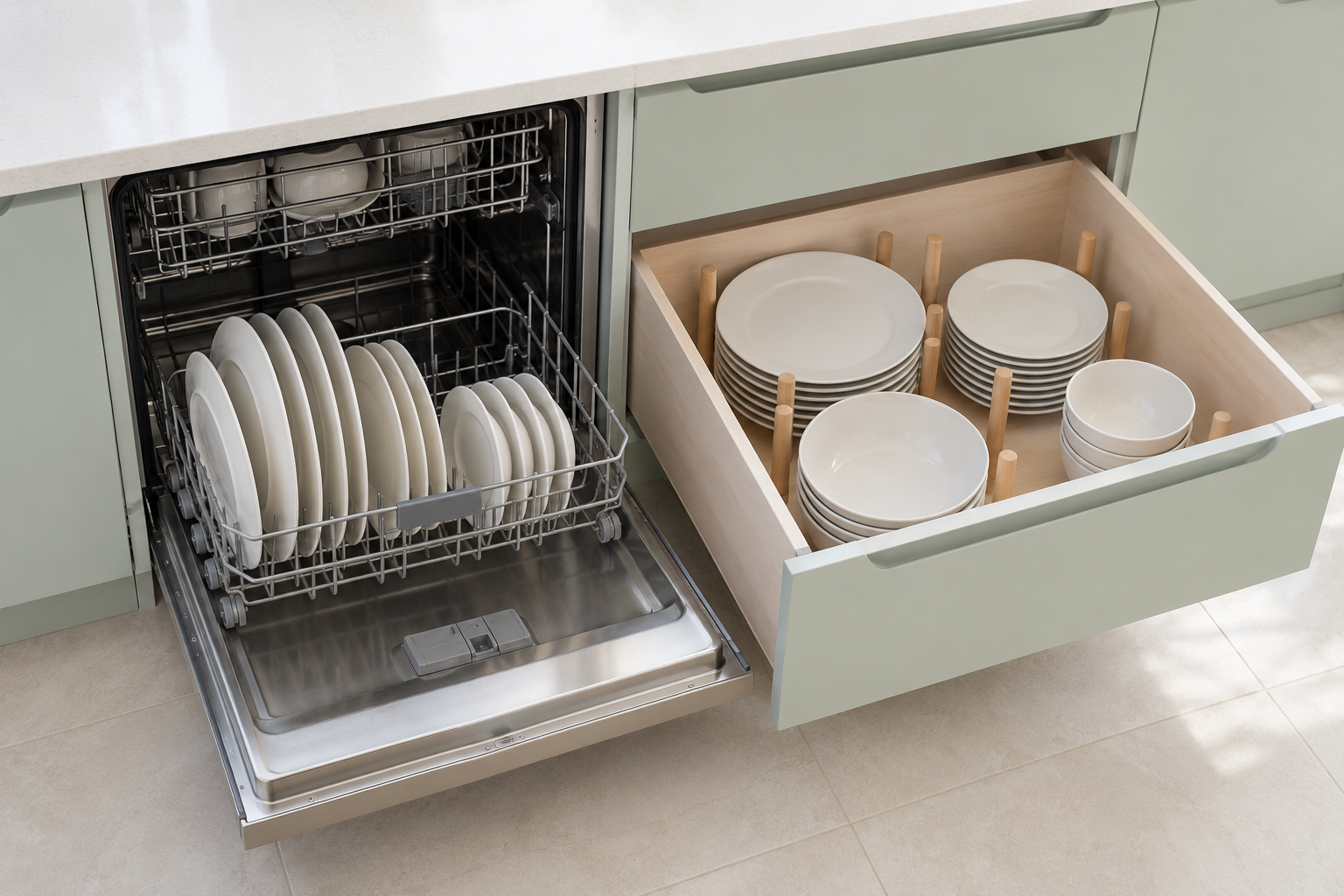
Unloading goes fastest when clean plates, bowls, and glasses go back into a cabinet within a step or two of the dishwasher. An upper cabinet directly above or beside it works, and so does a deep drawer below the counter fitted with pegs to hold plate stacks in place. A drawer means no lifting plates overhead, and children can set the table from it.
Glasses and mugs go in the upper cabinet closest to the dishwasher, or beside the kettle or coffee maker if that’s a few steps away. Dishes kept on open shelves instead of in cabinets follow the same rule: put the shelf where the clean dishes come out.
Put Pots and Pans in Drawers by the Stove
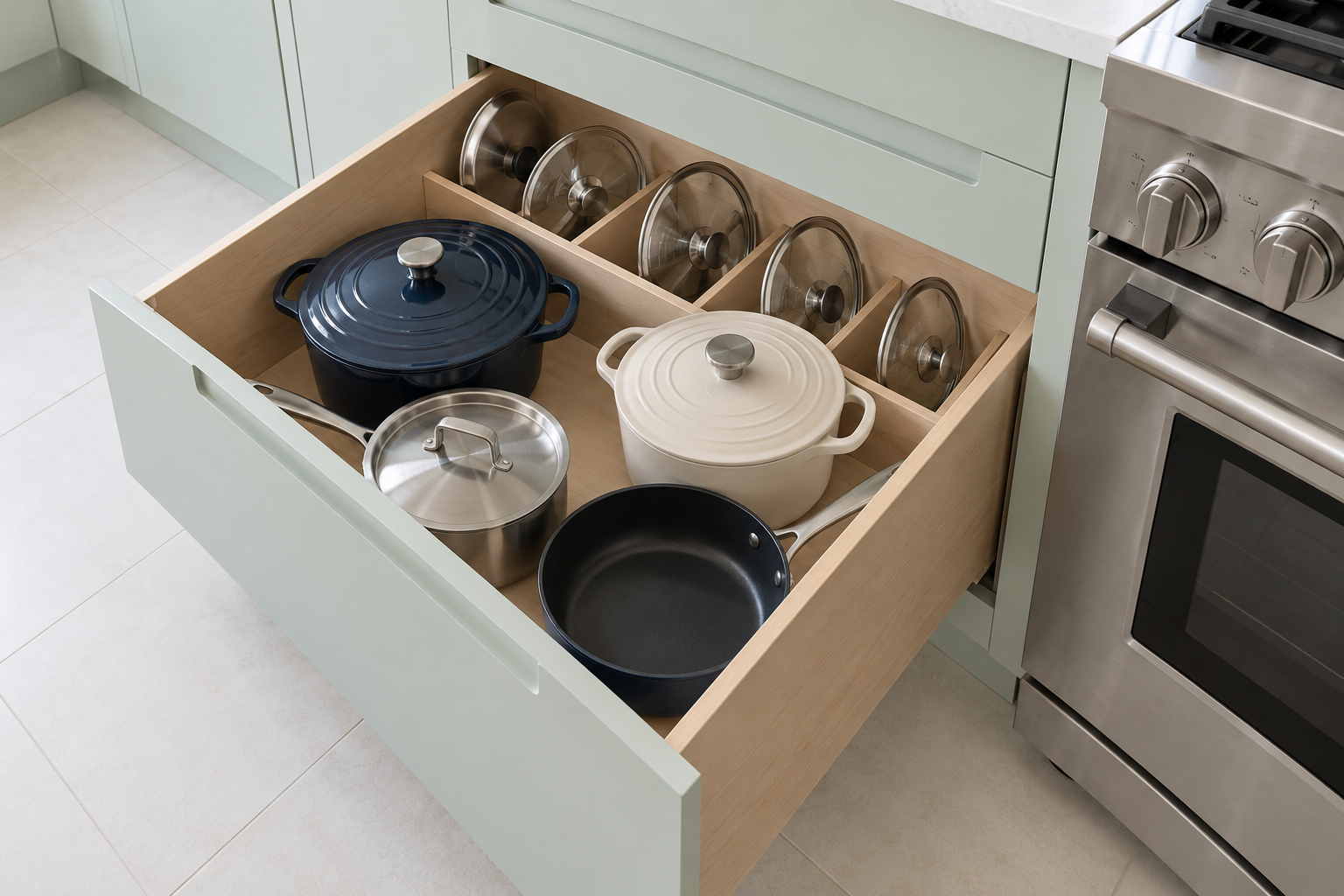
Deep drawers beside or under the stove beat base cabinets with doors. A drawer pulls out and shows everything from above, while a base cabinet makes you kneel and reach past the front pans to get the one at the back. Put the heaviest pots in the lowest drawer, and stand the lids upright in a slotted divider or keep each lid on its own pot.
If the kitchen has only base cabinets, pull-out shelves fitted inside them do most of what a drawer does. A frying pan used every day can also live on the stovetop or on a hook within reach.
Store Prep Tools at the Prep Counter
Knives, cutting boards, mixing bowls, and measuring cups belong at the counter where the chopping happens. Knives go in a drawer insert or a block on the counter, where the blades stay covered. Cutting boards stand upright in a narrow cabinet or a slot beside the counter, so any one of them slides out without lifting the others off it.
Put mixing bowls, measuring cups, and the grater in the drawer or cabinet directly below the prep area. Everything for getting a meal ready then comes out without leaving that stretch of counter.
Work Under the Sink Around the Pipes
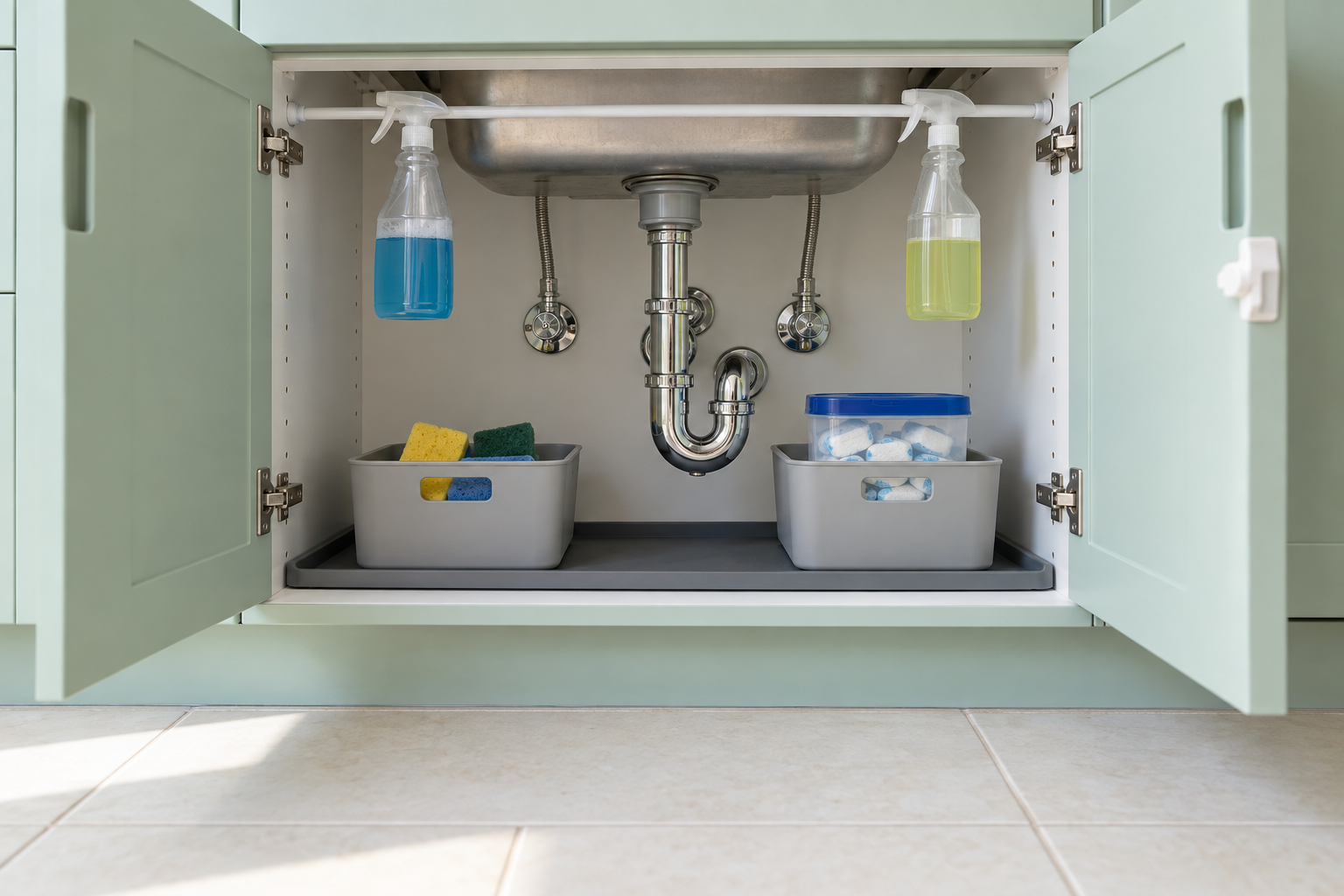
The sink cabinet loses its middle to the trap and the water pipes, so plan for the two sides. A lidless bin on each side of the pipes, or a U-shaped pull-out drawer made to fit around them, holds sponges, dish soap refills, and dishwasher tablets. A tension rod across the top of the cabinet holds spray bottles by their triggers and frees the floor below.
Set a shallow tray or a waterproof mat on the cabinet floor so a slow leak shows up before it damages the base. If young children live in the house, fit a childproof latch to the doors, or move cleaning products up to a high cabinet.
Send Rarely Used Things Up High
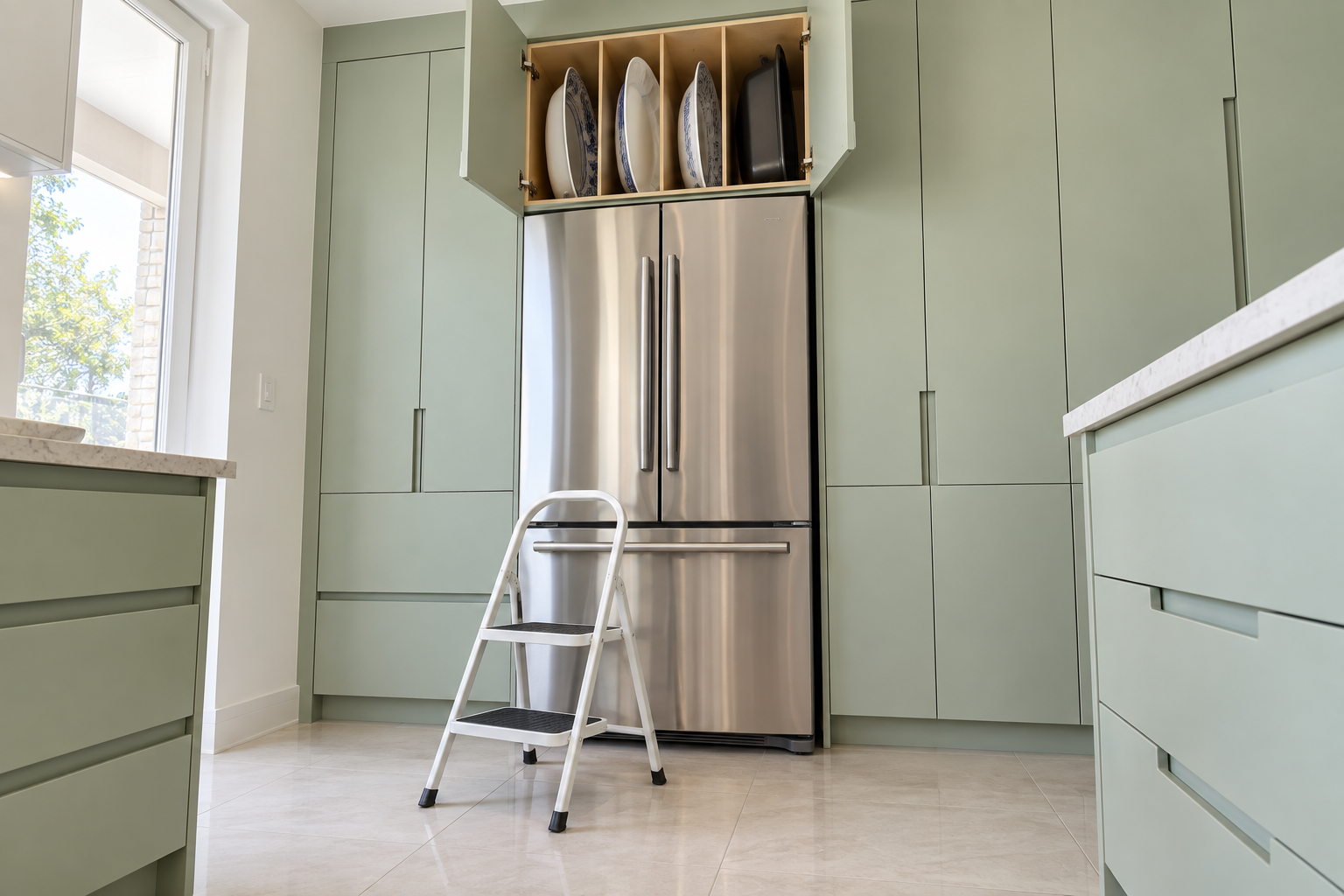
The cabinet above the fridge, the top shelves of the upper cabinets, and the back of a corner cabinet are the hardest places in the kitchen to reach. Keep them for things that come out a few times a year: large platters, the roasting pan, cake tins, holiday dishes. Stand platters and trays on edge in a vertical divider, so one comes out without lifting the rest.
Keep heavy things low, whatever their use. A cast iron pan or a stand mixer lifted down from above head height is easy to drop. Store a folding step stool in the kitchen, so nobody climbs onto the counter to reach the top shelf.
Contain the Small Loose Things
Spices, food storage containers, and rolls of foil and wrap spread out wherever there’s room unless each has a set place. Keep spices in a drawer or cabinet near the stove, but not directly above it, since heat and steam from cooking make them lose flavor faster. Nest food storage containers inside each other and stand the lids upright in a separate bin, so matching a lid to its container doesn’t mean emptying the shelf.
Give foil, plastic wrap, and parchment one shallow drawer near the prep counter. The same rule of one set place for each type of thing, used across the rest of a home organization system, keeps these from turning up in every drawer.
Frequently Asked Questions
How do you organize a corner cabinet?
An L-shaped corner cabinet usually takes a two-tier turntable, which brings the back of the cabinet to the front with a turn. A blind corner, where one cabinet runs past the other, can take pull-out shelves on a swing-out frame. If neither fits, keep the reachable front for things used monthly and the far back for things used once a year.
Are pull-out shelves worth adding to base cabinets?
For deep base cabinets, usually yes. They bring the back of the cabinet to you, so pots and small appliances don’t get lost behind each other. Retrofit kits fit most cabinets, but measure the inside width at the narrowest point, since hinges and the face frame can take an inch or more from the opening.