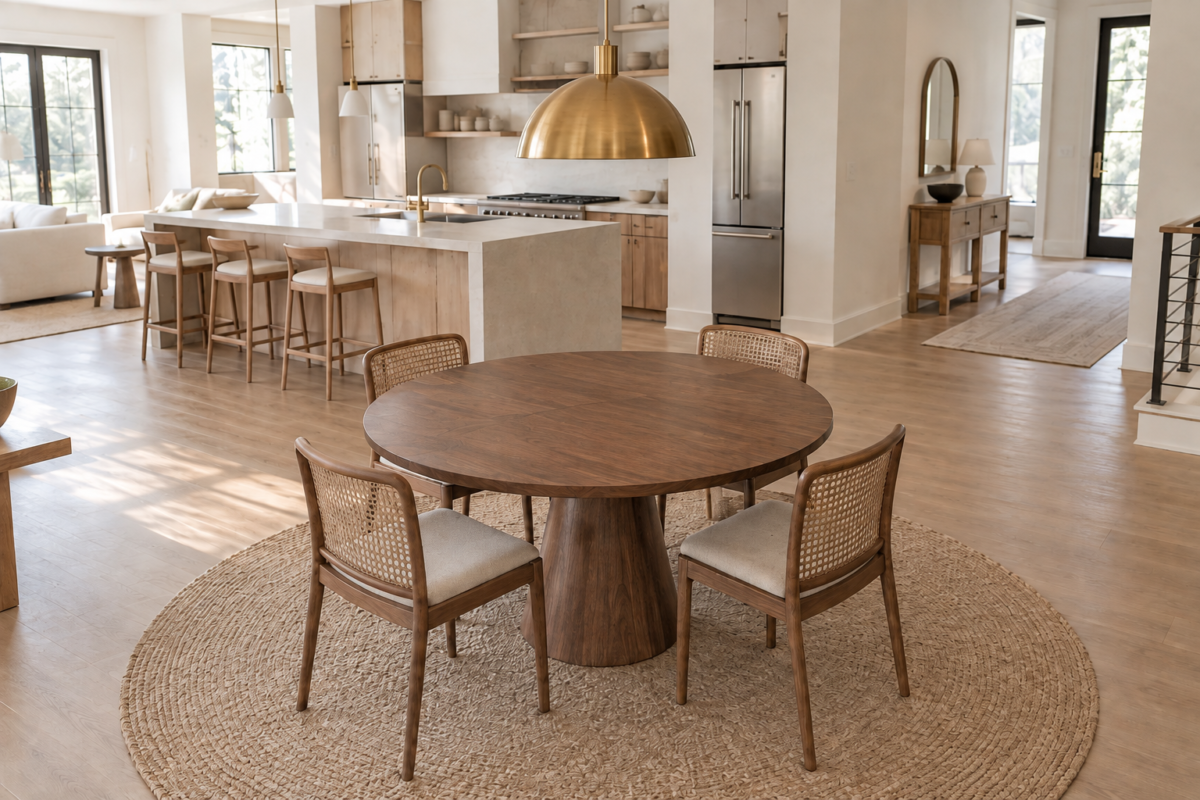
Furniture ends up against the wall for the same reason most defaults happen: nobody decided otherwise. It looks safe, it keeps the middle of the room empty, and it’s what a mover does without being told anything different. None of that makes it the better layout. Pulling furniture a real distance off the wall, floating it, usually reads as a more considered room, and it does more functional work than the wall-hugging default ever does.
This isn’t true in every room, and it isn’t true by accident. Floating furniture works when a few specific conditions are actually met, and it fails in some genuinely common situations. Both are worth knowing before rearranging anything.
Floating Turns Furniture Into a Group, Not a Perimeter
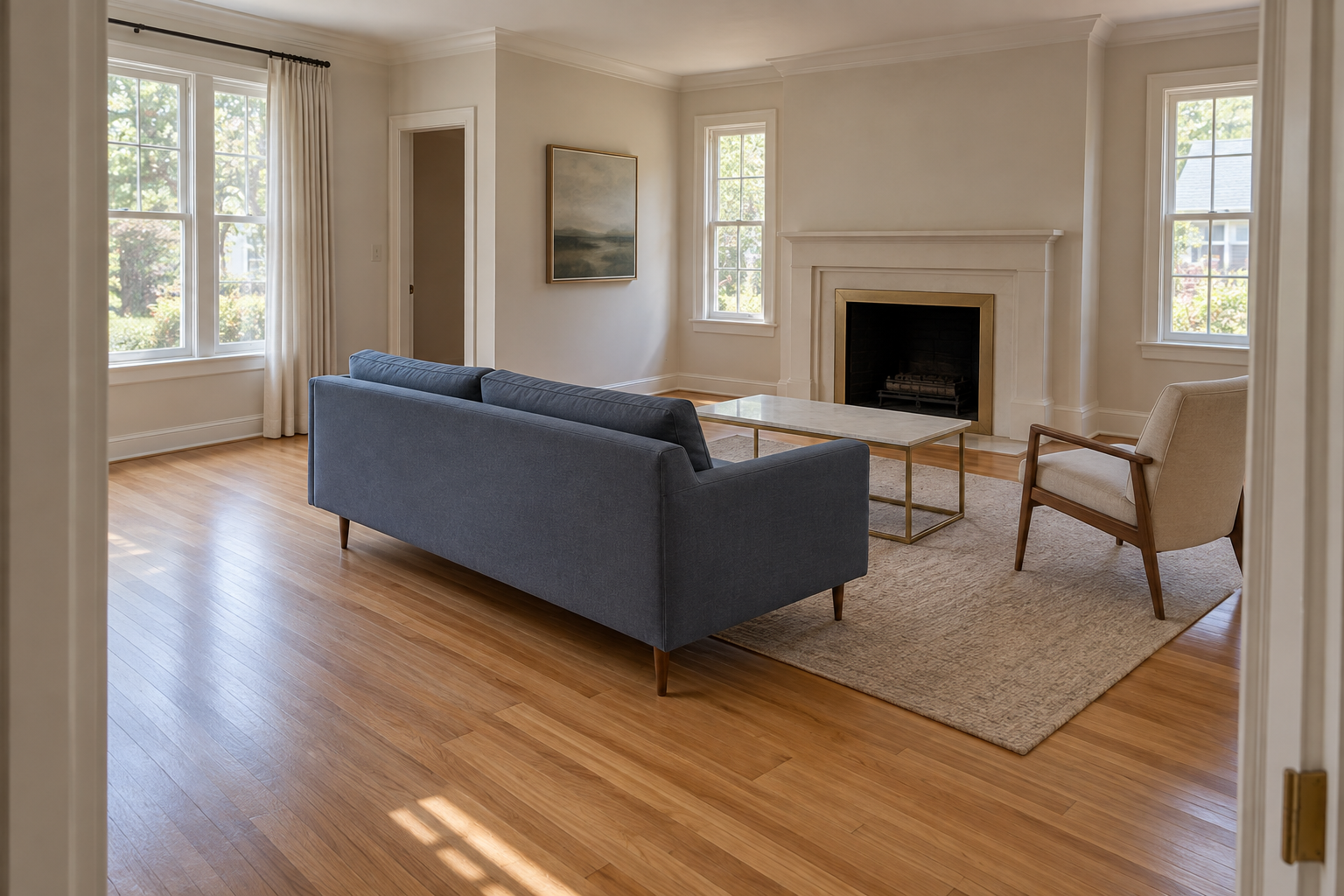
Furniture pushed to the walls reads as containment, not composition. Every piece ends up facing the middle of an empty room instead of facing each other, which is part of why a wall-hugged living room can feel oddly formal even when nothing in it is expensive or uncomfortable. Pulling the seating away from the wall and turning it toward a shared center, a fireplace, a rug, a coffee table, changes what the room is organized around. It stops being organized around the walls and starts being organized around the people using it.
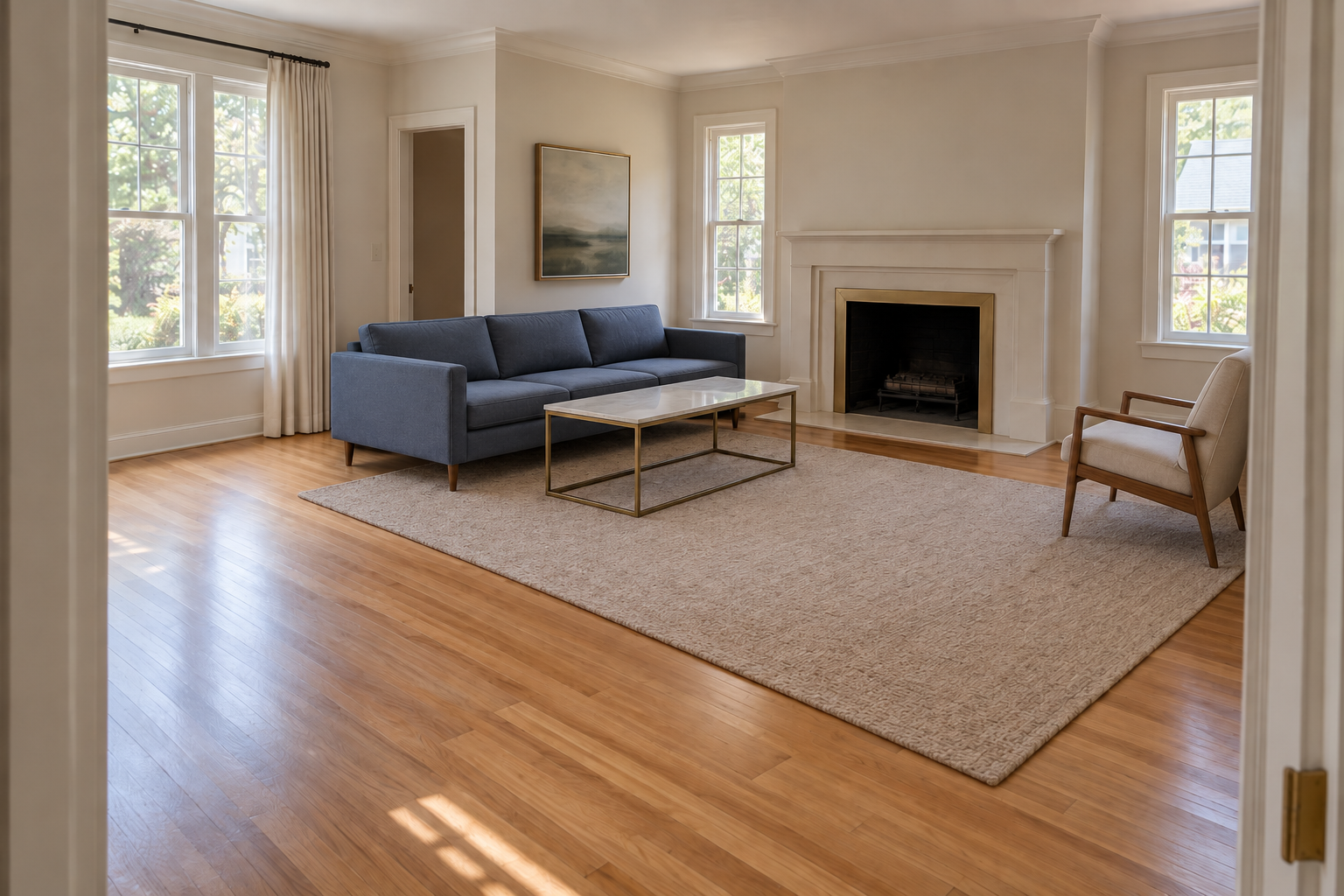
The floor space this leaves behind the sofa isn’t wasted. It reads as evidence that the arrangement was chosen, not inherited from wherever the furniture happened to land during a move.
A Floated Layout Needs Something Real to Arrange Around
Floating furniture fails when it has nothing to face. A sofa pulled to the middle of a room with no fireplace, no window, no real focal point in front of it just reads as a sofa in the middle of a room, adrift rather than composed. The floated arrangement needs a real anchor, a fireplace, a media wall, a dining table, a window worth facing, or it loses the entire reason for being pulled off the wall in the first place.
This is also why a rug matters more once furniture is floated than it does when everything sits against the walls. A rug under a floated grouping draws the boundary the walls used to draw for free, and a grouping with no rug and no wall behind it can read as unanchored rather than intentional.
Bedrooms and Dining Tables Float on Different Logic Than a Sofa Does
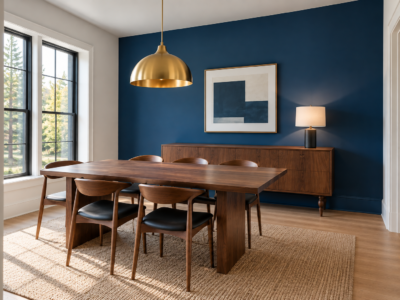
A dining table almost always floats by necessity, since it has to be reachable from every side, and an open-plan table backed against a wall on one side usually just means someone eats with their back to the room. The floating decision there is less about intention and more about the table simply needing clearance on every side to function.
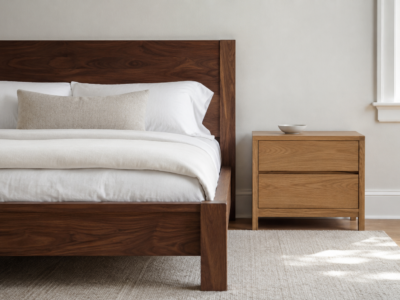
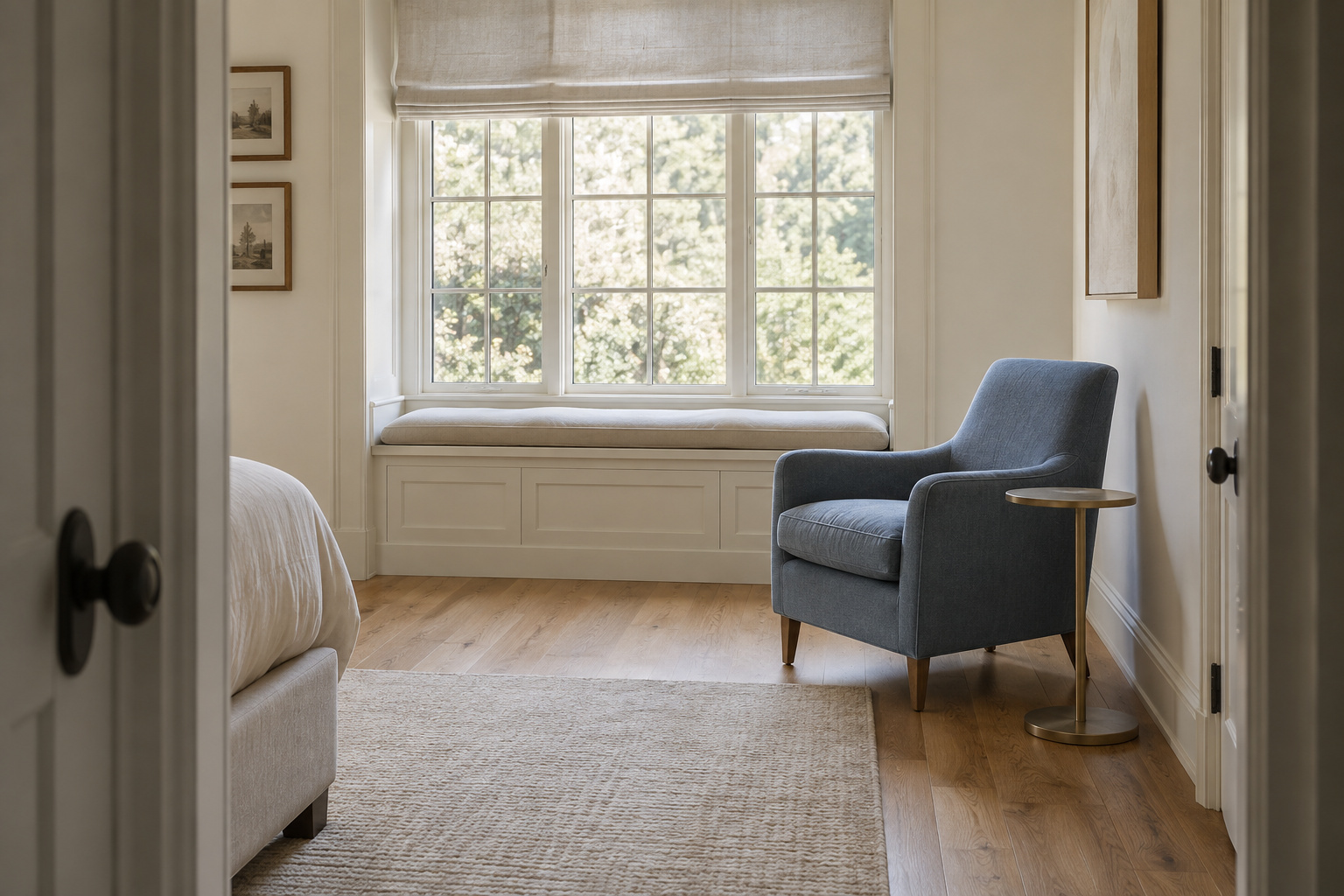
A bedroom floats on a smaller scale. A single accent chair pulled toward a window, rather than pushed into whatever corner is left over, does the same intentional work a living room grouping does, just with one piece instead of five. The bed itself is the exception in most bedrooms, since a headboard against the wall is both structural convention and, in most rooms, the only wall long enough to hold it.
Commit to the Distance or Skip It
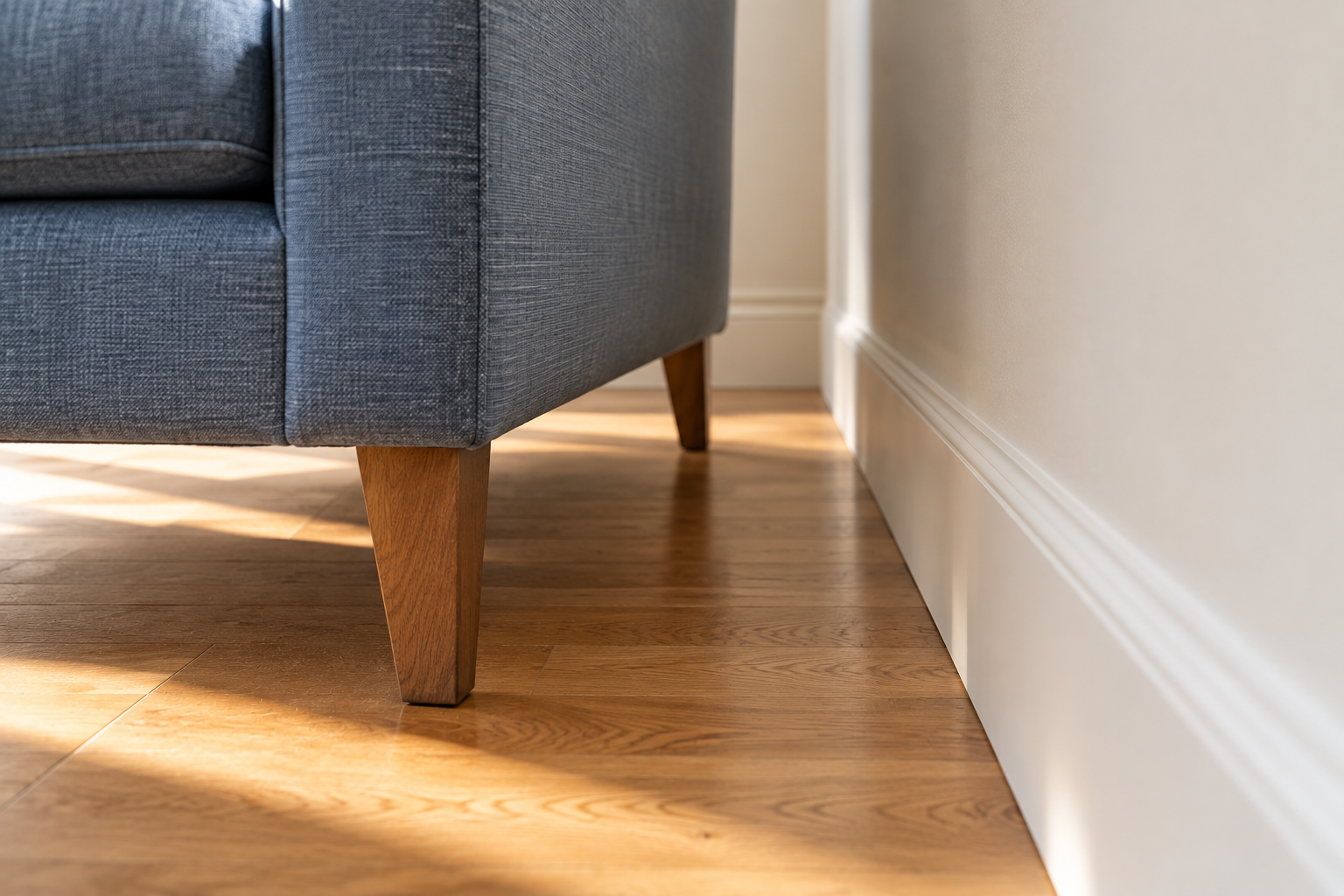
A sofa pulled six inches off the wall looks like a mistake, not a decision. It reads as furniture that didn’t quite make it into place rather than furniture that was deliberately floated, and it wastes the floor space without gaining the visual or functional benefit a real float provides. The distance needs to be large enough to read as a choice, generally enough room for a console table, a walkway, or clear negative space behind the piece, not a narrow gap that looks like an installation error.
If the room can’t support a real, visible gap, it’s better to push the piece flush against the wall on purpose than to leave it stranded a few token inches out.
When There’s Not Enough Floor to Give Any Up
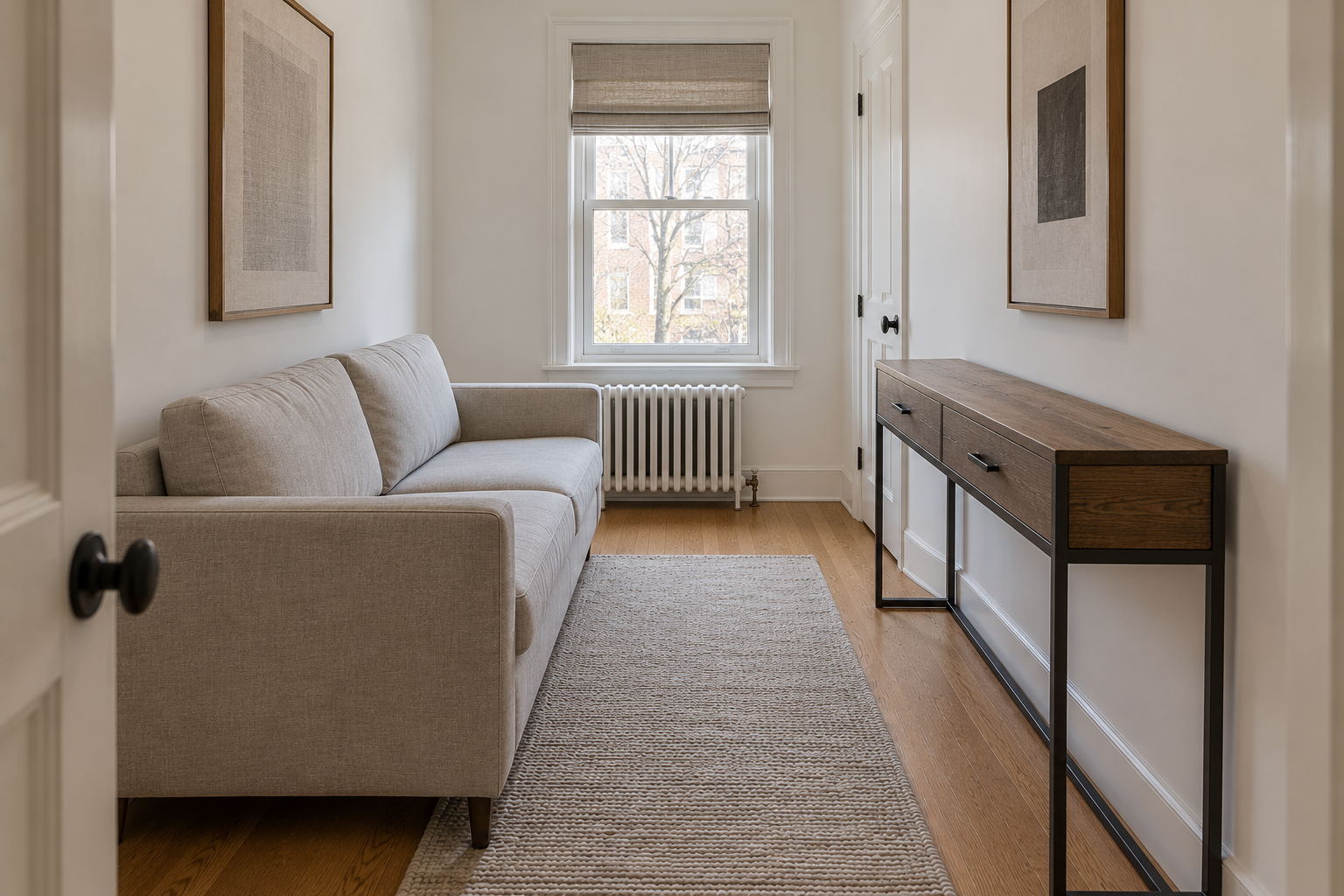
Some rooms genuinely don’t have the width to spare. A narrow den or a tight secondary living space can lose its only usable walkway the moment furniture pulls away from the wall, and no amount of intentional arrangement fixes a room that’s simply too tight for the floor floating requires. In a room like that, furniture against the wall isn’t a missed decision. It’s the correct one, and a small living room usually needs a different set of fixes entirely rather than trying to force a floated grouping into floor space that doesn’t exist.
Frequently Asked Questions
How far should furniture actually be pulled off the wall?
Enough to read as deliberate, which usually means at least a foot for a smaller accent piece and closer to two feet behind a sofa if a console table or walkway is meant to use that space. A gap under that starts reading as an accident rather than an arrangement.
Does a floated sofa need to be a correctly sized one first?
Yes, and it’s worth checking separately. Floating changes where a sofa sits, not how big it is, so a sofa that’s already too large for its room will still crowd a floated layout the same way it would crowd a wall-hugged one.