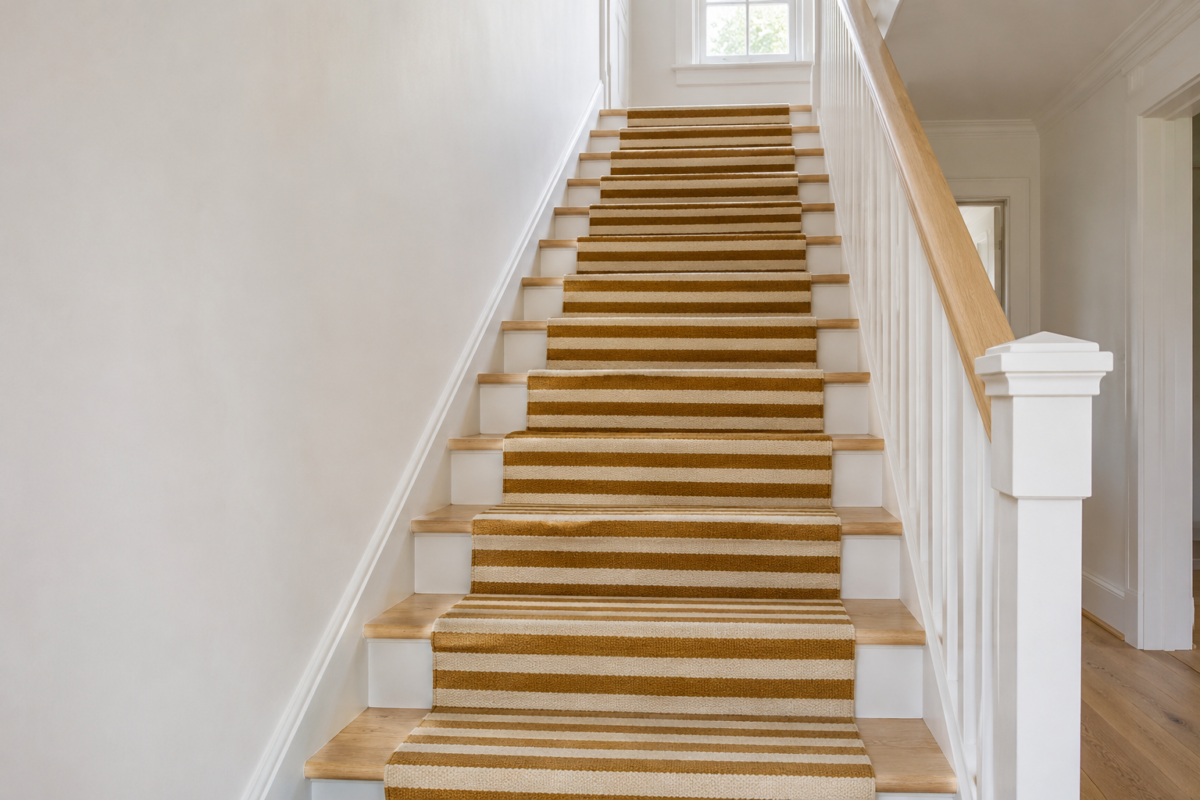
A stair runner covers the middle of each step and leaves the wood showing at the sides, which is what separates it from wall-to-wall stair carpet. Two numbers decide whether it fits. The width is usually set to leave about 3 to 4 inches of tread visible on each side, and the length comes from adding up the depth of every tread and the height of every riser it covers.
Both have to be right before ordering. Most runners are sold in a handful of fixed widths and cut to length, and on a stair a runner that comes up a few inches short can’t be stretched or moved along the way a rug on a floor can.
Measuring the Stair
Measure the width of a tread where the runner will lie, from the wall or the baseboard on one side to the stringer or balustrade on the other. Where a wall and a balustrade sit at different distances, measure the open tread between them, since that’s the strip the eye compares the runner against.
Then measure one tread from the back, where it meets the riser, to the front edge of the nose, and one riser from the top of the tread below to the edge of the nose above it. Do this on three or four steps, top, middle, and bottom. Older staircases vary a little from step to step, and the largest numbers are the ones to work from.
The Wood Left Showing at Each Side
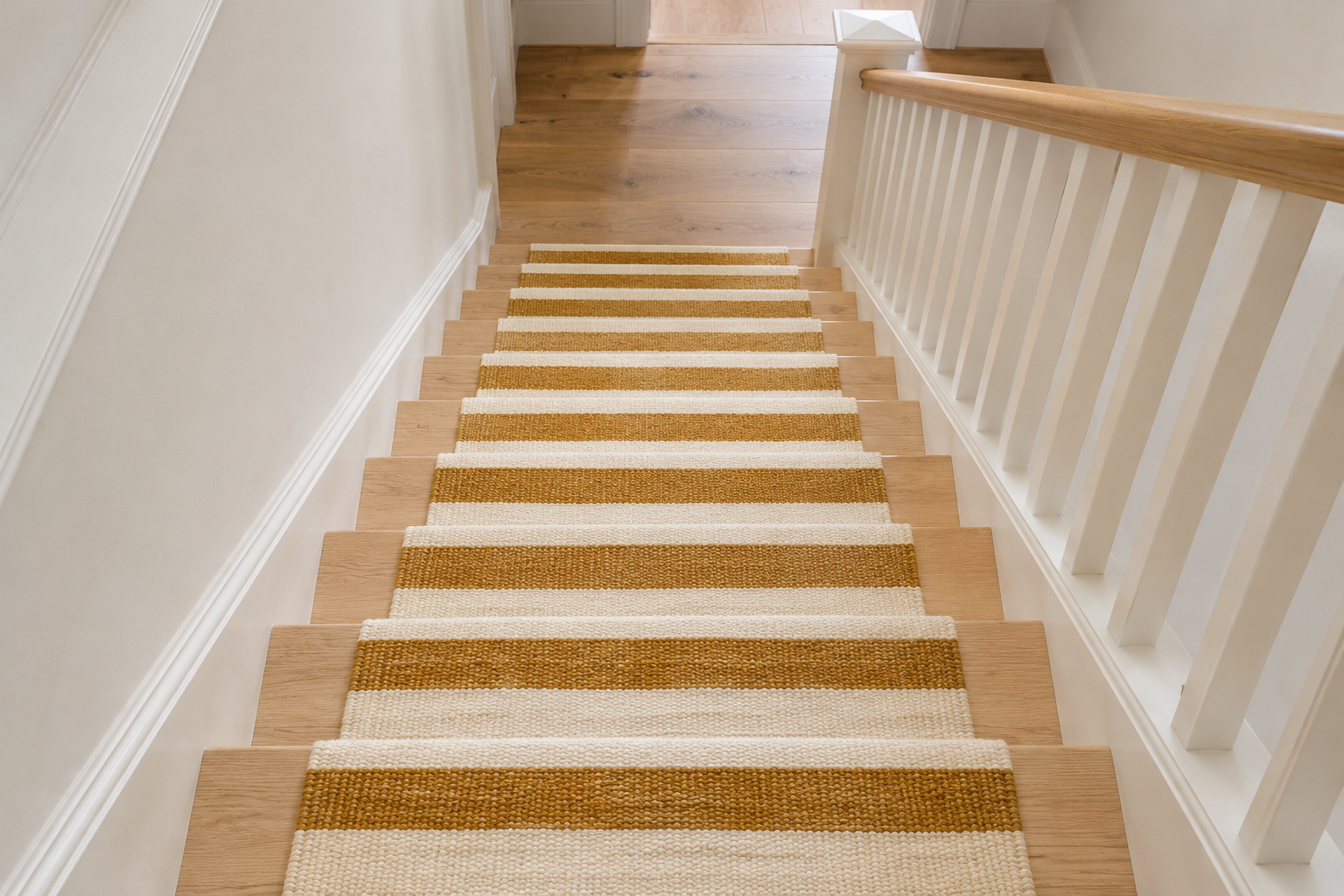
A runner usually leaves about 3 to 4 inches of tread showing on each side. That margin is narrower than the 4 to 6 inches a hallway runner leaves on a floor, because a stair is seen from below and at an angle, and a wider band of wood at every step adds up to a lot of bare tread.
| Tread width | Runner width | Wood showing each side |
|---|---|---|
| 33 in | 27 in | 3 in |
| 36 in | 27 in | 4 1/2 in |
| 36 in | 30 in | 3 in |
| 40 in | 32 in | 4 in |
| 42 in | 36 in | 3 in |
Many houses have stairs about 36 inches wide, which is why 27 inches is the most common runner width. When the measurement falls between two standard widths, the narrower runner is the usual choice. A little more wood showing looks even, while a runner that nearly reaches the sides looks like carpet cut short.
Working Out the Length
For each step, add the tread depth to the riser height. Multiply that by the number of steps the runner covers, then add one more riser for the last step up to the floor at the top.
As an example, a straight flight with 12 treads and 13 risers, each tread 10 inches deep and each riser 7 1/2 inches high, needs 12 times 17 1/2 inches, which is 210 inches, plus one more riser of 7 1/2 inches. That comes to 217 1/2 inches, about 18 feet 1 1/2 inches. Allow a few inches more at each end for finishing, and order the next length up that the runner is sold in.
Waterfall or Hollywood
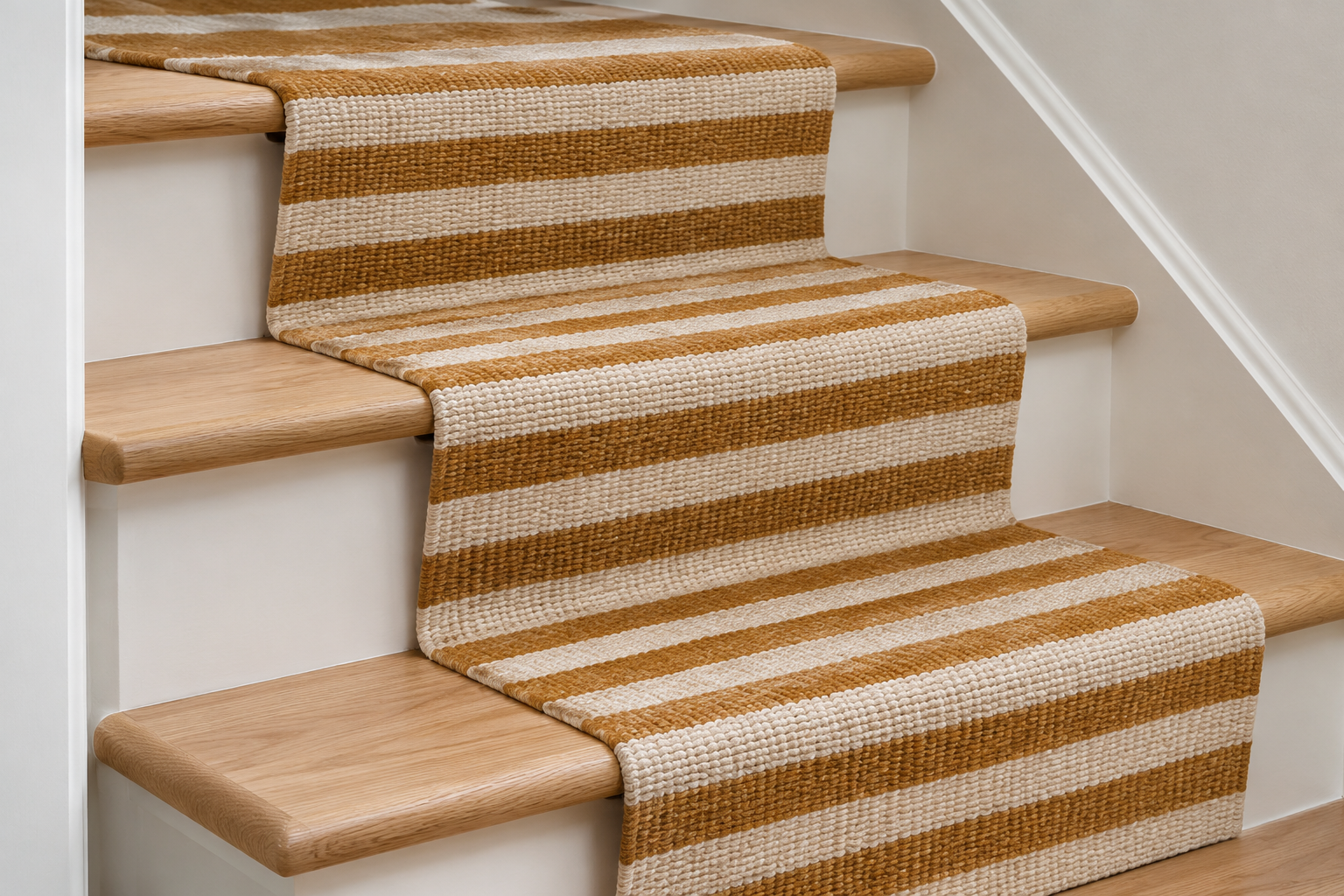
There are two common ways a runner goes over the nose of each step. In a waterfall install, it lies flat on the tread and drops straight down from the edge of the nose to the next tread, standing a little off the riser. It suits thick or stiff weaves that don’t bend tightly, and it needs about the length the formula gives.
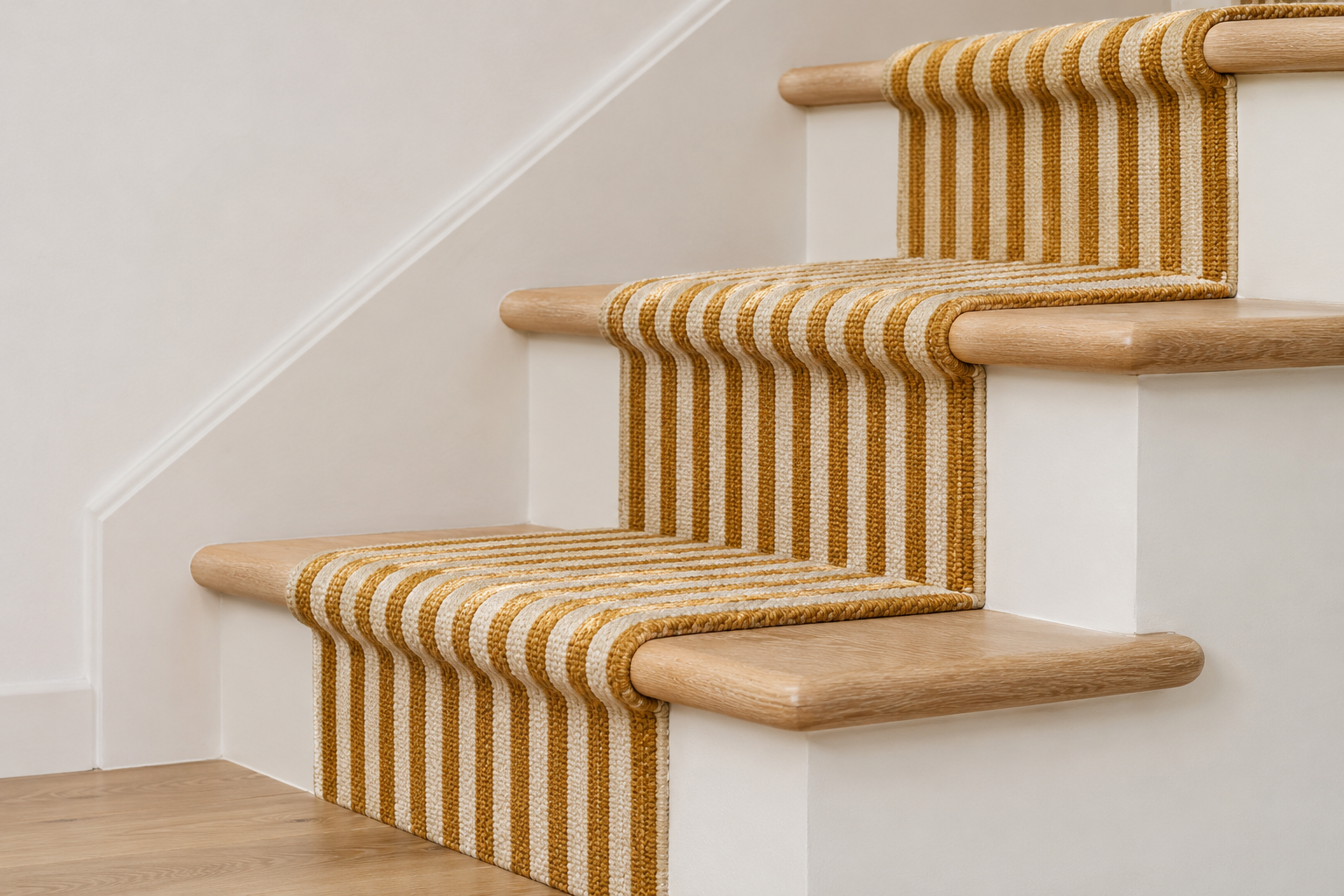
In a Hollywood install, also called upholstered, the runner wraps tightly under each nose and is fixed flat against the riser. It shows the shape of every step and suits a thin, supple flatweave. Following the curve under the nose takes a little more runner, an inch or so per step, so add that to the total before ordering.
Landings and Turns
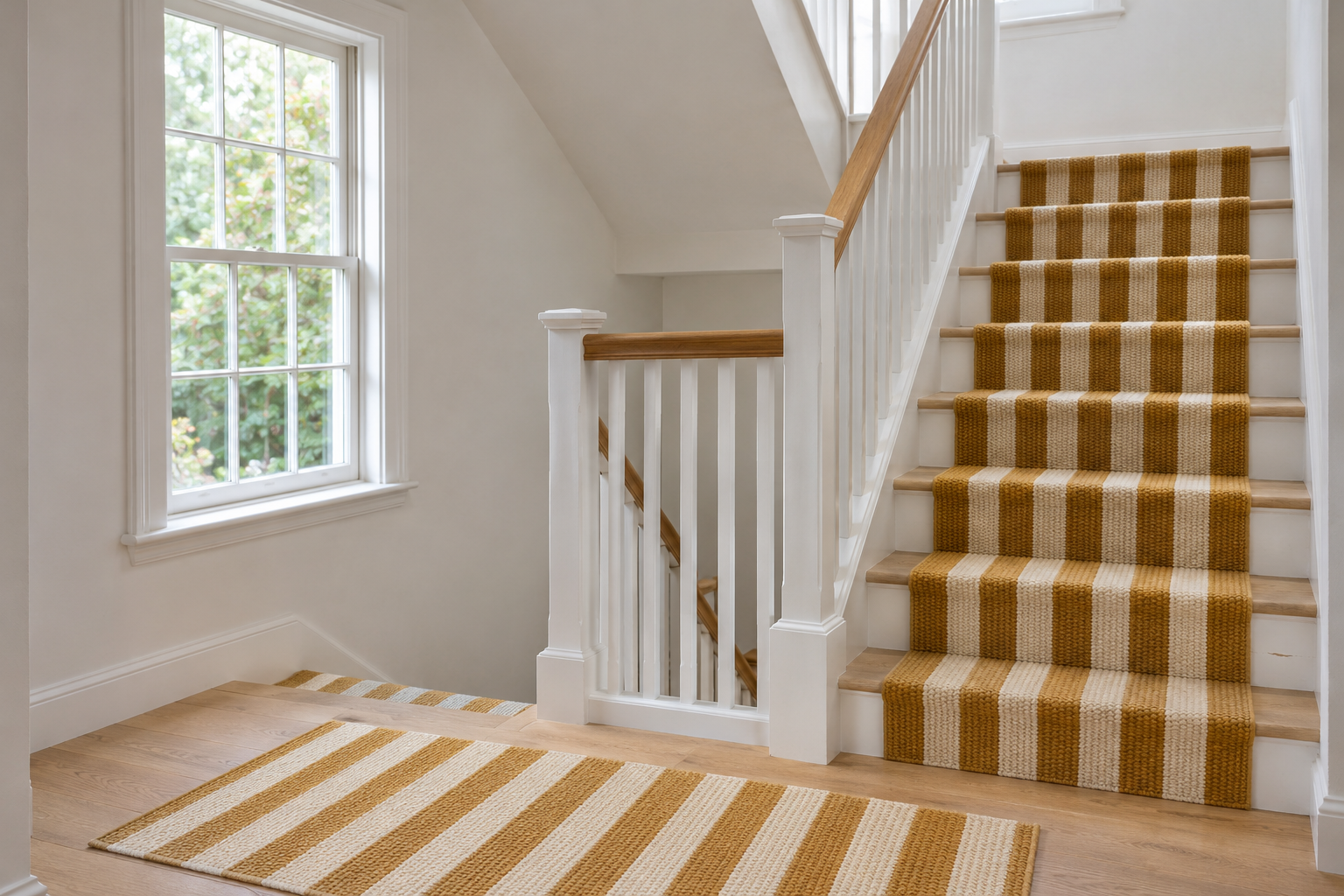
A straight flight takes one continuous runner. A landing usually takes a separate piece, laid on the landing floor with the same margins of wood around it and its pattern running the same way as the runner on the stairs, so the two look like one length when seen from below.
Measure each flight and each landing on its own and add them. Winders, the wedge-shaped steps on a curving stair, need the runner cut and fitted step by step, since no straight runner lies flat on a tapering tread. That work is usually left to the installer.
Holding It on the Stair
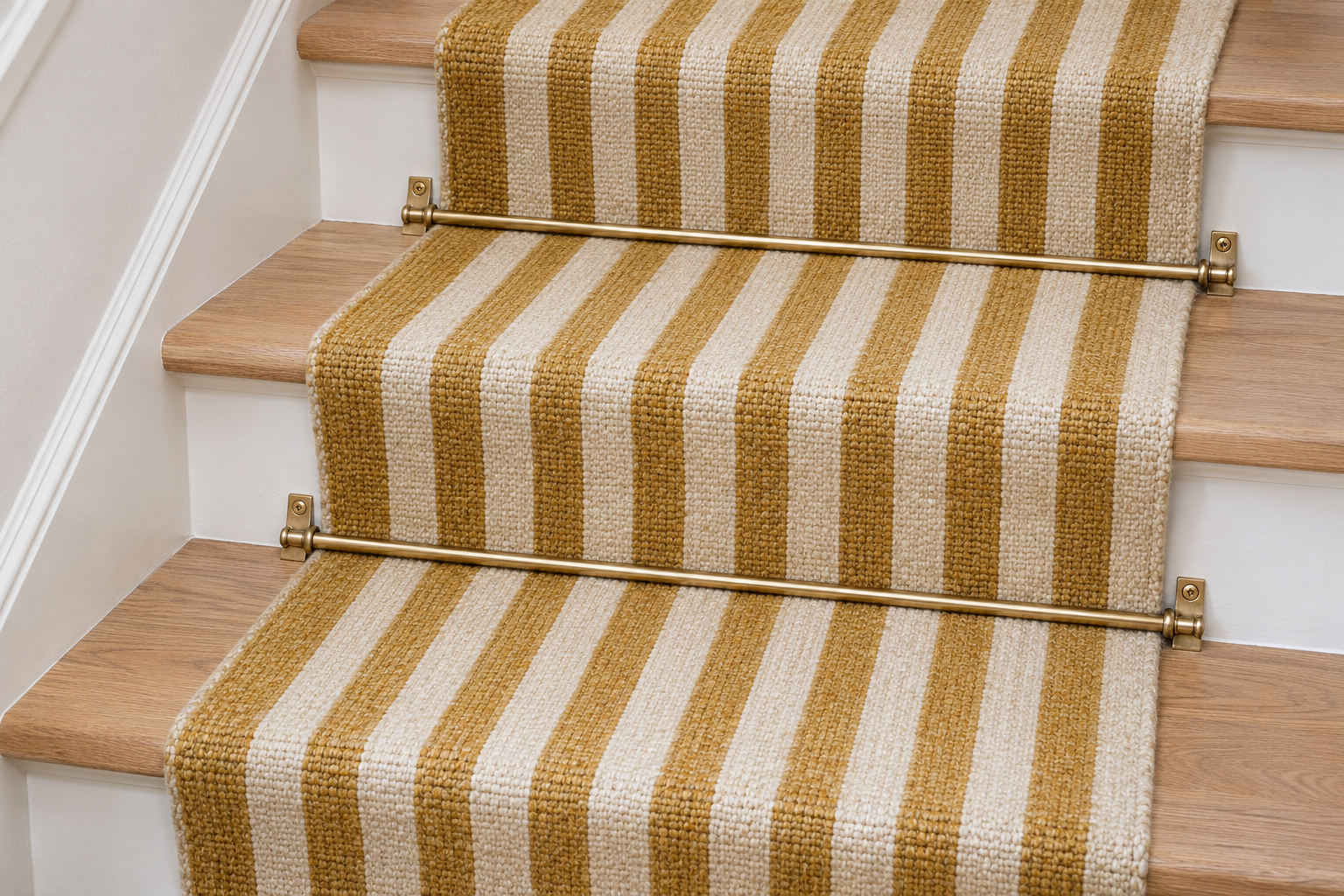
A runner is held at every step, fixed into the joint where the riser meets the tread, so it can’t creep or bunch under a foot. A loose runner on a stair is a tripping hazard in a way a loose rug on a floor is not.
A thin, firm pad under the runner cushions each step and stops the weave from wearing against the nose. A thick, soft pad rounds the edge of each step and makes it less certain underfoot. Brass rods across the base of each riser were once how runners were held down, and today they’re mostly decorative, fitted over a runner that is already fixed.