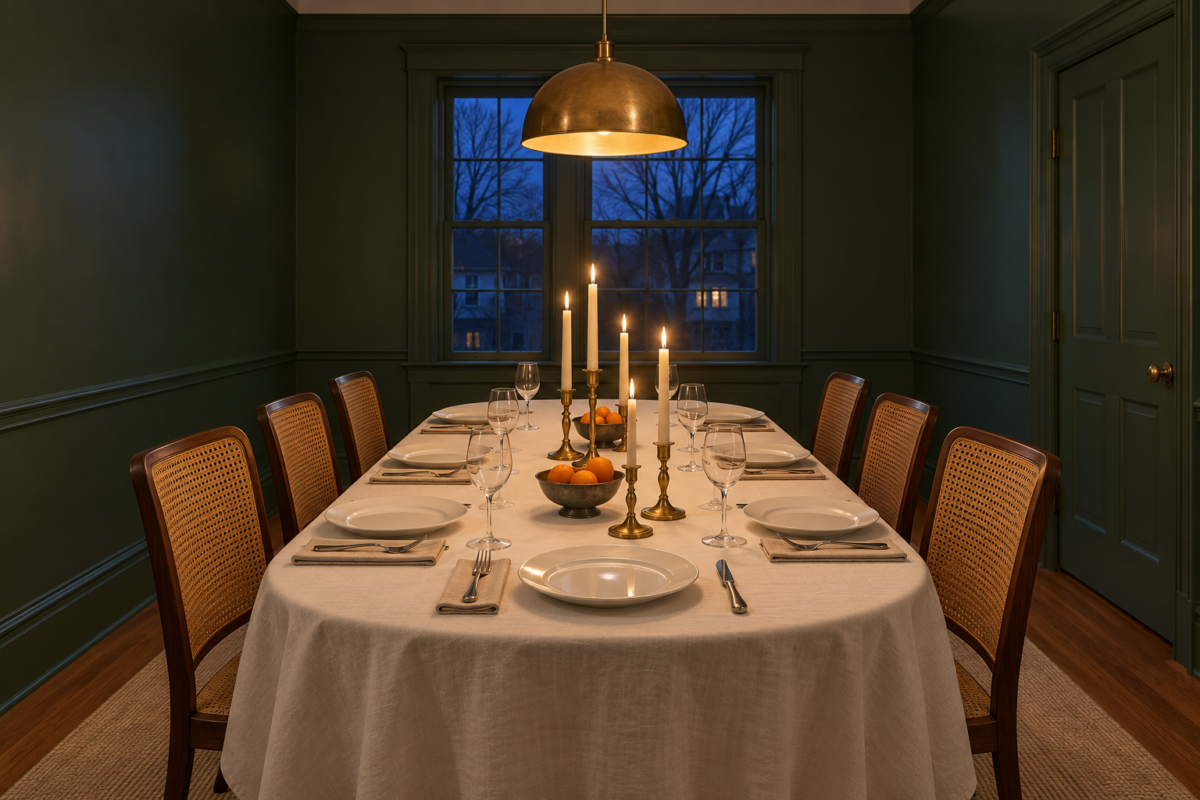
A Christmas dinner table carries more than any other meal of the year, with a roast and four or five dishes, glasses for wine and water, more chairs than usual, and whatever has been put down the middle to make it look like Christmas. The decoration has to fit around all of that, and around the conversation. Anything taller than the eye line of a seated guest splits the table into two halves that can’t see each other.
It also has to suit the hour. Dinner usually starts after dark, so the table is lit by candles and the lamp above it, and an open flame needs more room around it than a centerpiece of dry greenery leaves. A table that will hold the food needs its decoration kept low, moved to the ends or overhead, or taken to the sideboard with the dishes, and most of the ideas below take one of those routes.
Run a Garland Down the Middle
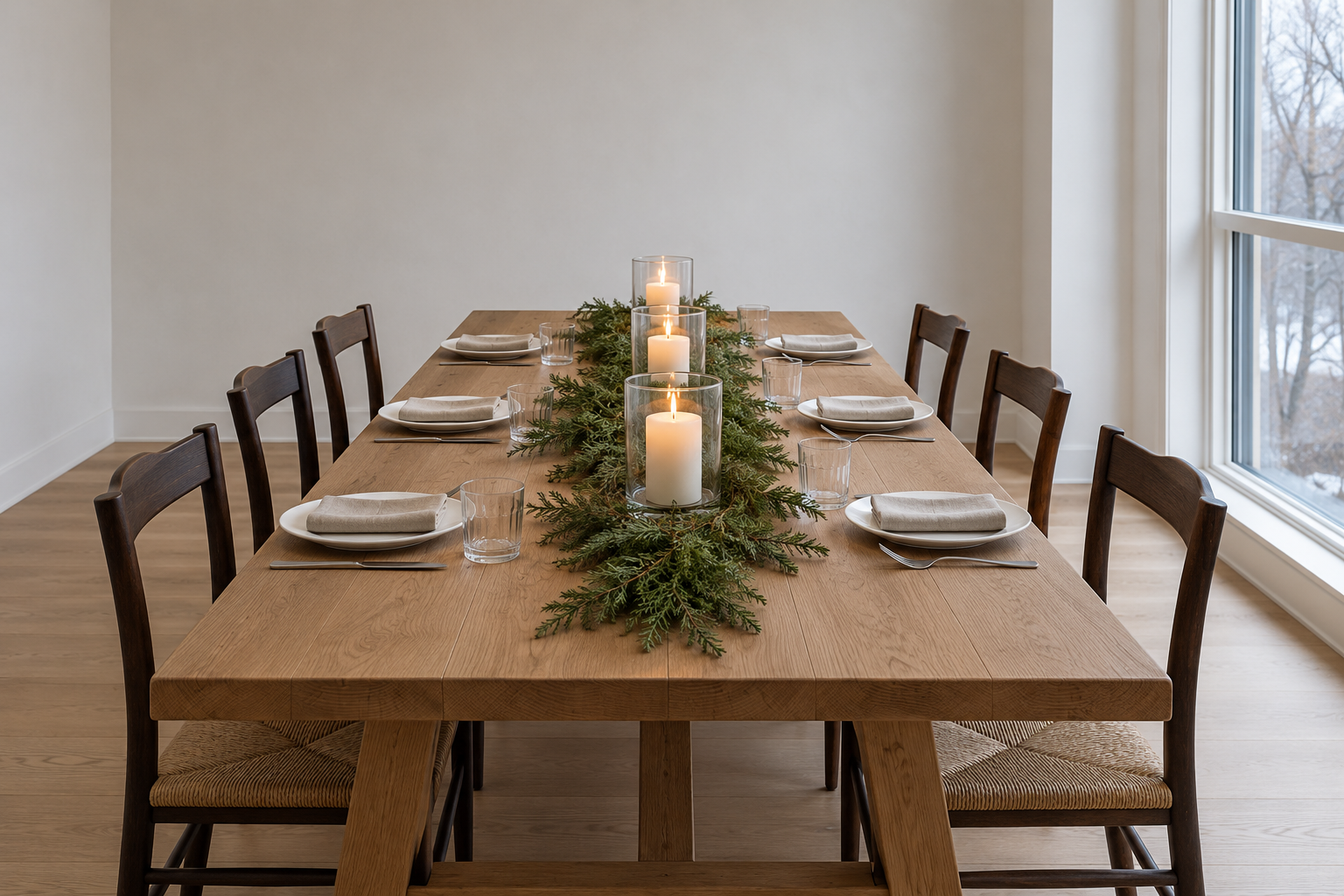
A garland laid along the center of a long table gives the whole length some green without anything tall. Cedar and fir lie flat, so guests see each other over them, and both keep their color through an evening without water. Make it about two thirds the length of the table, which leaves the ends free for a dish or a jug, and lay it on the day of the dinner, since cut greens dry out on a table in a heated room.
The garland is the wrong place for an open flame. A lit candle should stay at least a foot from anything that can burn, and greenery is no exception. Candles that sit in the greenery belong inside tall glass hurricanes, with the flame well below the rim, or are flameless. Tapers go elsewhere on the table.
Lay a Wreath Flat on a Round Table

On a round table the center is a single point, which a long garland doesn’t suit. A wreath laid flat fits it, a ring of green that leaves the middle open and the edges free for the plates. Boxwood keeps a tight, even shape and doesn’t shed, and a plain wreath with no bow looks right lying down, where a bow made for a door would sit on its side.
Put one candle in the middle of the ring, inside a short hurricane, and the wreath frames it. A wreath around 16 inches across suits a table of about 48 inches, leaving about 16 inches on every side for the four places.
Pile Fruit on a Footed Stand
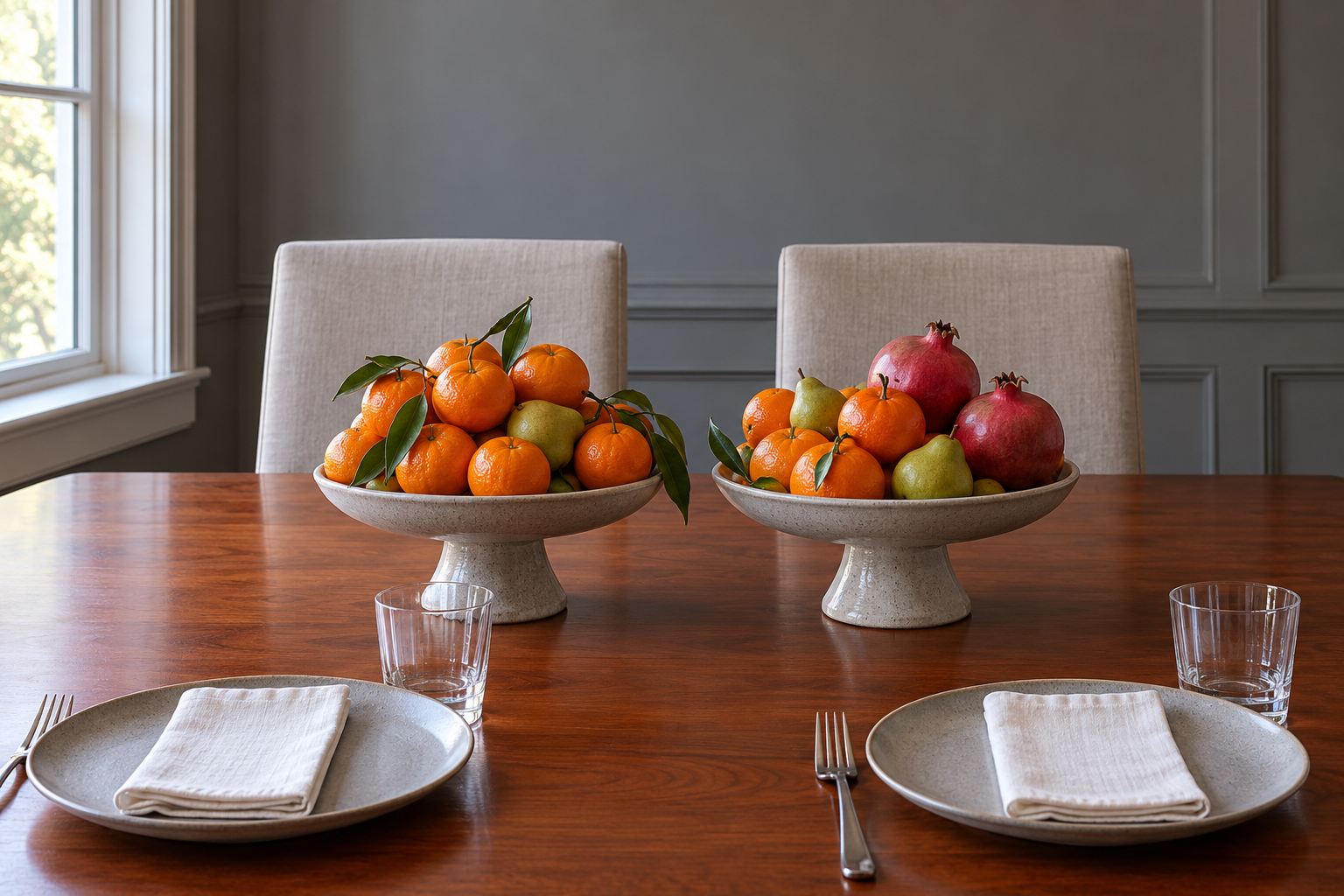
Clementines, small pears, and pomegranates piled on a footed stand give the table color without a single stem. A stand lifts the fruit a few inches, enough to look generous, while the pile stays far below the face of the person opposite. Two stands down a long table look better than one big bowl in the middle, and they leave space between for the serving dishes.
Fruit is also the one centerpiece people take from. The clementines get eaten after dinner and the stand ends up half empty, which is the point. Leave a few leaves on the clementines if they come with them, and nothing else is needed.
Plant a Row of Small Trees Down the Table
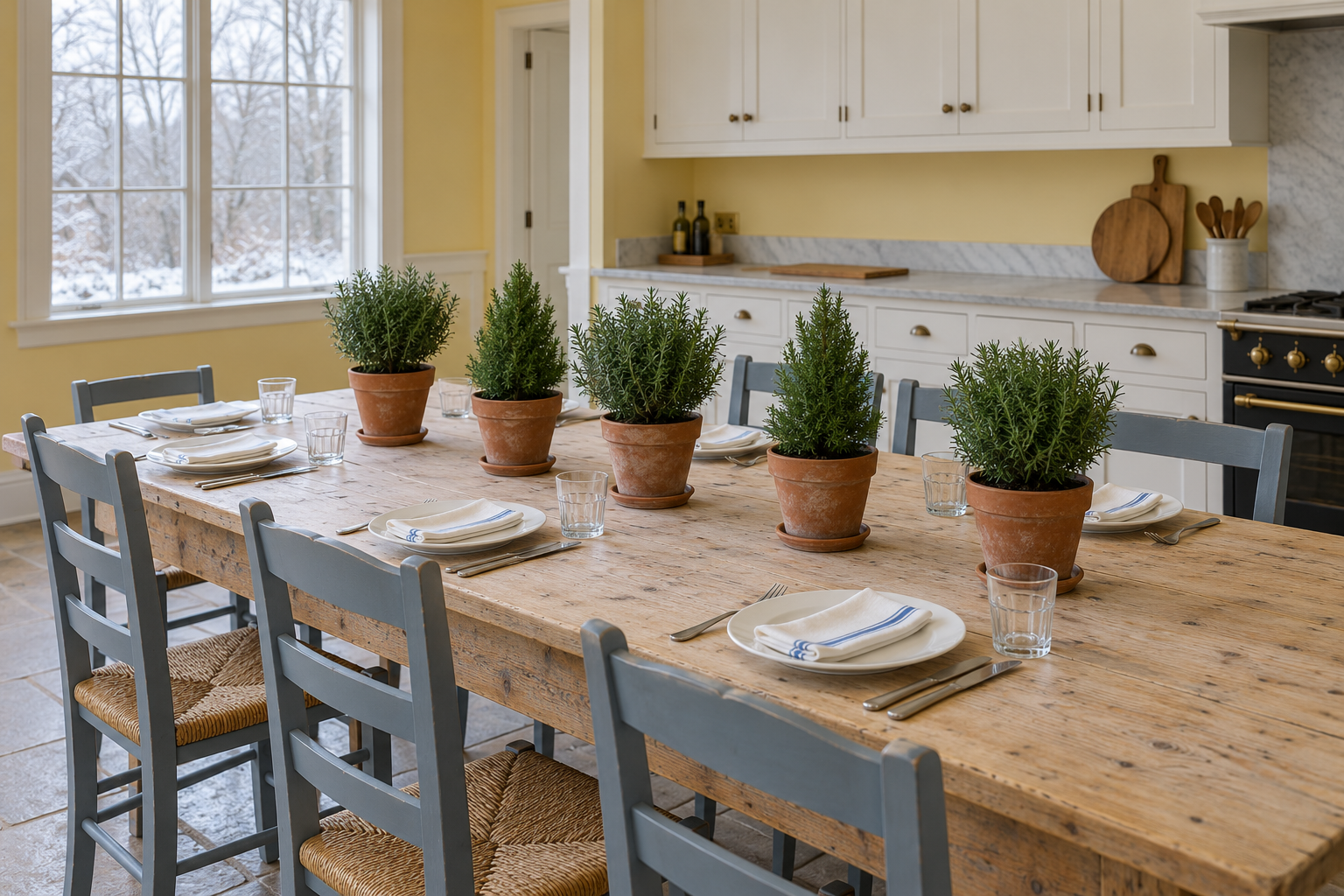
Small potted trees in a row look like a miniature avenue down the table: rosemary clipped into rounds, dwarf conifers, or a mix of both, each in a plain terracotta pot on a saucer. Keep them to about a foot tall so nobody has to look around them, and keep the pots identical, so the plants are what varies.
Unlike cut greens, these are still alive in January. Rosemary goes back on a sunny windowsill or out to a sheltered spot in mild climates, and a hardy dwarf conifer can be planted out once the ground is workable. Five pots suit a table for six, and three is about the fewest that still looks like a row.
Light the Table With Tapers Alone

A table lit only by candles needs nothing else in the middle. Gather candlesticks of different heights and finishes, brass and pewter, old and new, in a loose group down the center, and the flames at different levels become the decoration. Mismatched pieces look collected over years, not bought as a set.
With no greenery on the table, nothing sits close enough to the flames to catch, which is why this idea suits a household that wants open flames without counting inches. A bare table shows wax more than a cloth does. Dripless tapers cut down on it, and a drip on oiled wood can usually be lifted once it has hardened.
Hang Greenery From the Light Above
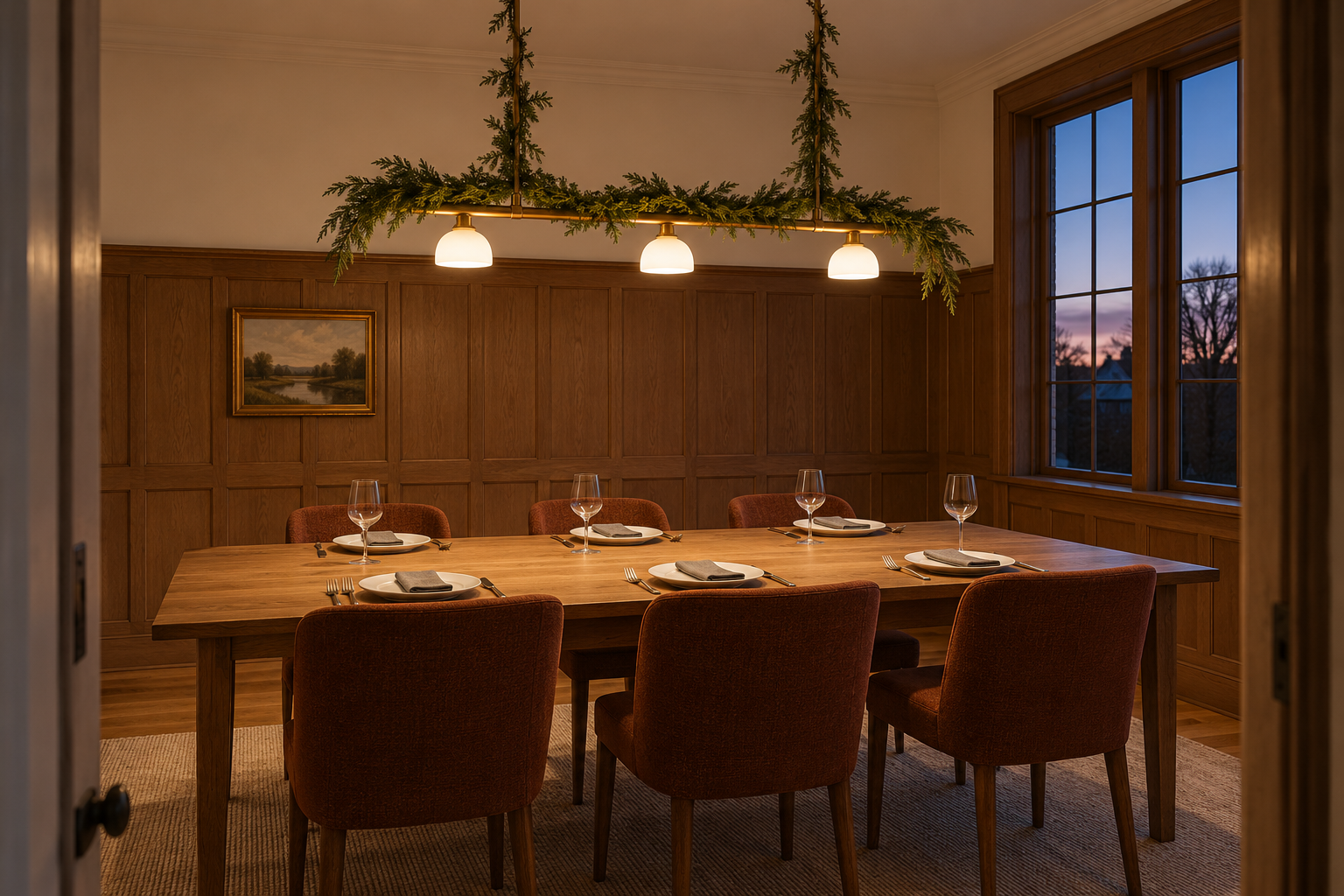
Greenery hung above the table leaves the surface free for food and keeps the eye line open, since everything green sits above the guests’ heads. A linear pendant suits it best, since a cedar garland wound along the suspension rods and laid on the top of the fitting looks like part of the light.
Keep the greenery above the fitting and away from the shades, so no needle rests against a bulb. A pendant hung 30 to 36 inches above the tabletop leaves the garland well above seated heads, and a few tips hanging past the ends of the bar are enough. With a chandelier, wind the greenery around the central stem, not the arms that hold the bulbs.
Leave a Lane for the Serving Dishes

When dinner is served family style, the middle of the table is where the food goes, so decorate the ends instead. A small bunch of fir and two candlesticks at each end frame the table, and the center third stays free for the roast, the potatoes, the vegetables, and the gravy. Trivets go down first, before the guests arrive, so it is clear where each dish lands.
At about 24 inches per person, a table set for eight, four to a side, is roughly 8 feet long, and its middle third is a lane of about 32 inches, room for three or four dishes and a gravy jug. Keep the candles at the ends at least a foot from the fir.
Serve From the Sideboard
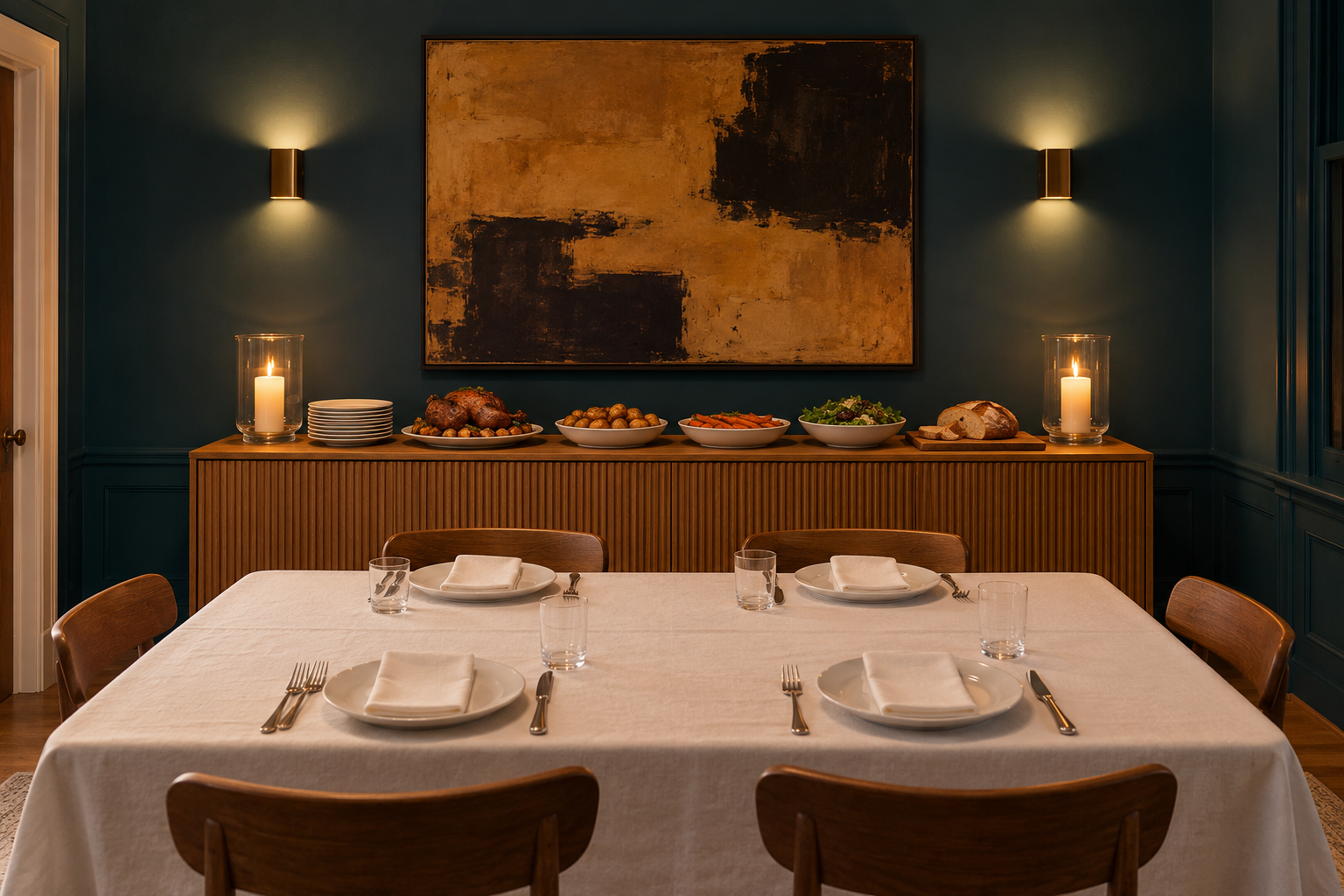
The other answer to a crowded table is to take the food off it altogether. Lay the dishes out on a sideboard as a buffet, with a stack of warm plates at one end, and the dining table holds only the places, with plates, glasses, and napkins and nothing else. It suits a narrow table, or a group too large for the dishes and the plates to share the surface.
The decoration moves with the food. A pair of hurricanes at the ends of the sideboard lights the dishes, and a painting or a mirror above the sideboard gets the attention the centerpiece would have had. A sideboard about two thirds the length of the table holds five or six dishes in a row.
A Checked Cloth Under Plain White Plates

A gingham or check cloth carries all the pattern on the table, so everything set on it can stay plain: white plates, clear glass, plain linen napkins. A large check, an inch or more across, still shows as squares from the far end of the room, where a small red one blurs into pink.
Red and cream is the obvious Christmas check and works because the white plates sit on it like the cream squares. Green and white or brown and white suit a room that already has red in it. Brass cutlery picks up the warmth of the red without adding another color.
Lay Runners Across the Table
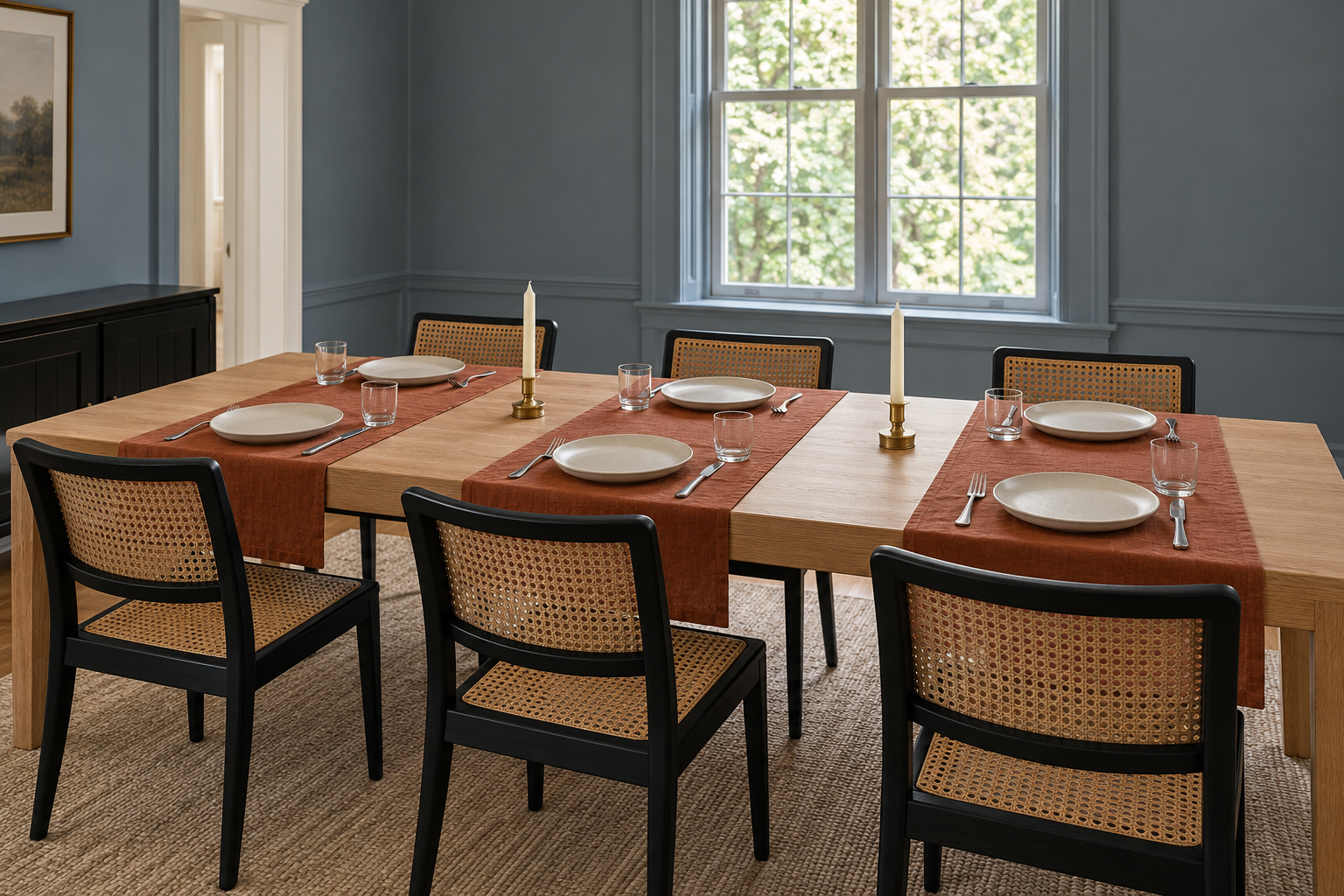
Runners laid across the width of the table, instead of along it, give each pair of facing guests a shared strip of linen and leave the wood showing between. On a good table the bare bands of wood are part of the look, and a crosswise runner is easier to wash than a full cloth after a dinner of gravy and wine.
Space them so each runner sits under two places, one either side, and let them hang a few inches over both edges. In the gaps between them, a single candlestick or a small dish keeps the center from looking empty. Rust or ochre linen looks warm on pale oak, and a deep blue looks crisp on darker wood.
Mix the Good China With Plain White

Inherited china rarely comes in a full set for twelve, and Christmas is the meal it gets used for. Alternating patterned plates with plain white ones makes six patterned plates look like a set for twelve, and nobody’s place looks like the odd one. The white plates also give a guest something plain to put a portion of red cabbage on.
Keep everything else at the place identical, the same napkin, the same cutlery, the same glass, so the alternation of plates is the only variation. Blue and white transferware mixes most easily, since white is already half its color. A gilt rim or a strong colored pattern looks better as a smaller plate on top of a white dinner plate.
Put Colored Glass at Every Place
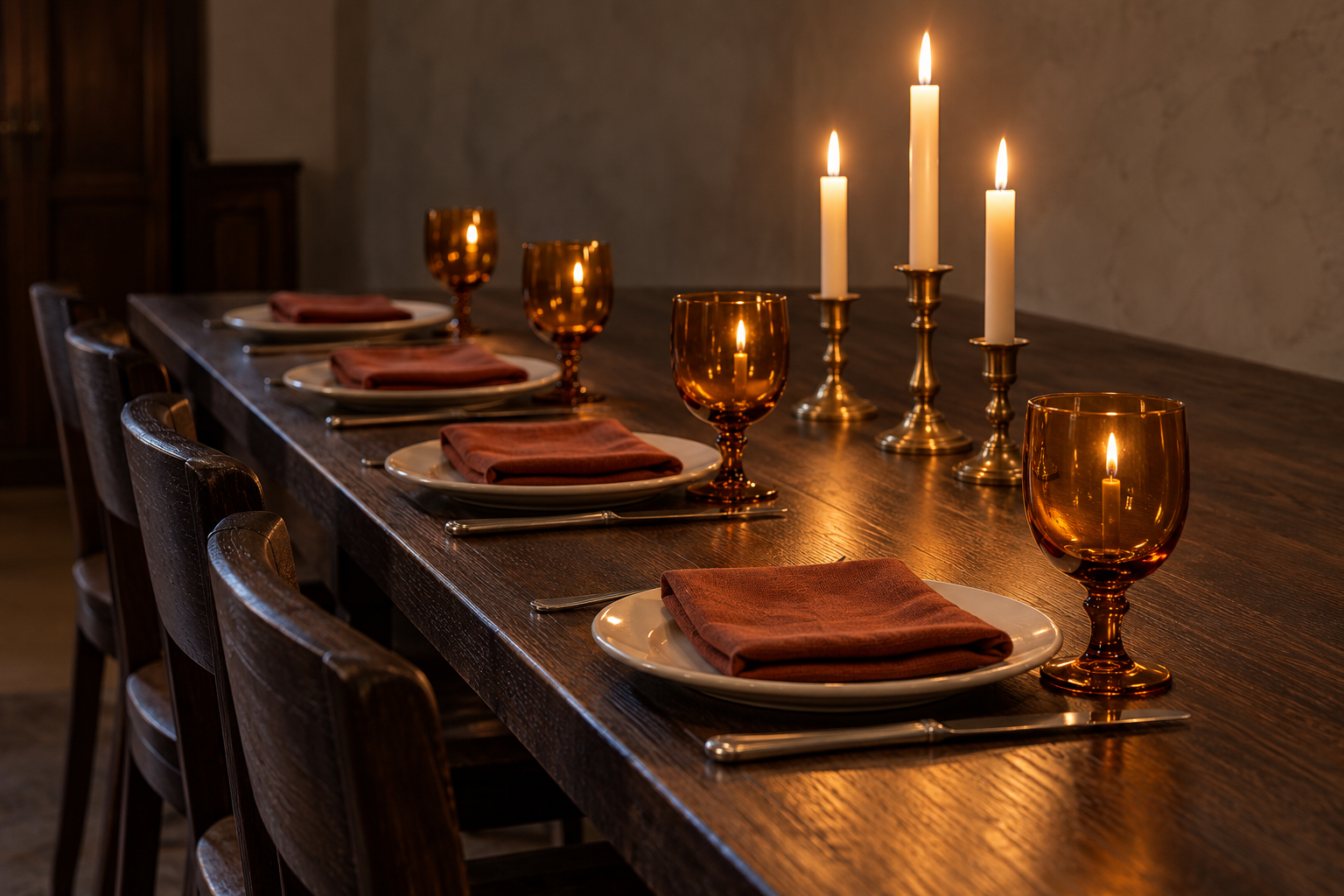
Colored glass holds candlelight in a way clear glass doesn’t. Each amber or green goblet glows in the flames around it, so a table full of them shows dozens of small warm lights after dark. Amber suits a dark wood table and red wine. Green suits a white cloth and the bottle green of a winter room.
Use one color at every place. A mix of colors looks like leftover glassware, and one color repeated down the table looks like a set. Pressed colored glass is common secondhand, often in sets of six or eight.
Tie a Sprig to Each Napkin

A sprig of green tied to each folded napkin puts something seasonal at every place without crowding the middle. Rosemary and fir keep their color through an evening without water, and rosemary gives off its scent when the napkin is unfolded. A loop of plain twine is enough to hold them.
A blank tag on the twine can be written on with a guest’s name, or left plain. Keep the sprigs short, about the length of a finger, so they lie on the napkin and don’t reach the plate, and tie them on in the afternoon, once the table is laid.
Add a Second Table Under One Cloth

When the guests outnumber the chairs, a second table pushed end to end with the dining table is the usual answer, and one long cloth over both makes them a single table. Match the heights first. A folding table is often a little lower or higher than a dining table, and a step at the join shows through the cloth and tips glasses. Felt pads or a folded towel under the shorter table’s feet can make up a small difference.
The cloth needs the combined length plus the drop at both ends, so measure the two tables together before buying one. At the end where children sit, a sheet of brown paper over the cloth and a jar of crayons keep them at the table between courses and protect the linen.
Set the Kitchen Table the Night Before
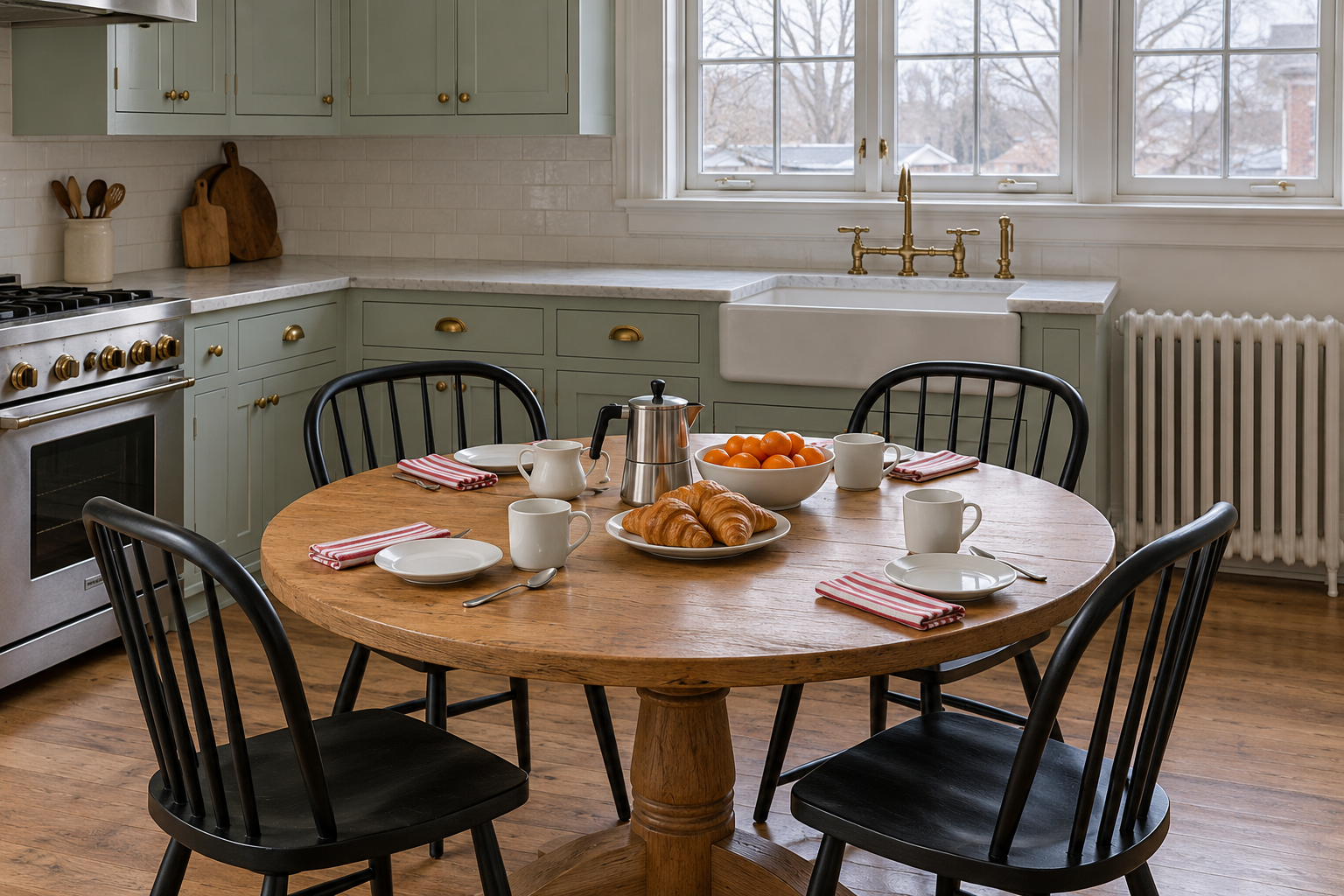
The breakfast table on Christmas morning gets laid before anyone goes to bed: plates, mugs with a spoon in each, napkins, the coffee pot ready on the stove, a bowl of clementines. In the morning there is nothing to do but put the coffee on and bring out whatever has been baked.
It is the least decorated table in this list and looks it, which suits a morning spent on the floor around the tree. A striped or colored napkin is enough to mark the day. Leave the candles for the evening, since nobody needs them in daylight.