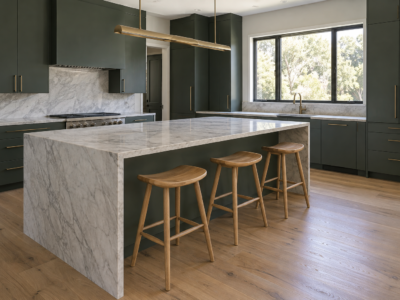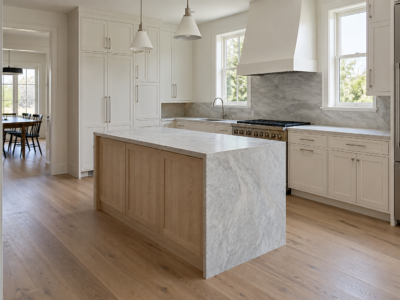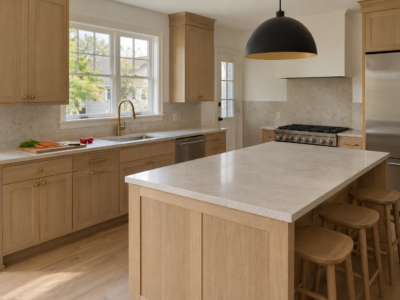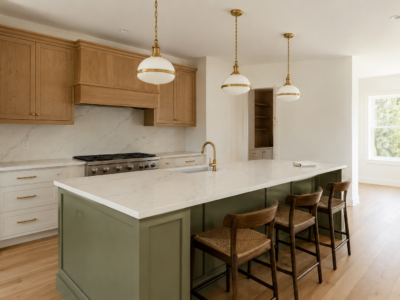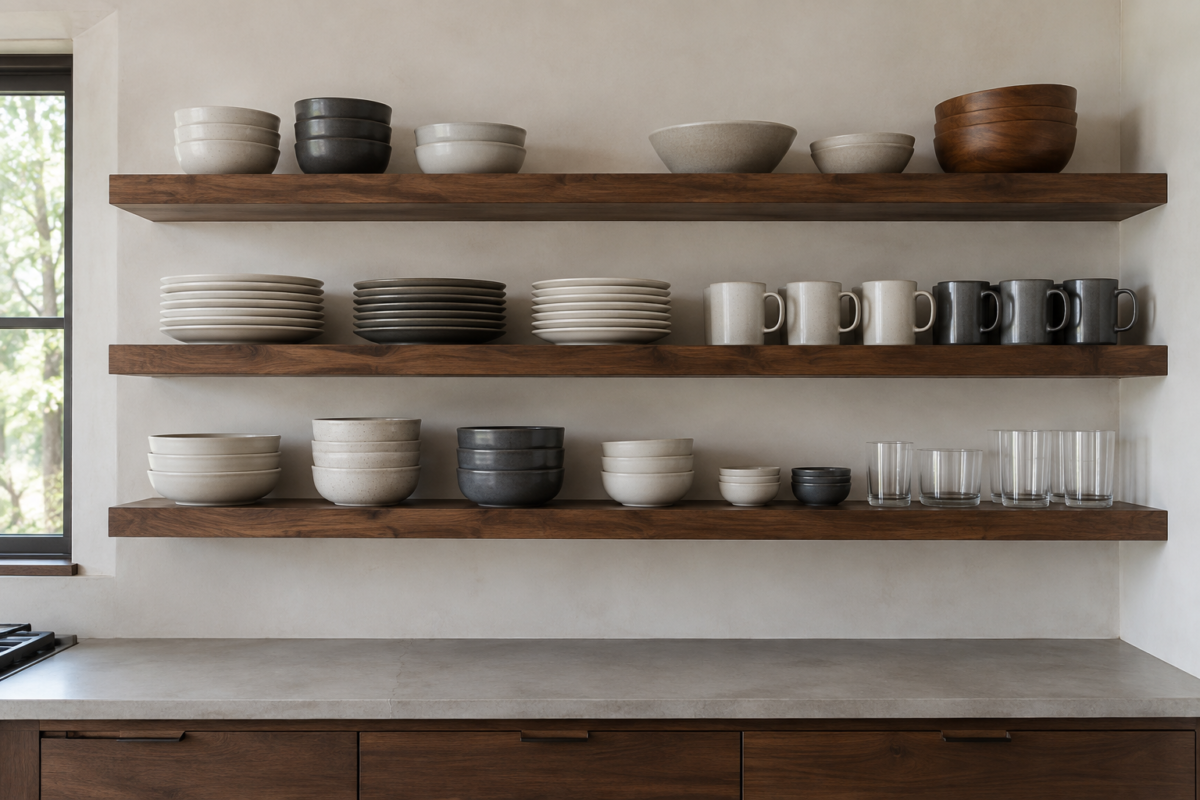
Open shelving photographs better than closed cabinets ever will. That’s not the same question as which one actually works for a kitchen someone cooks in every day. The real comparison is about what each choice asks of you afterward, not how either one looks in the moment it gets installed.
What Open Shelving Actually Requires of You
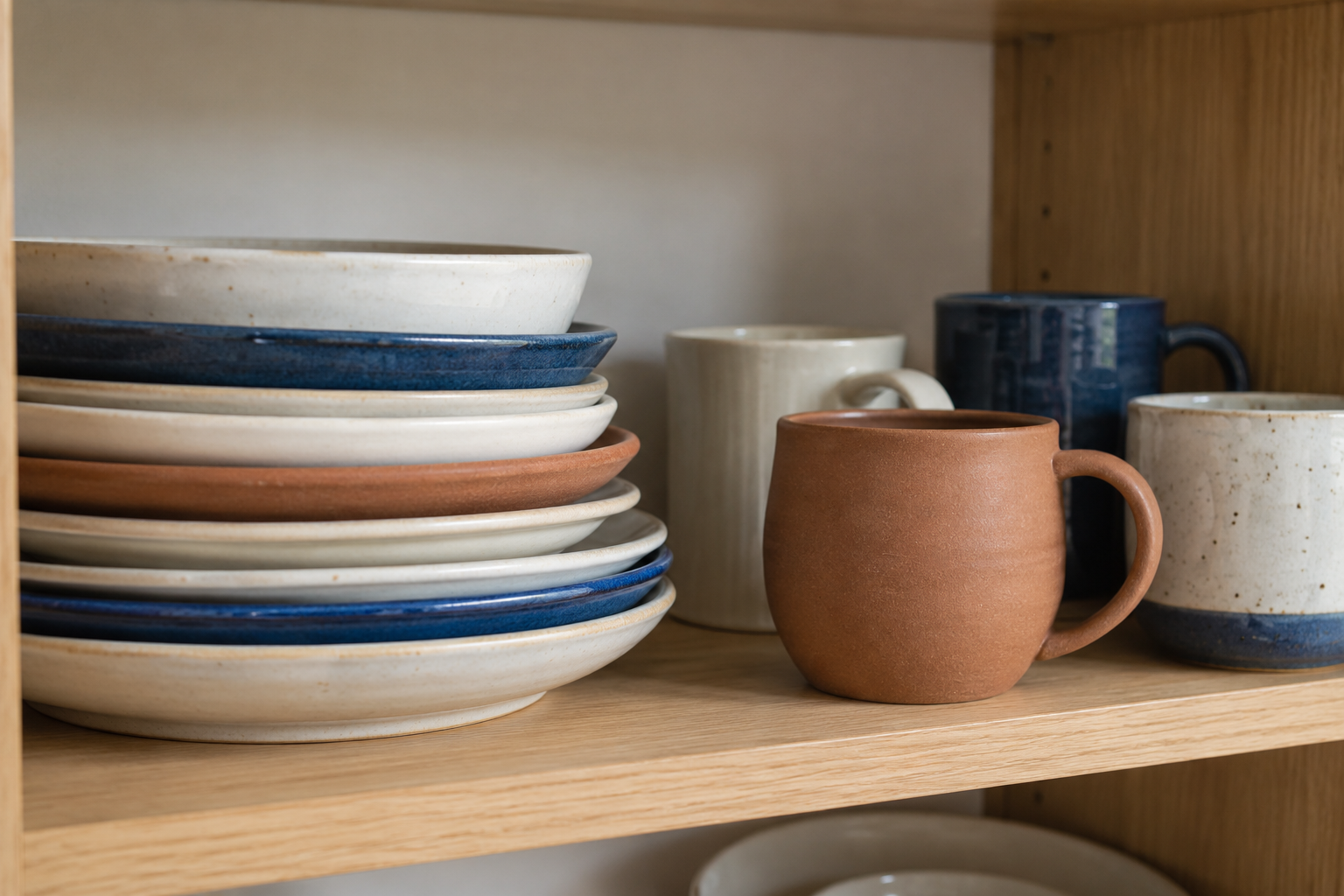
Open shelving stays looking good only if what’s on it stays worth looking at. Every plate, glass, and bowl is visible all the time, which means a chipped mug or a mismatched set shows in a way it never would behind a door. This isn’t a reason to avoid open shelving. It’s a reason to be honest about the maintenance it asks for: a shelf edited down to what’s in rotation, not a catch-all for whatever didn’t fit in a cabinet.
A genuinely mismatched, collected-over-years set of dishware can still work on open shelving. What doesn’t work is a shelf holding backstock, chipped pieces, or anything that wouldn’t survive being seen daily.
What Closed Cabinets Give Up (and What They Protect)
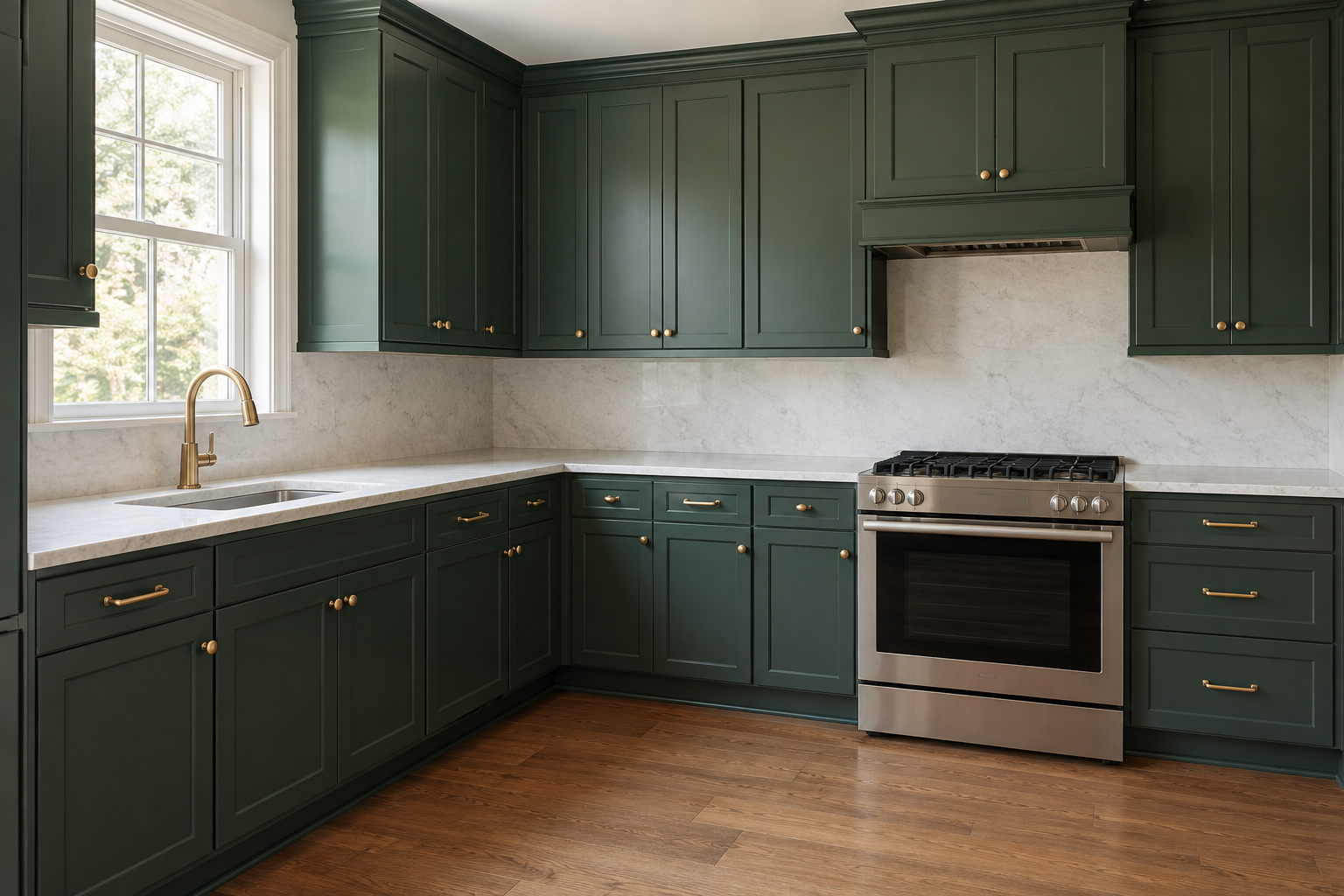
Closed cabinets solve the maintenance problem entirely. Whatever’s inside can be mismatched, chipped, or simply not photogenic, and none of it shows. What they give up in exchange is the visual lightness open shelving brings to a wall, since a run of closed doors reads as more enclosed and often heavier than the same wall with shelving instead.
Dust and grease are the practical argument for closed cabinets near a range specifically, since anything stored in the open there needs regular washing that a cabinet avoids. That single consideration is often enough to settle the decision for at least the wall closest to the stove.
Resale is worth considering, though it shouldn’t drive the whole decision on its own. Closed storage is still the more conventional kitchen default, and a kitchen with no closed cabinetry anywhere is a more unusual choice a future buyer might want to change. That concern applies much less to a single wall of open shelving alongside otherwise-normal cabinetry, which is one more reason the mixed approach below tends to be the safer default than converting a whole kitchen.
The Case for Mixing Both, Deliberately
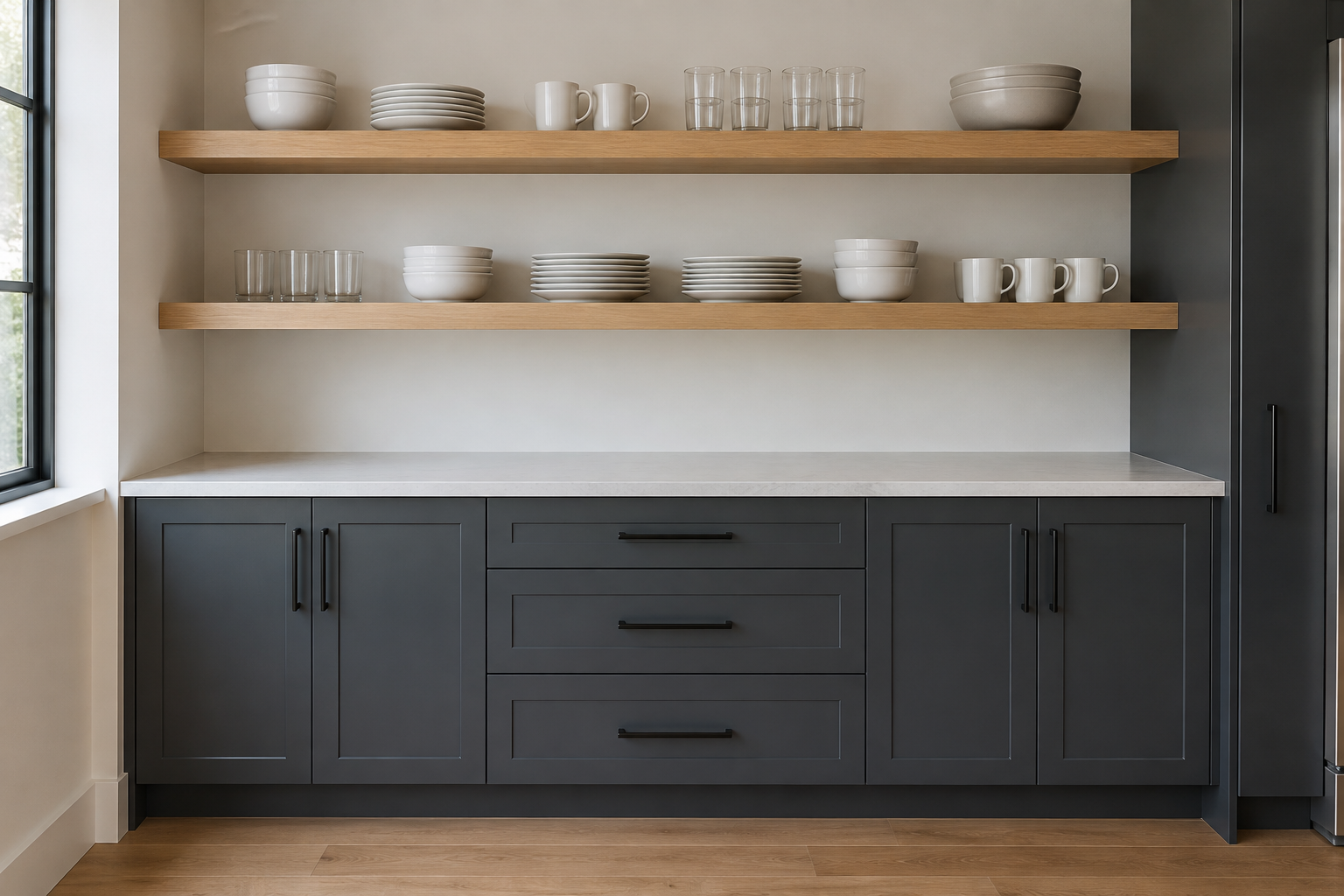
Open shelving and closed cabinets don’t have to be a whole-kitchen decision. Used together, open shelving on the wall furthest from cooking heat and closed cabinets wherever grease or daily wear needs protecting against, gives a kitchen the visual benefit of open storage. It doesn’t ask the whole room to maintain it.
The split works best when it follows a real logic, distance from the range, proximity to daily-use items, the same zone-by-use thinking that works in a pantry. That beats an even alternation that looks planned but doesn’t solve anything. Cost tends to favor this approach too. Open shelving is typically less expensive to install than an equivalent run of cabinet boxes and doors, so converting one wall costs meaningfully less than redoing the whole kitchen in either direction.
Where Open Shelving Wins Outright
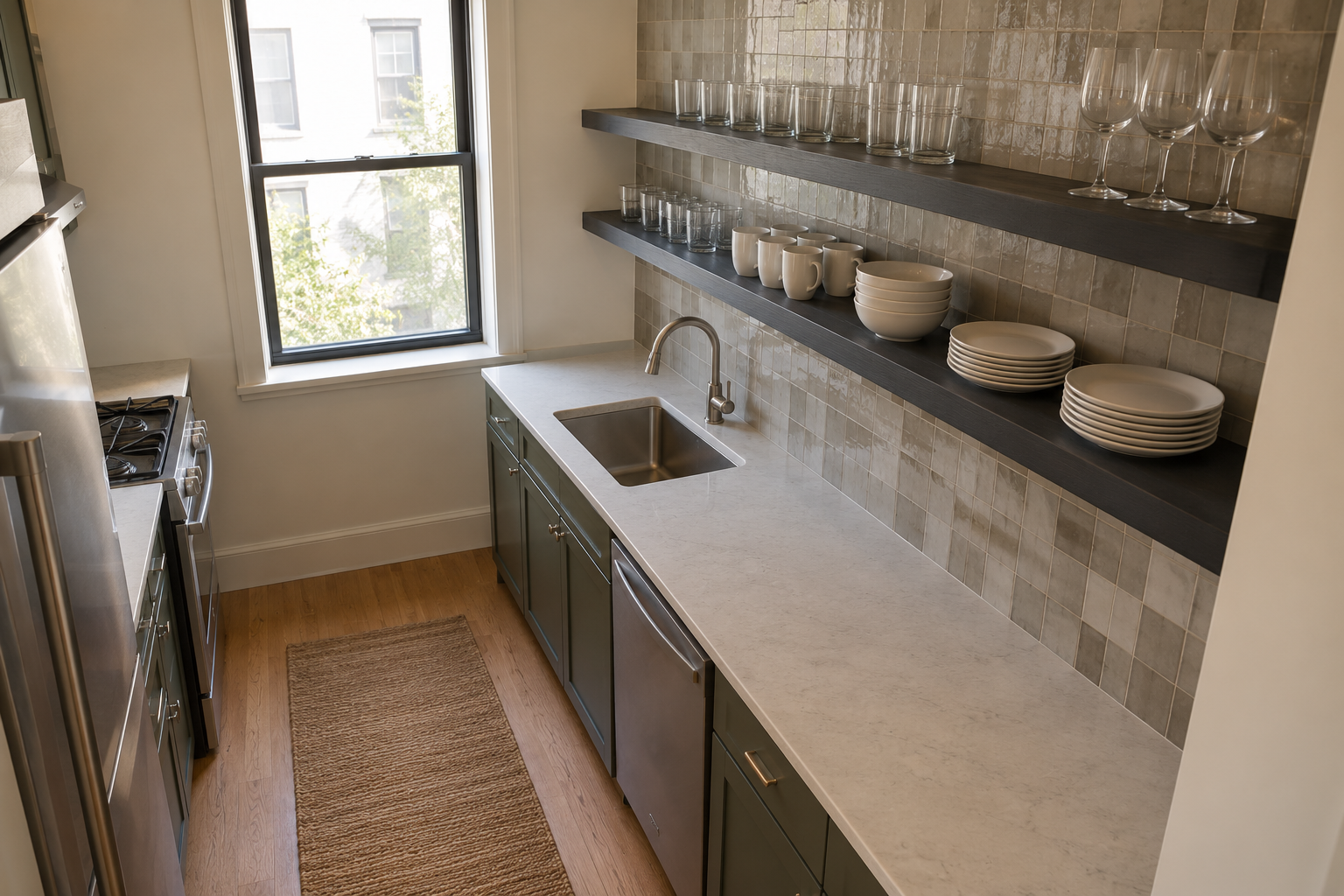
A small kitchen is the clearest case for open shelving over cabinets, the same small-kitchen logic that favors working with a tight footprint instead of fighting it. Closed doors add visual weight to a wall that a small room often can’t spare. Open shelving reads as lighter, and done well, makes the room feel less boxed in than the same wall in solid cabinetry would.
This isn’t true of every small kitchen. A cluttered household gains little from open shelving regardless of room size, since the visual lightness only works if what’s stored stays edited.
Storage is one decision among many in a kitchen. See twelve kitchen design ideas for the rest of them.
Frequently Asked Questions
Is open shelving harder to keep clean than closed cabinets?
Somewhat, mainly from dust rather than grease if it’s positioned away from the range. A quick wipe every week or two keeps it from becoming noticeable, which is a smaller commitment than most people assume before living with it.
Should open shelving go above or below the counter?
Above, in almost every case. Below-counter open shelving exposes items to more daily contact and spills, while above-counter shelving stays out of the way of actual cooking and cleaning.
Do open shelves need special brackets for heavier dishware?
Stoneware and stacked plates are heavier than most standard shelf brackets are rated for by default, so it’s worth checking the weight rating rather than assuming any bracket will do. A bracket rated for genuine kitchen-dishware loads, not a light decorative-shelf bracket, is the difference between shelving that holds up for years and one that sags within a season.
Does open shelving work in a rental?
Yes, often more easily than renovated cabinetry. A wall-mounted bracket system installs with far less commitment than replacing cabinet doors, and it reverses cleanly at move-out.