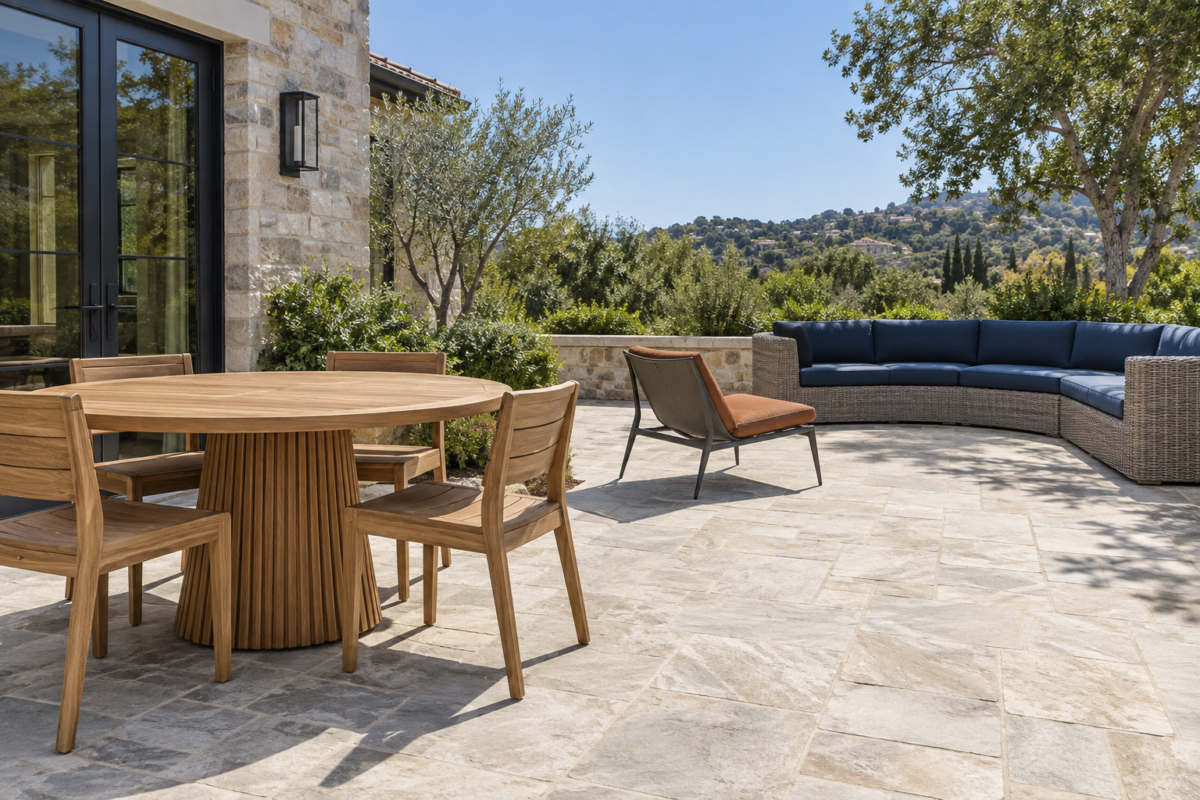
A teak dining set left outside through one real summer looks nothing like the version in the showroom, and neither does an aluminum lounge chair or a wicker sectional, each one ages, or fails to, in its own specific way. The three materials that dominate outdoor furniture solve the same problem, staying outside year after year, through completely different means: natural oil content, a rust-proof finish, or an engineered synthetic weave. None of them is simply the best option. The right one depends on your climate, how much upkeep you’re actually willing to do, and whether the furniture stays put or gets moved every fall.
What Teak Actually Gets Right
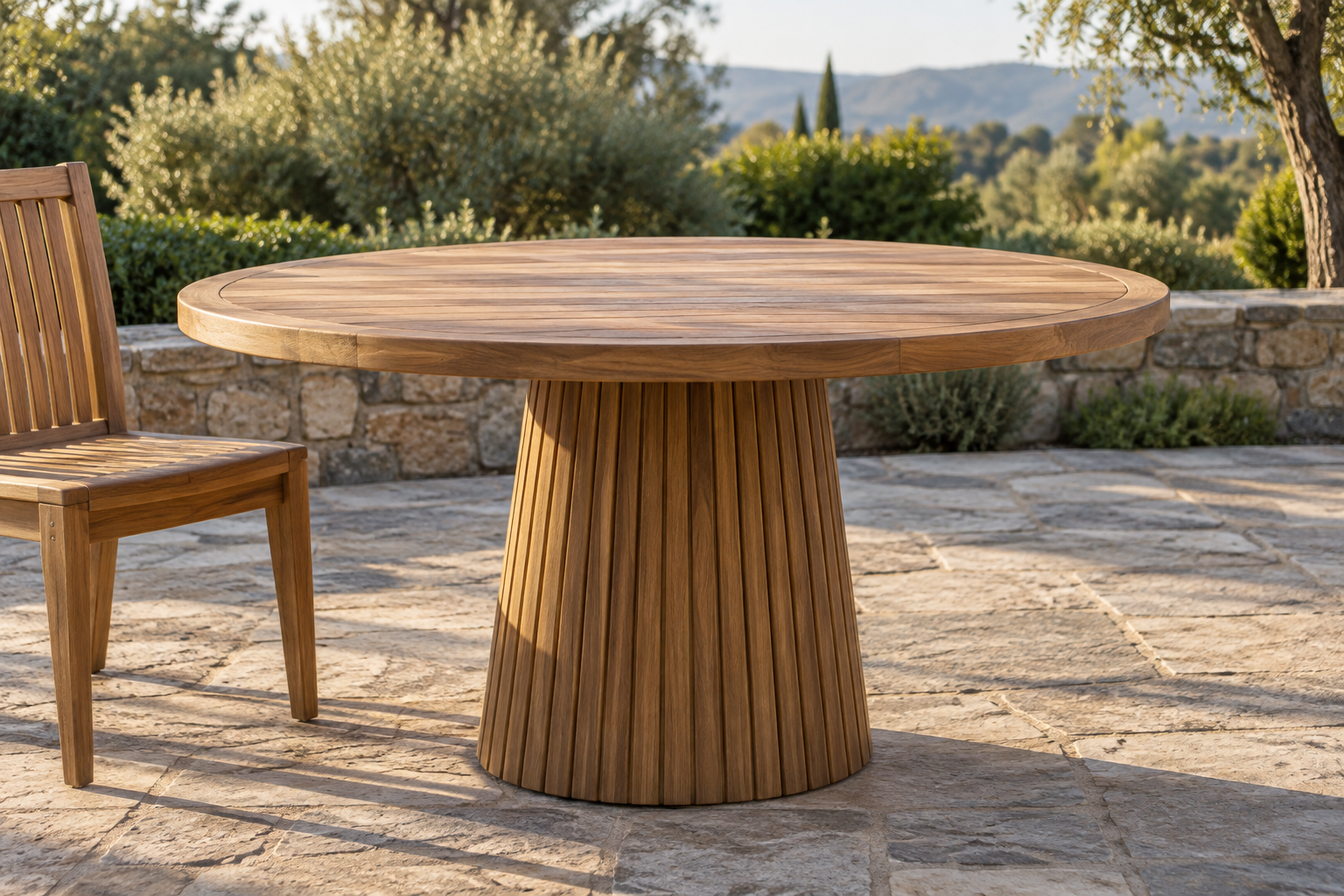
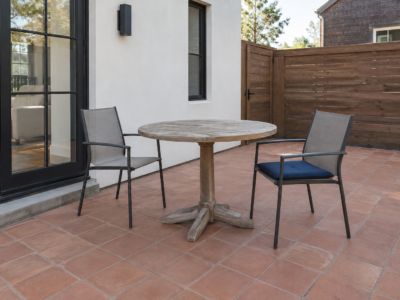
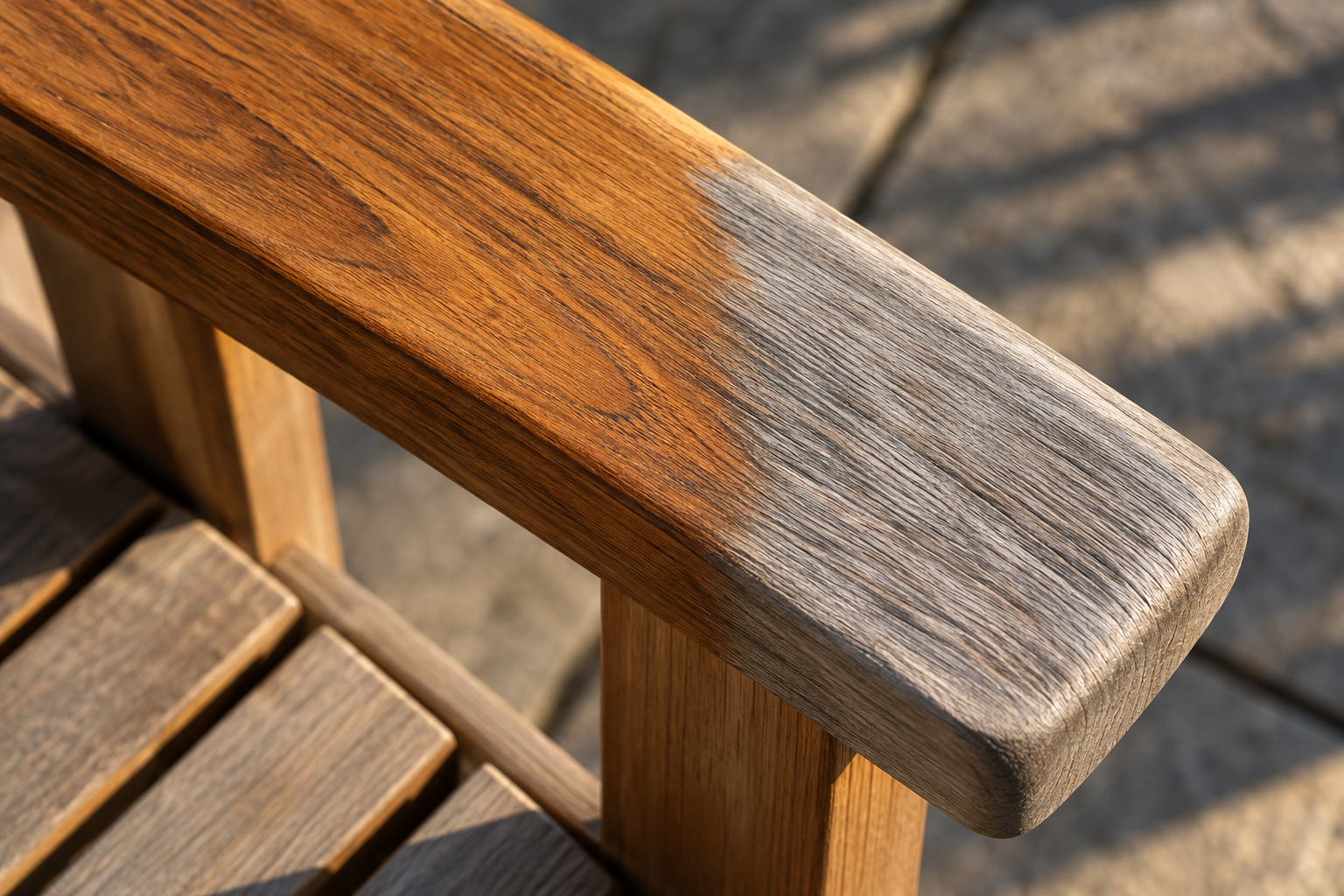
Teak’s natural oils are the whole story: they make the wood naturally resistant to rot, water damage, and insects, which is why a well-built teak piece can last for decades outside with only minimal care. Left alone, it weathers to a soft silver-gray patina that plenty of people prefer to the original color. Kept up with an occasional oiling, it holds its rich golden tone instead. Neither outcome is wrong, and neither is really “maintenance” in the way a fabric cushion or a painted rail needs maintenance, it’s a choice about which look you’d rather live with.
What teak doesn’t do is move easily. A genuinely solid teak dining table is heavy enough to stay put through wind and weather without hardware anchoring it down, which is an advantage if the furniture lives in one spot permanently and a real drawback if it needs to come inside every winter. Quality teak also costs more upfront than the other two materials here, and that gap tracks the wood itself, not a markup that disappears with a sale.
Where Aluminum Wins
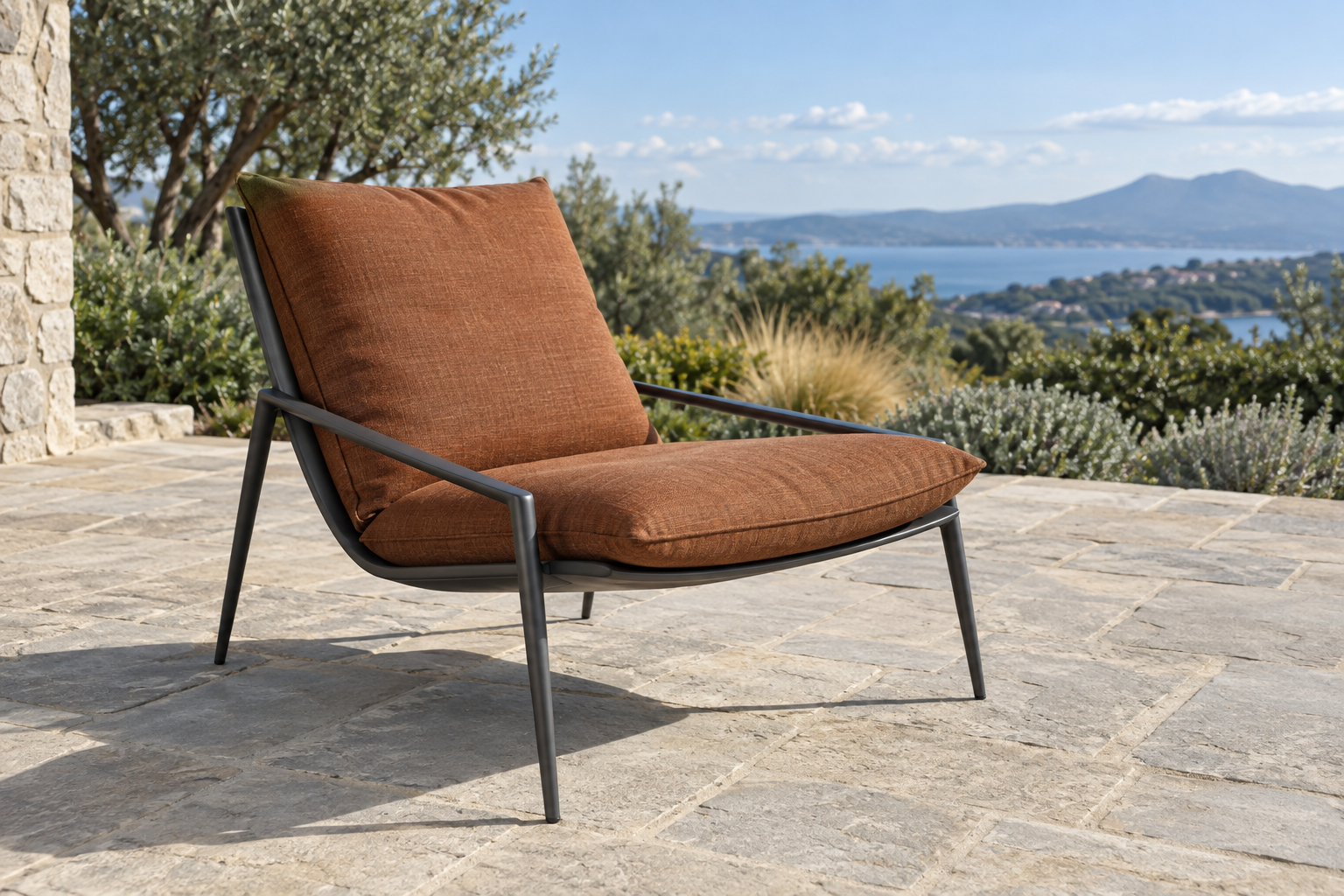
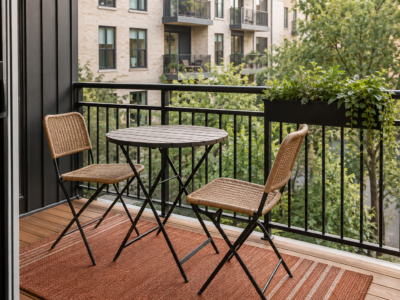
Powder-coated aluminum doesn’t rust, doesn’t corrode near salt air, and shrugs off rain in a way bare untreated metal never could. It’s also genuinely light, light enough to rearrange for a party or carry into a garage before the first snow, which teak’s weight makes impractical. Cleaning it is close to effortless: an occasional rinse handles almost everything a season throws at it.
The tradeoff shows up mostly in cheaper builds. Thin-gauge aluminum without a real powder-coat finish can flex, dent, and eventually corrode at the welds, which is a fair complaint about “aluminum furniture” in general that doesn’t actually apply to a well-made piece. A current, low-profile design with a proper finish reads as considered rather than cold or institutional, the reputation aluminum furniture had a decade ago and mostly doesn’t deserve now.
What Wicker Gets Right, and Where It Doesn’t
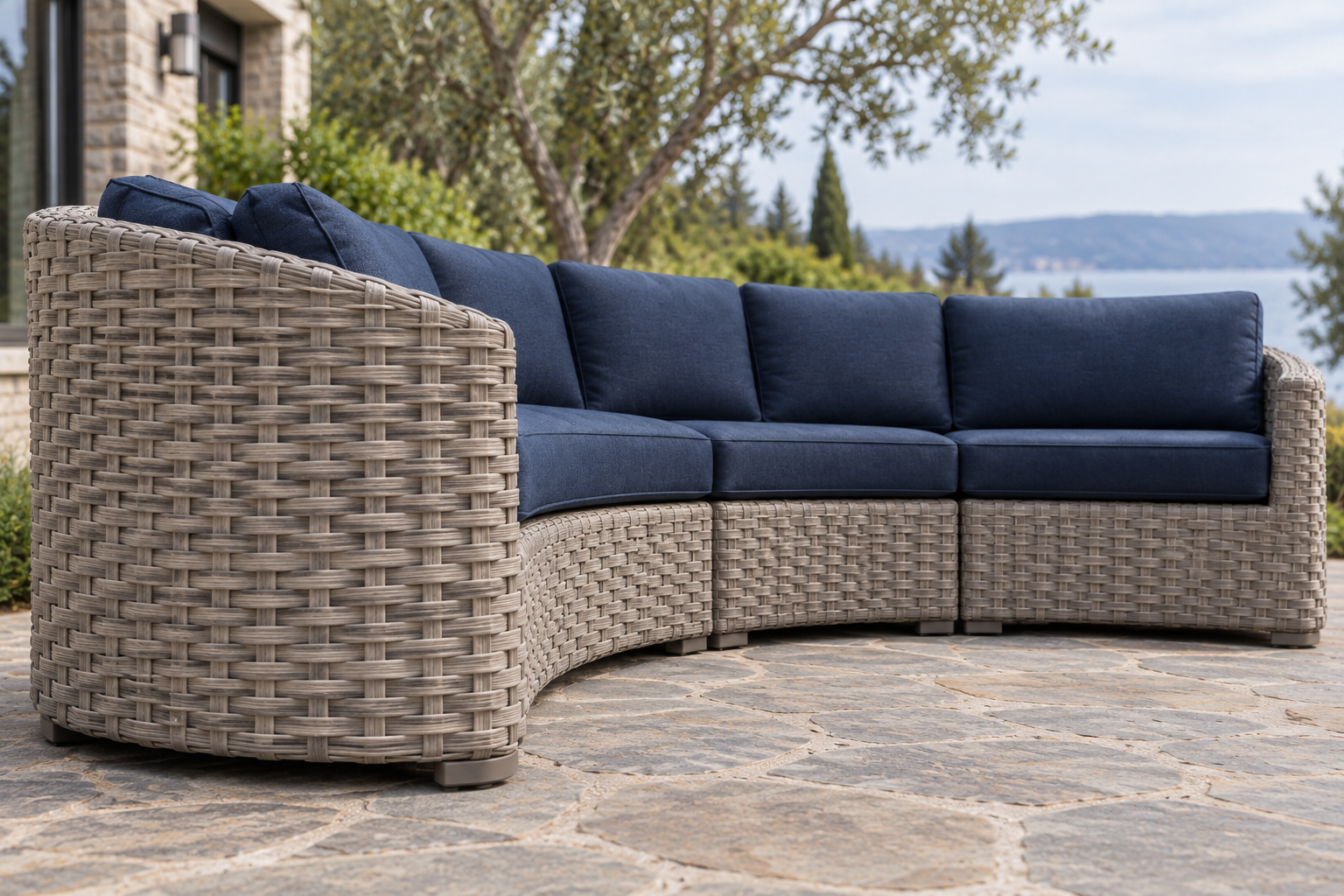
Real outdoor wicker today is almost never actual rattan. It’s HDPE resin, a synthetic woven over a metal frame specifically engineered to resist UV breakdown, moisture, and the kind of cracking natural fiber can’t survive outside. That distinction matters more than the material category itself: a genuine HDPE weave holds its color and structure for years, while a cheaper PVC look-alike, sold under the same “wicker” label, gets brittle and starts cracking within a season or two of real sun exposure.
Assuming the resin is genuine, wicker’s real strength is comfort and price. The woven surface flexes slightly and breathes more than a hard metal or wood seat, and a quality HDPE piece usually costs less than an equivalent teak set, occasionally less than aluminum too, depending on the frame underneath.
Matching the Material to Your Actual Patio
Climate settles more of this decision than style preference does. A humid or coastal setting is genuinely harder on teak’s upkeep schedule and on any metal without a real protective finish, which tips the scale toward powder-coated aluminum or HDPE wicker. A drier, more moderate climate is forgiving enough that all three materials perform well, which means the decision comes down to weight, cost, and look instead.
Storage habits matter just as much as climate. Furniture that gets moved into a garage or shed every fall makes aluminum’s weight a real practical advantage, not just a nice-to-have. Furniture that stays outside permanently, covered or not, makes teak’s weight irrelevant and its rot-resistance the more useful property. Budget tends to sort itself in the same order most of the time: wicker and aluminum usually cost less upfront than genuine teak, though a well-made piece in any of the three will outlast a cheap version of either of the others.
This is a decision about the material itself, not about how to put a finished patio together once it’s chosen, patio decorating ideas covers that side separately.
There’s no single best material here, only a better fit for a specific patio. A humid climate or furniture that moves indoors every winter points toward aluminum. A patio that stays furnished year-round, with an owner willing to oil it occasionally (or happy to let it silver), points toward teak. A tighter budget or a preference for a softer, woven seat points toward a genuine HDPE wicker piece, so long as it’s confirmed as real resin rather than a cheaper look-alike sold under the same name.
Frequently Asked Questions
Can teak, aluminum, and wicker be mixed in one seating area?
Yes, and it’s common in current outdoor design rather than a mismatch to avoid. A teak dining table paired with aluminum-framed dining chairs, or a wicker sectional next to an aluminum side table, both work because the materials share enough visual weight to feel intentional rather than accidental. The one thing to watch is letting one material clearly lead the space, with the others in a supporting role, rather than splitting a small patio three ways evenly.
Does letting teak turn gray actually hurt it?
No. The silver-gray patina is a surface change, not structural damage, and a piece left to weather naturally holds up just as long as one that’s regularly oiled. Oiling is a cosmetic choice to keep the original golden color, not a requirement for the wood to survive outside. The only real risk to a genuinely solid teak piece is the same risk any wood furniture faces: standing water pooling on a flat surface for extended periods, which is a drainage problem, not a material failure.