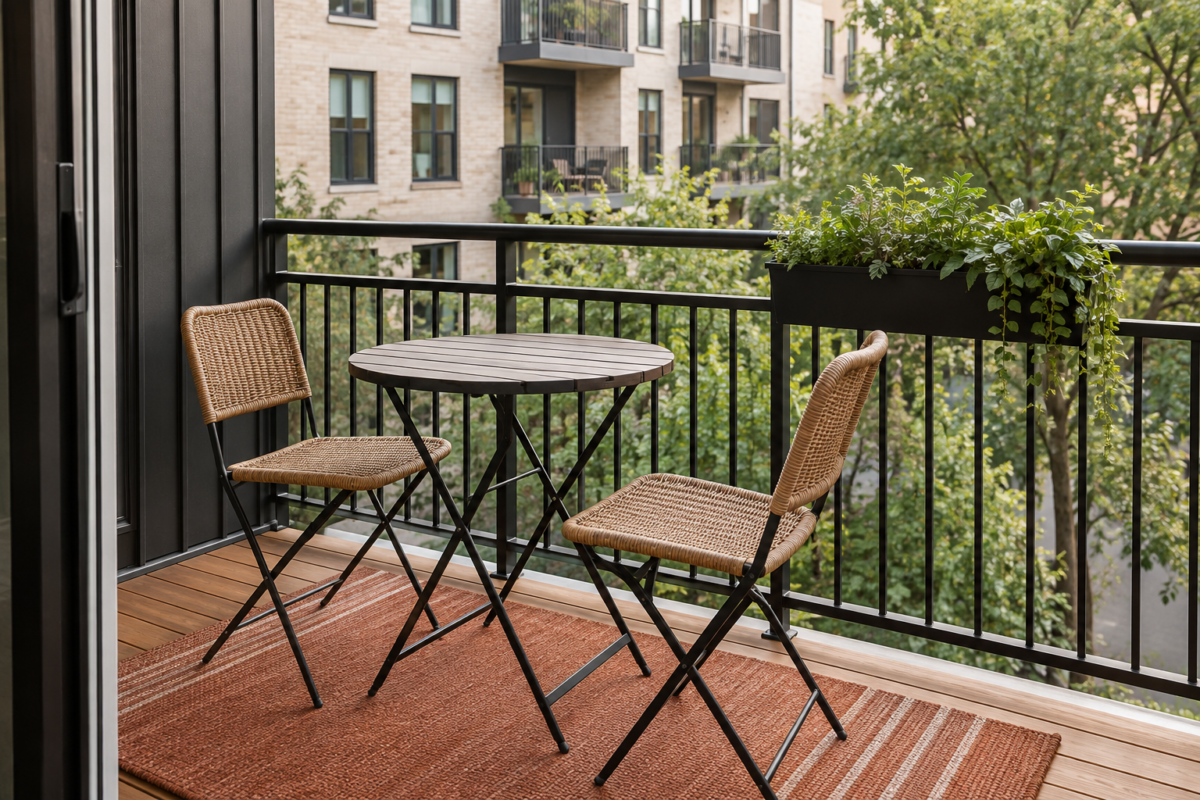
A rental balcony has two real constraints most decor advice skips past: no permanent changes, and not much weight the railing or the floor can actually take. Anything nailed, bolted, or drilled in is off the table, and anything heavy enough to strain a railing or a weight-limited floor is a real safety issue, not just a style choice.
Everything here works inside both constraints. Four decisions, on furniture weight, flooring, planting, and lighting, turn a small rental balcony into a real usable space without a single permanent change or a lease violation.
Weigh Furniture Before the Building Does
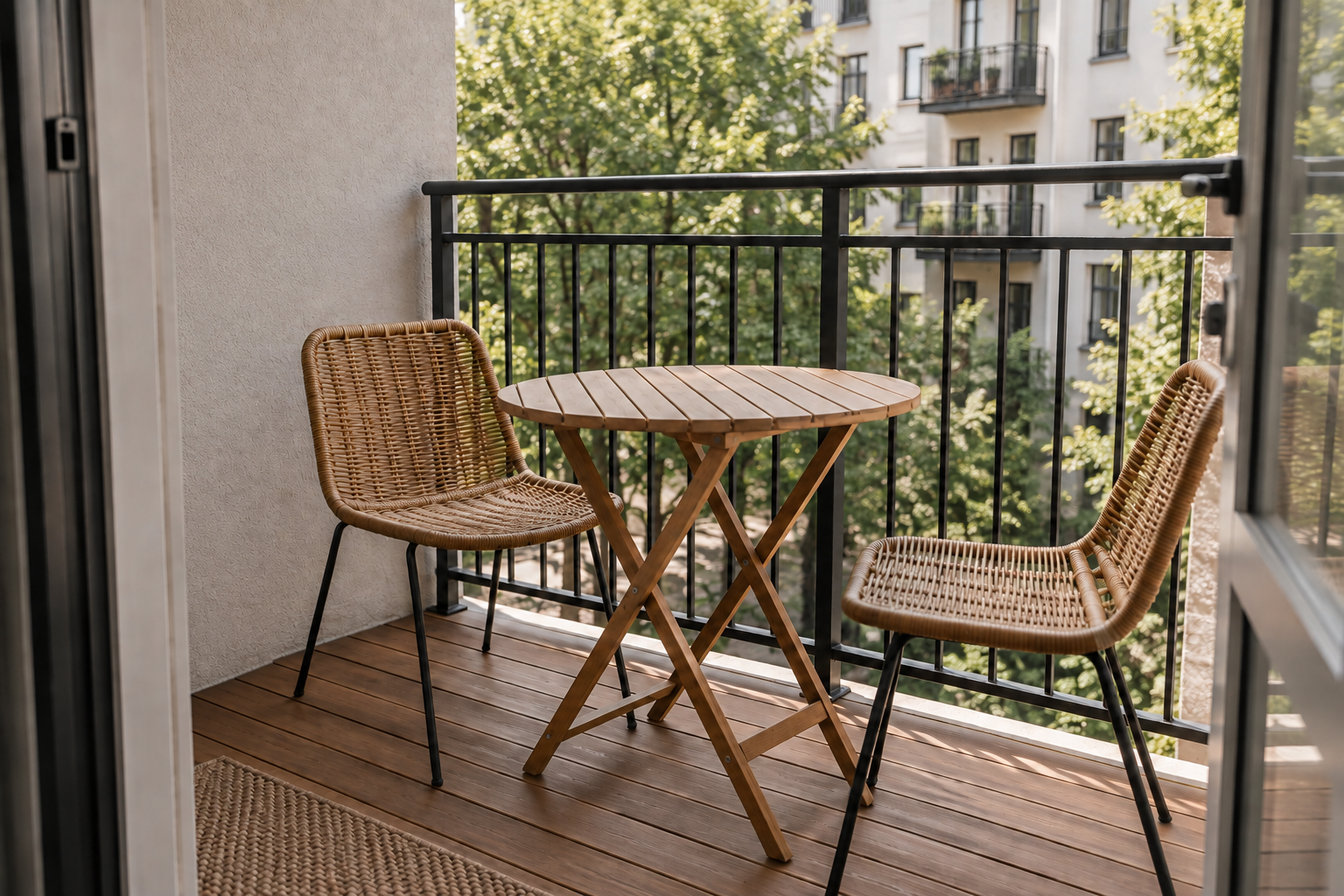
Most balcony furniture gets chosen for style first, and weight only becomes a question after something’s already been carried up the stairs. Many buildings post a maximum weight per square foot for balconies, often lower than people expect, and a heavy stone-topped table or a cast-iron chair set can genuinely approach that limit faster than a full-size outdoor sofa would.
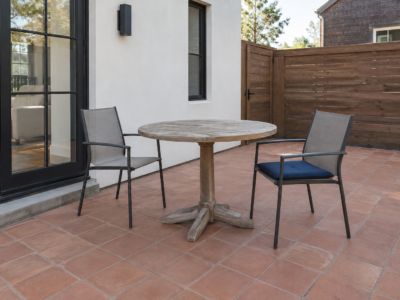
Lightweight materials, rattan, slim metal frames, folding bistro pieces, do the same job as bulkier furniture while staying well under most weight limits. A folding table that stores flat also solves a second rental problem: moving out doesn’t mean disassembling or donating a piece too heavy to easily relocate. Checking the building’s posted weight limit before buying anything is worth the five minutes it takes, since exceeding it is a structural risk, not just a lease technicality.
Let a Rug and Removable Tiles Do the Flooring’s Job
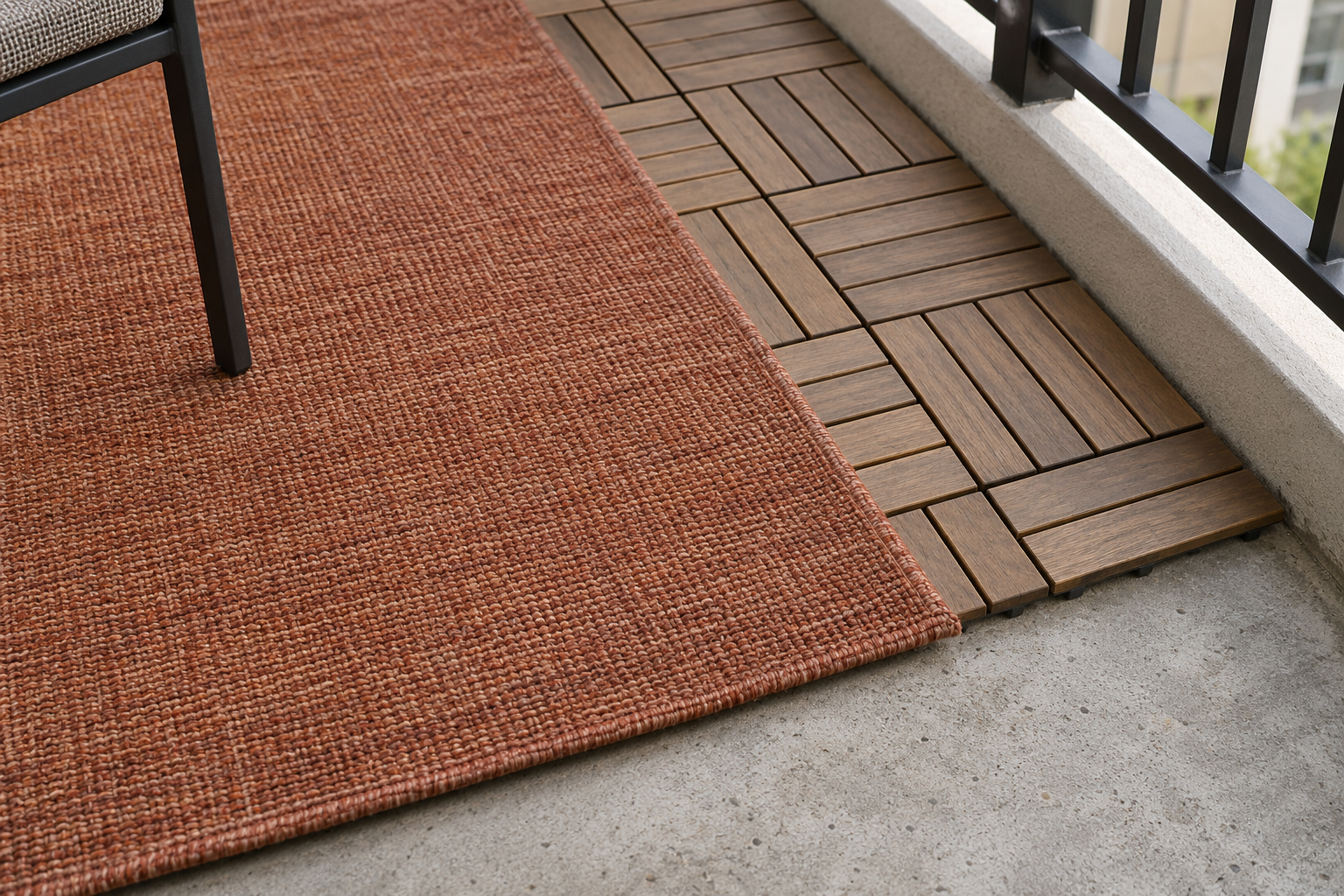
Most rental balconies come with plain concrete or a builder-grade composite surface, and permanent flooring changes are almost always off-limits in a lease. An outdoor rug solves the look instantly and rolls up completely at move-out. Interlocking deck tiles go a step further, snapping together over the existing surface with no adhesive and no tools, then unsnapping just as easily when the lease ends.
Both options add real comfort underfoot too, which plain concrete or aging composite decking rarely offers on its own. Layering a rug over the tiles, rather than choosing one or the other, adds a second layer of softness and color without either one doing the whole job alone.
Grow Vertically Instead of Crowding the Floor
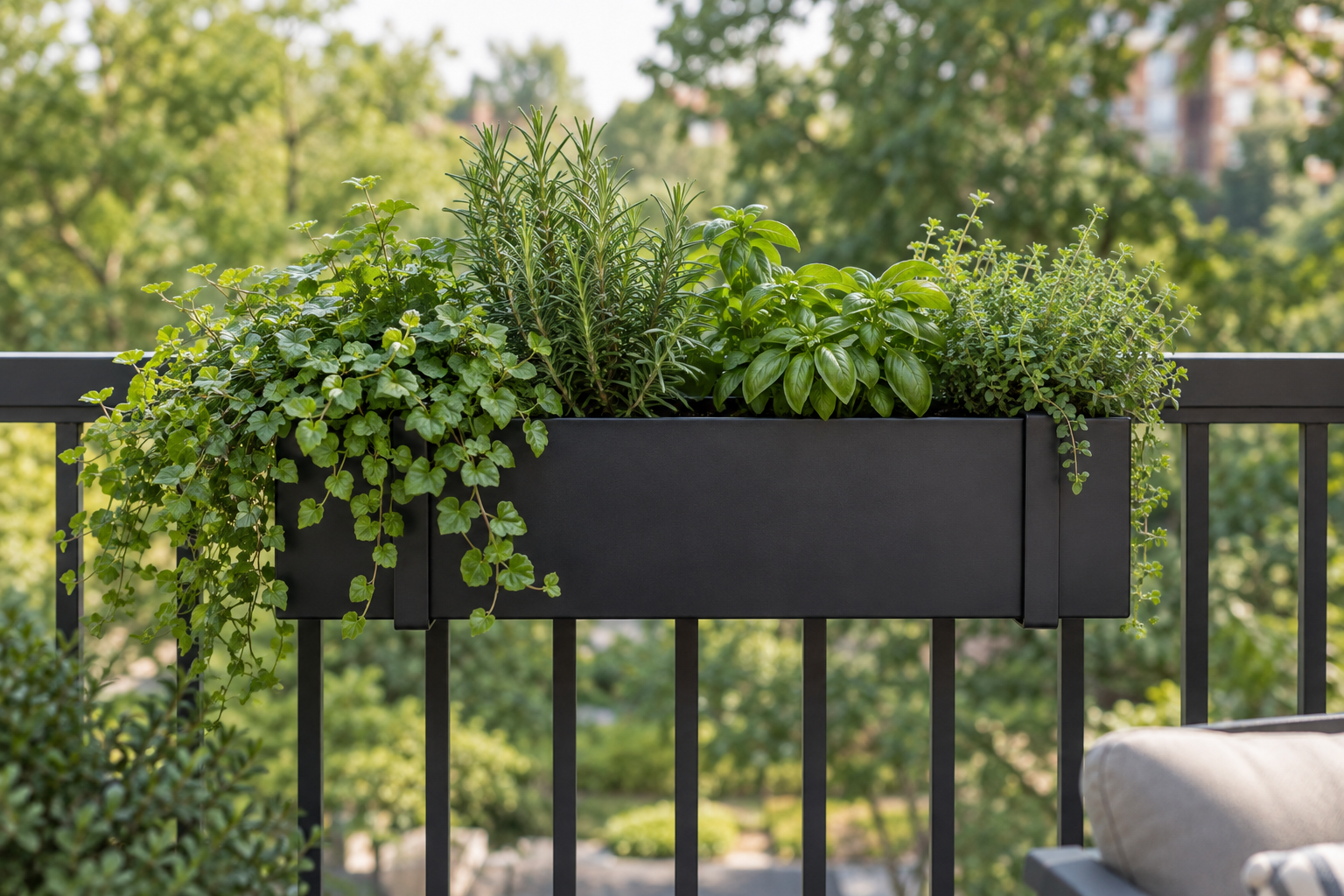
Floor space on a small balcony is the scarcest resource it has, and pots lined up along the ground use up a meaningful share of it before any furniture even arrives. A railing-mounted planter box moves that same greenery up and off the floor entirely, using space the balcony already has for free.
Vertical growing does more than save floor space. It also puts plants where they usually get better light, since most balcony railings sit higher and catch more direct sun than the shaded floor level below furniture and overhangs. A hanging or railing planter with a secure, weight-rated mounting bracket handles this without drilling into anything, since most attach by clamping onto the railing itself.
Light It Without Rewiring Anything
A rental balcony almost never has its own dedicated outdoor outlet, which rules out anything that needs to be hardwired. Battery-powered or solar string lights and lanterns solve this without an electrician or a lease violation, and solar options recharge for free during the day without a single cord to manage.
Placement matters as much as the fixture choice. A solar light in a shaded corner, blocked by a building overhang or a neighboring balcony, won’t charge enough to do its job after dark. Testing where direct sun actually reaches during the day, not just where a light looks good, is worth doing before committing to a permanent spot for it.
None of these four decisions require a drill, a landlord’s sign-off, or furniture heavy enough to worry about. Lightweight furniture, a rug and removable tiles, vertical planting, and battery-powered lighting all work within a rental balcony’s real constraints, and all four pack up just as easily as they went up when it’s time to move.
Frequently Asked Questions
How do I find out what my lease actually allows on the balcony?
The lease itself usually addresses this directly, often under a section on alterations or balcony use, and it’s worth reading before assuming a rule either way. When it’s unclear, asking the property manager directly is faster and safer than guessing, especially for anything involving weight limits or attaching something to the railing, since violating either can mean a real charge at move-out, not just a warning.
Can a genuinely small balcony hold a table and chairs at all?
Often yes, with the right scale. A two-person bistro table under about 24 inches across, paired with two slim chairs, fits balconies as narrow as four to five feet deep, as long as there’s still room to open the door and walk past. A folding or wall-mounted table is worth considering if even that footprint doesn’t leave enough clearance, since it disappears entirely when not in use.