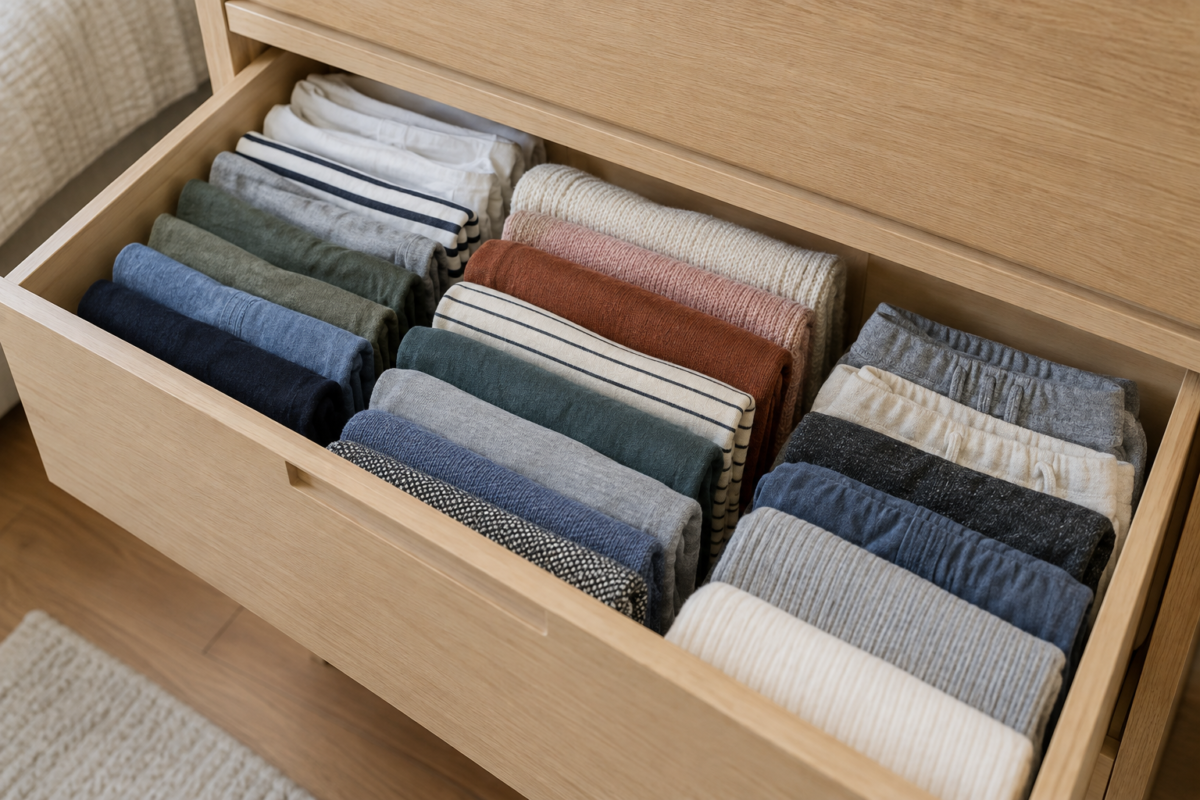
A dresser drawer doesn’t stay organized because it got organized once. It stays organized because of how the clothes are folded and what job each drawer has, and most organizing attempts skip both, sorting everything into neat piles that collapse back into a mess within two weeks of normal use.
Three things actually hold a drawer’s organization together: a fold that doesn’t collapse when something gets pulled from the middle, a drawer with one clear job instead of a loose mix of categories, and a divider doing the separating a bin alone can’t.
Fold So You Can See Everything at Once
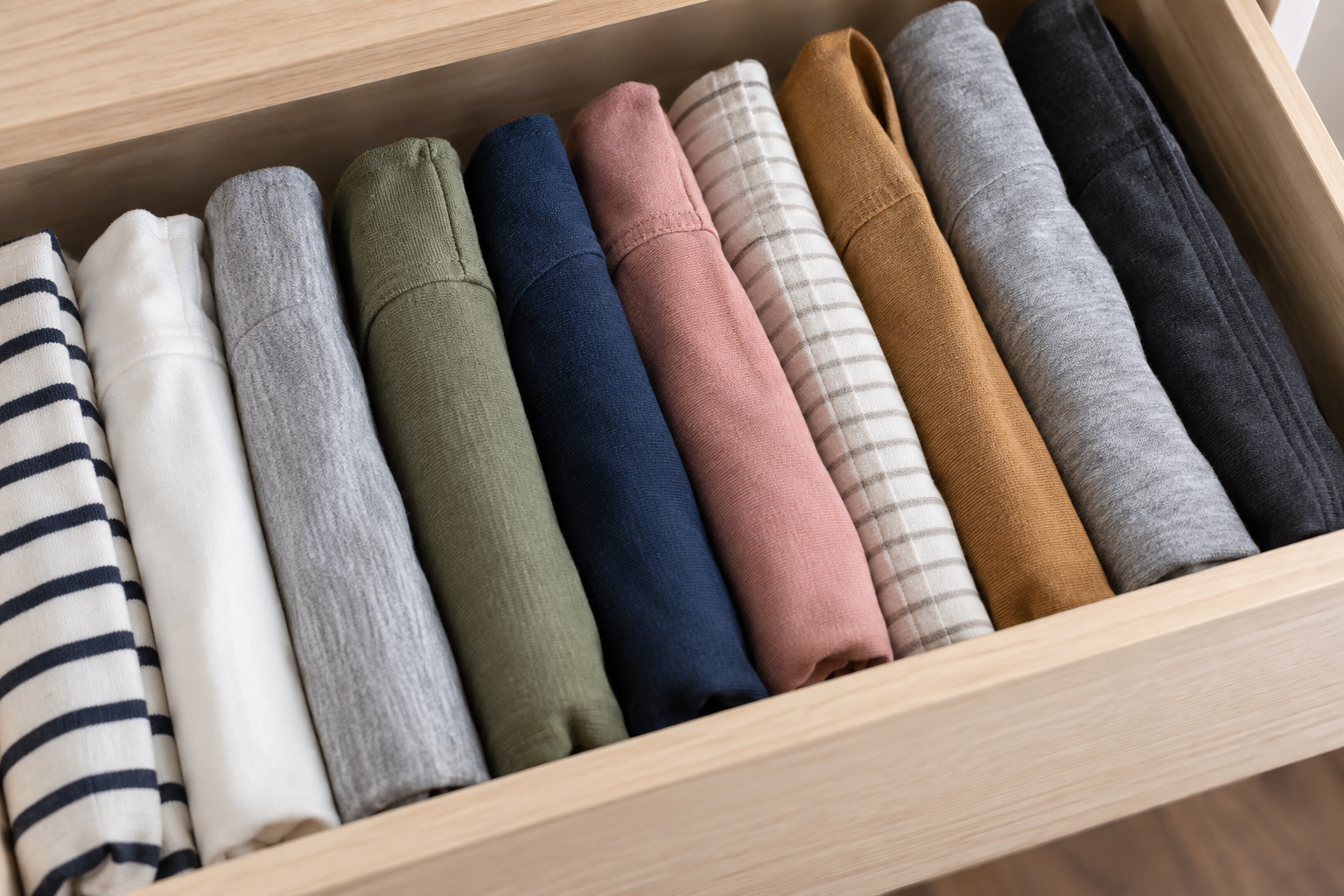
Most folded clothing gets stacked flat, one item on top of the next, which works fine until something from the middle of the stack gets pulled out. The pile above it collapses, and within a couple of weeks the whole drawer looks the same as it did before anyone organized it.
Folding items so they stand upright instead, each one visible from above like files in a drawer, solves this directly. Pulling one shirt out doesn’t disturb the ones next to it, since nothing was stacked on top of it in the first place. The fold itself, not the initial sorting, is what actually prevents the drawer from reverting.
Give Every Drawer One Job
A drawer holding a loose mix, some shirts, a few pairs of shorts, whatever didn’t fit anywhere else, tends to become the drawer everything gets shoved into once the original system breaks down even slightly. Assigning one specific category per drawer, all t-shirts in one, all pants in another, removes the ambiguity that leads to that drift in the first place.
This matters more than it sounds like it should. A drawer with an obvious single job is easy to put things back into correctly without thinking about it. A drawer with three loosely related categories requires a small decision every time something gets put away, and skipped decisions are exactly how organization quietly falls apart.
Use a Divider Before You Add a Bin
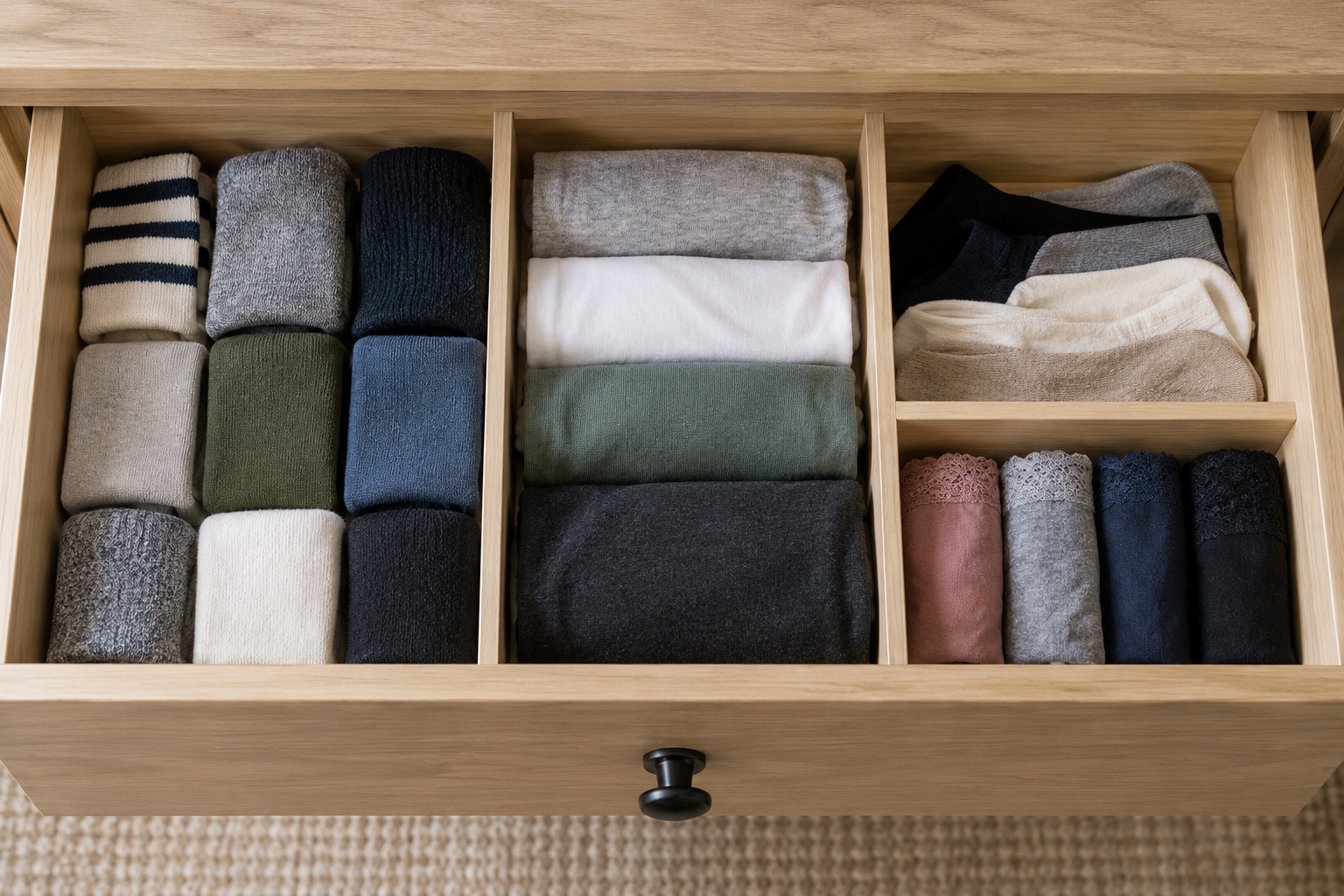
Small items, socks, underwear, folded accessories, are the most common reason a drawer looks messy even when everything technically has a home. A simple adjustable divider splits one drawer into two or three physical sections, which keeps categories from drifting into each other the way they do in a single open space.
This is usually a better first move than buying a full bin system, since a divider works with the drawer’s existing depth instead of adding another container that takes up space of its own. It’s a smaller, cheaper fix for a problem that often doesn’t need a bigger one.
None of this depends on reorganizing the whole dresser at once. A better fold, one clear job per drawer, and a simple divider where small items tend to drift are the three things that actually keep a drawer organized past the first couple of weeks, which is the part a one-time cleanup never manages on its own.
Frequently Asked Questions
Does the file-fold method work for kids’ clothes too?
Yes, and it often helps more there, since kids’ drawers tend to get dug through quickly and messily. File-folded items survive a fast search better than a flat stack does, since pulling one shirt doesn’t topple the ones around it. Smaller, simpler folds work better than an adult-sized fold for genuinely small items, but the same upright, visible principle applies at any size.
How often does a drawer actually need to be reset?
Less often than most people assume, if the fold and drawer-role system is actually working. A drawer organized this way mostly self-maintains, since putting an item back correctly is about as easy as putting it back anywhere. A seasonal check, more to remove things that no longer fit or get worn than to re-fold everything, is usually enough rather than a full reset every few months.