A living room without a fireplace still has places that can do a mantel’s job: the wall above the sofa that faces the room, the long table behind it, the cabinet under the television, the top of a piano. The sofa itself, with its cushions and the lamps beside it, can hold more of the season’s color than any single shelf, since it is what people sit among every evening of the month.
Most of the ideas here are swaps, covers and shades and curtains that go back in a bag or a box in January with the ornaments. The greens and the candles are placed where heat, elbows, and small hands won’t reach them, and none of the ideas needs a fireplace or space for a second tree.
Red Wool Covers on the Sofa Cushions

Cushion covers are the largest patch of color most living rooms can change in a few minutes. Zip the everyday covers off in early December and put deep red wool ones on the same inserts, perhaps with one cream cover woven with a thin red stripe, and the sofa changes color without a single extra cushion to find room for.
Wool and brushed cotton are warmer to lean against on a cold evening than a summer linen. Keep the same inserts and the same number of cushions, so the covers are the only thing to store, folded flat in a bag, for the other eleven months.
Pleated Red Shades on the Lamps
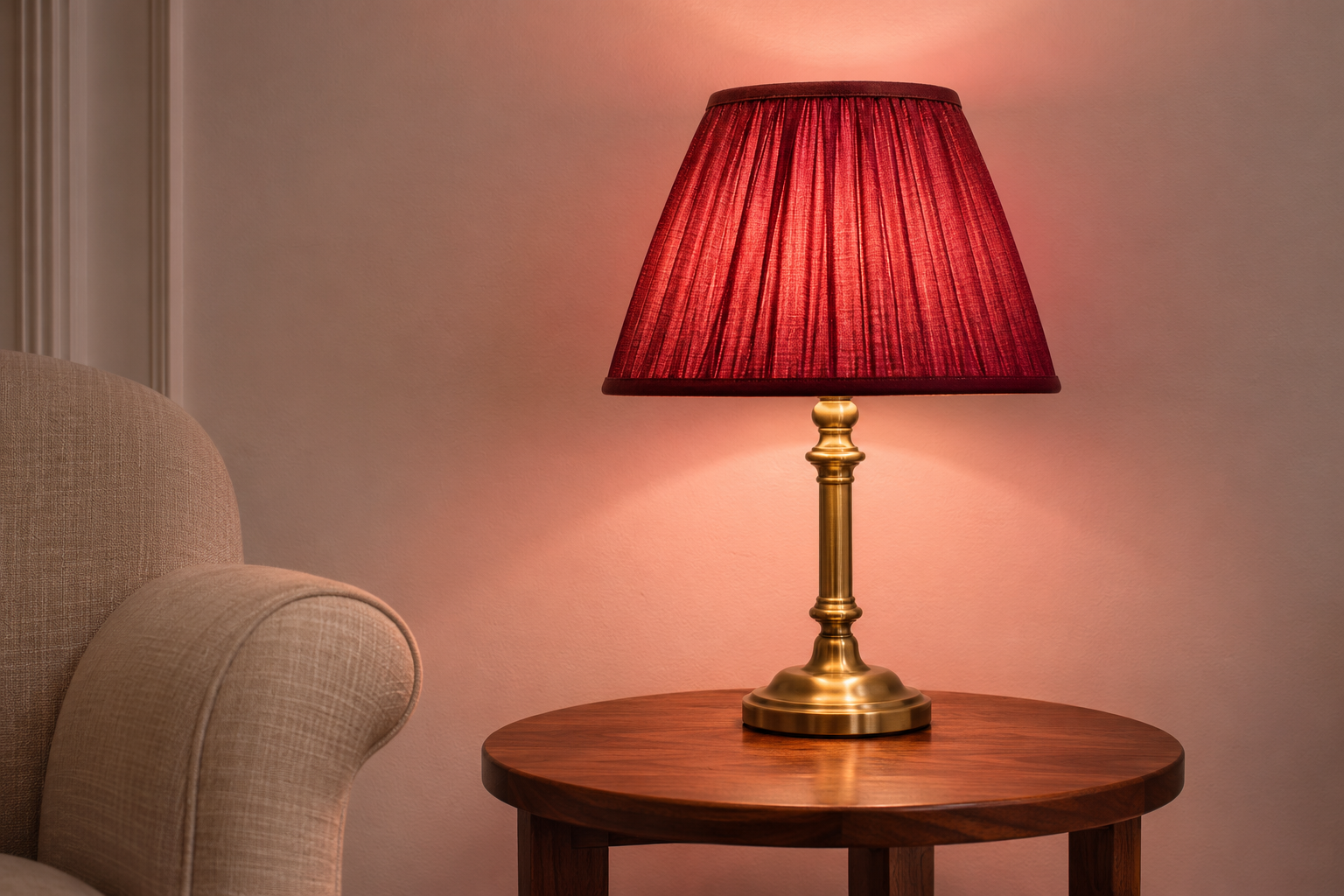
A red lampshade colors the light as well as the lamp. Switched on, a pleated shade in cranberry throws a warm pinkish glow onto the wall and the ceiling around it, and that glow shows most in the late afternoon, when the lamps are on and the daylight has gone. Two lamps with red shades at opposite ends of the room change its color at night.
Swap the shades and keep the bases. Check that each new shade fits the lamp’s fitting and sits at the same height on the base as the old one. A colored shade lets less light through than a white one, so it suits the lamps that set the mood better than the one beside the reading chair.
A Wreath on a Long Ribbon Over the Sofa
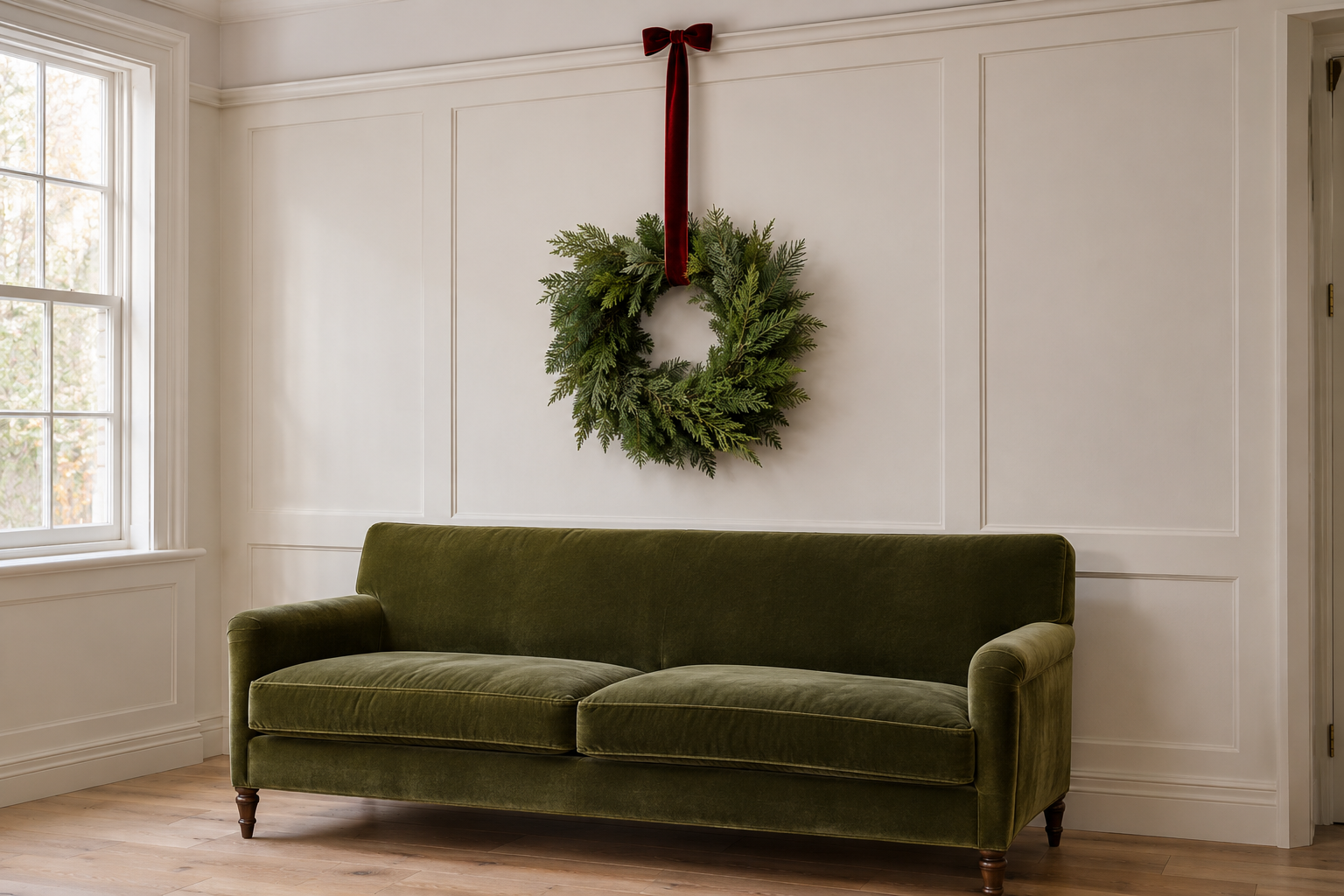
The wall above the sofa is the one people look at from across the room, and a wreath hung there sits where the eye already goes. Tie a velvet ribbon to a picture rail, or to a hook set high near the ceiling, and let it drop so the wreath hangs where a picture would, its bottom a hand’s width or more above the sofa back, clear of heads leaning back.
The ribbon is half the decoration. A long, straight line of deep red or green carries the eye from the ceiling down to the greens, and it dresses a plain wall with one object. Take the painting down for the month instead of hanging the wreath over it. A fresh wreath drops needles as it dries in a warm room, so over a sofa a preserved or faux one is easier to live with.
Hurricane Candles on the Table Behind the Sofa
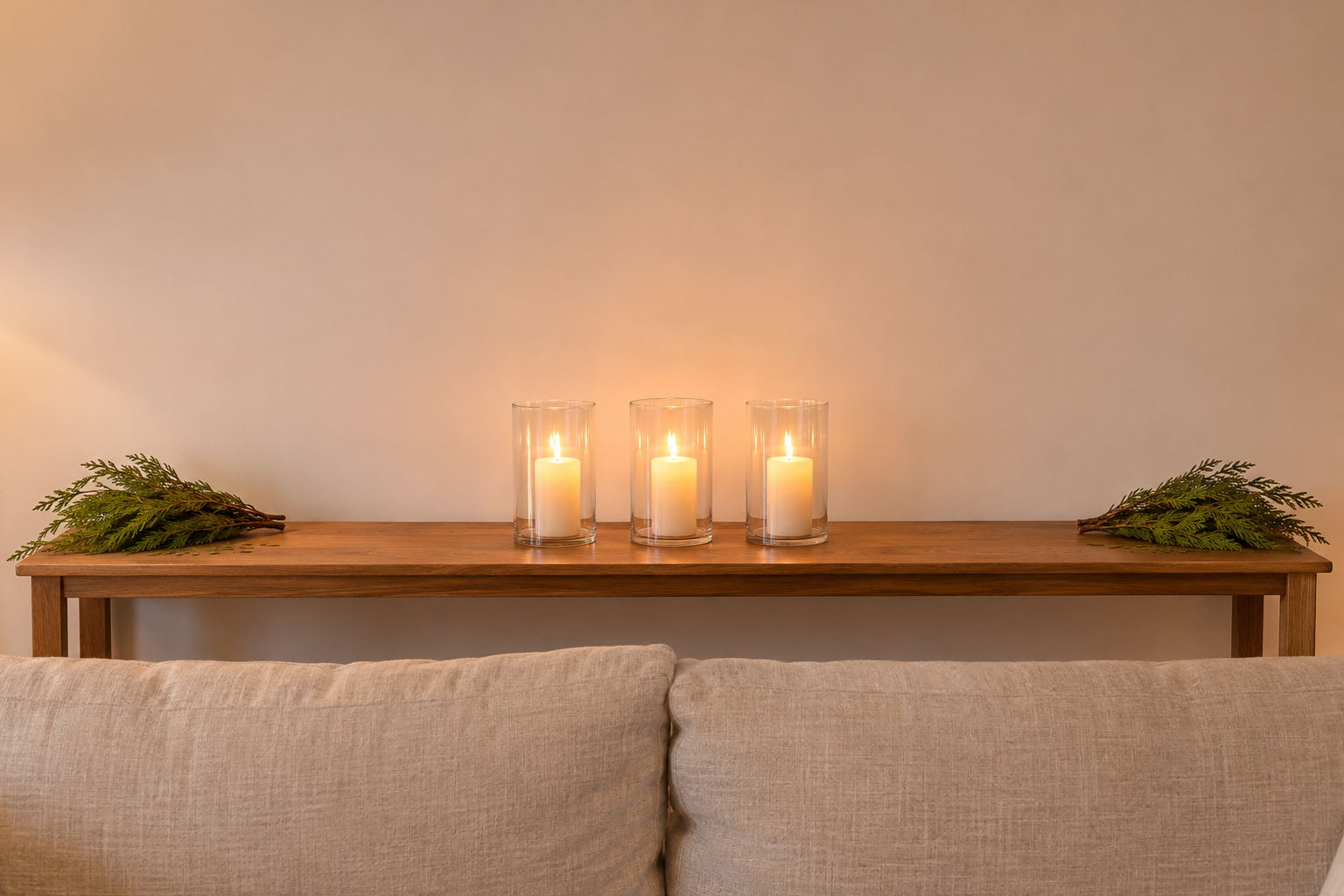
A long, narrow table behind a sofa that stands out in the room makes a ledge for candlelight at about the height of the sofa back. Three glass hurricanes with a pillar candle in each, grouped near its middle, give a soft pool of light behind the seats in the evening, and the glass keeps the flames out of the draft from a door.
Lay cut greens along the table if you like, but at the far ends. Keep at least 12 inches between each flame and anything that can burn, the greens included, since cedar and pine dry quickly in a heated room. Blow the candles out before the room empties, and use battery pillars instead if children or a cat will be on the sofa unwatched.
Heavier Curtains for the Darkest Weeks
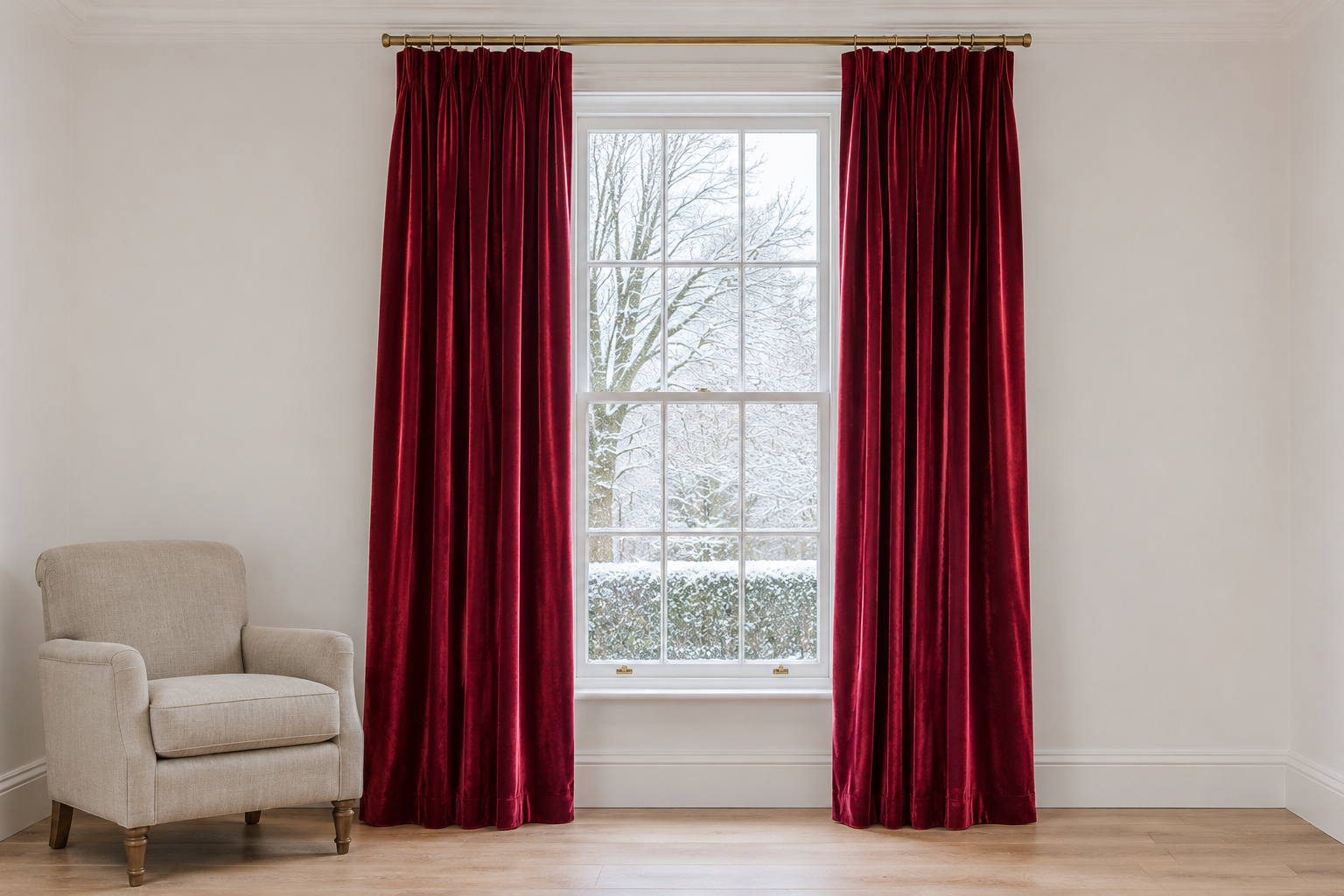
Living room curtains are often light linen, chosen with summer in mind. For December, a pair of lined velvet or wool curtains in deep cranberry on the same pole changes a whole wall, and drawn at dusk they cover the dark glass with color. A heavy, lined curtain also does more against a draft from an old window than an unlined one, which anyone sitting near it will notice.
Let them reach the floor, just touching or with a slight break, so the change doesn’t shorten the window. On rings it’s a short job: unhook the summer pair, hook on the winter one, and put the linen away until spring.
A Rug With a Red Border by the Sofa
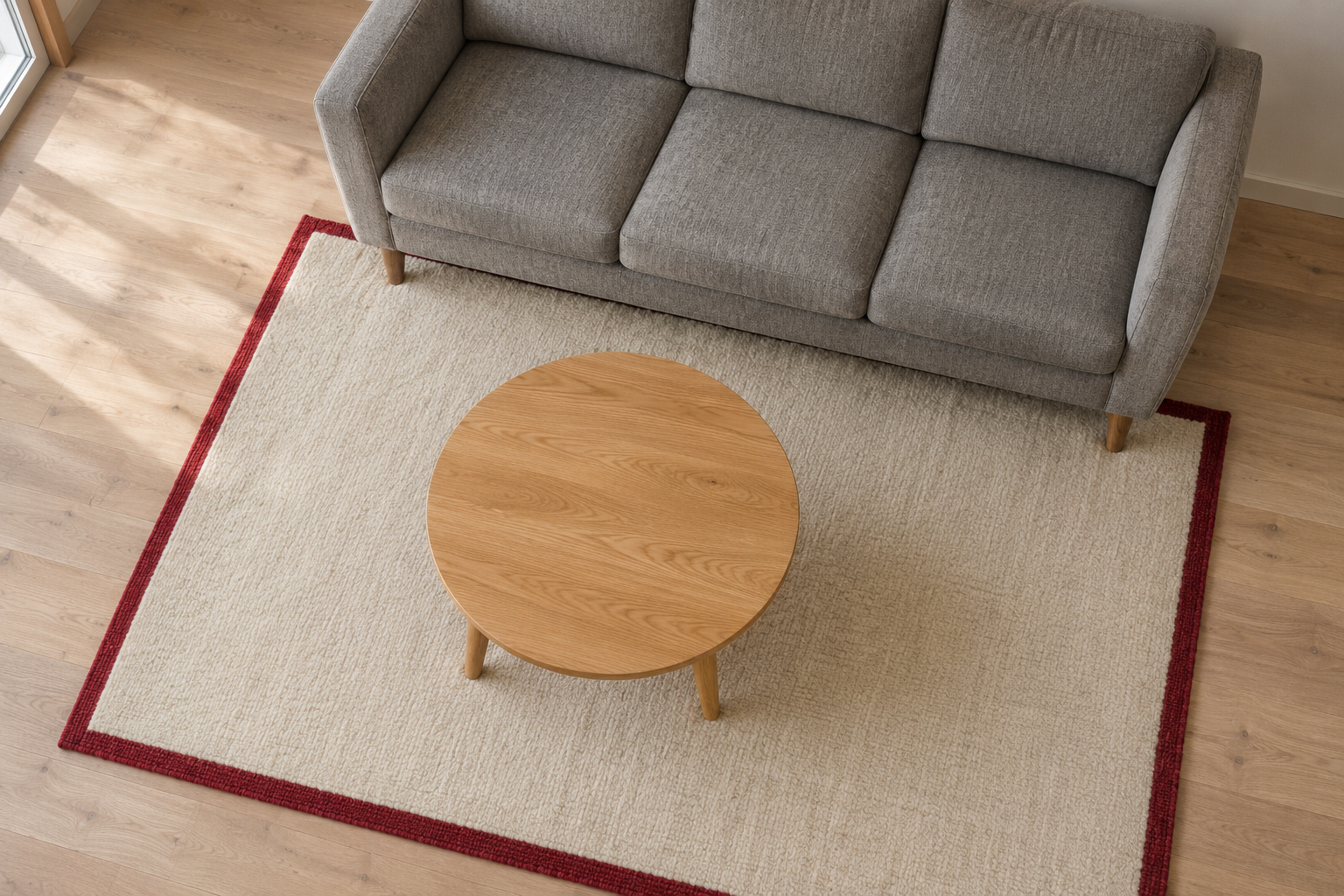
A seasonal rug is less work than it sounds if it is the same size as the everyday one and goes down on the same pad. A cream wool rug with a deep red border, laid in front of the sofa, brings the season’s red down to the floor and frames the seating group without adding a single thing that can be knocked over.
It also gives bare feet something warmer than cotton or jute on a winter morning. Keep the size and placement of the rug it replaces, so the sofa’s front legs still stand on it, and store the everyday rug rolled and wrapped in cotton somewhere dry until January.
Garland Along the Media Console
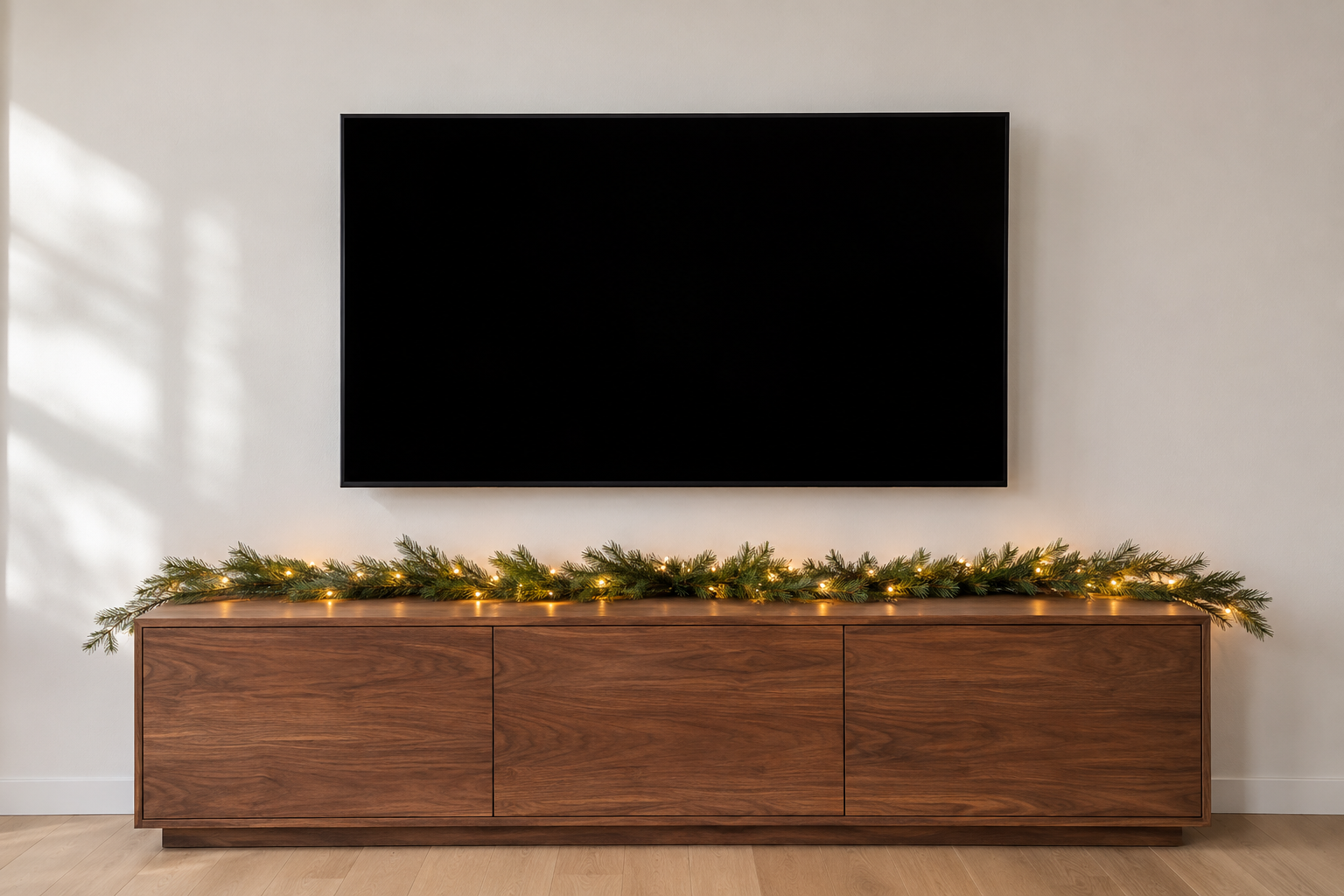
In a room arranged around a television, the low cabinet under it does the job a mantel does elsewhere. It is the long surface at the front of the room that everyone faces. A garland laid along the back of its top, close to the wall, with its ends trailing a little past each side, frames the console without crossing the screen.
Keep the greens clear of any vents in the console and the back of the television. Electronics need air around them, and greens dry faster over warm air. A strand of battery lights wound through the garland adds no cable to the ones already behind the console.
An Upright Piano Dressed Like a Mantel

An upright piano has the shape of a mantel, with a long top at about chest height against a wall. A garland along it and a pair of brass candlesticks make it the room’s December ledge in a house with no fireplace.
Keep anything that could spill, water for fresh greens included, off the piano entirely. Fresh pine also drops needles and can leave resin on a polished finish, so lay a strip of cloth under it or use a faux garland. Tapers left unlit, or battery ones, are the better choice on a piano that gets played, since the lid and the music stand move.
A Shelf of Nutcrackers at Eye Level

A collection that comes out every December, painted nutcrackers, old glass birds, or small brass bells, shows best together on one shelf. Clear a bookcase shelf at eye level, box its books or lay them on their sides on the shelf below, and stand the collection in a row across it.
Lined up together, the pieces can be seen from across the room, where the same pieces scattered among the books are hard to pick out. Choose a shelf above a small child’s reach if anything is breakable, and pack the collection in its own box in January so it comes out complete next year.
Stockings on a Blanket Ladder
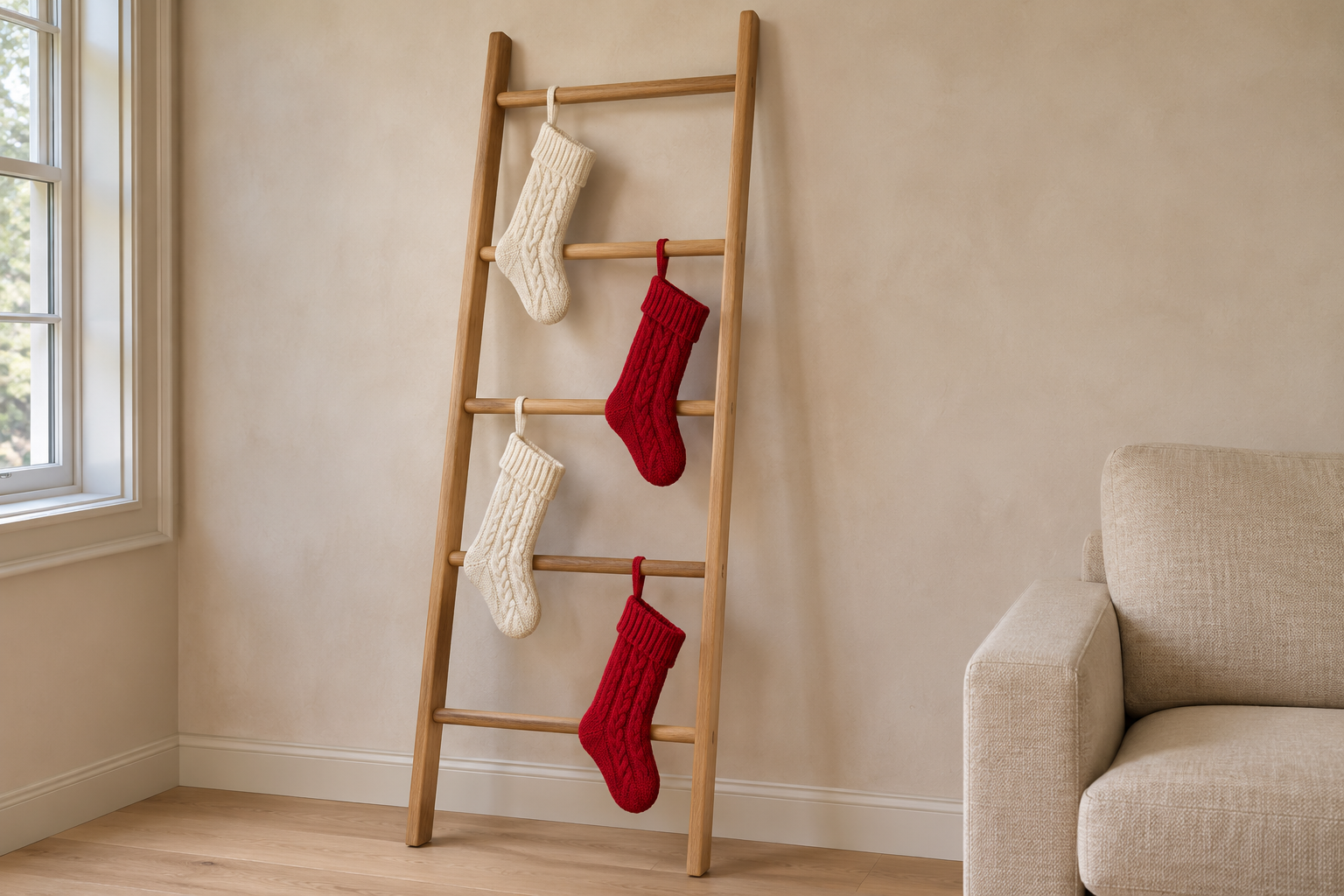
Without a mantel, stockings need somewhere that holds their weight once they’re full. A wooden blanket ladder leaned against the wall does it, with no screws in the plaster. Hang them by their loops from the rungs, alternating left and right so each one falls clear of the one below.
Lean it at a shallow angle, out of the path to the door, and check that its feet grip on a polished floor. Full stockings are heavier than they look on Christmas morning, and a ladder that slides is more likely than a nail to drop them.
Holly Tucked Behind the Picture Frames
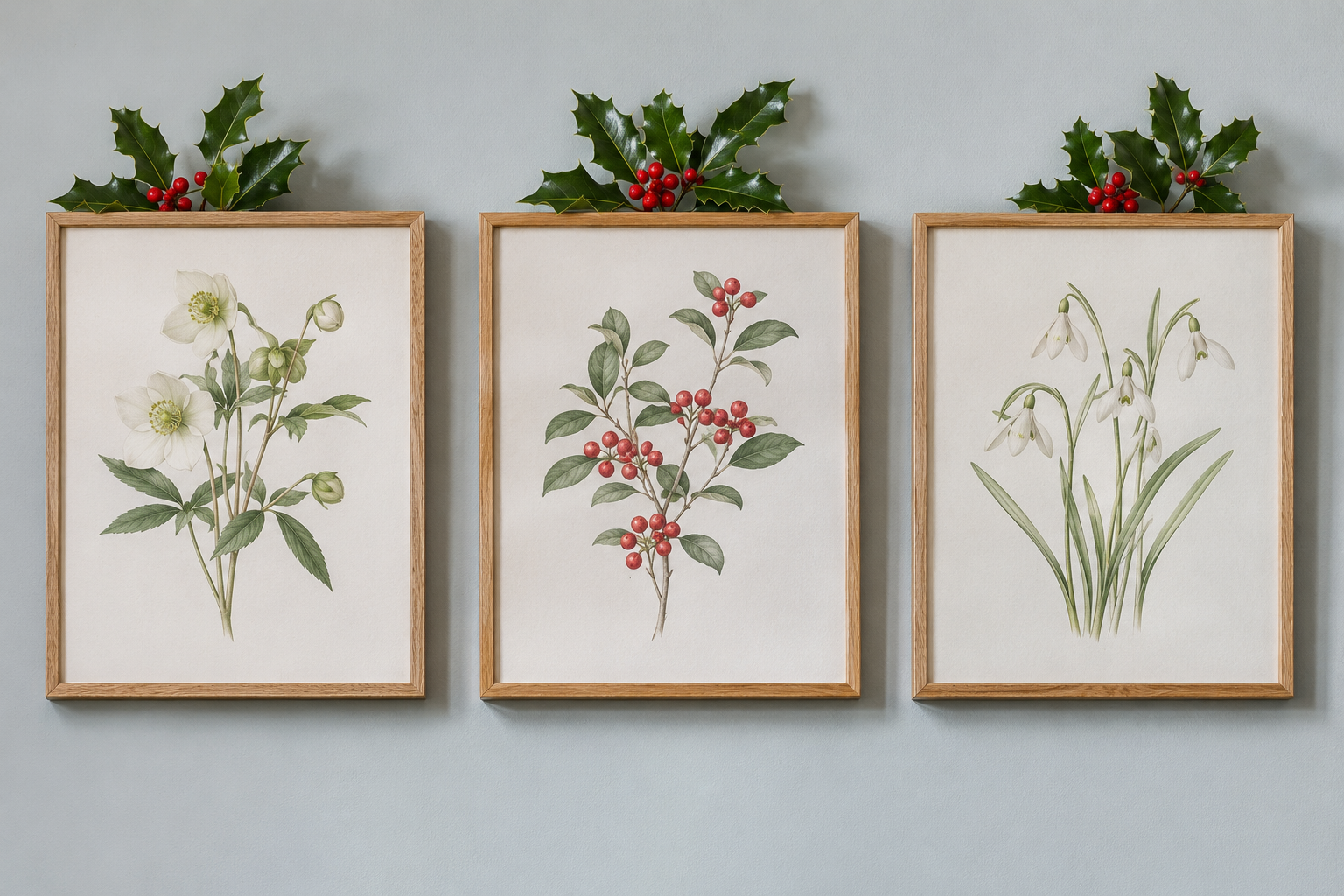
A traditional way to dress a room for Christmas is to push short sprigs of holly or ivy behind the top edges of the pictures already on the wall, so the leaves fan out above each frame. It needs no hooks, works with any art, and turns a row of frames into a band of green across the wall.
Use sprigs short enough for the frame to hold as it tilts slightly forward. Holly berries drop as the sprigs dry and can upset the stomach of a dog, a cat, or a small child who eats them, so keep berried stems high and sweep up any that fall, or use ivy and other greens without berries.
Greens Along a Ceiling Beam
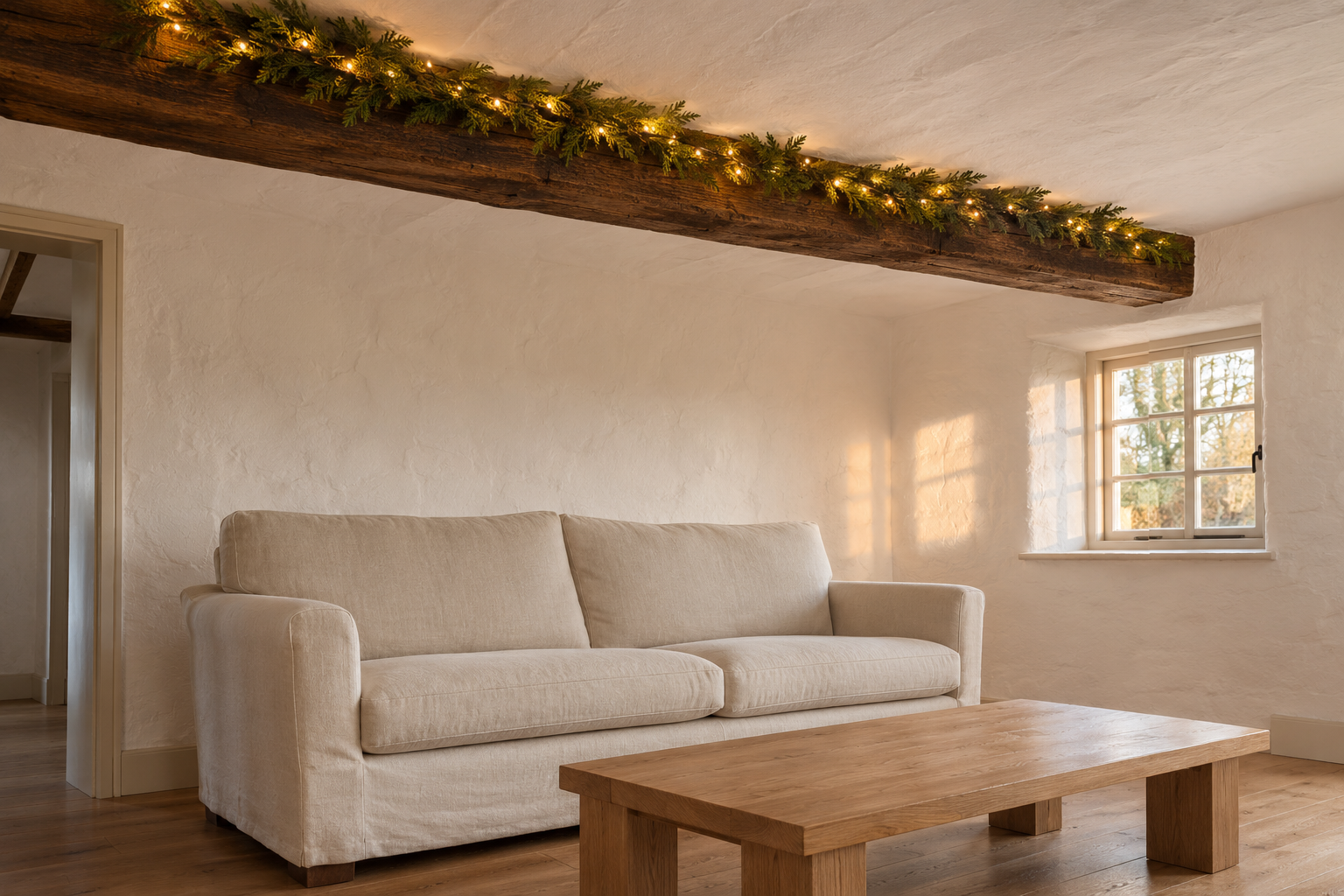
A room with an exposed beam has a place for a garland high above everyone’s heads. A rope of cedar or pine fixed along one side of the beam, with a strand of small warm lights wound through it, draws a line of green across the ceiling and adds light from above in the evening.
Fix it with small hooks into the side of the beam, or with ties around it, and never with tape that will lift the finish. Air near the ceiling is the warmest in the room, so a fresh garland dries faster up there and drops its needles on whoever sits below. A good faux garland suits a beam better.
Lights in a Large Houseplant
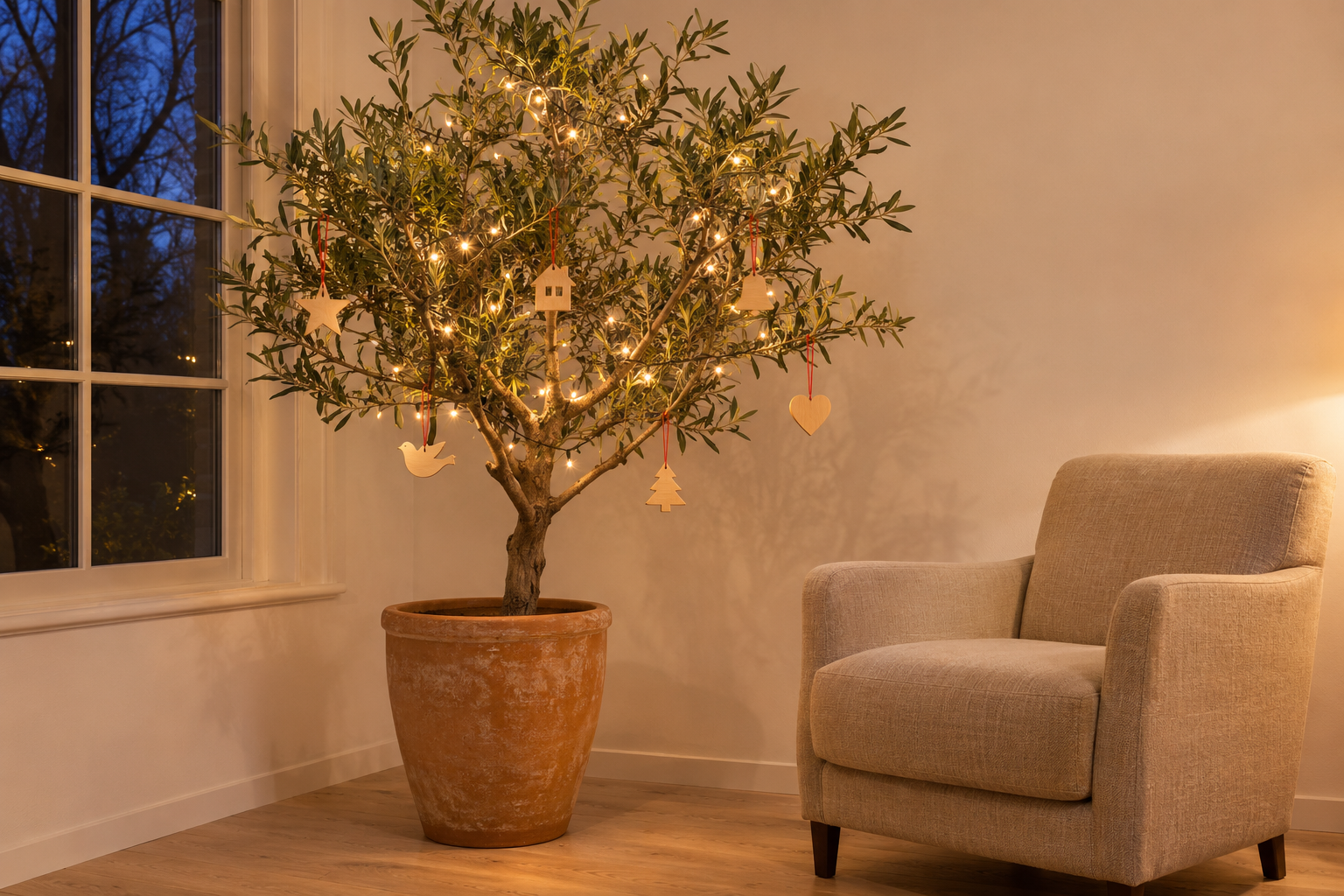
A living room with no space for a tree may already have one in a pot: a large olive, a palm, or a citrus by the window. Wound with a strand of small warm white lights and hung with a few light wooden ornaments, it becomes the room’s lit plant for the season, and it goes back to being a houseplant in January.
Use LED lights, which run much cooler than old incandescent strands. Wind the strand loosely so it doesn’t press into soft stems, and keep the ornaments small enough that no branch bends under them.
Paper Chains Made at the Table
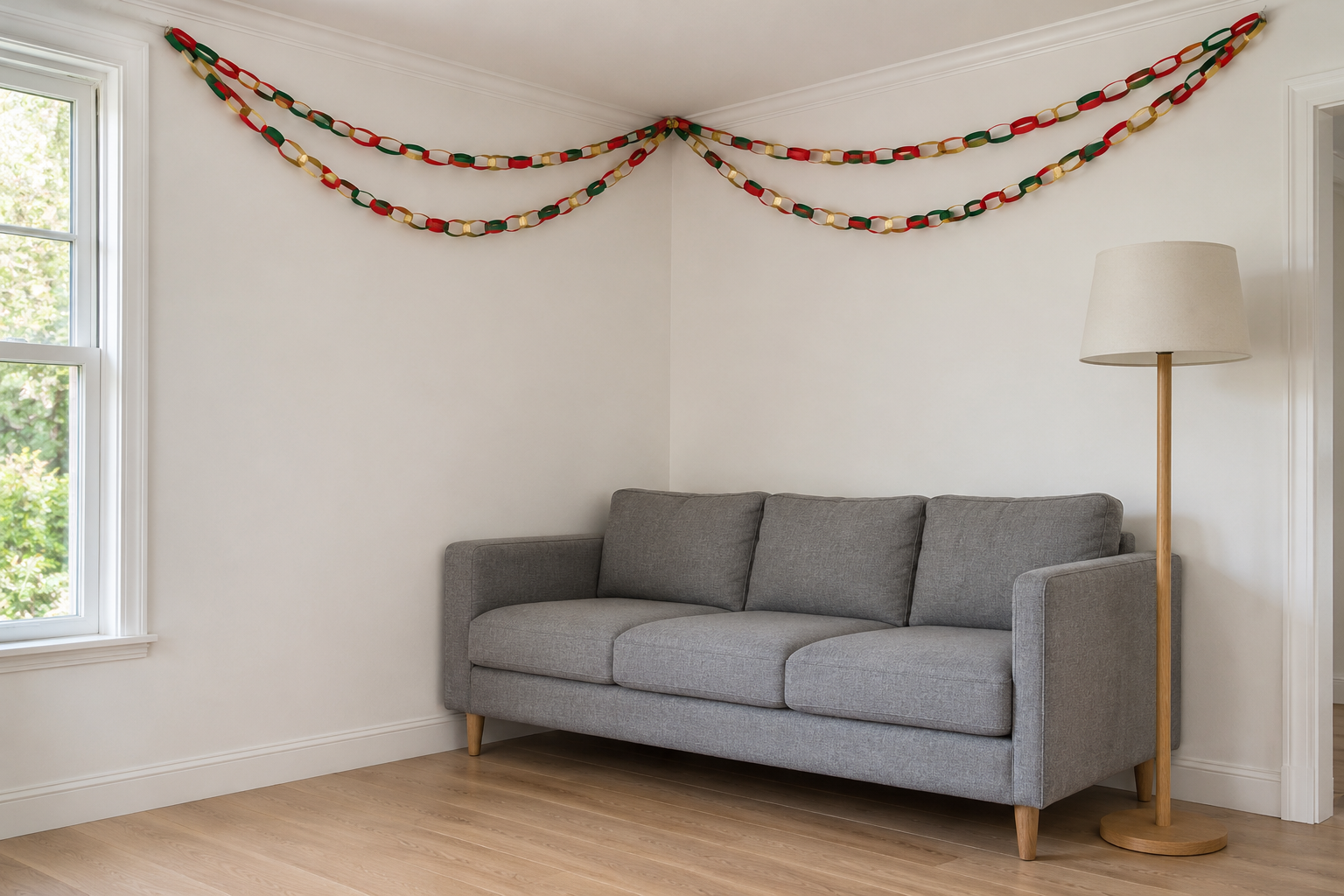
Paper chains are one of the simplest decorations children can make, and in a living room they can go higher than any garland. Strips of red, green, and gold paper, looped into rings during an afternoon at the table, can be swagged in shallow loops out from one corner just under the ceiling, where the lamps catch them in the evening.
They weigh almost nothing, so small removable adhesive hooks hold them. Test one on an unseen patch of the wall first, since some can lift paint. The chain can grow a few feet at a time through December, and it rarely survives being taken down, so next year’s is made fresh by whoever is old enough to help.
A Card Table Left Up for Puzzles
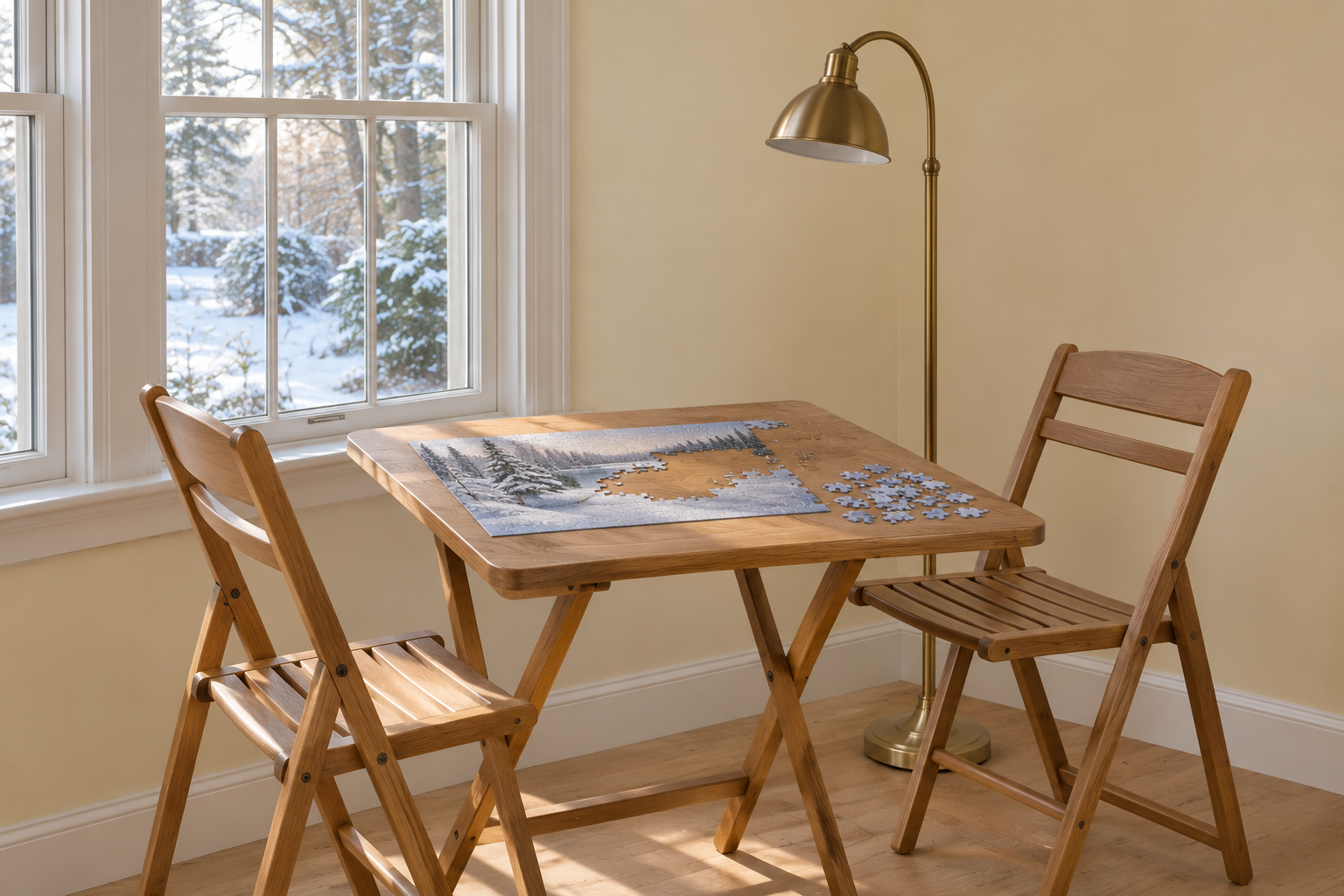
A folding card table set up near a window for the holidays gives the living room a place for a jigsaw or a long game that can be left out between evenings, so the coffee table stays free for cups. With two chairs pulled up to it, it becomes the corner people wander to when conversation on the sofa slows.
Put it where daylight reaches it in the afternoon and a lamp reaches it after dark, since puzzle pieces are hard to tell apart in dim light. When the holidays end it folds flat and goes behind a door with the boxes of decorations until next year.