Christmas decorations are out for a month and packed away for eleven, and nearly everything that goes wrong with them goes wrong in the boxes. Glass breaks under a heavier box set on top, lights come out in a knot, a candle slumps after a summer in a hot attic, a wreath flattens against the side of a carton. What happens in January, when everything comes down at once and the job is rushed, decides what comes out next December.
Packing also decides how easily it all goes up again. The stand, the hooks, and the extension cords are needed before anything else, and if they’re at the bottom of the last box, decorating starts with a search.
Where the Boxes Spend the Year
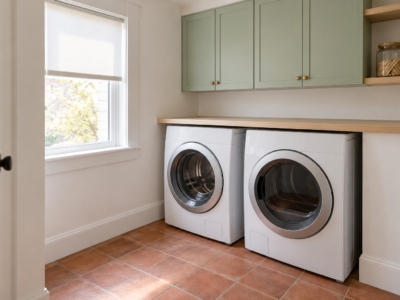
Where the boxes live matters more than which boxes they are. An attic heats up badly in summer and gets cold in winter, and that swing is hard on plastic, wire insulation, glue, candles, and paint on old glass. A garage or an unheated shed is damp and open to mice. A cool, dry room inside the house, a closet, the space under the stairs, a shelf in a dry basement, keeps decorations at a steady temperature all year.
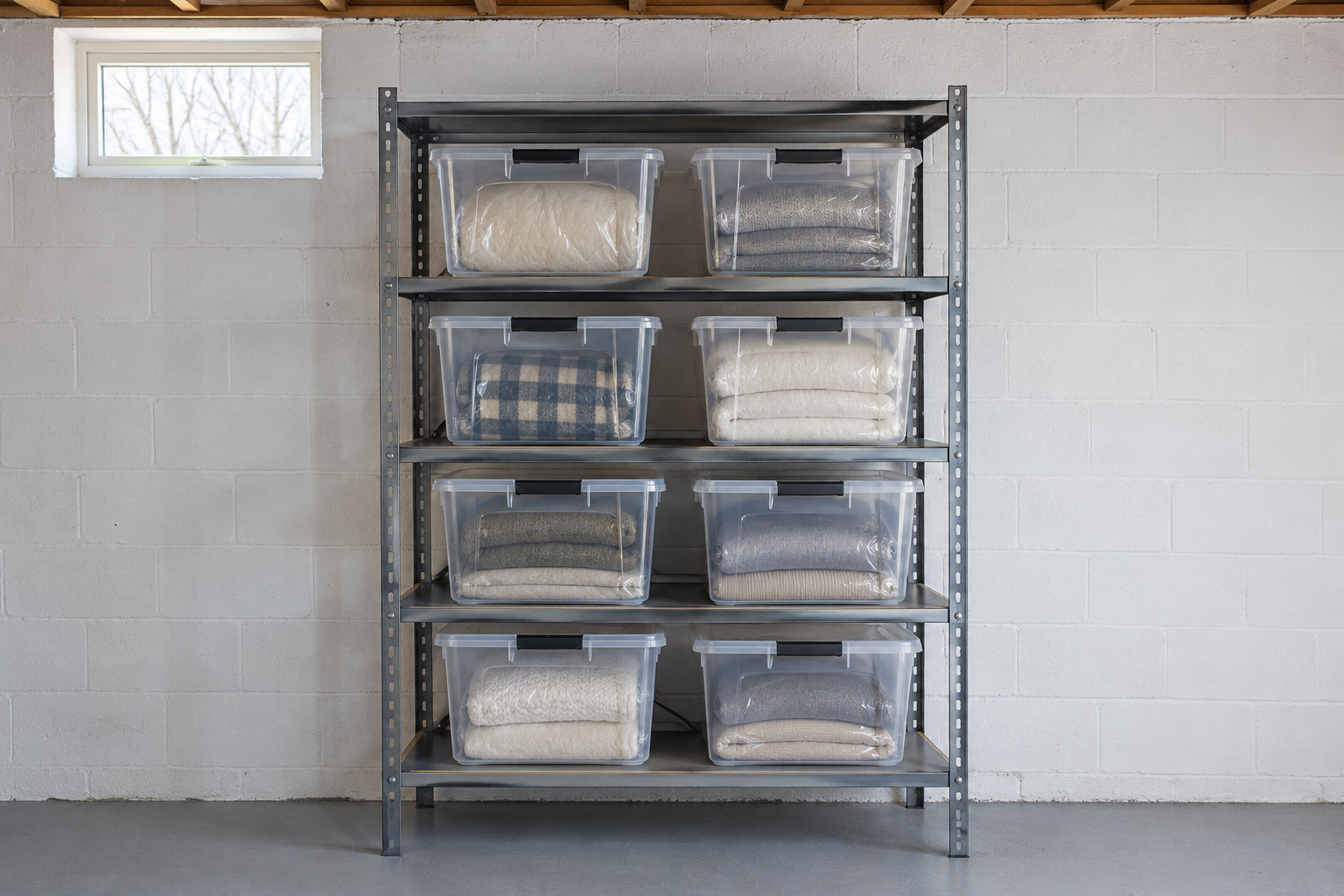
Sealed plastic bins with lids keep out damp, dust, and mice better than cardboard, which soaks up moisture and softens. In a basement, keep the bins on shelves rather than on the concrete, where damp comes up through the floor and a small leak or flood reaches the lowest box first. Clear bins show what’s inside without opening them.
Glass Ornaments in Divided Boxes
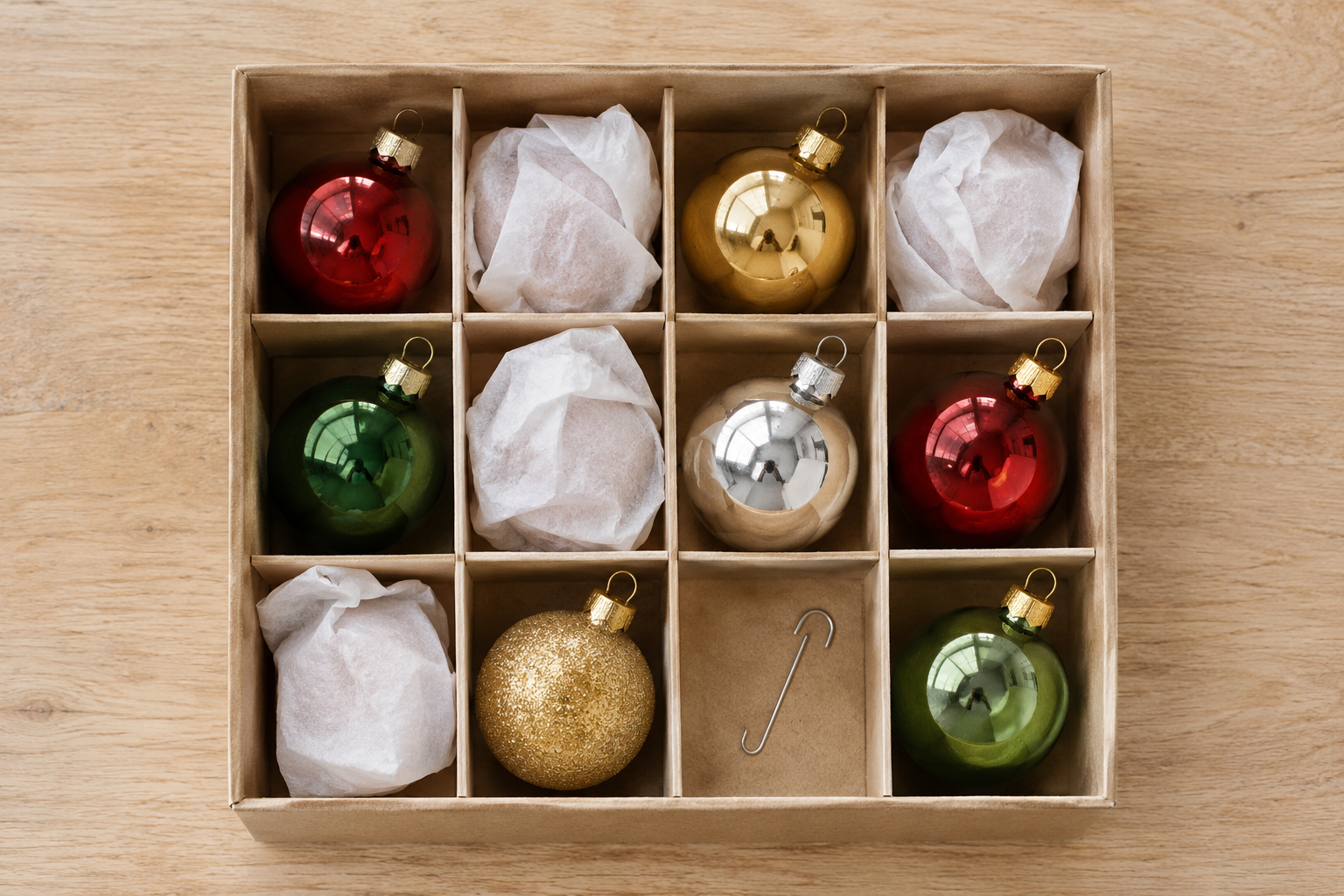
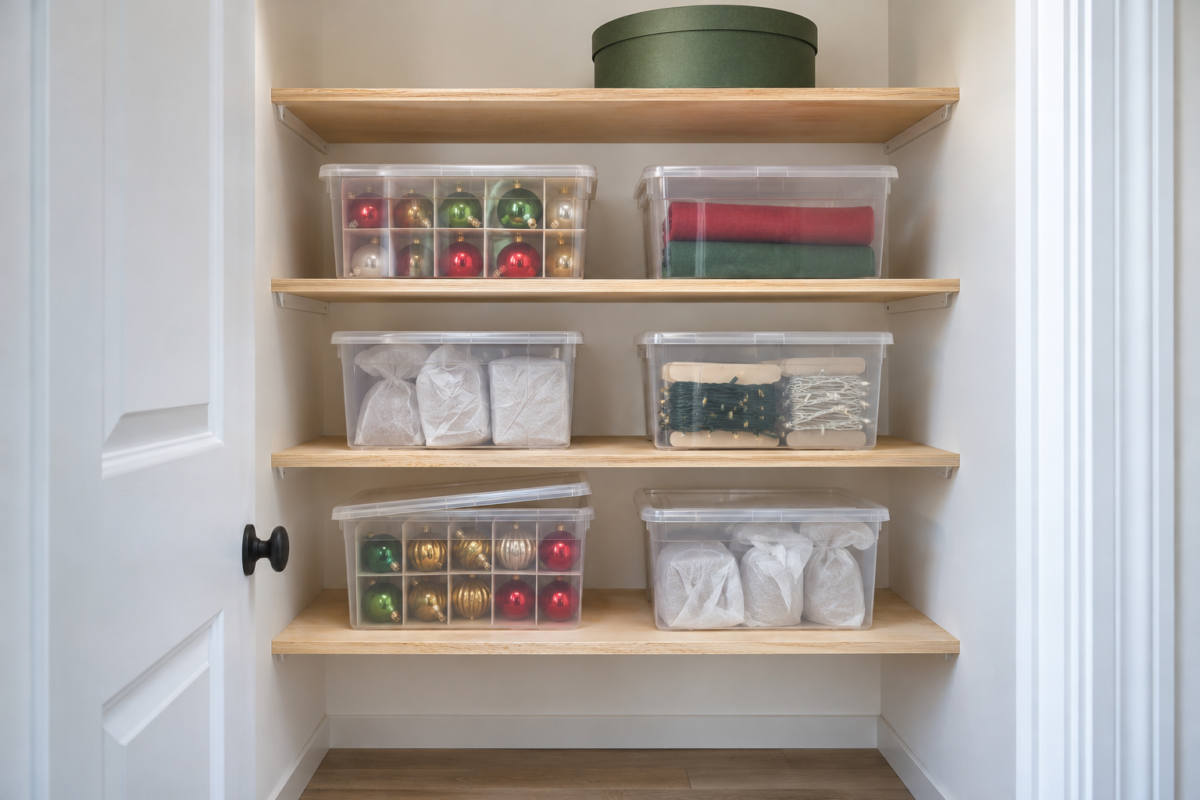
Glass ornaments break when they knock against each other or carry weight. A box divided into compartments, one ornament to each, set inside a sealed bin, keeps them apart, and stacking trays let the heavier ornaments go in the bottom layer with the thinnest glass on top. Wrap anything old or hand-painted in tissue paper first.
Take the hooks off before packing. A hook left on catches the next ornament and scratches it, and loose hooks end up in a tangle at the bottom of the box. A small jar of hooks in the ornament box keeps them together for next year. Don’t press a lid down on a full box. If it doesn’t close easily, something underneath is taking the weight.
Lights Wound Flat on a Card
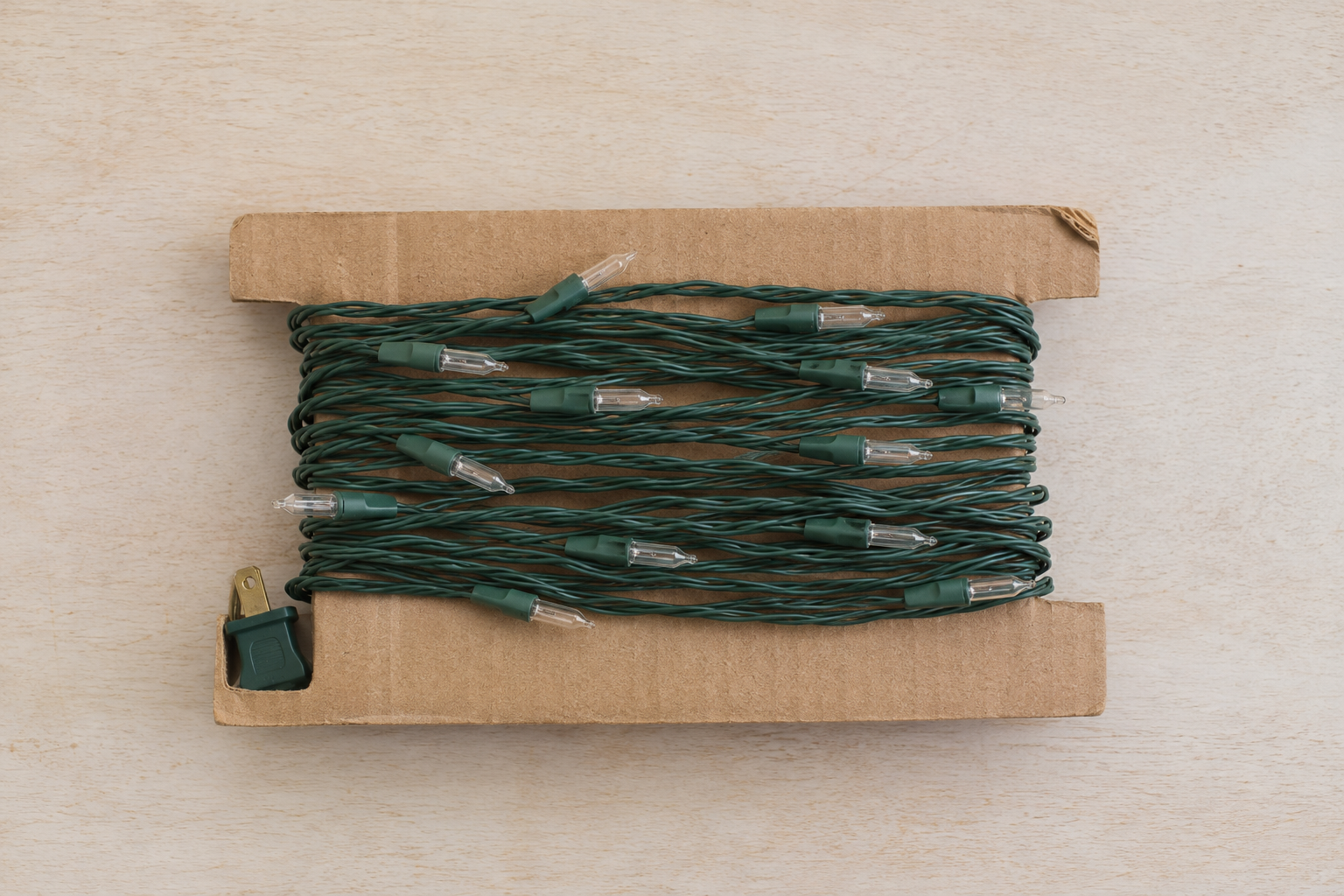
Lights tangle when they are bundled in a heap. Winding each strand flat around a rectangle of stiff card, with a notch cut in one end to hold the plug, keeps it in a single layer that unwinds in one pull next year. A cardboard tube or a reel made for the purpose does the same for a long strand.
Plug each strand in before it’s wound and set aside any that are partly out, so next December starts with lights that work. Throw away a strand with cracked or bare wire rather than packing it. Take the batteries out of battery-powered lights and candles, since batteries left in for a year can leak and corrode the contacts. Pack lights in their own bin, apart from the glass, so a heavy coil isn’t resting on an ornament.
An Artificial Tree in Its Sections
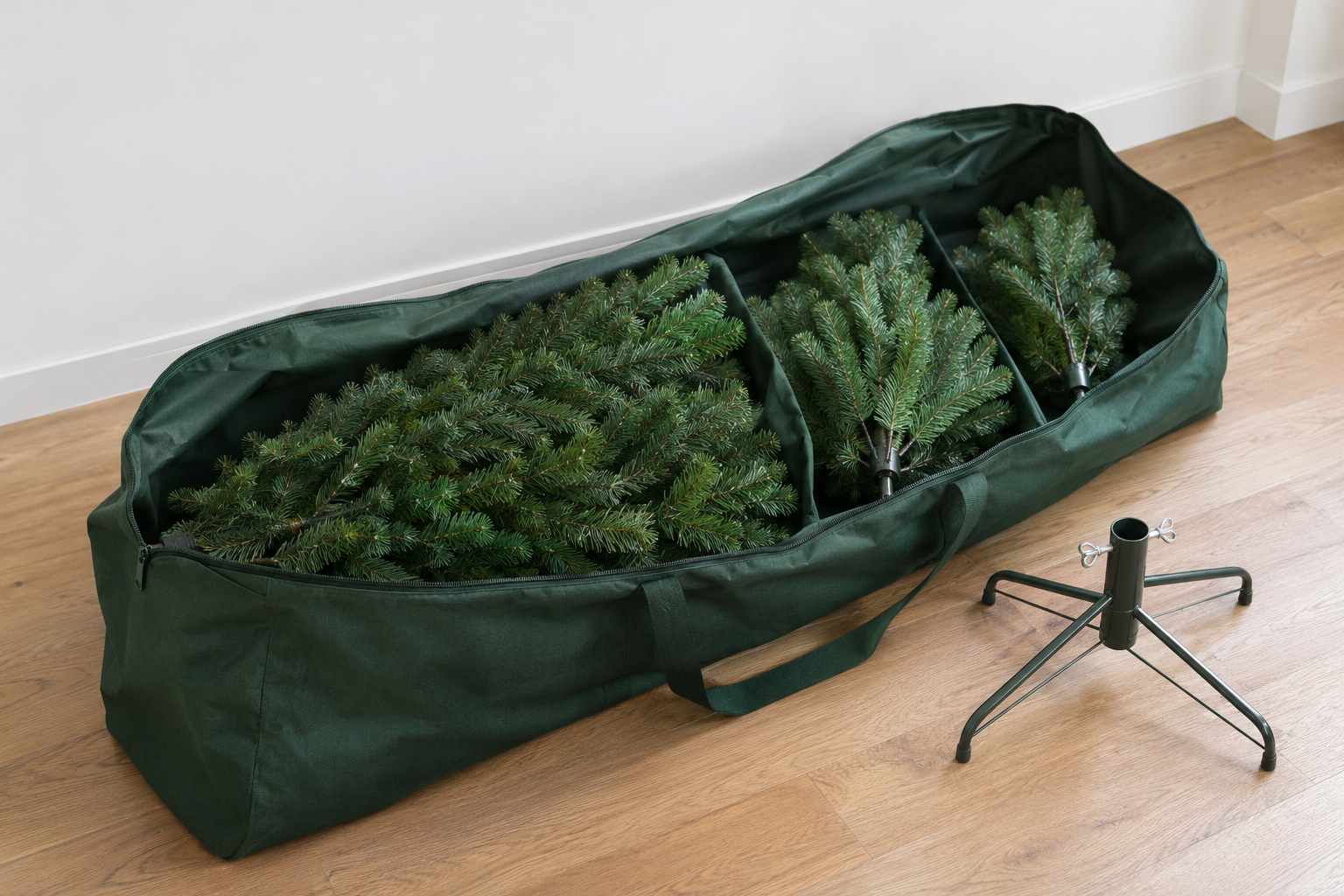
An artificial tree comes apart into sections, and each one packs smaller with its branches folded up against the pole, the reverse of fluffing it out in December. A long zippered tree bag keeps the dust and damp off, and on a tree whose sections look alike, a strip of colored tape on each pole saves guessing which goes at the bottom.
A pre-lit tree is better stored in a bag that holds it upright, or laid flat with nothing on top, since crushing the branches can bend the wires where the bulbs fix on. Keep it out of the attic for the same reasons as everything else. The stand, if it comes off, goes in the first box out.
Wreaths, Garlands, and Anything Soft
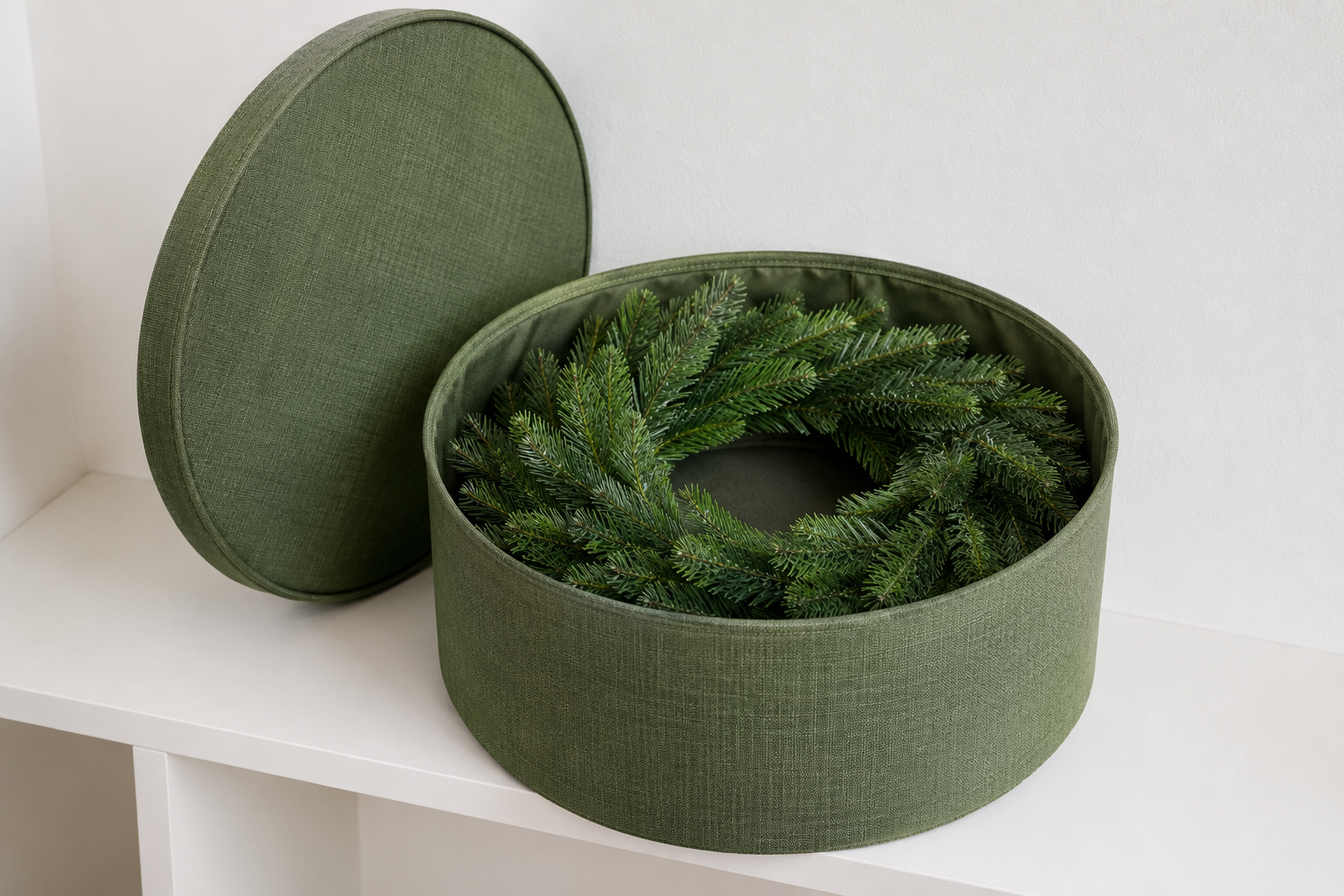
An artificial wreath keeps its shape lying flat in a round wreath box, or hung on a hook inside a closet with a bag over it. Stored on edge in a carton, it gets pressed flat on one side. A garland goes in loose coils rather than folded, since a fold pressed in for eleven months is still there when it comes out.
Tree skirts, stockings, and table linens should go into storage clean and fully dry. Damp fabric shut in a bin for a year can mildew, and food spills draw moths and mice, so wash or brush off what needs it before packing. Clothes moths feed on wool, and a sealed bin keeps them out.
The Village and Other Fragile Pieces
Ceramic and porcelain village houses, nativity figures, and other fragile pieces are safest in the boxes they came in, with the shaped foam that holds each piece. Keep those boxes, flattened if need be, and pack each piece back in its own. If the originals are gone, wrap each piece in tissue and pad the gaps so nothing moves when the bin is lifted.
A photograph of the village set up, kept in the top of its bin, shows next year how it went together.
The Box That Comes Out First
Pack one box last, and mark it so it’s the first one opened next year. It holds what’s needed before anything else can go up: the tree stand, ornament hooks, extension cords and timers, spare bulbs and fuses, a roll of tape, scissors, and the adhesive hooks used for the garland. With that box open, everything else can be unpacked in the order it’s used.
Group the other boxes by room, the tree, the mantel, the front door, so each one can be unpacked where it’s going. Bins that hold the same things every year end up in the same places on the shelf, and the one that’s missing is easy to spot.