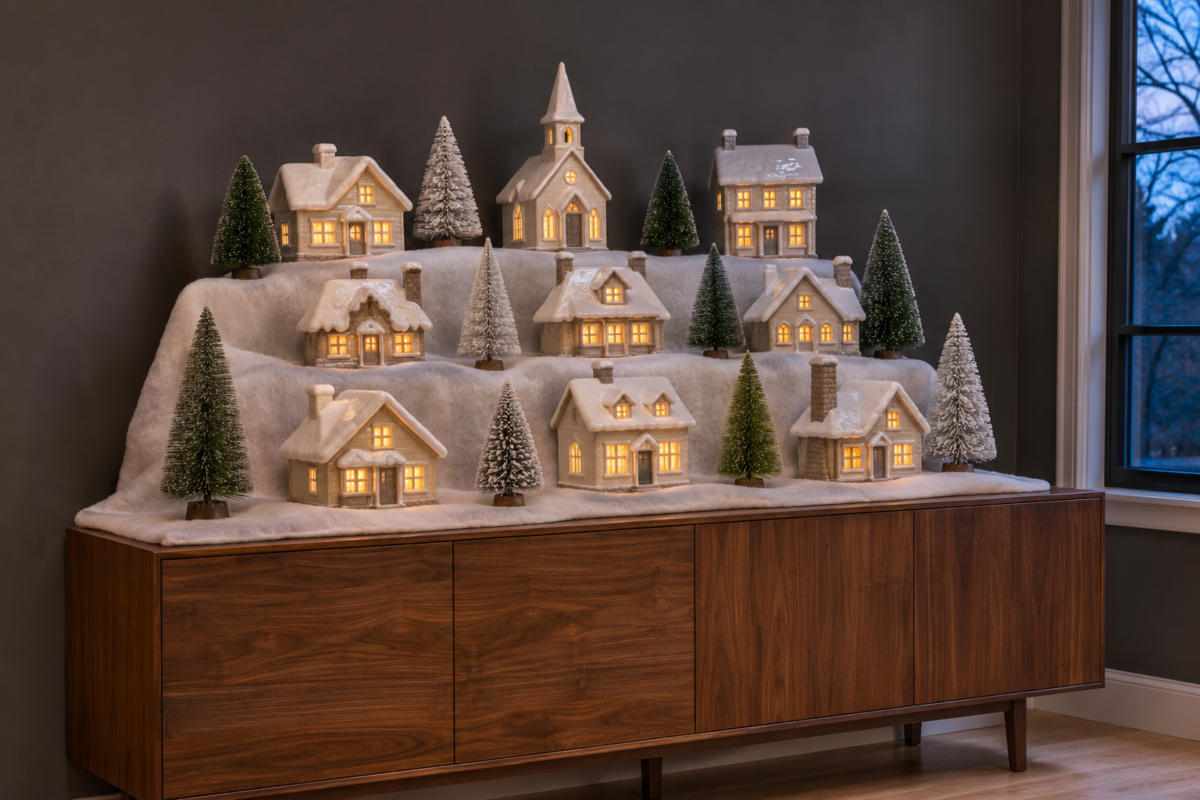
Christmas villages are rarely bought all at once. Most grow by a house or two a year, a gift one Christmas and a flea market find the next, so each December the collection has to fit a spot it may have outgrown. A sideboard, a mantel, a deep windowsill, or a bookcase will hold one, and each is seen from somewhere different, a chair, the doorway, or the sidewalk outside.
What the houses stand on, what sits behind them, and where the cords go change a display more than the number of houses does. Nearly all of it takes no more than an afternoon, a few boxes, a length of white batting, and a power strip with a switch.
A Hillside Built From Boxes Under the Snow
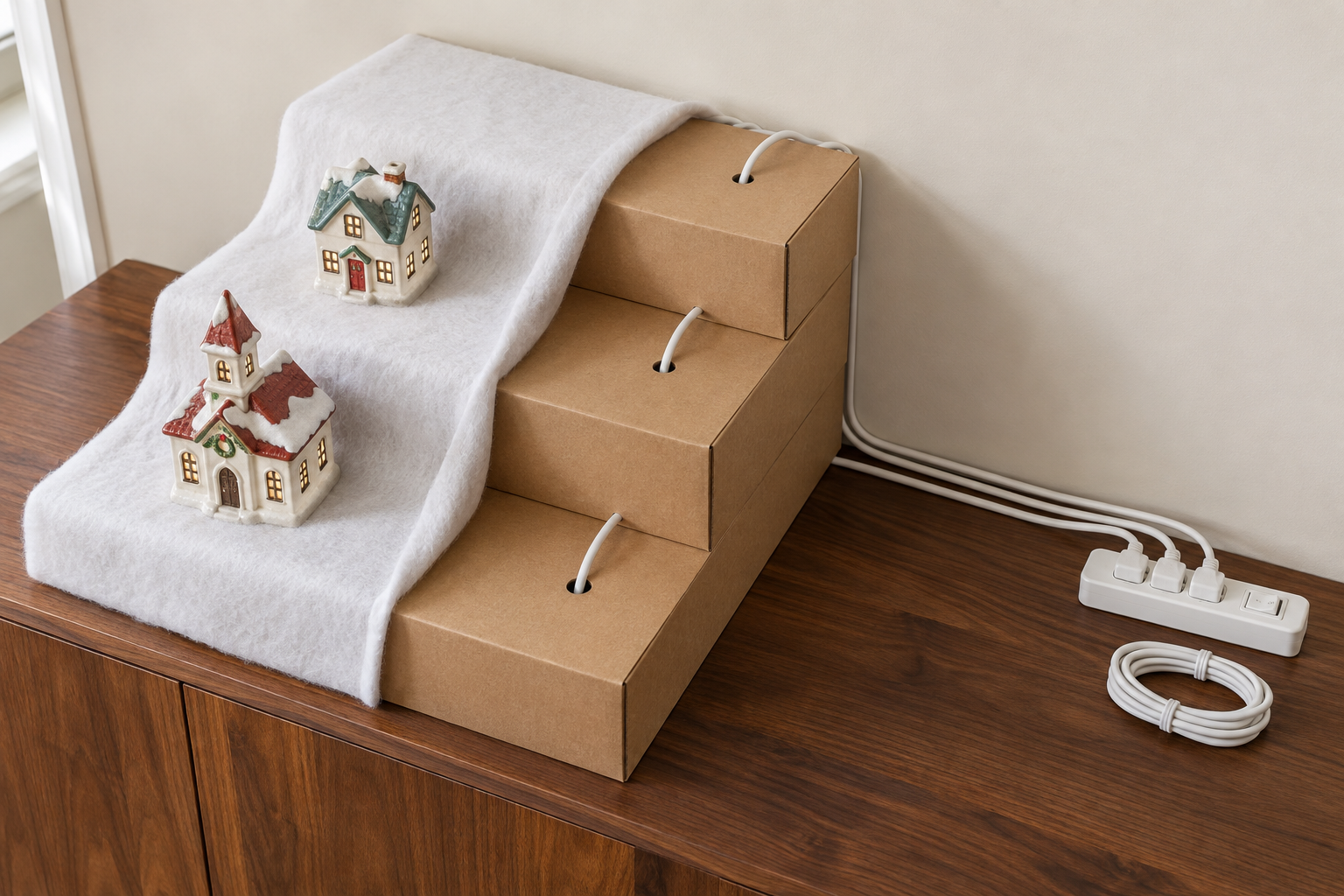
On a flat table, the front row of houses hides the back row. Stepping the ground up solves that. Sturdy boxes, old books, or blocks of foam set in two or three tiers, the highest against the wall, lift each row above the one in front so every window shows.
A felt snow blanket or a length of white batting thrown over the steps turns them into a slope. Before it goes on, cut a small hole in the top of each box under where a house will stand. The cord then drops straight down inside the hill and out at the back, where all of them meet one switched power strip and nothing trails across the snow.
A Single Street Along the Mantel
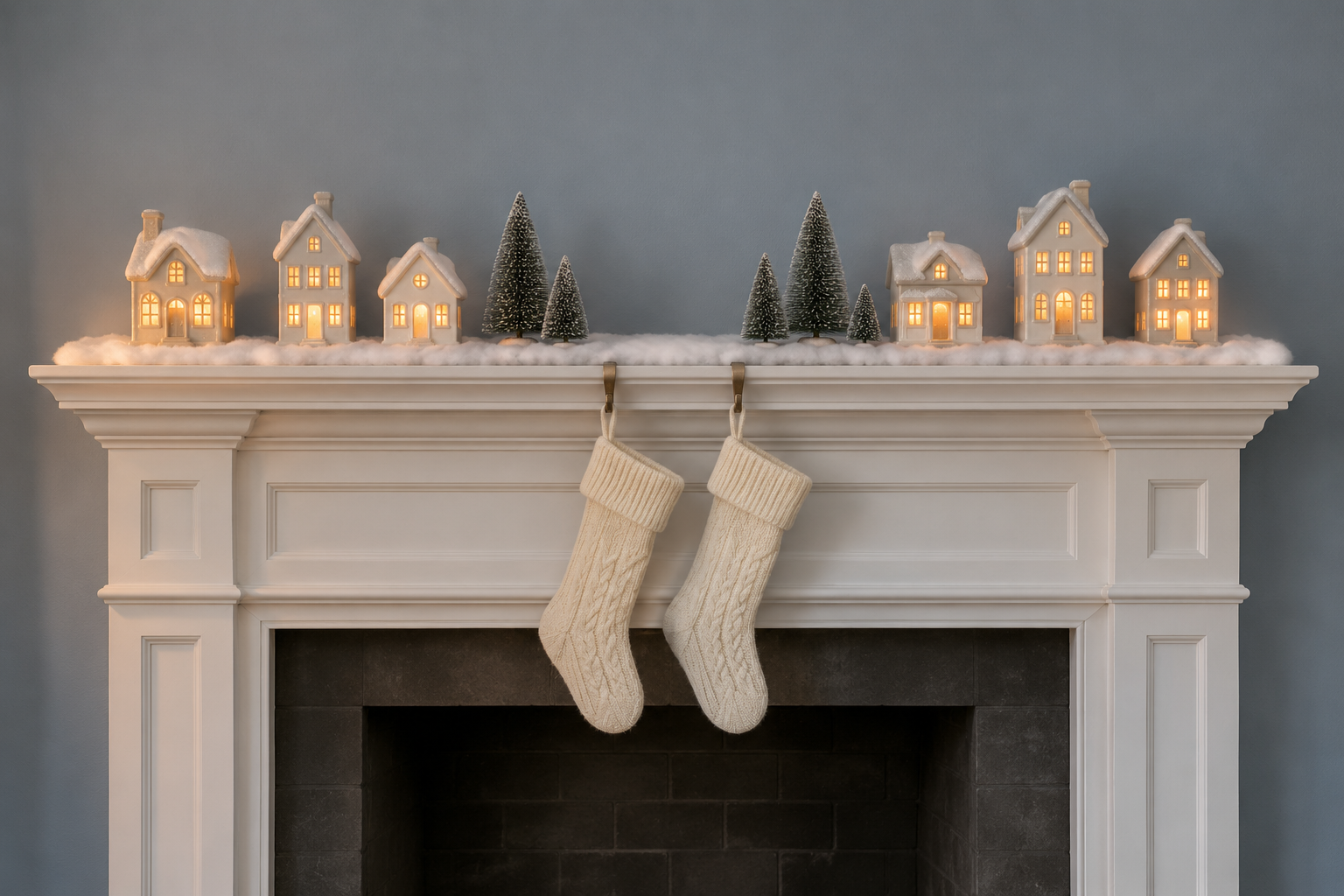
A mantel is too shallow for hills, and that suits a village laid out as one street. The houses stand in a line with small trees between them, the way buildings face a road, on a strip of batting that runs the length of the shelf. Leave a gap where the stockings hang, so the hooks don’t end up behind a house.
Above a fire that is lit most evenings, the shelf gets warm. Ceramic houses on a bare shelf, wired with LED lights, suit that better than cardboard pieces on cotton.
A Bookcase With a Street on Every Shelf
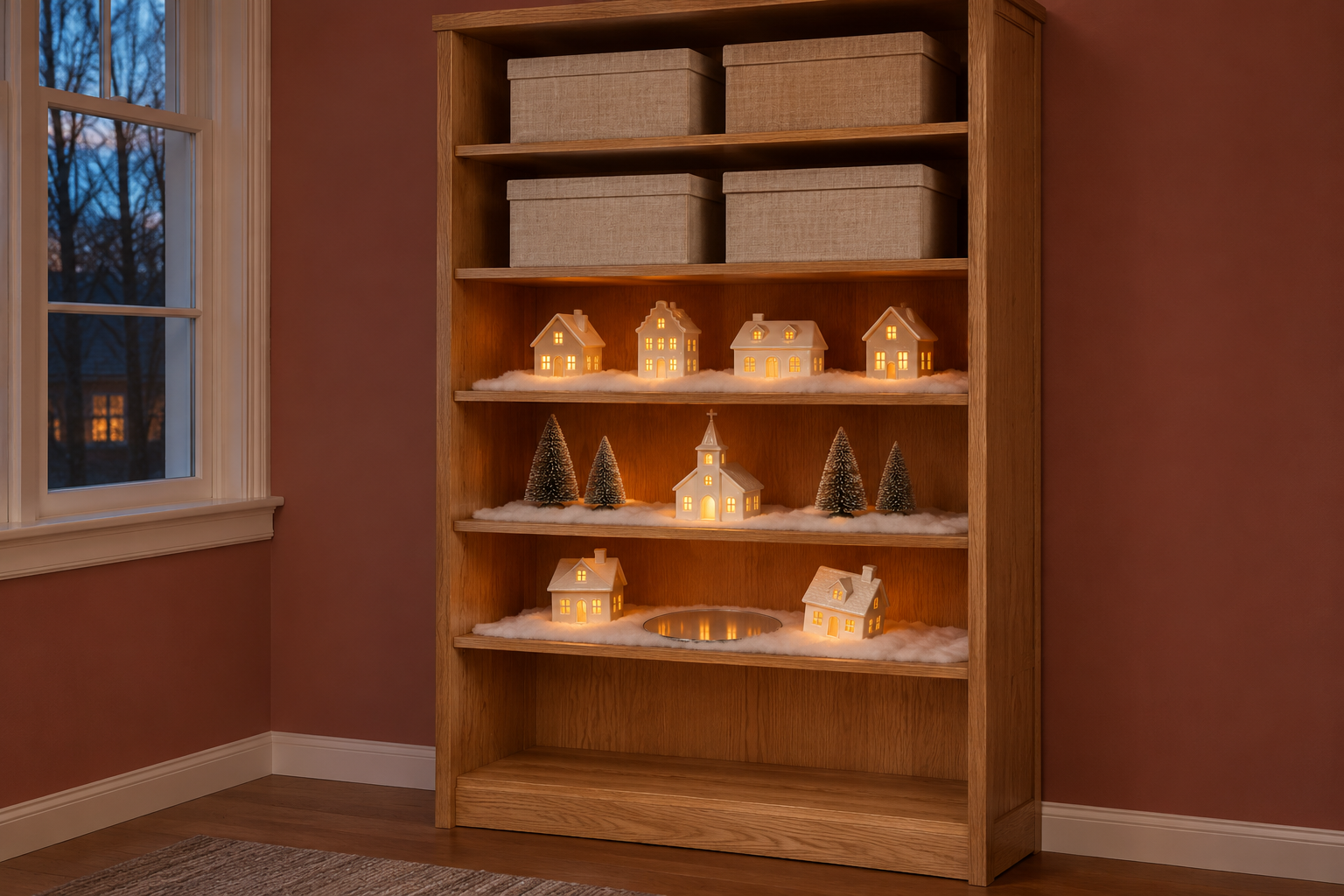
An open bookcase gives a village its levels without building any. Clear two or three shelves at and below eye level, lay a strip of batting on each, and give each shelf a street of its own: houses on one, a church among trees on the next, a pond on the lowest.
The shelf above shades each one, so the lit windows stand out more than they would on an open table under a ceiling light. Cords go out at the back of each shelf and down behind the bookcase to one switch. Battery houses on a timer save drilling, at the cost of changing batteries once or twice before New Year.
A Village Small Enough for a Tray
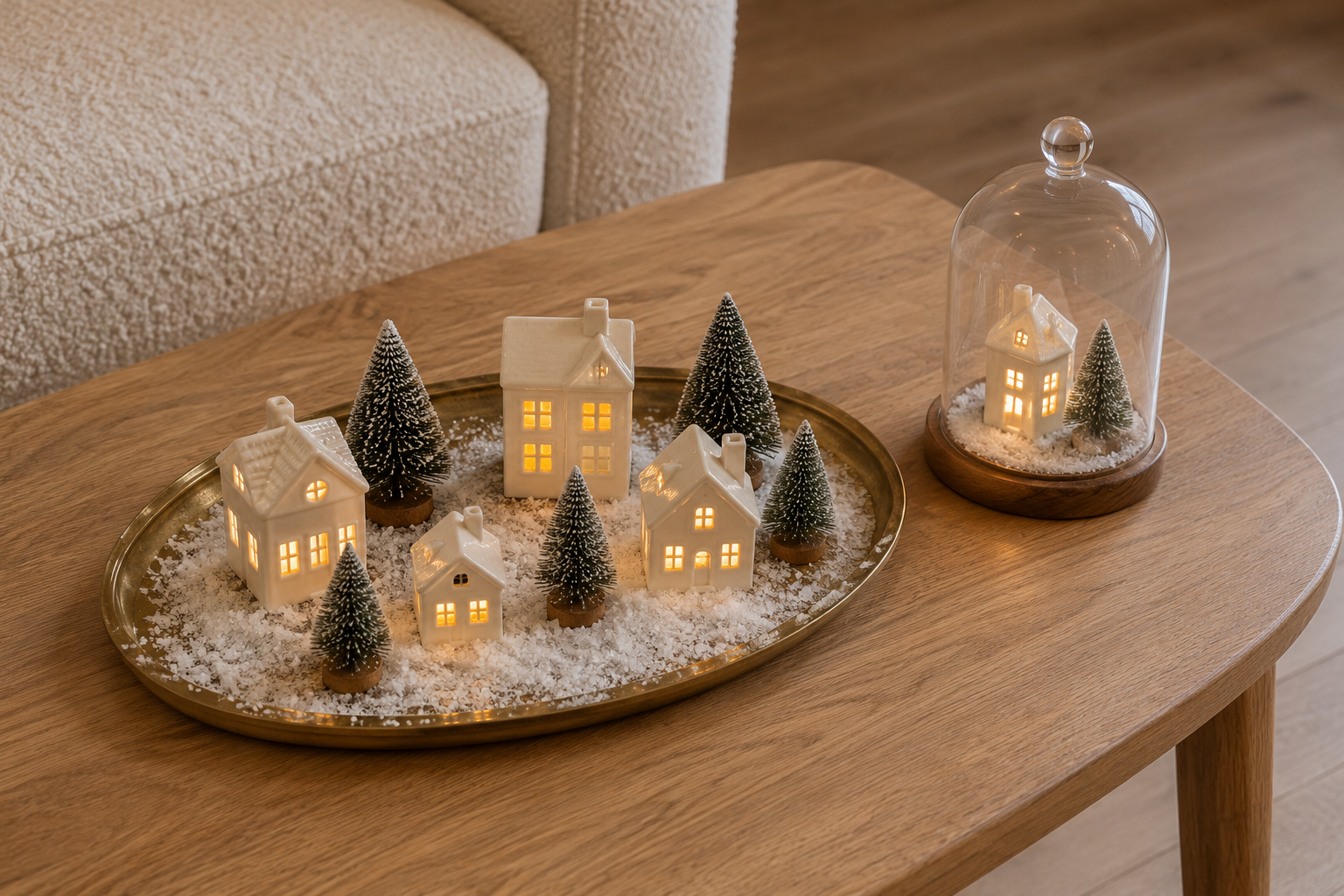
A village doesn’t need a whole table. Four small houses, a few short trees, and a scatter of artificial snow fit on a tray about the size of a serving platter, and the tray can move from the coffee table to a side table when the room is needed for something else.
Under a glass cloche, one lit house and one tree make the smallest version of all, and the glass keeps the dust off. Battery-lit houses suit both, since there’s no cord to catch when the tray moves.
A Frozen Pond Made From a Mirror
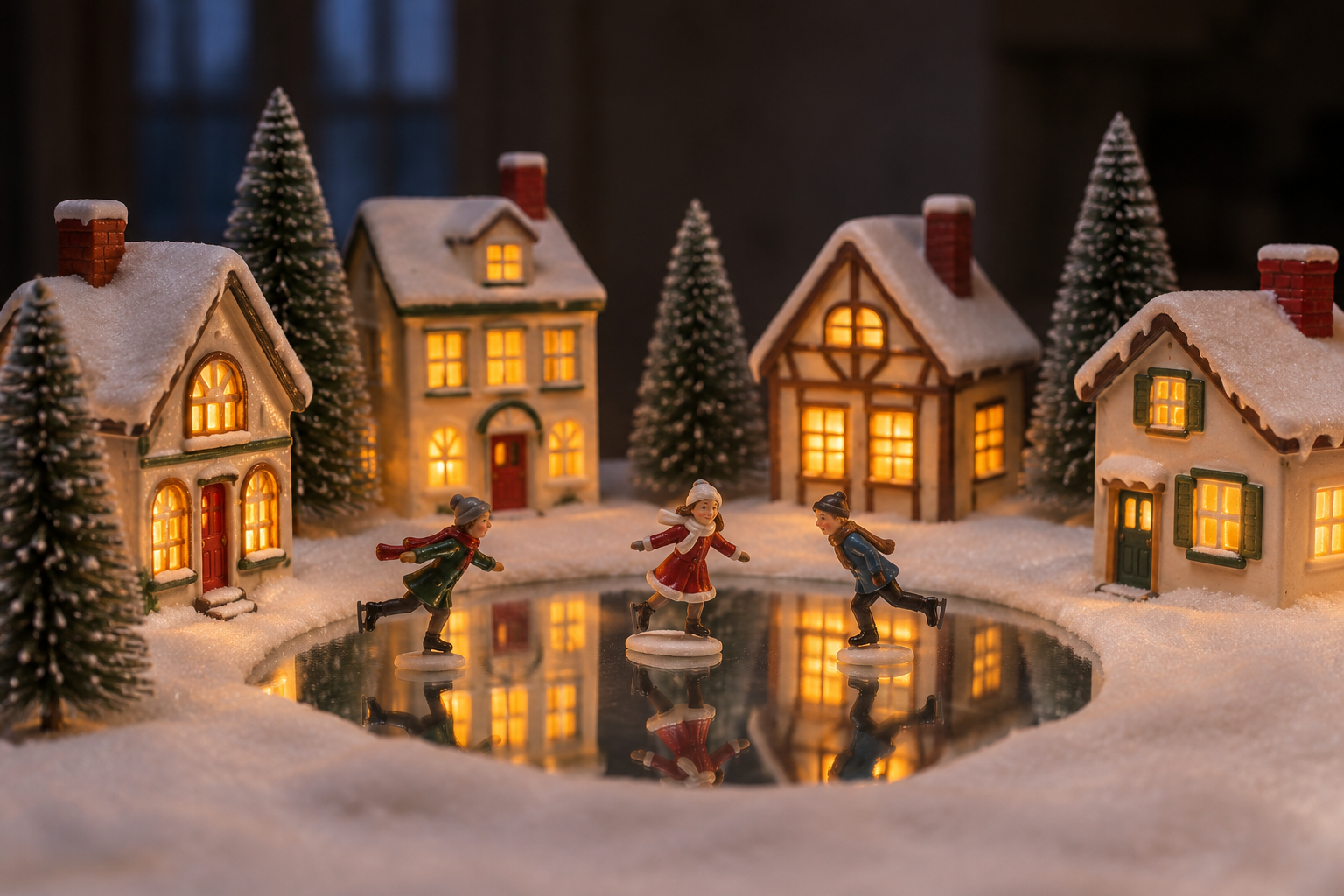
A round mirror laid flat in the middle of the village becomes a pond, and it reflects the lit windows around it, so every light near the water shows twice. A few skating figures on the glass give the scene something happening in it. Tuck the mirror’s edge under the snow so no frame shows and the glass meets a bank of white.
A mirror about the width of two houses is enough to look like a pond. A much larger one turns into a lake with the village gathered around it, which is a different scene and a good one where there’s room.
A Train Running Around the Village
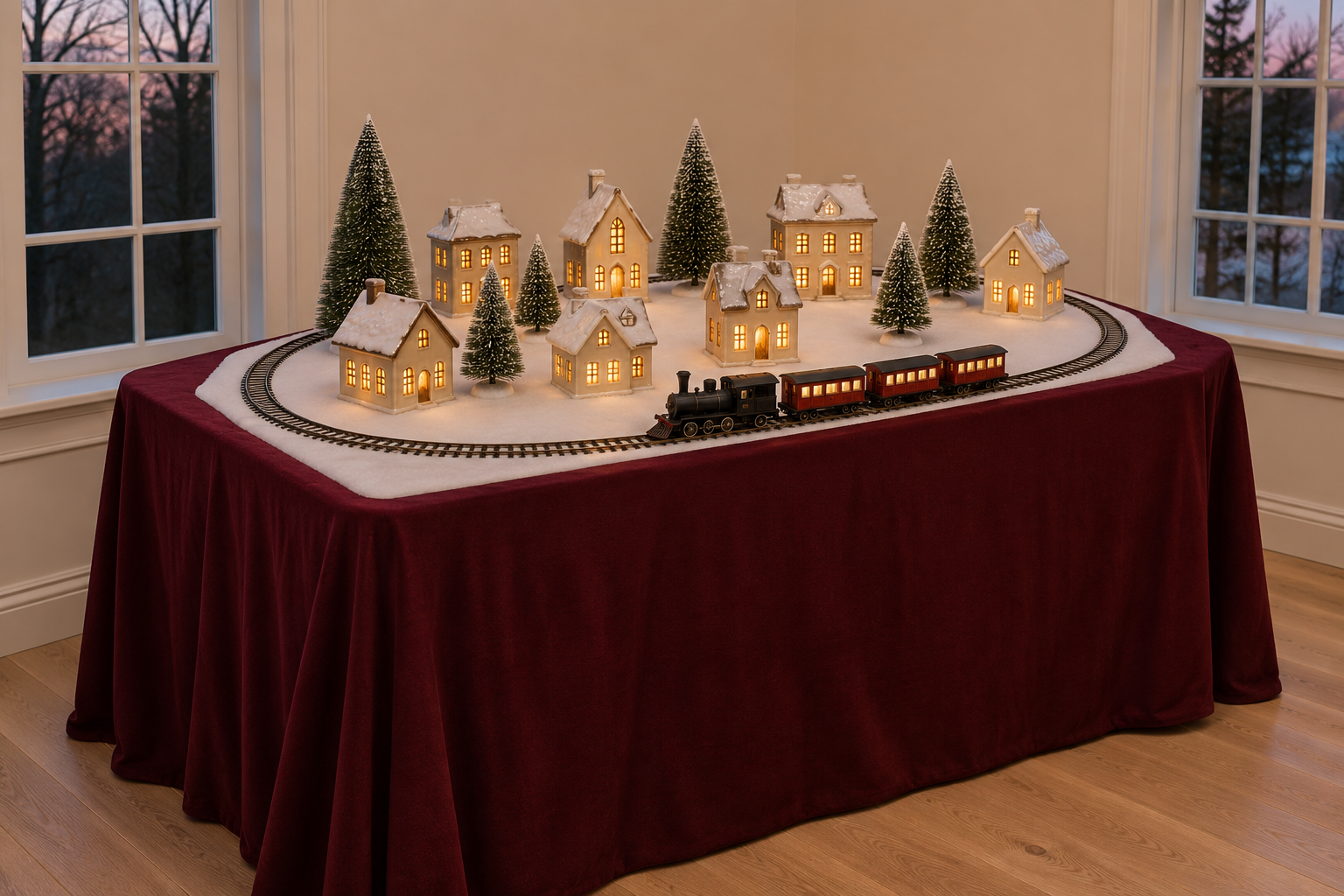
A train running round the houses is the one thing in a village that moves. An oval of track takes more room than the houses do, so this village usually needs a table of its own, with a cloth that reaches the floor to hide the transformer and the cords underneath.
Set the houses inside the oval and run the track close to the front edge. The train is easier to watch there, and when it comes off the rails, it can be reached without leaning over the roofs.
A Village in the Front Window
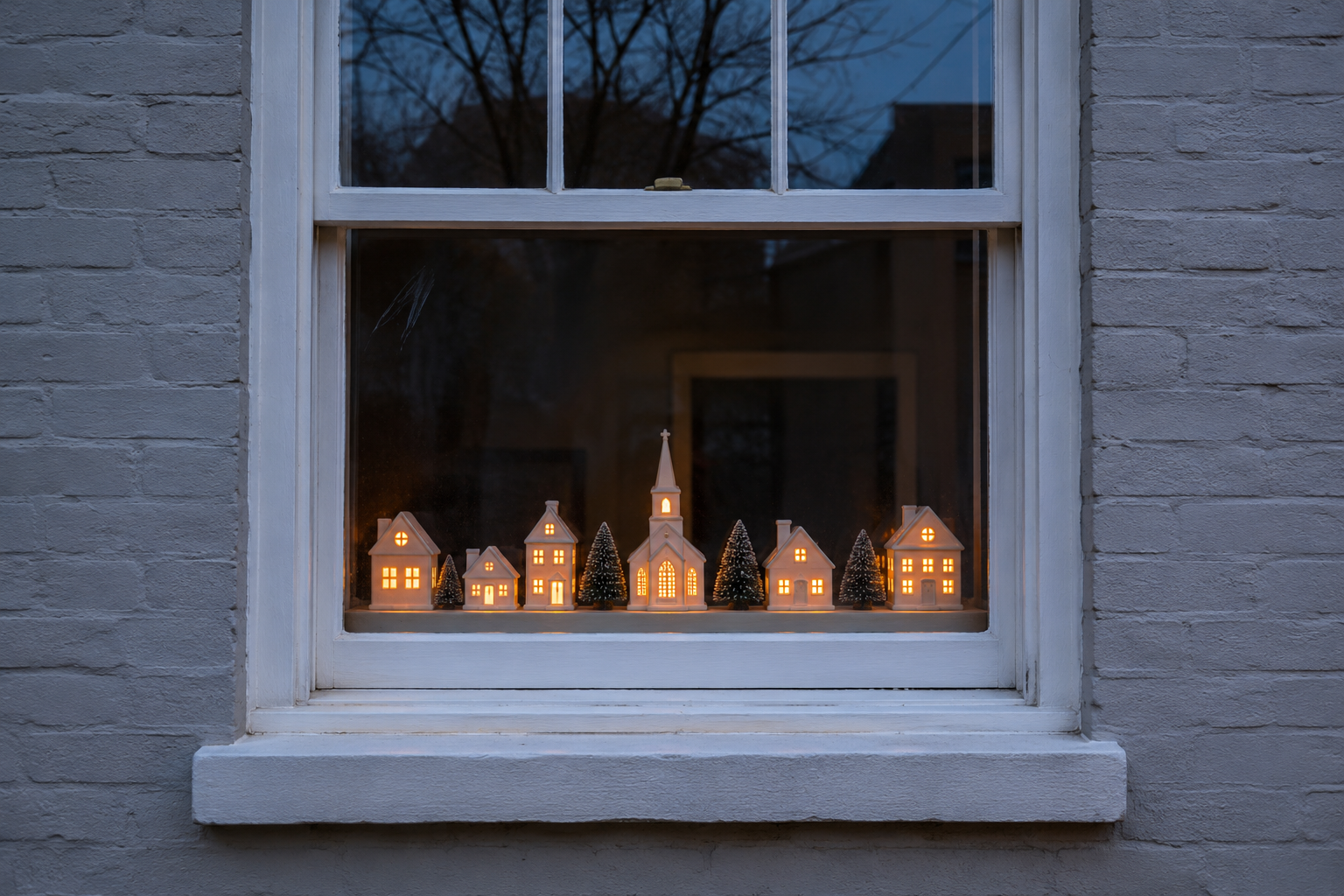
A village on a deep windowsill is seen as much from outside as from the room. After dark the houses glow through the glass with the room dim behind them, and people passing see it from the sidewalk. Most sills hold one row, so the tallest piece, a church or a clock tower, goes in the middle.
Cold glass is the thing to watch. On a freezing night, condensation can run down the inside of a window and collect on the sill, so ceramic houses on a waterproof snow mat suit it better than cardboard or felt, and a gap of an inch or so between the houses and the glass keeps them dry.
A Night Sky Painted Behind the Street
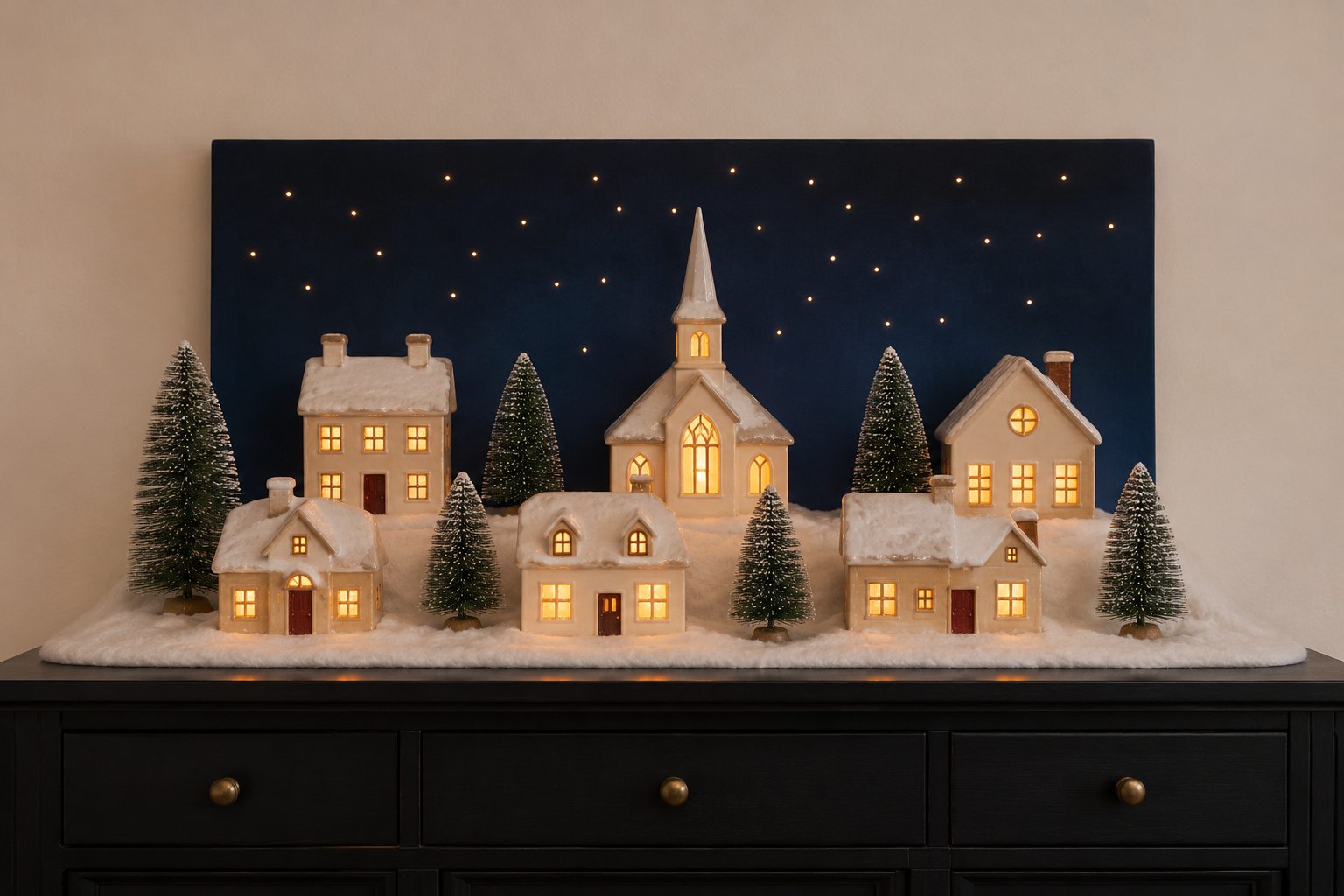
Behind a village on a sideboard there is usually a wall, and on it a lamp, a mirror, or a picture that draws the eye away from the houses. A backdrop closes that off. A sheet of thin board, painted a deep blue that darkens toward the top, stands behind the back row and gives the houses a sky. Pinholes with a string of fairy lights behind the board make stars.
The board only needs to be a little taller than the highest steeple. It slides behind the sideboard or flat into a closet when the village is packed away.
White Houses on White Snow
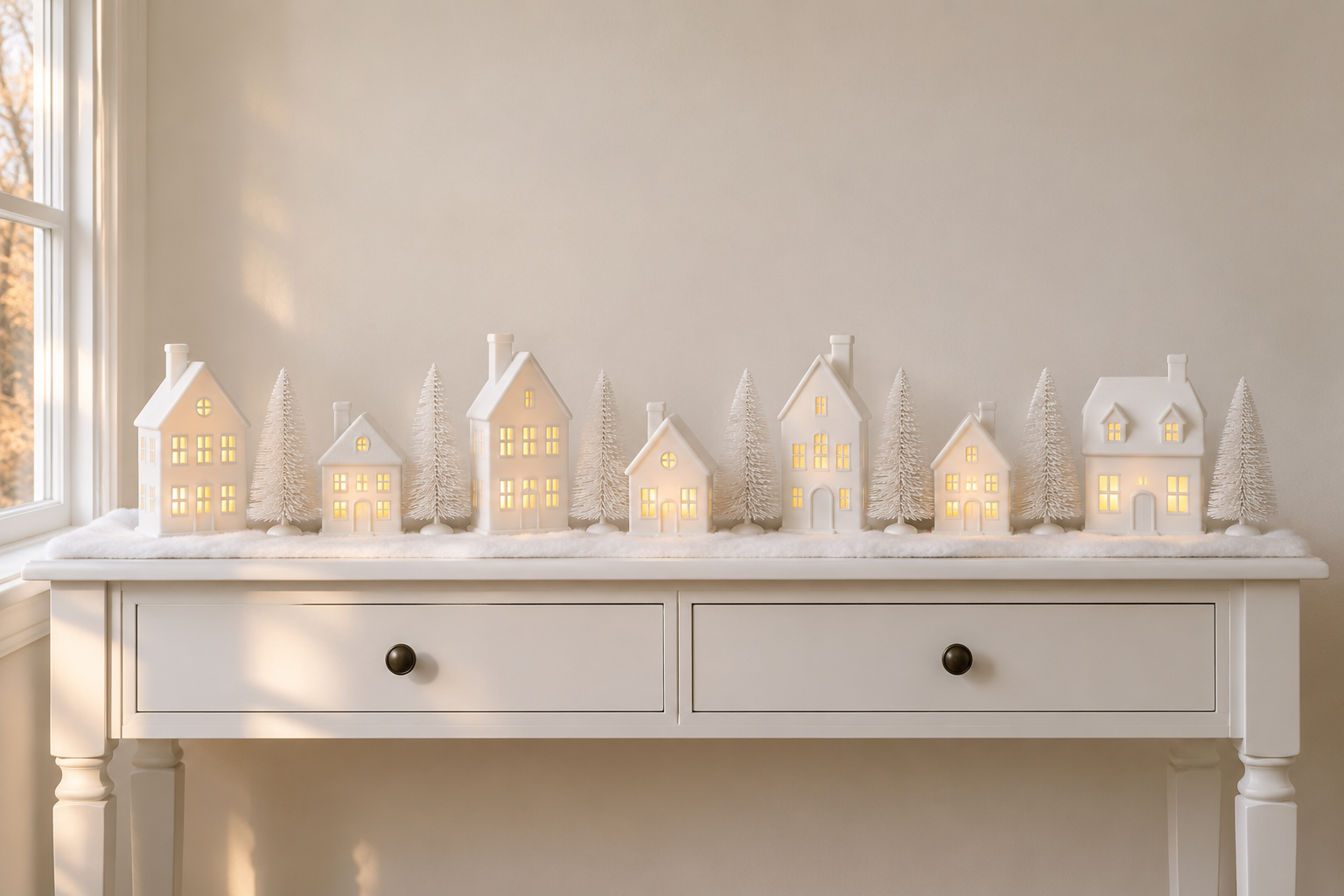
Unpainted white porcelain houses on white snow make a village of outlines and shadow. With no color to separate them, the eye follows the pitch of each roof and the line of each chimney, and the lit windows are the only warm color in the scene. It sits easily in a pale room, beside a tree decorated in any colors.
White pieces show dust sooner than painted ones. A soft brush over each house before it goes back in its box keeps the white clean for next year.
A Forest of Bottle-Brush Trees in Three Heights
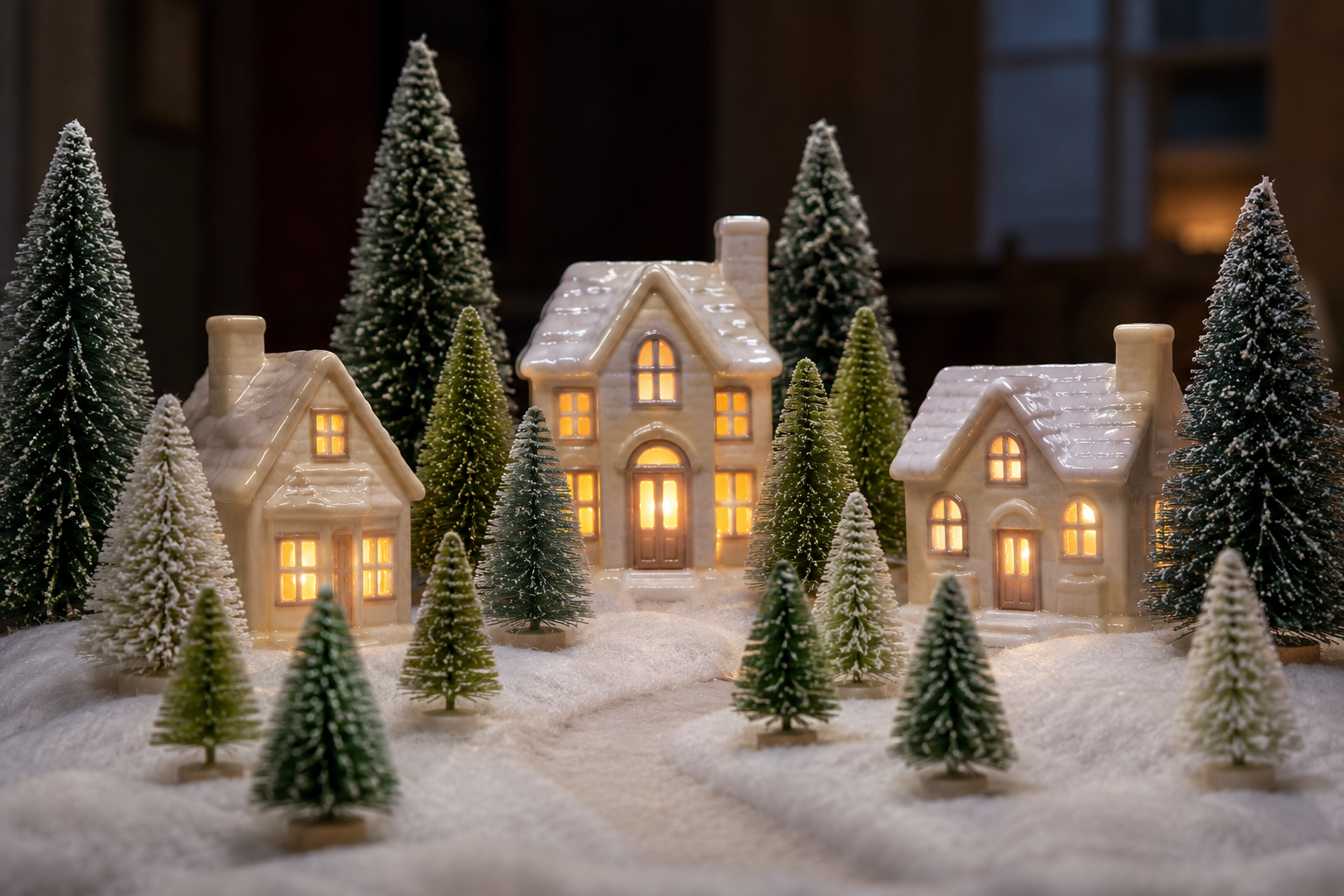
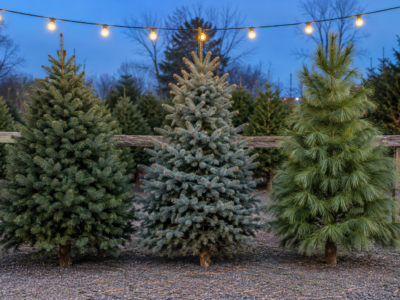
Trees fill the gaps between houses and give a village depth. Bottle-brush trees bought in three heights do that best when they’re placed by size: the tallest at the back and the edges, a cluster of middle ones between the houses, the smallest at the front along the path. Trees of a single height tend to look planted in a row.
Greens in two or three shades, some frosted and some plain, keep a big group from merging into one green mass. Set a few trees on small blocks hidden under the snow, so their tops don’t all line up.
A Glass-Front Cabinet That Keeps the Dust Off
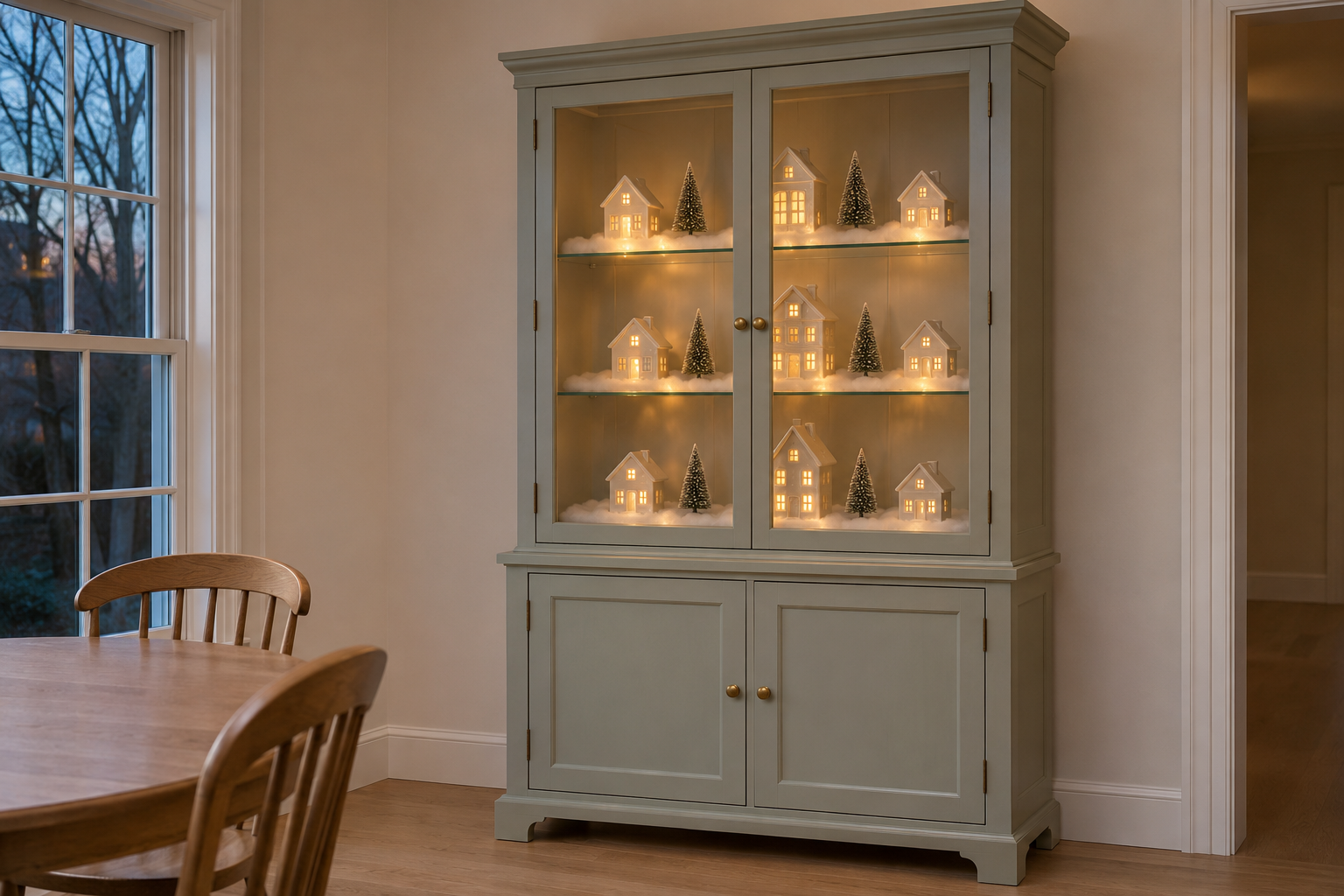
A china cabinet or a glass-fronted bookcase holds a village behind doors, which keeps the dust and the cat off it for the whole season. Its shelves are ready-made levels. Glass shelves let the light from the upper houses fall on the ones below, and the doors frame the scene.
Battery houses with a built-in timer avoid running cords through a cabinet built for dishes. If the cabinet has its own lights, a warm white setting keeps them from looking cold beside the glow of the windows.
Old Cardboard Houses on Cotton Snow
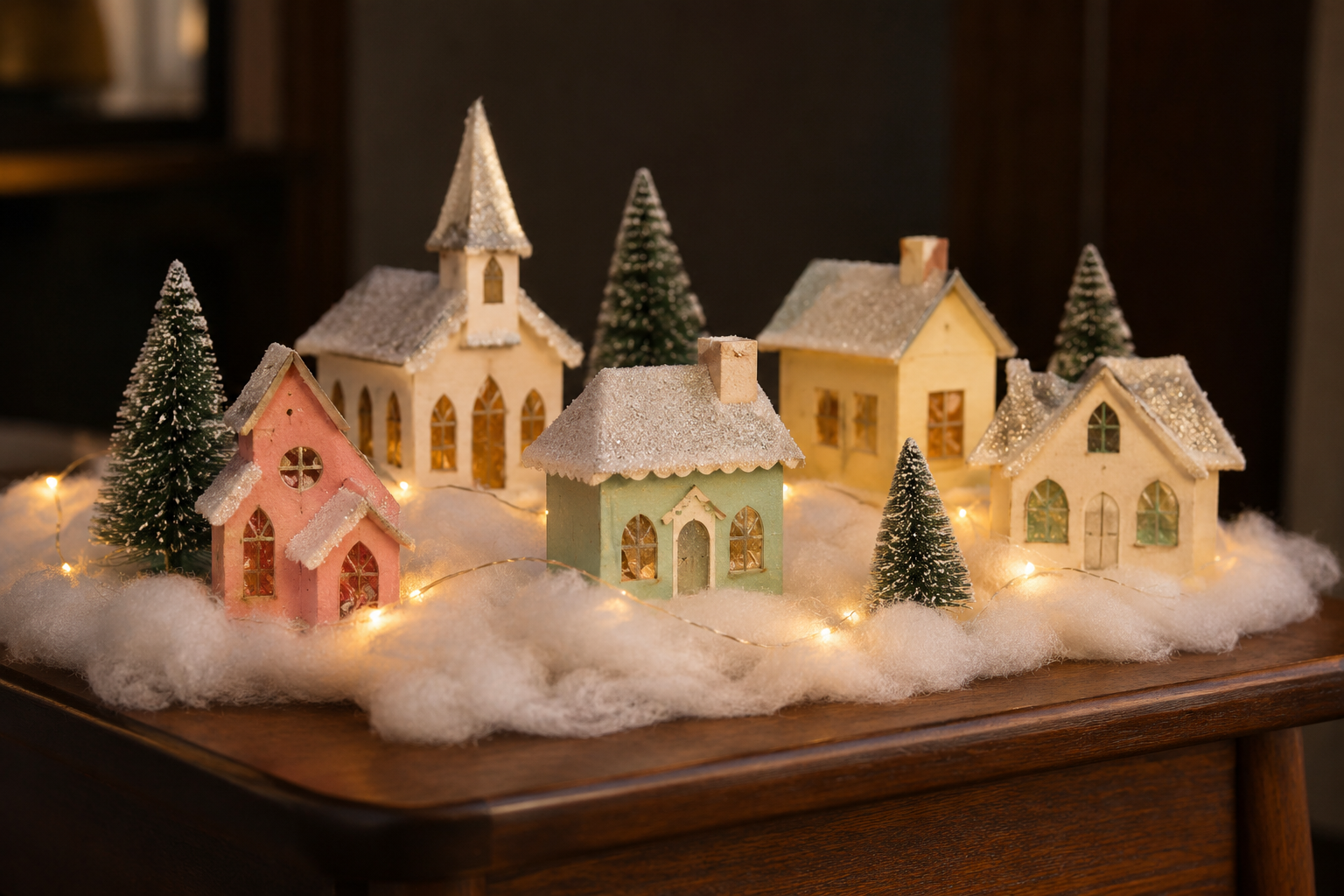
Small cardboard houses, painted in soft colors and dusted with glitter, were sold for Christmas villages for decades, and they still turn up at estate sales and in family boxes. They’re smaller and lighter than ceramic houses, and they look most at home on fluffy cotton batting with a few sprigs of bottle-brush tree.
Cardboard and cotton both catch fire easily. Light them with a string of LED fairy lights, which stay cool, tucked into the cotton around the houses, and keep the scene well away from candles.
Wooden Houses That Stay Out Until Winter Ends
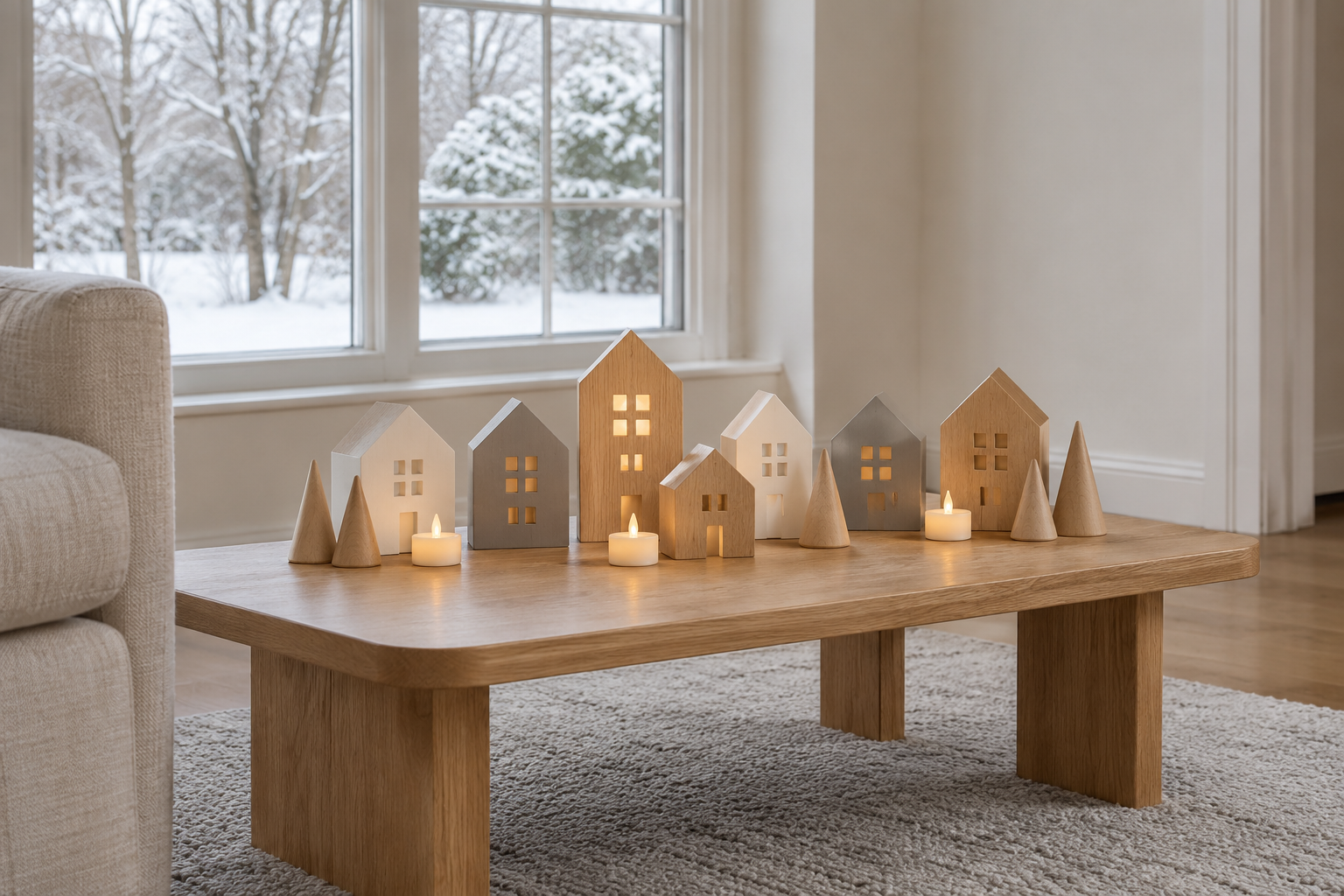
A village of plain wooden houses, natural or painted white and gray, with no Santa and no wreaths on the doors, looks like winter rather than Christmas. It can stay out after the tree comes down, through January and the gray weeks after, when the room has lost its lights.
Wood survives being knocked over, so a village like this can go on a low table where children are allowed to move the houses around. A few battery tea lights between them give it an evening glow without any wiring.