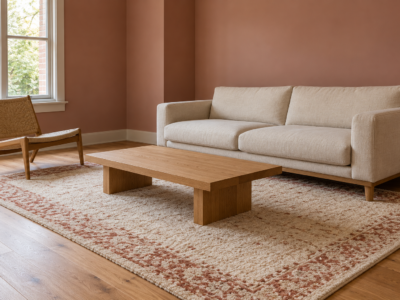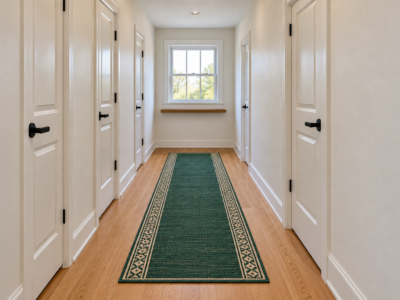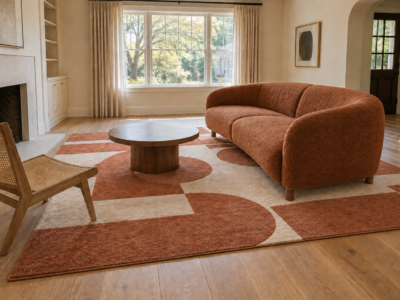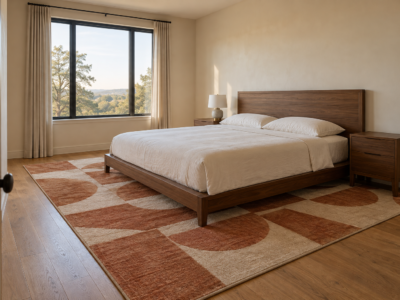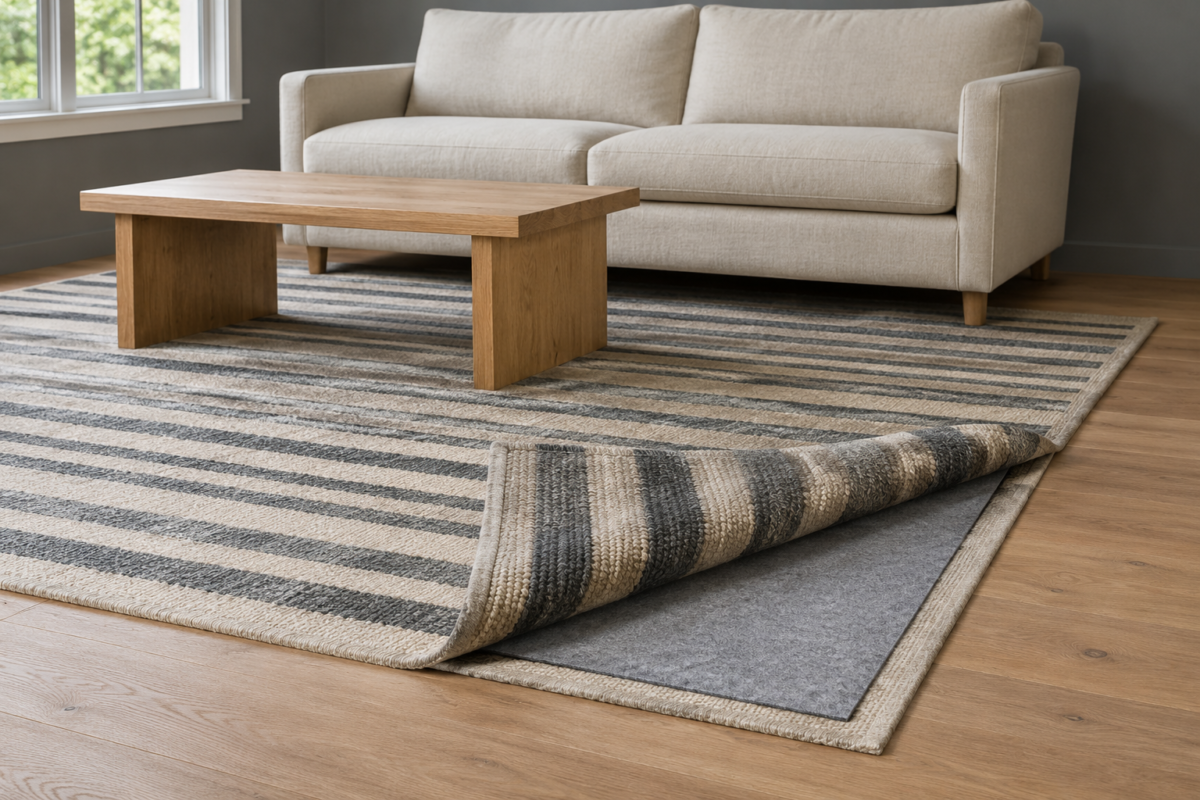
A rug pad keeps a rug from sliding, adds cushion underfoot, and takes some of the wear that would otherwise grind the rug’s back against the floor. It only does all three if it sits fully under the rug, where it can’t be seen or tripped on.
That sets the size. A pad should be a little smaller than the rug, about an inch short on every side, so the rug’s edges can lie flat against the floor and taper down over the pad.
An Inch Inside the Edge, All the Way Around
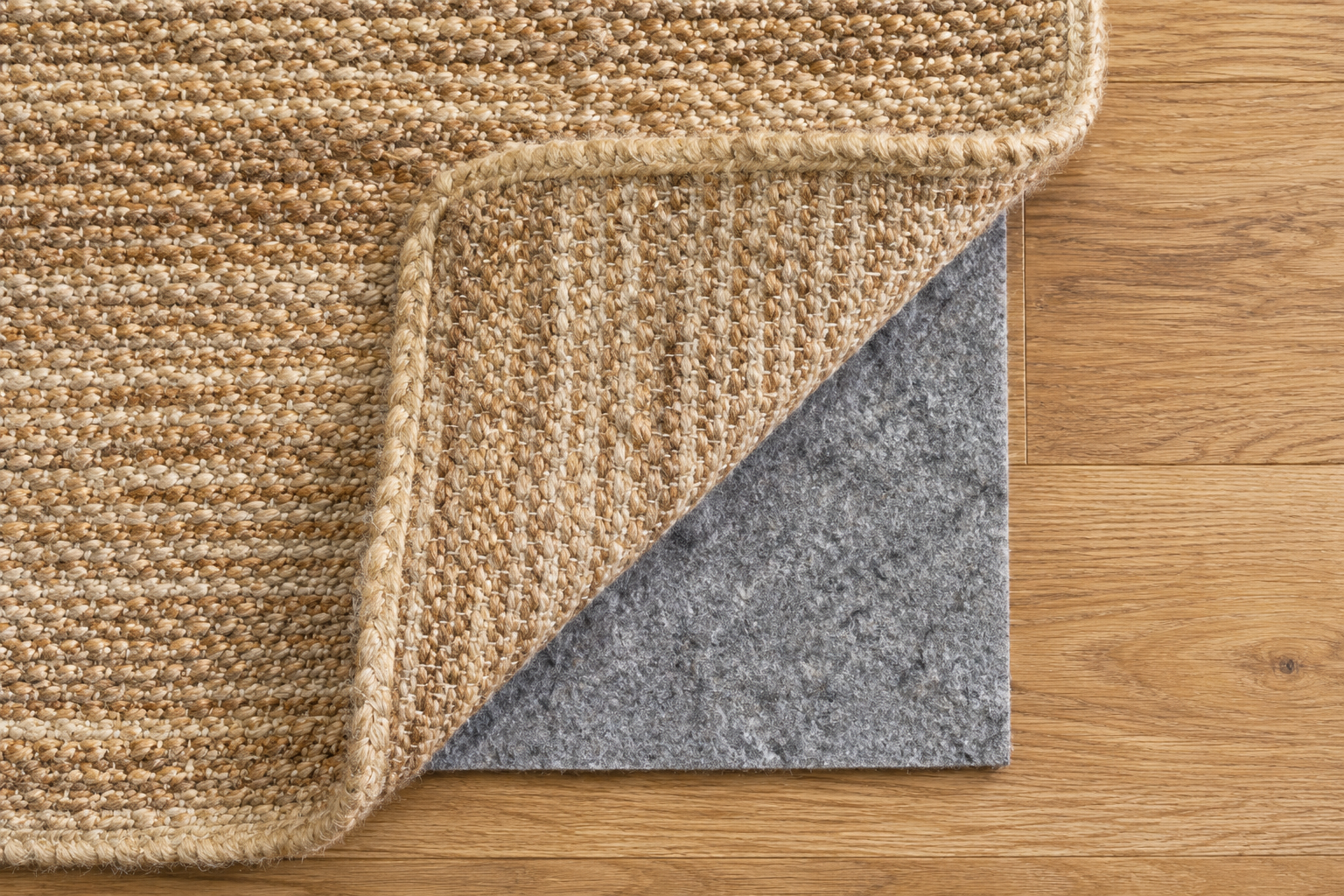
Take 2 inches off the rug’s length and 2 off its width, which leaves about an inch of rug beyond the pad on every side. An 8 by 10 foot rug takes a pad about 7 feet 10 inches by 9 feet 10 inches, and a 5 by 8 takes about 4 feet 10 by 7 feet 10. Measure the woven body of the rug, not its fringe or tassels.
| Rug | Pad (about) |
|---|---|
| 5 x 8 ft | 4 ft 10 in x 7 ft 10 in |
| 6 x 9 ft | 5 ft 10 in x 8 ft 10 in |
| 8 x 10 ft | 7 ft 10 in x 9 ft 10 in |
| 9 x 12 ft | 8 ft 10 in x 11 ft 10 in |
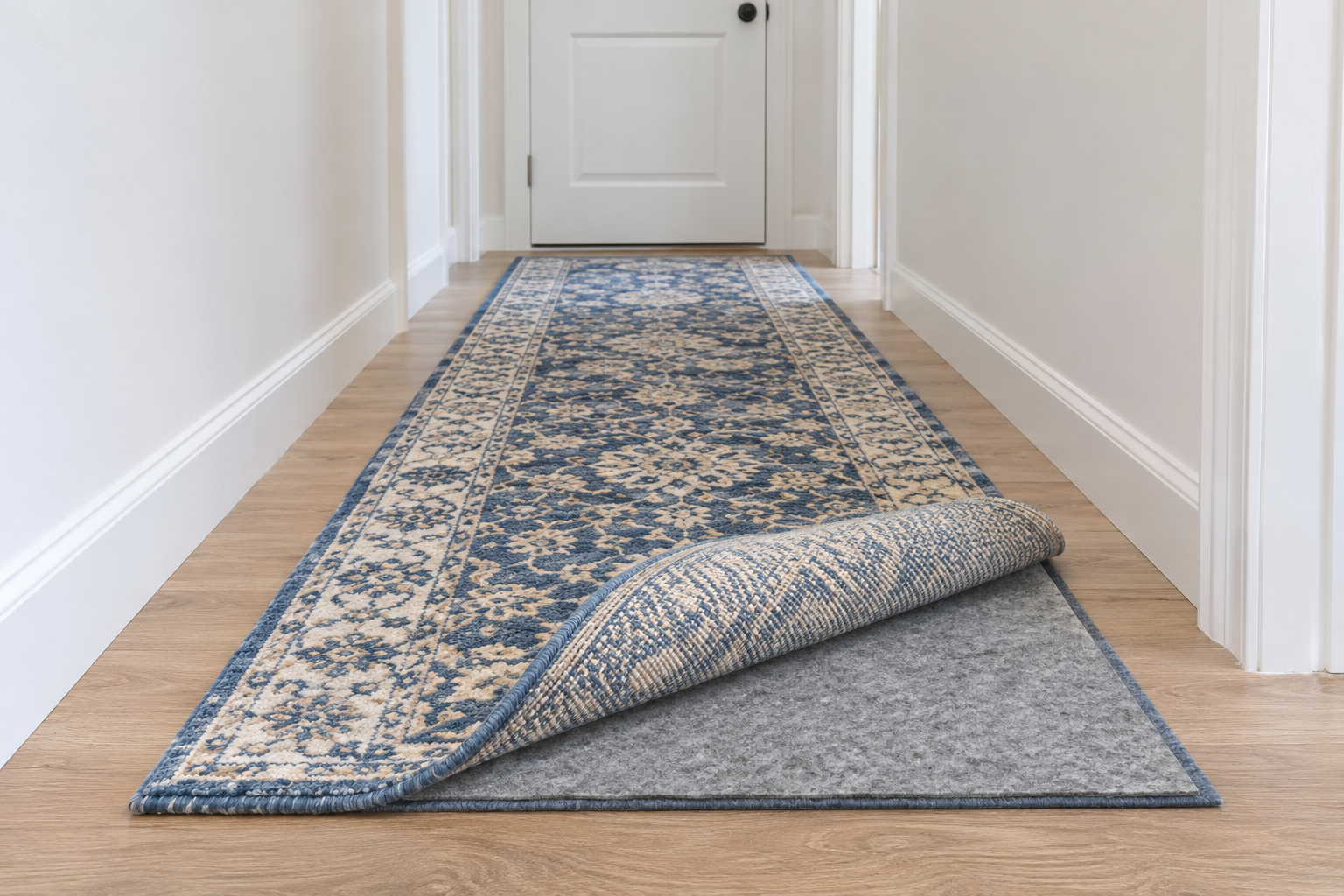
A thick rug, or a thick pad under a large rug, can take a slightly wider margin, up to an inch and a half on each side, so the rug’s edge has room to slope down to the floor. Runners and round rugs follow the same rule: a runner pad about an inch narrower and shorter at each end, a round pad about 2 inches less across. Most pads are sold in standard sizes and trimmed with sharp scissors, so lay the pad on the floor, set the rug over it, fold the rug back, and mark the line from the rug’s edge before cutting.
Felt, Natural Rubber, or the Two Bonded
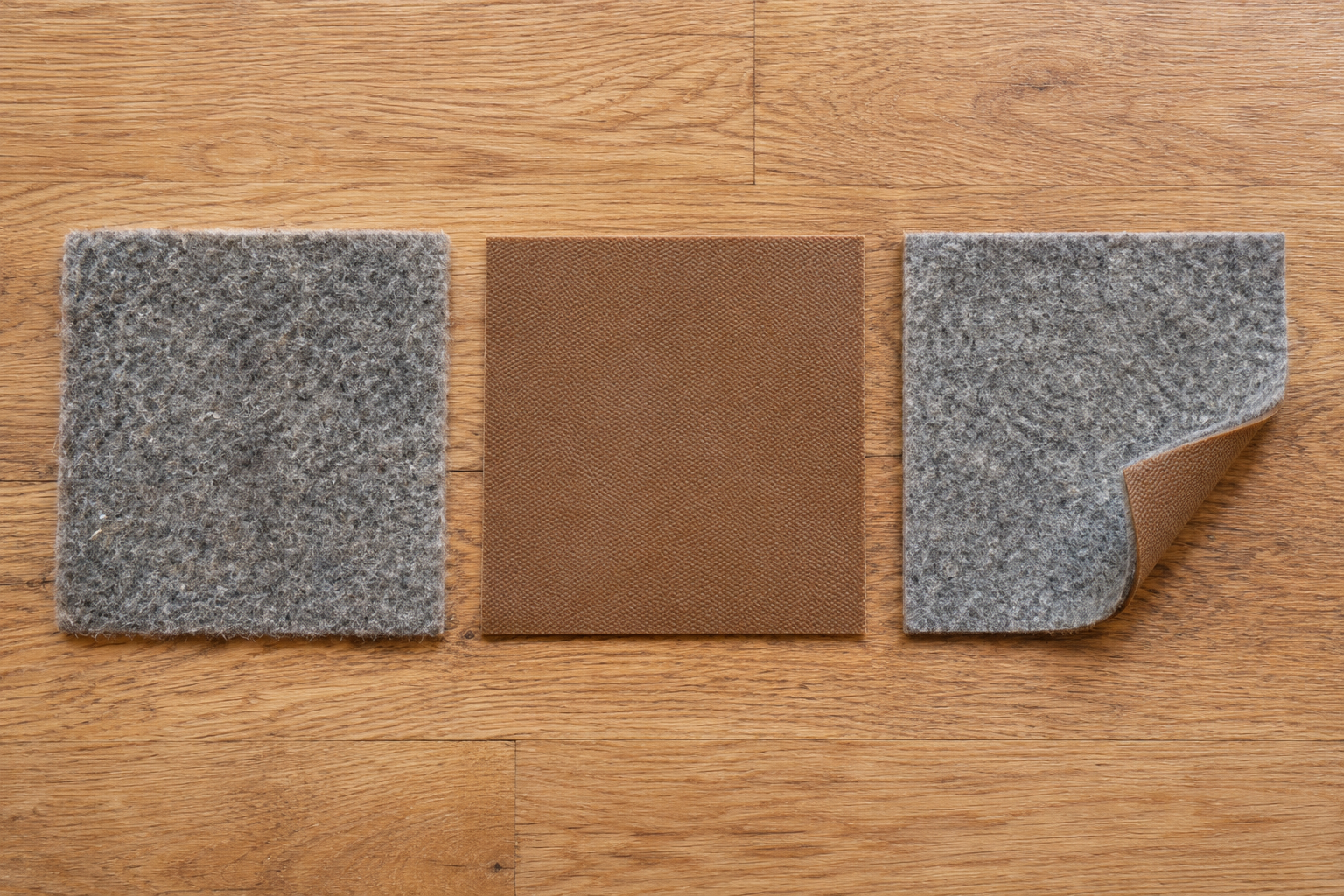
Felt pads are made of pressed fibers and give cushion. A thick felt pad makes a thin flat-woven rug feel softer underfoot and quieter on a wood floor, but on its own it grips less than rubber, so it suits a large rug held in place by furniture.
Natural rubber pads are thin and grip both the floor and the rug, which suits a small rug, a runner, or anything in a doorway that tends to slide or bunch. A pad that bonds felt to a rubber back combines the two, with cushion from the felt and grip from the rubber, and it is the usual choice for a living room rug that is walked across every day.
Low-cost PVC pads, often in an open waffle grid, grip at first but can harden, crumble, or stick to a finished floor over time. Natural rubber and felt cost more and avoid those problems.
Check the Floor Before the Pad
Vinyl plank and other vinyl floors can discolor under rubber. Many vinyl plank warranties exclude yellowing caused by rubber-backed mats, so on vinyl, choose a plain felt pad or one sold as safe for vinyl floors, and check the floor’s care guide before laying anything with a rubber back.
A newly sanded and finished wood floor needs its finish to cure before a rug goes down, which can take longer than the time it takes to dry to the touch. The finish maker’s instructions give the time.
Thickness and the Door That Swings Over It
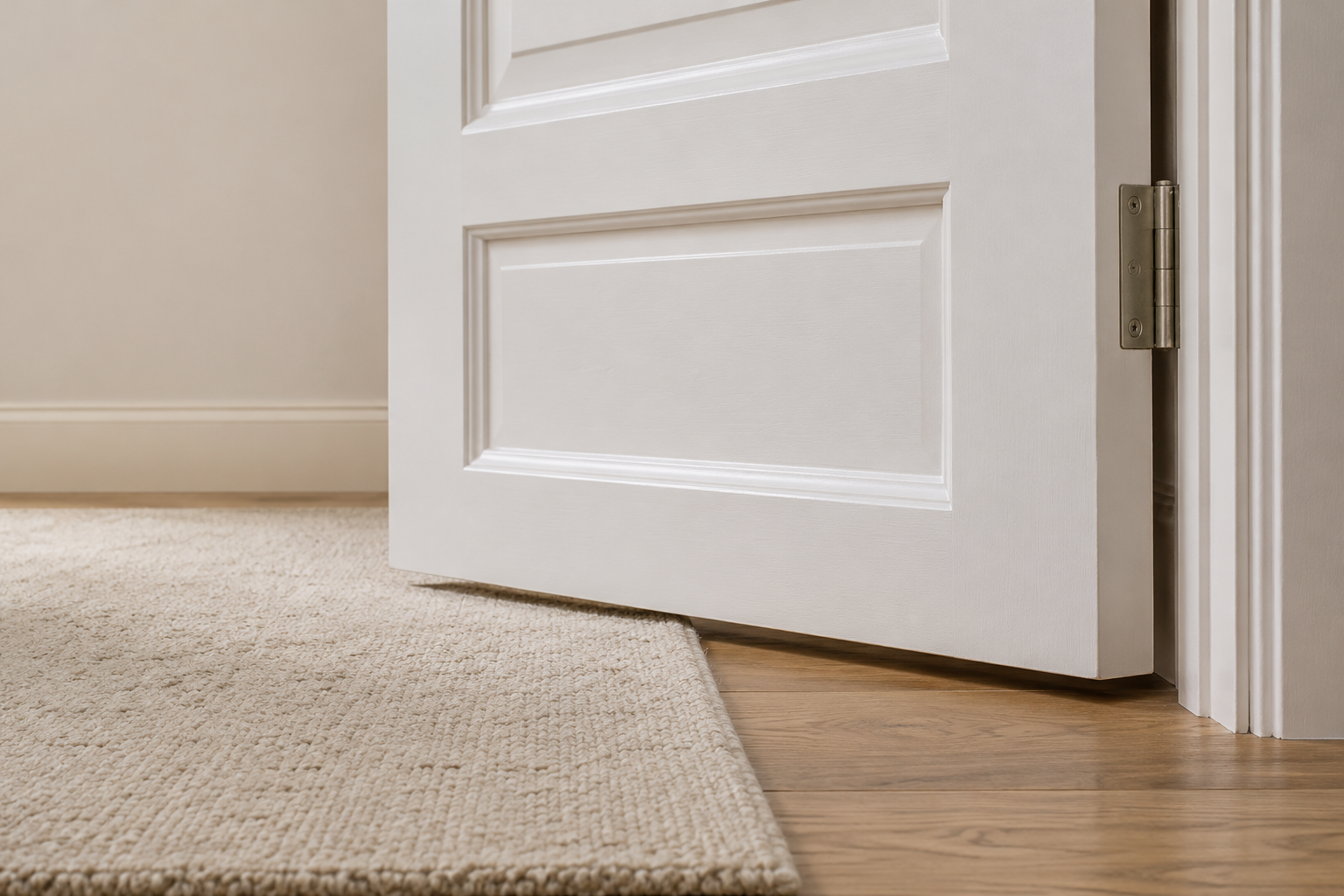
A pad around a quarter of an inch thick suits most rugs, and thicker pads, from about three eighths up, add cushion for a thin rug in a living room or bedroom. Thickness matters most where a door swings over the rug.
Measure the gap between the bottom of the closed door and the floor, then add the rug’s thickness to the pad’s. If the total comes close to the gap, the door will drag or catch. A thin natural rubber pad adds almost nothing to the height, which is why it suits runners in halls and rugs at bedroom doors.
Rugs Under Furniture, Under a Bed, and on Carpet
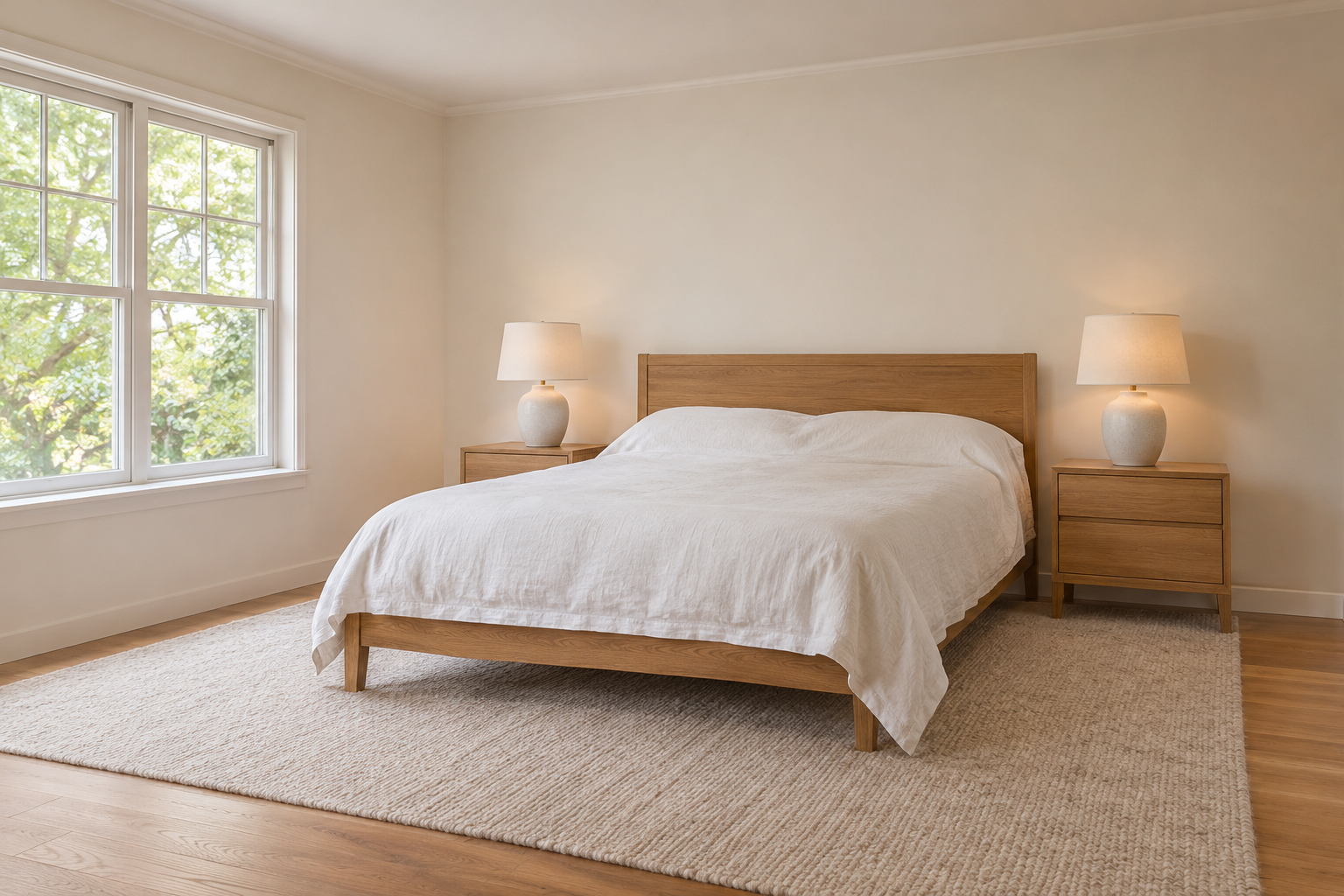
A large rug with a sofa, a bed, or a dining table standing on it is held in place by the furniture, so a pad’s grip matters less. A felt pad still adds cushion and protects the floor under the rug, but a rug under a bed that runs well beyond it on all sides, as in a bedroom with the rug under the bed, rarely slides.
A rug laid over wall to wall carpet tends to creep in the direction people walk. Pads made for rugs on carpet grip the carpet pile below and the rug above, which an ordinary felt or rubber pad doesn’t do well. Small rugs on carpet move the most.