
The tree goes out in the first week of January, and for a day or two the room it stood in looks bare. The lights come down, the cards come off the mantel, and what is left is the house in the coldest, darkest stretch of the year, with the sun down before five and the garden brown or under snow until March.
That stretch is long enough to decorate for on its own terms, and what suits it has more to do with warmth and light than with ornament. Most of it can stay out until the first bulbs flower outside.
Keep the Greenery After the Ornaments Come Down
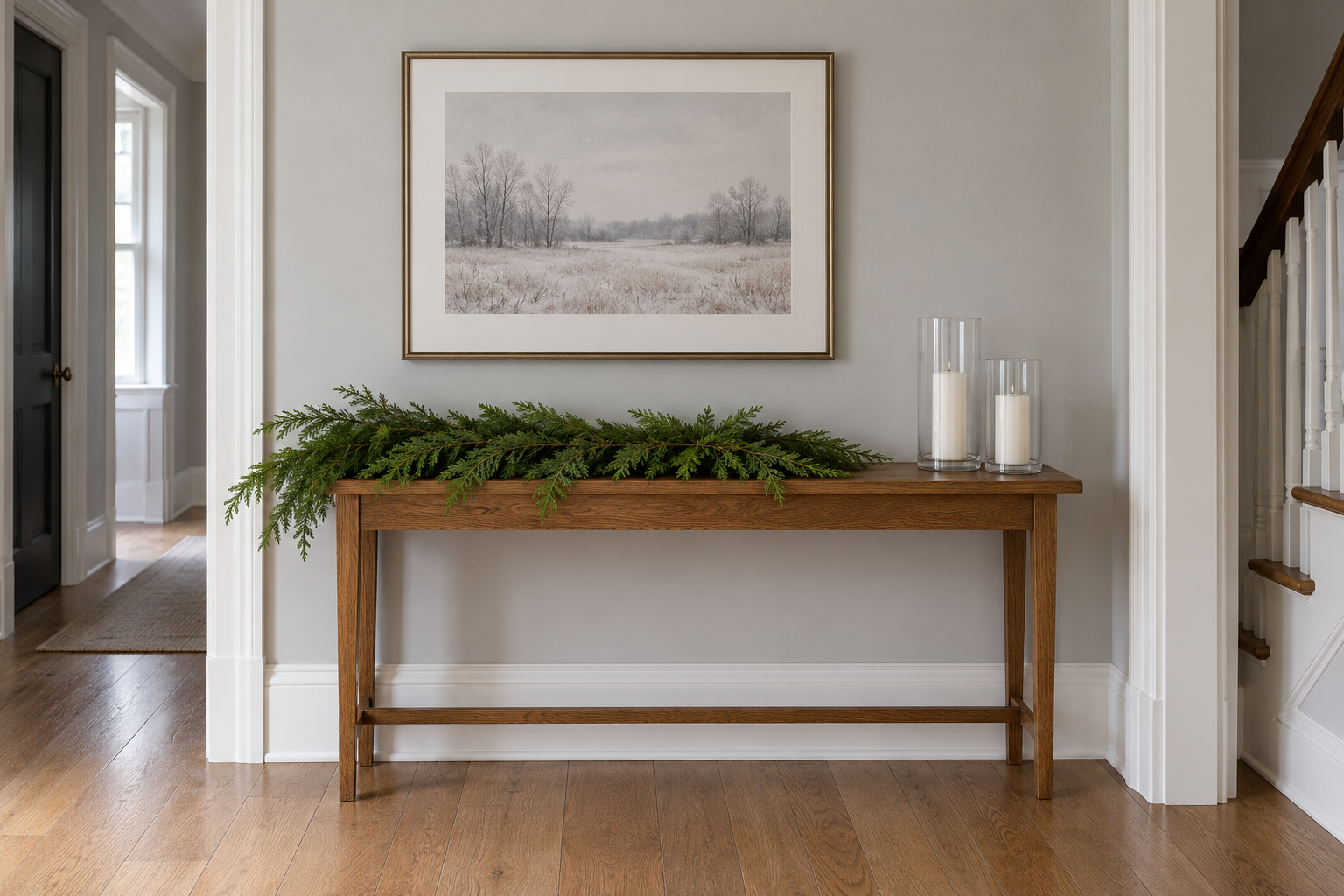
A garland of cedar or pine bought for Christmas still has a few weeks in it when the ornaments are packed away. Stripped of baubles, ribbon, and lights, it no longer says Christmas, only winter, and it can stay on a mantel or a hall console into January.
Cut greens dry out in a heated room, so mist them now and then, keep them away from radiators and the fire, and take them down once the needles drop at a touch. Candles stay well clear of them, in glass, at the other end of the console.
Leave Warm White Lights in One Window
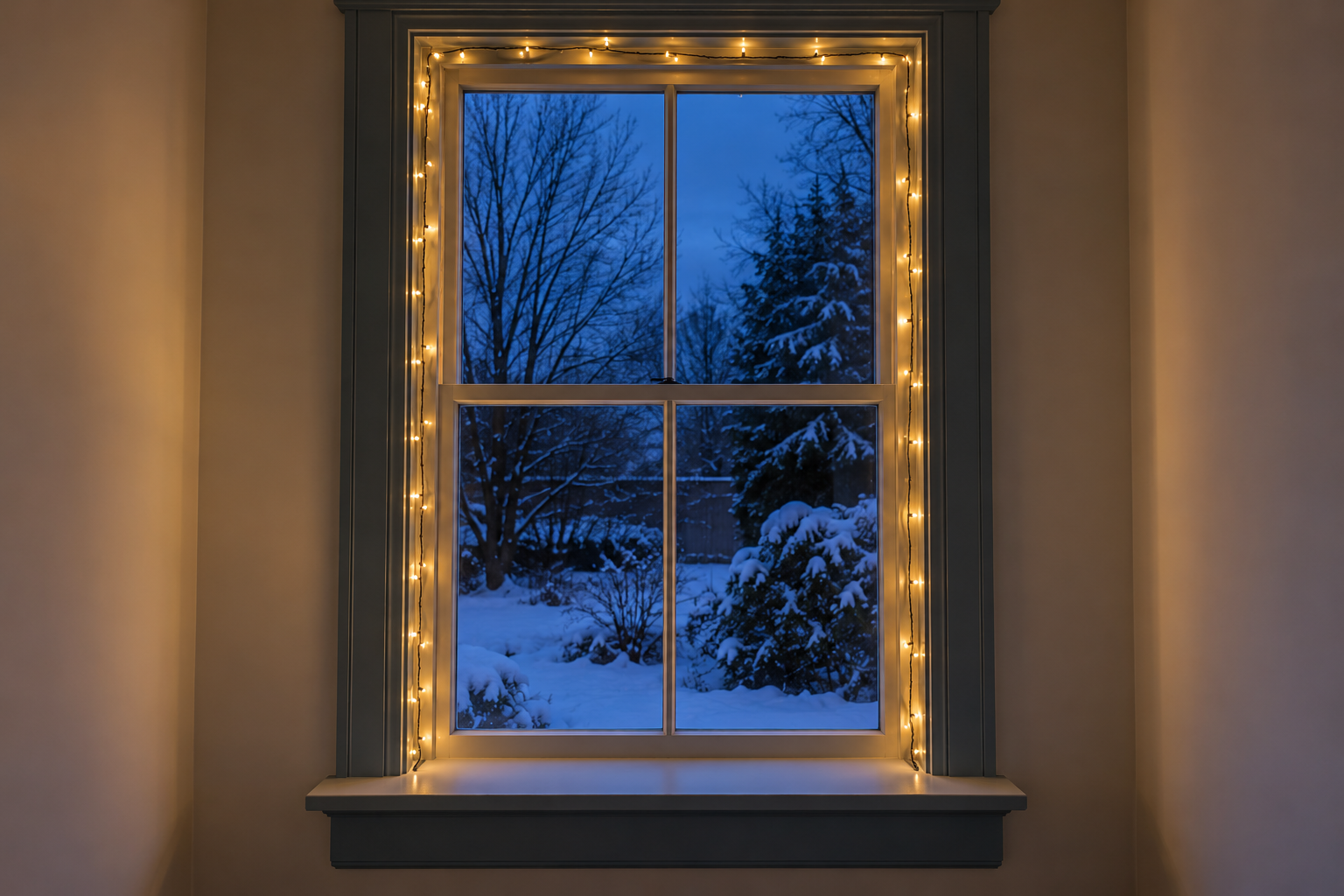
The roofline and the colored lights come down with the tree, but one window framed in warm white string lights is worth keeping through January, when it’s dark by five. From the street it shows someone is home. From inside, it gives the window a glow at the hour the glass would otherwise turn black.
A plug-in timer turns it on at dusk and off at bedtime, so nobody has to remember.
Force Bulbs on a Cool Windowsill
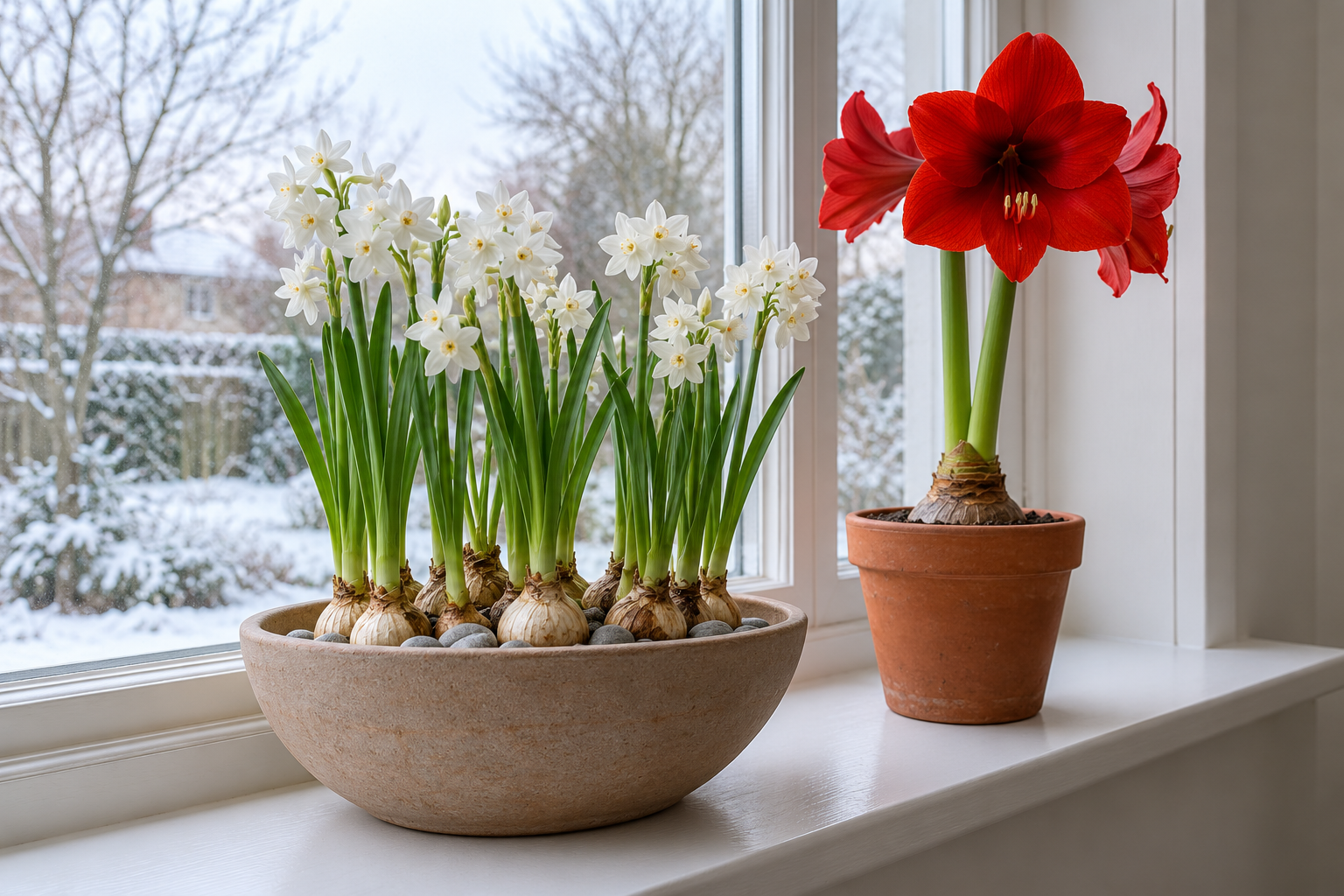
Paperwhites and amaryllis flower indoors without any cold treatment, paperwhites in about three to six weeks and amaryllis in about six to eight, so bulbs potted in early December are in flower through January. Hyacinths need a long cold spell first, eight weeks or more, so the ones for indoor winter flowers are bought already chilled.
A cool, bright windowsill keeps the stems shorter and the flowers open longer than a warm room. Paperwhites have a strong scent that some people love and others can’t stand, so try one pot before filling the house with them. Amaryllis has none.
Fill a Bowl With Citrus
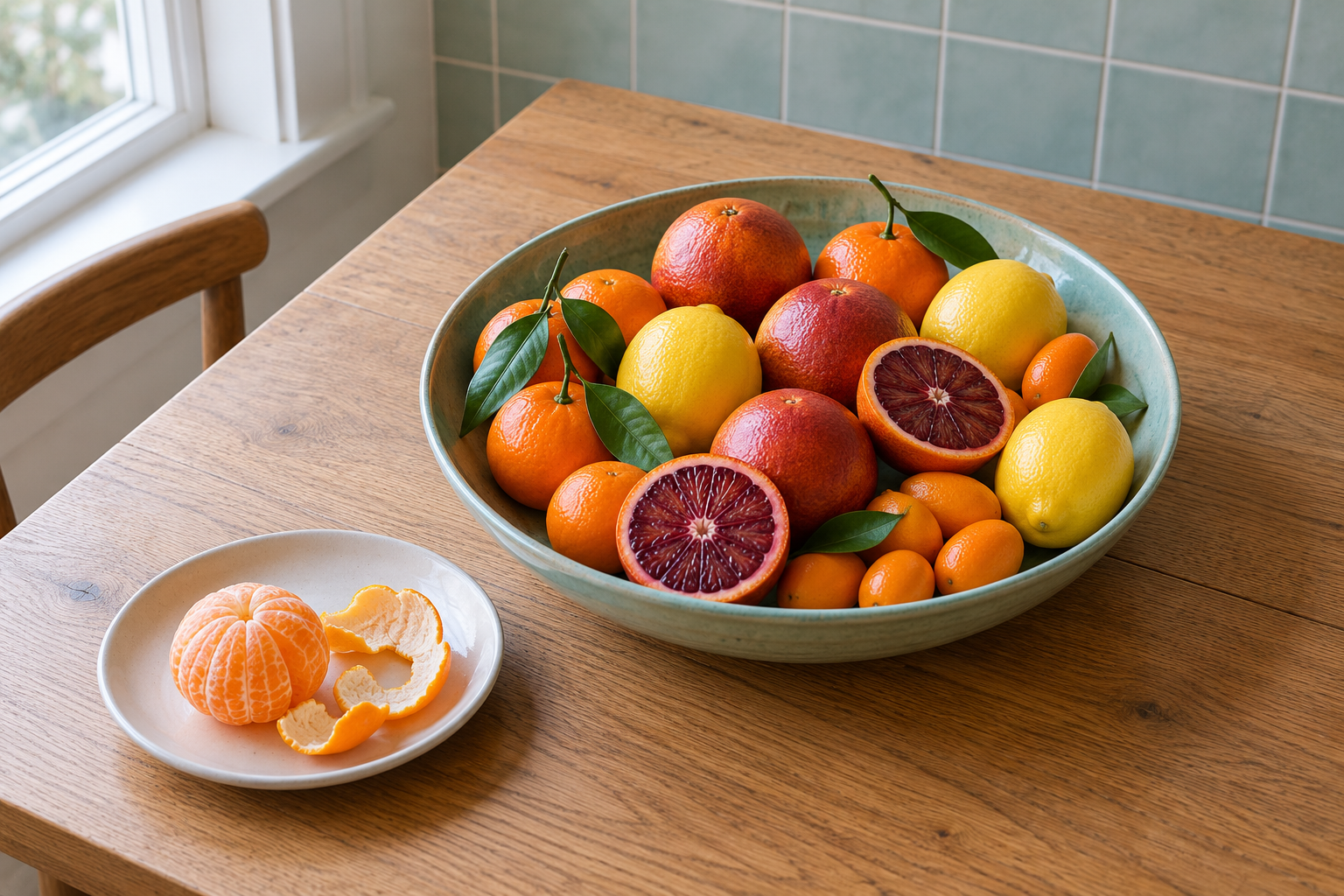
January is the middle of citrus season: blood oranges, clementines with their leaves still on, lemons, kumquats. A wide bowl of them on the kitchen table is the brightest color in the house in a gray month, and it gets eaten, so it never sits long enough to go dull.
Mixing kinds gives several shades of orange and yellow in one bowl, and a couple of blood oranges cut open show their red. It is the one decoration of the winter that gets replaced every week.
Cut Branches for the Mantel

A mantel cleared of cards and stockings looks empty, and a few tall branches in a heavy jug fill it without any theme. Bare winter branches with an interesting shape, contorted hazel, birch, or red-stemmed dogwood, last for months with or without water.
From late January, branches of forsythia, quince, or cherry cut with fat buds will open indoors in one to two weeks, weeks before anything flowers outside. Cut them on a mild day, recut the stems in water, and keep the jug away from the fire.
Hang a Curtain Over the Front Door

An old front door lets cold air in around its edges, and in a hall the draft reaches the stairs and the rooms off it. A heavy curtain on a rod above the inside of the door, drawn across at night, cuts that draft and softens a hall of hard surfaces. Lined wool or a heavy cotton velvet in a deep color suits it.
Hang the rod wide enough that the curtain draws fully clear of the door and its handle, so the door can always be opened quickly.
Move a Chair Into the Low Winter Sun

The sun stays low all winter, so on a clear day it reaches much deeper into a south-facing room than it does in June, sometimes across half the floor. A chair moved to where that light lands at midday, with a small table beside it, becomes the warmest seat in the house for an hour or two after lunch.
It goes back in March, when the sun climbs and the patch shrinks to the windowsill.
Put Up a Winter Wreath After the Christmas One

The Christmas wreath, with its bow and its berries, comes down with everything else, but the door doesn’t have to go bare until spring. A wreath of dried eucalyptus, bare birch twigs, or seed heads has no color that ties it to December, and it lasts outdoors through the winter.
Hang it on the same hook, at the same size for the door, and the front of the house keeps its winter look until the first daffodils.
Change the Bed to Flannel and Wool

Cotton flannel sheets feel warm the moment you get in, without the cool first touch of percale, because their brushed surface holds air against the skin. A wool blanket under the duvet, or folded across the foot of the bed, keeps it warm in a bedroom that runs cool at night.
A small check or a plain color in flannel keeps the bed calm. The flannel and the wool come off again in March, when the nights warm up.
Set a Bird Feeder Outside the Window
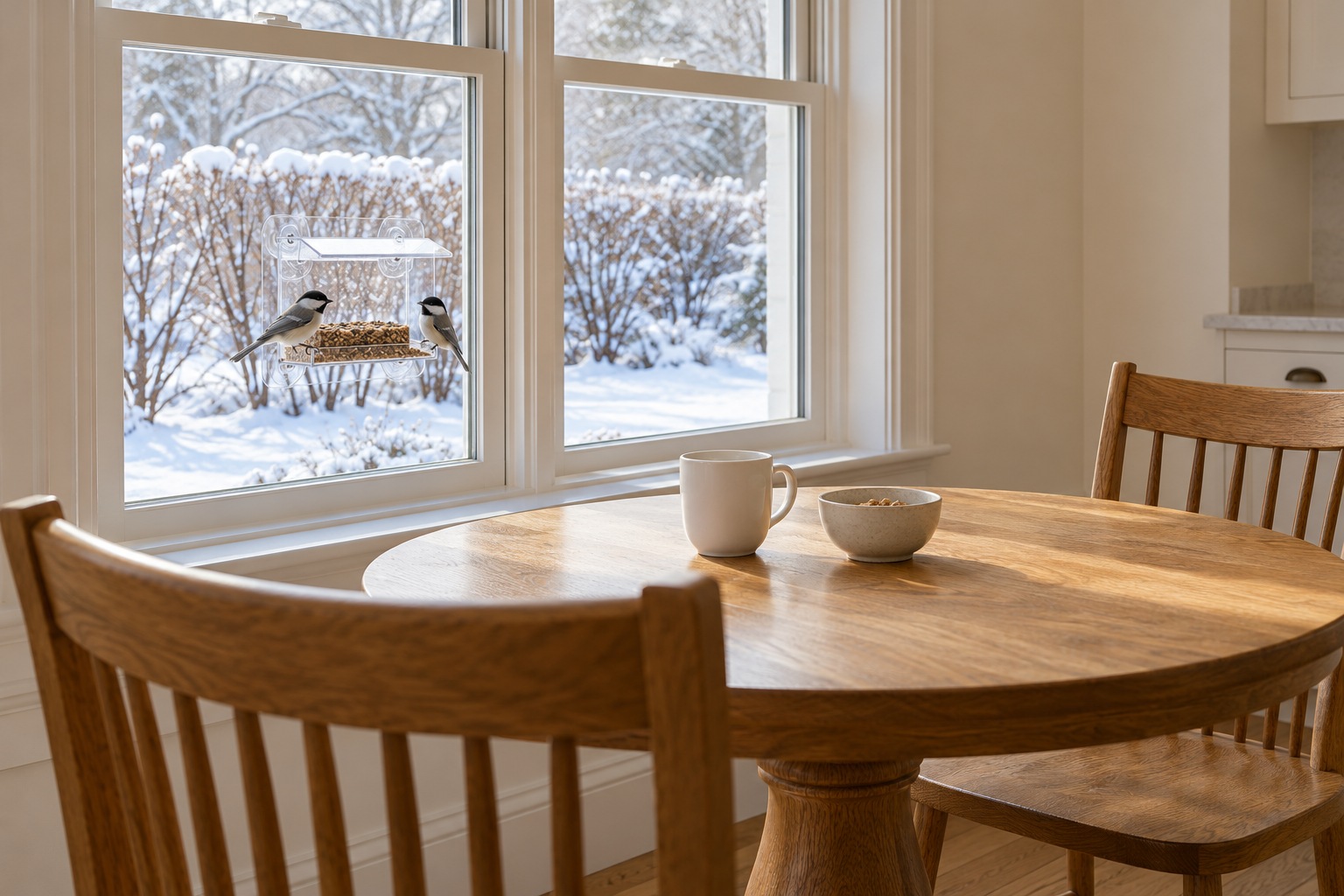
With the garden bare, birds at a feeder are the most movement outside the window from December to March. Put it where it can be seen from the table or the chair used most, and either right against the glass, within about 3 feet, or well away from it, more than 30 feet off. Birds flushed from a feeder at the distances in between are the ones that fly into windows.
A small clear feeder fixed to the outside of the glass is the close option, and it gives the best view of all.
Light Dinner With Candles
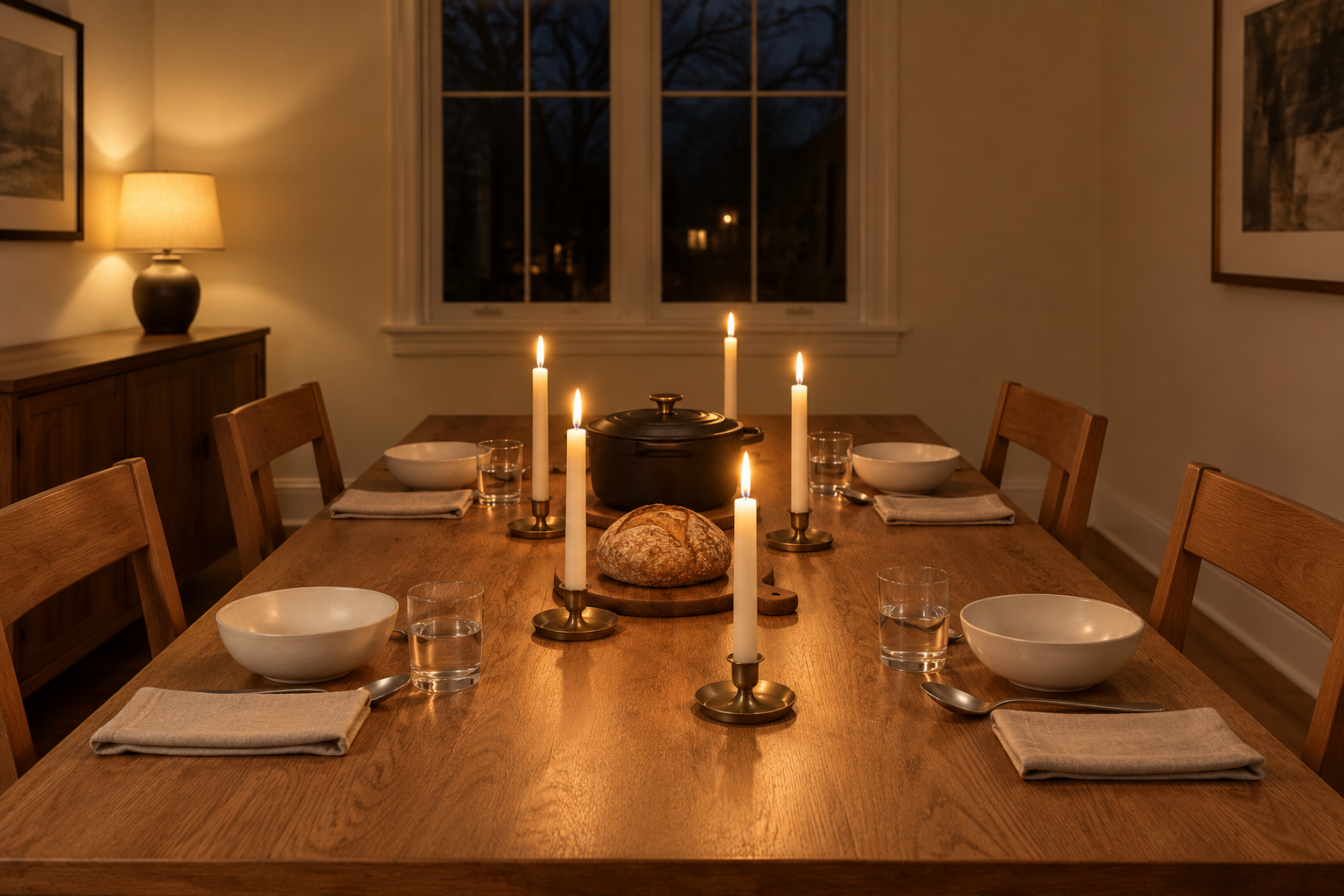
In January, dinner happens in the dark. A few candles on the table, lit as people sit down, light faces from below eye level, which a ceiling light can’t, and let the rest of the room fall away. Unscented candles keep the smell off the food, and candles in steady holders, kept clear of anything that burns, can stay lit through the meal.
It works for soup on a Tuesday as well as for guests, and it uses the early dark instead of fighting it with every light in the room.
Make a Place for Wet Boots by the Door
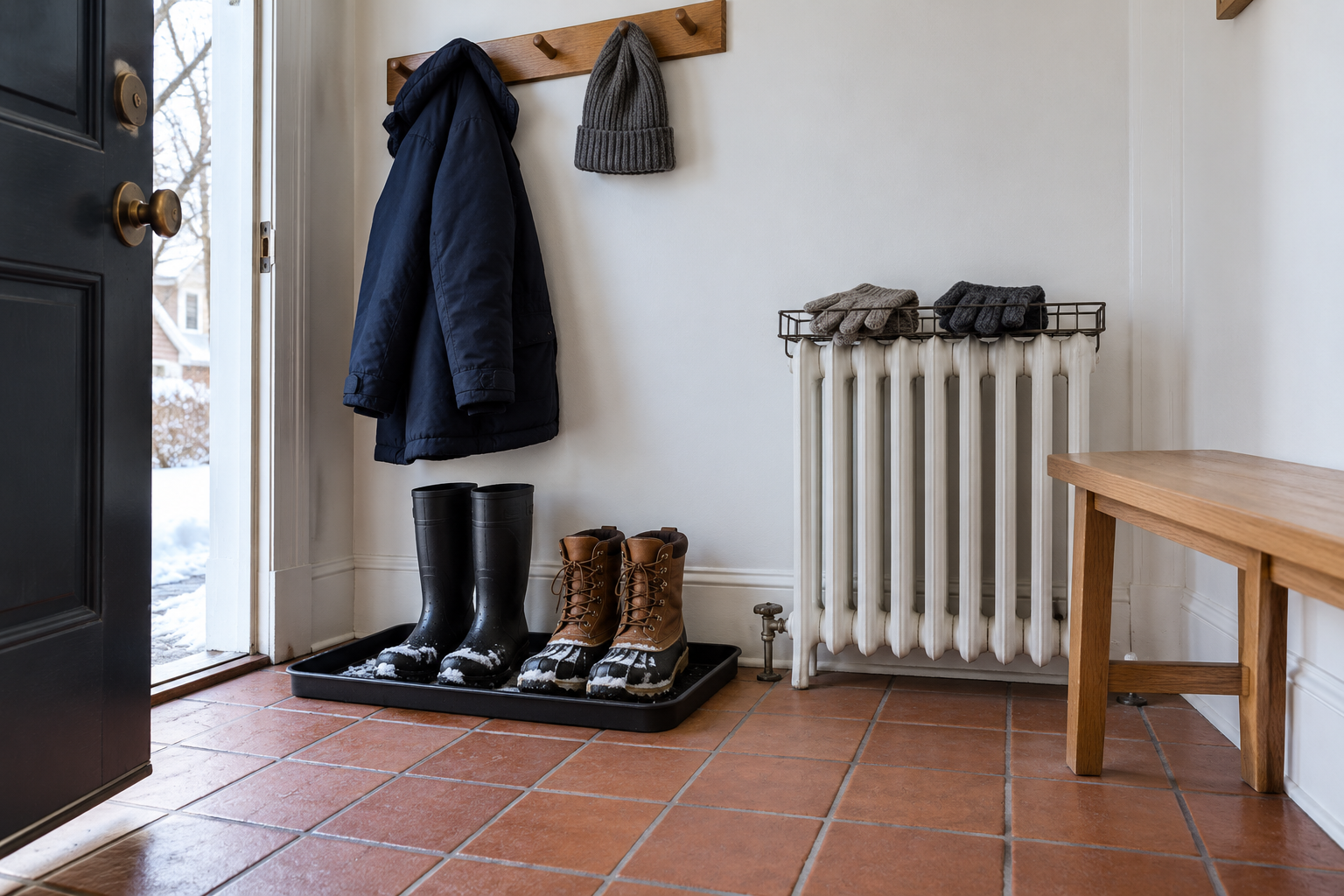
Snow and slush come in on boots from December to March, and without a place for them they end up on the hall floor. A boot tray with a raised edge, a row of hooks for wet coats and hats, and a small rack on a radiator for gloves give every wet thing one place to drip and dry.
A tray takes the melting snow, so the floor around it stays dry and nobody steps in a puddle in socks.
Swap the Cushion Covers for Wool and Corduroy

Cushion covers are the cheapest thing in a living room to change with the season. Linen and cotton covers swapped for wool, corduroy, or brushed flannel in January change how the sofa feels to lean against and give it heavier, darker colors for the dark months.
Keep the inserts and store the summer covers flat. They go back on in April.