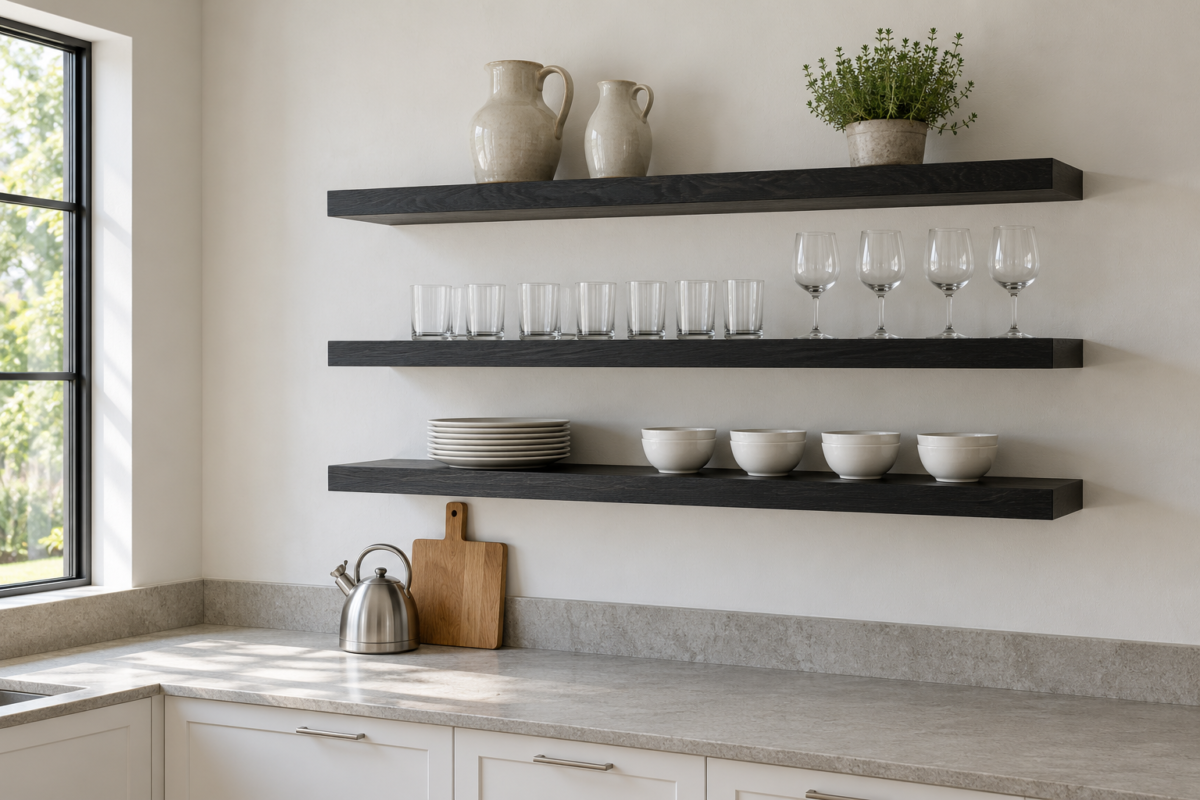
Measured to the underside of the lowest shelf, a floating shelf goes about 18 inches above a kitchen counter, a few inches above the top of a monitor, high enough over a sofa to clear the head of someone sitting upright, and about 2 feet above a toilet tank. Beside a bed, a shelf used as a nightstand sits with its top level with the mattress.
Each of those figures starts from the counter, desk, sofa, toilet, or bed under the shelf, not from the floor, because that is what a shelf has to clear and what the hand reaches up from. The gaps between stacked shelves come from what goes on them. The reasons, and the cases where each figure changes, follow.
Above a Kitchen Counter

Start the lowest shelf about 18 inches above the counter, measured from the countertop to the underside of the shelf. That’s the usual gap under upper cabinets, and it works for the same reasons. It leaves room for a kettle, a toaster, and a coffee maker underneath, and a person of average height can still reach the back of the shelf without stretching. If a stand mixer or a tall coffee machine lives under the shelf, measure its height and go up to 20 or 24 inches.
On a standard 36 inch counter, an 18 inch gap puts the underside of the first shelf at 54 inches from the floor. With 15 inches between shelves, the second sits at about 71 inches, counting a shelf 2 inches thick, and a third at about 88, which most people reach only from a step. Keep the dishes used every day on the bottom two. Shelves for dinner plates need to be about as deep as the plate is wide, 11 to 12 inches. Keep shelves out of the space above a cooktop, where the range maker’s instructions set a minimum clearance to anything that can burn.
Space Between Stacked Shelves
The gap between two shelves is the height of the tallest thing on the lower one plus 2 to 3 inches, enough for fingers to lift it off without tipping the next one. Wine glasses about 9 inches tall need around 12 inches between shelves. Plates stacked six high and bowls need 8 to 10. Cookbooks and jars of 10 or 11 inches need 13 or 14.
Equal gaps look tidy on a bare wall, so choose the gap that suits the tallest of the shelves’ contents and repeat it. Books on a floating shelf follow the same spacing as a bookcase, tallest book plus a little, though a floating shelf usually holds a short row rather than a full run.
Over a Desk and a Monitor
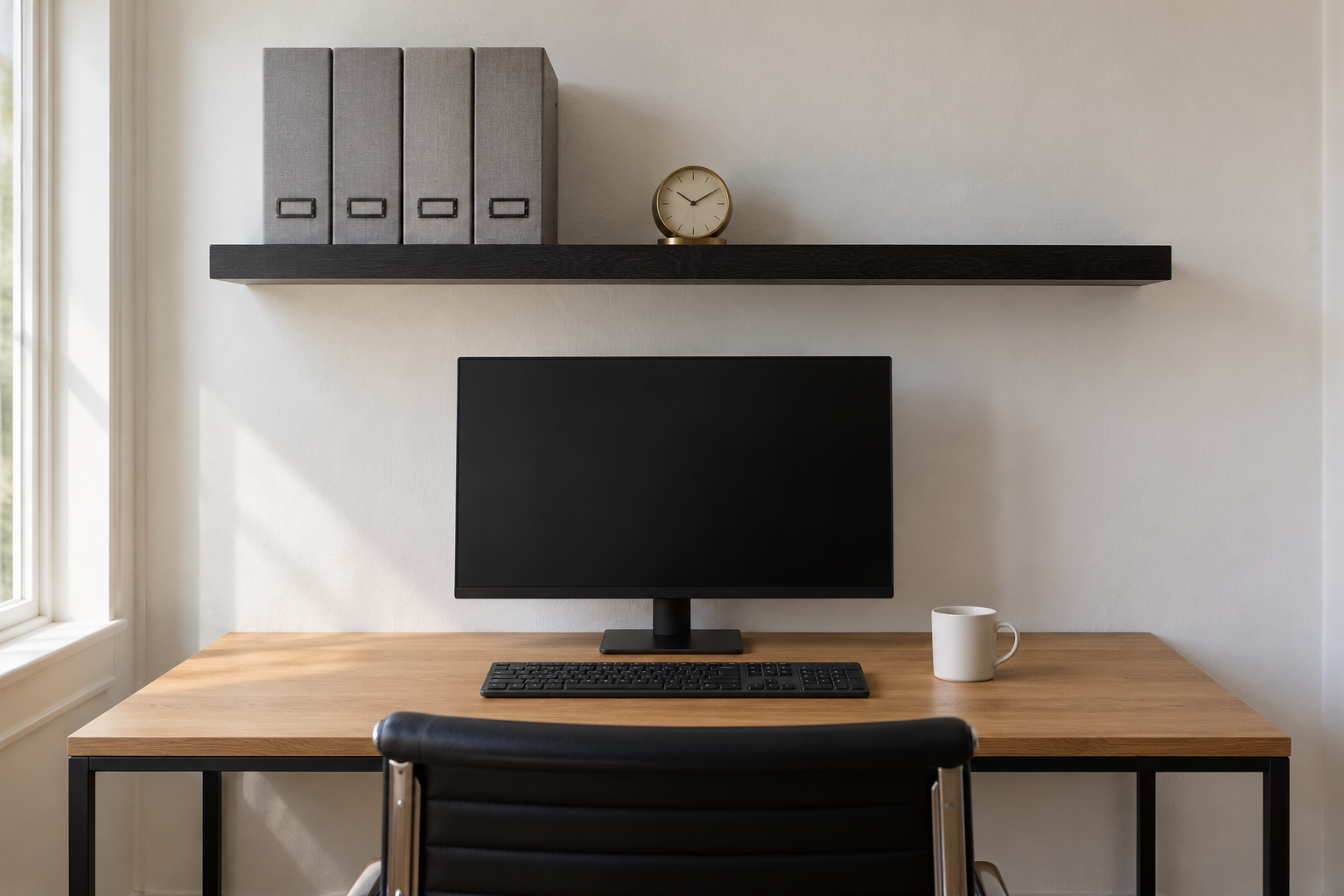
Over a desk with a monitor, the shelf has to clear the screen. A monitor set at a comfortable height for working usually has its top edge 16 to 20 inches above the desk, so put the underside of the shelf about 22 to 24 inches above the desktop, which leaves a few inches over the screen. Measure your own monitor on its stand, since stands vary by several inches.
Without a monitor, a shelf can come lower, 15 to 18 inches above the desk, where things on it can be reached without standing up. That is about as high as a seated arm reaches comfortably over a desk. Above that, a second shelf holds what’s used weekly, not hourly.
Over the Sofa
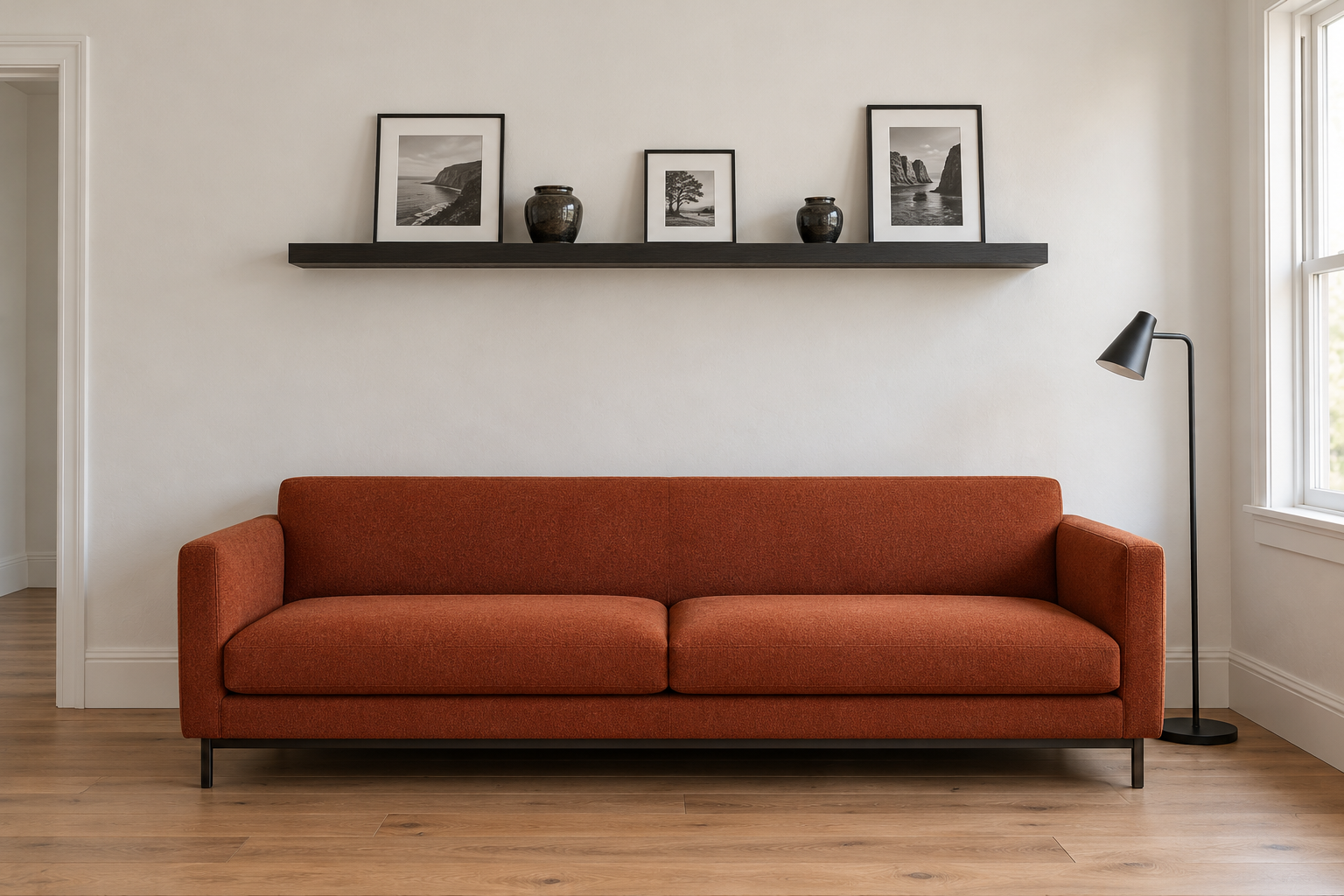
A shelf over a sofa goes higher than art does. Art above a sofa can hang 6 to 8 inches over the back cushions because a frame flat against the wall can’t be knocked. A shelf sticks out from the wall by its depth, holds things that can fall, and is where a head goes when someone leans back or stands up.
Put the underside of the shelf about 2 feet above the top of the sofa back. On a sofa with a back 30 to 32 inches high, that puts it 54 to 56 inches from the floor, above the head of most adults sitting upright, whose heads reach about 50 to 52 inches. A shelf about two thirds the width of the sofa, centered on it, matches the proportion used for art. Keep heavy and breakable things off a shelf over seating.
Above the Toilet
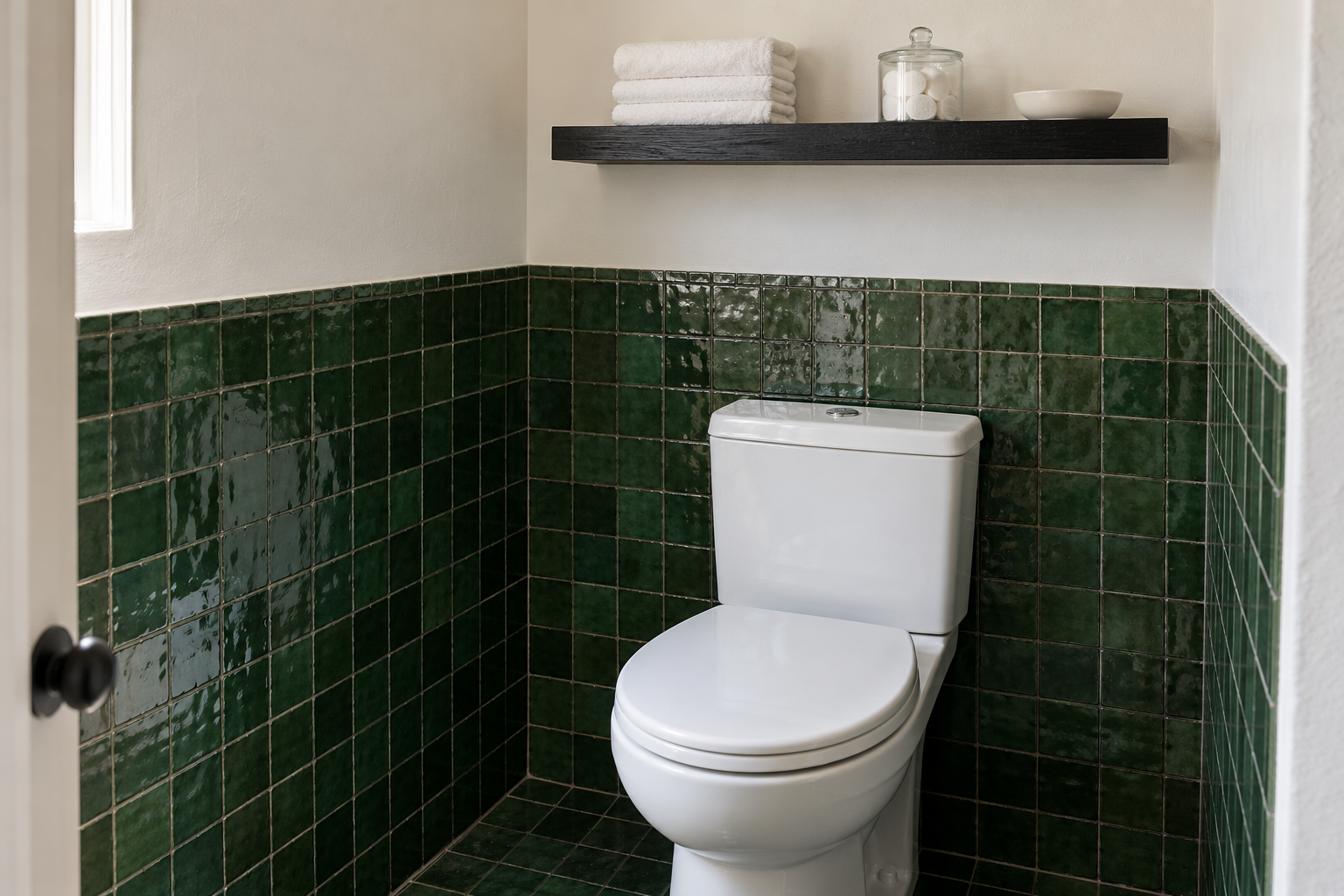
Advice on this one varies from a foot above the tank to two feet. The lower figure allows only for the tank lid, which needs a few inches to lift off for a repair. The higher figure accounts for the person. Someone standing in front of the toilet has a shelf at a foot above the tank around hip height, in the way and easy to knock things off into the bowl.
So put the underside of the shelf about 2 feet above the tank lid, which on a typical tank puts it around 4 1/2 feet from the floor, at chest height for an adult standing in front of it and reachable without stepping around the toilet. Towels, a jar or two, and spare soap suit it. A glass bottle above a porcelain tank is a hazard if it falls.
Beside the Bed
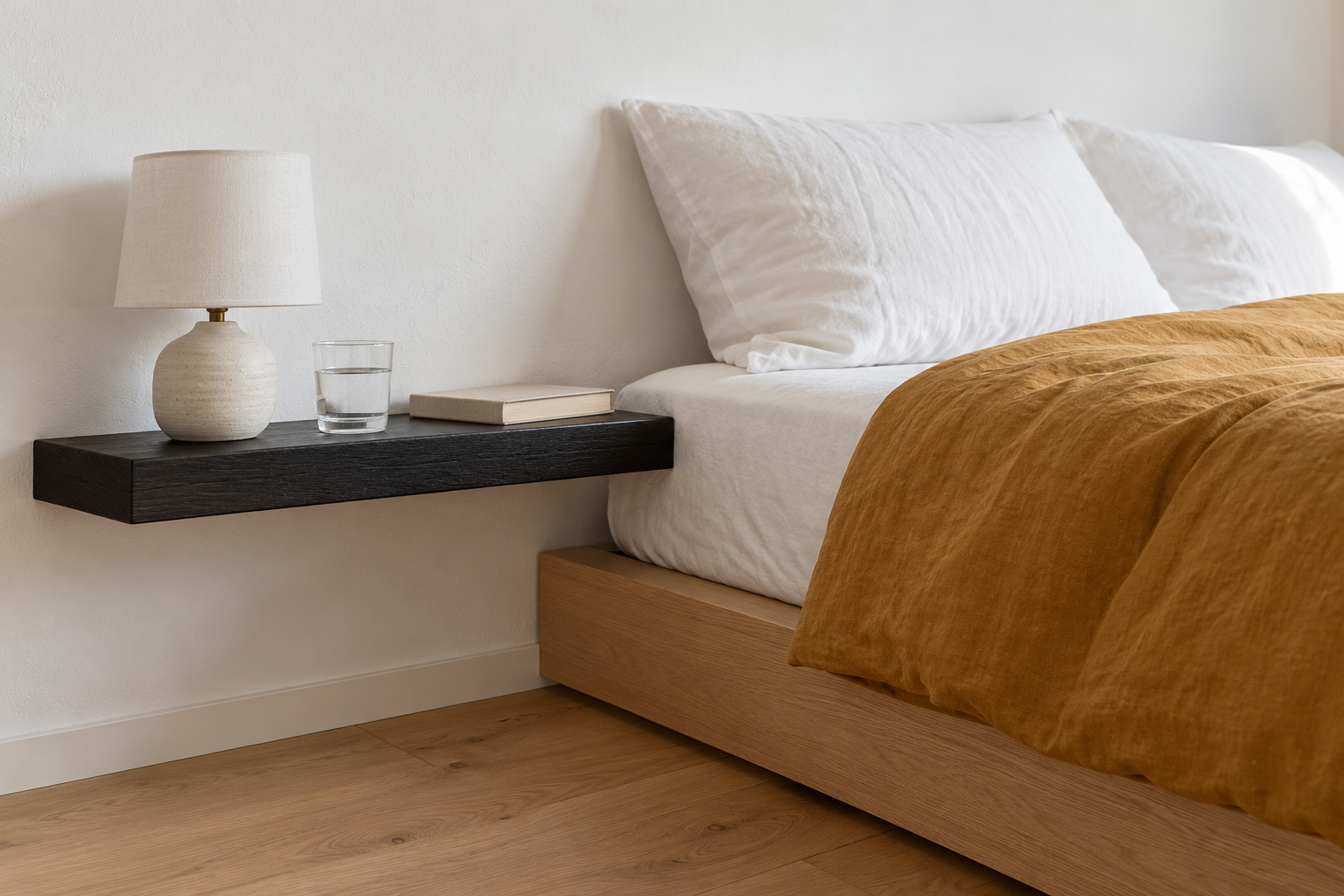
A floating shelf used as a nightstand should have its top level with the top of the mattress, or within a couple of inches of it. That’s the same rule as for a nightstand, and for the same reason: a hand reaching from the pillow finds the glass or the phone without lifting or dropping. On most beds that puts the shelf top 24 to 28 inches from the floor.
Depth matters more than for a nightstand, since there is no drawer. A shelf 8 to 10 inches deep holds a small lamp, a glass, and a book. Shallower than that and the lamp base crowds the glass. Run the lamp cord down the wall to an outlet below, or choose a wall light above the shelf and keep the whole top free.
Into the Studs
A floating shelf hangs on brackets hidden inside it, and those brackets hold their rated load only when screwed into something solid. In most American houses that means wall studs, usually spaced 16 inches apart from center to center, so a shelf 32 inches long reaches at least two wherever it goes, and a shorter one only if it is placed to catch them. Find the studs before deciding exactly where the shelf goes. Moving it a few inches to the side to catch a second stud is better than fixing one end into drywall alone.
Depth works against a floating shelf, since the farther a load sits from the wall, the harder it pulls the bracket down. A shelf 8 to 10 inches deep holding plates or books is within the range most hidden brackets are made for. A deeper one needs a bracket rated for it. Check the bracket maker’s load rating, which assumes the screws it specifies and solid fixing, and keep the heaviest things near the wall and over the studs.