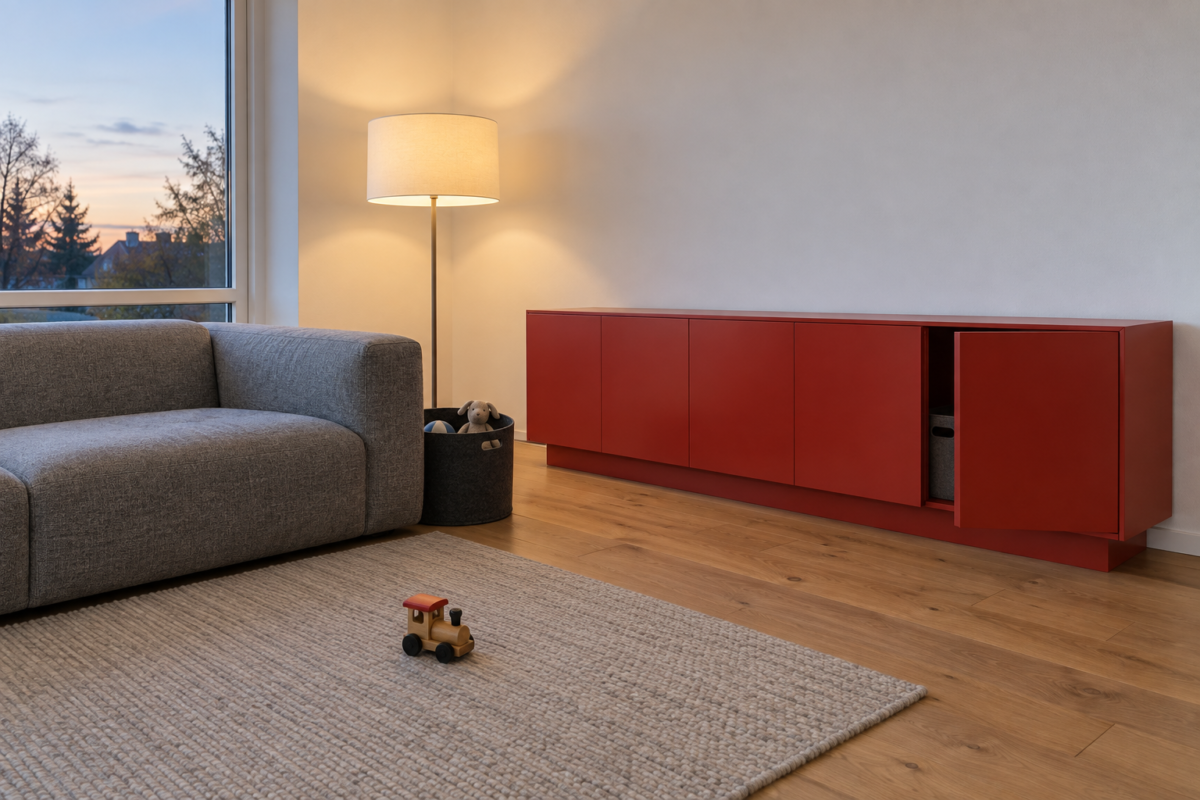
In a house with no playroom, toys are used wherever the child happens to be. That’s the living room floor for most of the day, the kitchen while dinner is cooking, the bath, and the stairs in between. A shelf of bins in an upstairs bedroom is a long way from all of those at six in the evening, so the toys stay where they were dropped.
Storage near the play gets used. So does storage a child can reach and understand without help, where the block bin is plainly the block bin. The ideas below go through the house room by room, starting with the living room. They differ because toys do. Some lie flat, some are bulky, some are tiny, some are wet, and some are half built and can’t be put away at all.
Give the Toys One Cabinet With Doors
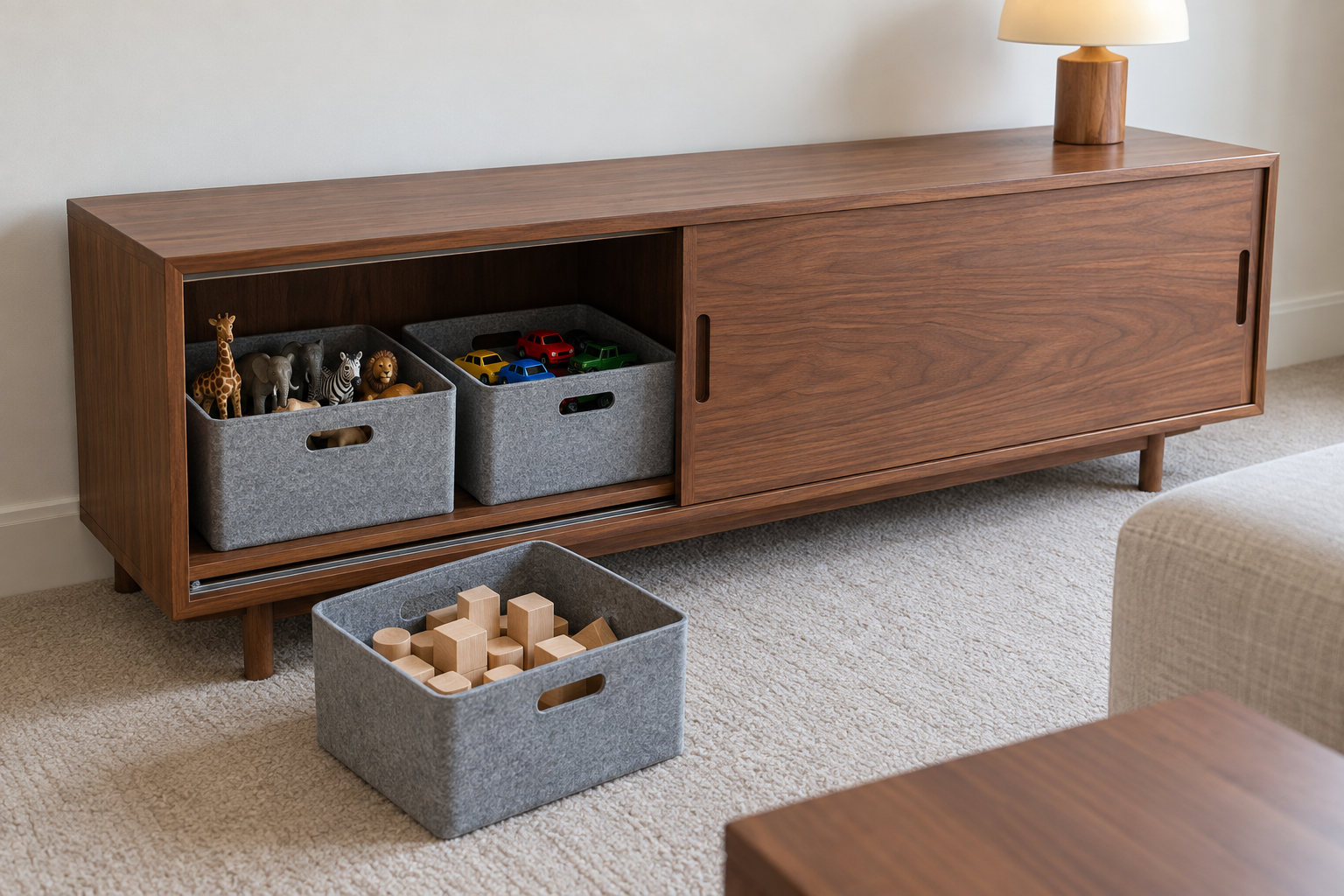
A sideboard or media cabinet with solid doors holds more than a toy box does and looks like furniture when it’s shut. Inside, use open bins that slide out, one for each kind of toy, so a child pulls a bin onto the floor, plays, and pushes it back. Hinges that close softly matter on doors at the height of small fingers. With the doors shut in the evening the room goes back to the adults.
Keep One Basket by the Sofa for Today’s Toys
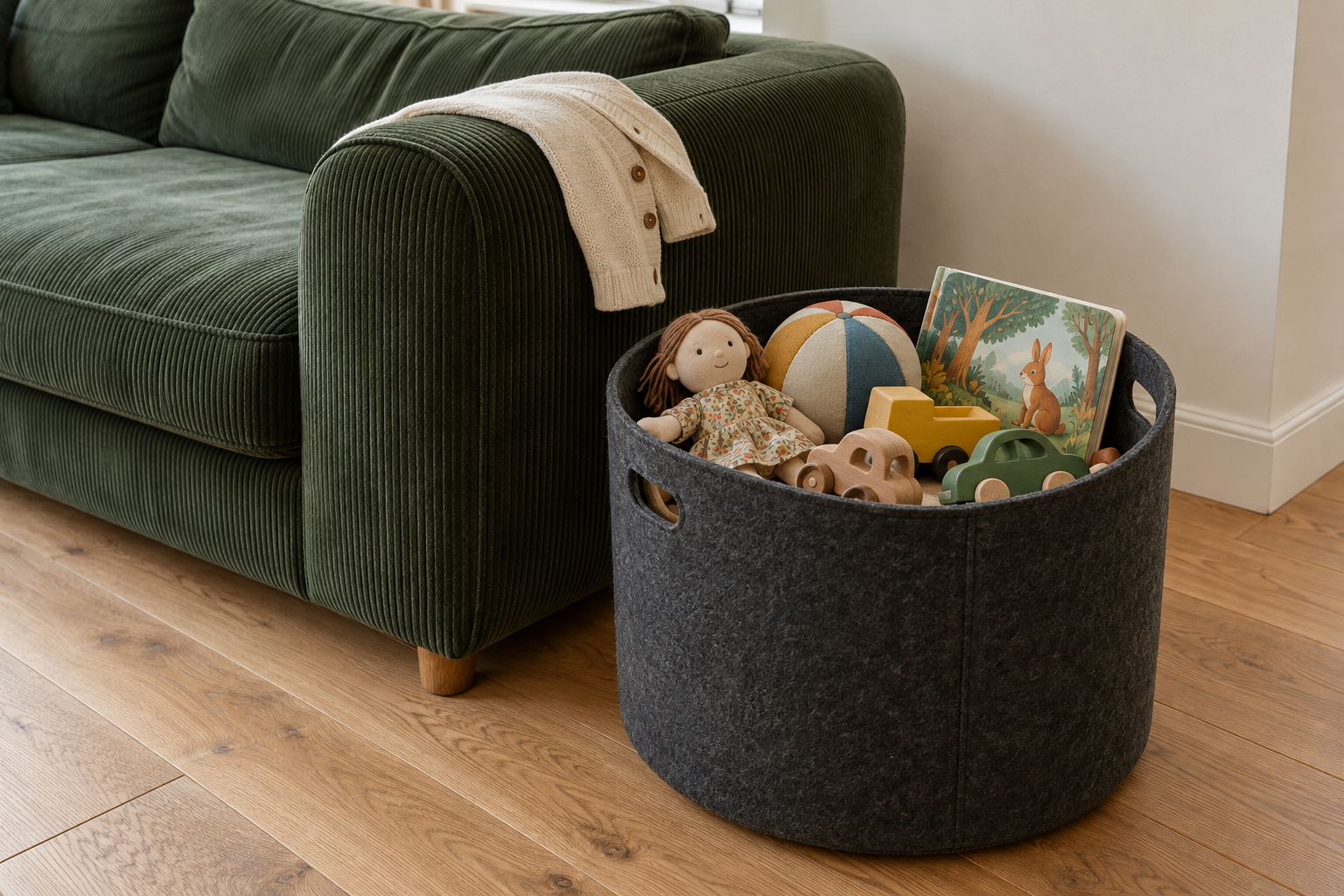
The cabinet holds everything. A basket holds what’s in play today. One open basket about the size of a laundry basket, on the floor beside the sofa, sets a limit a child can see. When it’s full, something goes back to the cabinet before anything new comes out, and cleanup at bedtime means filling one container.
Slide Shallow Trays Under the Sofa
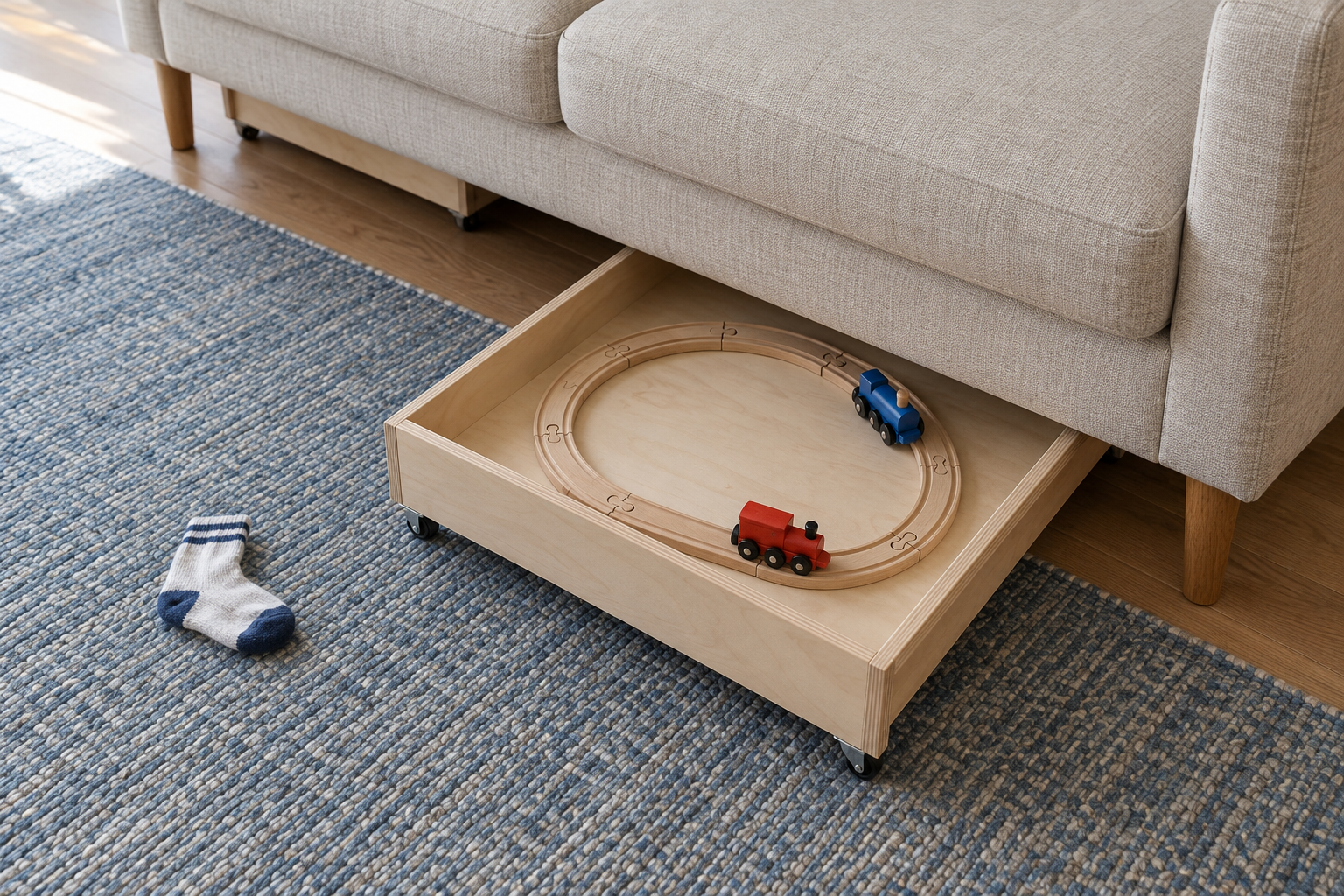
Train track, a marble run, and a road of wooden blocks spread out flat and take a long time to pack into a bin. A shallow tray on casters holds the layout as it was left and rolls under the sofa.
Measure from the floor to the underside of the sofa frame with someone sitting on it, because some seats sag lower in use. The tray and its casters need to clear that height with about half an inch to spare.
Stand Picture Books Face Out
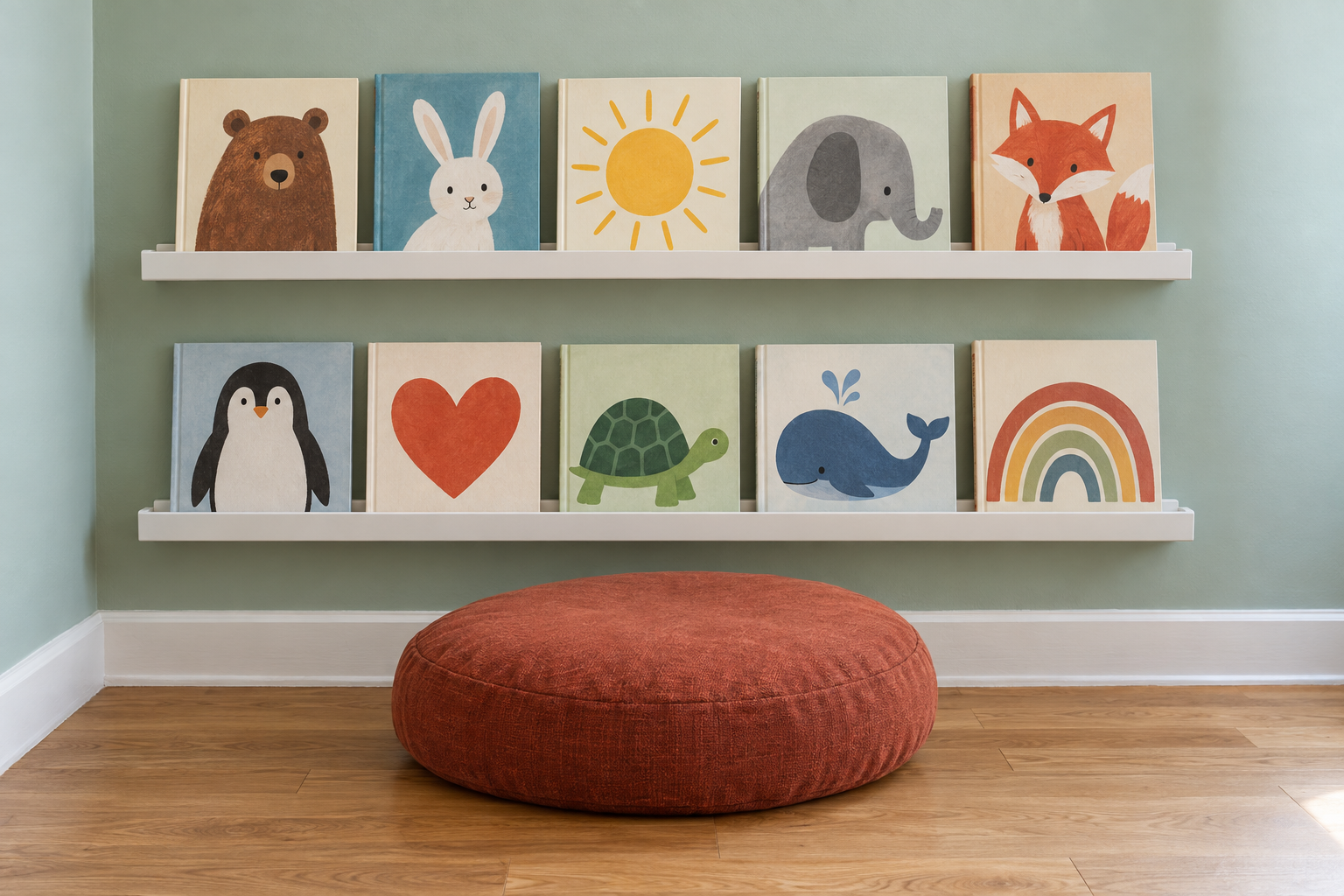
Small children choose books by the cover, and a spine means nothing to a child who can’t read yet. A narrow ledge or two on the wall at the child’s eye level, with ten or so books facing out, lets the covers do the choosing. Keep the other books elsewhere and swap them every few weeks. A ledge about 4 inches deep with a lip along the front holds picture books and barely projects into the room.
Store Board Games on Edge
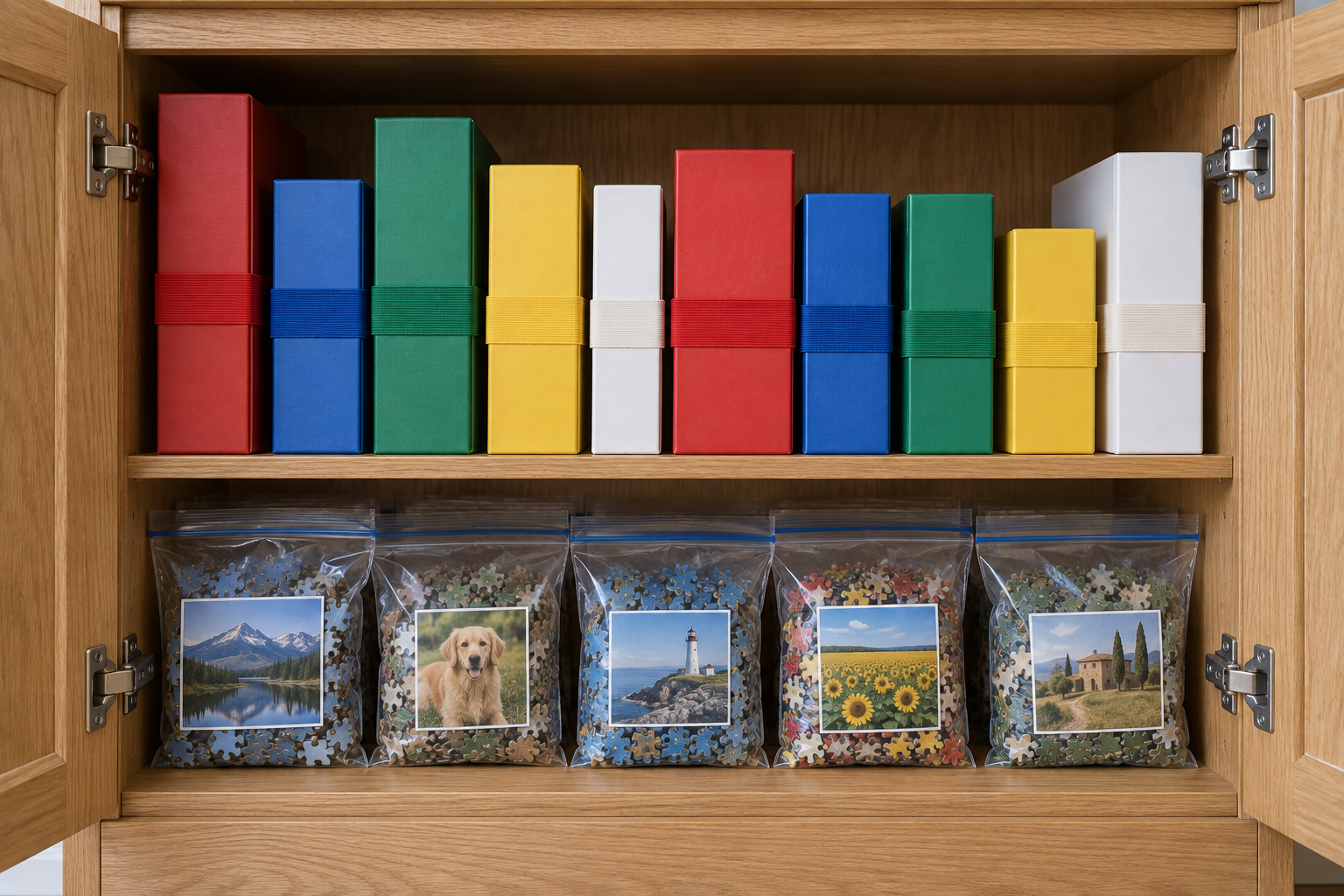
In a flat stack, the game at the bottom can’t come out without lifting the rest. Stood on edge like books, each box slides out by itself. A wide elastic band round each one keeps the lid on. Jigsaw puzzles take less room out of their boxes, with the pieces in a zip bag and the picture cut from the lid tucked in beside them.
Give Controllers and Chargers a Drawer
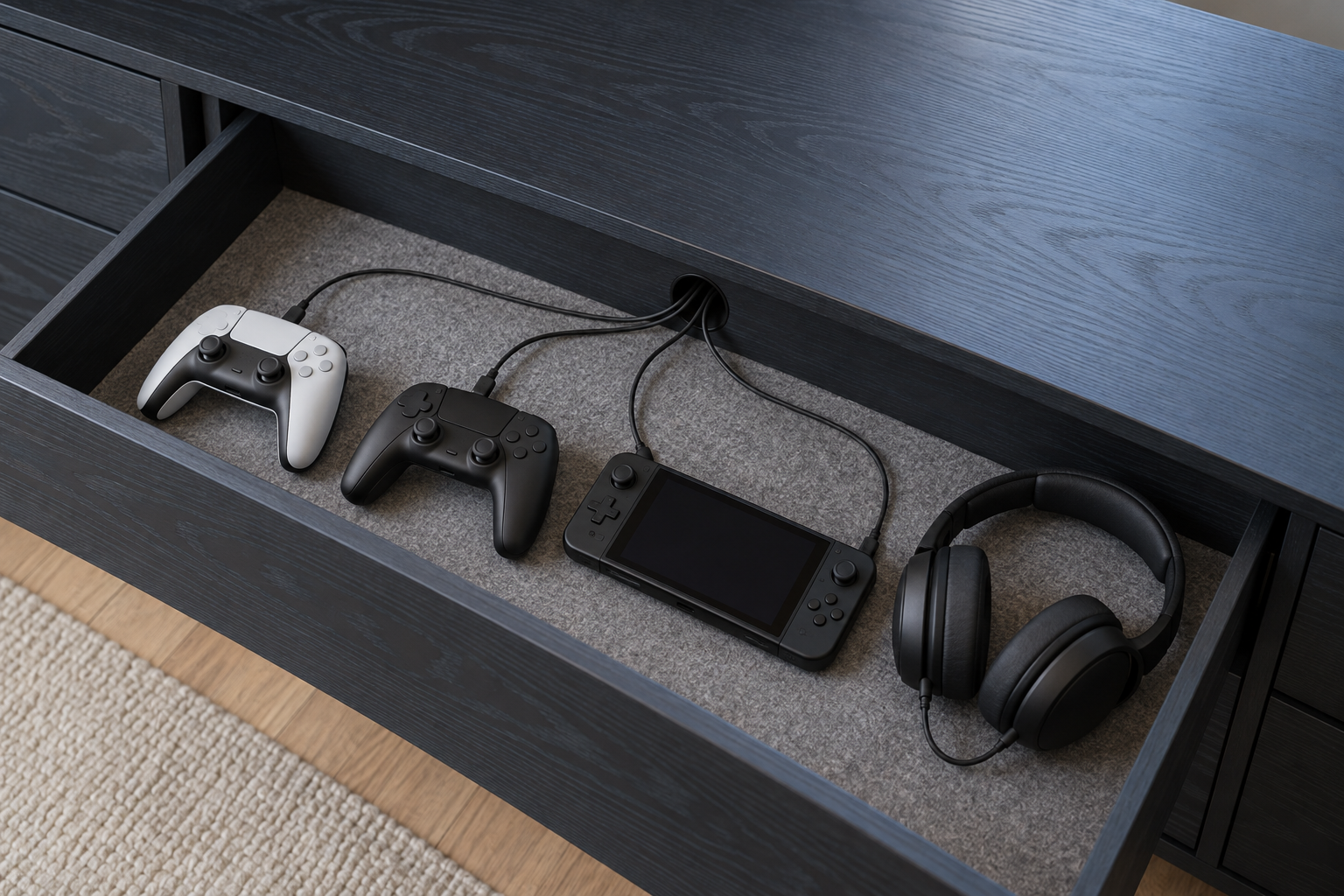
Game controllers, a headset, and a handheld console are toys too, and they tend to live on the coffee table with their cables. A shallow drawer in the media cabinet gives each a place. Feed the charging cables through a hole at the back of the drawer, so they stay plugged in and nothing trails across the floor.
Hand Over One Low Kitchen Drawer
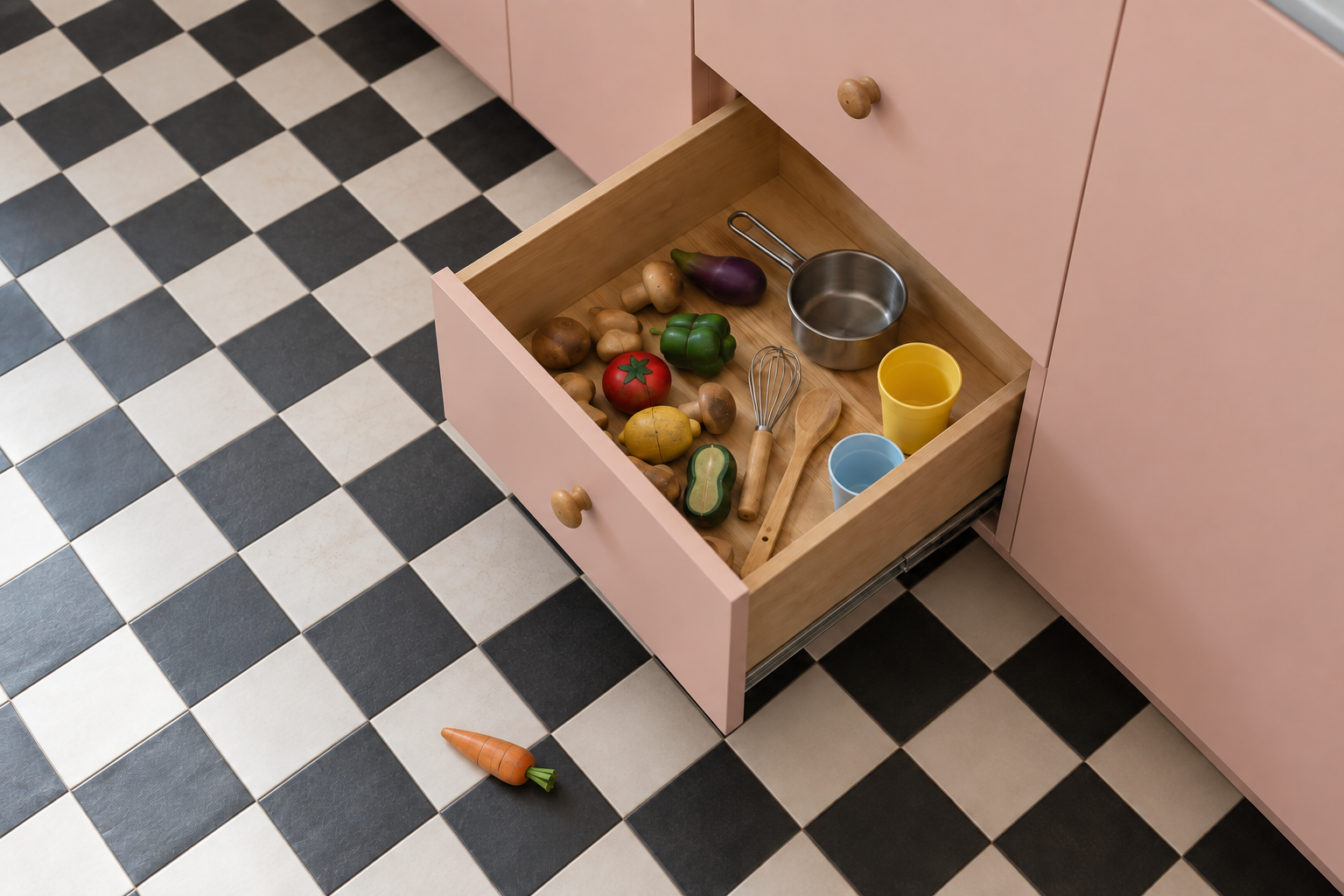
A toddler in the kitchen wants to do what the adult is doing. One low drawer, away from the stove and the oven door, filled with a few toys and some safe kitchen things, gives them somewhere to be busy within sight. Plastic cups, a whisk, and a wooden spoon are as good as toys at that age. It’s the one drawer at that height left without a latch.
Park a Basket at the Foot of the Stairs
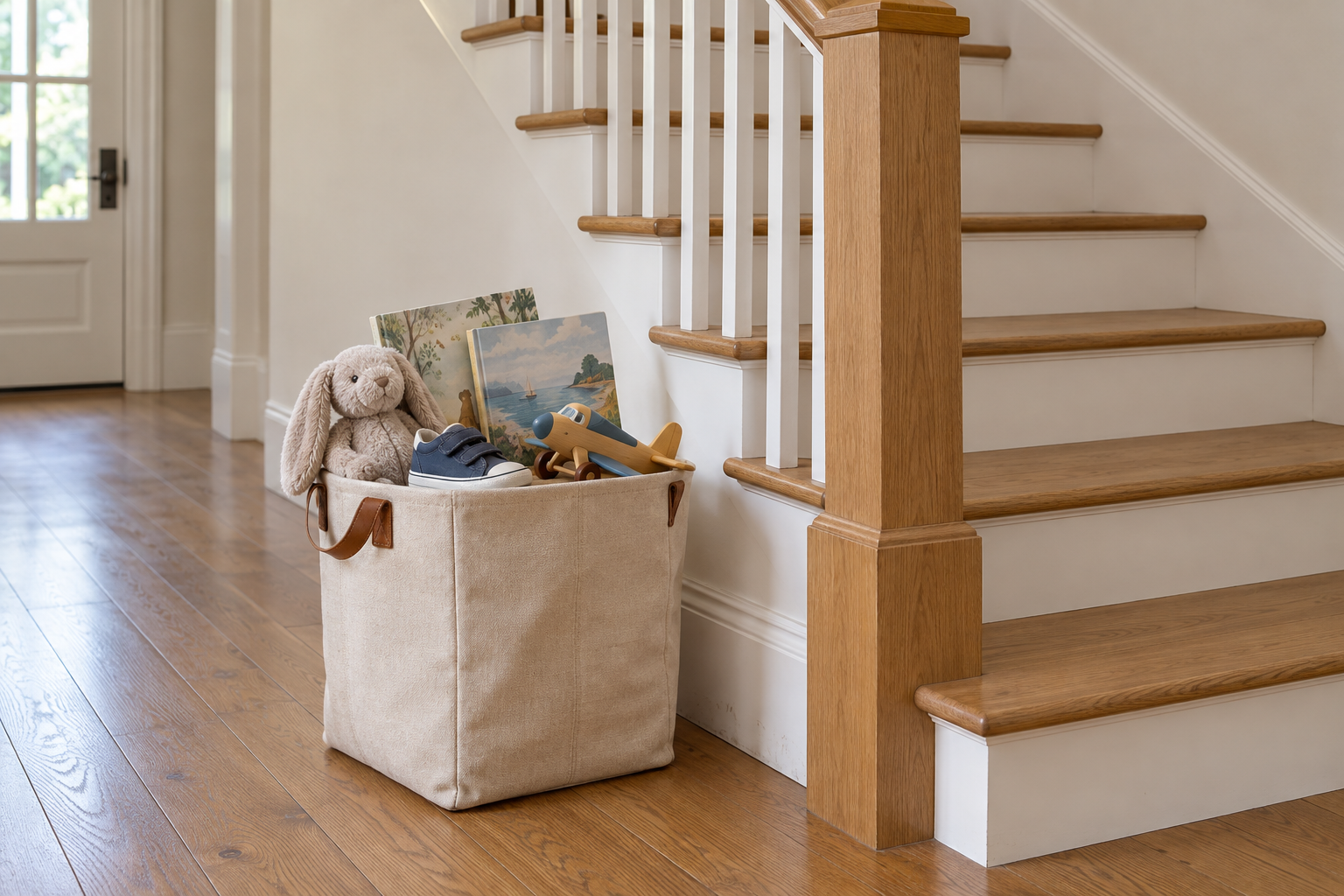
Toys drift downstairs through the day, and nobody climbs the stairs to return one car. A basket on the floor beside the bottom step collects whatever belongs upstairs and makes the trip once, at bedtime. Keep it on the floor and off the treads. Anything left on a step is something to trip over.
Keep Outdoor Toys by the Back Door
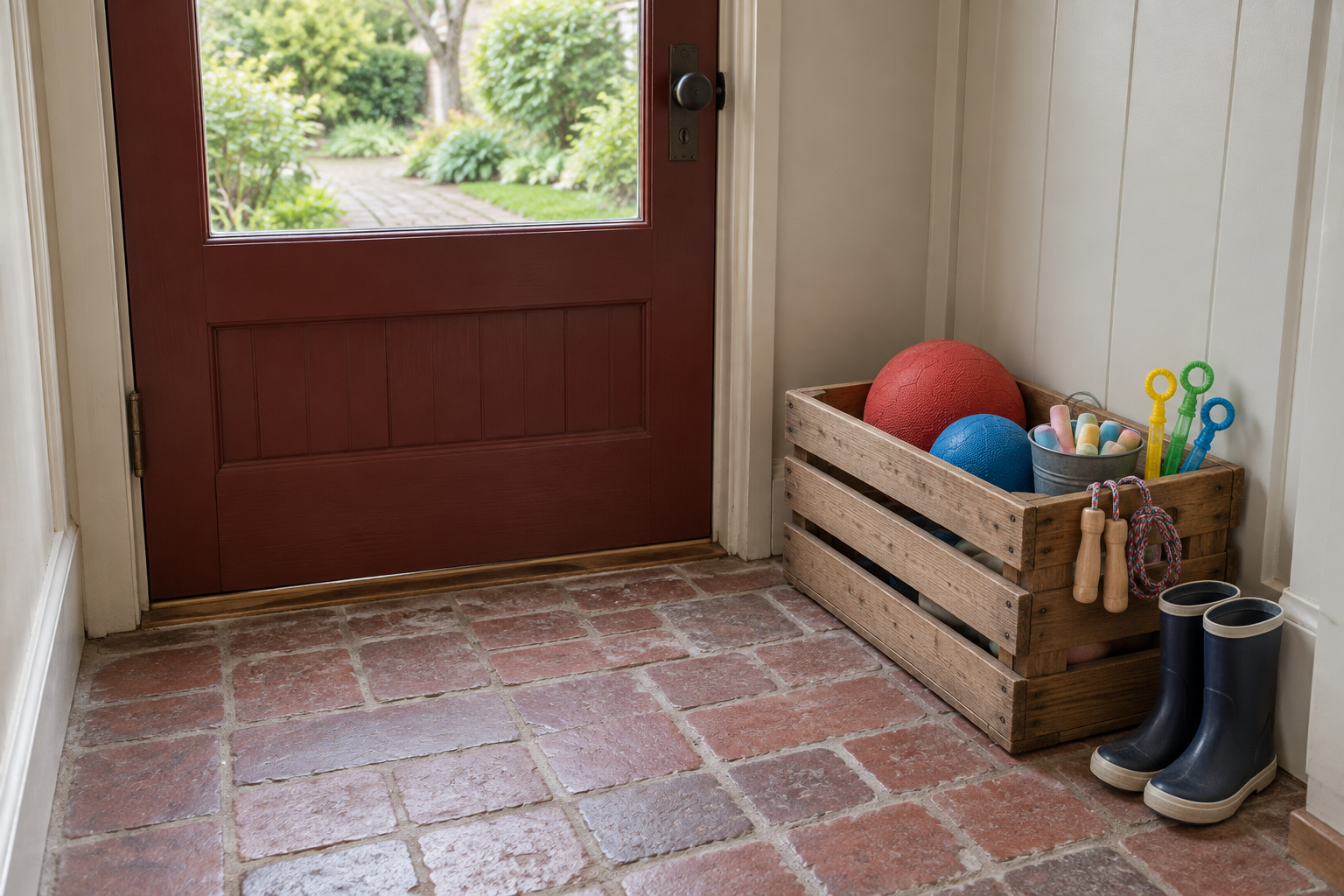
Balls, chalk, bubbles, and buckets are used outside and get stored wherever they were dropped. A bin beside the door they go out through, a lidded one on the porch or an open crate in the mudroom, keeps them apart from the indoor toys and keeps the dirt near the door. Slatted or mesh sides let wet things dry.
Sort Bricks Into Shallow Drawers
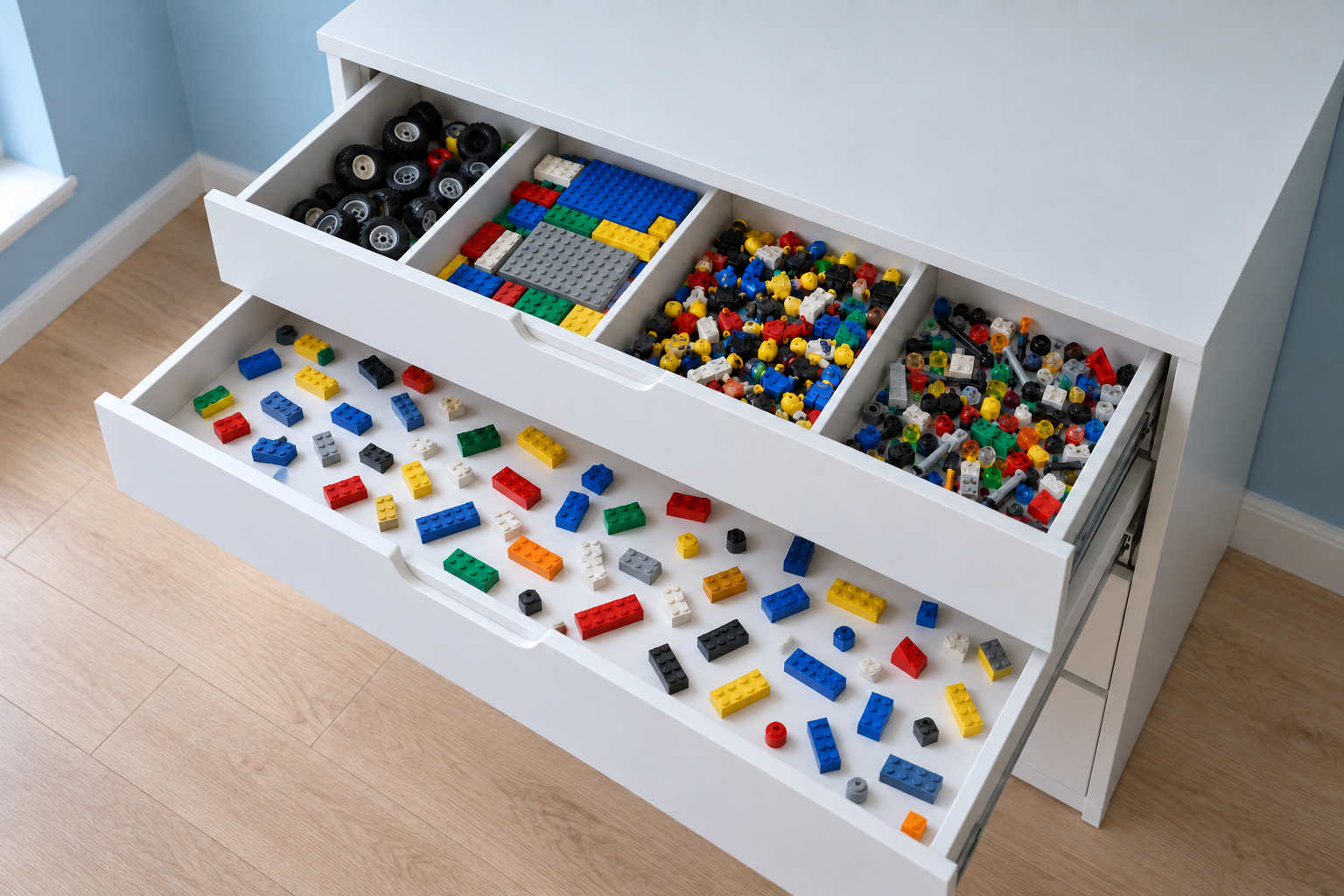
Building bricks in a deep bin get dug through and tipped out, because the piece that’s wanted is at the bottom. Wide, shallow drawers spread them one or two layers deep, so everything can be seen from above.
Sorting by kind of piece (wheels, flat plates, figures, the small odd parts) helps more than sorting by color. A red piece is hard to find in a drawer of red and easy to spot in a drawer of mixed colors.
Add a Play Table With a Rim
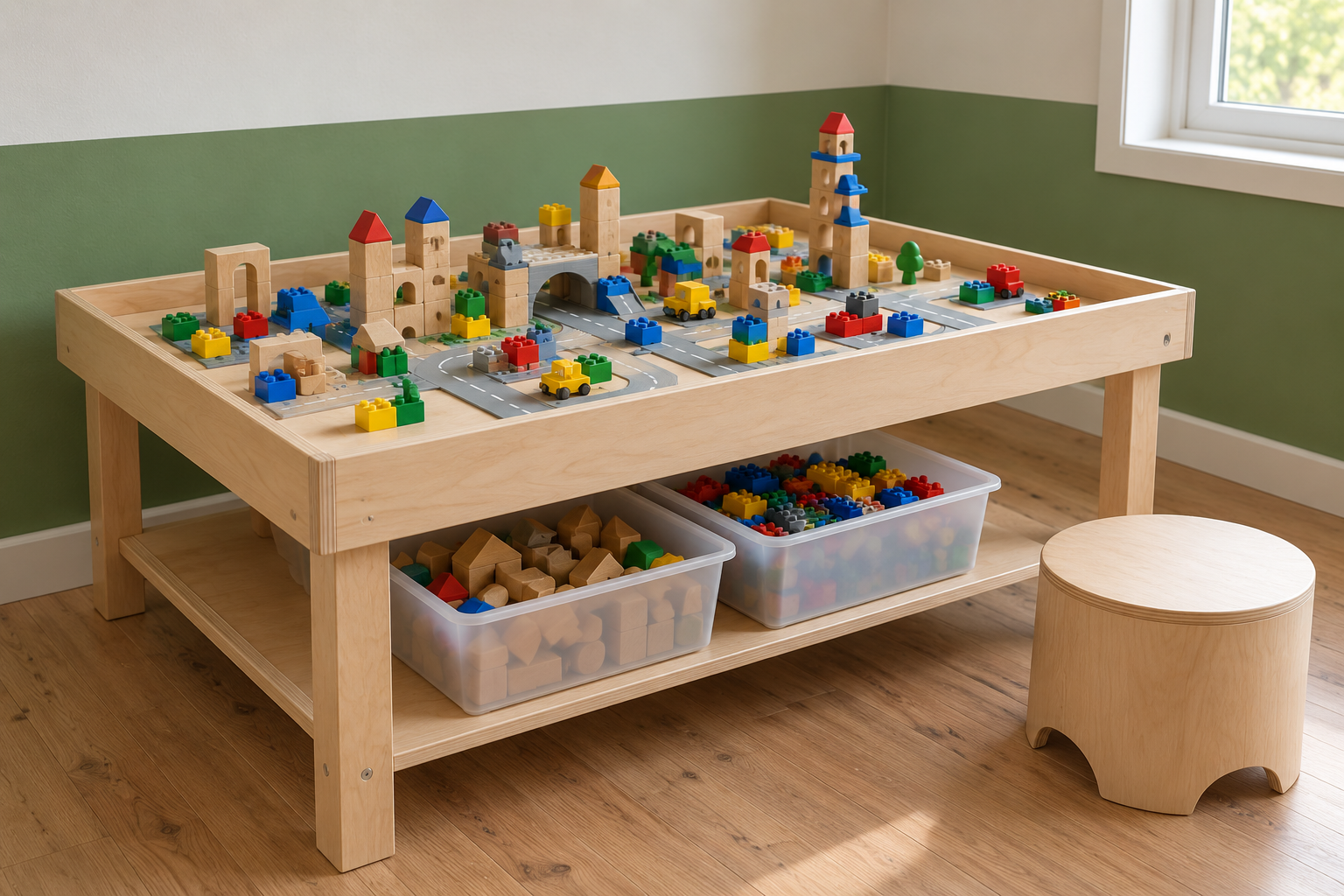
A build that takes three days needs somewhere to stay. A low table with a raised edge keeps a model in progress, a train layout, or a jigsaw off the floor and out of the vacuum’s path, and the rim stops pieces rolling off. Bins on a shelf underneath hold the loose parts. In a small bedroom, the table means the floor can be cleared at night without taking anything apart.
Give Finished Builds a Shelf
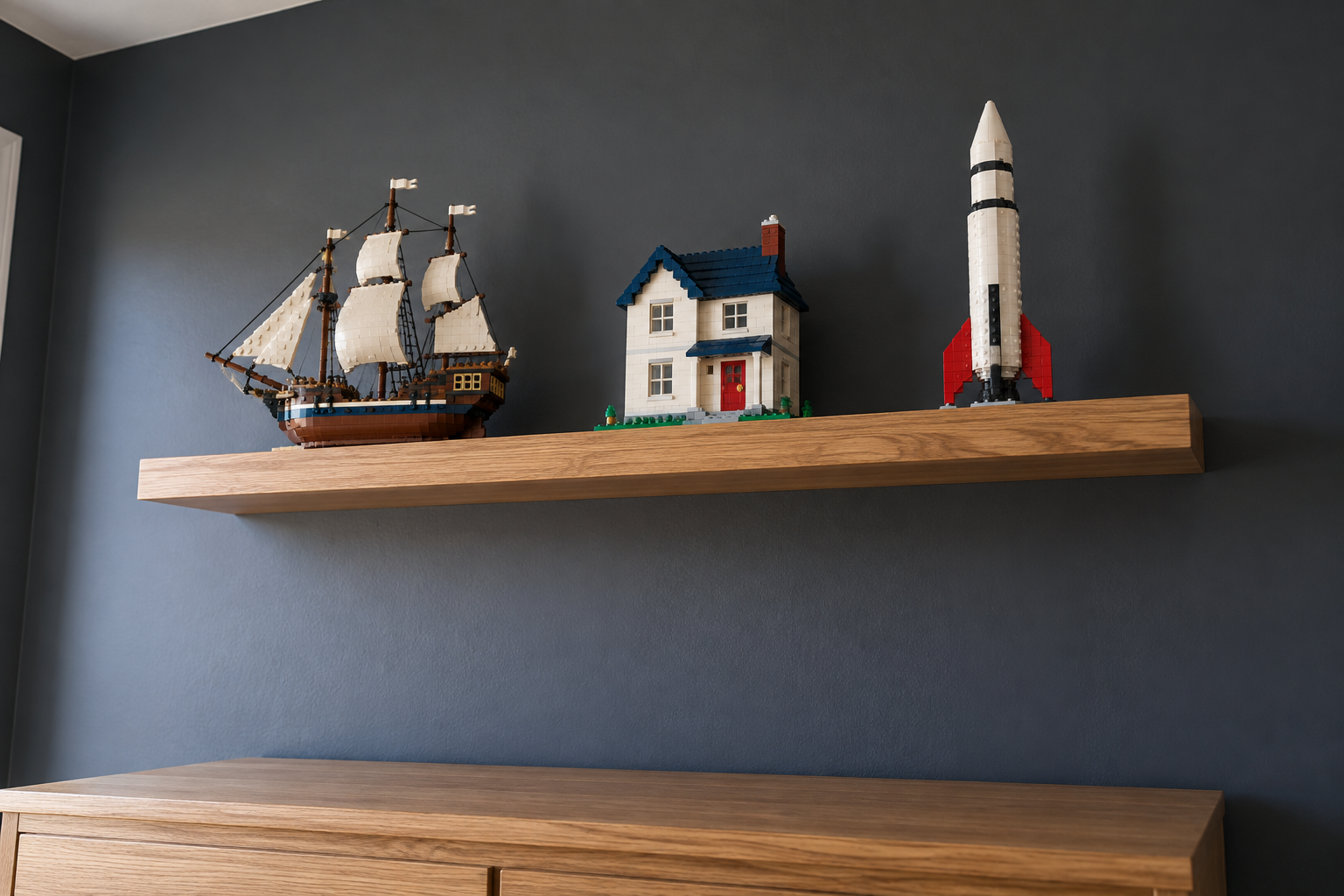
Some toys stop being played with and start being looked at. A model that took a week to build is one of them. A shelf above the reach of a younger brother or sister, long enough for three or four models, keeps them in one piece. It also sets a limit. When the shelf is full, one model gets taken apart to make room.
Keep Small Pieces in Clear Boxes, Up High
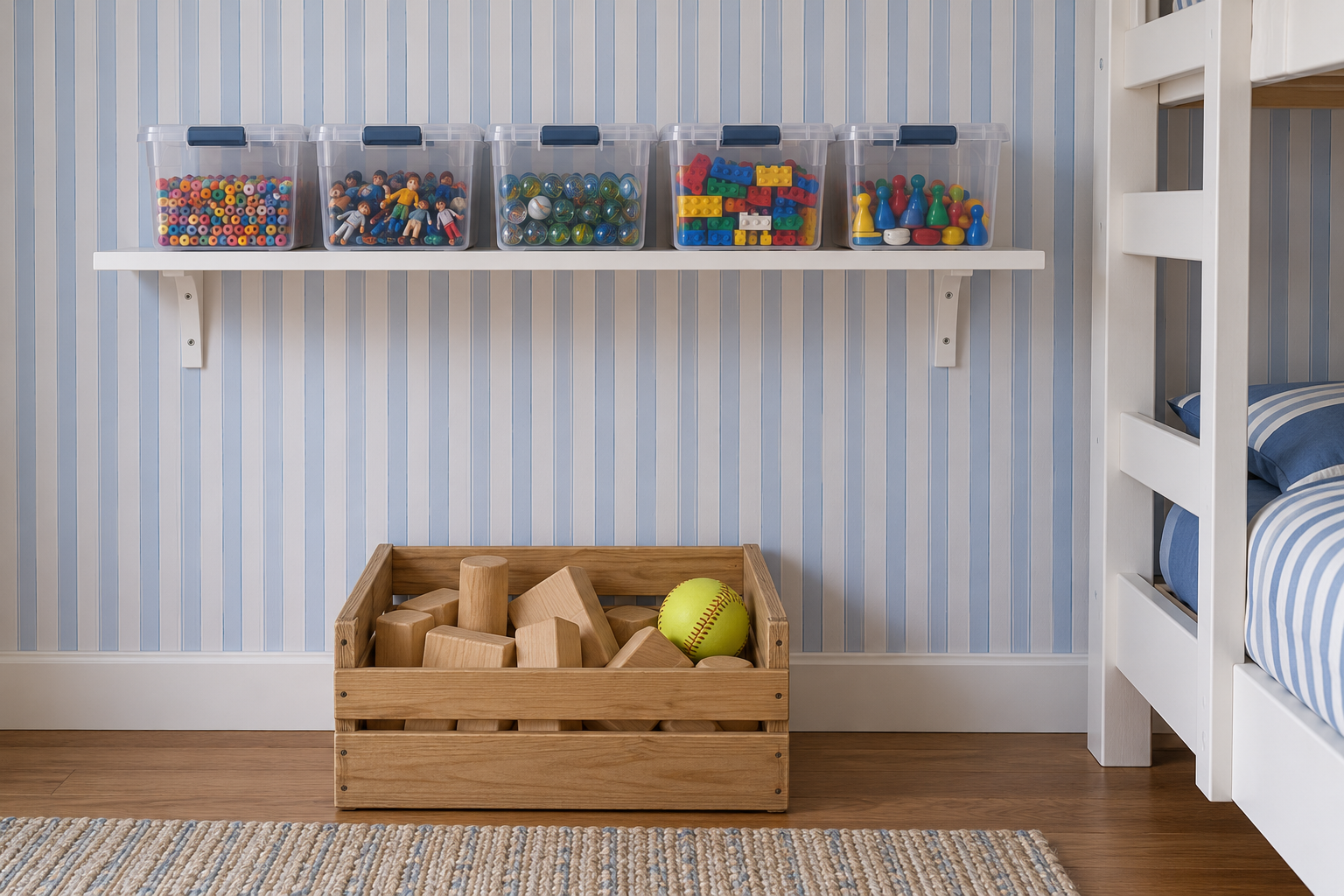
Beads, marbles, tiny figures, and the smallest bricks belong to older children and are a choking hazard for a baby or toddler in the same house. Clear boxes with lids that latch show what’s inside without being opened. Keep them on a shelf above the younger child’s reach, with the rule that they’re played with at a table and counted back in.
Hang Stuffed Animals in a Net or Zip Them Into a Seat
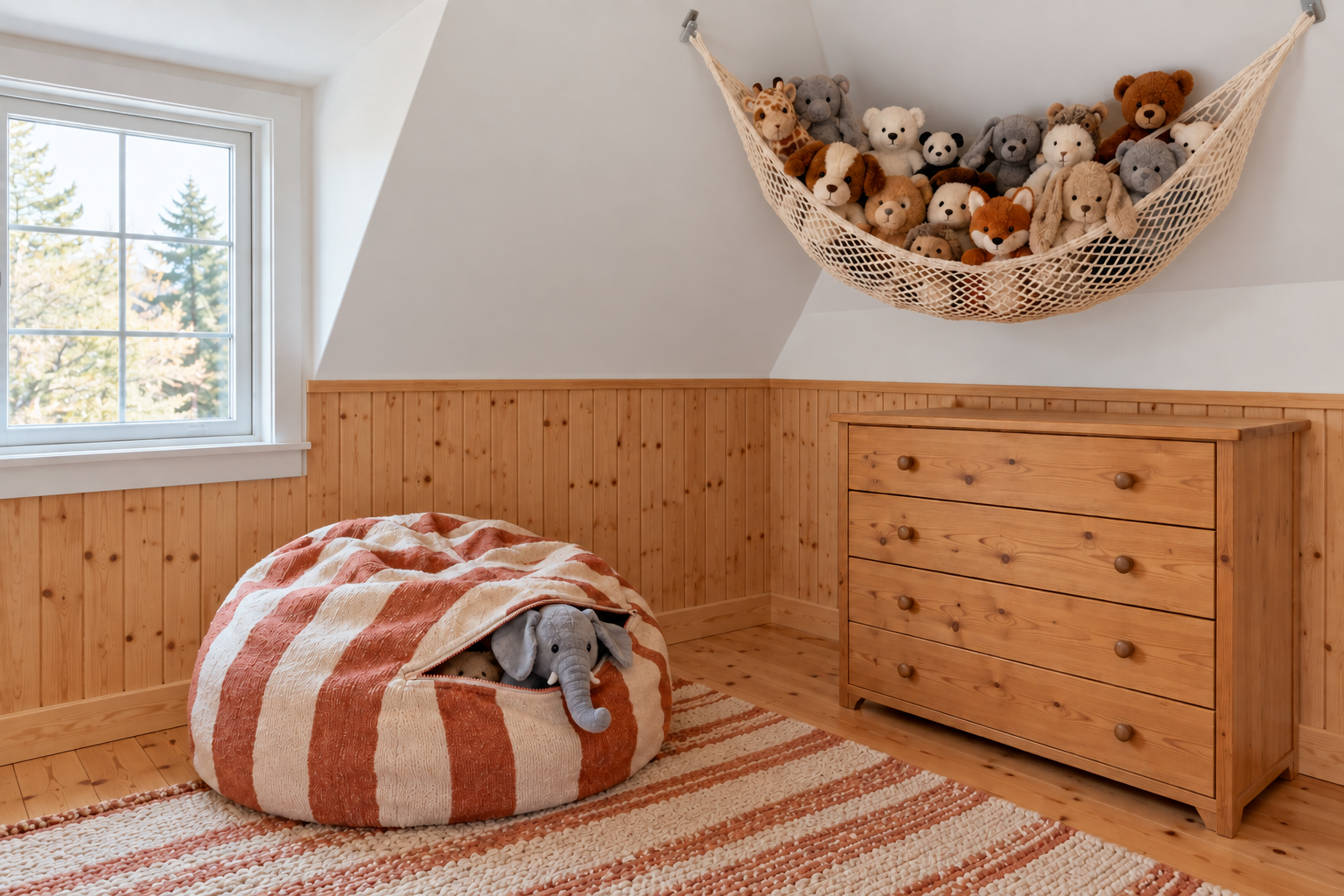
Stuffed animals weigh almost nothing and take up a great deal of room, which makes them the one kind of toy that can be stored overhead. A net strung across a corner, above a dresser, holds twenty or thirty where they can all be seen.
The other way is to sit on them. A beanbag cover made to be filled with soft toys turns the whole collection into a chair, and the zipper lets a child pull one out.
Hang Dress-Up Clothes on a Low Rod
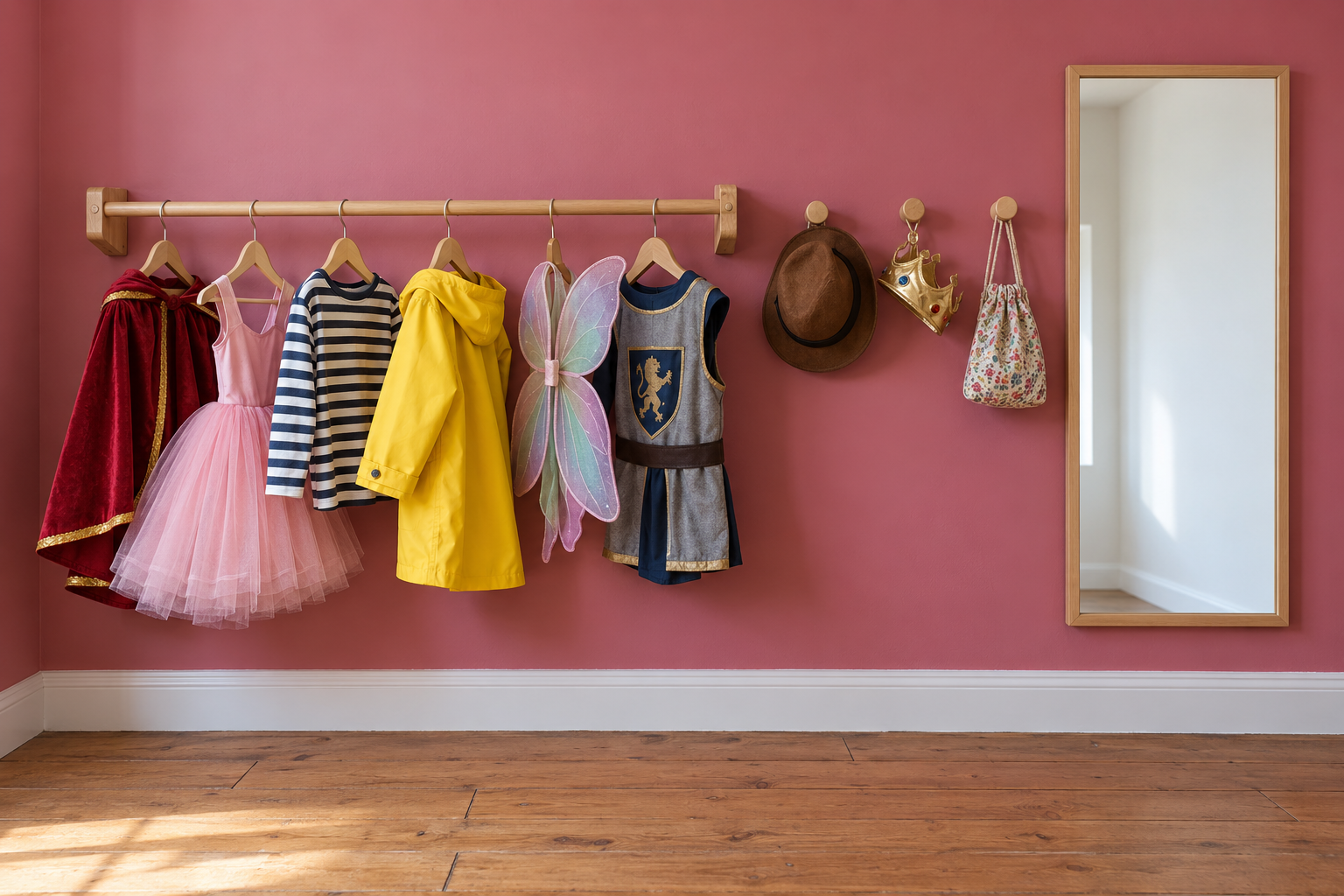
Costumes in a box get crumpled and forgotten. On hangers they can be seen, and a child can choose one and put it back. A short rod at about the child’s shoulder height, a few pegs beside it for hats and bags, and a mirror fixed to the wall take about 2 feet of wall in a bedroom or a hallway.
Put Art Supplies on a Cart
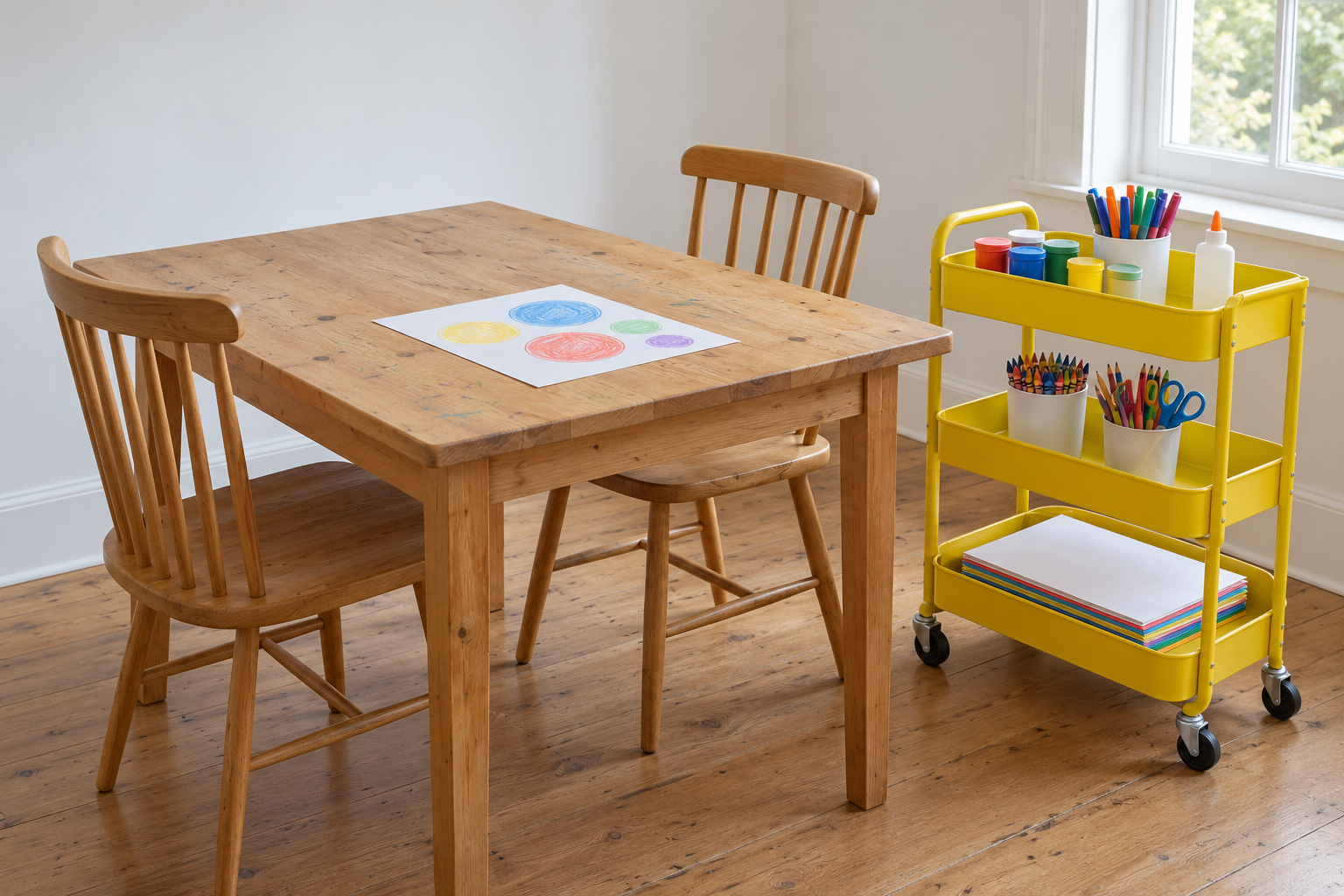
Crayons, paper, glue, and scissors are used at the kitchen or dining table and kept somewhere else. A cart with three tiers and wheels carries all of it to the table and back to a closet afterward. Paper goes on the bottom tier, where it lies flat. Paint, markers, and glue go on the top tier, where an adult can see what’s being opened.
Use the Back of the Door
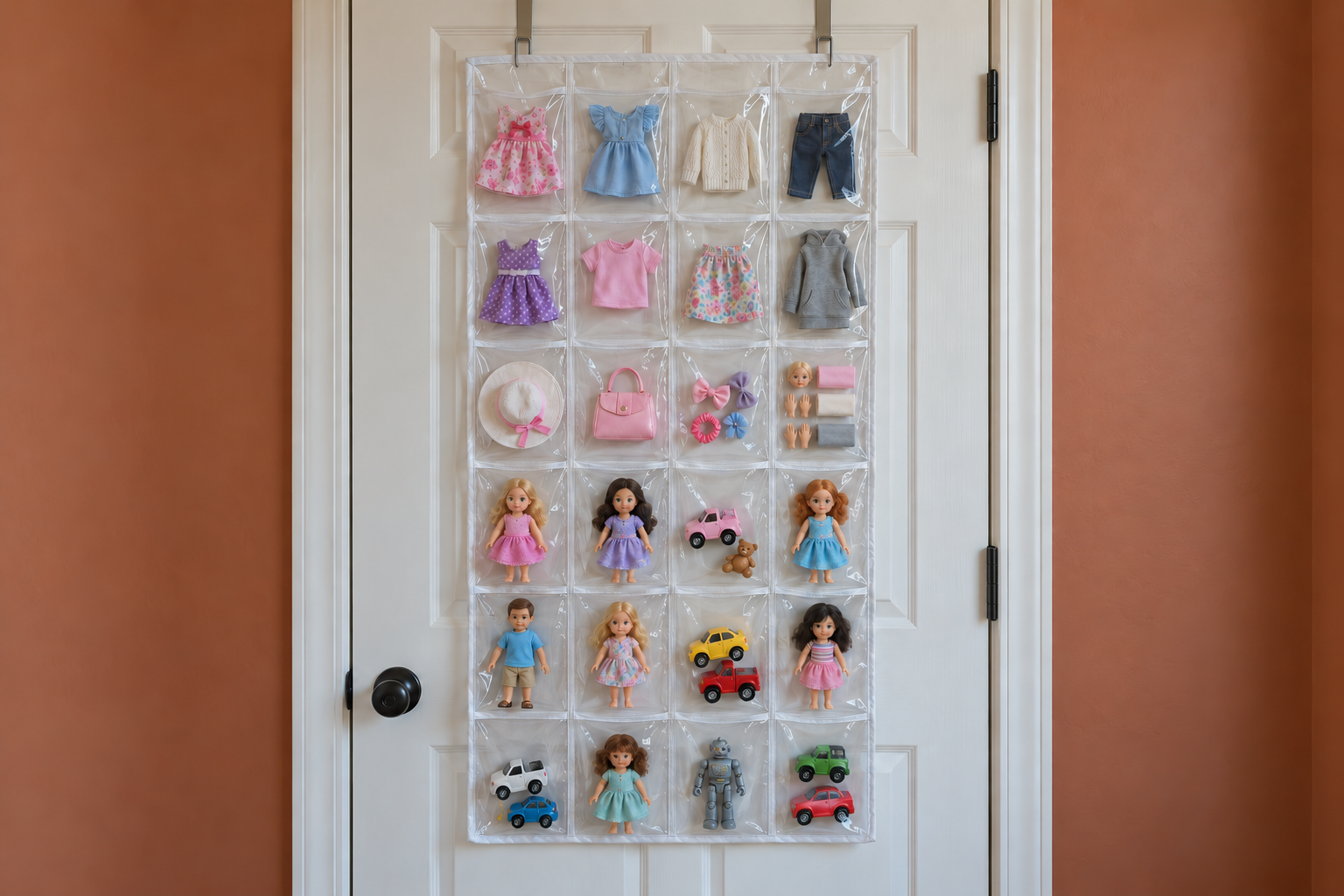
A hanging organizer with rows of clear pockets, the kind sold for shoes, fits over a bedroom door and holds small toys one to a pocket. Dolls, figures, and toy cars all suit it. Because the pockets are clear, a child can find one without emptying the rest. Only the lowest two or three rows are within a small child’s reach, so the favorites go there and the spare parts go higher.
Mark a Parking Spot for the Big Toys
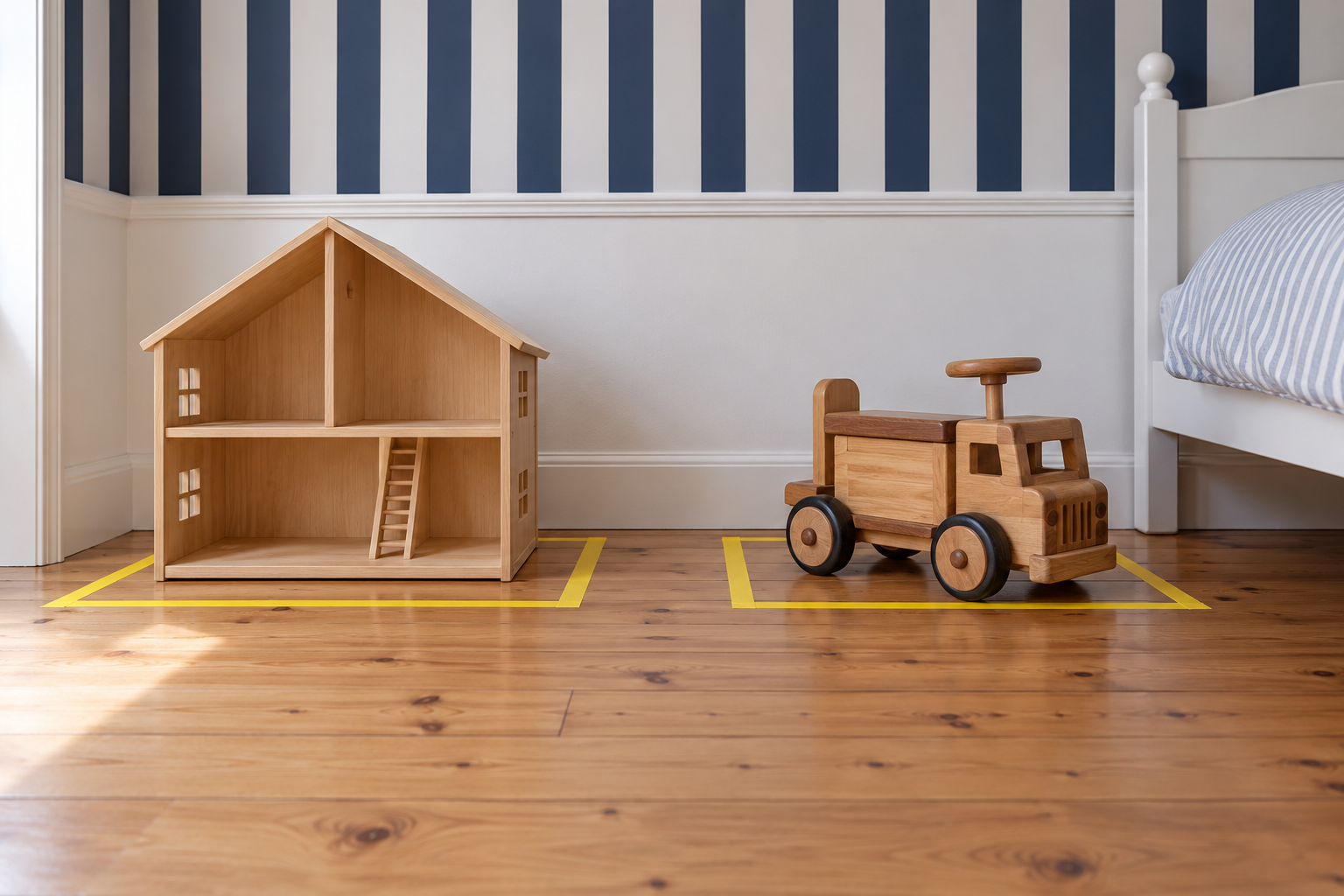
A dollhouse, a play kitchen, and a truck big enough to ride on fit in no bin, and without a place of their own they end up in the middle of the floor. Give each one a spot against a wall and keep that spot for it. A rectangle of colored tape on the floor shows a small child where the truck parks, and makes putting it away part of the game.
Choose a Toy Chest With a Lid That Stays Up
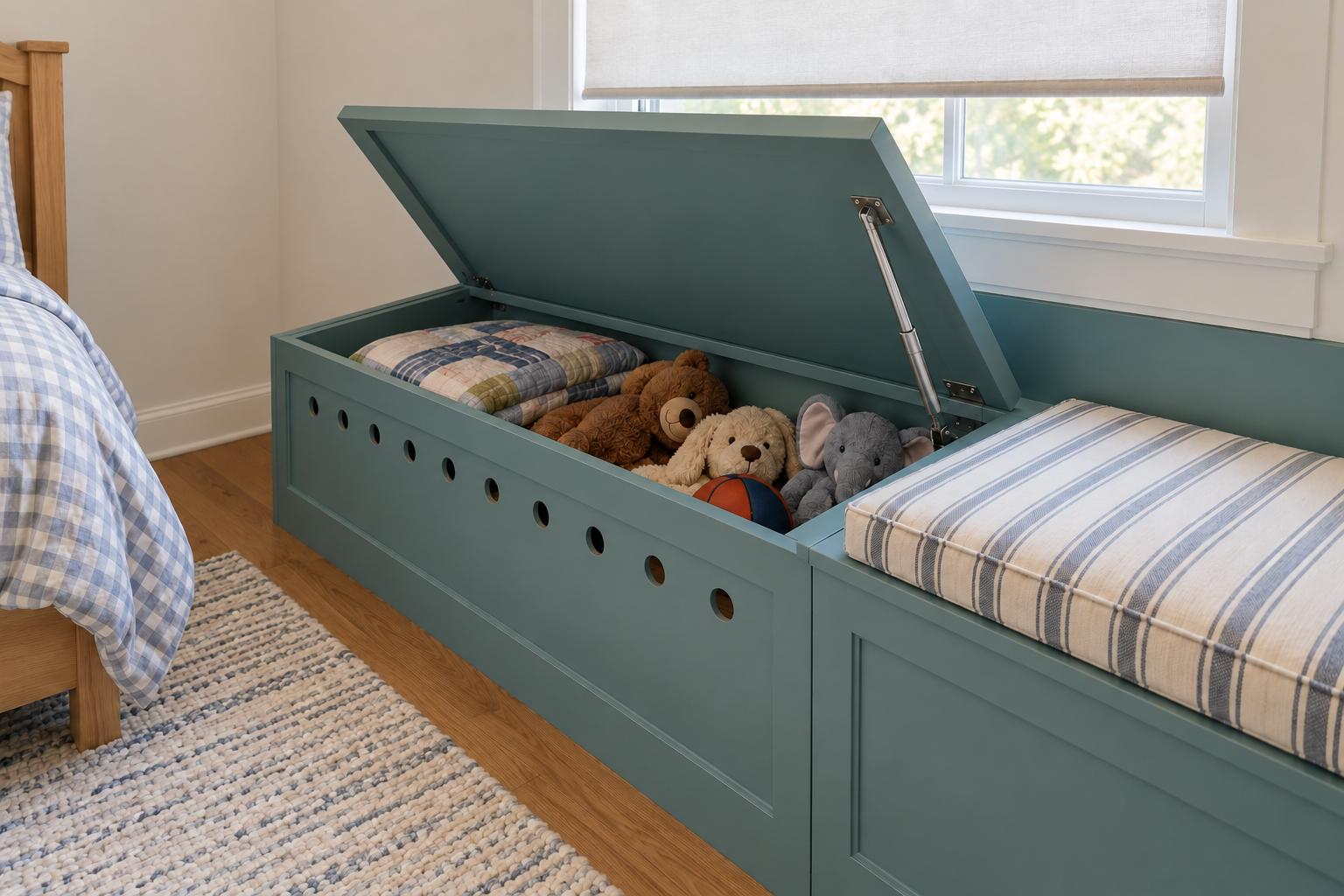
A chest or a window bench with a lifting lid holds the bulky things, and the lid is the part to check. It should stay open in any position by itself, held by a support made for that job, so it can’t fall on a head or a hand. A chest also needs air holes or a gap under the lid in case a child climbs inside.
An old trunk or blanket chest usually has neither. Use it with the lid taken off, or for something other than toys. A bench with drawers or open cubbies avoids the question.
Drain the Bath Toys
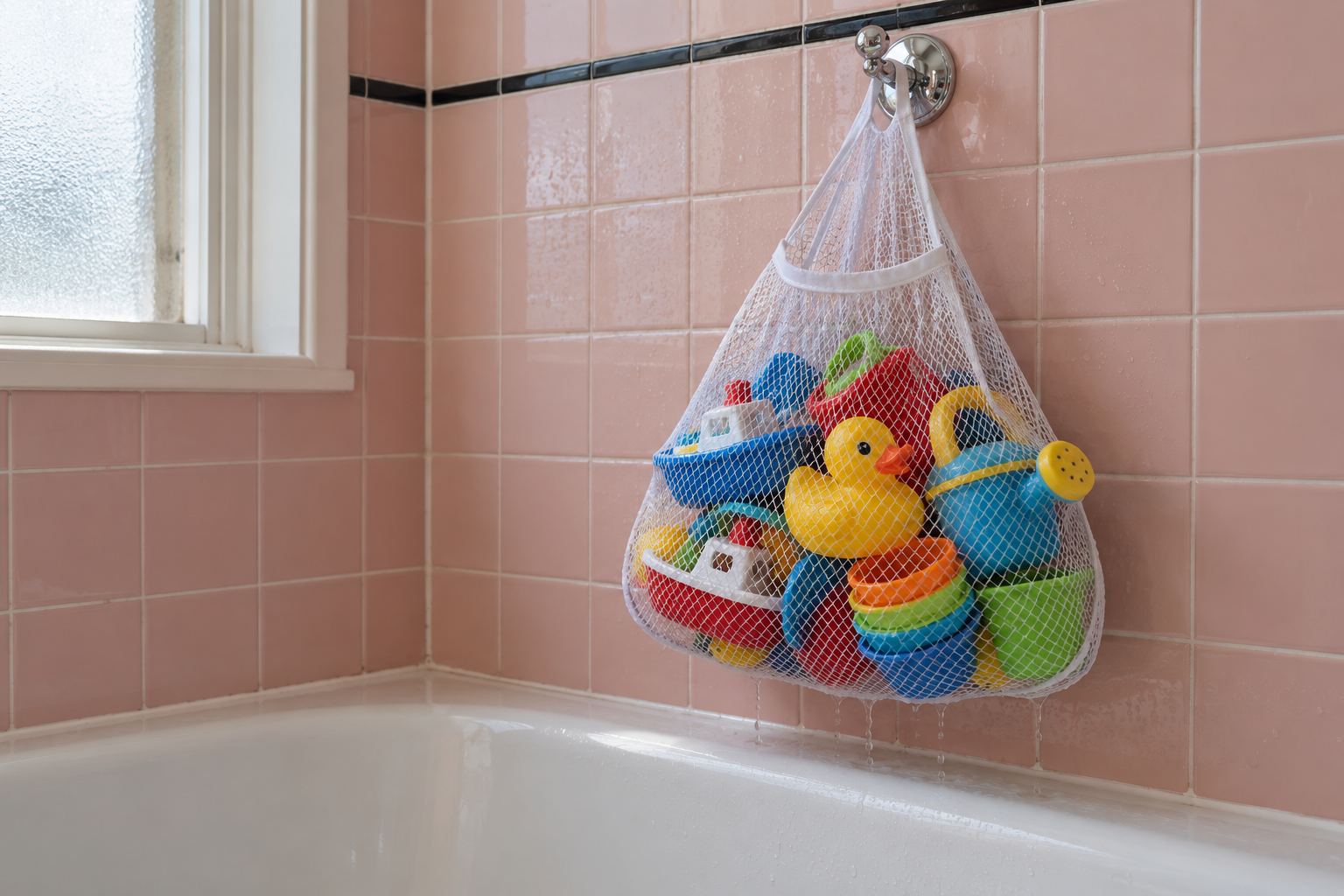
Bath toys left in a heap in the tub stay wet. A mesh bag on a hook above the tub lets the water run out and the air in, and scooping the toys into it takes a moment. Squeeze toys with a hole in the base take in water that doesn’t all come out again. Choose sealed ones, or squeeze them empty and stand them with the hole down.
Rotate From a Closet Shelf
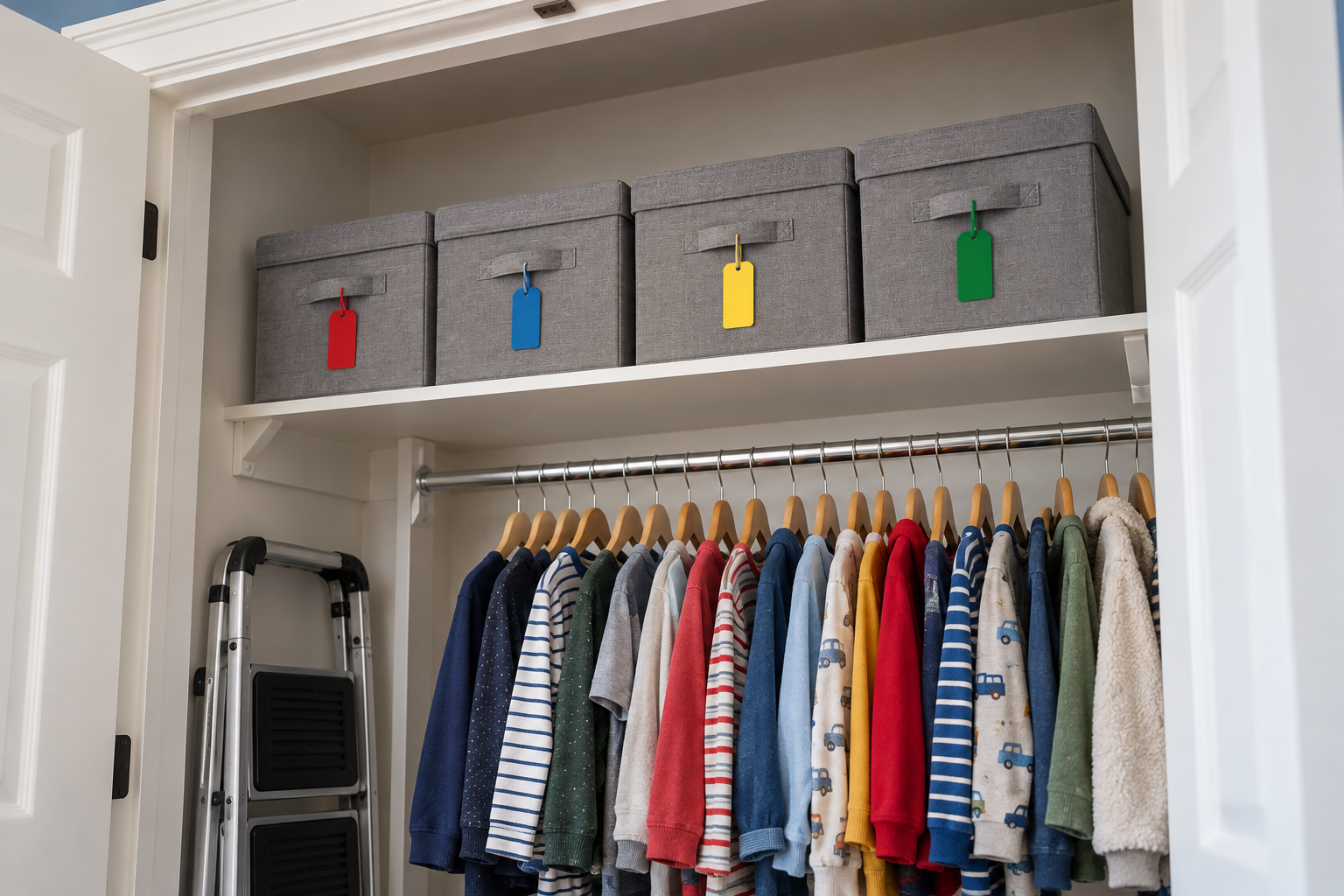
A child with every toy out tends to play with a few of them. Pack about half into lidded boxes on the top shelf of a closet and trade one box every few weeks. Toys that have been away for a month often get more attention on their return than they did before, and the shelves in the bedroom have half as much to hold. Opaque boxes suit this better than clear ones, since what can be seen gets asked for.