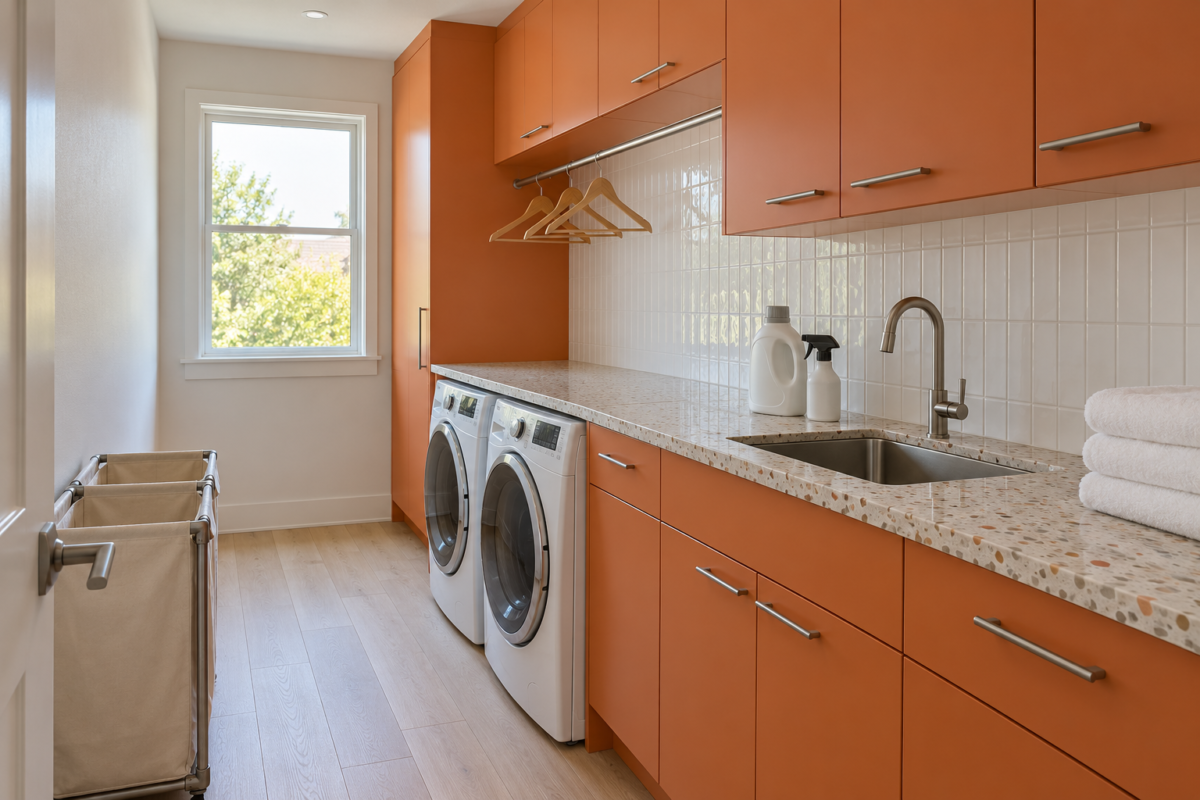
Laundry moves through a house in one direction. It arrives dirty, gets sorted, goes into the washer, moves to the dryer or a rack, gets folded or hung, and leaves in clean piles. A laundry room works when each of those steps has a spot beside the one before it, and the things each step needs are within reach of whoever is doing it.
Most laundry rooms grow the other way. Detergent ends up on a high shelf across the room, the only folding surface is the top of the dryer, and clean clothes wait in the basket they arrived in. The ideas below follow the wash in order and end with the basket that goes back to each bedroom. The last one covers a laundry closet, where all of it has to fit behind a pair of doors.
Sort Before the Laundry Reaches the Machine
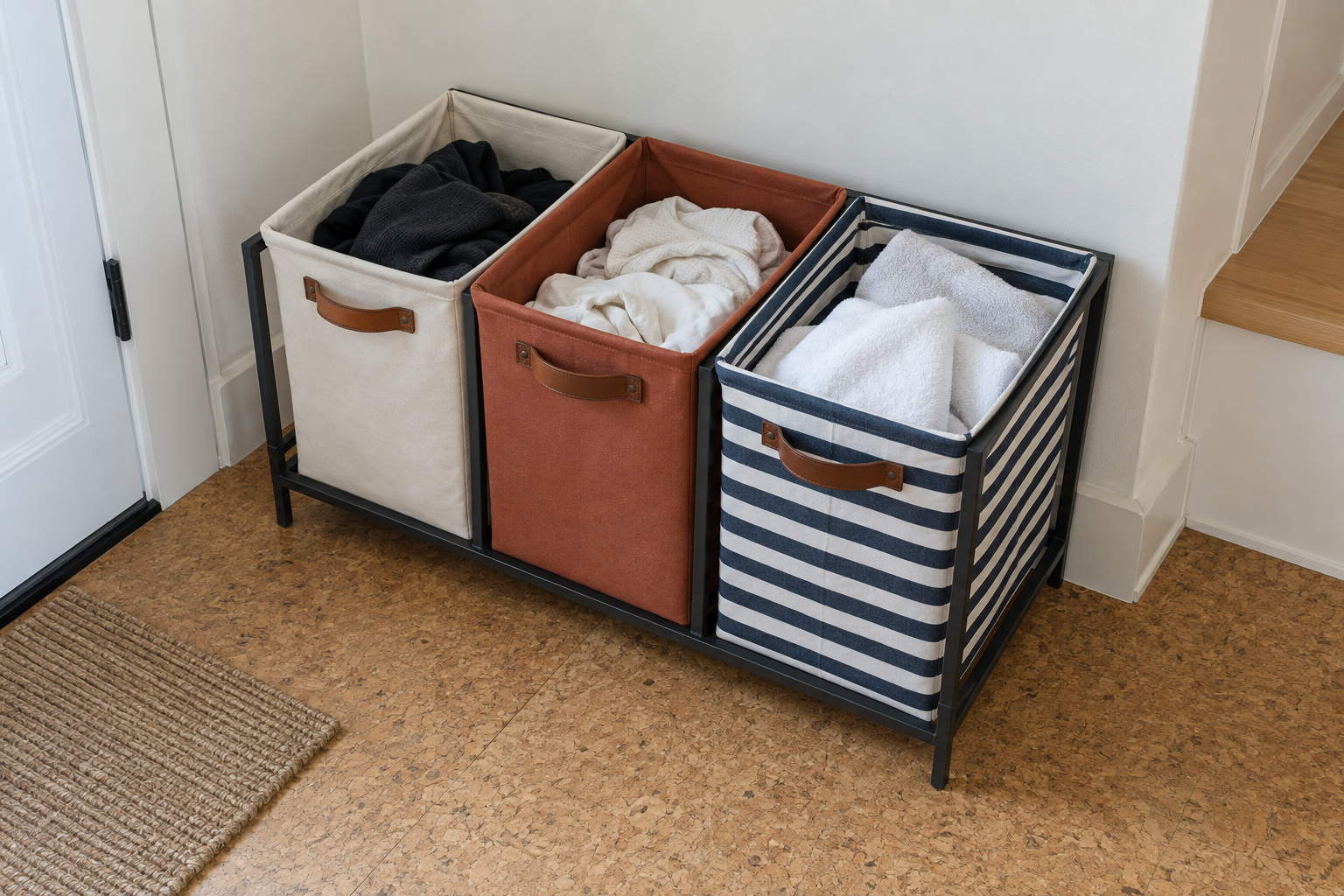
Sorting on the laundry room floor means handling every item twice. A hamper divided into two or three sections, or two or three separate bins, lets clothes get sorted as they come off: darks in one, lights in another, towels and bedding in a third. On wash day, each section is already a load.
If the laundry room is a floor or two away from the bedrooms, put the sorter where clothes come off, in a bedroom or bathroom. If it’s close, keep it beside the washer. Lidless bins with handles beat lidded hampers, since nobody has a free hand to lift a lid while carrying an armful of towels.
Put Detergent Within Reach of the Washer
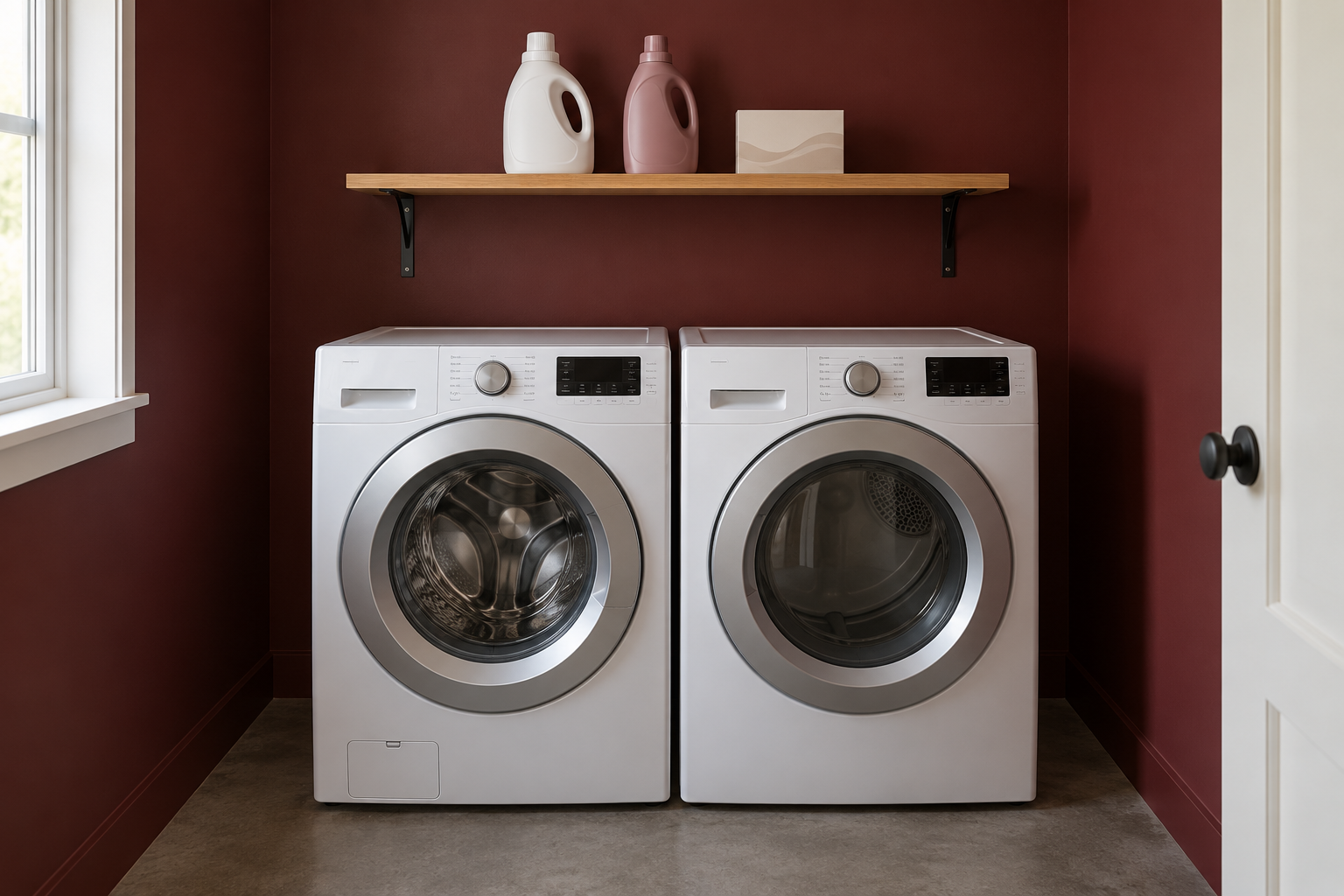
Detergent, softener, and dryer sheets belong within arm’s reach of the machines, on a shelf directly above front loaders or in a wall cabinet beside them. A shelf across the room means walking back and forth with a measuring cap for every load.
Above a top loader, check that the shelf clears the lid when it’s fully open, or put the shelf beside the machine. Keep liquid detergent in its original container with the cap on, so the label and dosing lines stay with it. In a house with young children, detergent pods go on a high shelf in a closed container, since a child can mistake them for sweets.
Set Up a Small Stain Kit
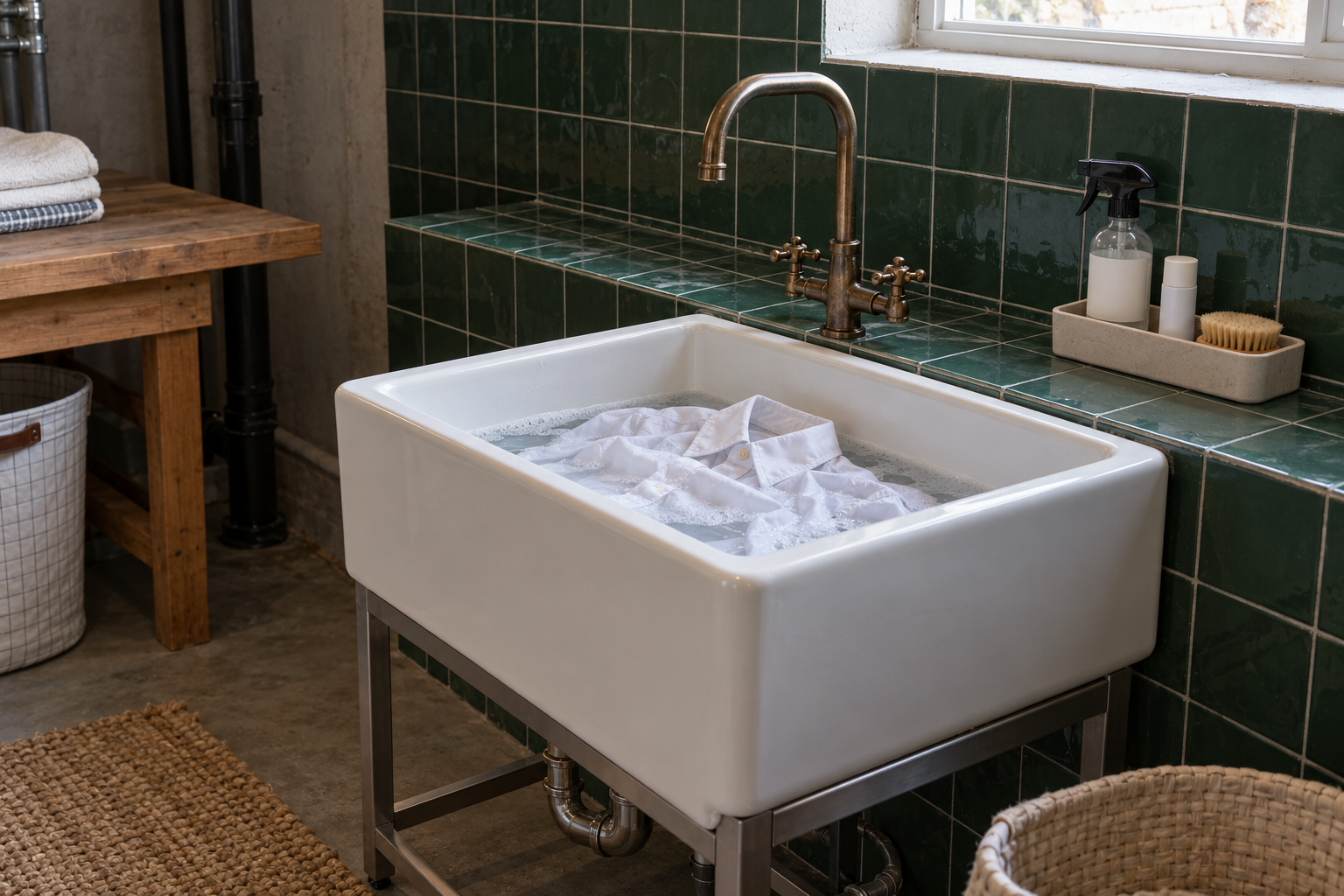
Stains come out more easily when they’re treated before the wash, so the stain remover needs to be where the sorting happens. A small caddy holding a stain spray or stick and a soft brush can sit on a shelf by the hamper or beside the sink. If the room has a utility sink, keep the kit on the ledge behind it, so soaking and scrubbing happen in one spot.
Keep only what gets used. A shelf of half-empty specialty products for grass, wine, and rust takes up room and rarely comes down, and clearing out what nobody reaches for frees the shelf for things that do get used.
Use the Gap Beside the Machines
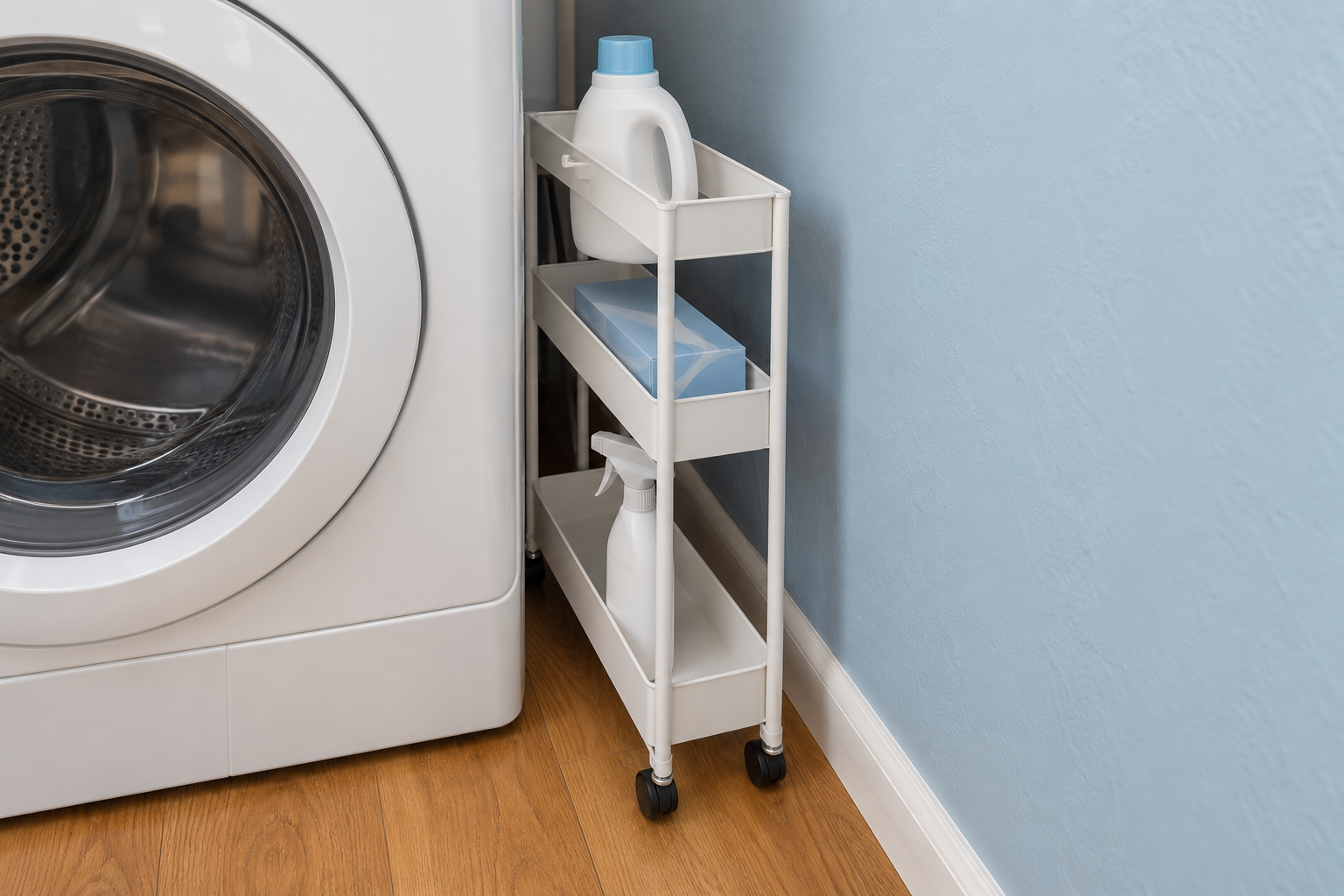
Most laundry rooms have a narrow gap between a machine and the wall, or between the washer and dryer, and it collects dropped socks and lint. A slim rolling cart made for that gap holds detergent, dryer sheets, and stain spray, and pulls out on its wheels when you need something. Measure the gap’s width and depth before buying, and leave room behind the cart for the machine’s hoses and cord.
If the gap is too narrow even for a slim cart, a strip of trim or a gap cover laid across the top stops things falling behind the machines, which is where most lost socks end up.
Keep the Space Behind the Dryer Clear
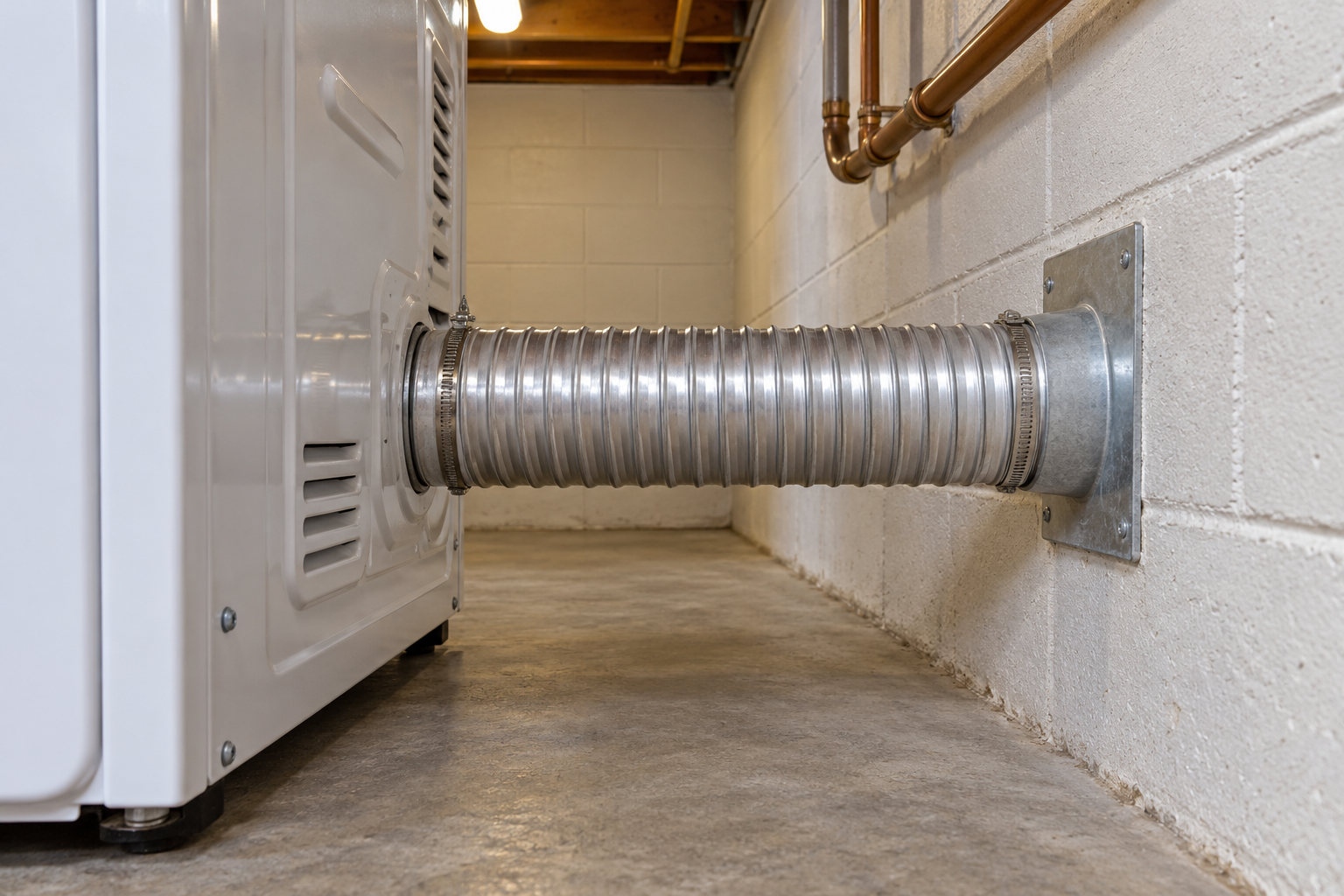
A dryer pushes hot, damp, lint-laden air out through its vent duct. Anything that crushes or blocks the duct makes the dryer run longer and lets lint build up inside it, and lint burns easily, which is why the filter should be cleared after every load. Don’t store baskets, boxes, or bags behind the dryer, and don’t push it back so far that the duct kinks.
A rigid or semi-rigid metal duct holds its shape better than a flexible foil one. If clothes are taking longer to dry than they used to, a blocked or crushed duct is one of the first things to check.
Top Front-Loaders With a Folding Counter
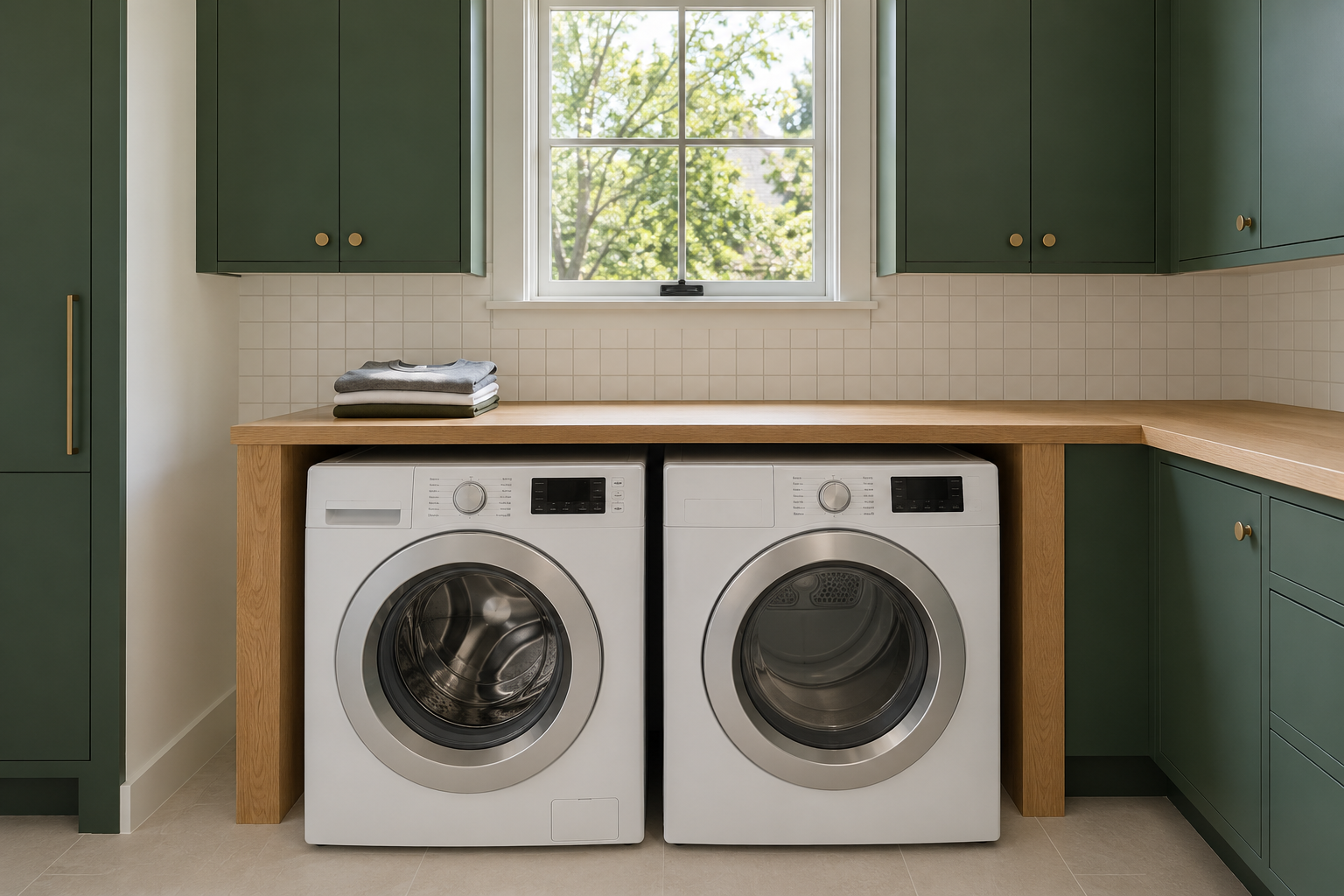
Two front loaders side by side leave a long, flat space above them. A counter spanning the pair, in solid wood, laminate, or stone, turns it into a folding surface at a comfortable standing height, right where the clothes come out. Leave a small gap between the counter and the machine tops, since the washer shakes during the spin, and make the counter removable, or leave room to slide the machines out for repairs.
Keep it clear between loads. Once bottles and baskets live on the counter, folding moves back to the bed. Top loaders can’t take a counter, but a fold-down table mounted on the wall beside them gives the same surface when it’s needed.
Hang Shirts Straight From the Dryer
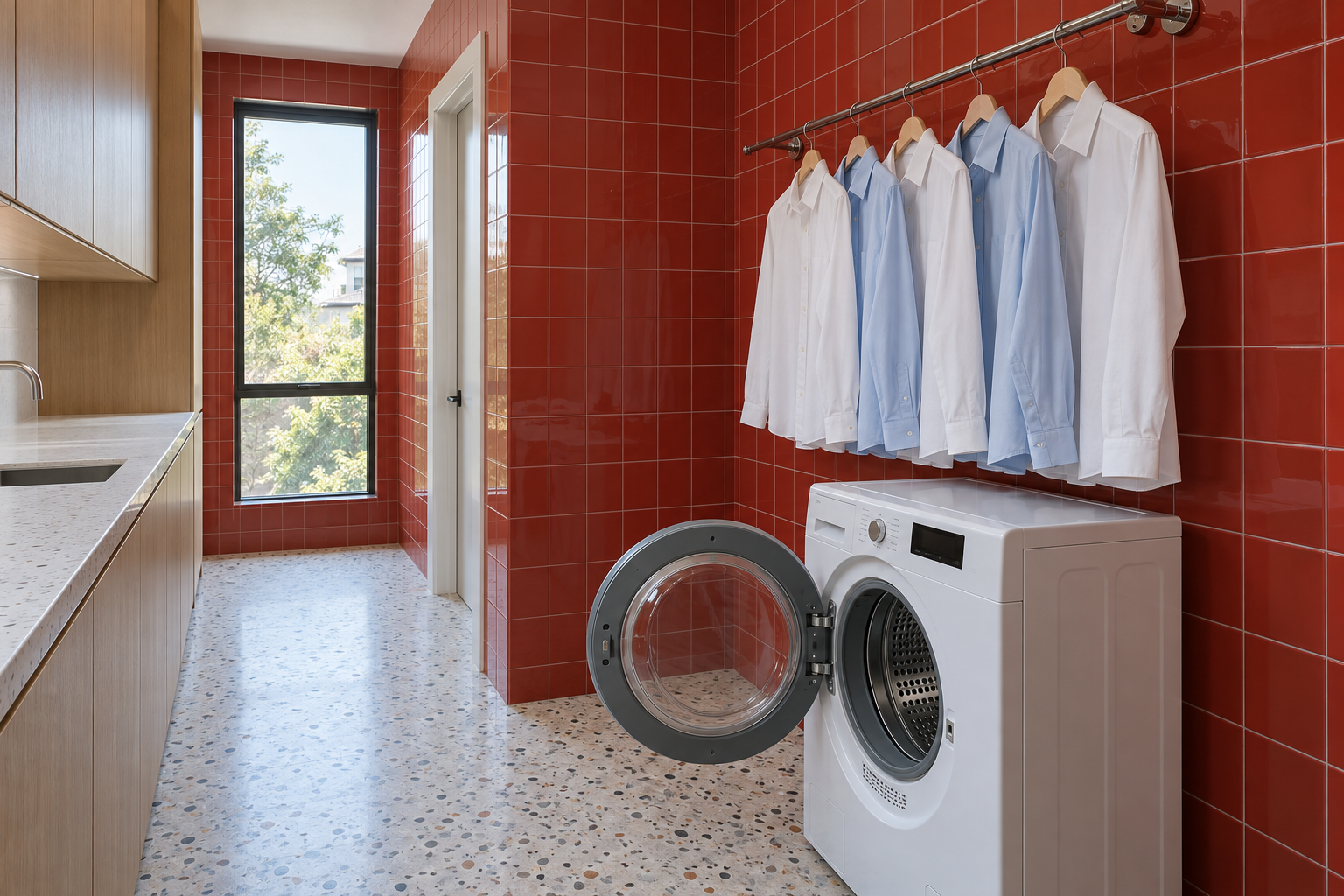
Shirts and dresses wrinkle less when they’re hung while still warm. A rod mounted above the machines or the counter, with spare hangers kept on it, lets that happen right at the dryer instead of on a bed. Mount it high enough that long items clear the counter below, and fix it into studs or with anchors rated for the weight.
The rod doesn’t need to be long. It only holds one load of shirts at a time, since they move to closets once the load is done.
Make Room to Air-Dry
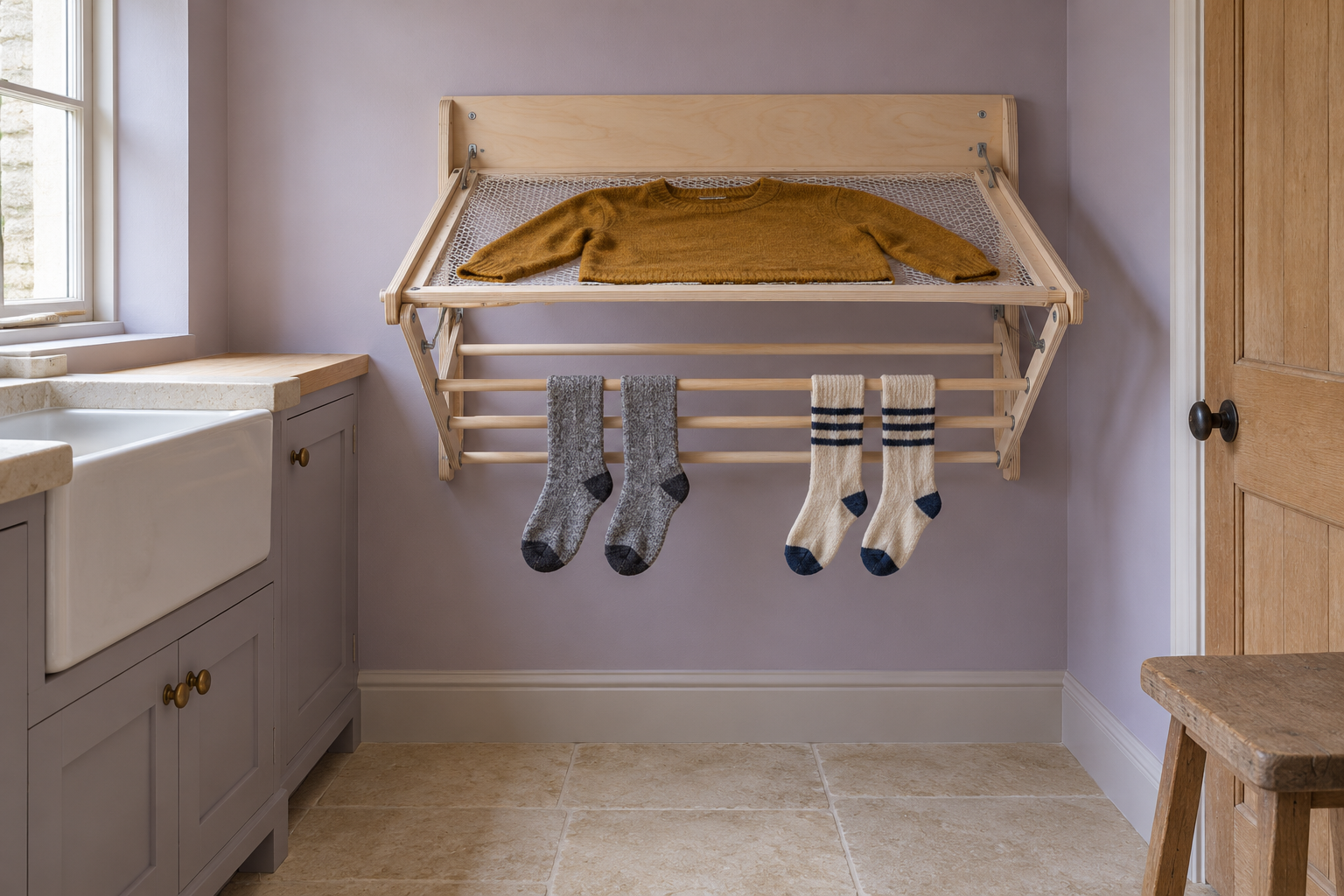
Sweaters, delicates, and anything whose care label says not to tumble dry need somewhere to hang or lie flat. A fold-down drying rack on the wall takes almost no room when it’s closed, and a ceiling airer on pulleys uses height that’s otherwise empty. Put either one where the air moves, near a window or an exhaust fan, since clothes dry faster in moving air.
Sweaters stretch if they’re hung while wet, so give them a flat mesh rack, either on the fold-down rack or one sized to sit over a laundry sink.
Mount the Ironing Board on a Wall or Door
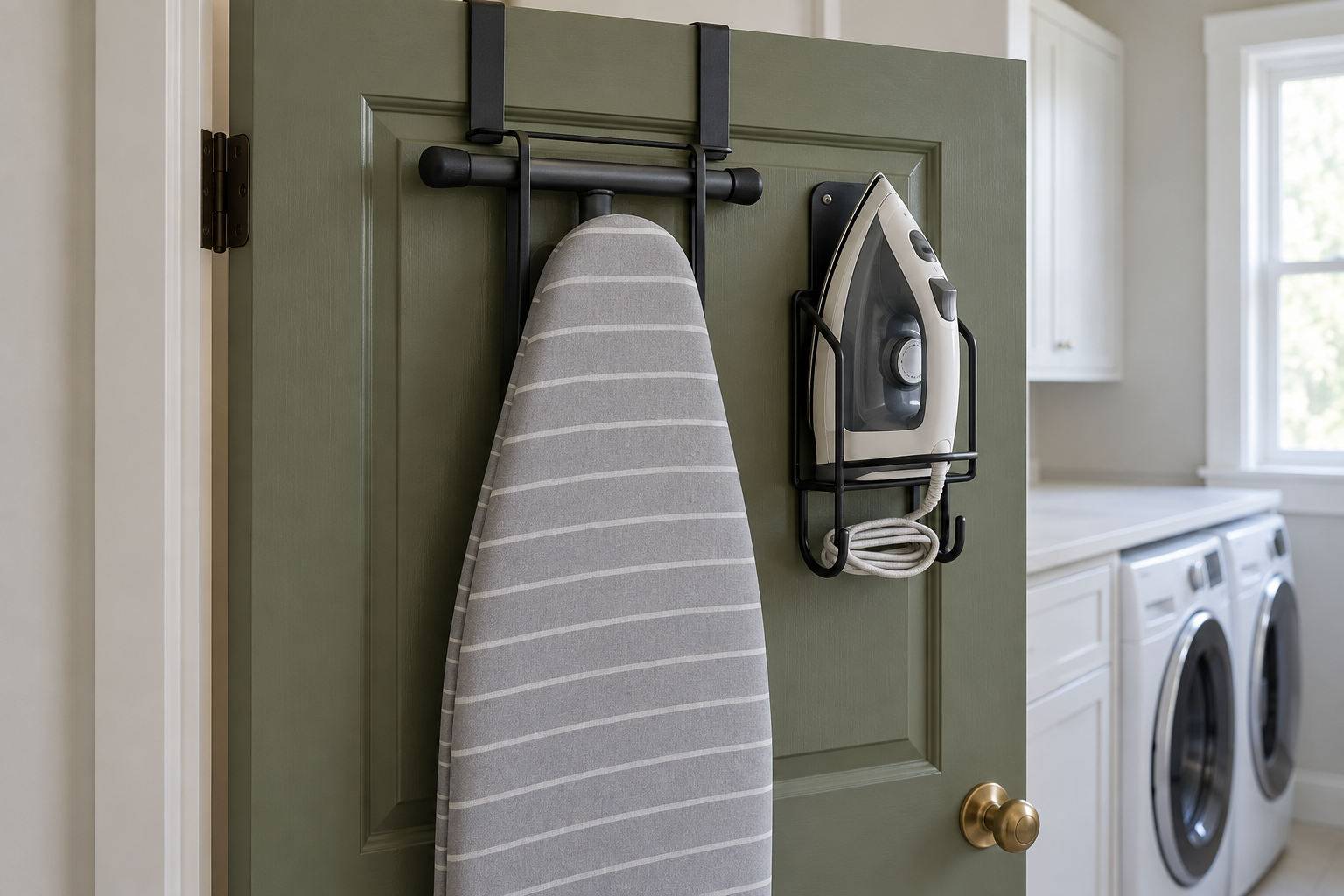
An ironing board leaning against the wall slides over and gets in the way of everything else. Hang it on hooks on the wall or on a rack on the back of the laundry room door, with a holder for the iron beside it. Choose an iron holder made to take a hot iron, so it can go back up before it’s cooled. If the board goes on the door, check that the door still opens all the way.
If ironing happens only now and then, a tabletop board that sits on the folding counter takes far less space than a full-size one.
Give Each Person a Basket for Clean Clothes
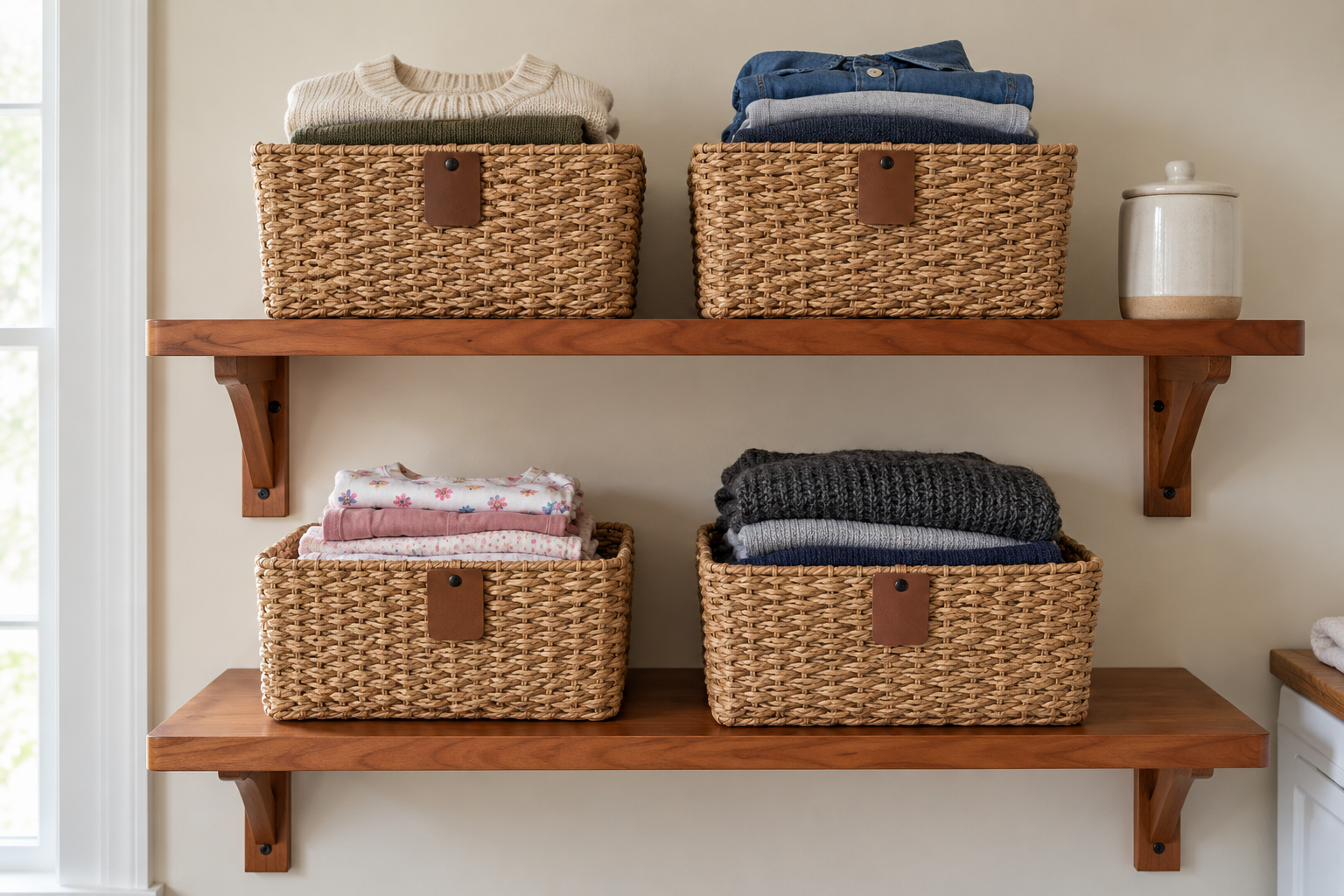
Folded laundry piling up on the dryer, waiting to be sorted by owner, is the step where most laundry rooms stall. One basket per person, on a shelf or on the floor under the counter, lets clean clothes be sorted as they’re folded. Each person carries their own basket to their room and brings it back empty.
Keep a small jar on the same shelf for whatever turns up in pockets and the washer drum: coins, hair ties, a single sock waiting for its pair. That gives stray things one place to wait, and the counter stays clear for folding.
Stack the Machines in a Laundry Closet
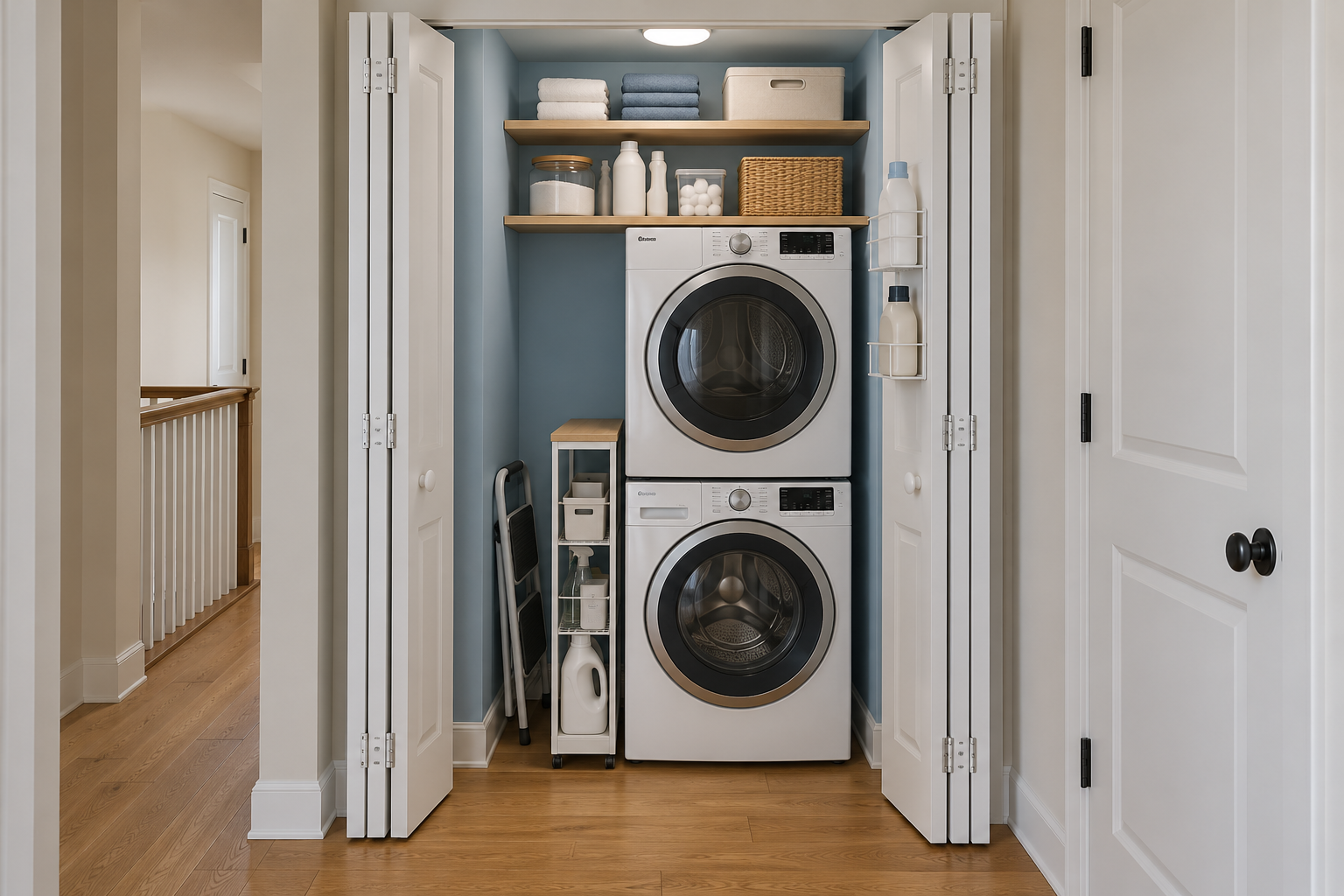
In a closet, stacking is often the only way to fit both machines and still have storage. Only stack a front-loading washer and dryer that are made to stack, using the manufacturer’s stacking kit. Stacking frees the width beside them for a narrow cabinet or a pull-out shelf, and the wall above the dryer for shelves up to the ceiling. Everyday supplies go on the lowest shelf and rarely used things at the top, with a folding step stool kept in the closet.
The doors can hold storage too. Racks mounted on the inside of the doors take detergent and stain spray, as long as the doors still close over them. In a narrow hallway, bifold doors need less room to open than a pair of hinged ones. The same thinking about which storage belongs where applies here as much as in any other room.