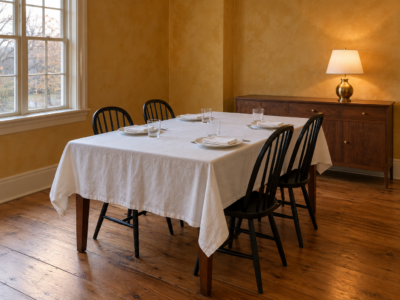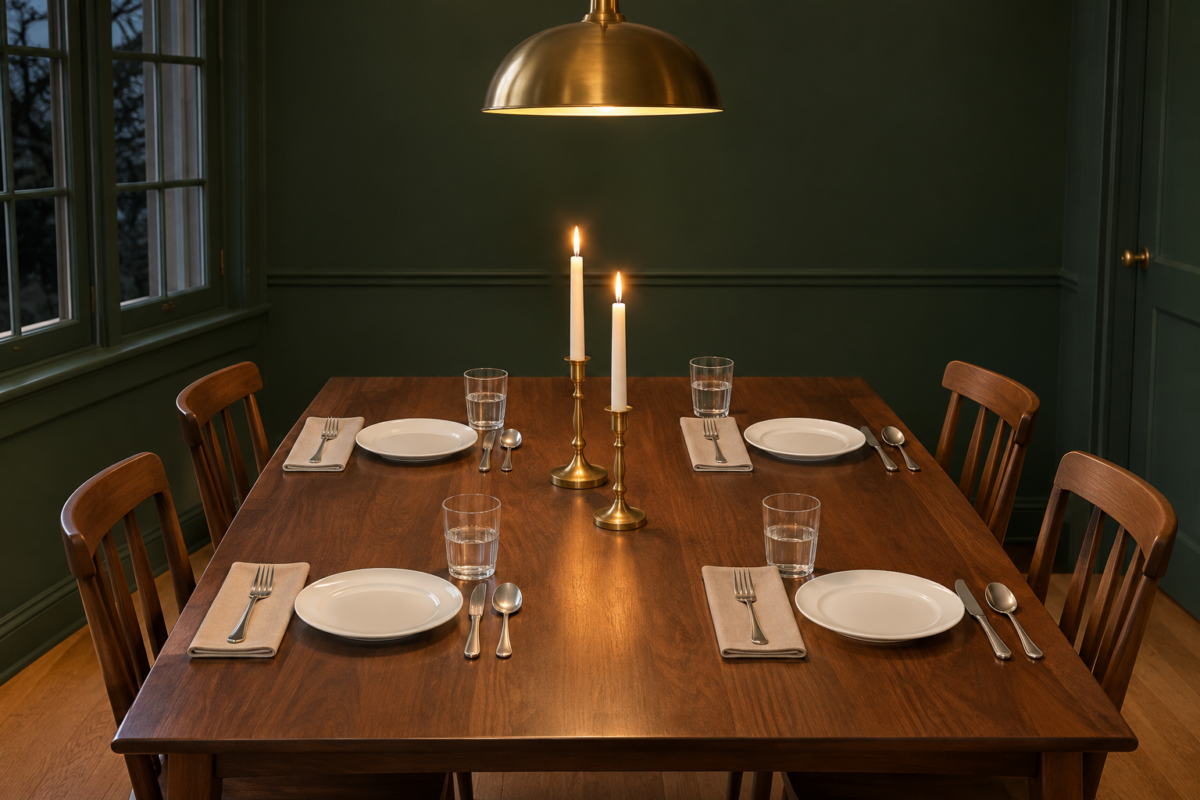
Two rules decide where almost everything on a table goes. Forks go to the left of the plate and knives and spoons to the right. And the utensils are laid in the order they will be used, so the first one needed is on the outside and each course works inward toward the plate.
A weeknight dinner needs a plate, a fork, a knife, and a glass. A longer meal adds pieces, and they follow the same two rules, apart from the bread plate and the dessert utensils, which have places of their own above the setting.
A Basic Setting for Every Day
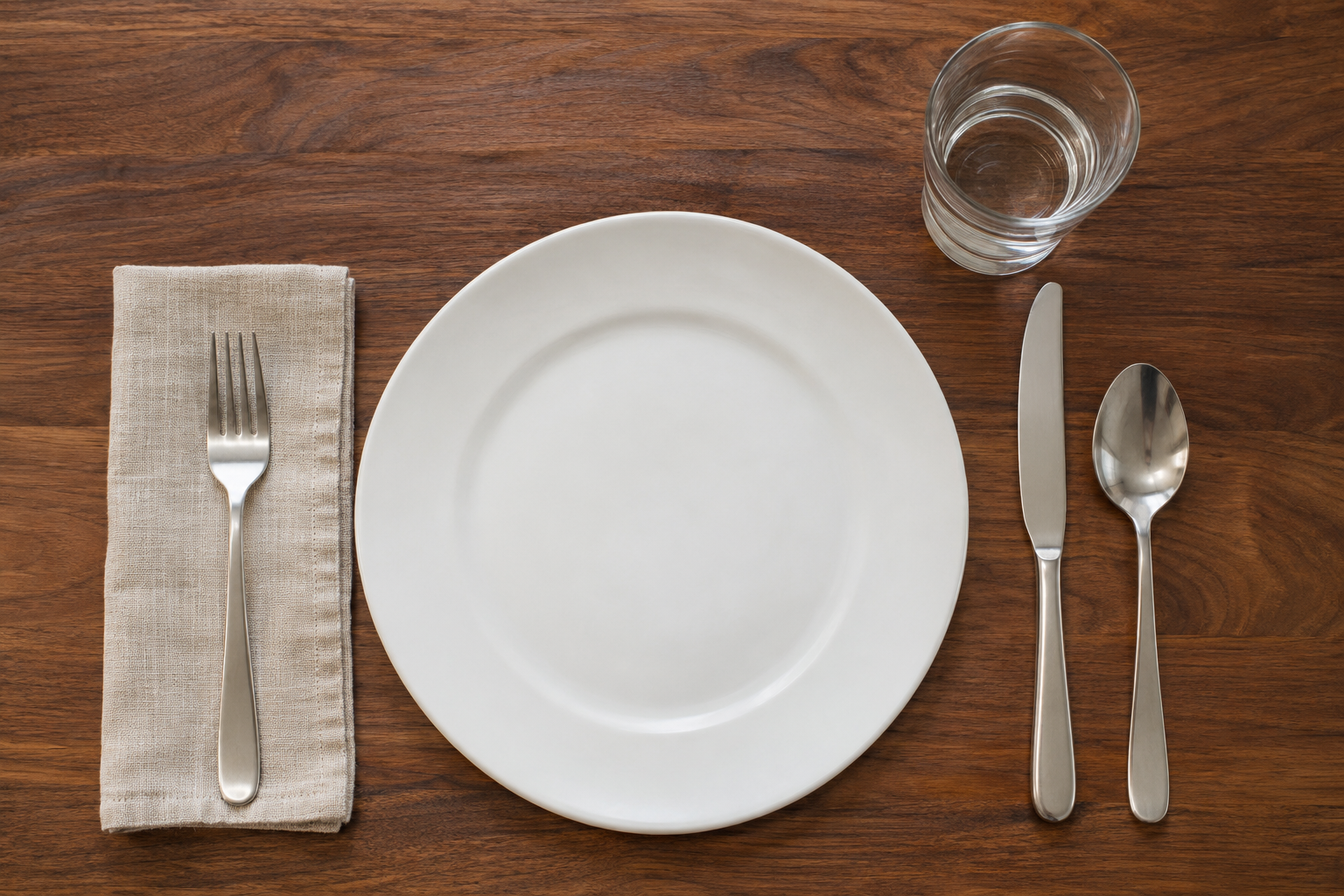
Put the plate in the middle of the place, the fork to its left, and the knife to its right with the blade turned toward the plate. A spoon, if the meal needs one, goes to the right of the knife. The napkin goes to the left of the fork, or under it, or folded on the plate, and the water glass stands above the tip of the knife.
Bread and butter belong on the left of every setting and drinks on the right, so each guest’s are easy to tell apart from a neighbor’s. Leave about 24 inches of table for each place at an everyday table, which gives each setting room without elbows meeting.
Three Courses, Used From the Outside In
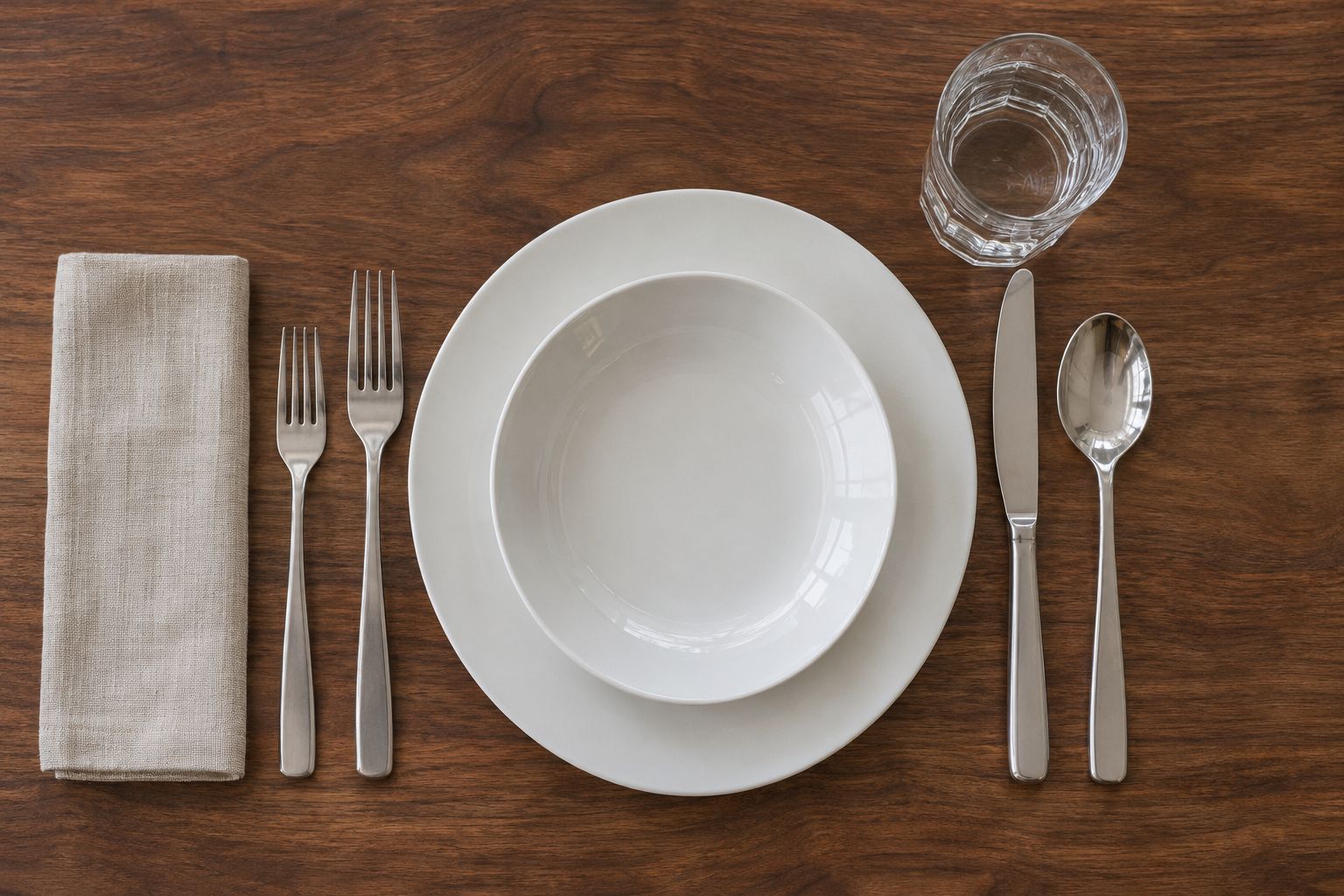
For a meal of soup, salad, and a main course, each piece goes in the order it will be used, starting from the outside. A soup spoon goes on the far right, outside the knife. A salad served before the main course gets a small fork to the left of the dinner fork, and a salad served after it gets the small fork to the right of the dinner fork, next to the plate.
The guest then picks up the outermost piece for each course without working out which is which. A salad served with the main course can go on its own small plate to the left of the forks, which keeps it apart from gravy or a sauce on the dinner plate.
Glasses Above the Knife
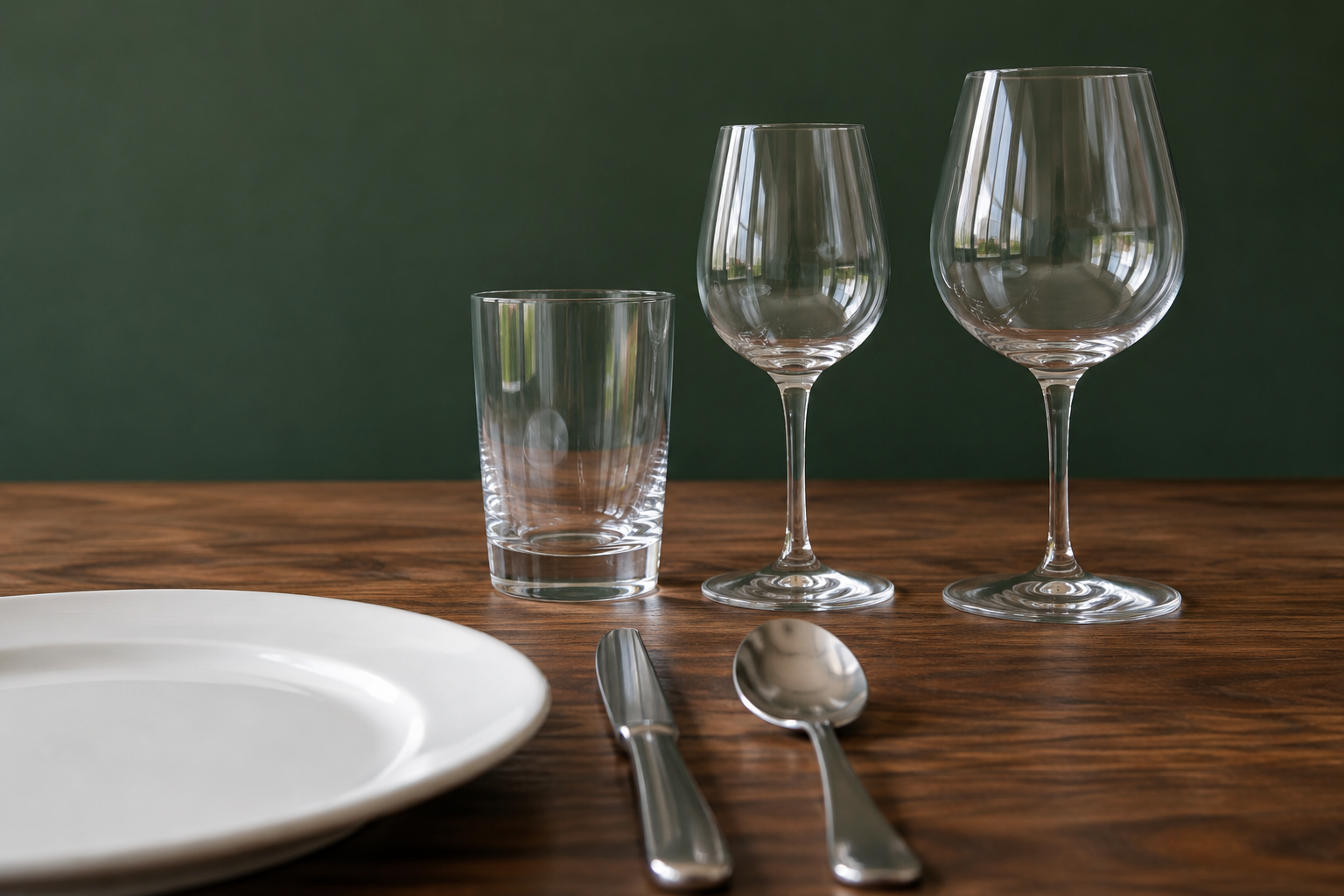
The water glass goes directly above the knife, and wine glasses stand just to its right in the order they will be used, the glass for the first wine nearest the water. A formal table can carry up to five glasses, and each is cleared at the end of the course it served.
At home, coffee usually comes after the meal. The cups are brought to the table then and set above and to the right of the knife and spoons, where the glasses were.
The Bread Plate and the Dessert Spoon
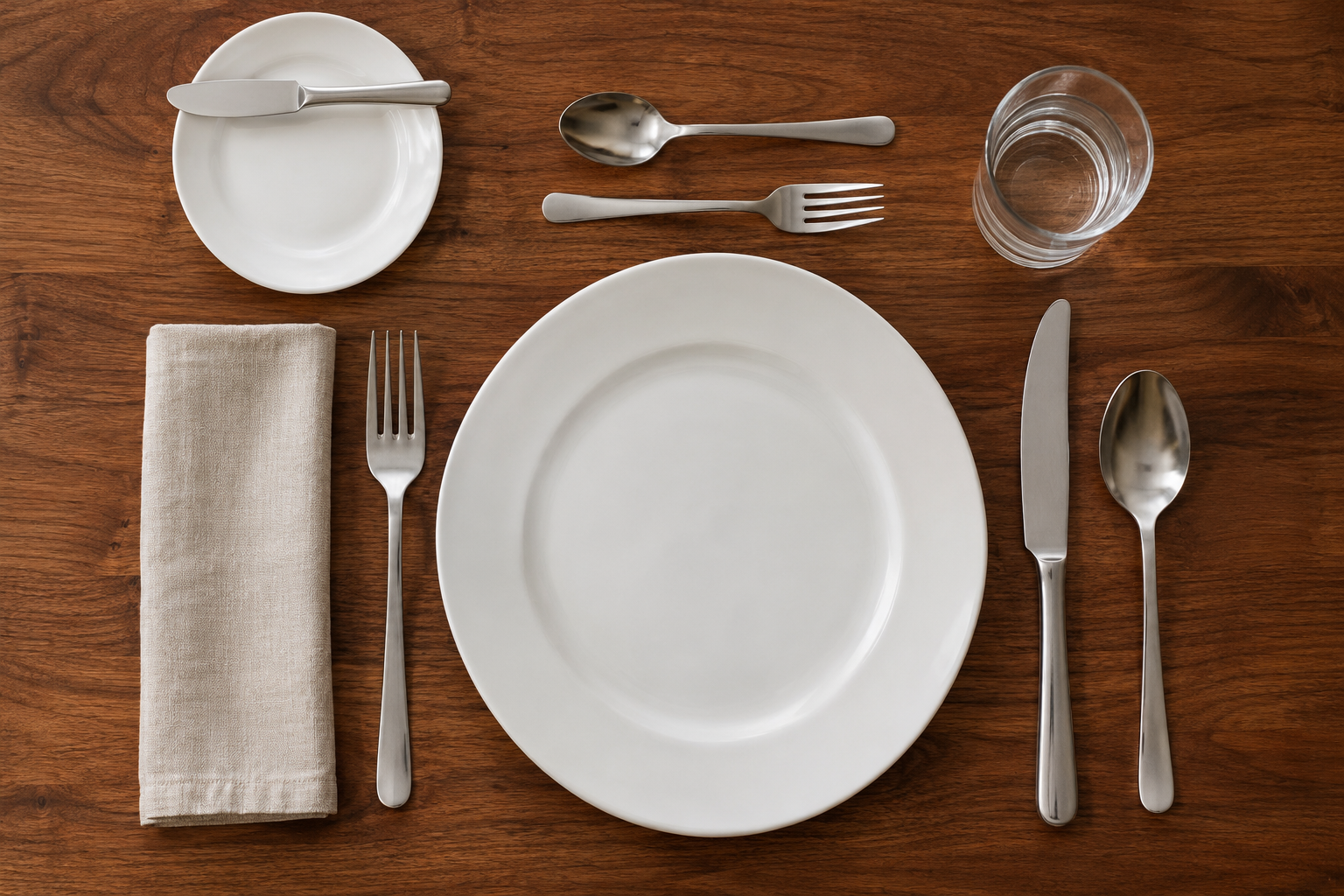
A small bread plate goes above the forks, at the upper left of the setting, with a butter knife laid across its top edge, handle to the right and blade down. At a crowded table, each guest’s bread plate is the one on their left.
Dessert utensils can be laid sideways above the plate, the spoon on top with its handle to the right and the fork below with its handle to the left. That way they wait for the last course without crowding the sides of the setting. They can also be brought in with dessert.
A Formal Setting With a Charger
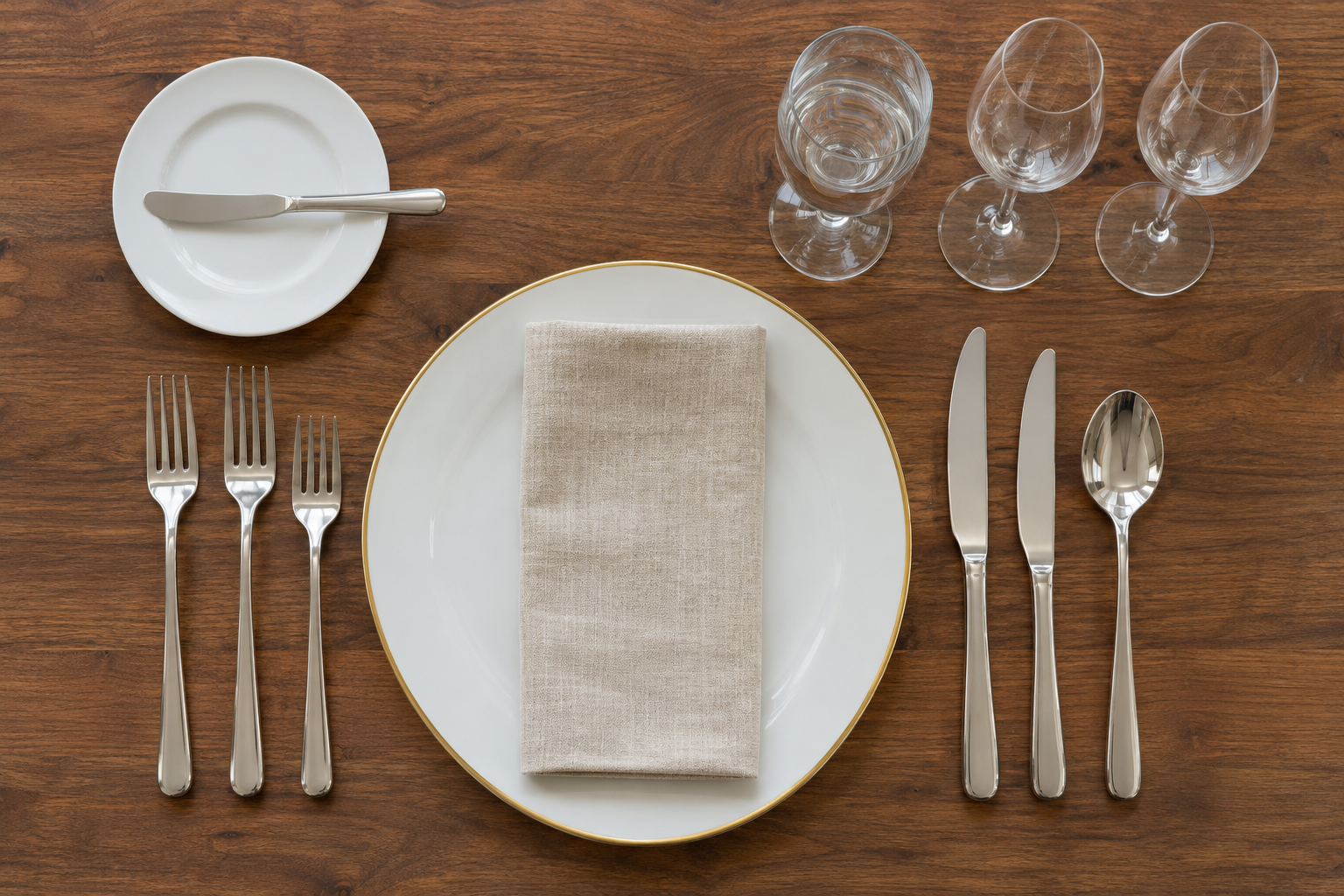
A formal dinner starts with a charger, a large service plate that stays under the first courses and is taken away when the main course arrives. The napkin goes on the charger or to the left of the forks.
No more than three of any utensil go on the table at once, so a meal with more courses has pieces brought in with them, and dessert utensils arrive on the dessert plate. The one fork placed on the right is an oyster fork, set beyond the spoons when oysters are served. Everything else follows the same two rules as the weeknight table.