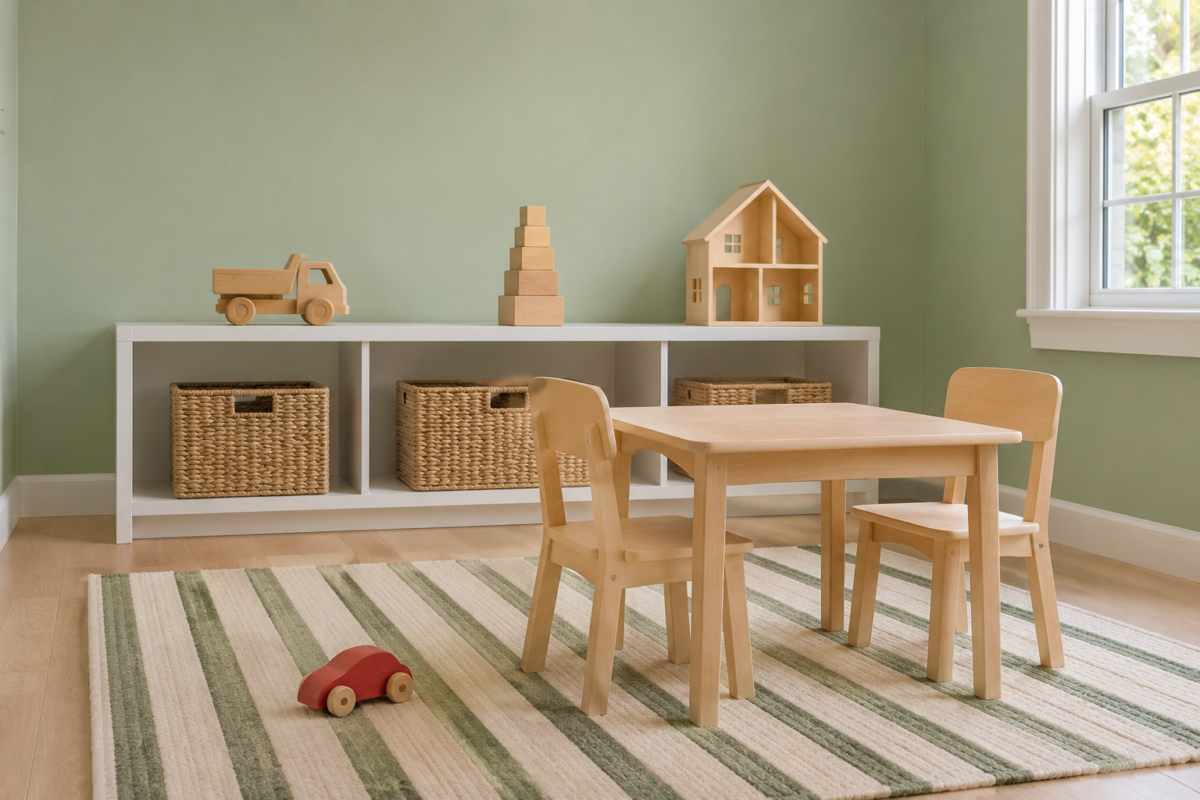
From two feet off the floor, a playroom looks different. The bottom shelf is the one that matters, the lower half of the wall is the half that gets touched, and the floor is where most of the playing happens. A shelf at adult eye level is out of reach and mostly out of sight.
Planning from that height decides where things go and who puts them away. Toys a child can reach are toys a child can return, a wall that takes a wet cloth can take a crayon, and anything tall enough to climb has to be fixed to the wall before it is filled.
Open Shelves a Child Can Reach
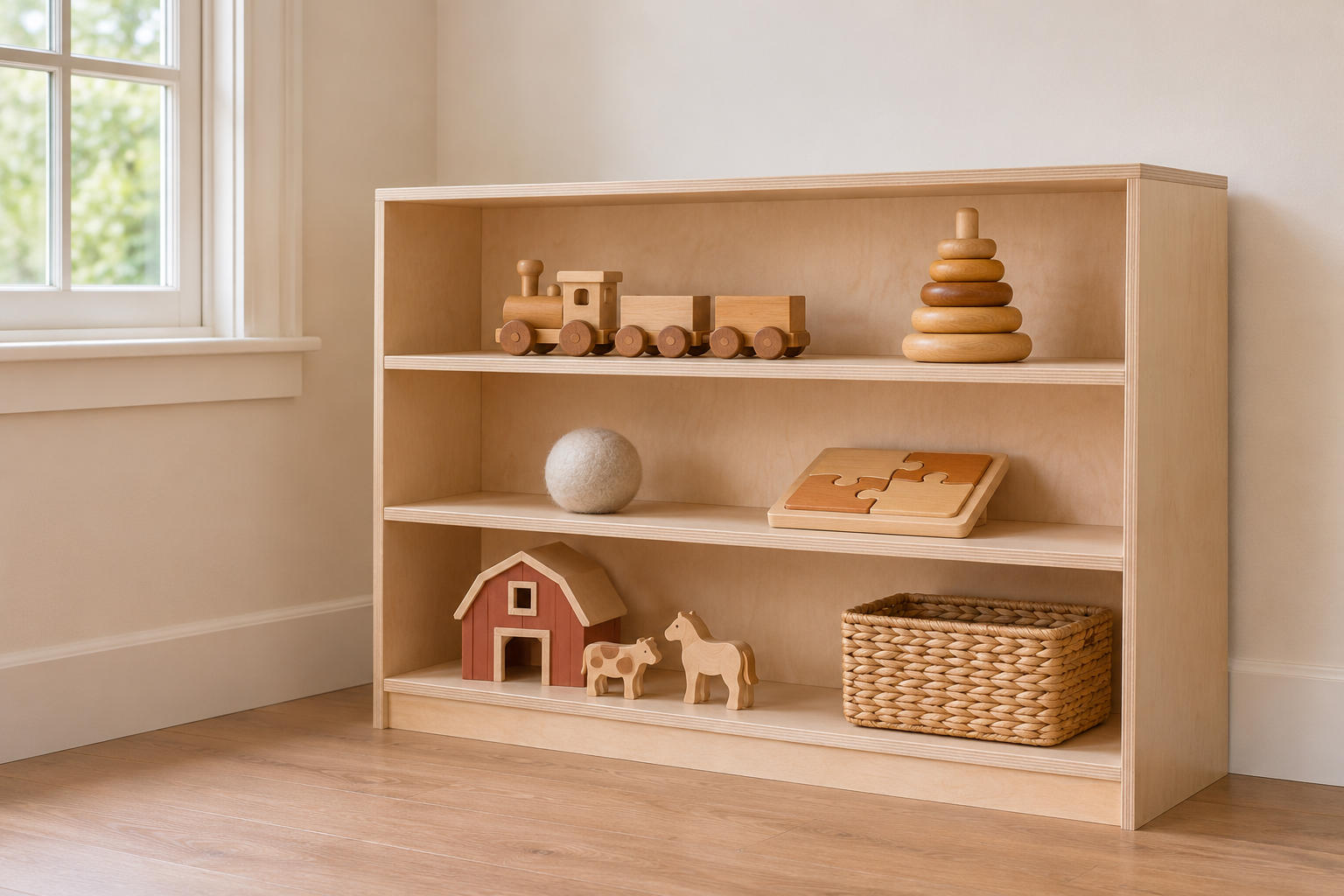
A low open shelf, with its top no higher than a small child’s shoulder, lets a child see everything on it and take it down without asking. Two or three things on each shelf, with space around them, make it clear where each one goes back. A shelf packed edge to edge tends to get emptied onto the floor by a child looking for the one thing at the back.
Keep most toys in a cupboard and swap a few onto the shelf every week or two. A low shelf is harder to pull over than a tall one, but any unit a child could climb should still be anchored to the wall with the strap or bracket it came with.
A Darker Color on the Lower Half of the Wall
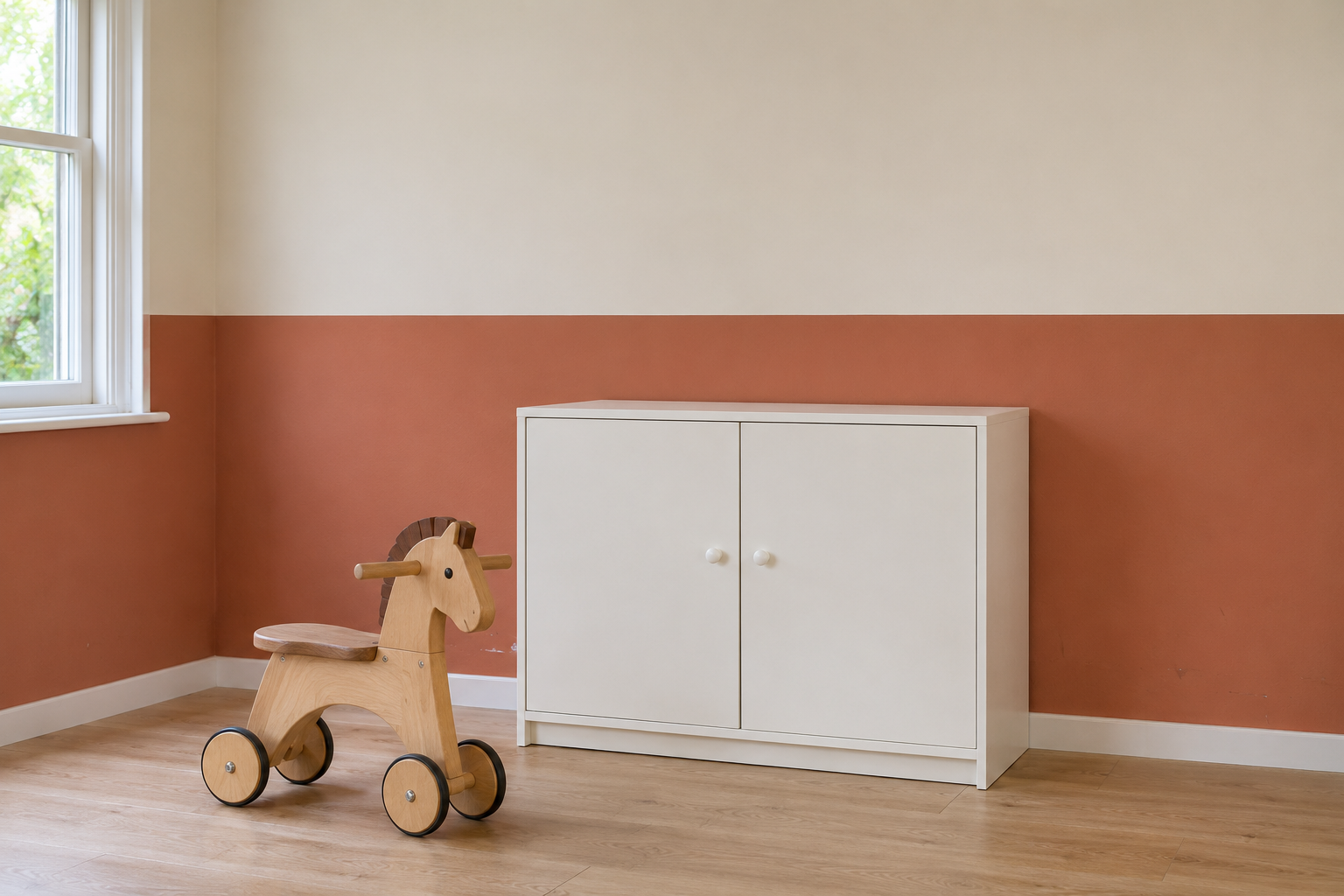
Hands, toy cars, and the occasional scooter all meet the wall in its lower third. Painting that part a darker color, terracotta here with cream above, hides the marks that build up between repaints, and the line gives the room a horizon at a child’s level.
Use a scrubbable eggshell or satin on the lower color, since a flat finish polishes and stains where it is wiped. A crisp painted line with no trim is the simplest to repaint. Set it below the window sills or level with them, as here, so it doesn’t cut across a frame.
A Chalkboard Panel at Drawing Height
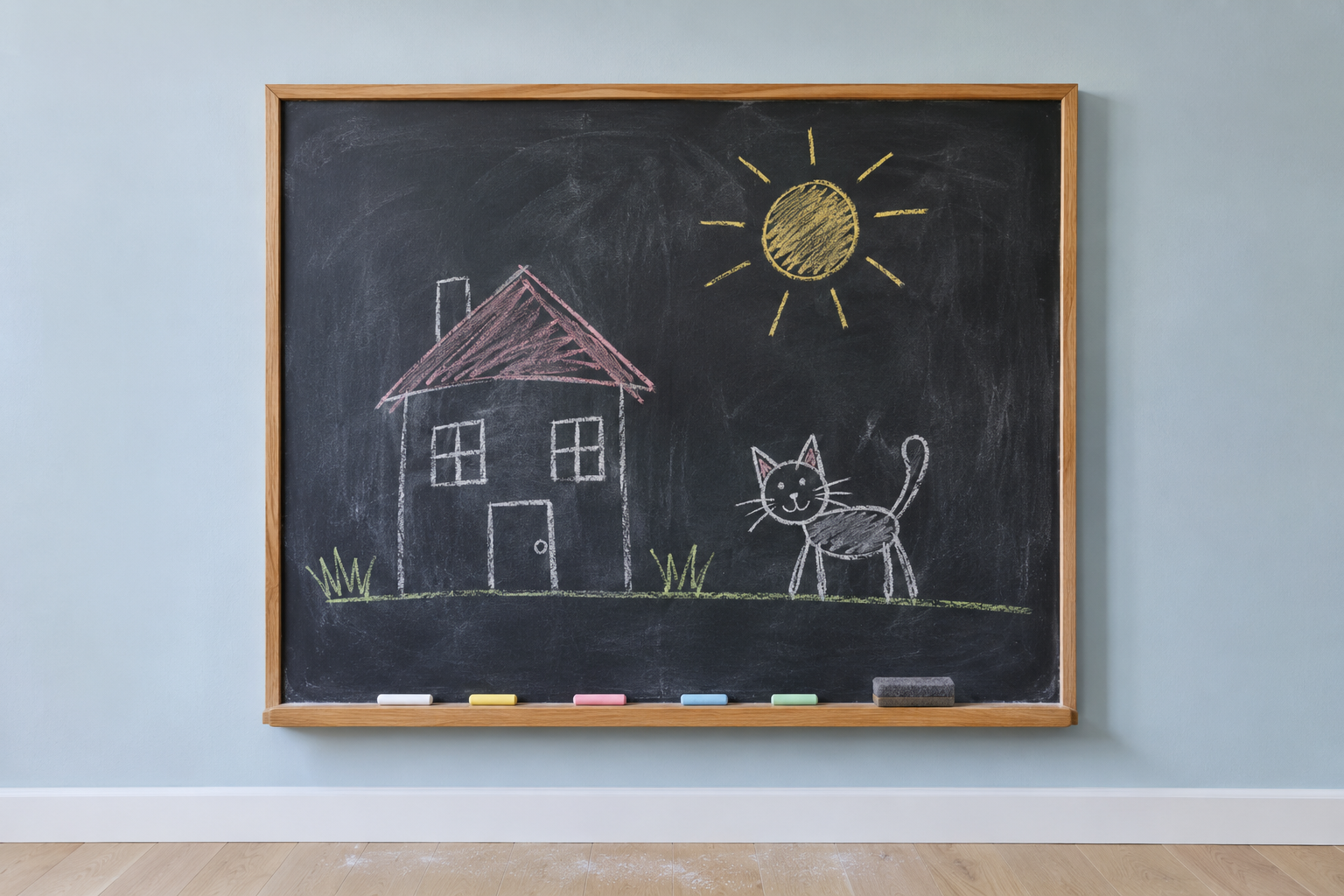
A chalkboard hung for adults sits at adult height. For a playroom, start it close to the floor and stop a little above the child’s head, so a toddler sitting and an older child standing can both reach it. A panel in a thin wood frame keeps the chalk dust off the wall around it and can be lifted down and repainted when the surface wears.
A narrow ledge along the bottom holds chalk and an eraser and catches some of the dust. Even so, chalk dust settles on the floor below, so the panel suits a hard floor better than a carpet.
Book Ledges That Show the Covers
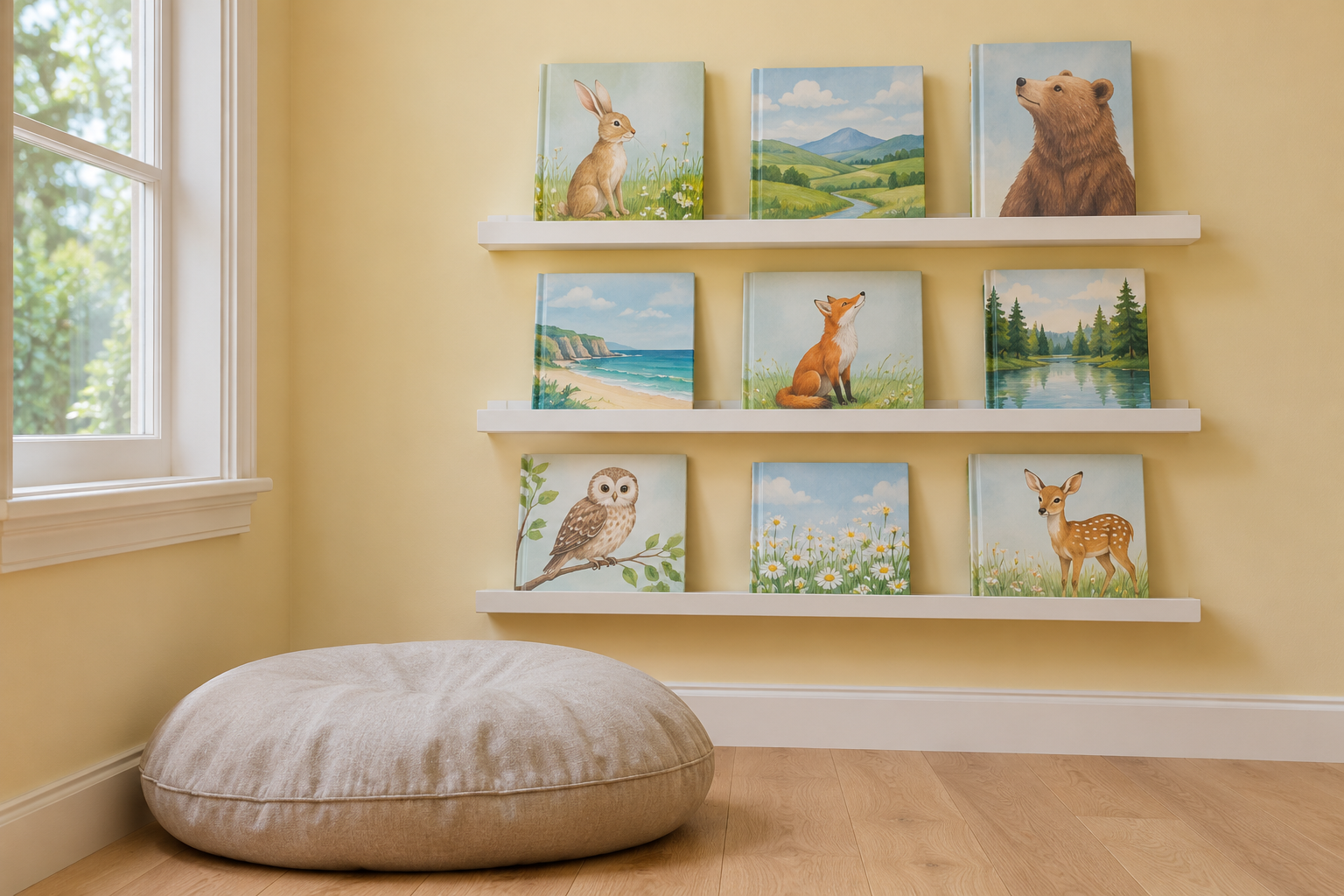
Young children choose books by the picture on the front, which a spine on a bookshelf hides. Narrow picture ledges, the lowest a foot or so above the floor, stand books face out where a child can see them all at once, and a floor cushion below turns the wall into a reading corner.
Ledges hold fewer books than a shelf, so they work as a rotating display: eight or ten out at a time, the rest on a shelf or in a basket. The books on the ledges tend to be the ones that get read.
A Craft Table on a Floor That Wipes Clean
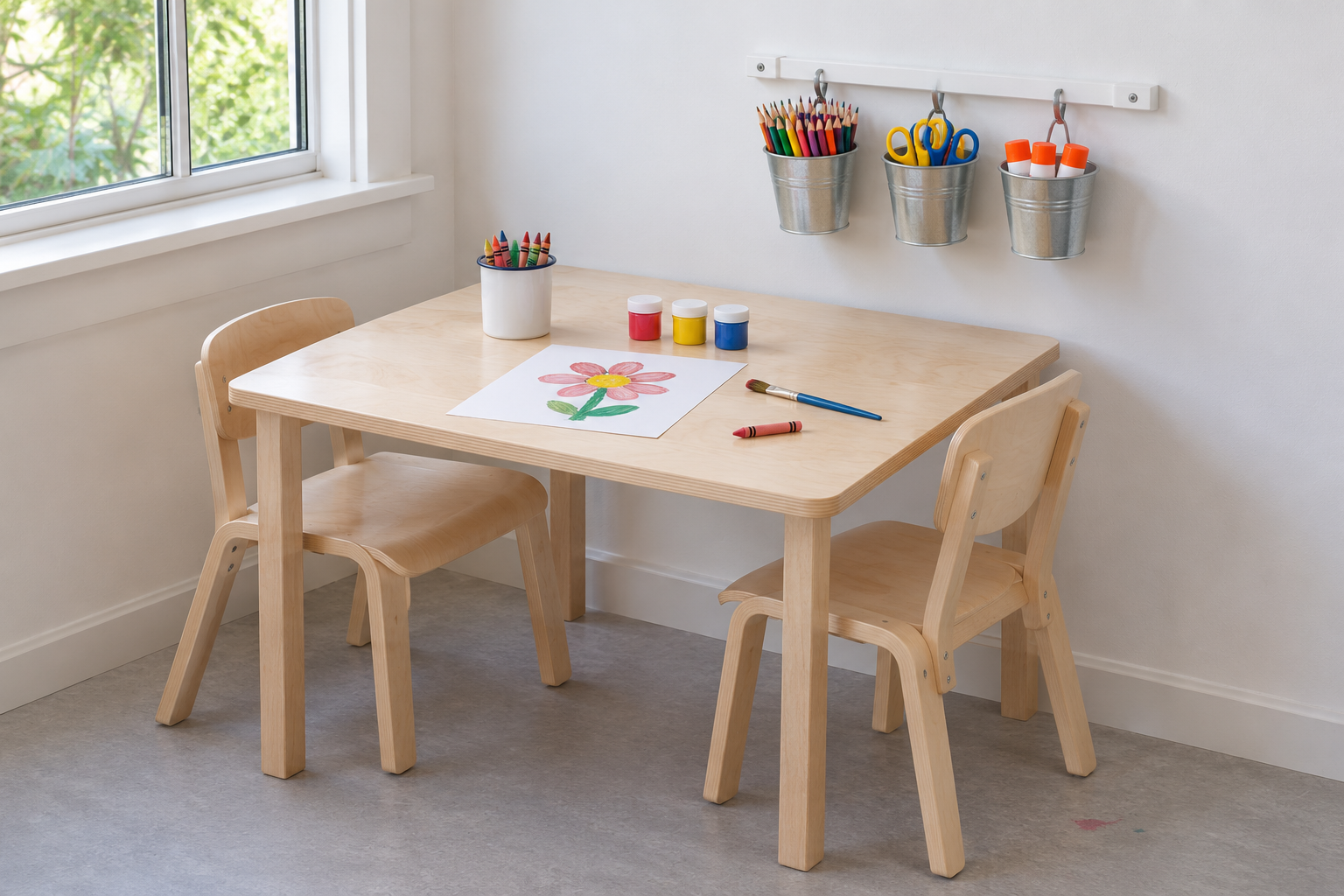
Paint, glue, and play dough end up on the floor. Giving the craft table its own floor, a sheet of vinyl laid across that part of the room or a large wipeable mat, contains the mess to a few square feet that can be mopped. A table close to a window has good light for drawing, and one close to the bathroom or the kitchen is a short walk from the sink.
Supplies in pots on a wall rail beside the table stay in reach without taking up the tabletop, and a rail is easier to sort than a drawer. Keep scissors and anything sharp in the pots a parent can see.
A Climbing Corner Over a Thick Mat
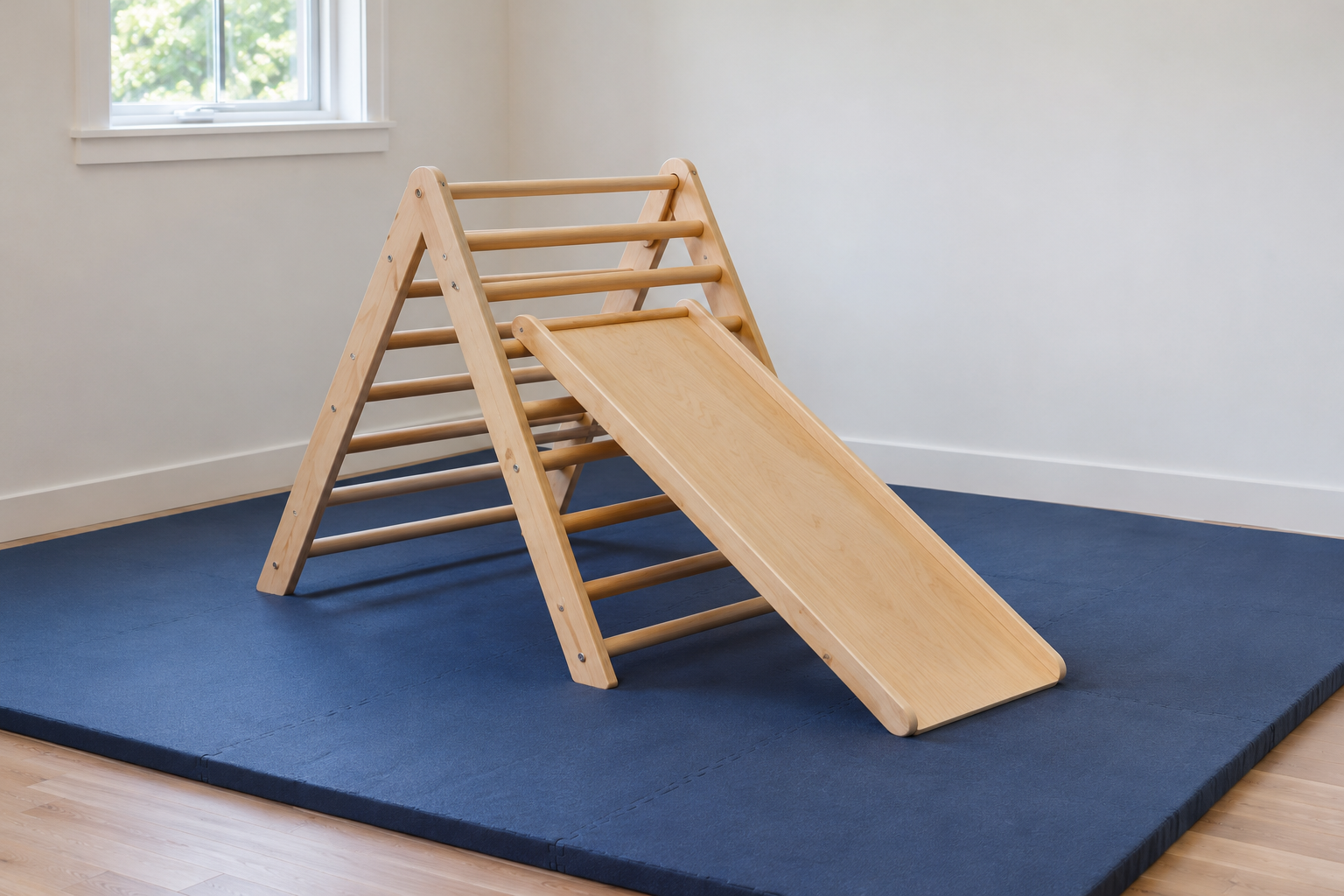
A wooden climbing triangle or a small frame gives a child somewhere to climb on a rainy afternoon. Set it in a corner over a thick foam mat that reaches well past the frame and its slide on every side, with nothing hard within falling distance: no table edge, no radiator, no shelf corner.
Climbing holds fixed to the wall need fixing into studs or masonry with the manufacturer’s hardware, and a mat below them as wide as the climbing area. Freestanding frames fold flat for the days the room is needed for something else.
A Playhouse Built Into an Alcove
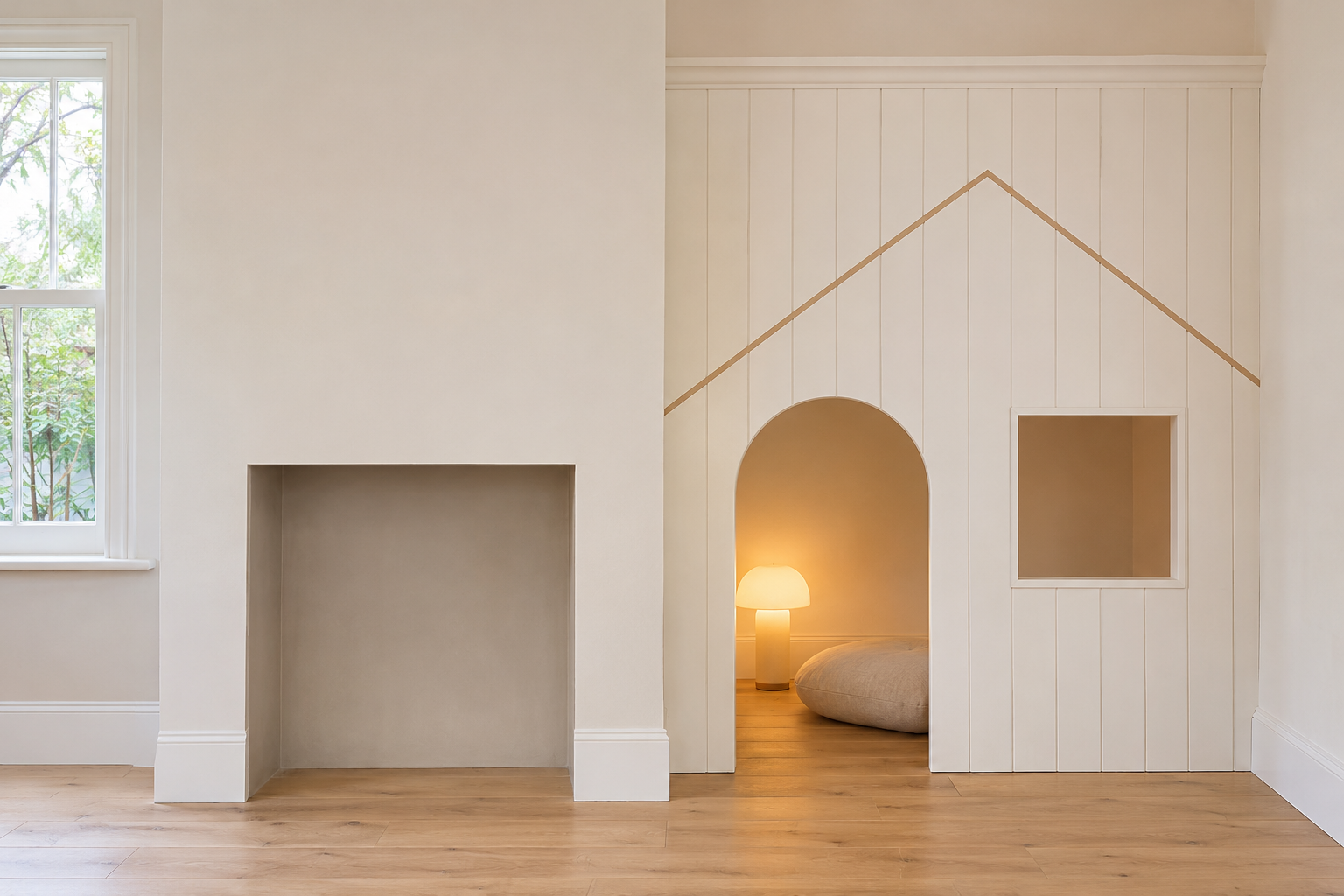
The recess beside a chimney breast or under a sloping ceiling is hard to furnish and the right size for a playhouse. Closing it with a painted wooden front, a small door and a window cut into it, makes a room inside the room that takes no floor space away from the rest.
Inside, a floor cushion and a small battery lamp are enough. Leave the window unglazed, so a parent can see in and the inside never gets stuffy, and keep the door opening wide enough for an adult to reach through.
A Window Seat With Drawers Underneath
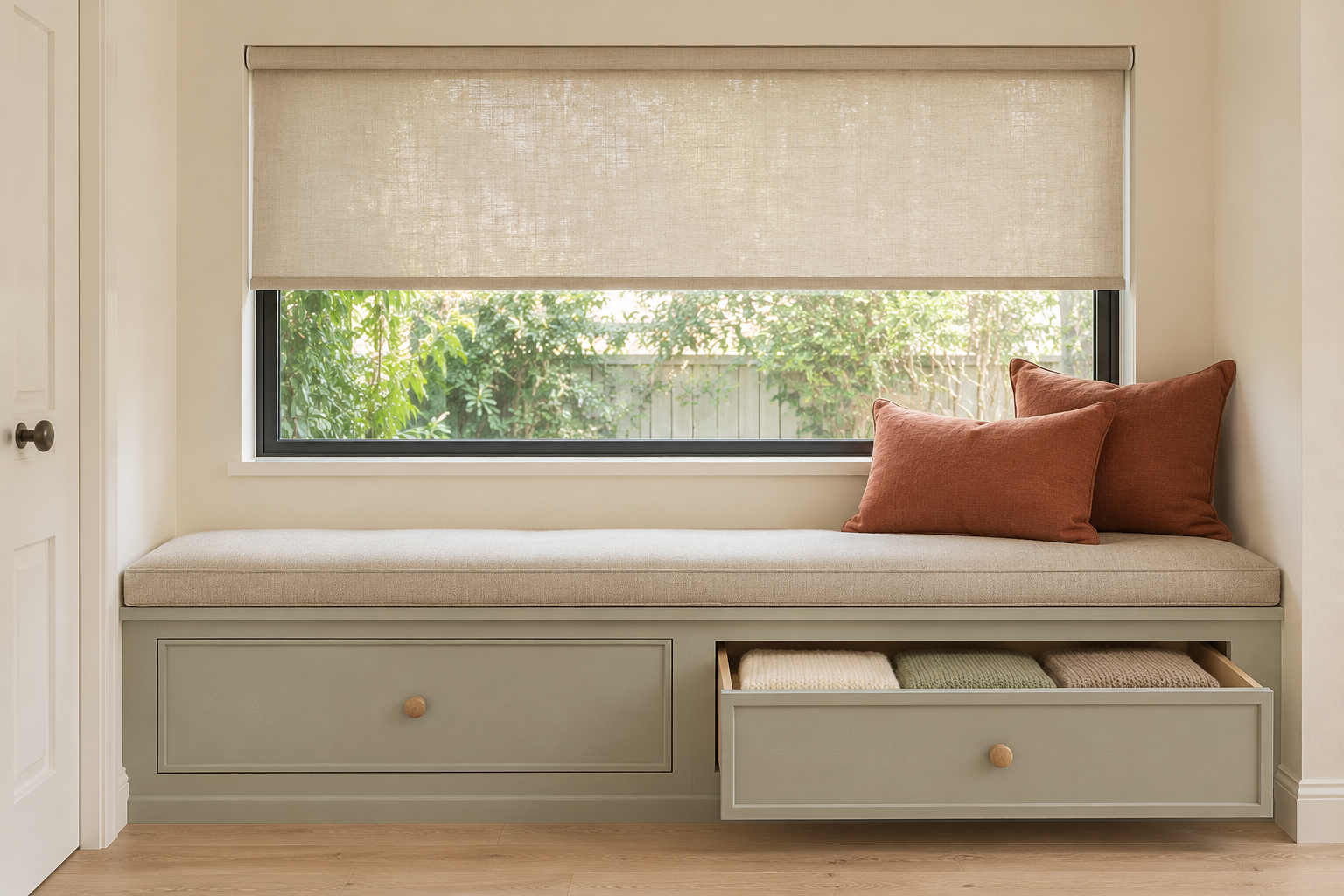
A window seat gives a child a place to sit and look out, and the space under it holds a lot. Deep drawers make better storage than a hinged lid, which can drop on fingers and has to be emptied from the top to reach the bottom. Each drawer comes out to the floor, where a child is already sitting.
A window that children sit beside needs a cordless blind or curtains on a rod with no loose cord, since a dangling loop is a strangling hazard for young children. A cordless roller blind, as here, is also the tidiest option above a seat.
A Washable Rug That Marks the Play Floor
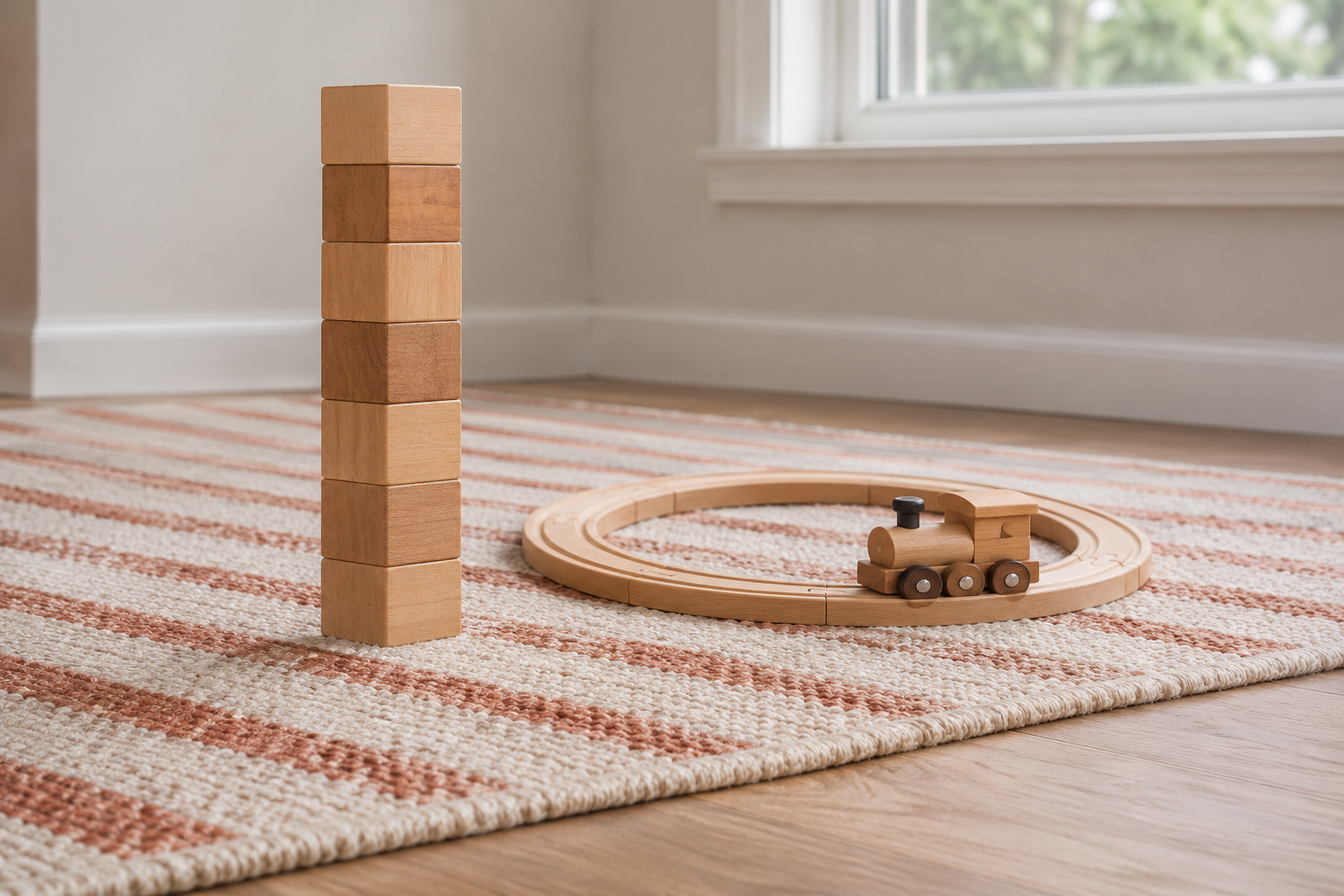
A rug says where play happens, and the toys tend to stay on it. A flat weave or a very low pile gives a firm surface for building, where blocks stand level and wooden track lies flat. In a deep shag, a tower falls over and small pieces disappear.
Choose one that can be washed, either small enough for a home machine or made with a removable washable top. Size it to the floor area children use, not to the furniture, and the rug size guide covers the room-by-room proportions.
Closed Cabinets in a Room With Other Jobs
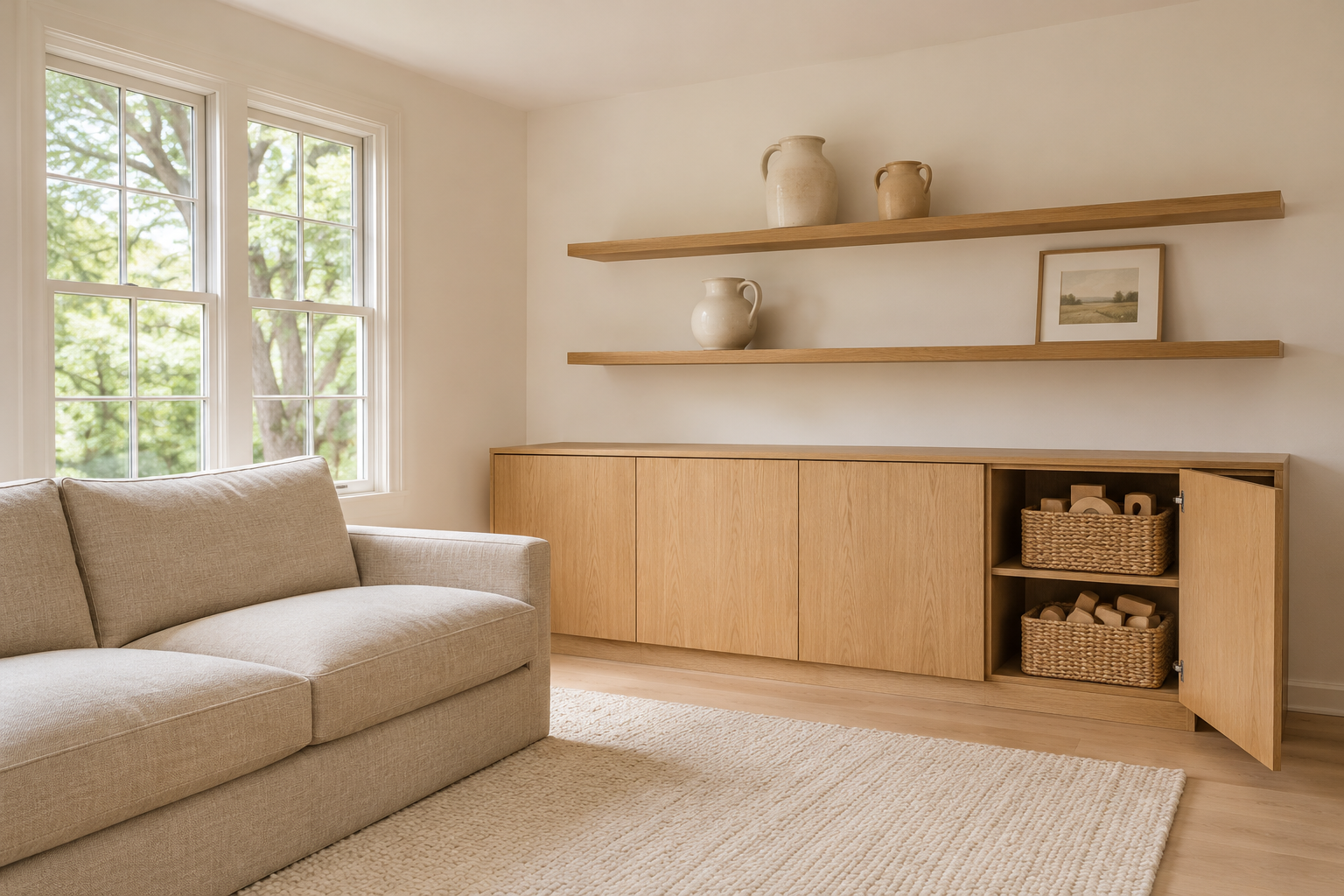
A family room that doubles as the playroom needs the toys out of sight in the evening. A run of low cabinets with plain doors keeps toys at the bottom, where children can reach them, and leaves the open shelves above for adult things. With the doors shut, the room looks like a family room again.
Give each cabinet one kind of toy in baskets, so tidying up is a matter of which door, not which shelf. For homes with no spare room at all, toy storage in shared rooms takes the same approach further.
A Desk Along One Wall for Homework
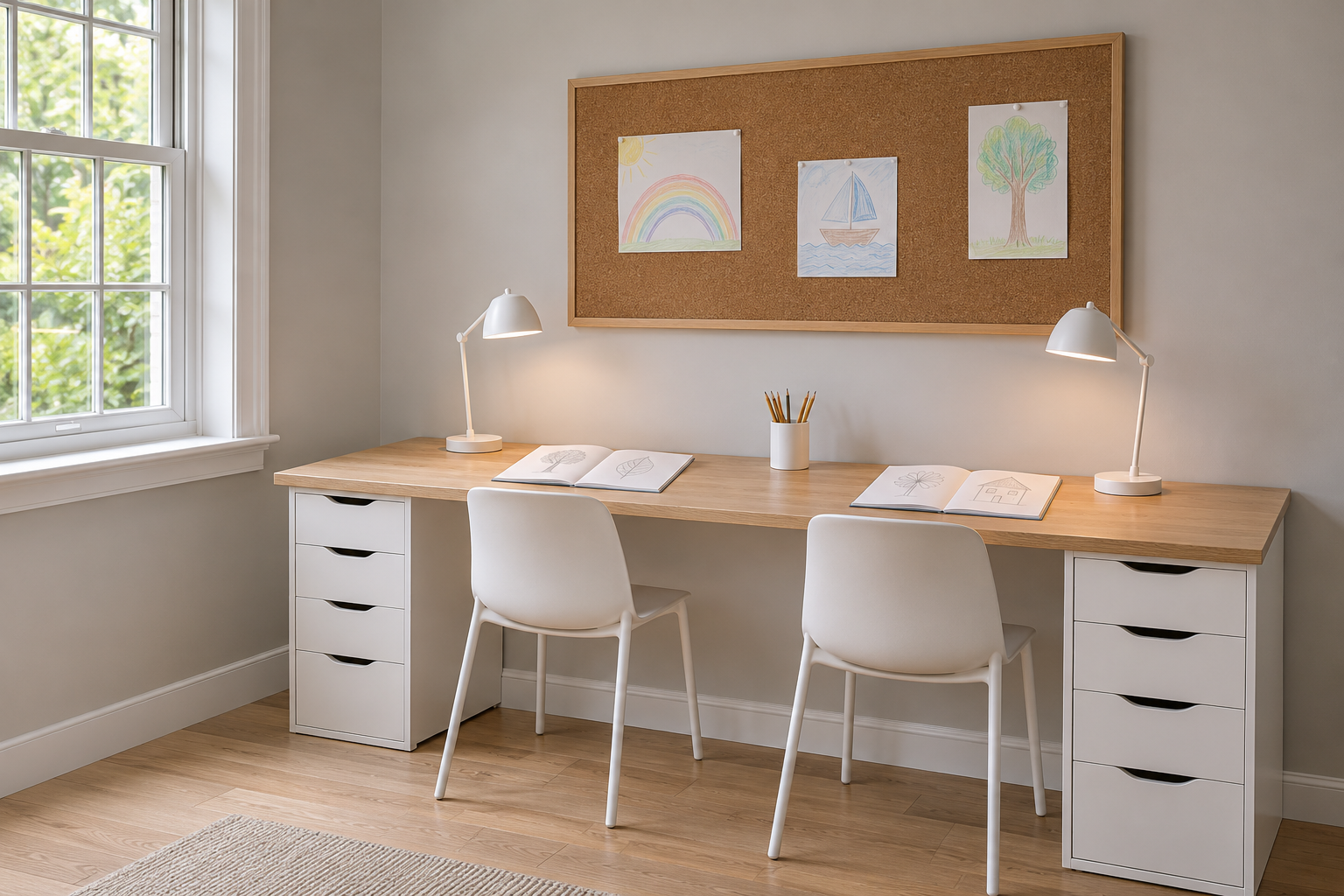
Children outgrow a playroom before they outgrow the room. A long desk top resting on two drawer units, set along one wall, gives two children a place each to draw, build, or do homework, and it replaces the toddler table when the toddler years are over.
Fit it at the height of an ordinary desk with adjustable chairs, rather than a child-height desk that will be too low in a few years. A lamp at each place means neither child works in the other’s shadow.
A Picture Rail for Drawings
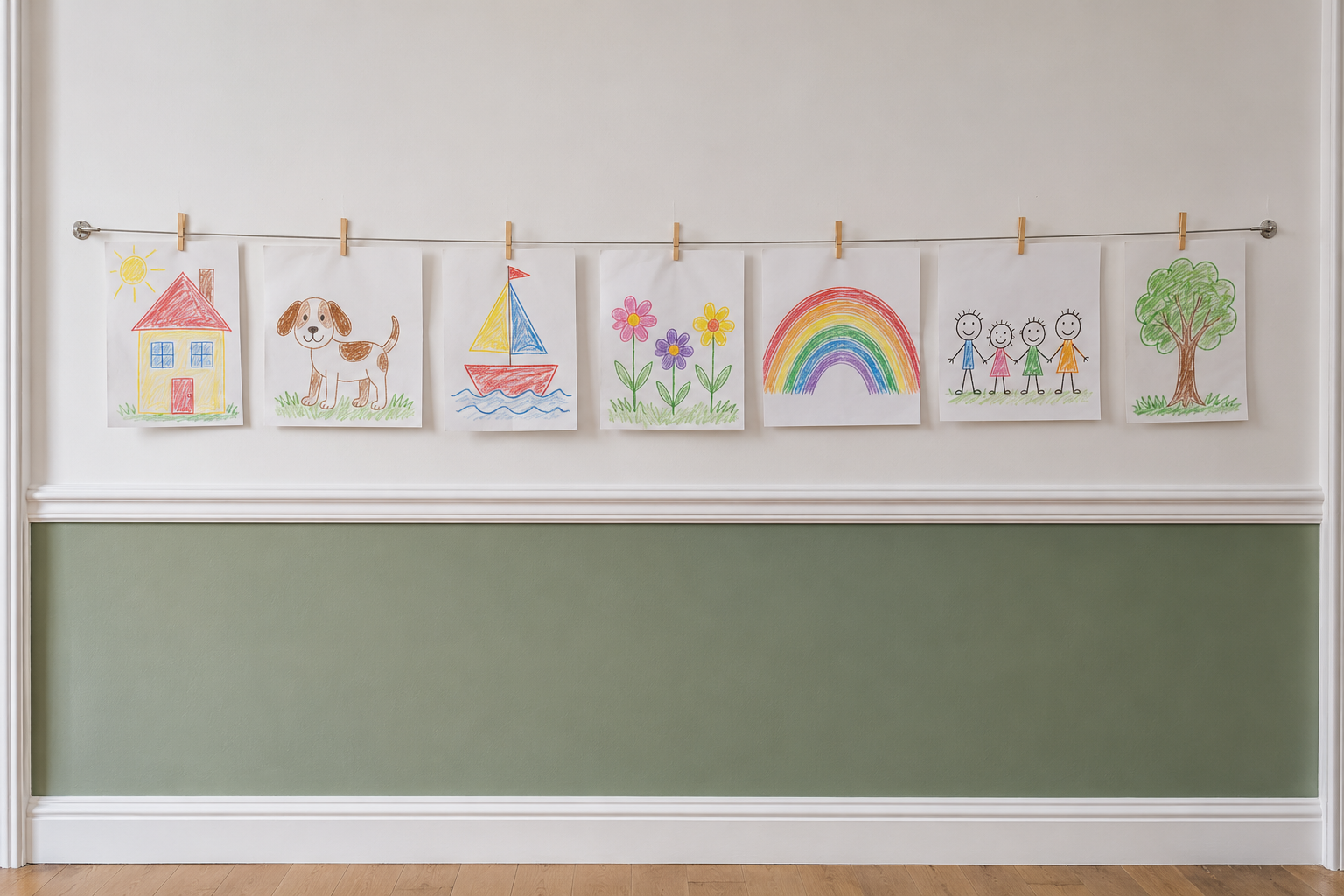
Children make more drawings than any wall can frame. A thin steel cable stretched across the wall, with small clips along it, holds a changing display that the children can add to themselves if it is low enough to reach. Here it runs above the dado, which keeps the drawings clear of the scuffed lower wall. For a small child to add their own, hang it lower, near their eye level.
Old drawings come down when new ones go up, and the best go into a folder for keeping. A cable fixed tight at both ends doesn’t sag as the clips fill up.
A Dress-Up Rail With a Mirror Beside It
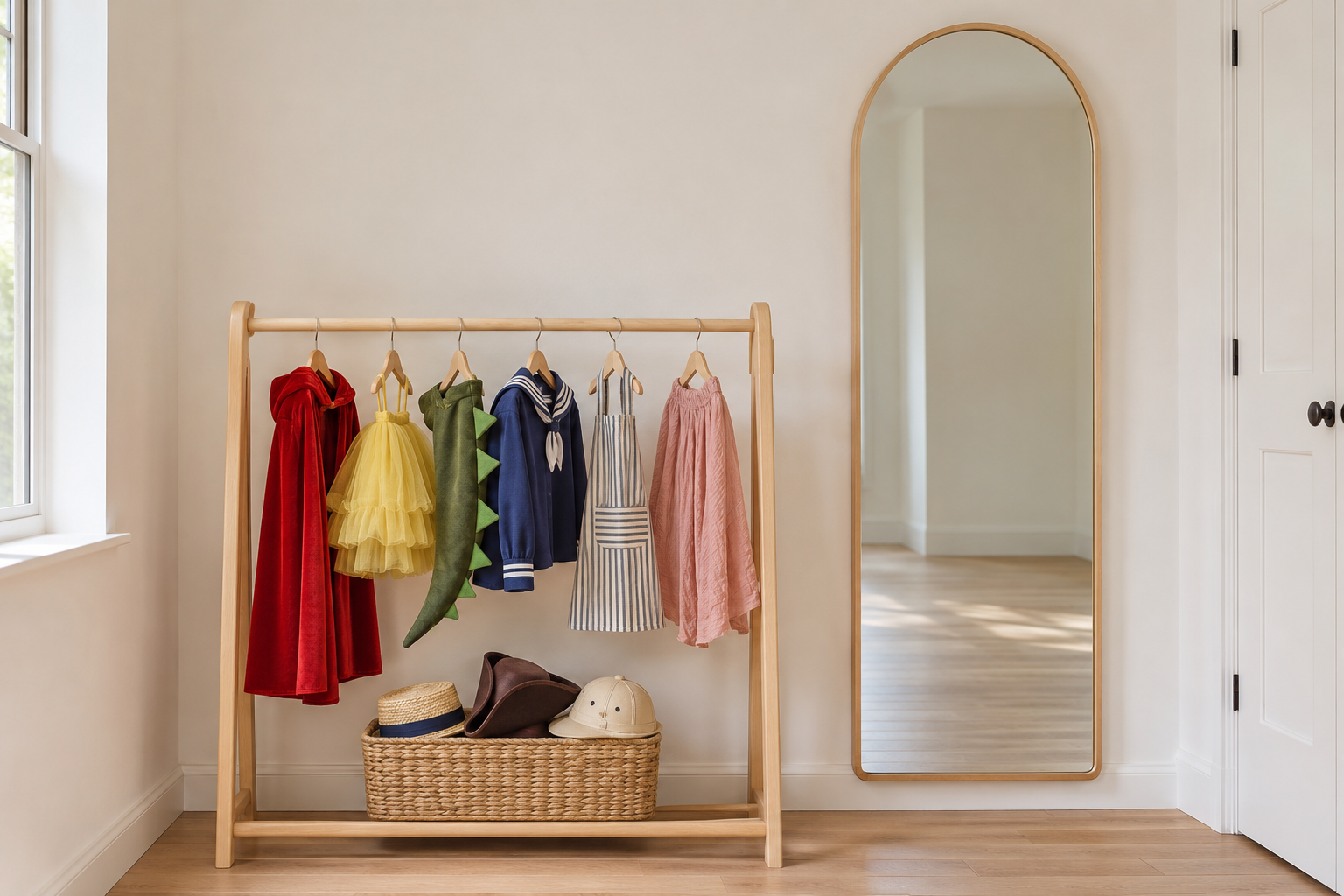
Costumes in a box come out in a tangle. A low clothes rail, about a child’s height, shows every costume on its own hanger, and a basket underneath takes hats and the small things. A child can hang a costume back where it came from, which a box doesn’t allow.
A mirror beside the rail is half the fun of dressing up. Fix it flat to the wall rather than leaning it, and choose safety-backed glass or an acrylic mirror, which won’t break into shards if a dinosaur tail hits it.
Glass Doors Within Sight of the Kitchen
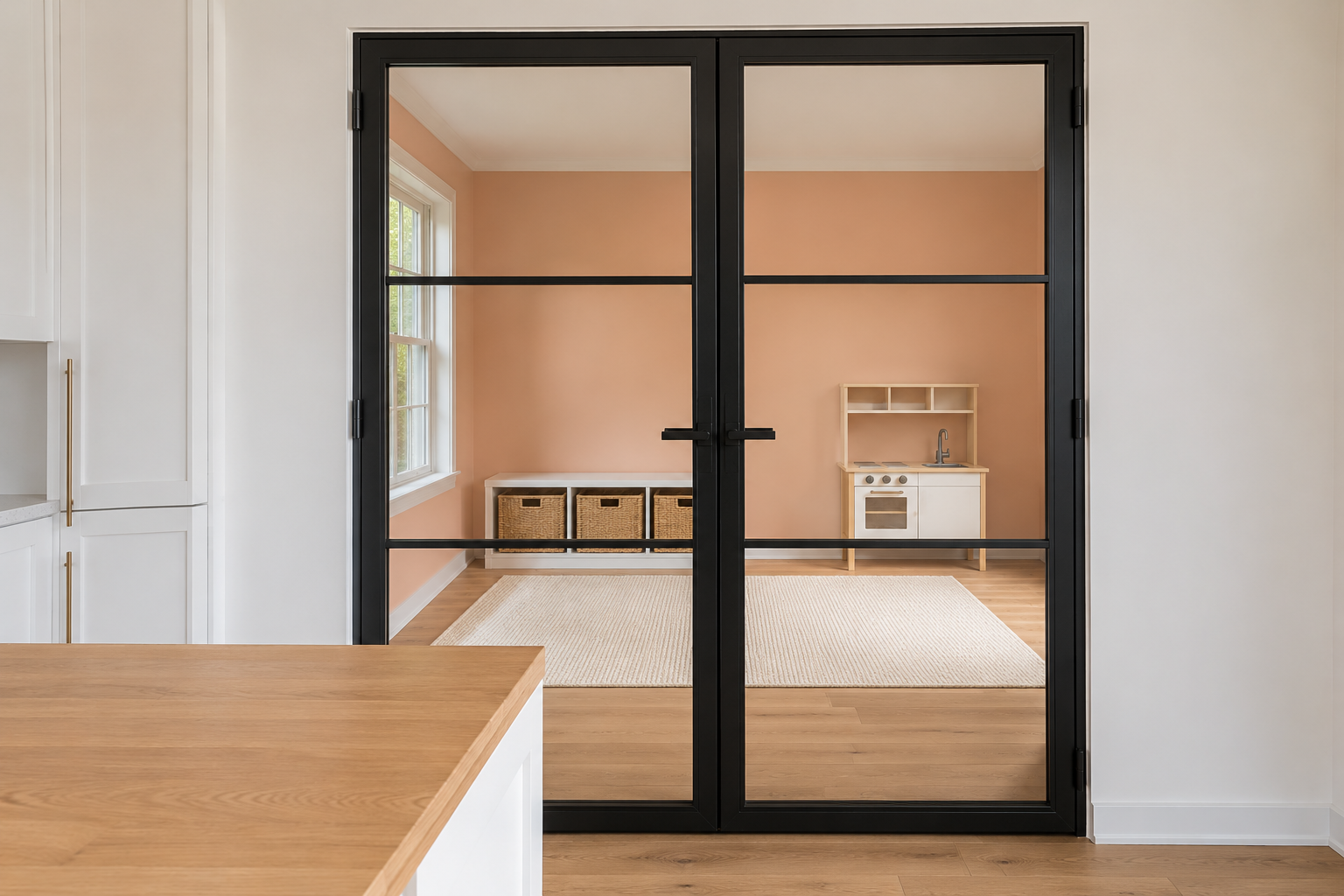
A playroom next to the kitchen, with glazed doors between them, lets a parent cooking see in while the noise stays on the other side. Children can play out of the way and still be in view, and the playroom borrows light from the kitchen.
Interior doors with large panes should use safety glass, tempered or laminated, since a child will run into them at some point. Steel-framed doors like these give the most glass for the least frame. A curtain on the playroom side can close the view when the room is used for naps.