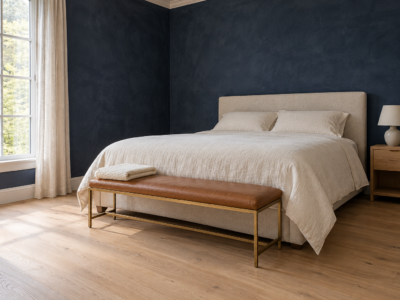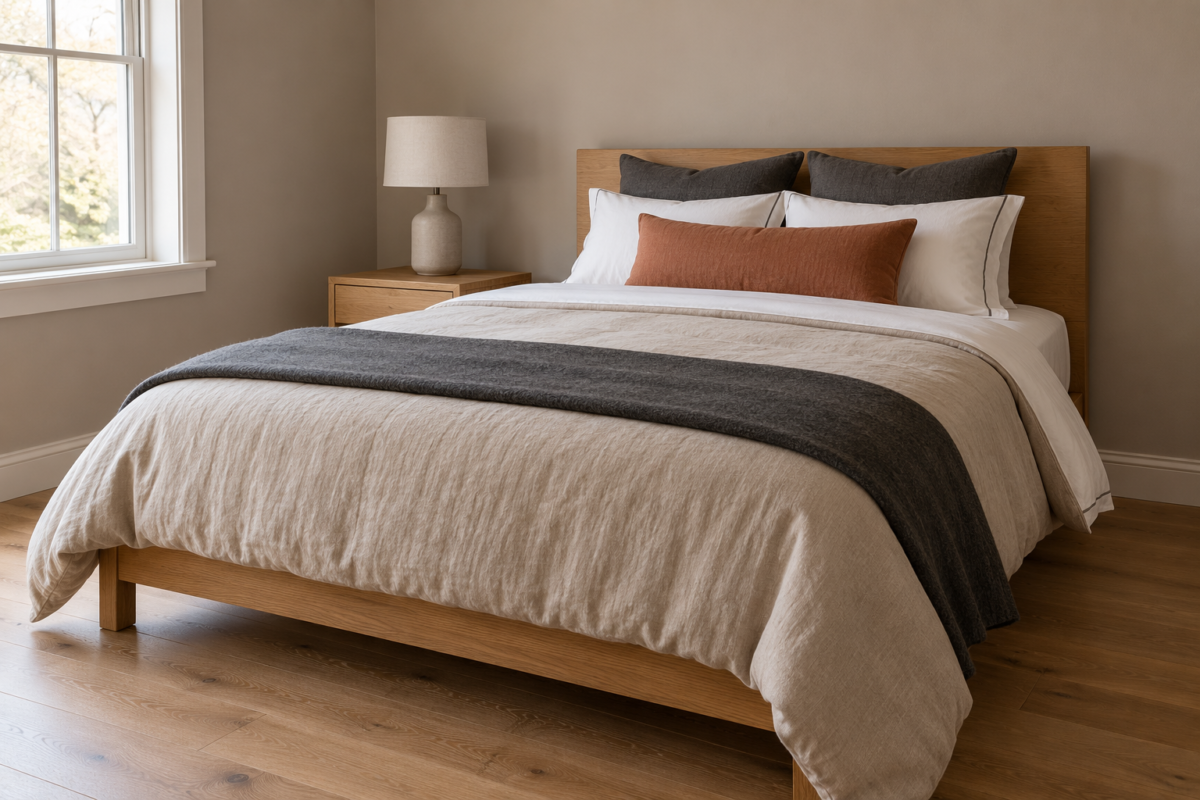
A bed made in layers can be adjusted through the night and across the year. A blanket comes off in May and goes back on in October, an extra one is within reach on a cold night, and nothing about the top of the bed has to change. Each layer has a job. The sheets are what you sleep against and wash every week or two, the middle layer adjusts the warmth, and the top layer covers everything and is what the room sees. The pillows and a blanket folded at the foot finish it.
Getting the layers right is mostly a matter of sizes. A fitted sheet has to match the depth of the mattress, a duvet has to be wide enough to hang past the mattress sides, and the pillows have to add up to roughly the width of the bed. Each of those is something you can measure before buying.
Start With a Fitted Sheet Deep Enough for the Mattress
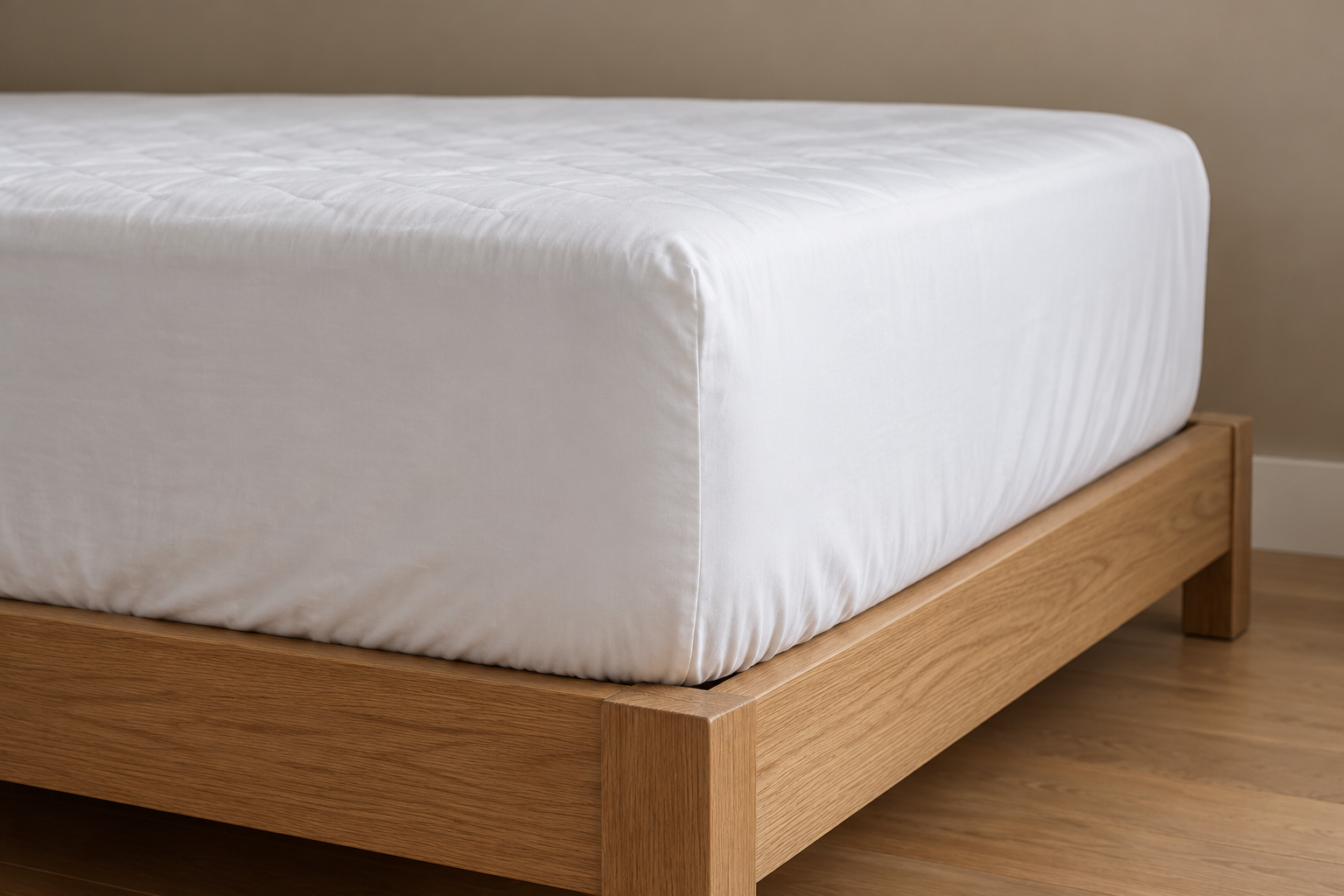
Measure the mattress from its bottom edge to its top surface, with any topper in place. Many mattresses are 9 to 14 inches deep, and a topper adds 2 to 4 more. A fitted sheet lists a pocket depth, and that number should be at least the mattress depth plus a couple of inches, so the elastic reaches under the mattress at every corner.
A pocket that is too shallow lets a corner pop off during the night, and one far too deep leaves loose fabric that wrinkles across the top. A mattress protector goes on first, under the fitted sheet, and a quilted one adds a little to the depth, so measure with it on.
The Flat Sheet Folds Back Over the Top
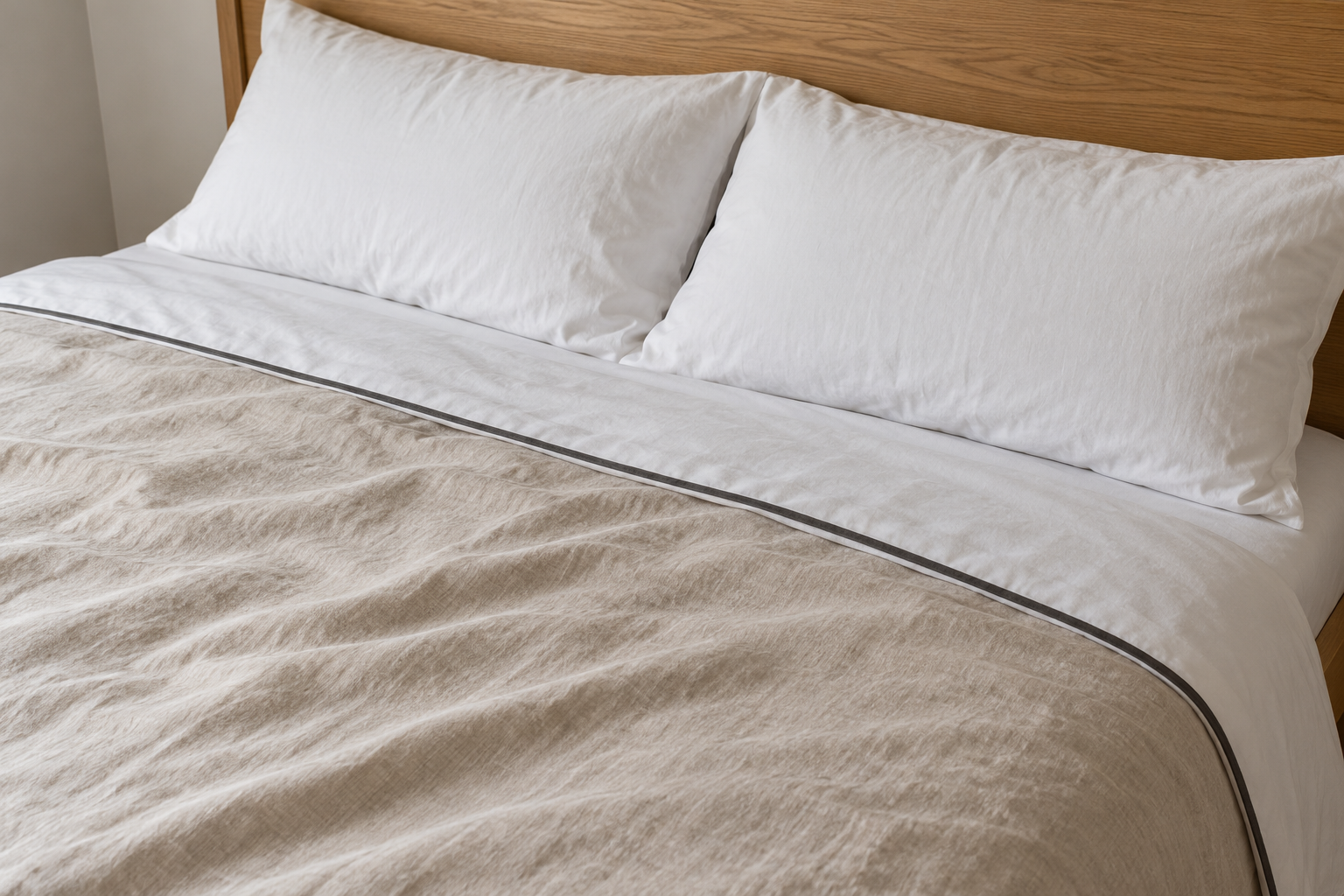
The flat sheet goes on next, with its finished side facing down. When its top edge is later folded back over the duvet or blanket, the finished side, and any border, faces up. Tuck it in at the foot, and along the sides as well if you like a firmly made bed.
The fold at the head, about a foot deep, keeps the edge of the duvet or blanket off your face, and it is the one place the sheet shows on a made bed. A sheet with a contrasting border makes that band clearly visible. In much of Europe people skip the flat sheet and sleep under a duvet in a washable cover. That works as long as the cover is washed as often as a sheet would be.
A Middle Layer for Cold Nights
Between the flat sheet and the top layer goes the layer you take away when the weather changes: a wool or cotton blanket, a quilt, or a thin coverlet. It lets one bed work through the autumn and spring without changing the duvet. On a mild night it is folded down to the foot. On a cold one it stays up.
Tucked in with the flat sheet, a blanket makes a snug bed that holds its shape. Left loose, it is easier to push off in the night. In summer the middle layer can become the top one, with the duvet put away and a quilt or coverlet alone over the sheet. If you sleep warmer than the person beside you, a blanket folded double over one half of the bed puts the extra warmth on one side only.
The Top Layer Has to Clear the Mattress Sides
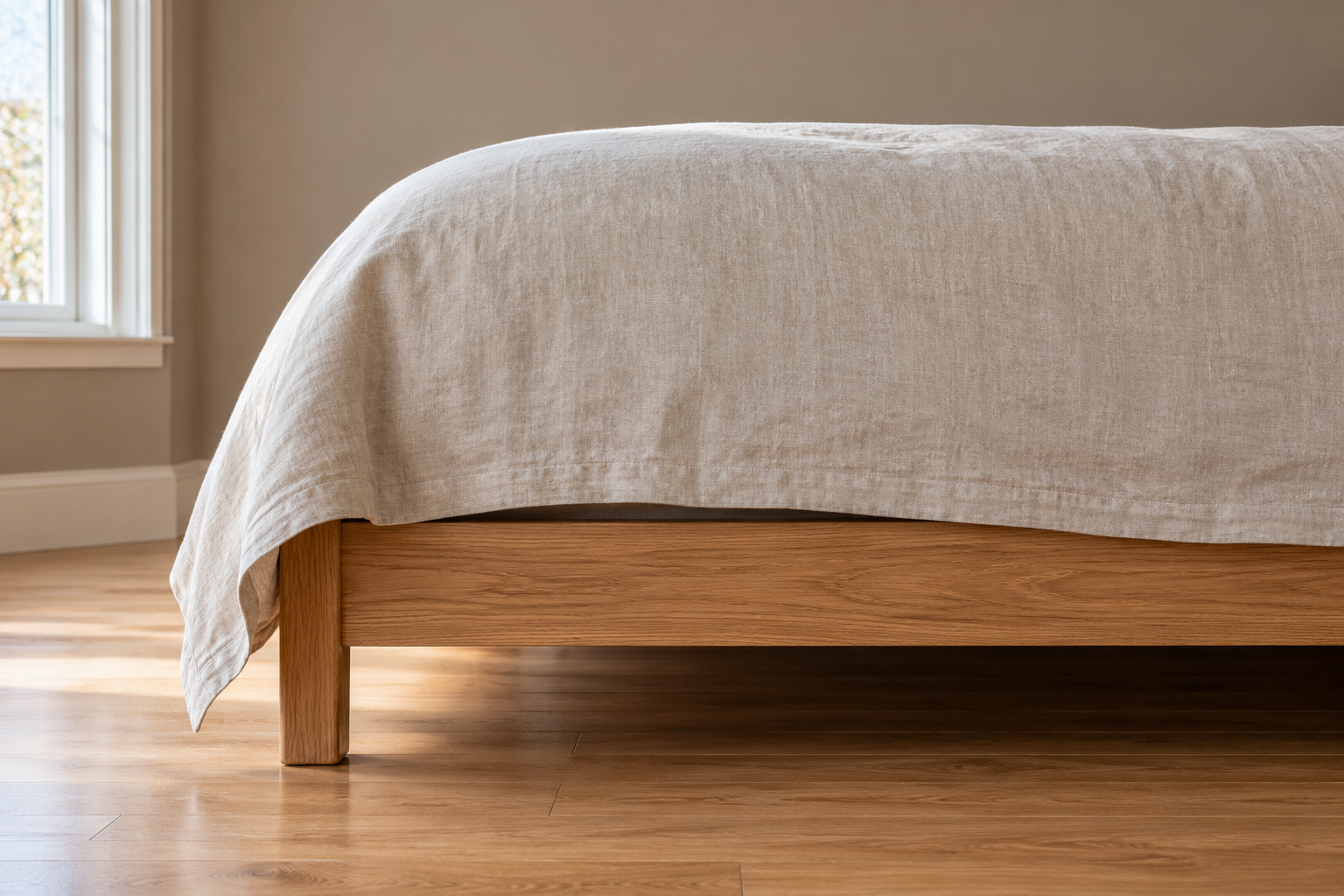
The duvet, comforter, or coverlet on top should be wide enough to cover the mattress sides and hang a little below them. A queen mattress is 60 inches wide, and a queen duvet is often about 90 inches wide. The extra 30 inches splits into 15 on each side. On a 12-inch mattress that covers the side and leaves about 3 inches hanging below the bottom edge.
For a quick check, add the mattress width to twice its depth. That is the width the top layer needs just to reach the bottom edge on both sides. A 60-inch queen with a 14-inch mattress and a 3-inch topper needs 94 inches, so a 90-inch duvet stops short and the mattress shows. An oversized queen duvet, or a king on a queen bed, covers it. A coverlet or quilt meant as the top layer is often cut to hang lower, sometimes to the frame, so check its listed width against the same sum.
Pillows in Rows
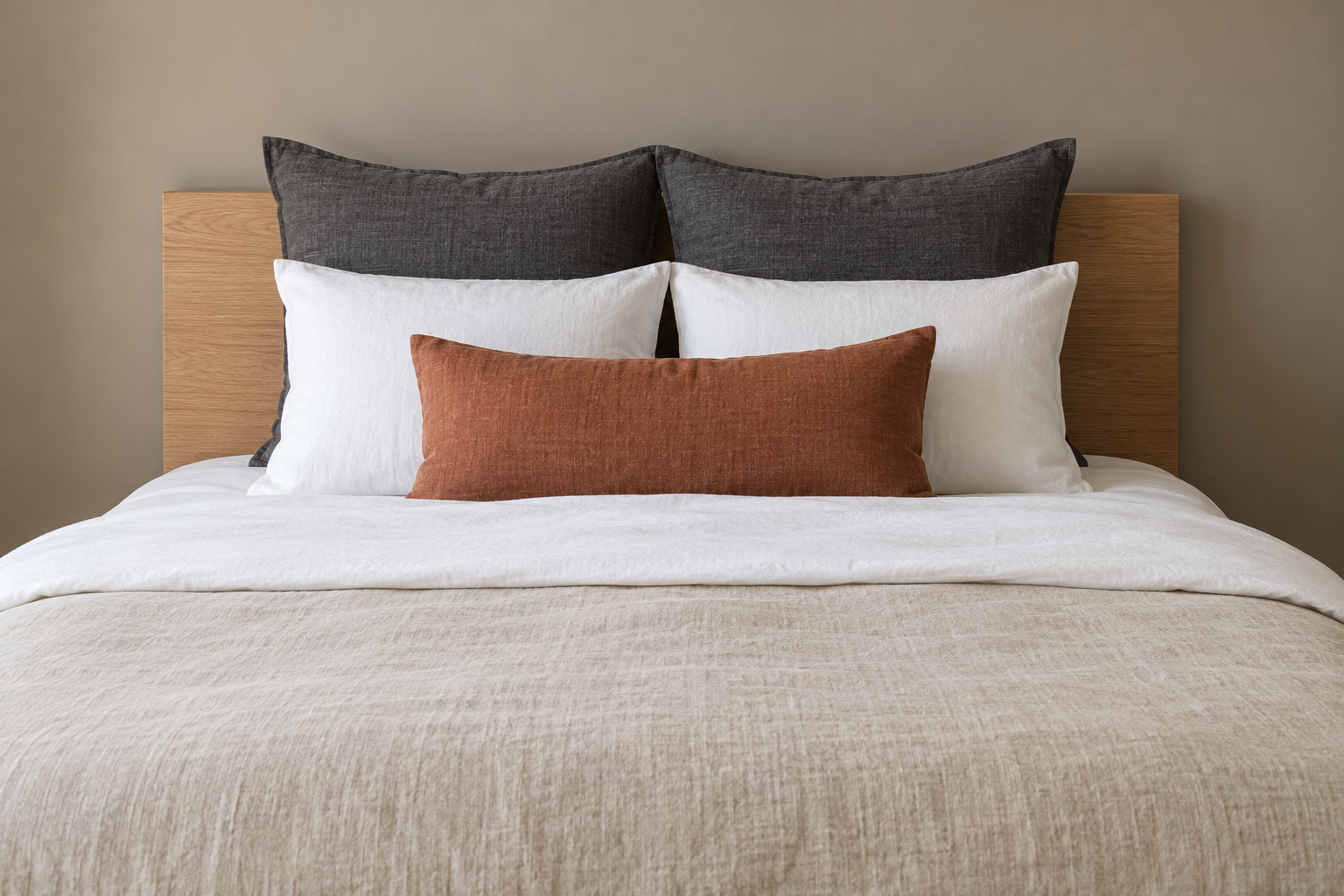
Pillows go on in rows from the headboard forward. If you use euro shams, the square ones at 26 by 26 inches, they stand at the back against the headboard. Two cover 52 inches of a 60-inch queen, leaving a few inches of bed showing at each side, and three cover 78 inches, about the full width of a 76-inch king. Sleeping pillows go in front of them, in pillowcases or shams.
A queen takes two standard pillows at 26 inches long or two queen pillows at 30. A king takes two king pillows, 36 inches each, or three standards. In front of the sleeping pillows, one decorative pillow or a pair finishes the bed. Every pillow in that front row is one more thing to move each night and put back each morning.
Fold a Blanket Across the Foot
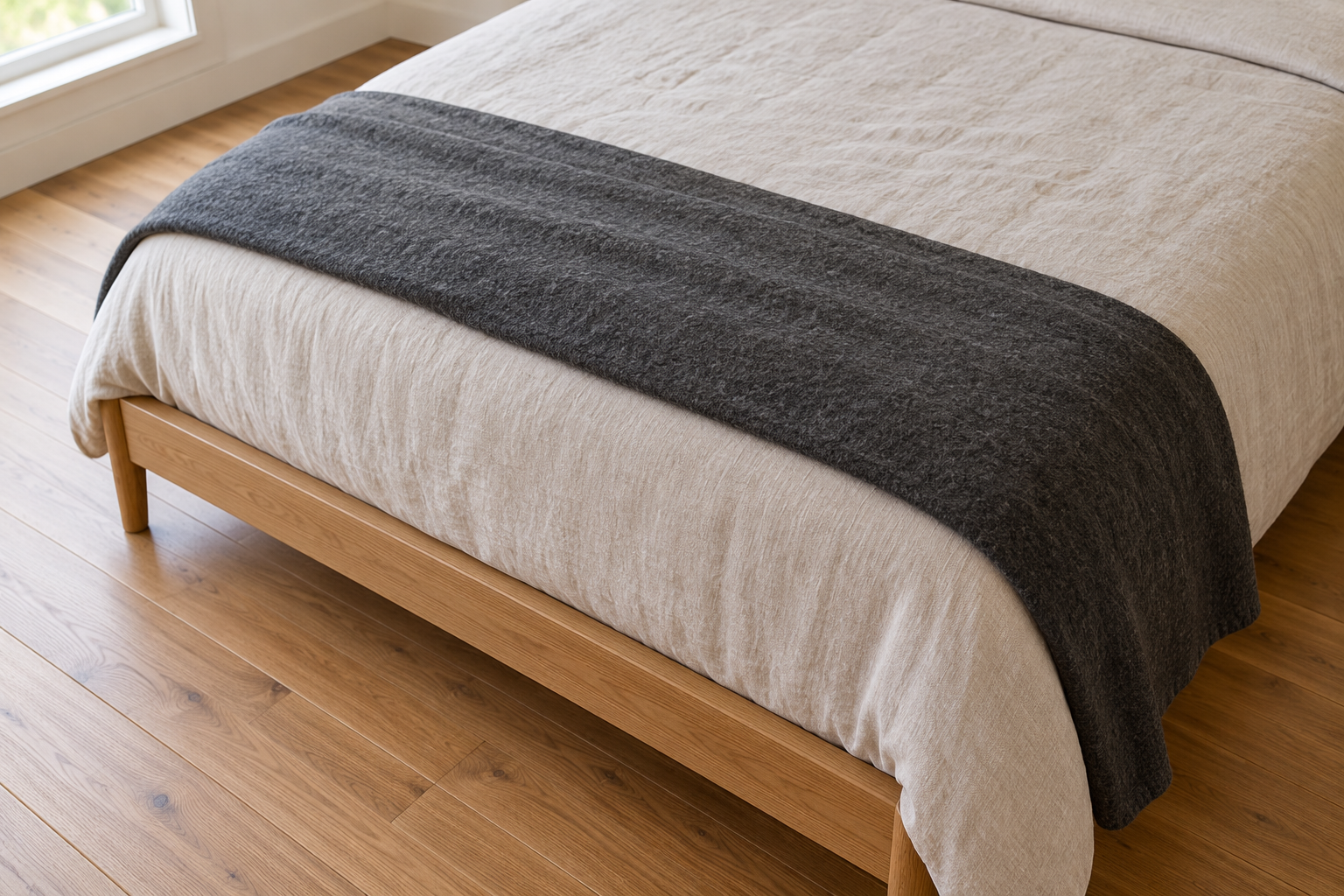
A blanket or quilt folded in thirds across the foot of the bed covers the part of the top layer that gets sat on and rubbed by shoes and pets, and it is extra warmth within reach at three in the morning. It also gives the bed a band of a second color or texture without changing the duvet.
Fold it so it covers about the bottom quarter of the bed and hangs a few inches over each side. Most throws are about 50 by 60 inches, which barely spans the top of a queen and leaves nothing to hang over the sides. A blanket or quilt close to the size of the bed folds into a band that does.
Making It in the Morning
In the right order, a layered bed takes a couple of minutes to make. Pull the fitted sheet straight at the corners, draw the flat sheet and the middle layer up together, then the duvet, and fold the top of the sheet back over it. The pillows go back row by row, sleeping pillows first, and the folded blanket goes across the foot.
Each extra layer and each extra pillow adds a step. If making the bed is the job that gets skipped, cut the pillows in the front row before anything else, and keep the middle layer, since it is the one that does something at night.