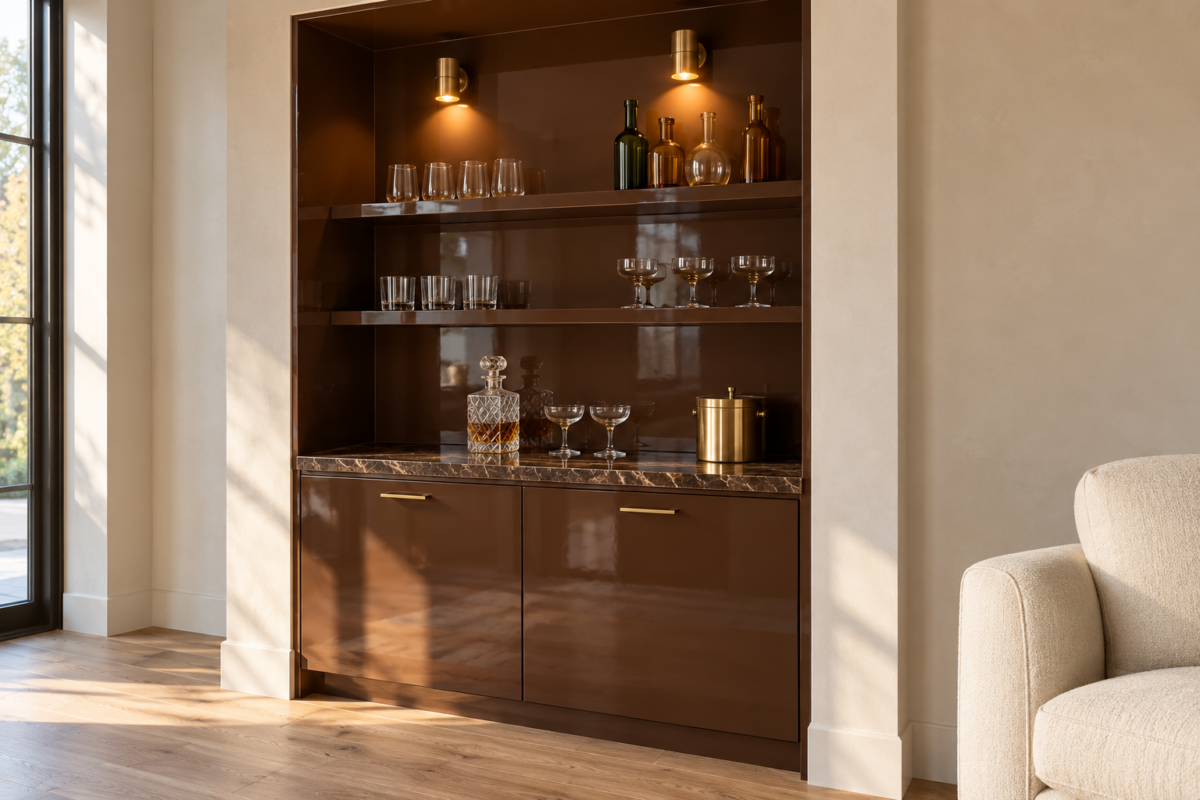
Drinks at home usually get poured wherever there is a free stretch of counter, between the chopping board and the sink, or at the corner of a table already set for dinner. A bar gives the bottles and glasses one place of their own, and it can be as small as a tray or as large as a passage between two rooms. Most houses have a spot for one already, a sideboard, a hall closet, an alcove beside the chimney that never found a use.
Glass is what a bar is built around. Bottles and stemware look their best lit from the side or from behind, against a darker surface or a reflective one, so the light around a bar deserves as much planning as its shelves. The counter under them takes a different kind of wear, from cut lemons, spilled wine and the rings of wet glasses.
A Tray on a Console
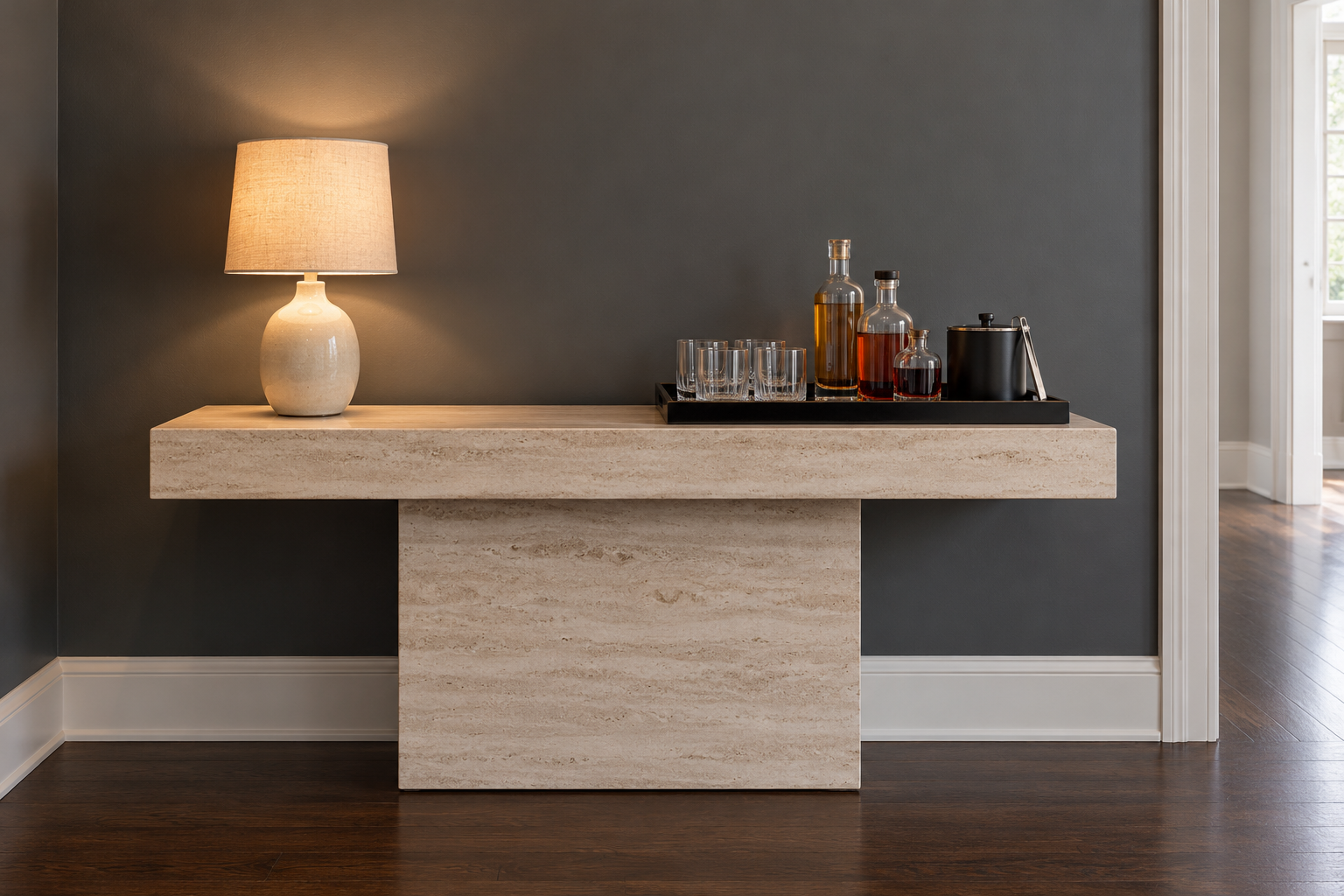
The smallest bar is a tray. On a console or a deep shelf it gathers three or four bottles, a few glasses and an ice bucket into one shape, so the surface looks arranged, and it lifts off in one move when the console is needed for something else. A lacquered or stone tray with a raised rim keeps spills from running over the edge.
Put it on the higher surface. A console at 30 to 34 inches is comfortable to pour at standing up, while a tray on a coffee table makes everyone stoop over it.
Roll the Cart to Where People Sit
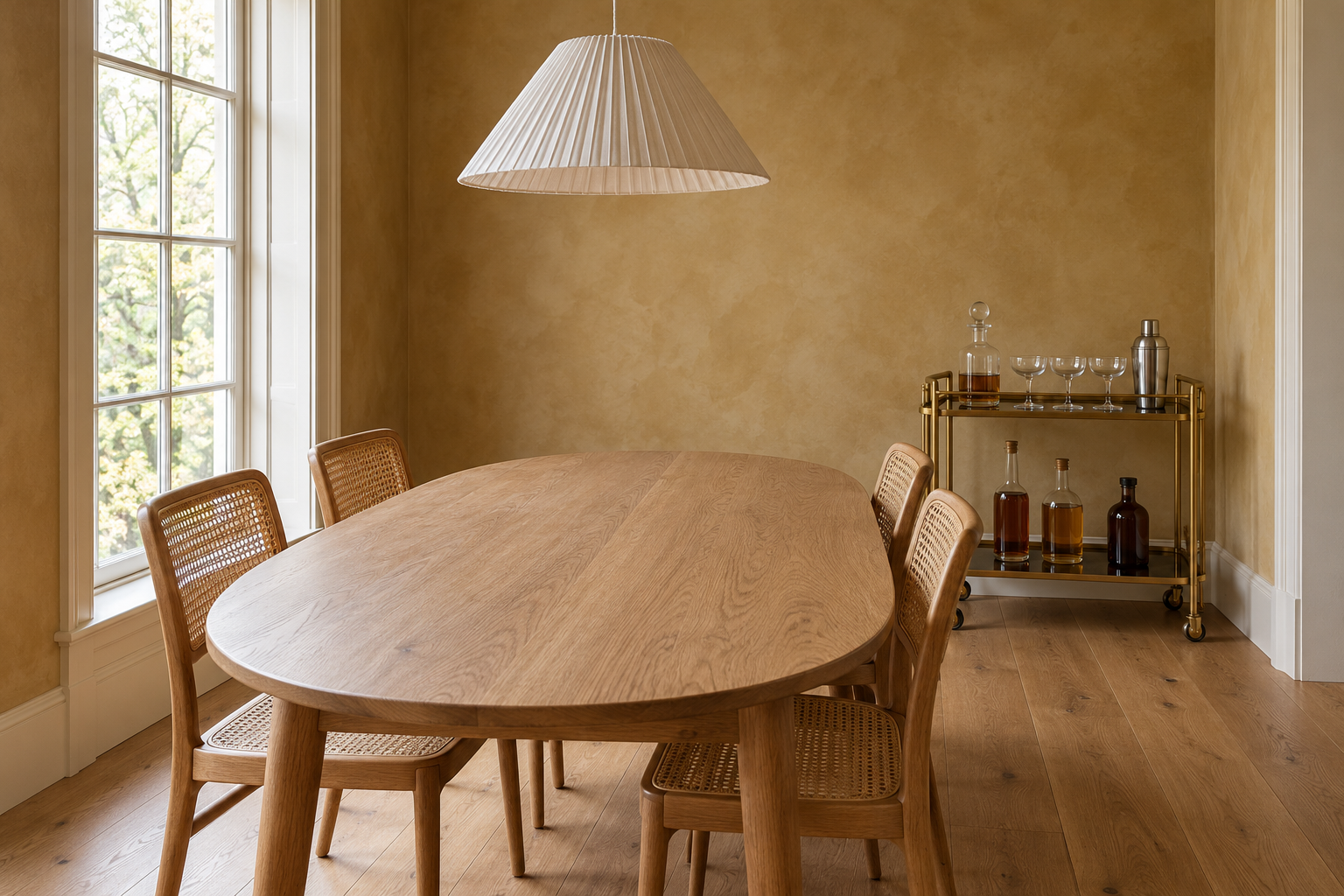
A bar cart has one advantage over every other idea here, its wheels. Between parties it stands against a wall with the bottles on its lower shelf, and on the evening itself it rolls to the end of the dining table or beside the sofa, so whoever is pouring stays in the conversation.
Glass or mirrored shelves catch the light from a window or lamp and keep a small cart from looking heavy in the room. A rail around the top shelf stops bottles from sliding when a wheel bumps over the edge of a rug.
Set Up the Sideboard as the Bar

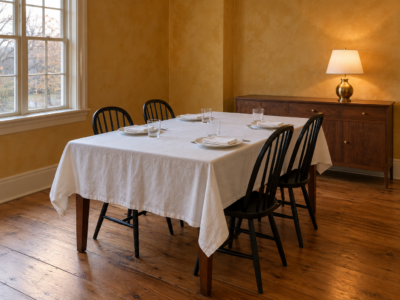
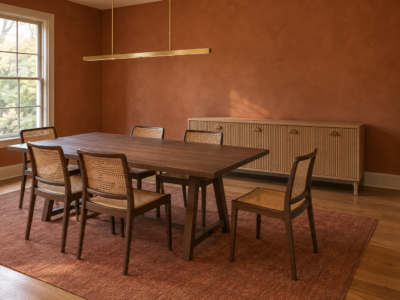
In a dining room, the sideboard already stands at a working height and already holds the glasses. Give its top to the bar for the evening and keep the bottles behind its doors the rest of the time, out of the light. Sideboards usually stand 30 to 36 inches high, and one toward the upper end of that range is the height of a kitchen counter, easy to pour at without bending.
A small lamp at one end lights the top without the overhead light on, which leaves the table in softer light while people eat.
An Old Cabinet With a Drop-Front Door

A secretary desk or a cabinet with a fall front makes a bar that closes up completely. The front folds down into a shelf to pour on, and the pigeonholes inside, made for letters, hold small glasses and short bottles at a scale that suits them. Burl walnut, old painted pine or a lacquered finish gives a modern room one piece of strong figure and color, and with the front closed there is no sign of a bar inside.
Check the supports before loading the front. A desk flap was built to take a writing hand, and the slides or brass stays that hold it level need to carry several full bottles as well.
One Bay of the Bookcase
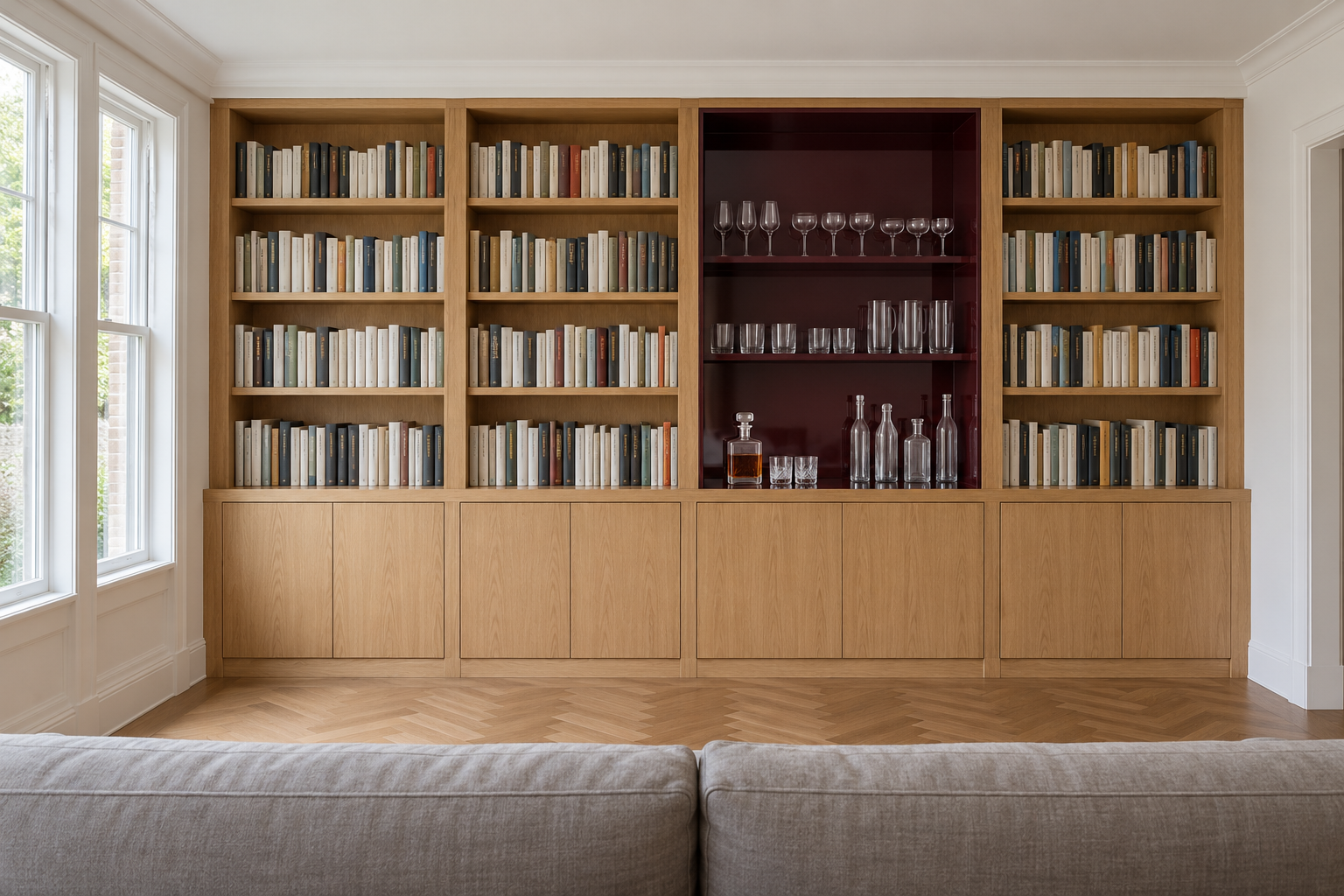
In a living room lined with shelves, one bay can be given to drinks without building anything new. Line its back and sides in a finish the rest of the bookcase doesn’t have, a glossy lacquer, a sheet of mirror or tile, so the bay stands apart from the books around it, and fix one shelf at about 36 to 40 inches as the pouring surface. If the bookcase is deep enough, that shelf can sit a few inches proud of the others.
Bottles and glasses go on the shelves above. Where the bookcase has closed cupboards along the bottom, the one under the bar bay takes the mixers, the corkscrew and the ice bucket, so the open shelves hold only glass.
Fit Cabinets Into the Alcove Beside the Chimney
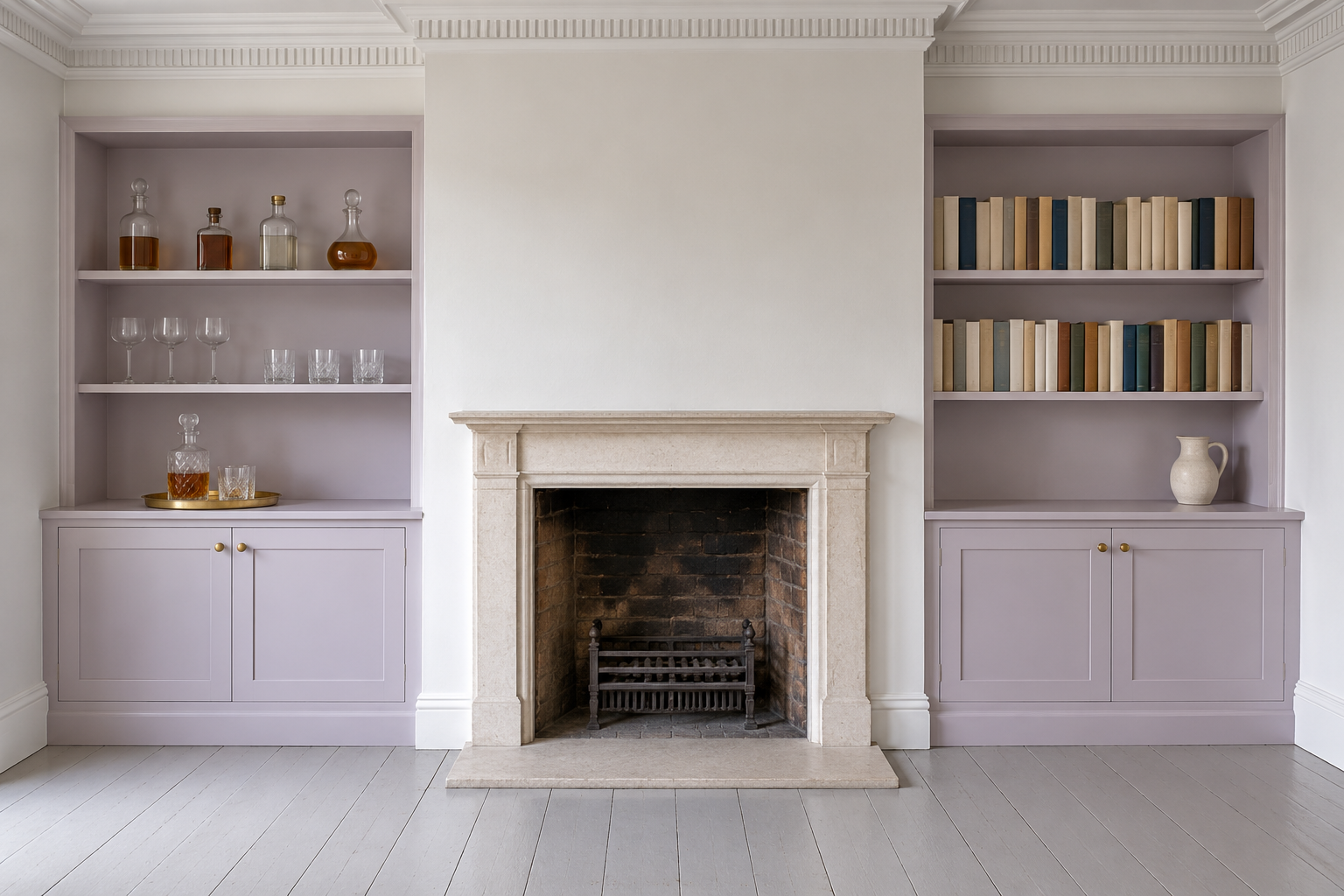
Older houses with a chimney breast often have a pair of alcoves on either side of it, usually given to bookshelves or left for a chair. A run of low cabinets with a counter at about 36 inches and open shelves above turns one of them into a bar. Built the same as its twin, with the same doors, counter and shelves, it keeps the wall symmetrical while one side does a different job.
These alcoves are often only 12 to 18 inches deep. That holds bottles and glasses easily, but not an undercounter fridge, which needs about two feet, so the ice and mixers come from the kitchen.
Convert a Coat Closet

A reach-in closet about two feet deep holds a counter, two or three shelves above it and a small cabinet or rack below, with the doors closing over all of it. Paint the inside a strong color in a glossy finish, back, sides and ceiling, so that opening the doors shows the whole lined box at once.
Fit a light inside. A closet sits outside the reach of the room’s lamps, and a small fixture under the top shelf, ideally one wired to a door switch, lights the counter as the doors open. Leave about 36 inches of clear floor in front, enough to stand at the counter with both doors swung back.
A Butler’s Pantry Between Kitchen and Dining Room
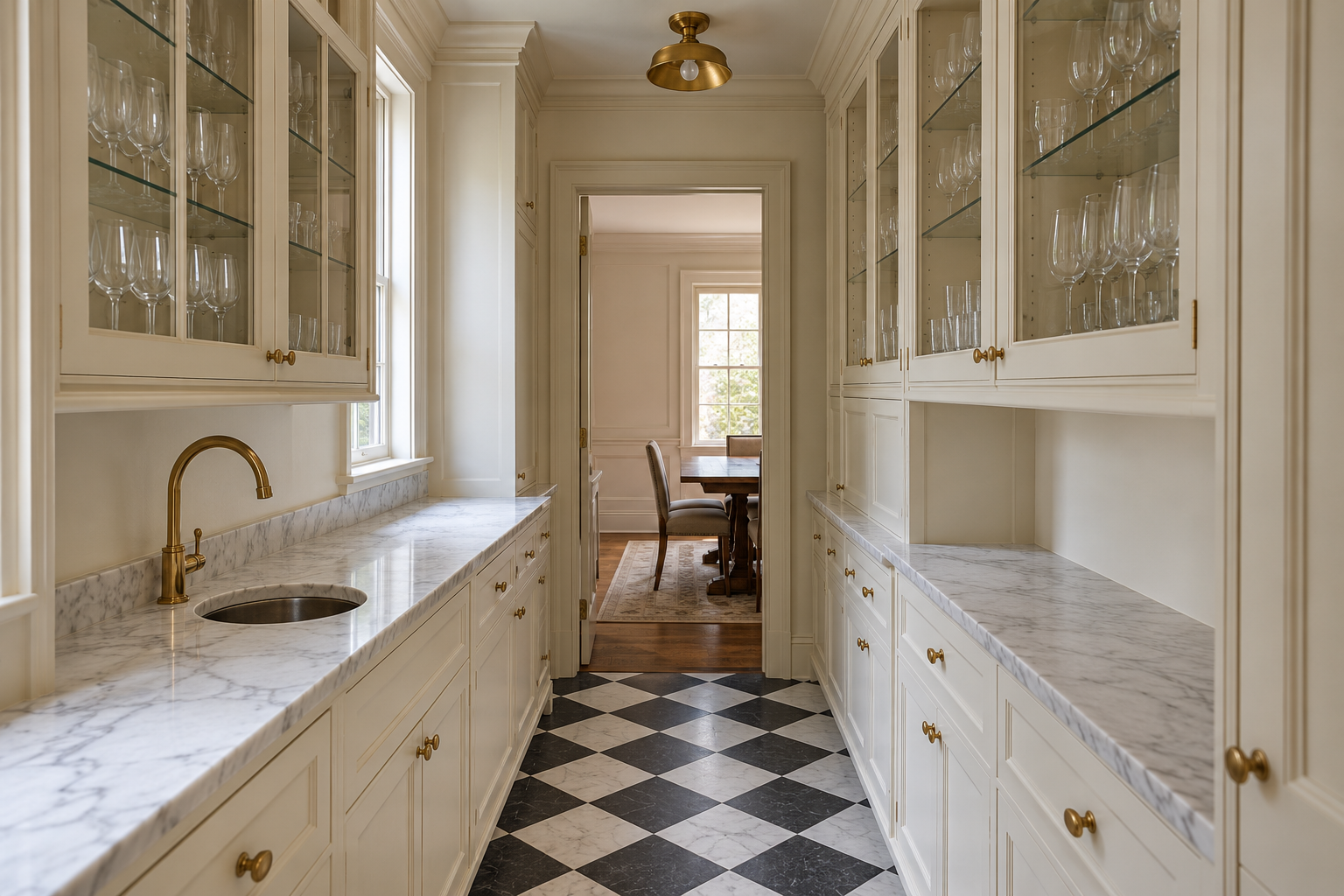
Where a passage or a small room connects the kitchen to the dining room, it can be fitted as a butler’s pantry: a counter, glass cabinets above and, where plumbing already reaches, a small sink. It takes the glasses, bottles and mixing out of the cooking area while keeping them a few steps from the table.
Glass-fronted upper cabinets let rows of stemware show without leaving it out to collect dust. A bar sink, usually about 12 to 15 inches across, fits a counter too narrow for a kitchen sink and is enough for rinsing glasses and filling an ice bucket.
Hide the Fridge Behind a Cabinet Panel
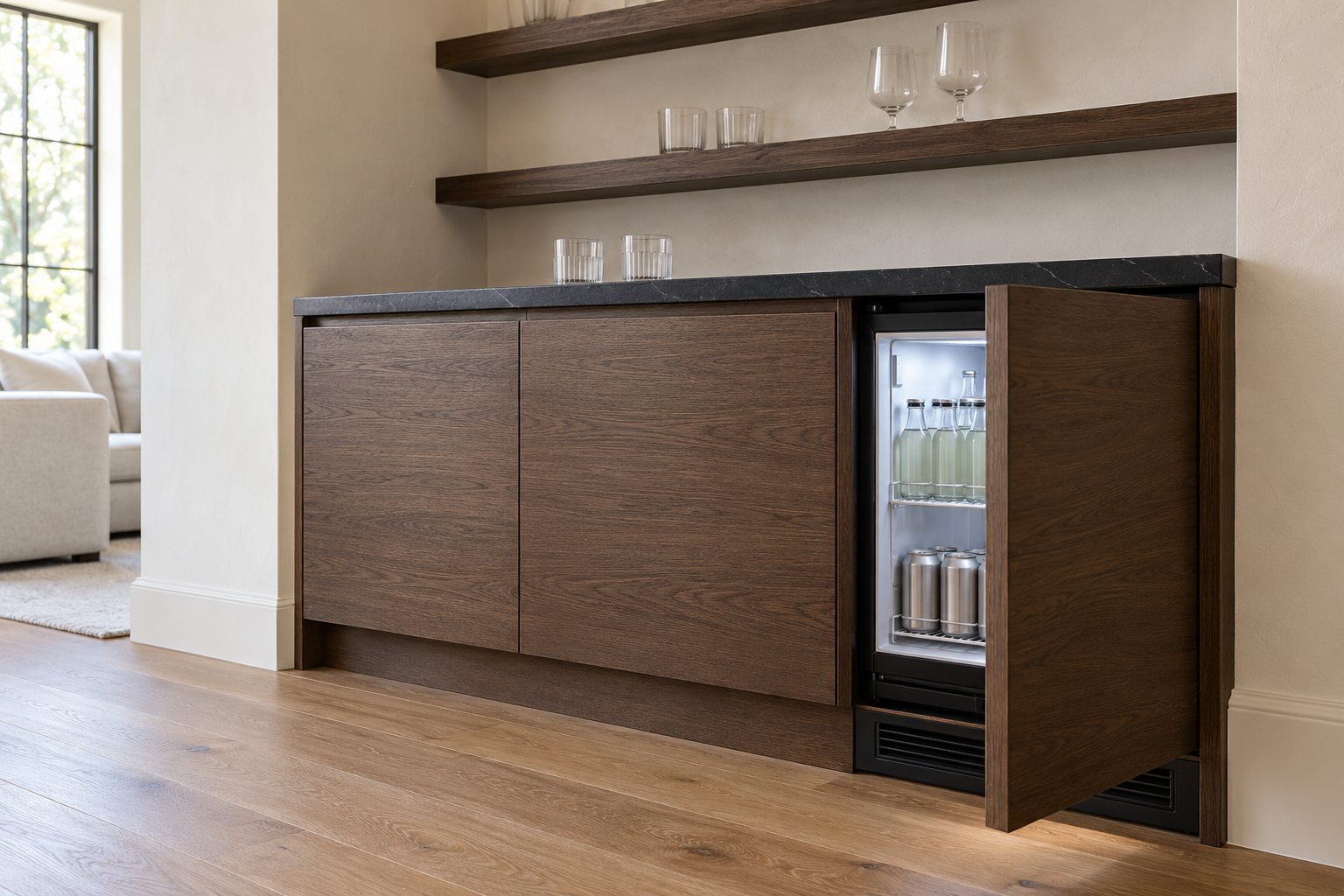
A small undercounter fridge for mixers, wine and ice saves the walk to the kitchen, and many are made to take a front panel matching the cabinet doors around them, so the bar run looks like one piece of furniture.
The kind of fridge decides where it can go. One made for building in vents through a grille at the front, at the toe kick, and can sit flush between cabinets. One made to stand on its own vents at the back and sides and needs open air around it, so boxing it into cabinetry makes it run hot.
Lay the Wine Down in the Lower Cabinets

Wine kept for more than a few weeks is stored on its side, so the wine stays against the cork and the cork stays damp. A rack built into the lower cabinets, in a diamond grid or individual cubbies, holds bottles that way and keeps them near the floor, where a room is cooler and further from a window’s light.
Keep the rack away from a radiator, an oven or a wall that takes afternoon sun. Wine keeps best somewhere steady at around 55 degrees, and the open shelves at eye level suit spirits, which aren’t affected the same way.
Back the Shelves With Antique Mirror
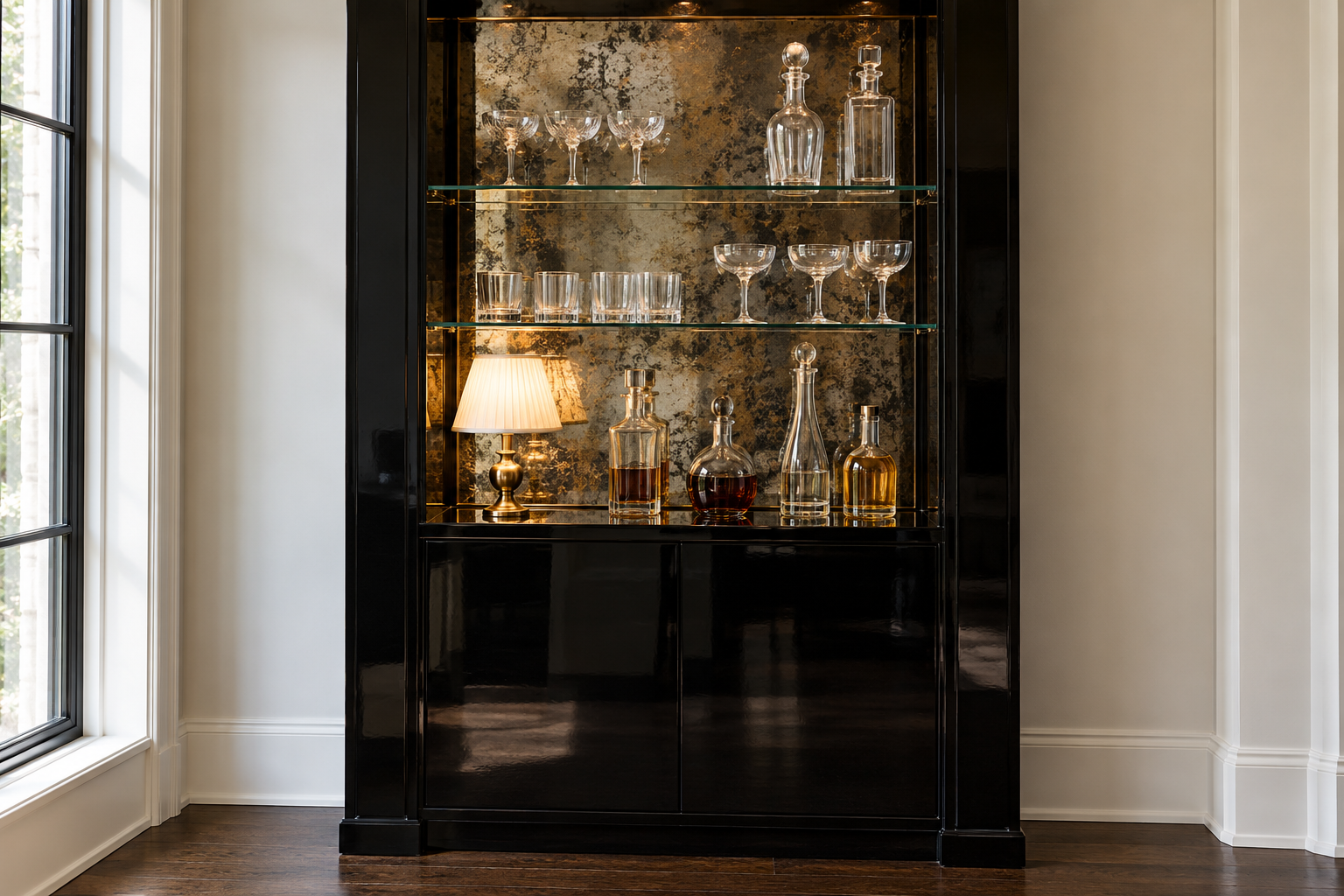
Antique mirror is glass silvered so that the reflection comes back clouded, flecked and slightly dark. Behind open bar shelves it doubles the bottles and the light falling on them, while the mottling keeps it from giving a clear picture of the room the way plain mirror would at eye level.
It does the most in a dark cabinet, where the shelves would otherwise fall into shadow, with a small lamp on a shelf or a strip of light along the shelf fronts to give it something to return. Every mirror shows fingerprints and splashes, so the glasses should sit where a hand reaches in without touching the back.
Light a Glass Cabinet From Inside
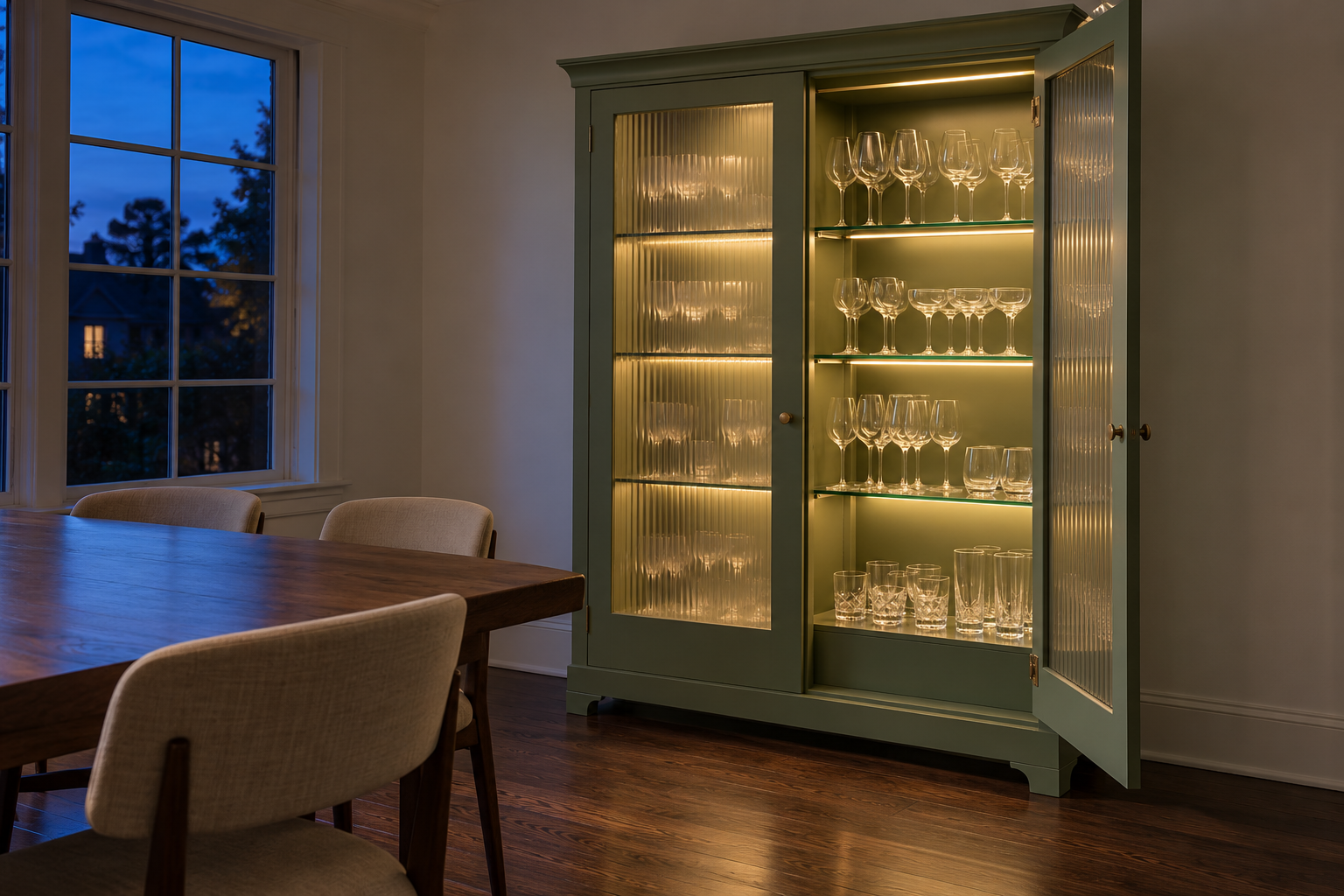
A cabinet with glass doors, lit from inside, makes the glasses the display. A slim light strip along the front edge of each shelf lights the stemware from the side, so the rims and stems catch, where a single bulb at the top leaves the lower shelves dim. Warm light, around 2700 kelvin, is close to the color of an ordinary warm lamp, so the cabinet doesn’t look cold beside the rest of the room in the evening.
Reeded or fluted glass doors blur what is inside when the cabinet is dark and turn the glasses into soft lines of light when it is lit, so the cabinet looks different by day and at night.
Tile the Back of the Niche
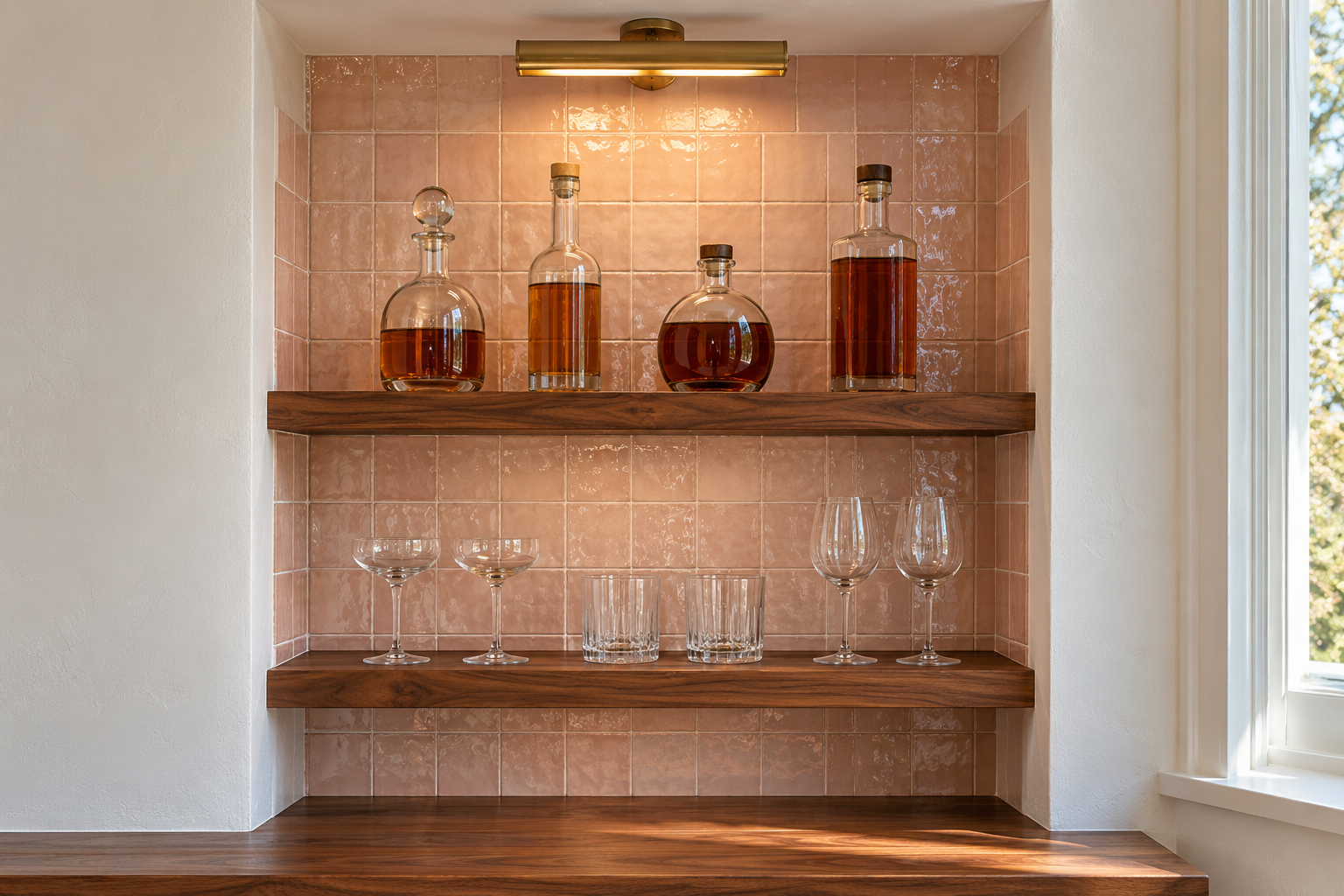
Glazed tile behind a bar shelf wipes clean where drips and lime rinds land, and its glaze catches light that the plaster around it doesn’t. Handmade tiles such as zellige, each a little uneven, break a lamp’s reflection into many small highlights, while flat machine-made tile returns it as one bright patch.
Carry the tile across the back and up both sides so the shelves sit inside a lined box, and choose a grout close to the tile color, which keeps attention on the glaze and away from the grid.
Top It With a Surface That Takes a Wet Glass
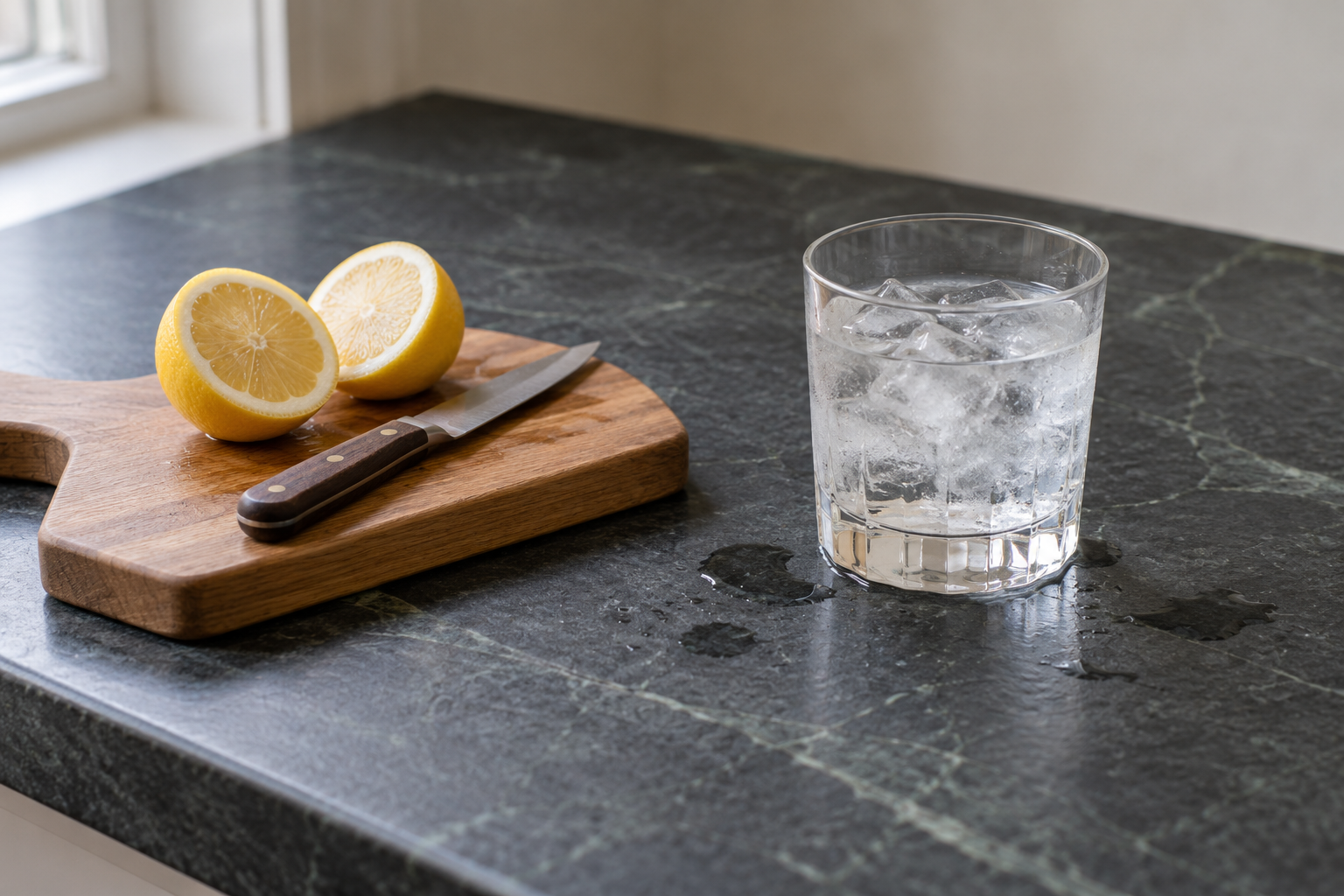
A bar counter sees lemon juice, wine and wet glasses, and stones react to them differently. Marble and limestone contain calcium carbonate, which acid dissolves, so citrus and wine leave dull patches on the polish, called etching, that sealing doesn’t prevent.
Soapstone resists acids. It darkens where it gets wet or oiled, and the darker patches fade as it dries. Zinc and unlacquered brass go dull and spotted with use and can be polished back or left to darken. If marble is the point, a cutting board under the lemons and a tray under the glasses keep most of it off the stone.
Paint the Bar Darker Than the Room

Bar cabinetry painted a dark color in an otherwise pale room changes with the hour. By day it is a block of color on one wall, and at night, with a lamp on its counter, the dark surround makes that small pool of light stand out from across the room.
A higher sheen on the dark paint, eggshell or semi-gloss, reflects that lamp along the door edges and shows the shape of the cabinetry, where flat paint absorbs the light and leaves the doors as one dark shape. Painting the inside of the cabinets the same color as the outside keeps the dark going when a door is open.
A Ledge for Drinks Where Guests Stand
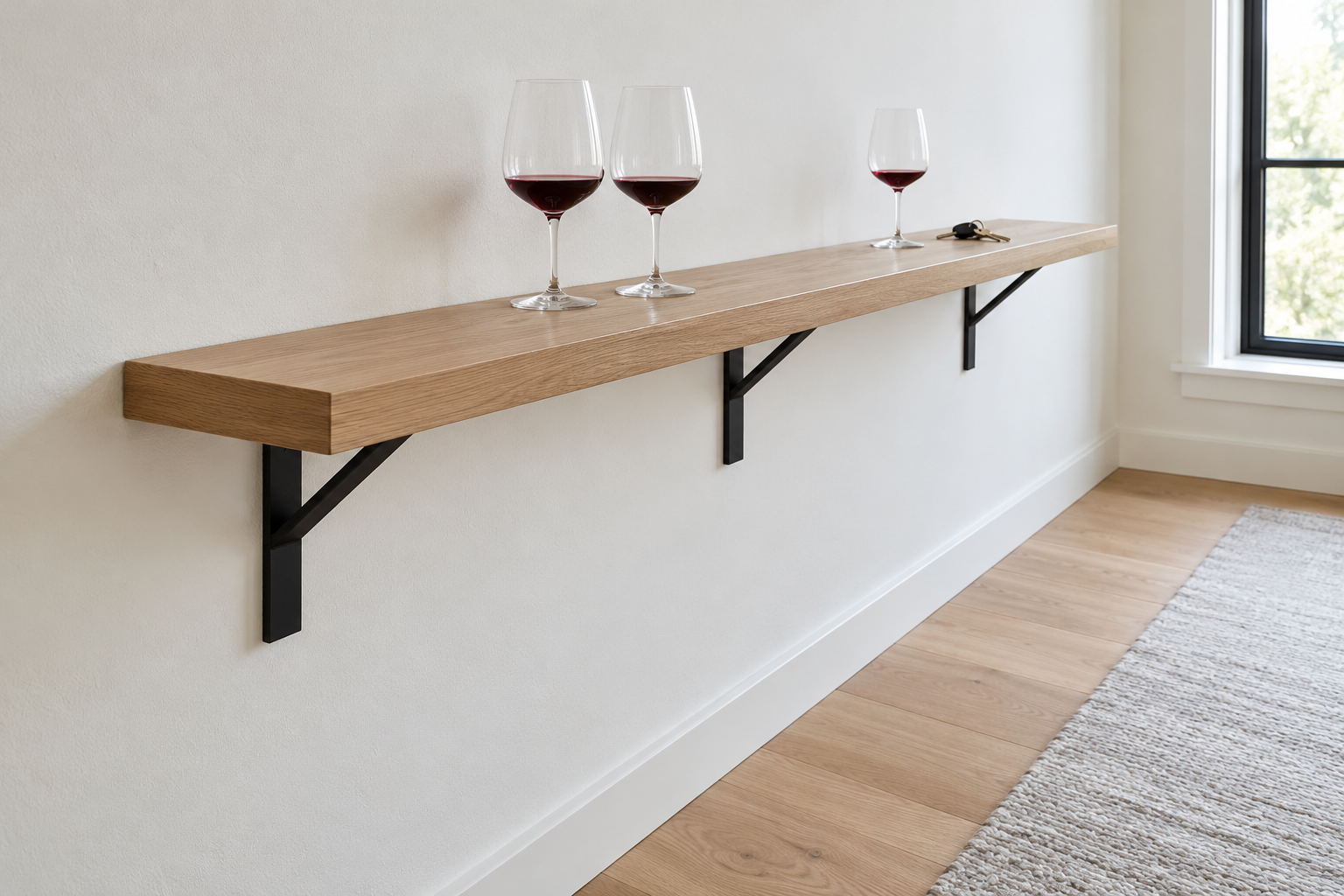
At a party many guests stand, and they look for somewhere to put a glass down. A narrow ledge along a wall, about 10 to 12 inches deep and 42 inches high, takes a drink at elbow height without taking floor from the room. It suits a window wall, the back of a room where people gather near the kitchen door, or a hallway that fills up during a party.
Fixed to the studs on brackets or a cleat, it holds glasses and small plates, and on an ordinary day it is a place for keys and mail.