A shower curtain rod over a tub usually goes about 75 to 77 inches above the floor, a little above head height for most adults. The figure comes from the standard curtain, 72 inches long, and from where its liner should end.
Work it out once and it adapts to any shower. The liner has to hang inside the tub, low enough that water running down it stays in the tub, and high enough that its hem doesn’t lie in the water at the bottom. The rings add a little, and the rod goes at the top.
Work Up From the Hem
Start at the bottom. In a typical tub, the inside bottom sits a couple of inches above the bathroom floor, and the liner’s hem should end a couple of inches above that, so it hangs clear of standing water. That puts the hem about 4 inches above the floor. Add the liner’s length and the drop of the rings, the distance from the top of the rod to the top edge of the curtain, usually about 1 to 2 inches.
For a standard liner, that is 4 + 72 + about 1.5 inches, roughly 77 inches from the floor to the top of the rod. A rod at 75 inches puts the hem a little lower in the tub, which still works. Measure the rings you have before drilling, since some hang lower than others.
Over a Tub
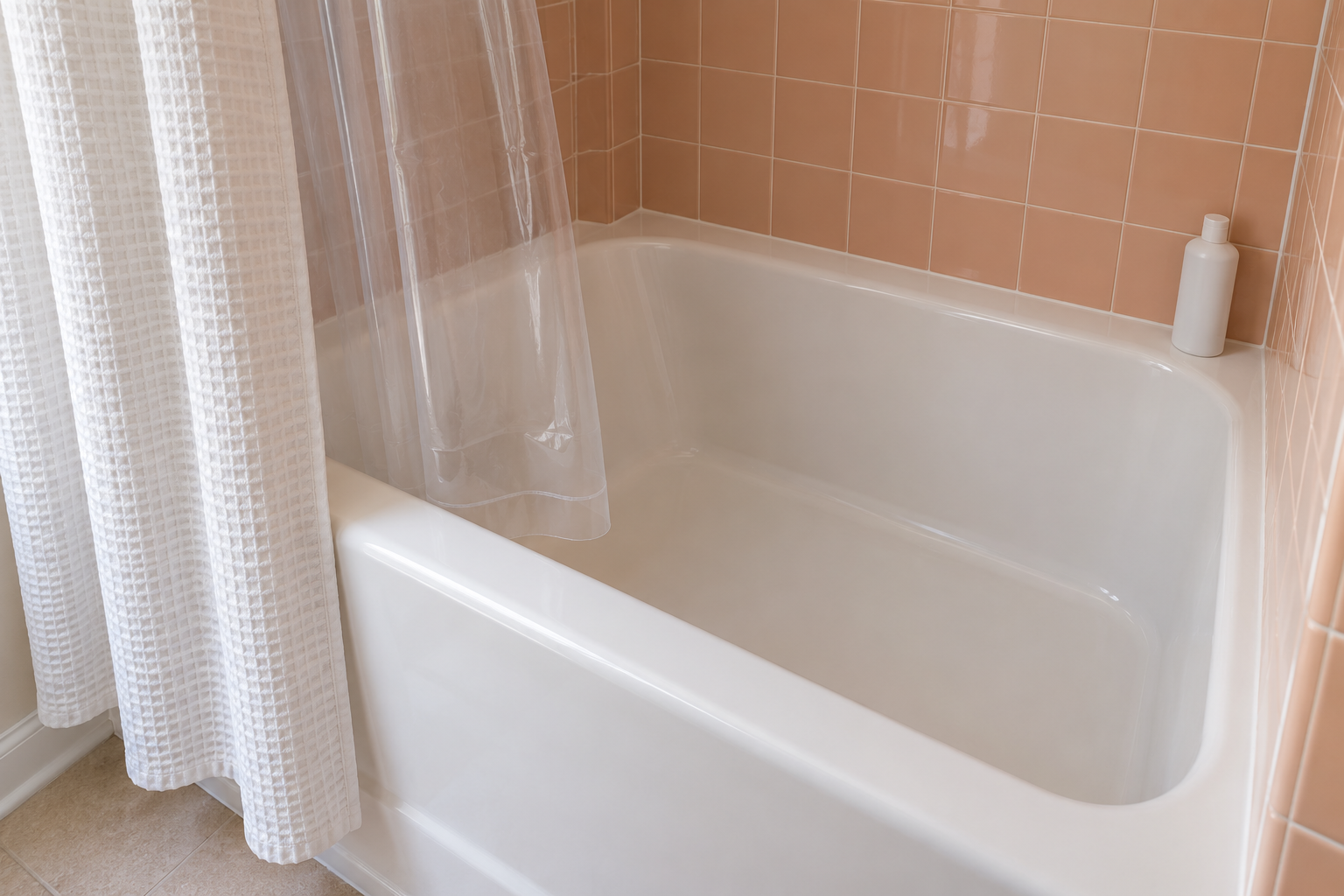
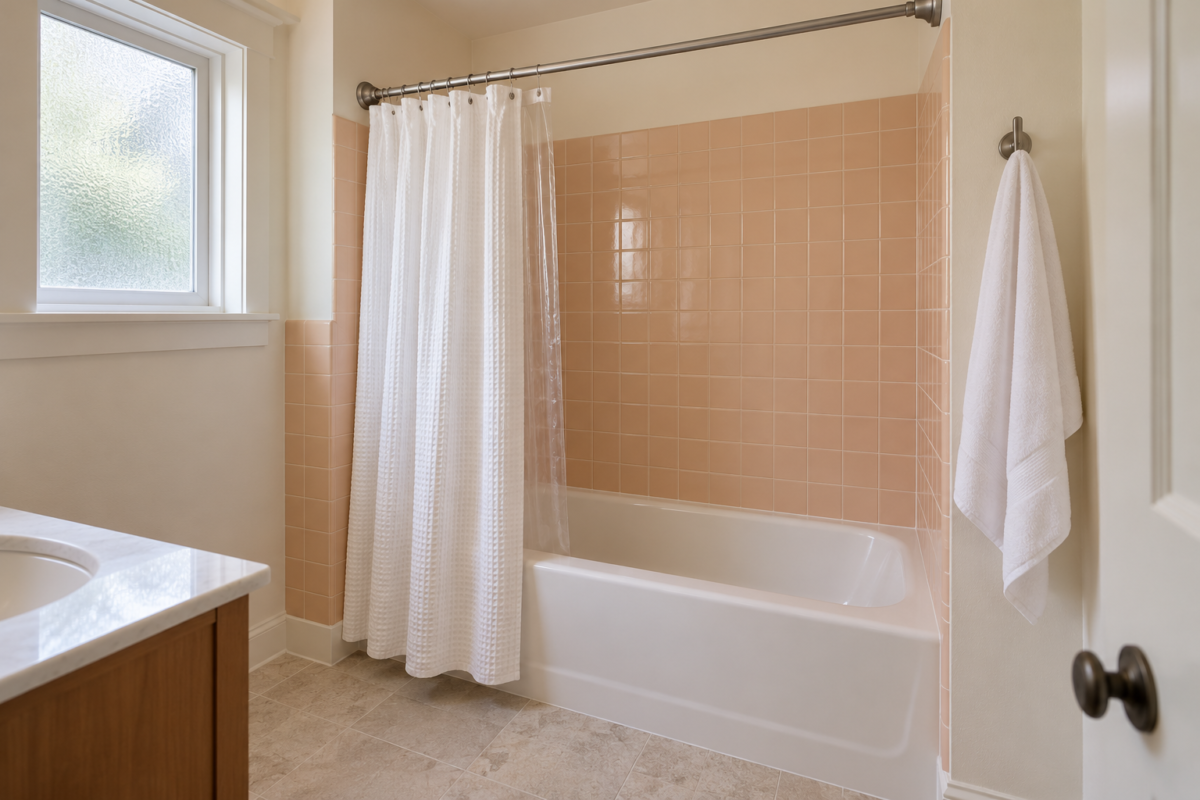
Over a tub, the liner hangs inside the rim and the curtain hangs outside it, from the same rod. The liner keeps the water in. The curtain covers the front of the tub and hangs to a few inches above the floor, so the two can be the same length and end at different places, the liner inside and the curtain outside.
A curtain that stops at the rim, or above it, leaves the tub’s front panel showing. One that reaches the floor or puddles on it picks up water from wet feet and stays damp.
In a Walk-In Shower
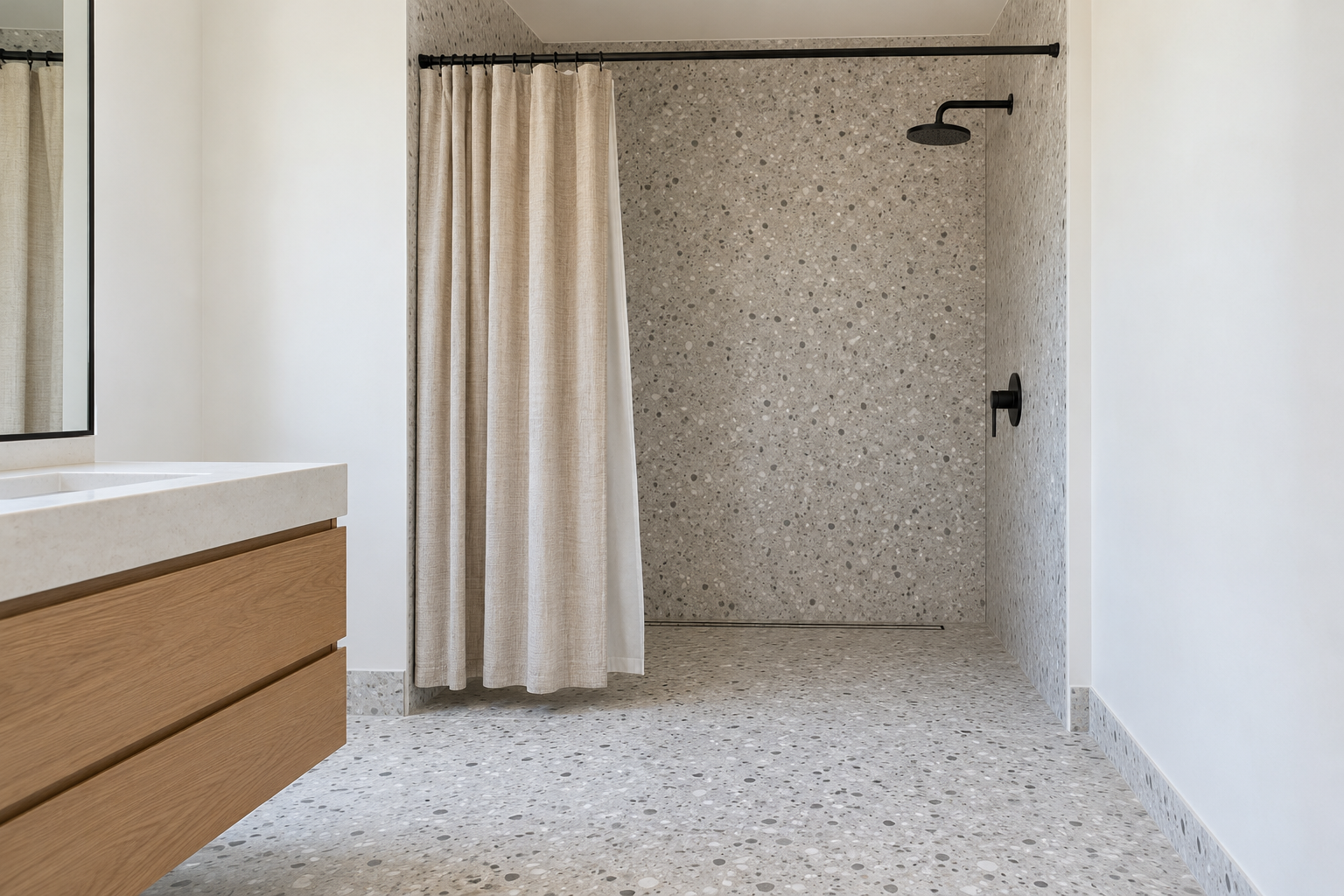
A walk-in shower without a tub has no rim for the liner to hang inside, so the hem comes down to about an inch above the floor, close enough that water runs off it onto the shower floor, not under it. With a standard 72 inch liner, that puts the rod at about 74 to 75 inches. Over a low curb, the liner hangs inside the curb in the same way.
A curtain works in a curbless shower when the floor inside it slopes to the drain, so splashes that pass under the hem run back. Where water can reach the rest of the bathroom floor freely, a fixed glass panel keeps more of it in.
Hanging It Higher
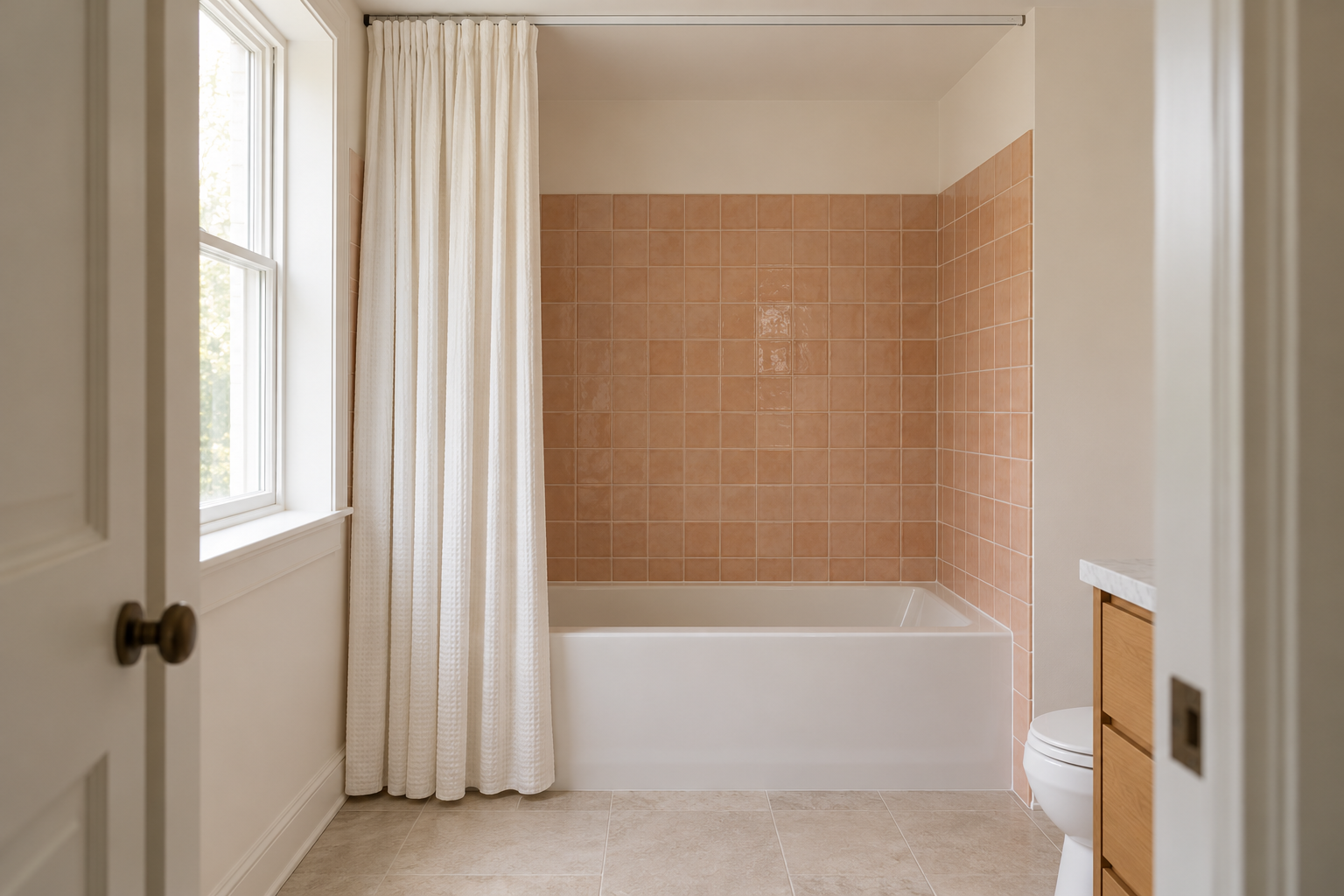
A curtain hung higher makes a small bathroom look taller and hides more of the tile and wall above the tub. The arithmetic stays the same. An 84 inch curtain and liner over a tub put the rod at about 89 inches. A 96 inch pair puts it at about 101 inches, which needs a ceiling higher than 8 feet.
Under an ordinary 8 foot ceiling, the way to take the curtain all the way up is a track fixed to the ceiling, with a curtain cut or hemmed to the length from the track to about 4 inches above the floor, roughly 90 inches. The liner has to be the same length, or it won’t reach the tub.
How Wide the Curtain Should Be
A standard curtain is about 70 to 72 inches wide, made to cover a 60 inch tub with some fullness left, so it hangs in folds when closed instead of stretched flat. For a wider shower or a tub that stands free of one wall, use a wider curtain or two panels, one from each end, which also lets the curtain open from either side.
A curved rod bows out into the room, giving more elbow room inside the shower, and needs a little more curtain width to close.
The Curtain and the Liner on One Rod
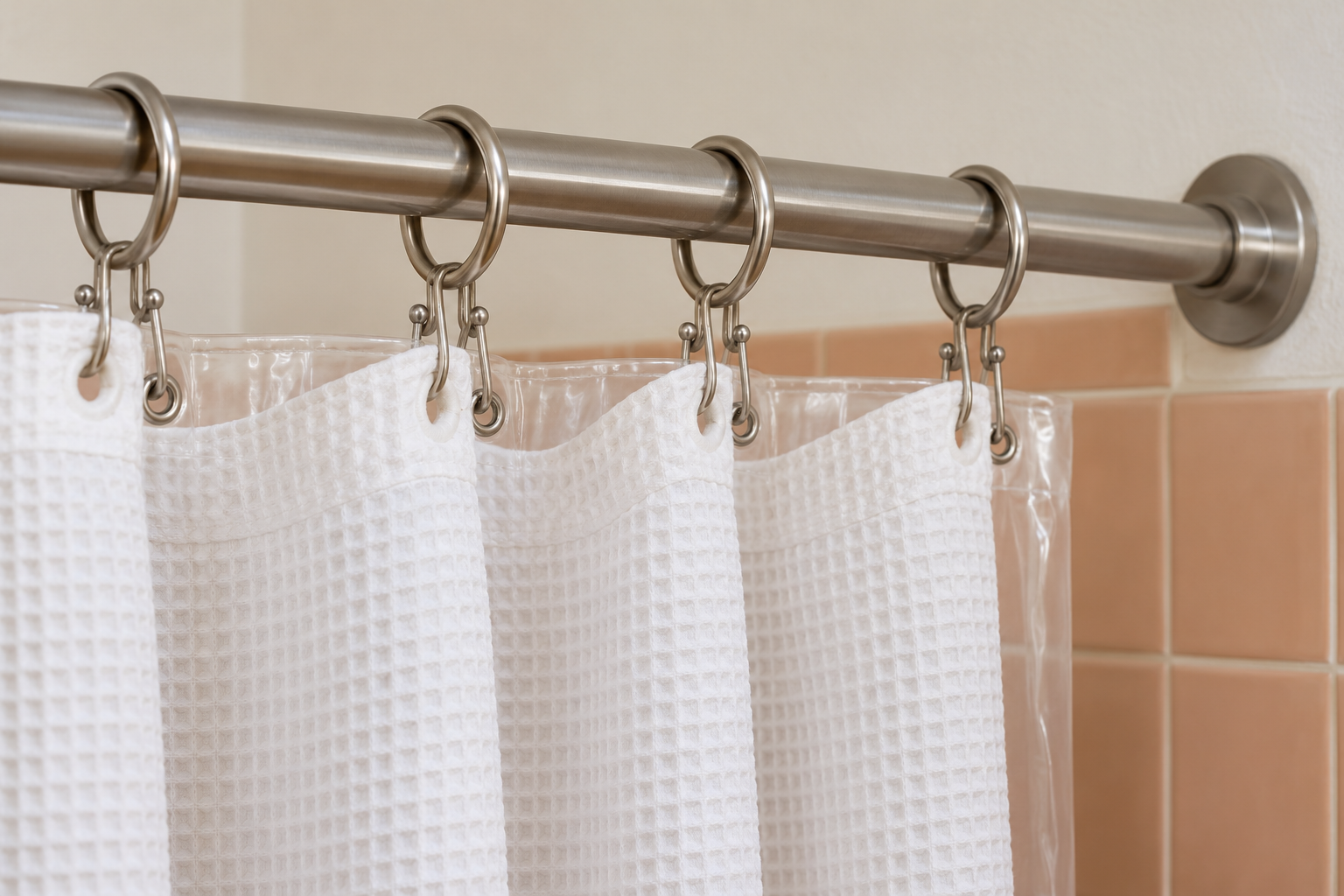
Double rings carry the curtain and the liner on separate hooks from one rod, so each can come off on its own. The liner, which gets wet every day and grows mildew at the hem, can go in the washing machine or be replaced without unhooking the curtain, and the curtain can be washed less often.
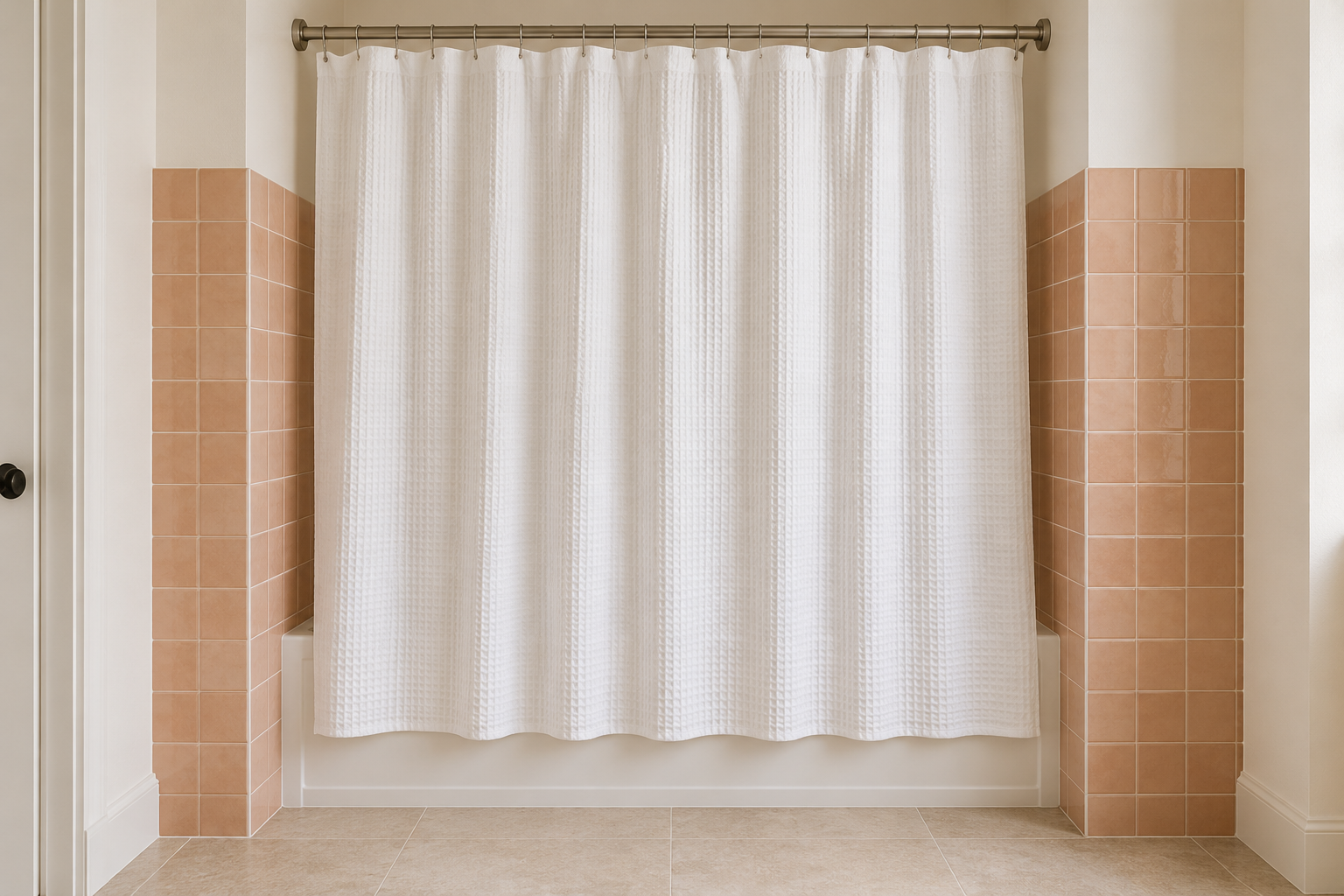
A curtain in cotton waffle or linen looks softer than plastic and lets daylight through it, and with a liner behind it the fabric stays mostly dry. Choose a liner a little narrower than the curtain, so it doesn’t show at the edges.