Most of the year a dining table goes without a cloth, or with one that has been on it so long nobody remembers measuring. Then November comes, the leaf goes in, eight people are coming instead of four, and the cloth in the drawer turns out to stop short at both ends.
Sizing a new one is two steps. Decide how far below the tabletop the cloth should hang, then add that twice to the table’s length and twice to its width, and round to a size that is sold. The first step is the one that needs thought.
Start With How Far It Hangs
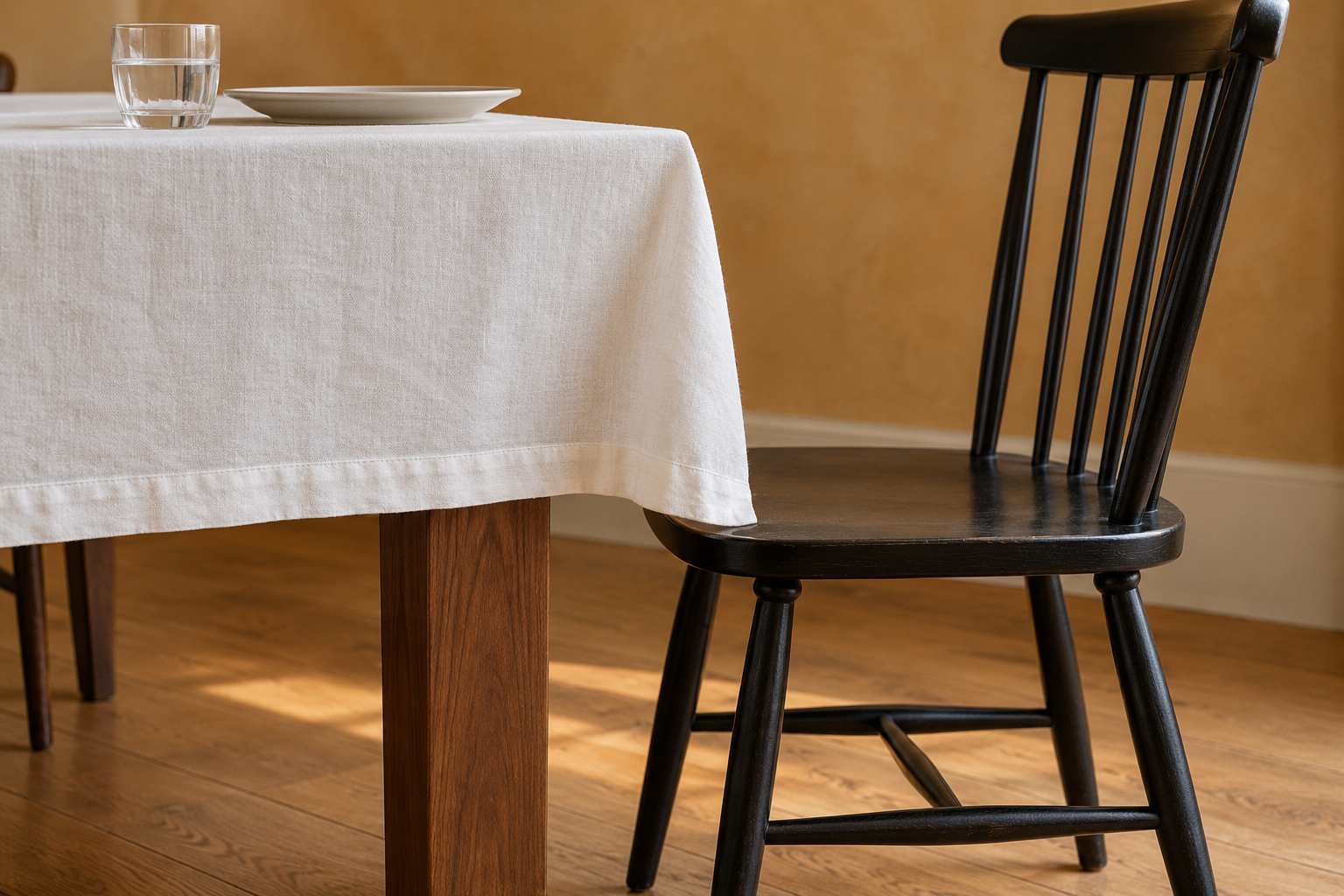
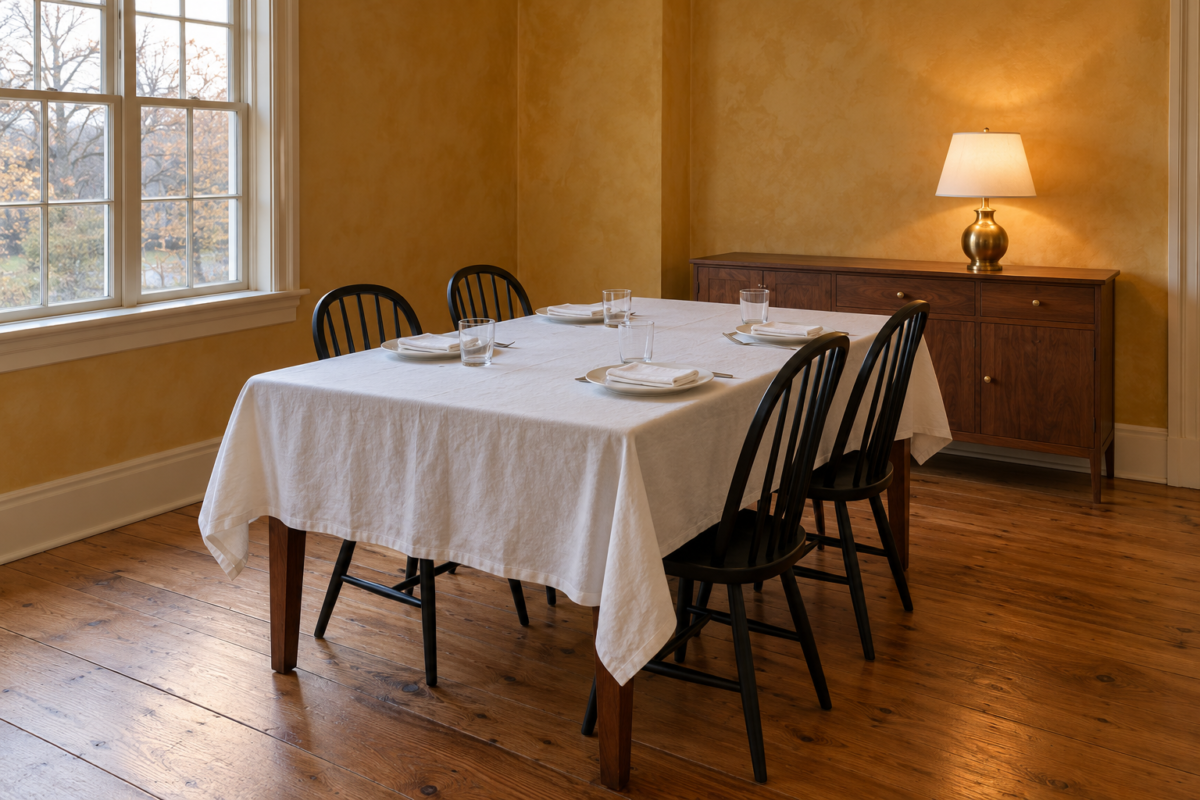
The drop is measured straight down from the edge of the tabletop to the hem. Drops fall roughly into three lengths. A short drop of 6 to 8 inches suits an everyday table. A longer one of 10 to 15 inches is the usual formal look. A cloth to the floor, about 30 inches on a standard table, is for a buffet or a side table where nobody sits.
Where the hem lands against a seated person is what separates them. A dining table is commonly about 30 inches high and a chair seat about 18, so there is roughly 12 inches between them. A cloth that hangs less than that clears the lap when a chair is pulled in. One that hangs more lies across the knees of everyone at the table, which is how a formal cloth is meant to sit, and fine for a long dinner, but it gets caught when people stand up. For a table used often, 8 to 10 inches keeps the hem just above the seats.
Long Tables Take the Drop on All Four Sides
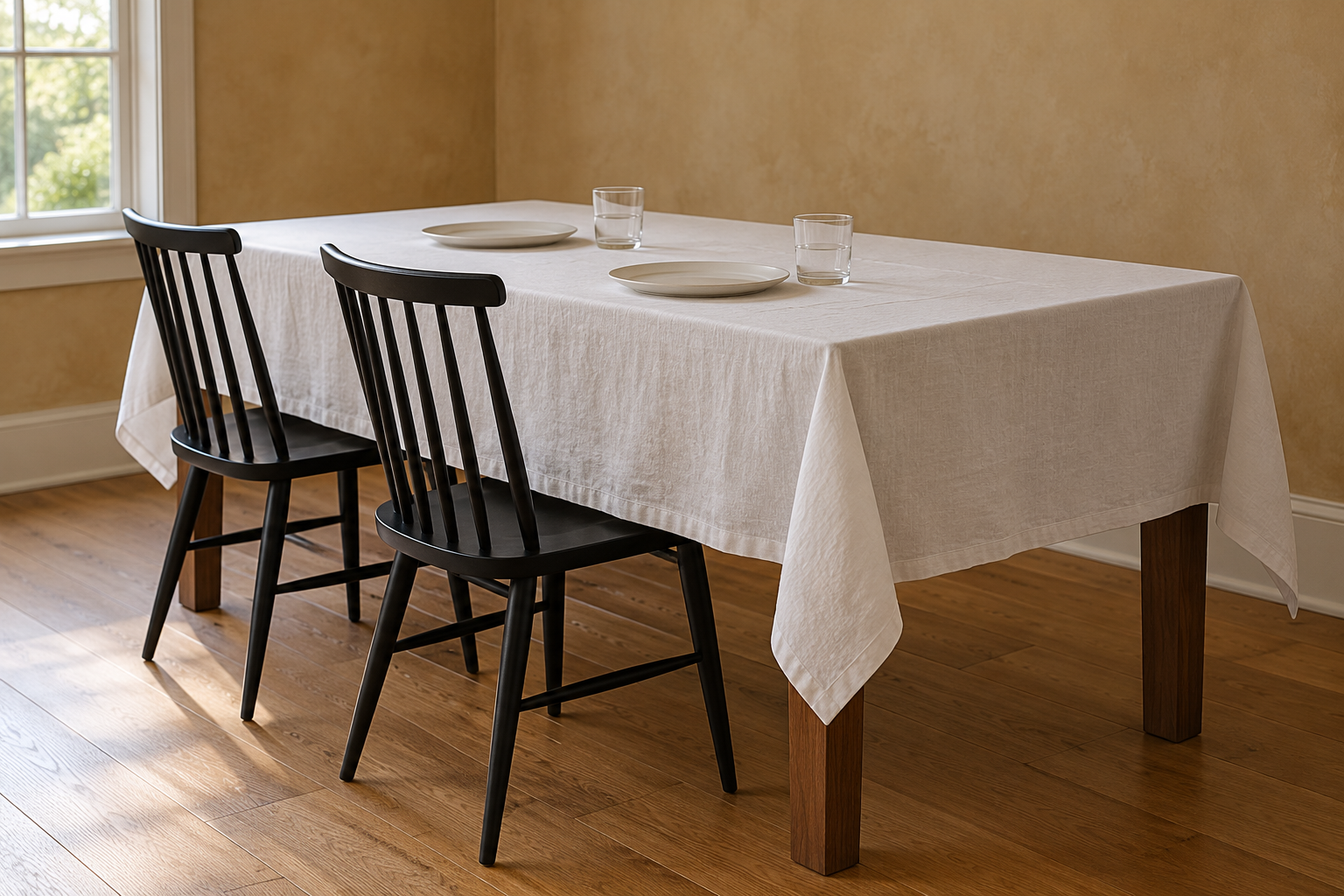
Measure the table’s length and width across the top, then add twice the drop to each. A table 72 by 40 inches with a 10 inch drop needs a cloth 92 by 60.
Rectangular cloths are sold in a fairly short list of sizes, with 60 inches the common width:
| Sold size | Fits a table about, at a 10 inch drop |
|---|---|
| 52 by 70 inches | 32 by 50 (a small kitchen table) |
| 60 by 84 inches | 40 by 64 |
| 60 by 90 inches | 40 by 70 |
| 60 by 102 inches | 40 by 82 |
| 60 by 120 inches | 40 by 100 |
When the result falls between sizes, round toward the longer cloth if a longer drop at the ends is acceptable, or the shorter one if a shorter drop is. For the table above, a 60 by 90 cloth hangs 10 inches at the sides and 9 at the ends, close enough that nobody will see the difference. An oval table takes the same arithmetic on its length and width, with an oval cloth, since a rectangular one hangs to points at the four corners.
Round Tables Add It to the Diameter

A round cloth is the table’s diameter plus twice the drop. A table 48 inches across with a 10 inch drop needs 68 inches, so a 70 inch round cloth, which hangs 11. Round cloths are commonly sold at 60, 70, 90, 108, and 120 inches.
A 60 inch round table is where the choice shows. A 90 inch cloth gives a 15 inch drop, the formal length. A 70 inch cloth gives 5, which looks skimpy on a table that size, and there is rarely anything in between. A square cloth on a round table hangs in four points and is a look of its own, not a substitute.
When the Leaf Goes In
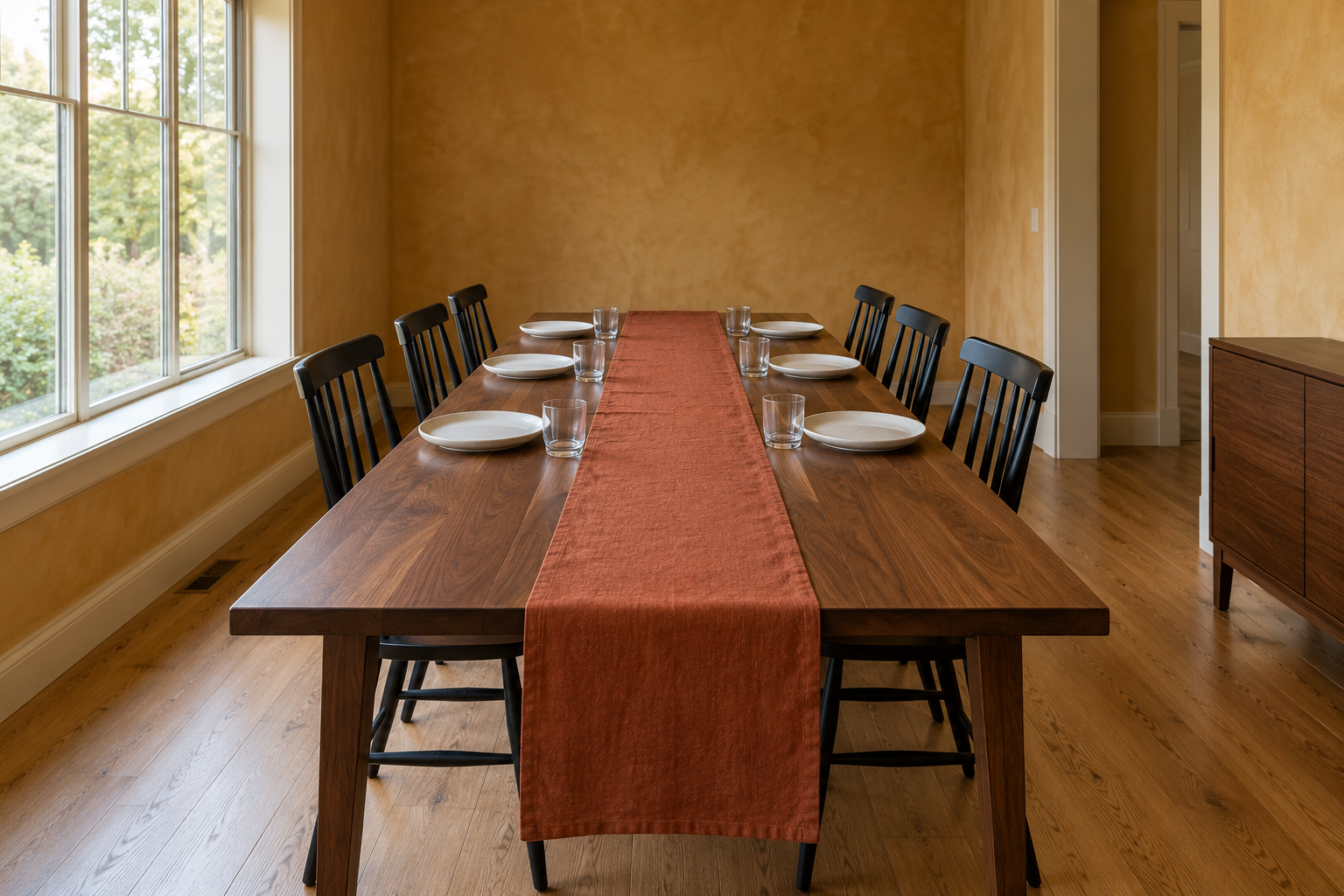
An extending table is two tables for the purpose of a cloth. Measure it as it will be set. With an 18 inch leaf, the 72 by 40 table above becomes 90 by 40, and at the same 10 inch drop it needs a cloth 110 by 60. The nearest sold size is 60 by 120, which hangs 10 inches at the sides and 15 at the ends. That is the formal length at the ends and suits a holiday dinner.
The same cloth on the table without its leaf hangs 24 inches at each end, nearly to the floor, and drags when chairs at the ends are moved. One cloth will not suit both sizes. Keep two, one for each, or leave the table bare for the holidays and use a runner.
A runner gets around the problem, since it covers only the middle of the table. Make it 12 to 24 inches longer than the table, so it hangs 6 to 12 inches over each end, and about a third of the table’s width, so 13 to 14 inches on a table 40 inches wide. On a table with a leaf, a runner sized for the full length still lies flat on the shorter table, with its ends folded under or left hanging about 9 inches longer at each end, half the length of the 18 inch leaf. A plain cloth in one color, like the linen base suggested for a Thanksgiving table, can stay on through December, so the one bought for the leaf gets used twice.