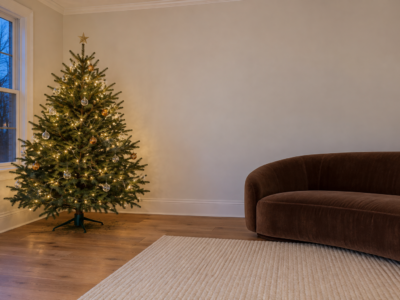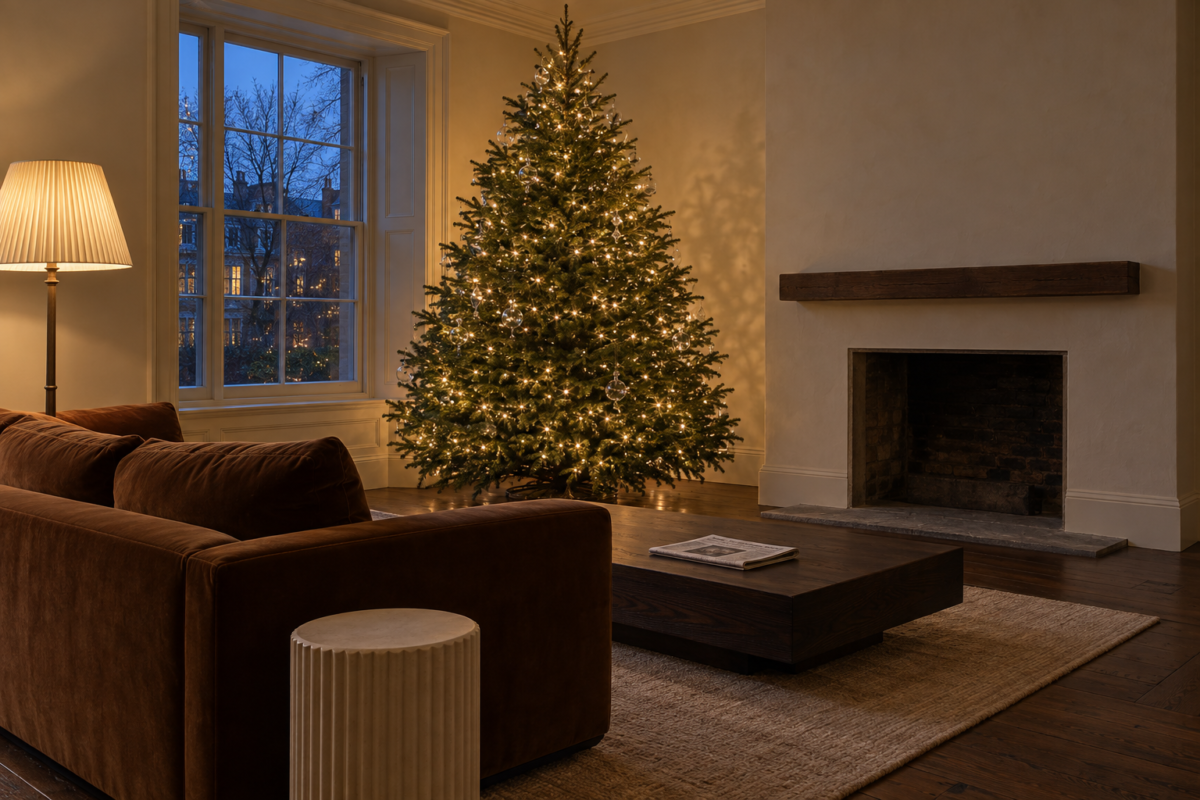
About 100 mini lights for every foot of tree height is a good place to start. A 6-foot tree takes around 600, a 7.5-foot tree around 750, and a 9-foot tree around 900. That gives a tree that looks evenly lit from across the room without the glare of a heavily lit one.
The number is only half of it. Where the lights sit changes how many a tree seems to have. A tree wrapped only around its outer tips can look patchy with 1,000 lights, while one lit from the trunk out can look full with fewer. The sections below cover the count first, then how to string the lights, the wire and bulb color, and the plug.
Start at About 100 Lights per Foot
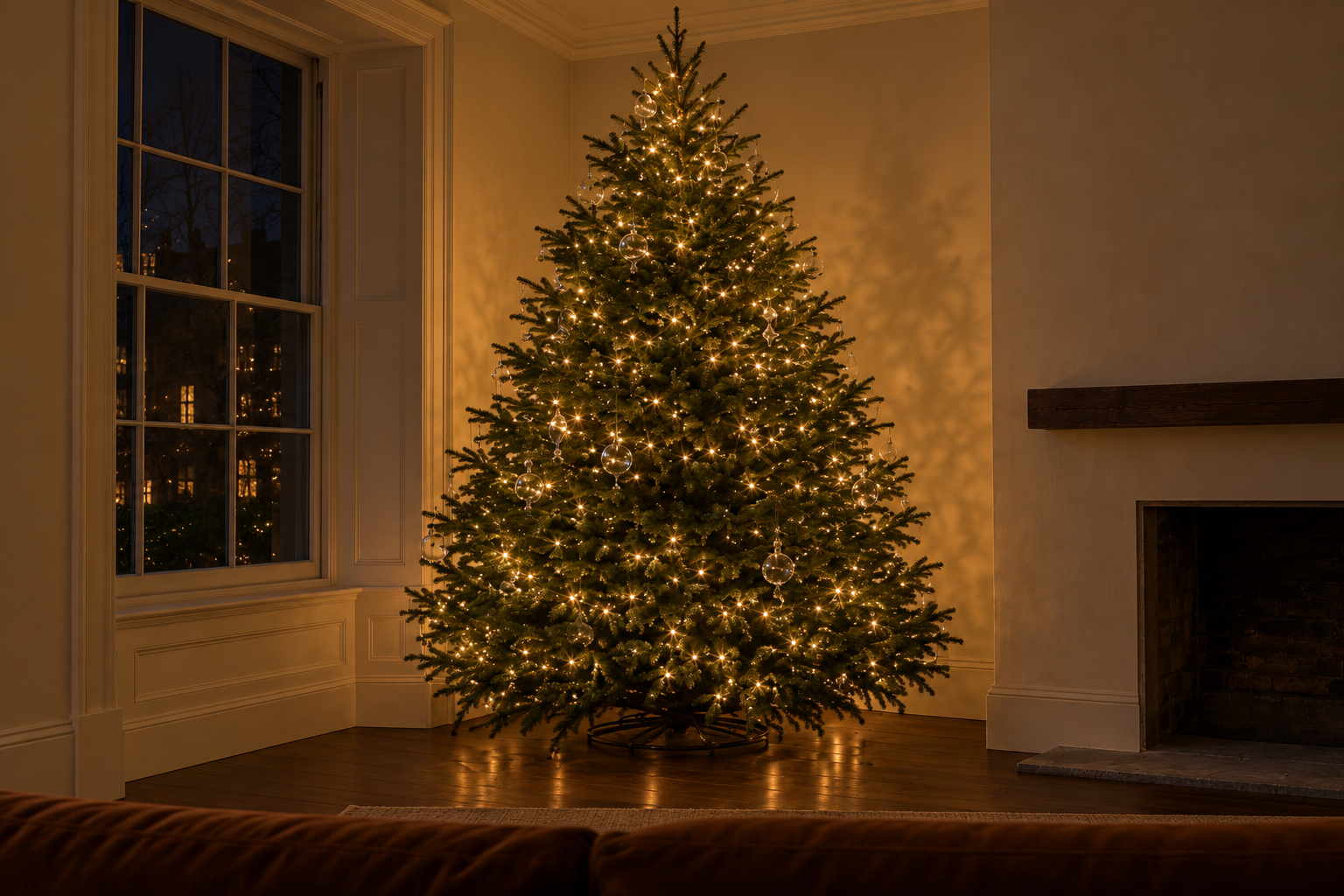
The 100-per-foot figure assumes ordinary mini lights on a tree of average fullness. Treat it as the middle of a range. At about 50 per foot, the tree has a soft, scattered glow, which suits a lightly decorated tree or one where the ornaments do most of the work. At 150 or more, the tree glows from inside and the lights become the main decoration.
| Tree height | Light (about 50 per foot) | Standard (about 100 per foot) | Full (about 150 per foot) |
|---|---|---|---|
| 4 feet | 200 | 400 | 600 |
| 6 feet | 300 | 600 | 900 |
| 7.5 feet | 375 | 750 | 1,125 |
| 9 feet | 450 | 900 | 1,350 |
Buy the whole count before you start. Running out two-thirds of the way up and adding a set from a different box is how a tree ends up with a band of slightly different white near the top.
Adjust for the Width of the Tree
Height is only a rough stand-in for how much branch there is to cover. A full 7.5-foot tree can be 5 feet across at the base, while a slim tree of the same height might be 2.5 feet across, with roughly half the branch surface. Cut the count by a third or more for a slim or pencil tree, and add a quarter or so for an extra-full one.
Dense trees, like a Fraser fir or a full artificial tree, hide lights set deep inside, so they can take the top of the range. An open tree like a noble fir shows every bulb and every length of wire, and fewer lights, placed carefully, usually look better on it.
String Lights From the Trunk Out
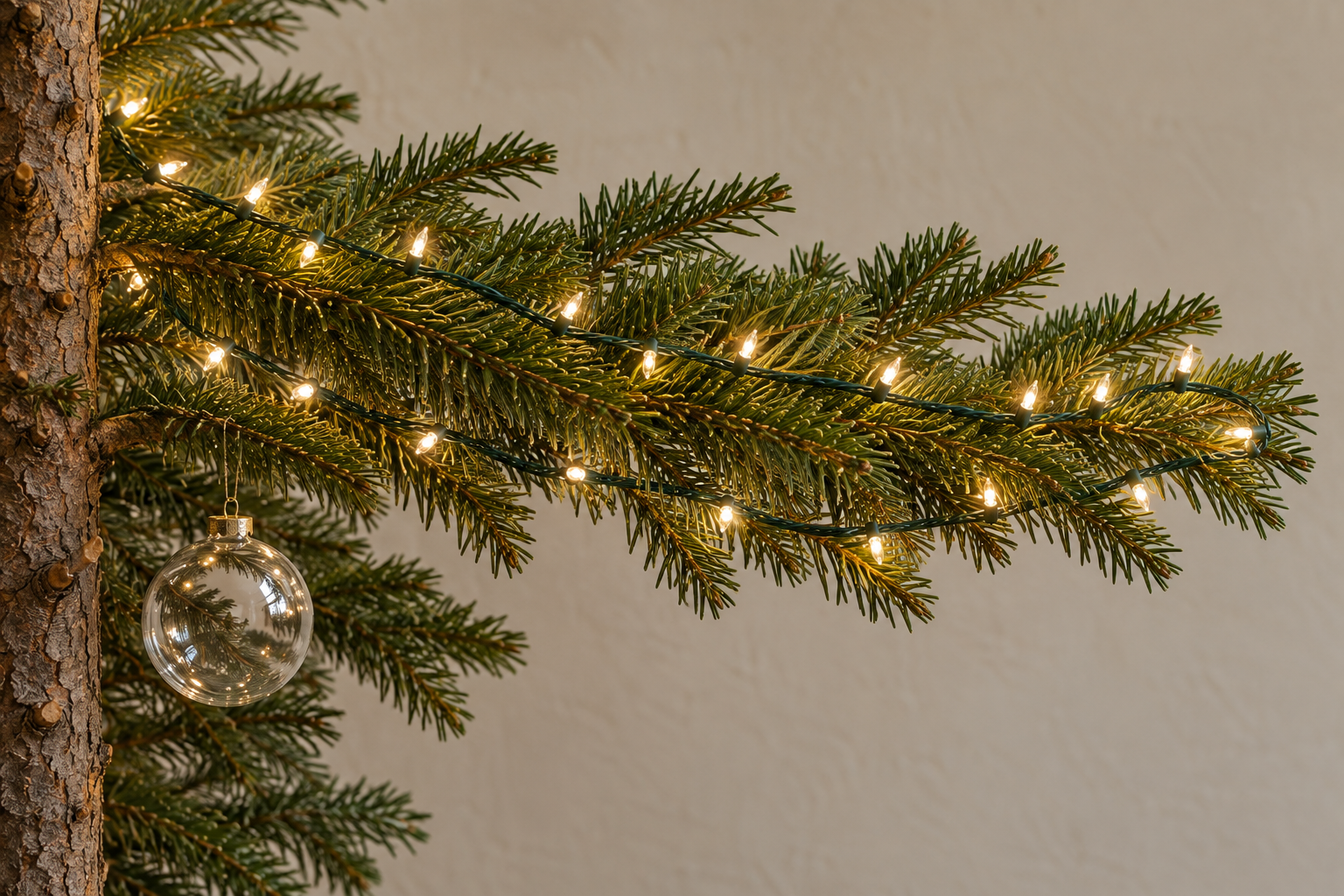
Wrapping lights around the outside of a tree in a spiral is quick, and it leaves the inside dark. Running them along each branch, from near the trunk out to the tip and back, lights the tree through its depth. It glows from inside, and the ornaments hung deeper in the branches catch the light too.
Work in vertical sections. Picture the tree in three wedges, like slices of a cake. Start at the bottom of the wedge nearest the outlet and work up one branch at a time to the top before starting the next wedge. Plug each set in before it goes on the tree, so a dead strand shows up before it’s woven into the branches. Done this way, a 7.5-foot tree takes an hour or more, where a spiral takes a few minutes.
Match the Wire to the Branches
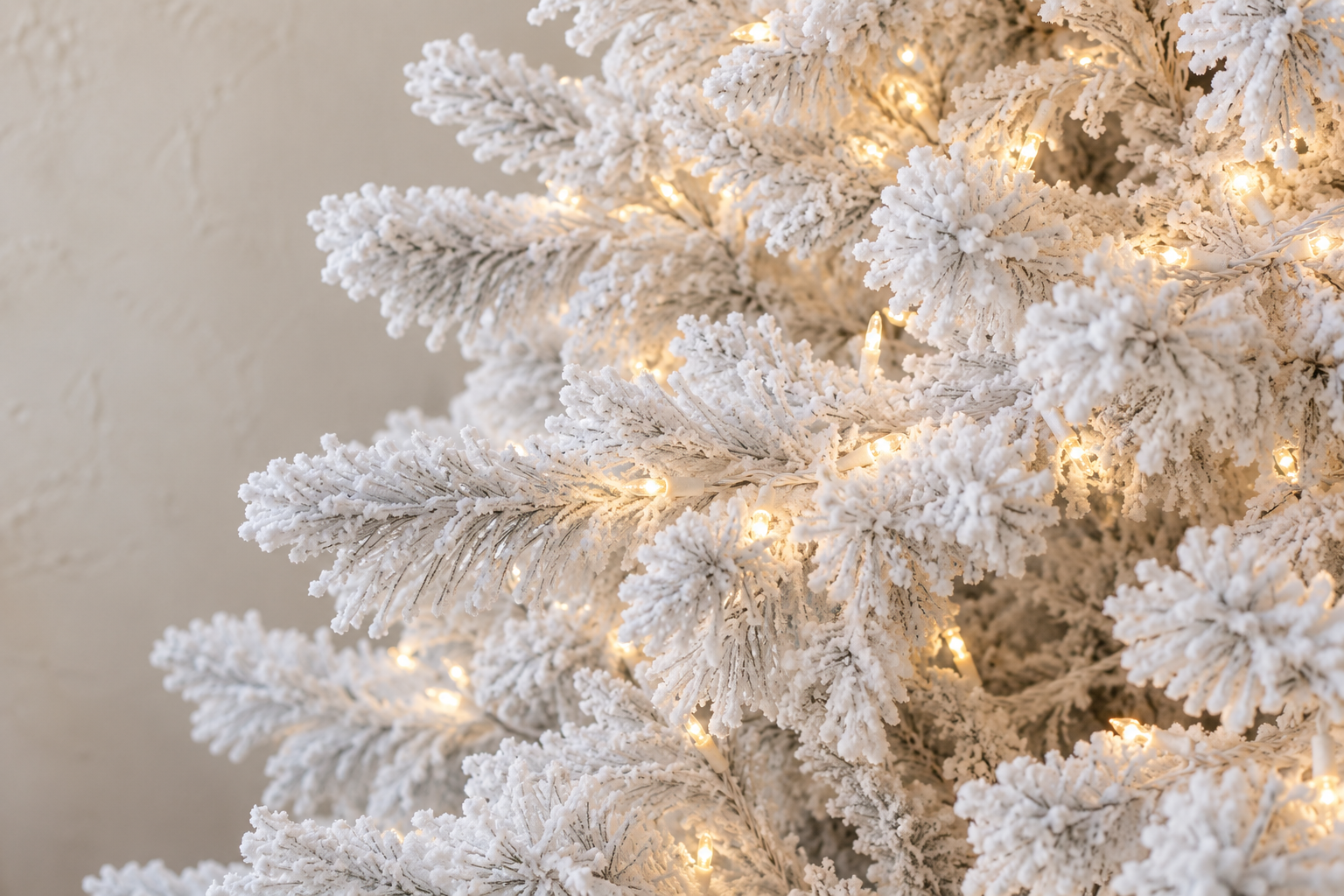
Green wire disappears into a green tree. On a flocked or white tree it shows as dark lines, so use white wire there. Clear wire is sold as a neutral option, but it catches the light and tends to show on both.
The same goes for the lead to the outlet. A green cord run down the back of the trunk vanishes, while a white or orange extension cord crossing the front of the tree is the first thing anyone sees in daylight.
Choose Warm White or Multicolor Before You Buy
Warm white LEDs, usually labeled around 2700K or lower, give a light close to old incandescent bulbs. Sets sold as cool white or daylight run bluer and can look harsh in a living room at night. Multicolor lights are a different look altogether, and they’re more forgiving to mix, since small differences between colored bulbs don’t show.
White LEDs vary more than their labels suggest. Two warm white sets from different brands, or from different years of the same brand, can look like two different colors side by side. Buy every set for one tree at the same time, from the same product line. In the evening the tree becomes one of the room’s lamps, so it should sit comfortably with the room’s other lighting, and warm white usually does.
Plan the Plug Before the Tree Goes Up
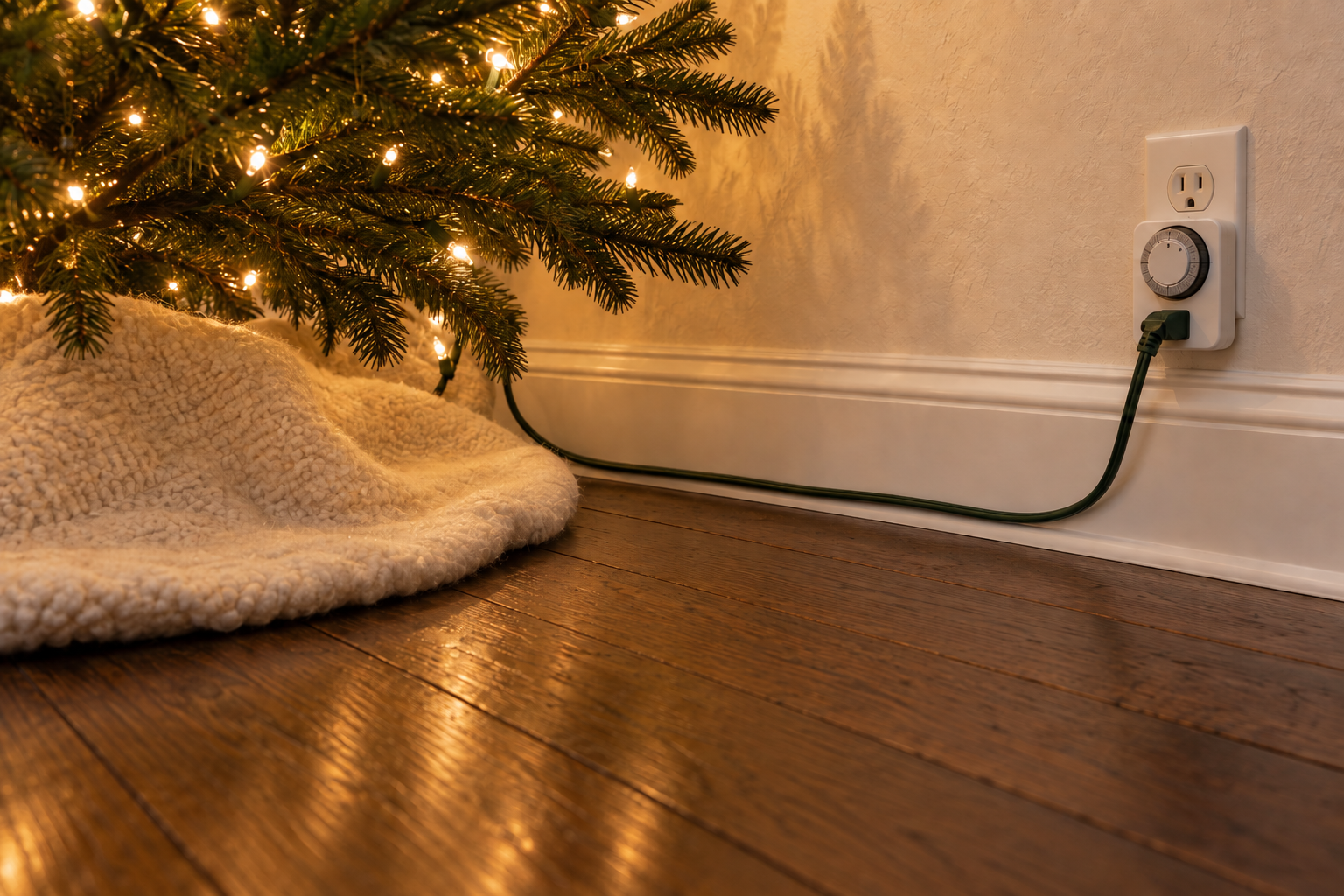
Put the tree near an outlet if you can, and start stringing on the side closest to it, so the lead reaches without an extension cord across the floor. Check the packaging for the maximum number of sets you can connect end to end, and stay under it. LED sets usually allow far more than old incandescent ones.
A plug-in timer switches the tree on at dusk and off at bedtime, so nobody has to reach behind it twice a day. Use sets rated for indoor use and marked by a testing lab such as UL or ETL, and switch the lights off when you go to bed or leave the house. With a cut tree, keep the stand topped up with water and keep the tree at least 3 feet from fireplaces, radiators, and heat vents, since a dry tree catches fire easily.
Frequently Asked Questions
Do pre-lit trees have enough lights?
Many do. A pre-lit 7.5-foot tree often comes with somewhere between 500 and 1,000 lights, which sits inside the range above. Check the count on the box against the table. If it comes in low, add a set of the same color deep in the branches, where a slight difference in shade is hardest to see.
Should I use LED or incandescent lights?
LED, for most trees. LEDs use far less power, run much cooler, and let you connect many more sets end to end. Incandescent sets give a slightly softer light that some people prefer, but their bulbs get hot, so keep paper and felt ornaments away from them.