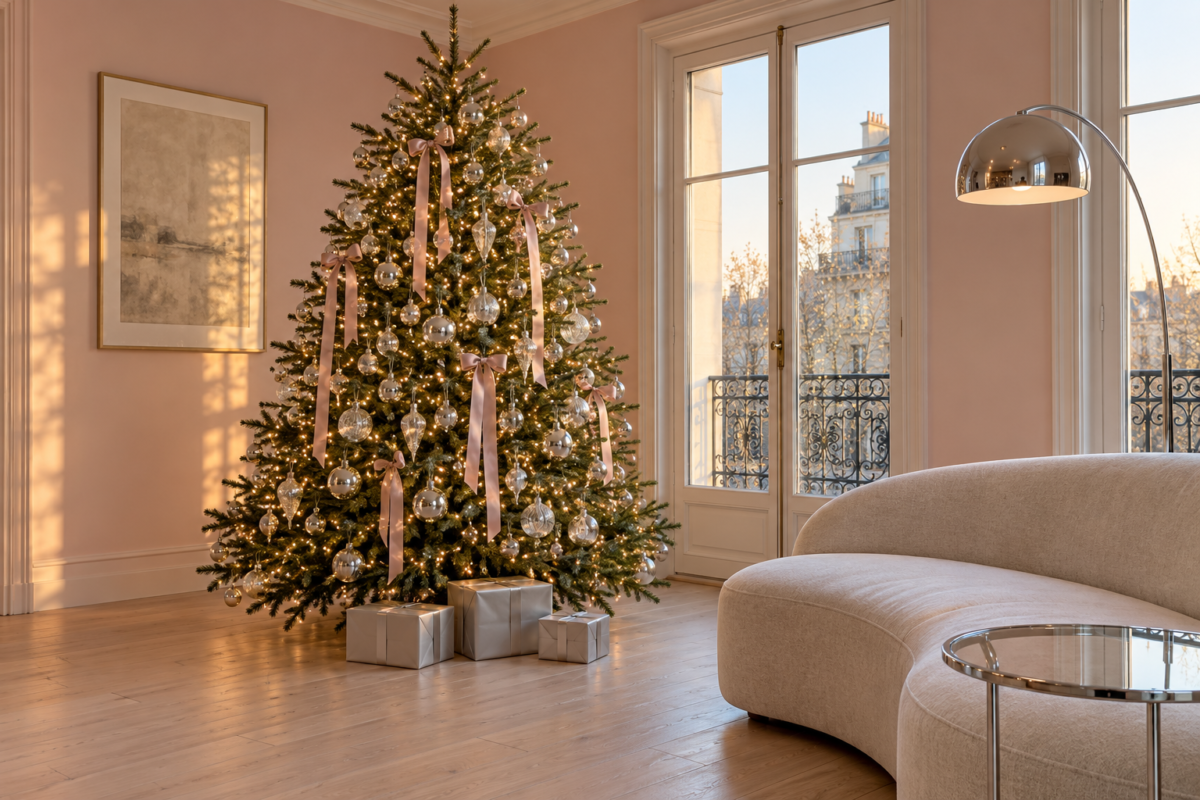
The tree usually goes up the same way every year. The lights go on first, then whatever comes out of the ornament boxes, hung wherever the branches allow, with a star at the top because there has always been a star at the top. It works. But the tree is the one piece of decorating in the house that gets rebuilt from nothing each December, which makes it the easiest place to try something different.
The ideas below deal with the tree itself: ribbon, ornament color and placement, handmade and heirloom pieces, toppers, the stand, and the kinds of tree that suit a narrow corner or a tabletop. Some make a tree fuller and more layered, others strip it back. Lights always come first, and our guide to how many lights a tree needs covers that step. For the rest of the house, these Christmas decorating ideas go room by room.
Run Ribbon From the Top Down
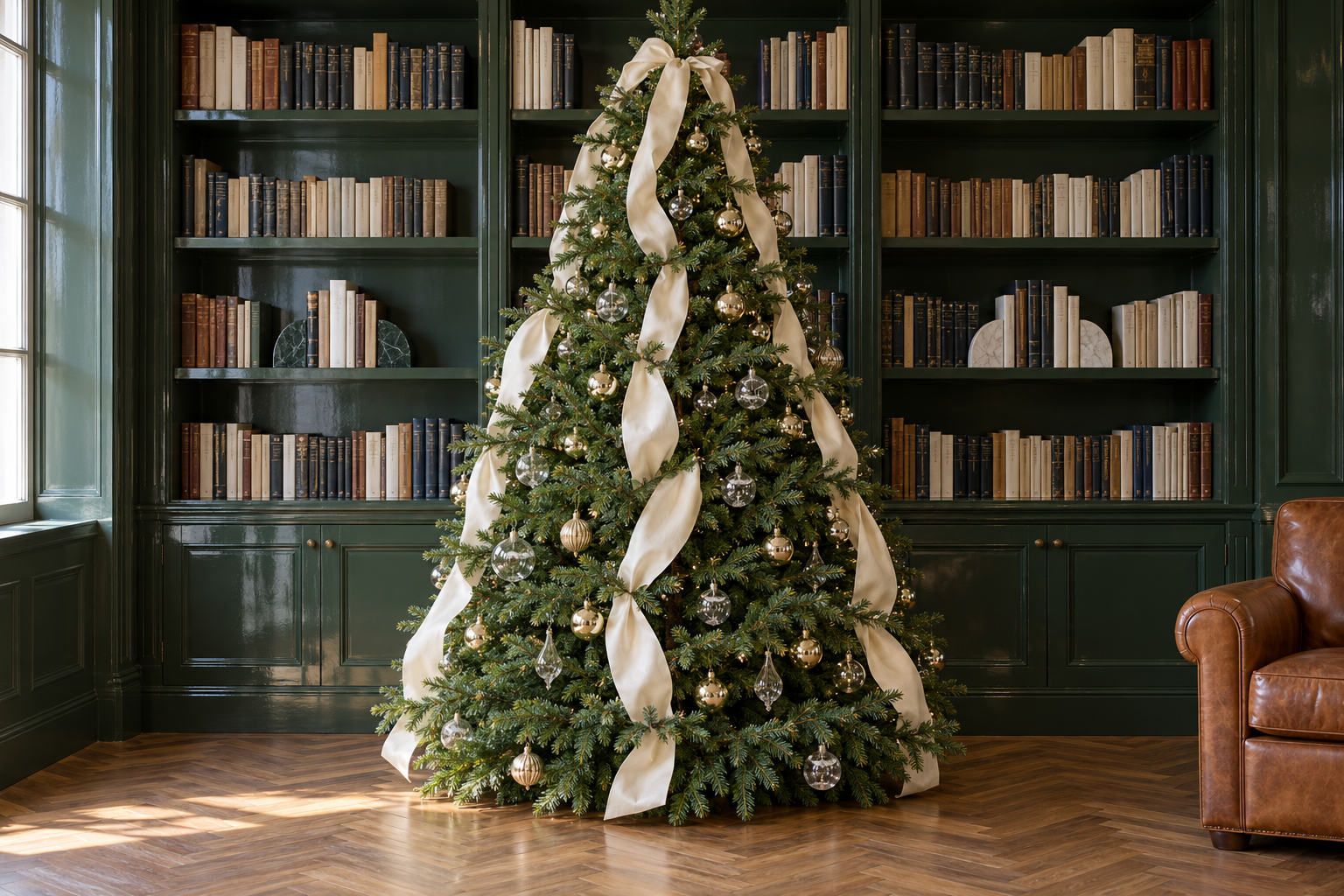
Ribbon wound around a tree in a spiral tends to look like a candy stripe from across the room. Running it in vertical lengths instead, from the top down, gives the tree long lines that pull the eye up. Tuck each length into the branches about every foot and let it billow a little between tucks. Wired ribbon between 2.5 and 4 inches wide holds a fold where you push it in, which plain satin won’t do.
On a 7-foot tree, five or six lengths spaced evenly around the front and sides is a good start. Cut each one a little longer than the tree is tall to allow for the billows. One ribbon in one color, like the cream silk here against dark green shelves, gives the tree more shape than three patterns competing for the same branches.
Stick to One Ornament Color Family
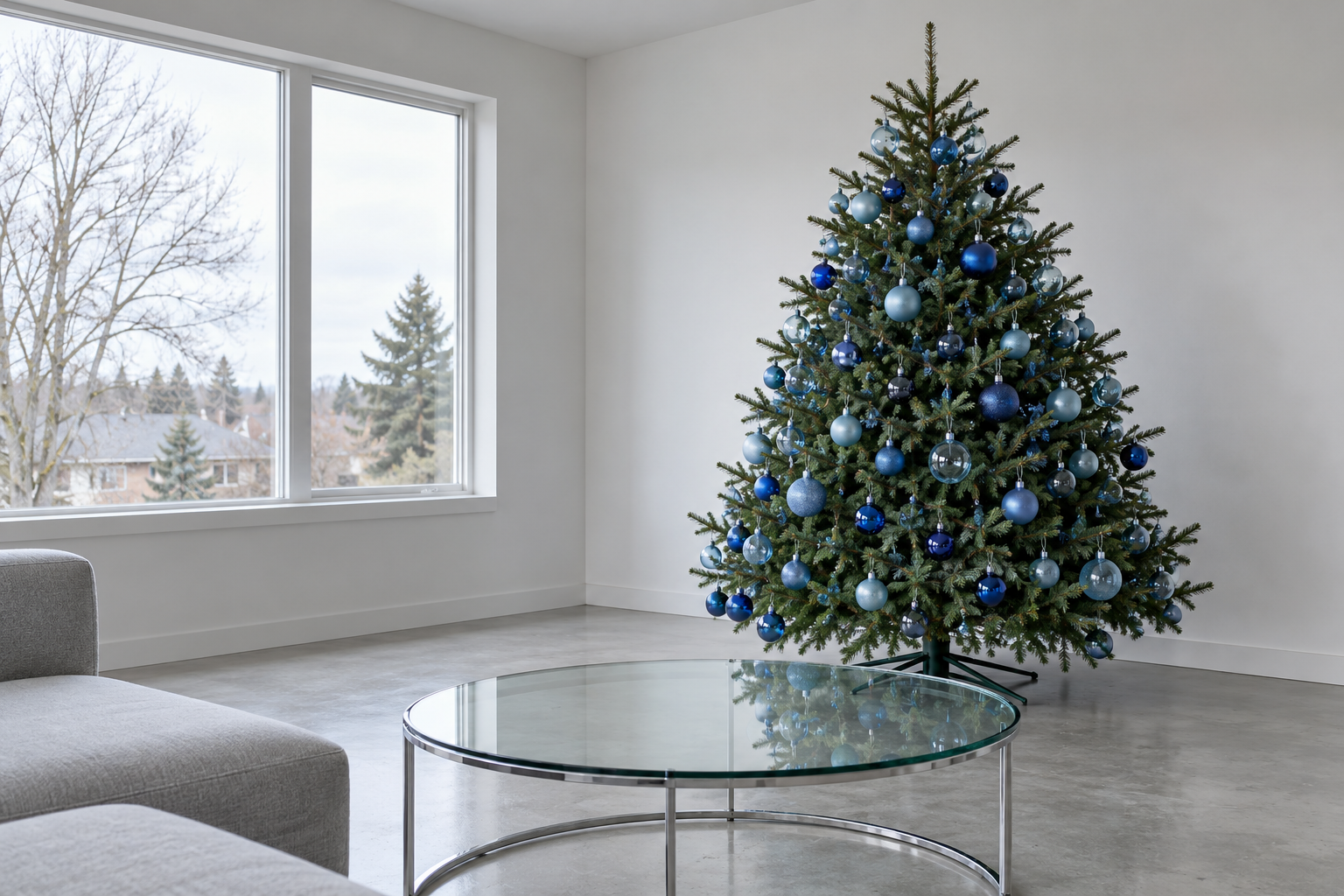
A tree dressed in one color family looks planned, even when the ornaments came from six different shops. Blue works well, running from pale ice to deep cobalt, because the range within one hue gives the tree depth without a second color to manage. Mixing finishes inside that range (matte, glossy, glitter, clear glass) keeps it from going flat.
Choose the family from the room around the tree. In a white room with chrome and glass, cool blues and clear glass sit comfortably. In a room full of warm wood, amber, copper, and gold do the same job. If giving up the old mixed ornaments feels wrong, they can go on a second, smaller tree in the kitchen or a bedroom.
Hang Ornaments Deep in the Branches
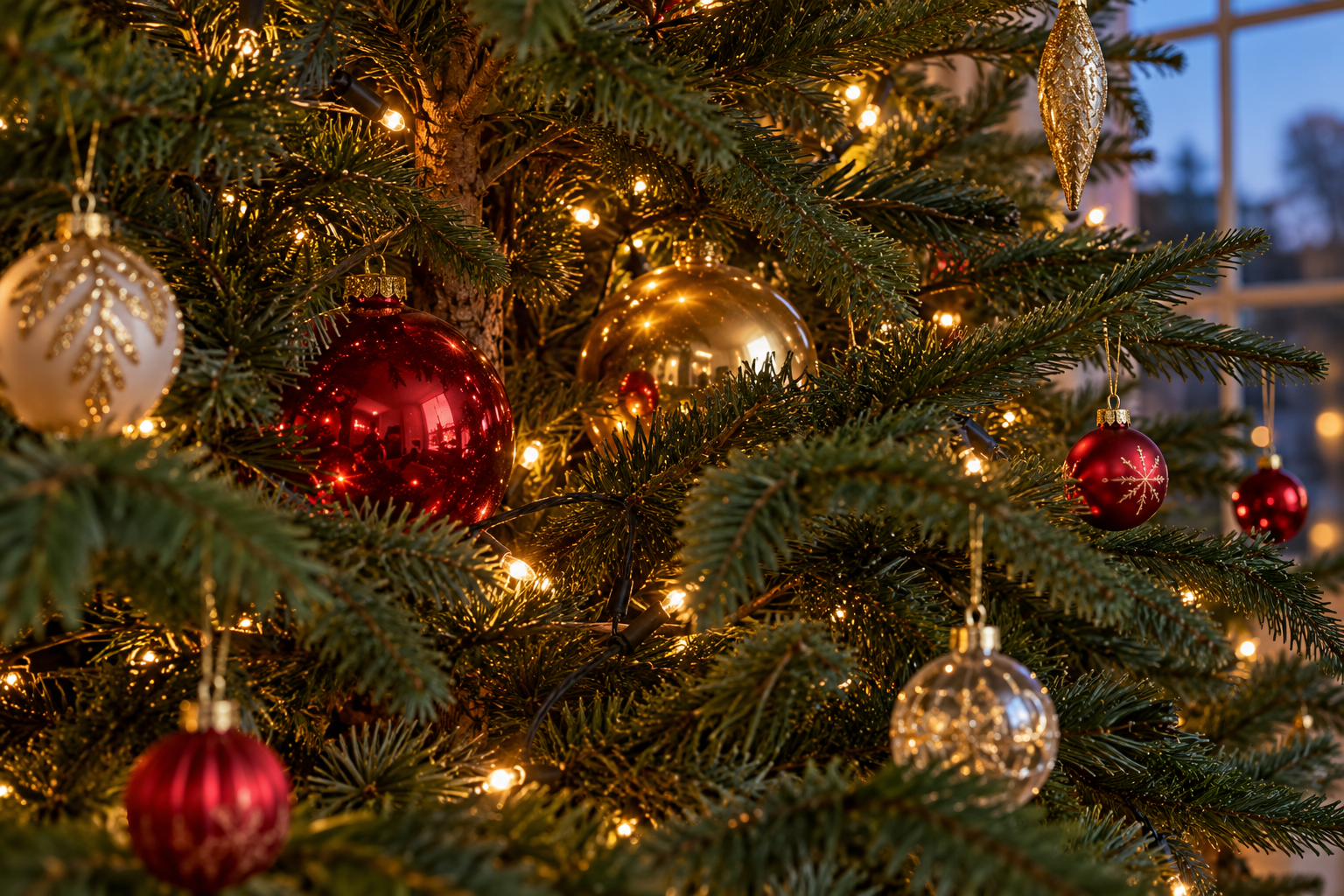
Most ornaments end up on the tips of the branches, where they’re easiest to reach. The result looks decorated on the surface and hollow behind it, and the gaps show once the lights come on. Hanging a third or so of the ornaments well inside, near the trunk, fills that depth and makes the tree look denser than it is.
Use the larger, plainer balls for this inner layer. They catch light from the strings around them, and nobody needs to see their details. Heavier ornaments belong there anyway, on the thicker inner branches that won’t droop. Keep the smaller and more detailed pieces for the outer tips, where people see them up close.
Use Bows in Place of Baubles
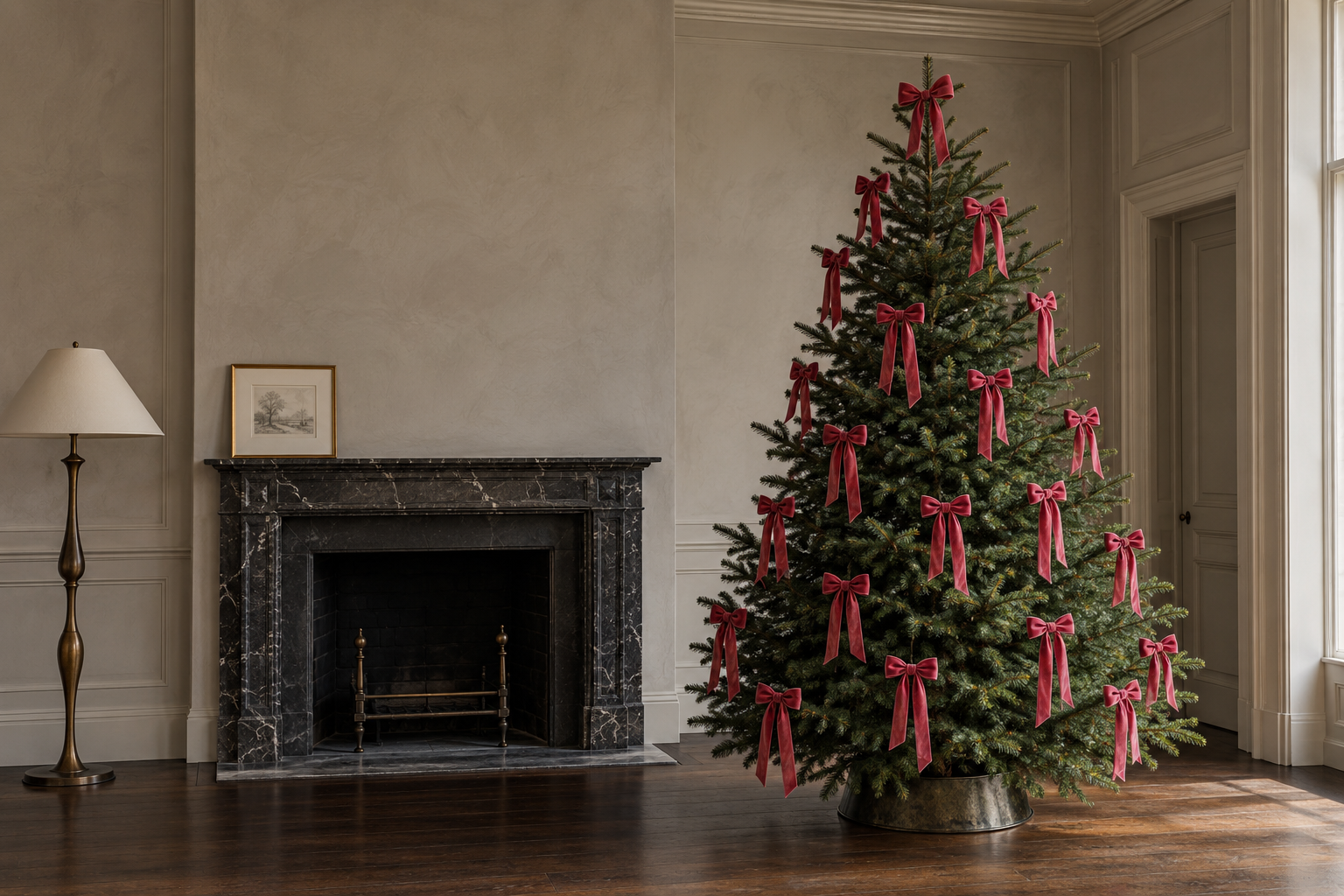
A tree hung with fabric bows and nothing else has a softer outline than one covered in glass. Velvet holds its shape best and soaks up light instead of reflecting it, so from across the room the tree reads as one color, like the raspberry bows here against warm gray plaster. Somewhere around 20 to 30 medium bows fills a tree of 6 or 7 feet without crowding it.
Bows are also the most practical choice in a house with a toddler or a cat, since nothing breaks when one falls. Buy them with a wire or clip on the back, or tie your own from wired ribbon so every bow comes out the same size.
Mix Paper, Wood, and Felt Ornaments
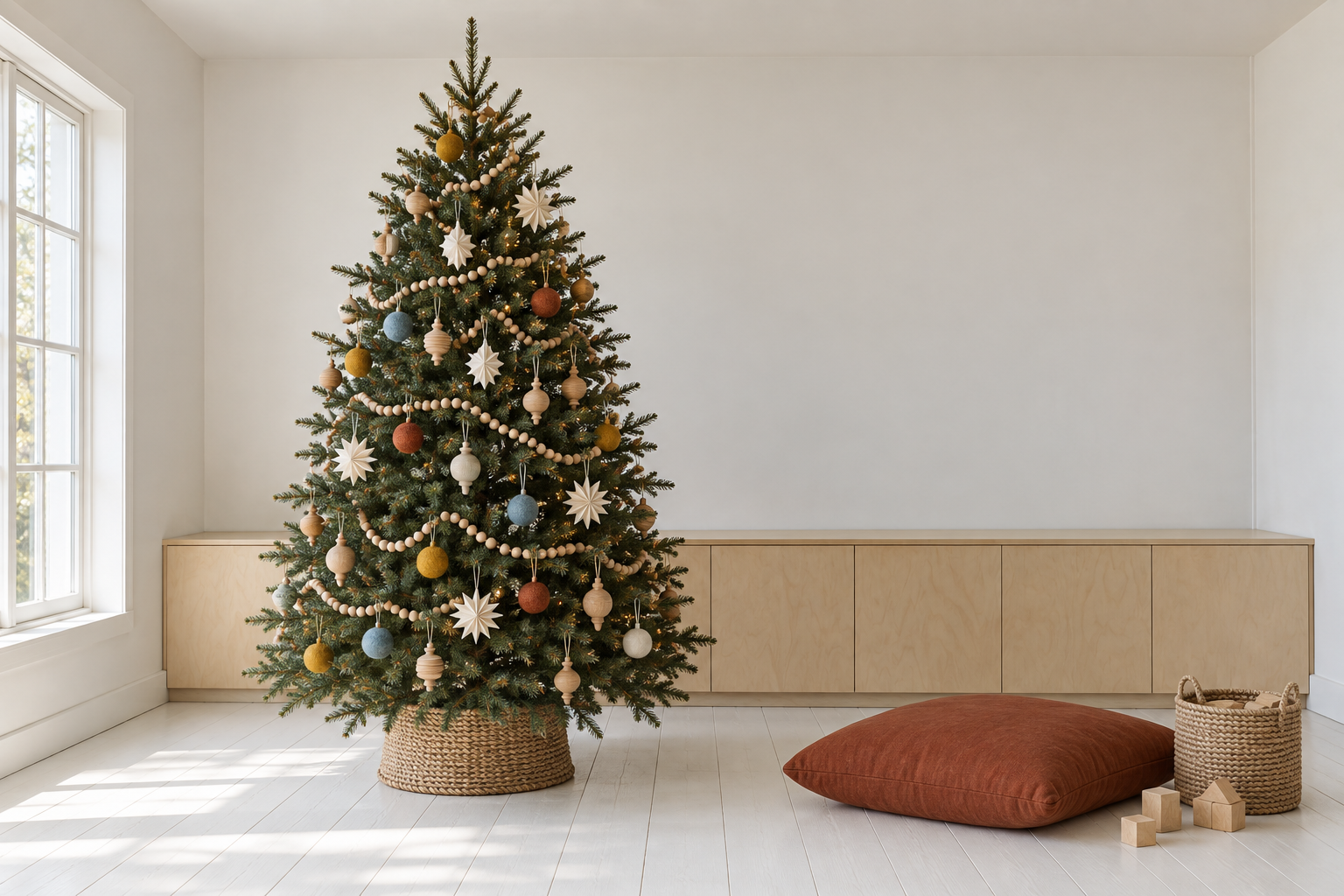
Handmade ornaments give a tree a different kind of texture, matte and light and slightly irregular. Felt shapes, folded paper stars, wooden bead garlands, and turned wood ornaments look at home together because none of them shines, so the tree looks warm even before the lights go on.
They suit a family room, where children can hang them without anything breaking and add a few of their own each year. Paper and felt are light enough for the thin outer tips of an artificial tree, where heavy glass would make the branch sag. Keep them clear of the bulbs on older incandescent strings, which run hot.
Save the Top Branches for Old Glass
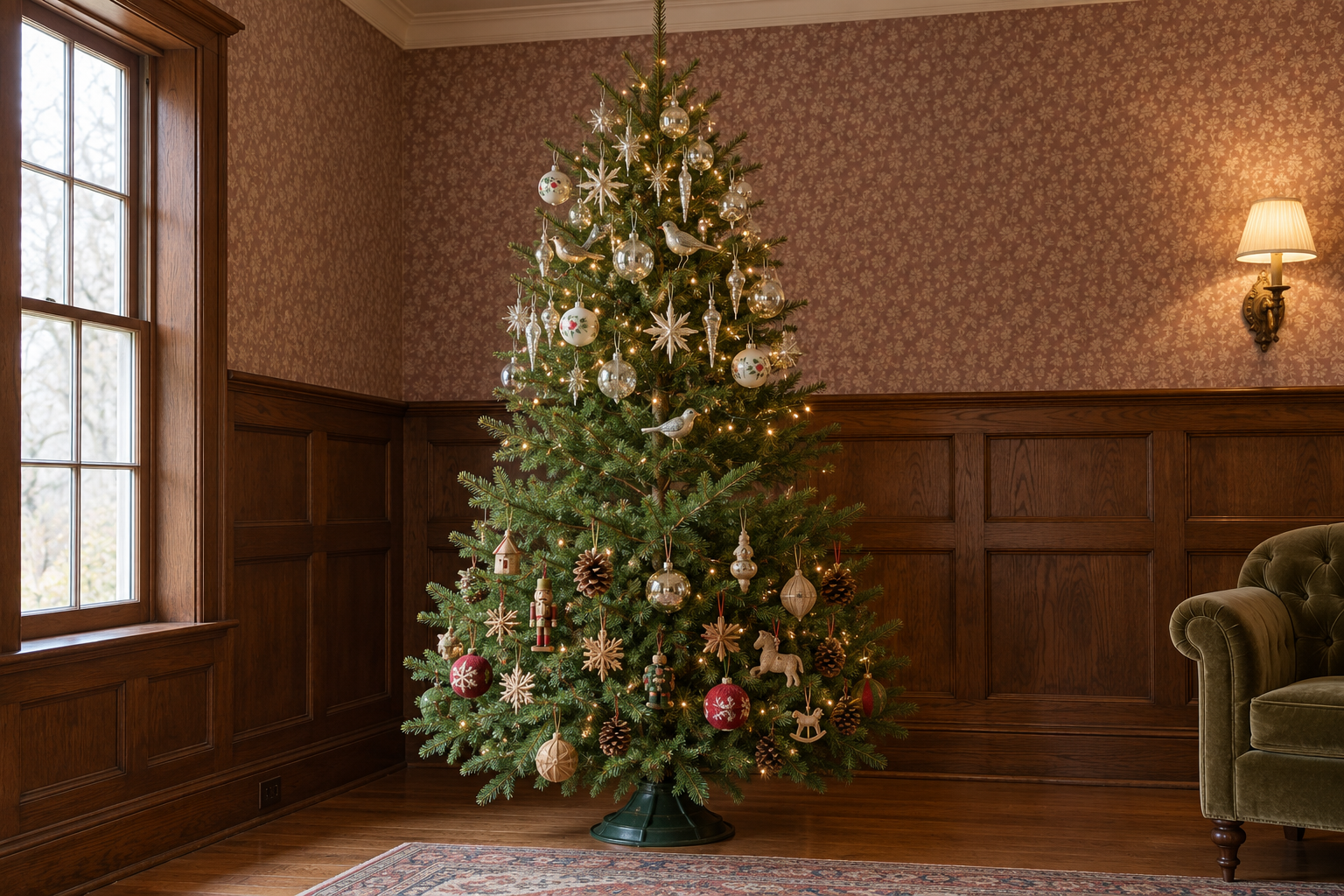
Vintage glass ornaments are thin and hard to replace, and the bottom third of a tree is where things get knocked off by a tail, a vacuum, or a small hand. Moving the old glass to the top third keeps it at adult eye level and out of reach of everything else. The lower branches can take whatever won’t break, such as wood, felt, shatterproof balls, and the ornaments children made at school.
Hang each heirloom piece on the inner part of a sturdy branch, away from the springy tip, and close the hook around the branch so it can’t slide off. A room with some history, like this one with patterned wallpaper and worn oak paneling, suits old glass well, but the split works on any tree.
String a Dried Orange Garland
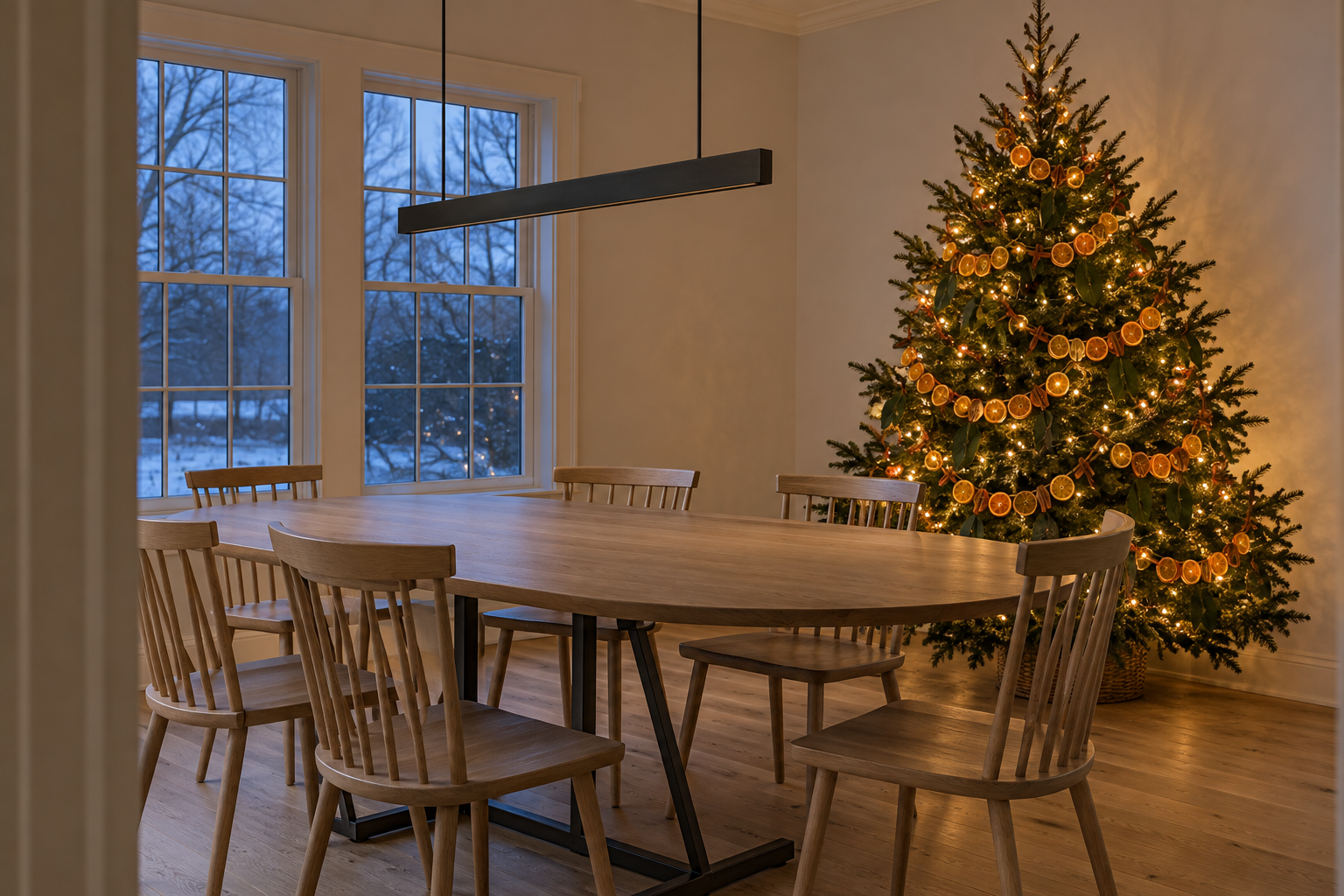
Dried orange slices glow when a light sits behind them, and they bring a warm color to the tree that isn’t red or gold. Strung on twine with a bay leaf or a cinnamon stick every few slices, they make a garland that smells faintly of citrus for the first week or two.
Slice the oranges about a quarter inch thick, pat them dry, and dry them for several hours in a low oven, turning them now and then until they’re leathery all the way through. Slices that aren’t fully dry can mold on the tree. Drape the garland in loose swags so light passes through the fruit.
Leave a Real Tree Lightly Dressed
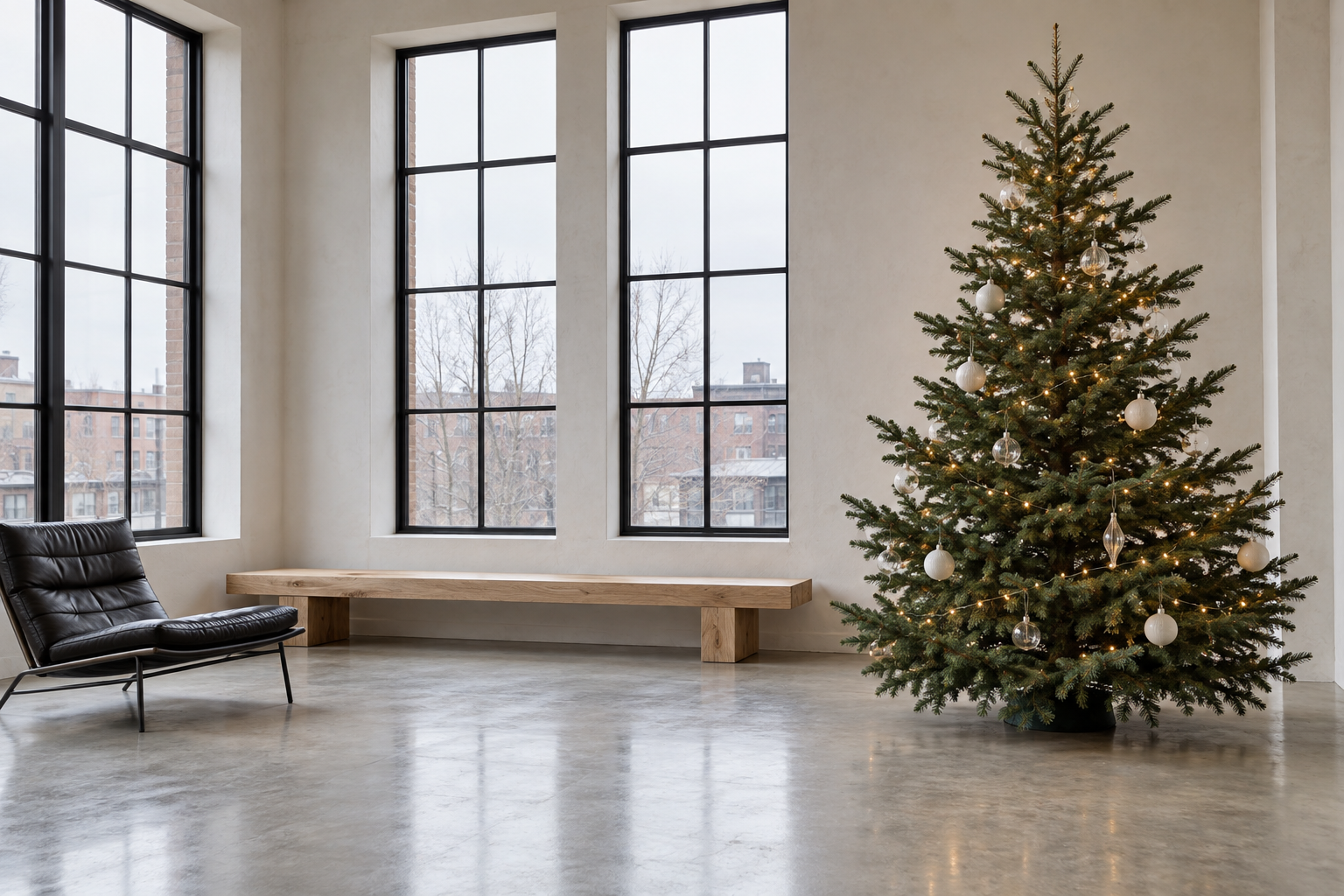
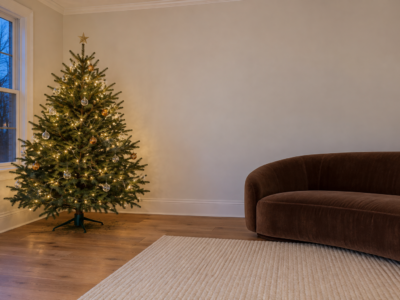
A noble fir or a Nordmann has a shape worth seeing, with open tiers of branches and space between them. Covering it in ornaments hides that. Dressed lightly, with one string of lights and a dozen or so white or clear ornaments, the branches do most of the work, and the tree suits a spare room with plenty of wall and floor around it.
It depends on choosing the right tree. A dense, bushy tree dressed this lightly just looks unfinished, so pick one with visible gaps between its tiers when you buy it. It’s also the quickest tree to take down in January.
Choose a Slim Pencil Tree for a Tight Corner
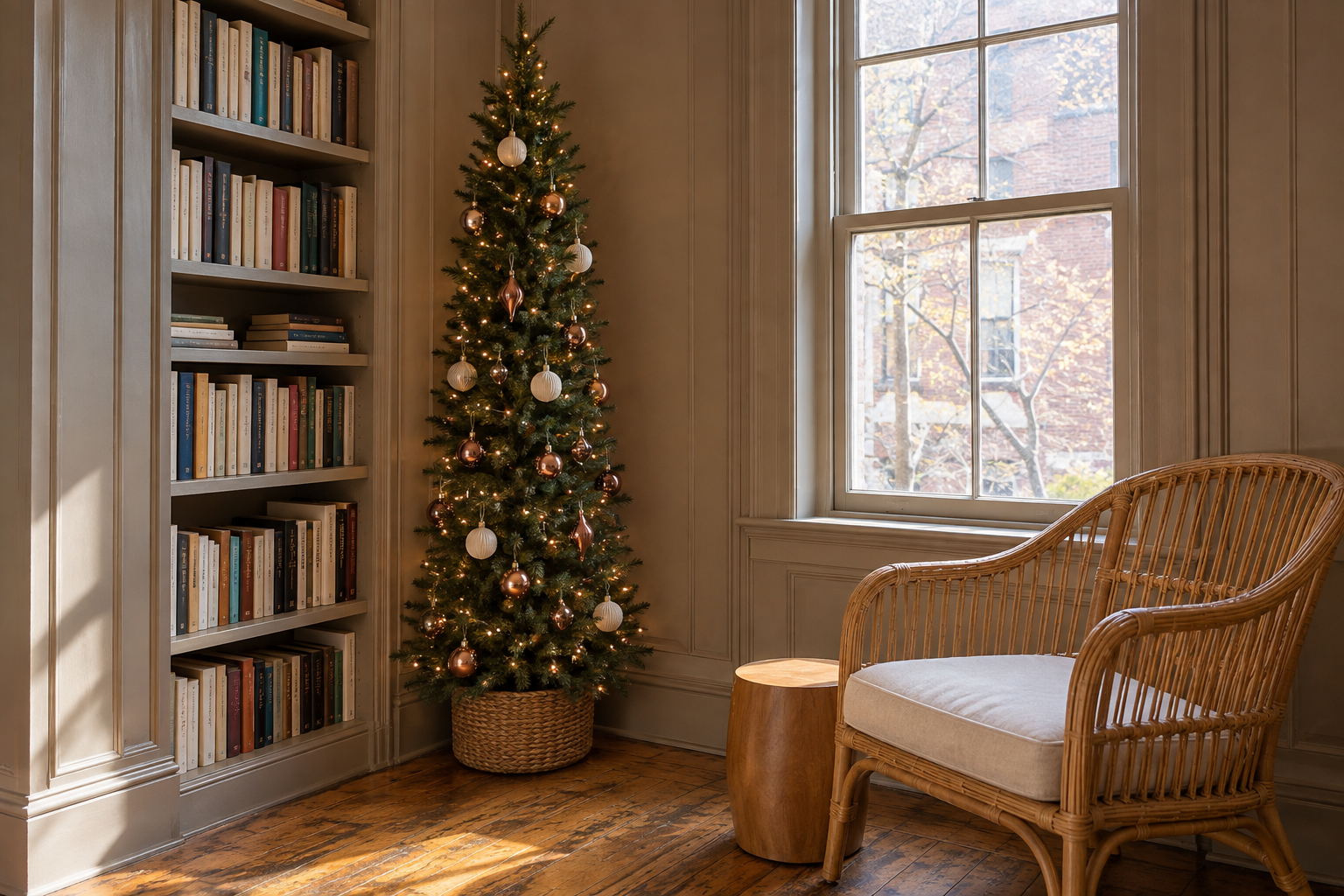
A standard 7-foot tree can spread 4 to 5 feet across at the base, which takes over a small living room and hides whatever stands behind it. A pencil tree of the same height is often half that width or less, so it fits between a bookcase and a window without moving furniture out of the room.
Dress it with smaller ornaments than a full tree would take, since large balls look oversized on short branches. Ribbon run in vertical lengths suits the narrow shape. Before choosing the spot, check the walkway around it the same way you would when arranging a small living room, and keep it away from radiators and heat vents.
Set a Small Tree on a Table
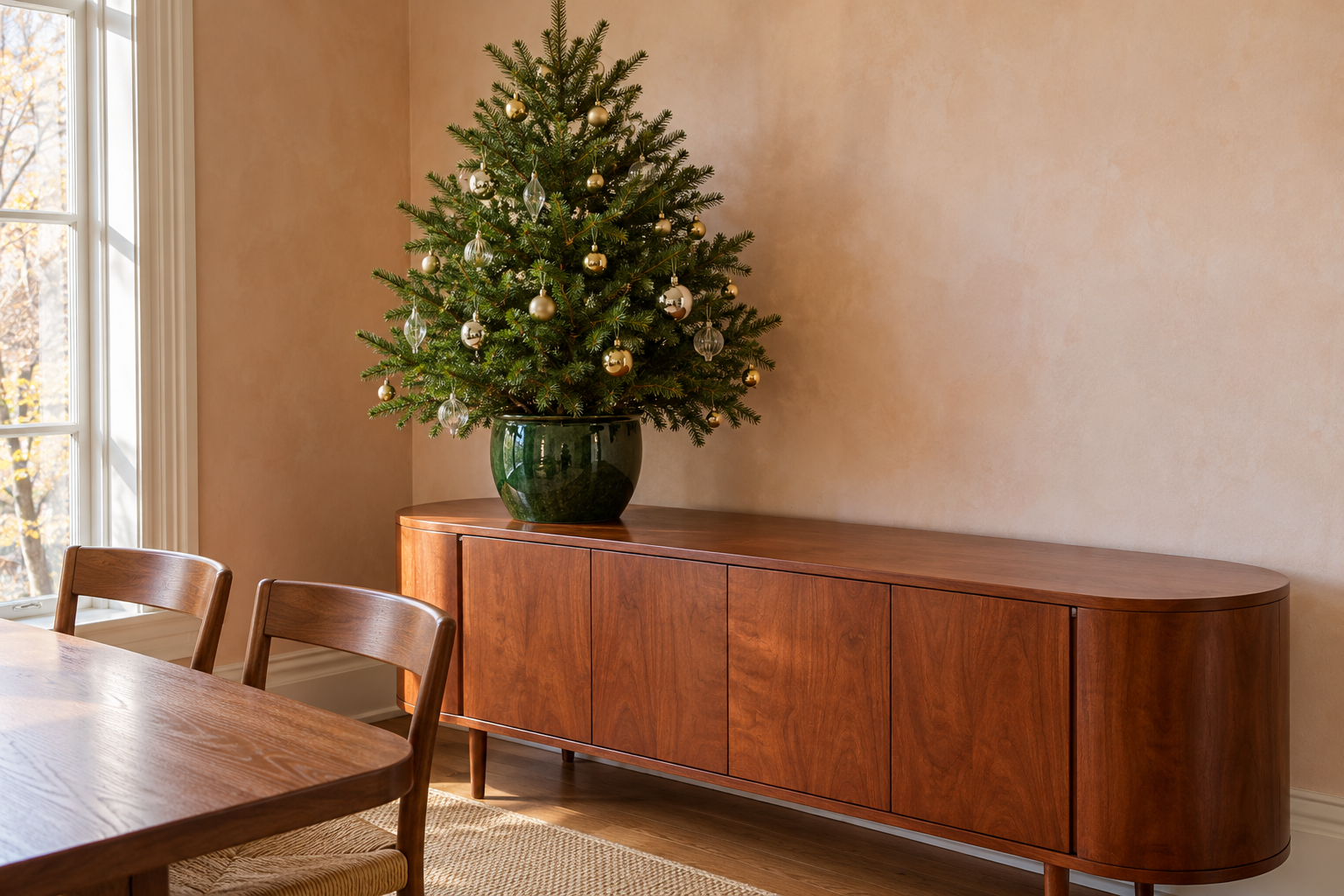
A tree 2 to 4 feet tall on a sideboard, console, or dresser gives a room without spare floor a tree at eye level. Raising it also keeps it away from pets and gives it more presence than its size suggests.
Use a heavy pot or a wide, stable stand, since a tree on a table is easy to knock. A small cut tree still needs water, and a small stand holds very little, so check it every day. A living potted tree, such as a dwarf spruce, can be planted outside afterward, but it does best with a short stay indoors in a cool spot.
Group Two or Three Trees of Different Heights
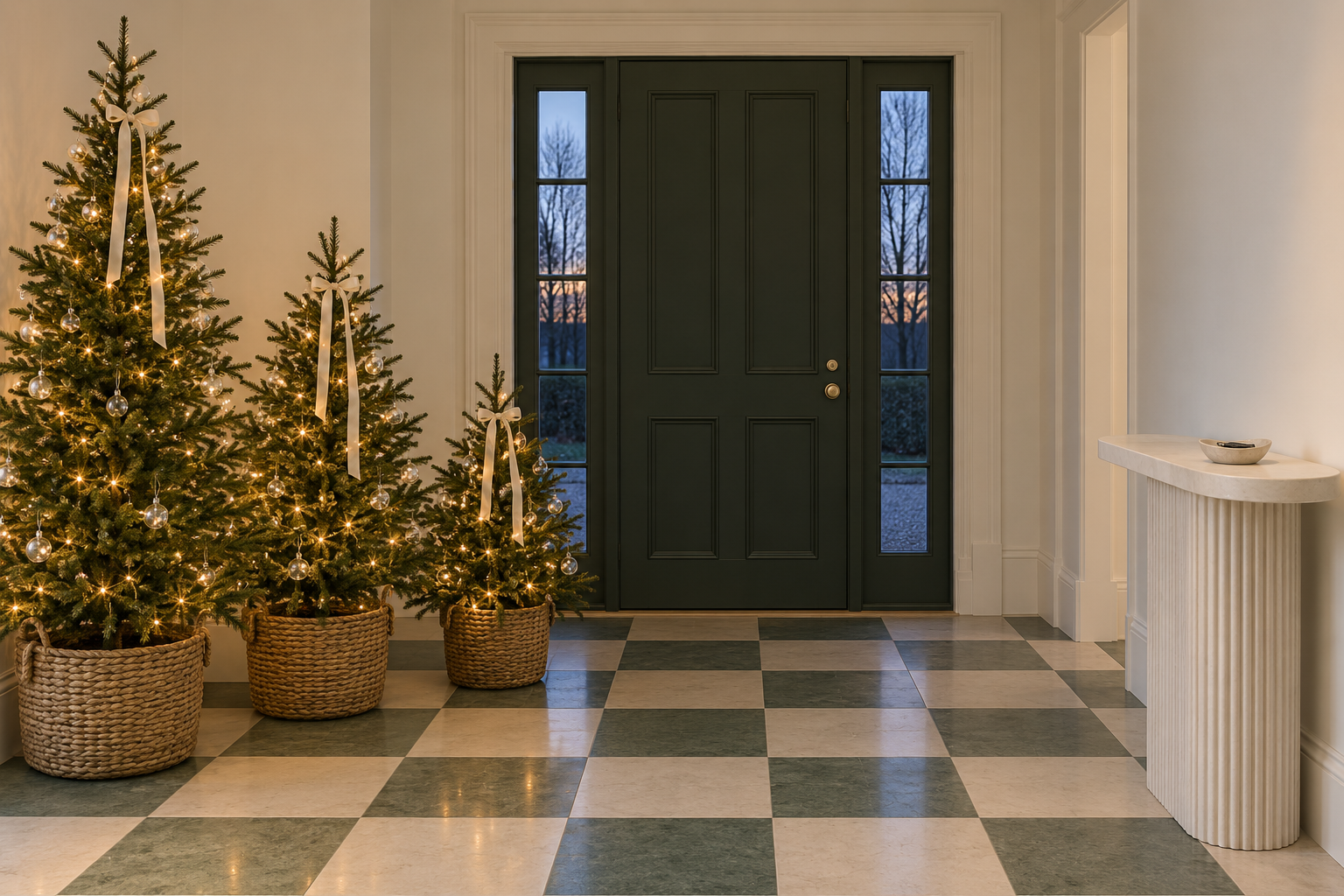
Two or three small trees clustered together make a stronger display in an entry or a corner than one small tree on its own. Stepped heights read best, for example trees of about 5, 4, and 3 feet, set slightly apart so each keeps its own outline.
Give all three one shared detail, like the same ribbon or the same ornament color, so they look like a group and not three separate purchases. Matching baskets or pots under each help too. A group is also a good way to use a mix of trees, since one small real tree standing beside two artificial ones is hard to pick out.
Top It With Something Other Than a Star

The topper sits where everyone looks first, so it’s the one decoration worth choosing on its own. A tall glass finial, a spray of gilded branches, or a large bow with long tails changes the tree’s silhouette more than any ornament below it.
Scale it to the tree. A small topper on a 9-foot tree disappears, and a heavy one bends the top shoot sideways. Leave a few inches between the topper and the ceiling, too. A tree whose topper grazes the ceiling looks squeezed into the room, even when it technically fits.
Hide the Stand With a Collar or Basket
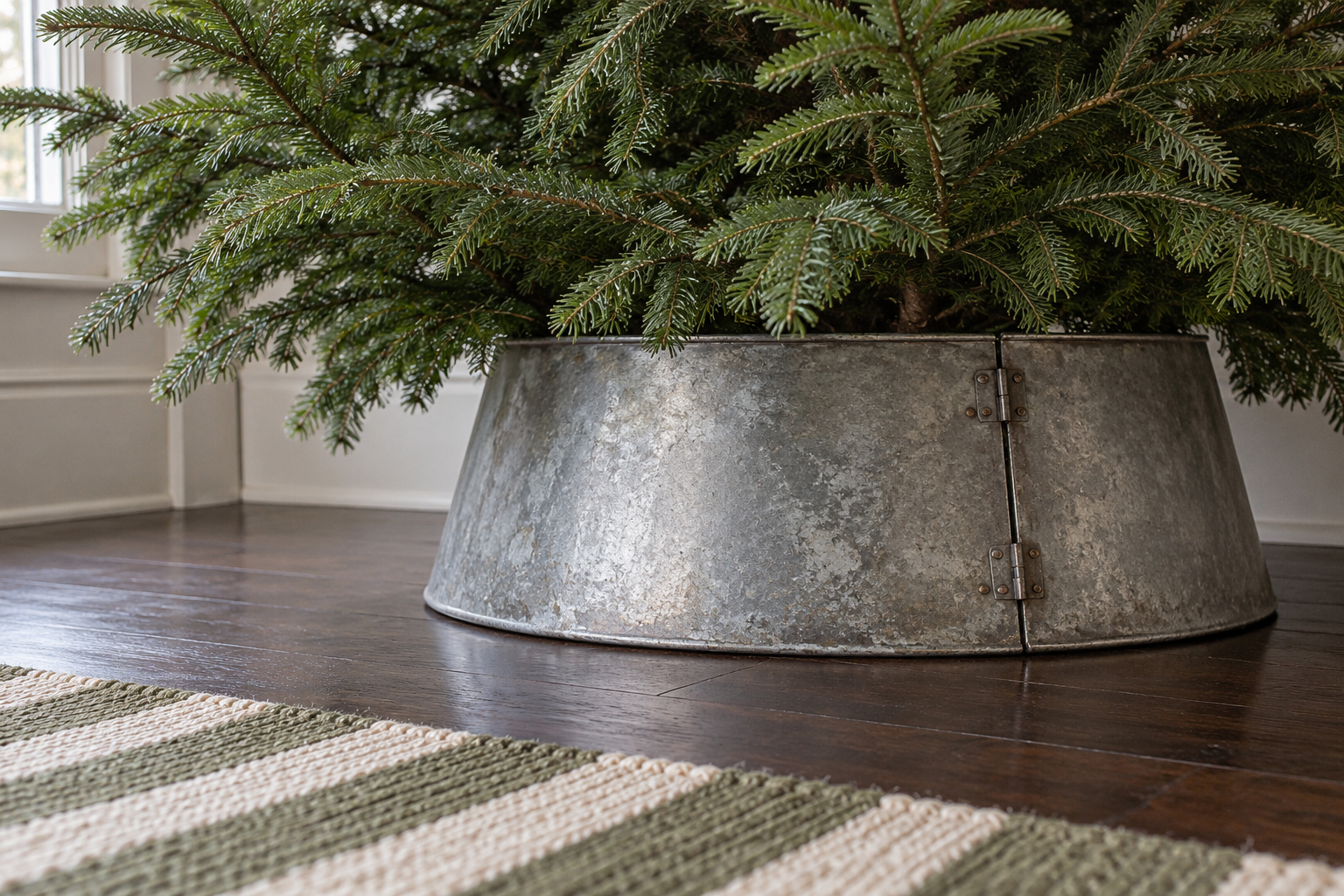
A tree collar is a ring of metal, woven rattan, or wood that sits around the base. It hides the stand more neatly than a fabric skirt, and it doesn’t bunch up or collect needles in its folds. It also gives the bottom of the tree a firm edge, which suits a room with clean lines. For a smaller tree, a large woven basket does the same job.
With a cut tree, make sure the collar still lets you reach the water. A fresh tree can drink a lot in its first days, and a tree that dries out drops needles quickly and becomes a fire hazard. Some collars have a hinged opening at the back for this.