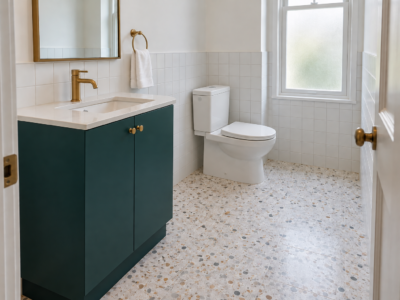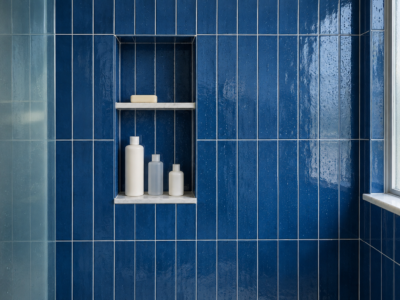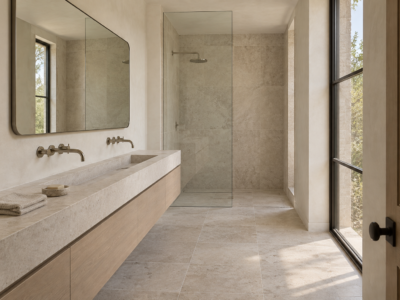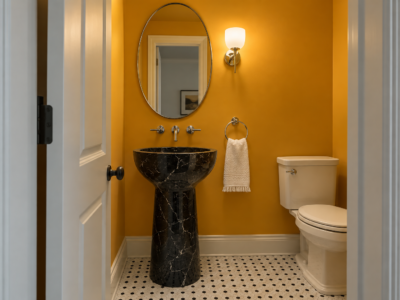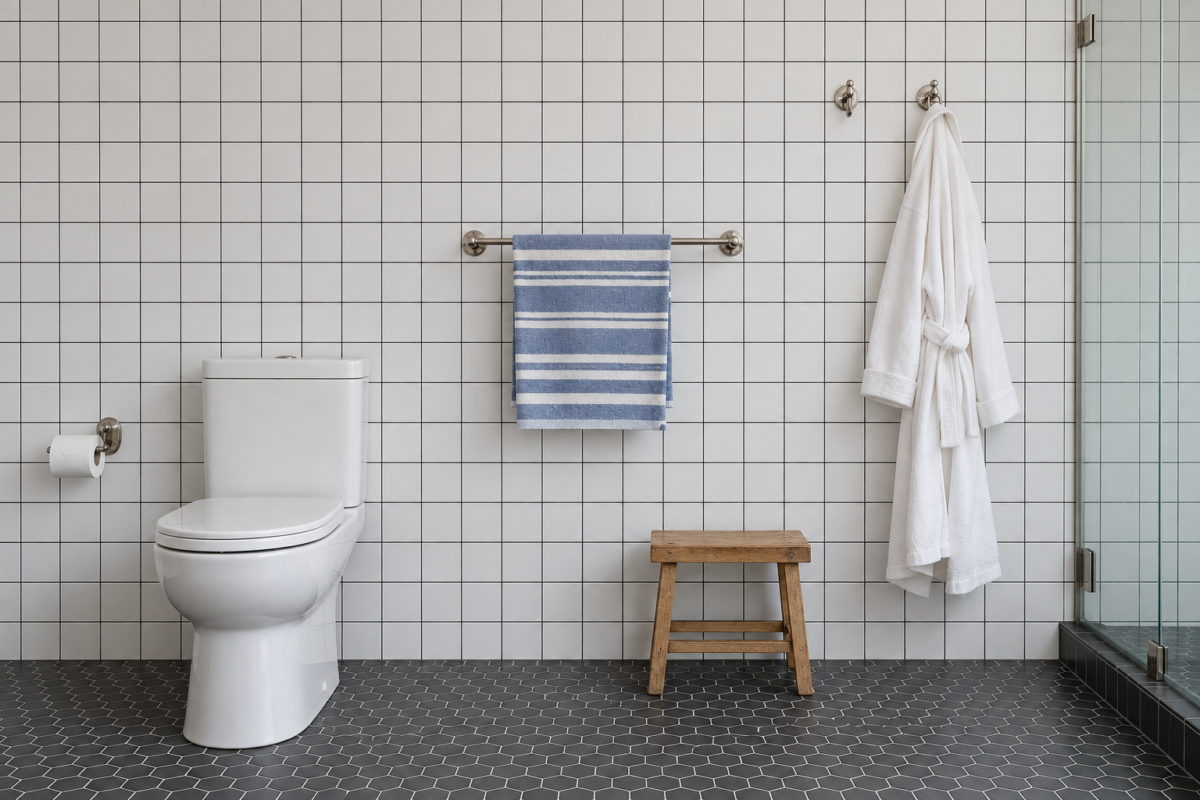
A towel bar screwed into drywall with plastic anchors holds a hand towel fine. Load it with a wet bath towel every day, pull on it a little each time, and within a year it leans, then comes away from the wall with a patch of paper still attached. Meanwhile the hooks went up at eye level because that’s where the tape measure happened to be, and the toilet paper ended up behind the seated person’s hip.
All of that comes from deciding too late. The heights should come from the people using the room, and the wall behind each piece should have solid wood in it before the tile or drywall goes up. The sections below give the heights first, then the blocking, then the adjustments for children and shared bathrooms.
Put the Towel Bar About 48 Inches Up, Near the Shower
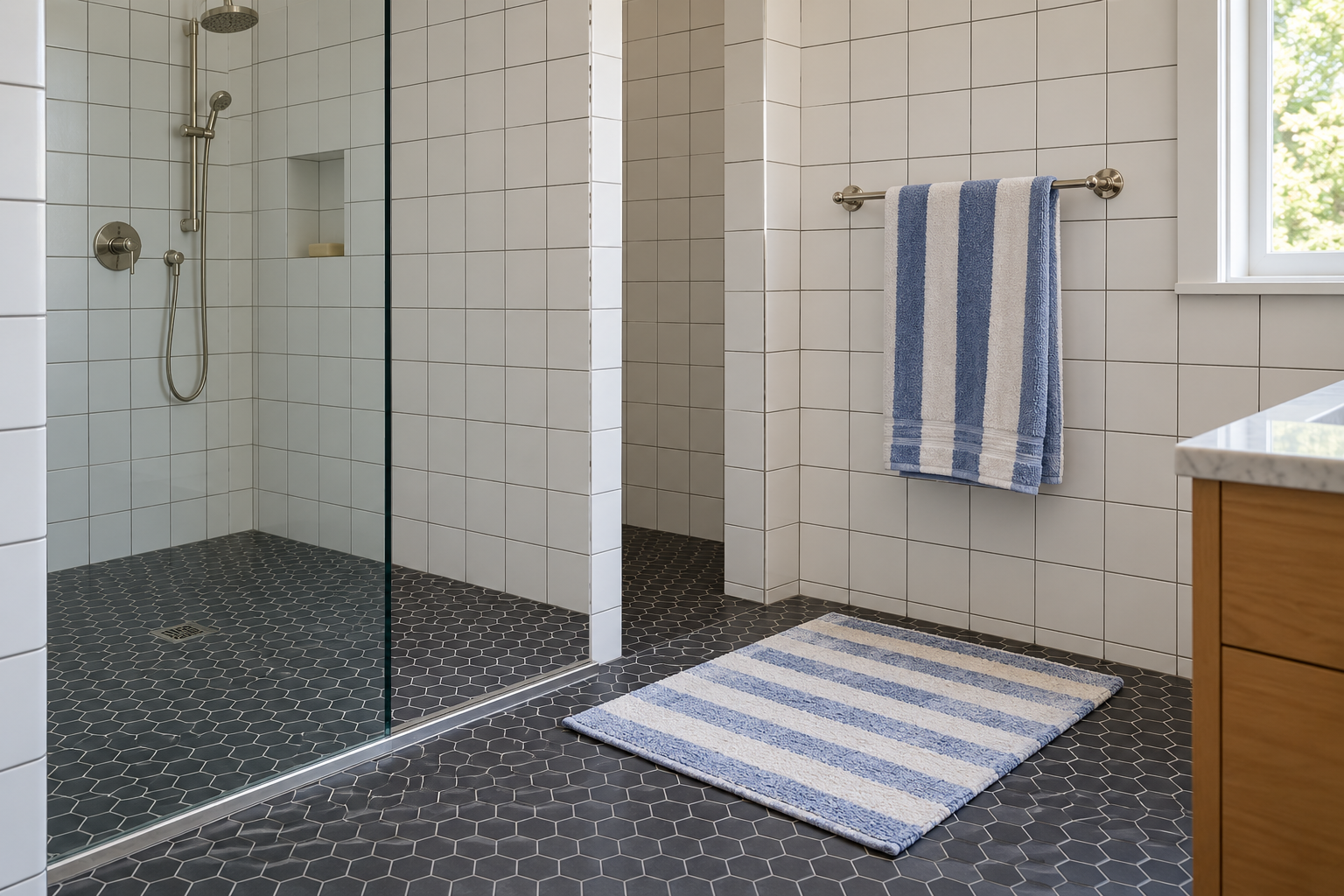
About 48 inches from the floor suits most adults. A bath towel folded over the bar hangs clear of the floor, and the bar sits at an easy reach without lifting an arm. Placement matters as much as height. The bar belongs within one step of the shower or tub exit, so you can reach it while still standing on the mat.
Keep it out of the direct spray, on the wall beside the opening and not the wall the shower head faces. A 24-inch bar holds a bath towel folded in thirds, while a 30-inch bar holds it folded in half, which dries faster. Airflow matters as much as bar length, and the storage guide’s section on hanging towels where they dry covers it.
Keep the Hand Towel Within Reach of the Sink
A hand towel ring or short bar belongs about 20 inches above the vanity top, on the wall beside the basin or on the end of the vanity. The test is simple. You should be able to reach it with wet hands without taking a step or dripping across the counter. A towel bar across the room, on the only free wall, fails that test every time.
If the wall beside the basin is taken by a window or a door swing, a short bar on the side of the vanity works just as well.
Hooks Go Higher Than Bars
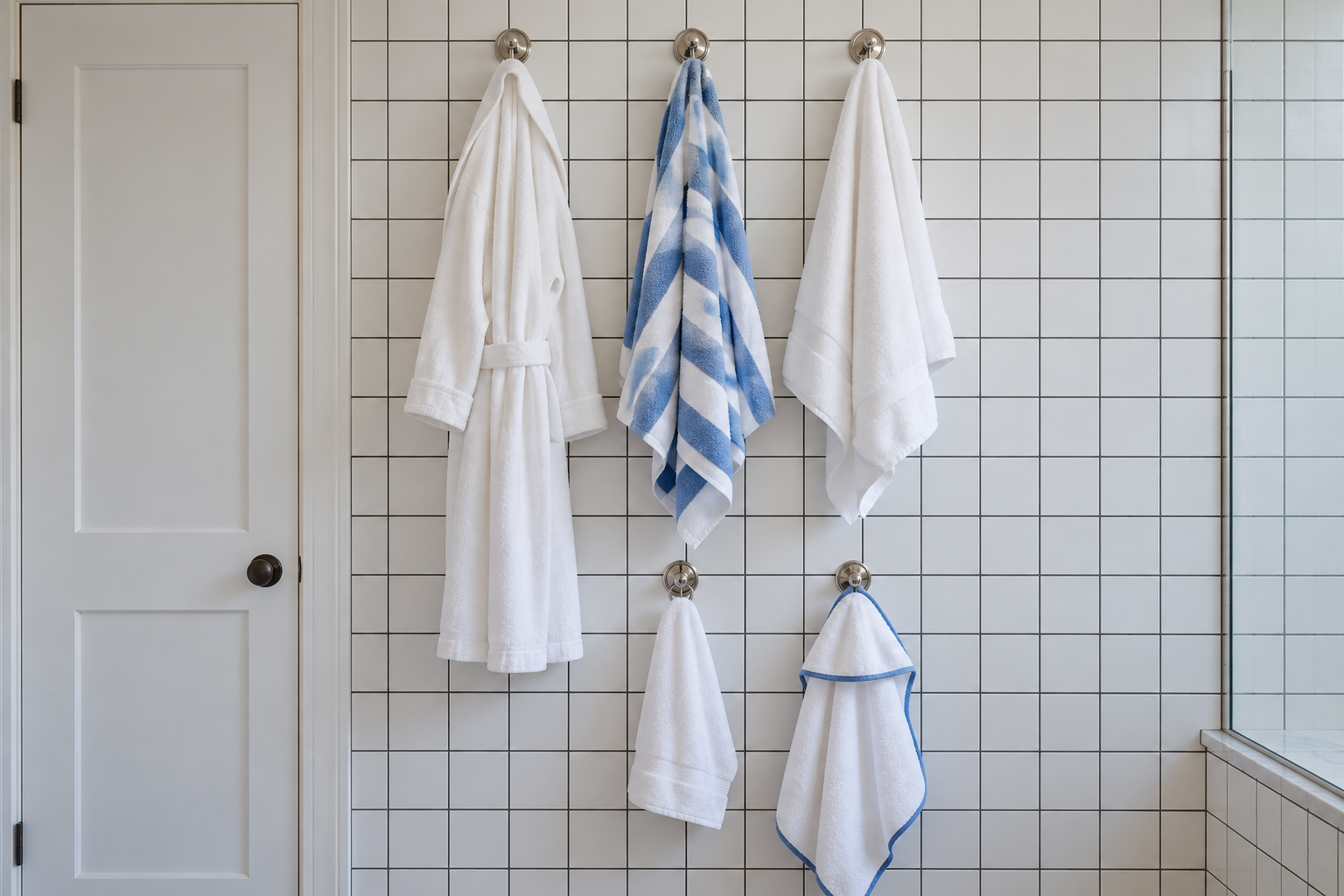
Hooks look odd at the same height as a towel bar, and they don’t work well there either. A towel or robe hangs from a hook by one point and drops its full length below it, so a hook at 48 inches leaves the hem on the floor. Around 68 to 72 inches works for most adults, high enough for a robe to hang clear and low enough to reach.
Space hooks about 6 to 8 inches apart so towels don’t overlap and stay damp. For children, add a second row at 36 to 48 inches instead of lowering the adult hooks.
Set the Paper Holder Slightly Ahead of the Bowl
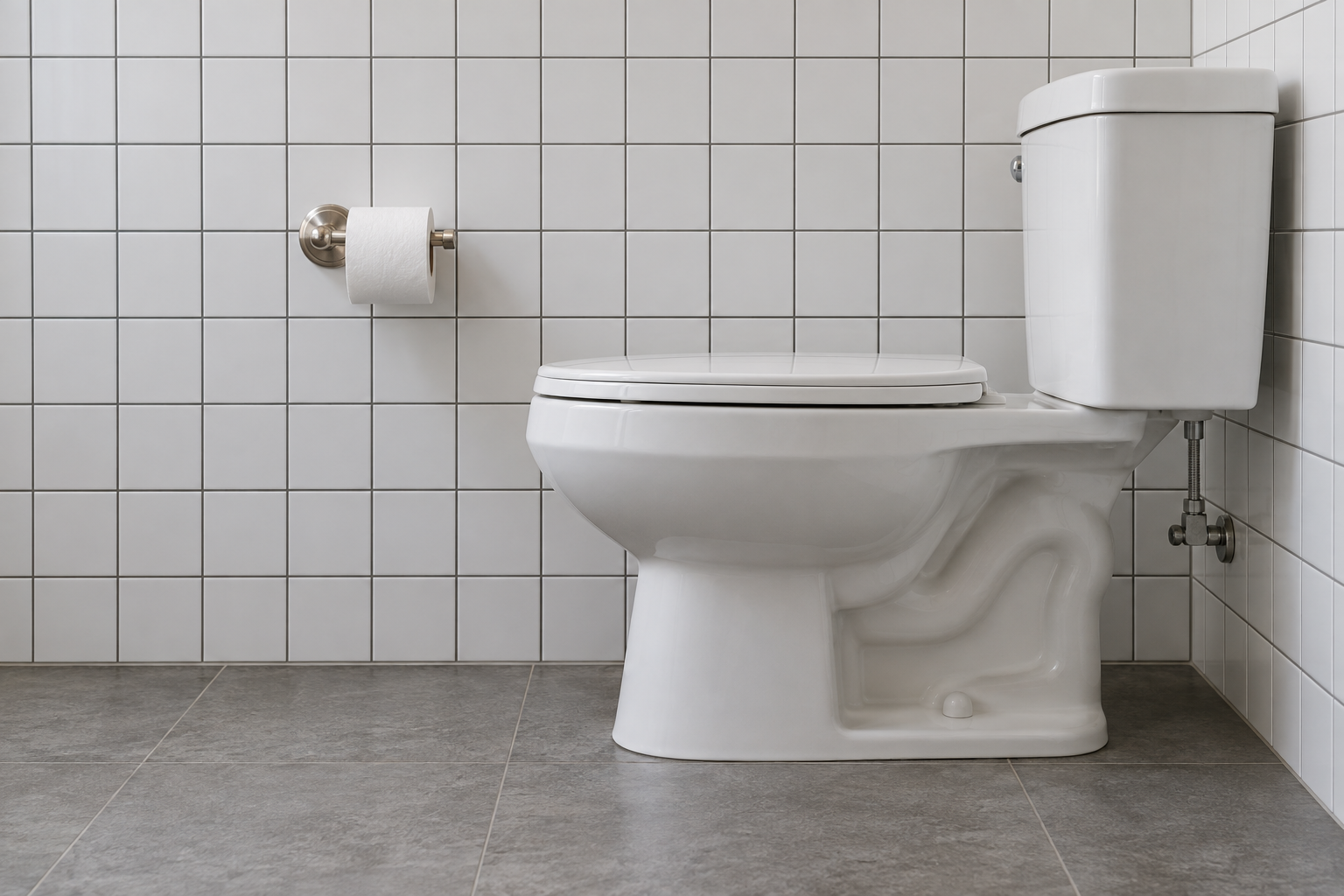
The toilet paper holder works best about 26 inches from the floor, with the roll 8 to 12 inches in front of the front edge of the bowl. That puts it within reach of someone sitting down, without the twist backward that holders centered beside the toilet or mounted behind it require.
If the wall beside the toilet is too far away or taken by a glass shower screen, the side of the vanity is the next best spot, at the same height and forward position. A holder on the wall behind the tank is the one placement to avoid.
Add Blocking Before the Wall Closes
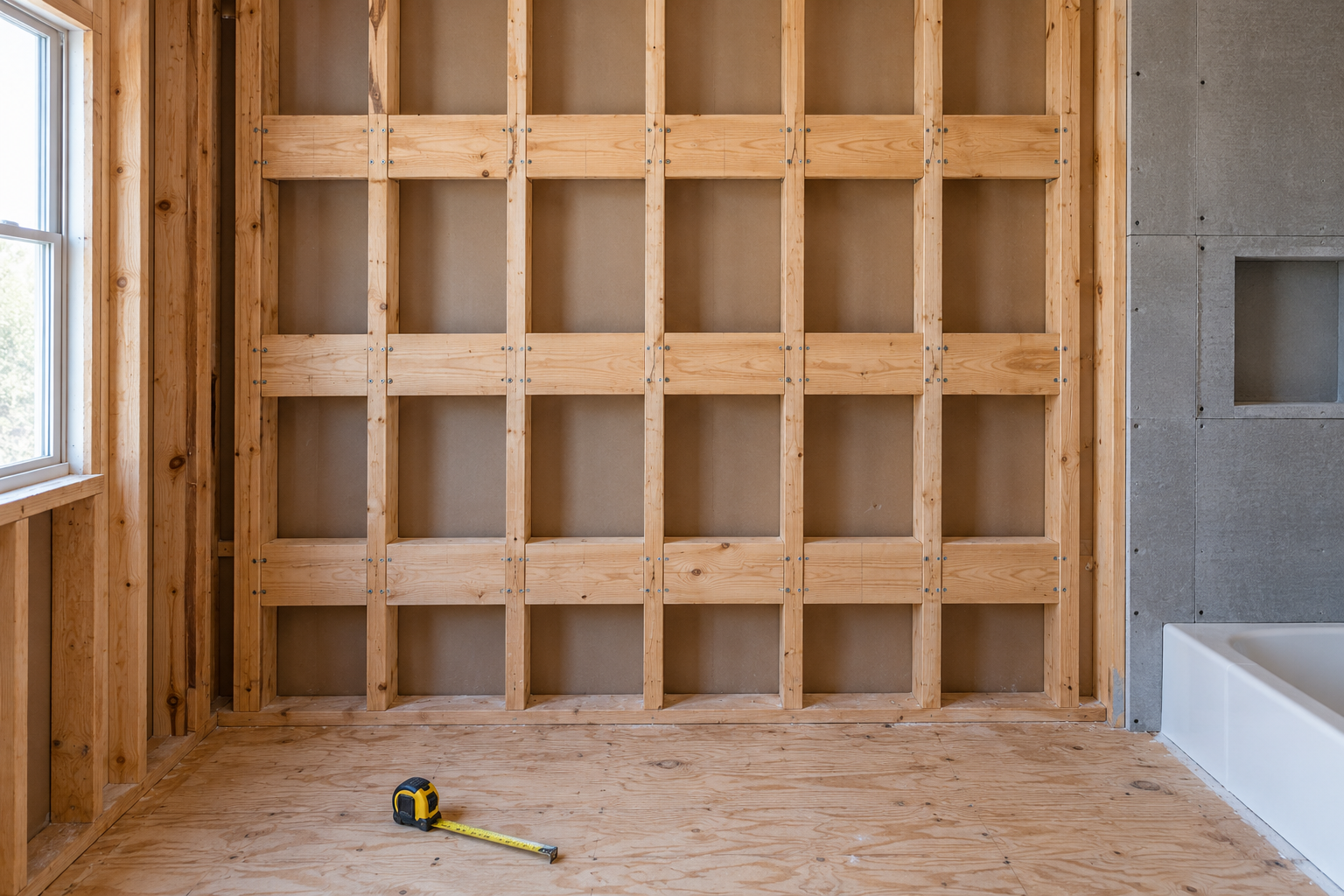
Blocking is a horizontal piece of wood, usually a 2×6 or 2×8, fitted between the studs where a towel bar, hook, paper holder, heated rail, or hung vanity will go. Once it’s in, every screw for that piece goes into solid wood instead of a hollow wall and an anchor. It costs almost nothing during a remodel, and a lot later, when adding it means cutting into finished tile.
Mark the heights on the studs, fit the blocking wider than the hardware in case the plan shifts by a few inches, and photograph the open wall with a tape measure in the frame before the board goes up. Add blocking for future grab bars near the toilet and in the shower at the same time, even if nobody needs them yet. The electrician is usually working in the wall at this stage too, which makes it the moment to settle how high the vanity lights go.
| Hardware | Height from the floor | Position |
|---|---|---|
| Towel bar | about 48 inches | within a step of the shower or tub, out of the spray |
| Hand towel ring or bar | about 20 inches above the vanity top | beside the basin |
| Robe and towel hooks | about 68 to 72 inches | 6 to 8 inches apart |
| Children’s hooks | about 36 to 48 inches | a separate, lower row |
| Toilet paper holder | about 26 inches | 8 to 12 inches ahead of the bowl’s front edge |
| Grab bar | about 33 to 36 inches | into blocking or studs only |
Adjust for Kids, Tall Adults, and Shared Bathrooms
These heights are starting points for a household of adults of average height. In a family bathroom, a second towel bar at about 36 inches lets children hang their own towels instead of dropping them. Very tall adults may want the bar and hooks a few inches higher. In a bathroom several people share, giving each person one hook, always the same one, does more to keep towels off the floor than extra shelving.
The order is what matters. Decide the heights, block the wall, then tile, and the hardware goes up once and stays level.
Frequently Asked Questions
Can a towel bar double as a grab bar?
No. A towel bar isn’t built or fixed to hold a person’s weight, and it can pull out of the wall at the moment someone relies on it. Grab bars are rated hardware, usually mounted 33 to 36 inches above the floor, and they need to go into blocking or studs. Planning the blocking now costs little even if the grab bars are years away.
What if the wall is already tiled?
Find the studs first and use them where the layout allows. Where it doesn’t, use anchors rated for tile over backer board, and drill with a diamond or carbide tile bit at low speed, starting with a small pilot hole so the bit doesn’t wander on the glaze. Hardware with a wide mounting plate spreads the load better than a single small post.