An entry hall gets looked at a few seconds at a time. People come in carrying bags, stamp the snow off, hang a coat, and move on into the house, and guests waiting while their coats are taken see it longer than anyone who lives there. Decoration in a hall works at that pace. It catches the eye from the door and stays clear of elbows, coat sleeves, and wet boots.
December also changes what comes through the door. Boots arrive wet, coats are heavier and there are more of them, and on a party night the hooks fill before half the guests are in. A few of the ideas below deal with that, since a heap of coats and a puddle of melted snow are the first things a guest sees in a hall that hasn’t planned for them.
A Small Tree on the Hall Console
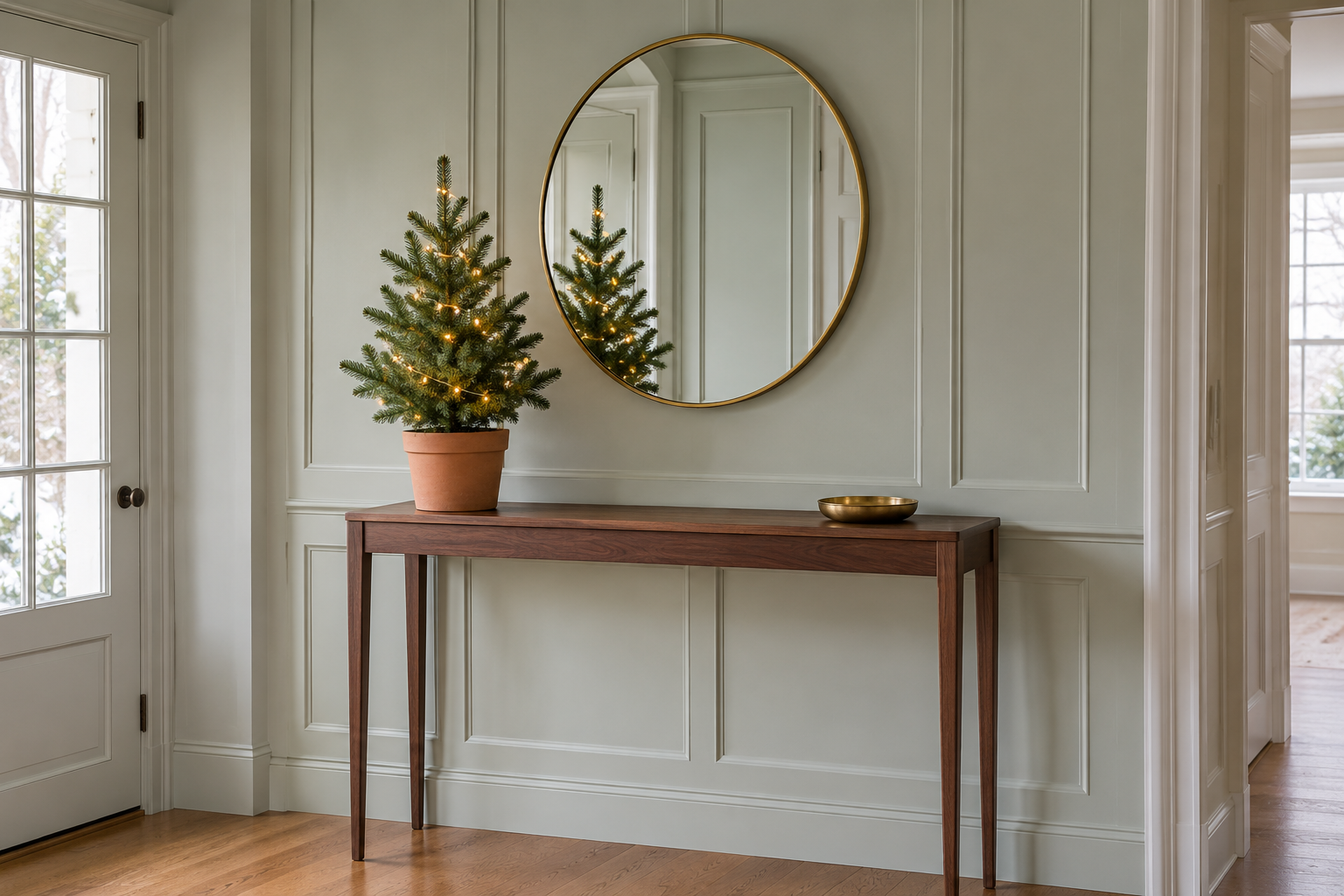
A tree about 2 feet tall on the console gives the hall a Christmas tree of its own without taking any floor. In a narrow hall it may be the only tree that fits, and it’s the first thing seen when the door opens. Set to one end of the console, it leaves the other end free for keys and the day’s post.
Under a mirror, the tree is seen twice, front and back, so choose one that is full all the way around or turn it every few days. A plain clay pot keeps the base low and heavy, which matters on a narrow table that coats brush past.
A Wreath Hung Over the Mirror
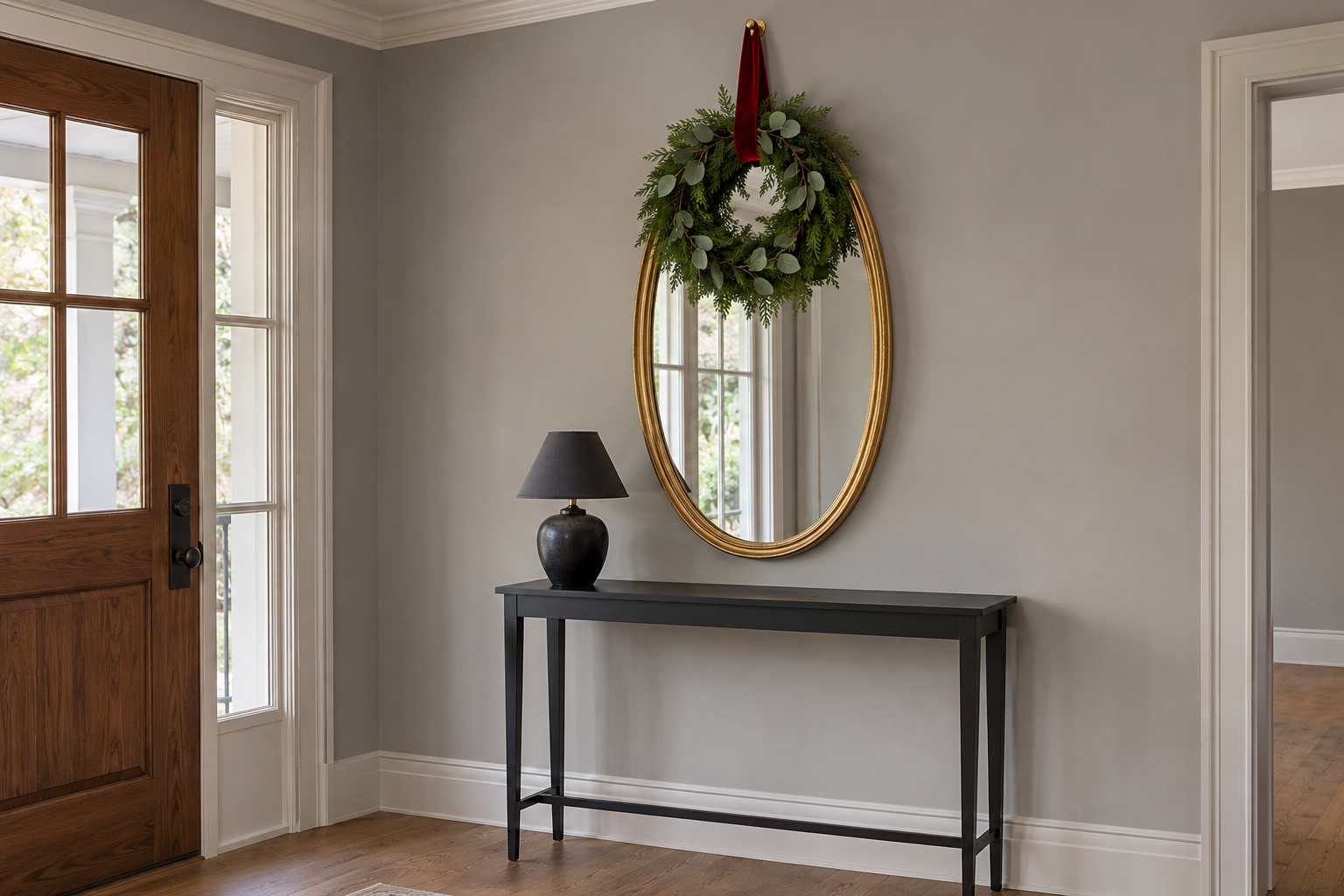
A mirror above a console is already the center of the hall wall, and a wreath hung over the top of it frames whatever the mirror reflects. A ribbon from a picture hook above the frame carries the weight, so nothing is fixed to the glass, and the ribbon’s length sets how far down the wreath sits.
A wreath narrower than the mirror, hung over its upper part, leaves most of the glass clear, so the hall keeps the light the mirror bounces around and the view back toward the door. Cedar and eucalyptus are light enough for a single picture hook. A heavy wreath of cones and fruit needs a stronger fixing.
A Full-Size Tree in a Large Foyer
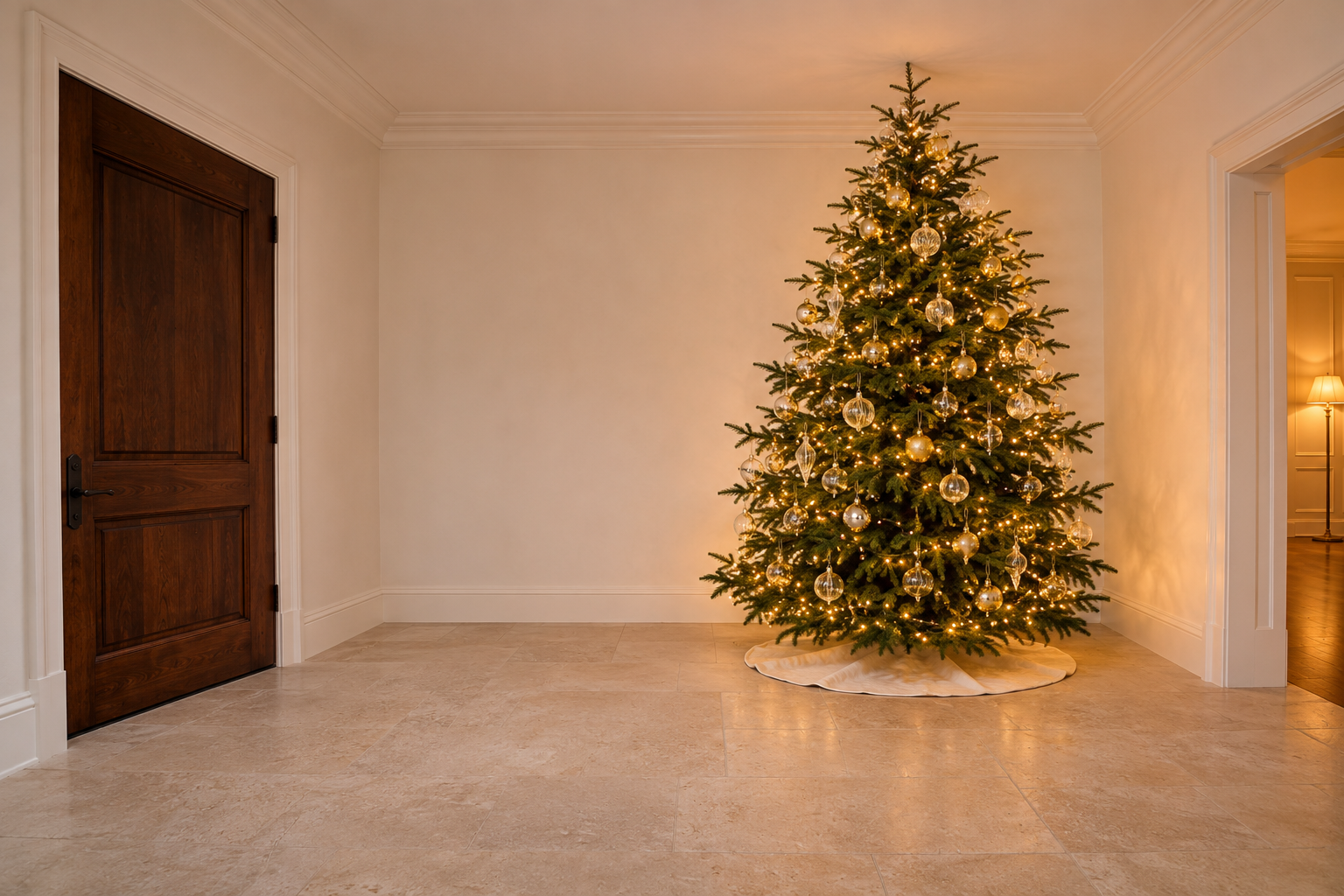
A foyer wide enough to walk around something can hold the house’s main tree. It’s the first thing guests see and the last thing anyone passes on the way to bed, and in a double-height hall it can be taller than any living room would take, with about a foot left between the top and the ceiling.
The hall still has to work as a hall. Leave a clear path past the tree to every door, since a tree pushed into a busy route gets brushed by every coat and loses ornaments. Stand it well back from the front door, out of the draft and the wet patch boots leave in December, and close to an outlet if its lights plug in.
Cut Greens Laid Along a Hall Chest
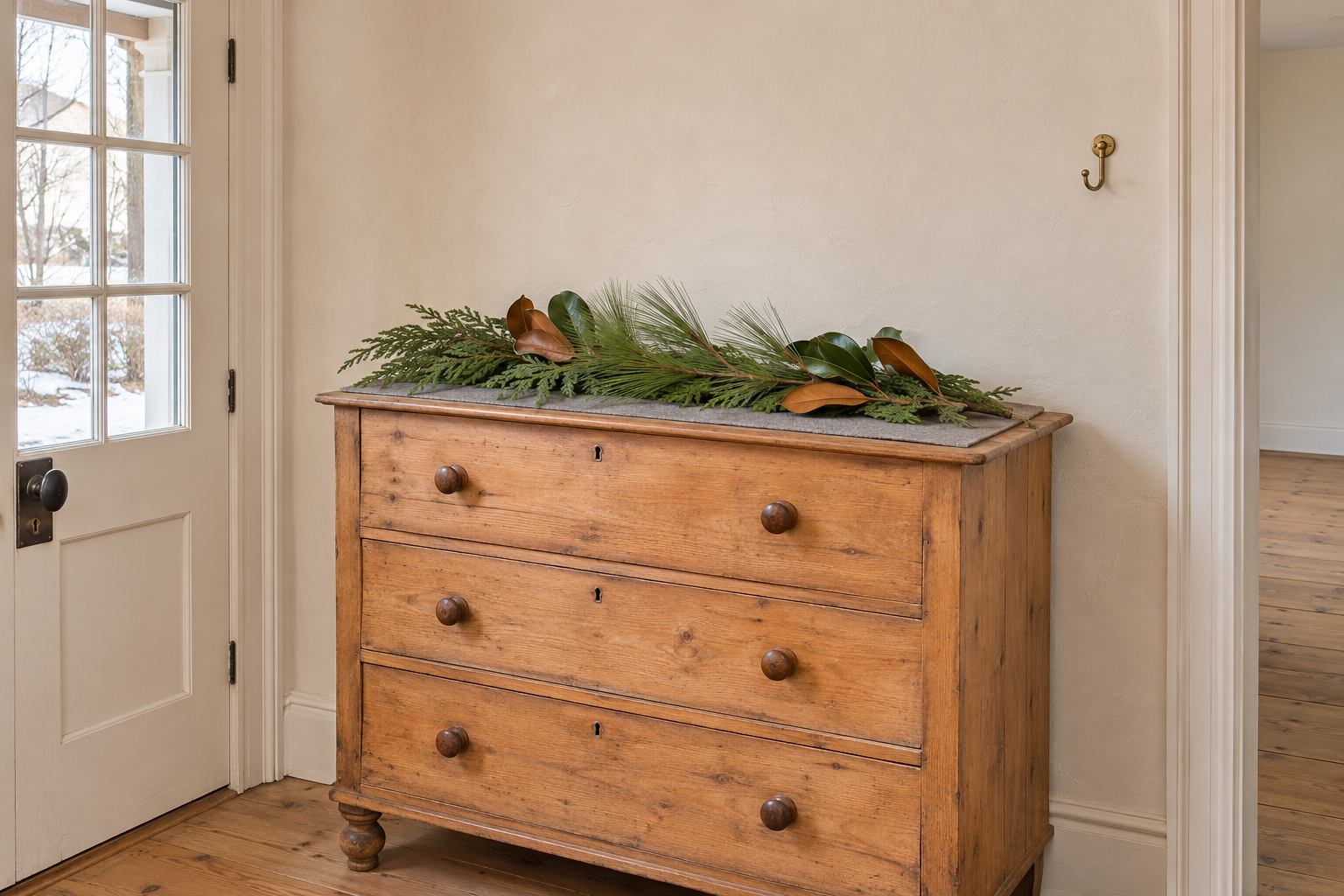
A chest of drawers in the hall can hold a long bank of cut greens laid flat along its top: cedar, long-needled white pine, and a few magnolia branches with some leaves turned to show their brown undersides. Laid flat, they need no vase and no water, and a hall is usually the coolest room in the house, the one where cut greens dry slowest.
Sap and damp stems can mark a wood top, so lay a strip of felt or brown paper under them. When the cedar starts to dry at the tips, a fresh bundle from the lot replaces it.
Greens Tied to the Coat Hooks
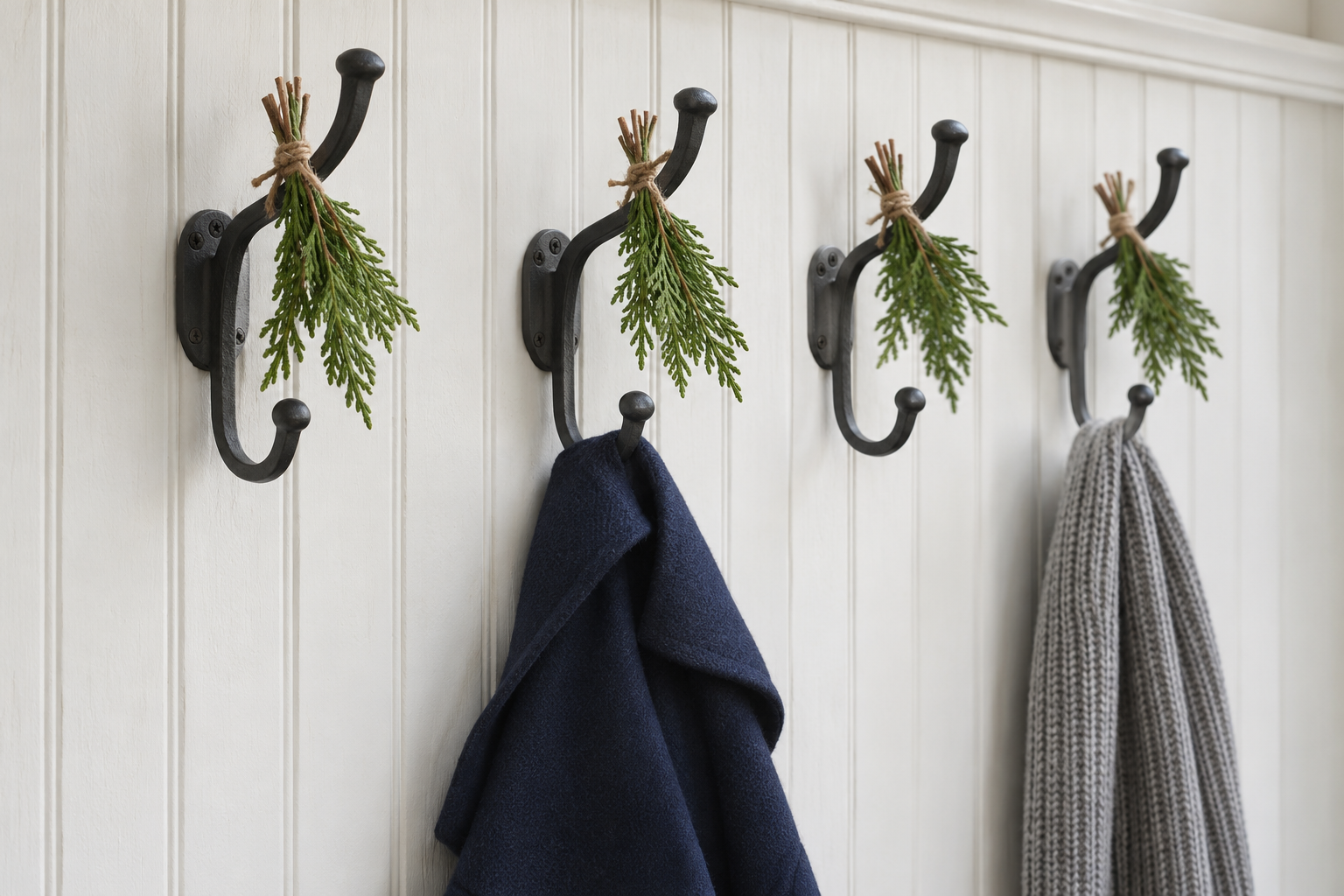
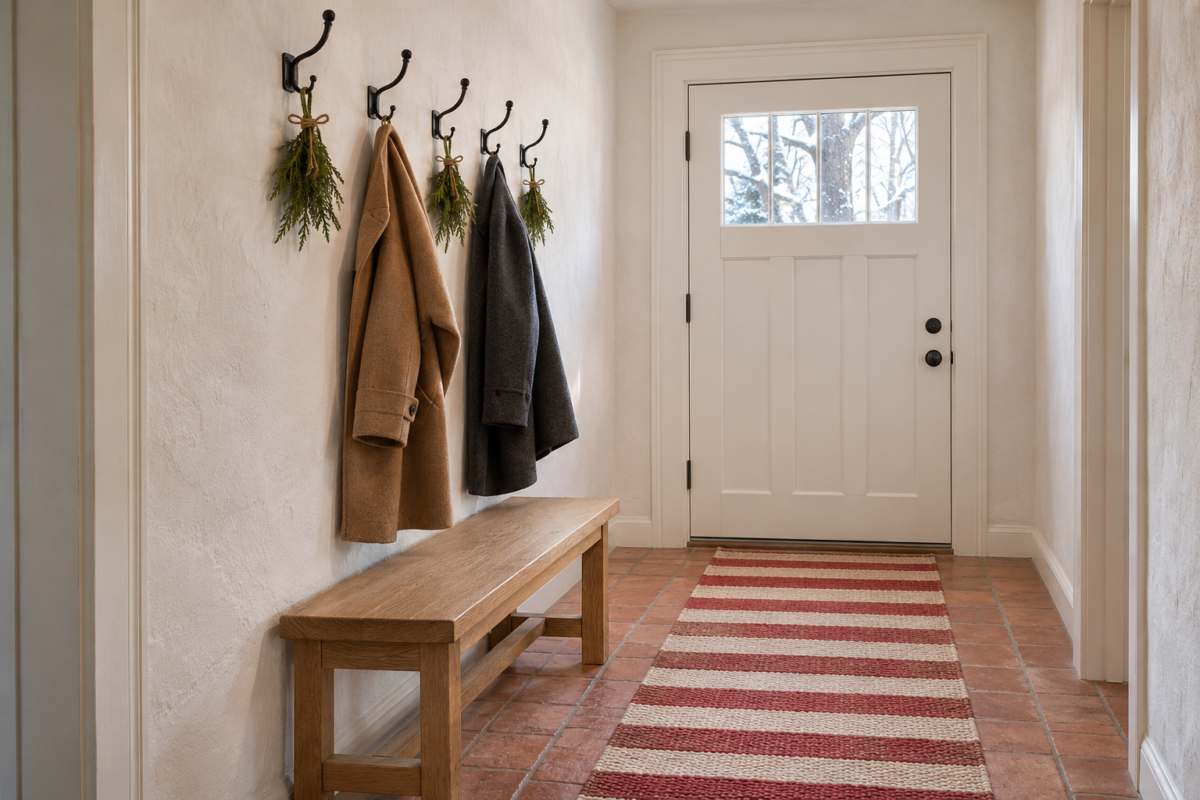
A row of coat hooks can take a small bundle of cedar or fir on each one, tied with twine to the upper arm so the lower arm still takes a coat. In a hall too narrow for any furniture, it puts Christmas at eye level along the one wall everyone uses, and the bundles can come from the branches trimmed off the bottom of the tree.
Coats rub against the greens all month. Fir holds its needles when it’s brushed, and cedar grows in flat sprays with no loose needles to drop. Spruce sheds sooner, and its needles end up on the coats.
A Striped Wool Runner for December
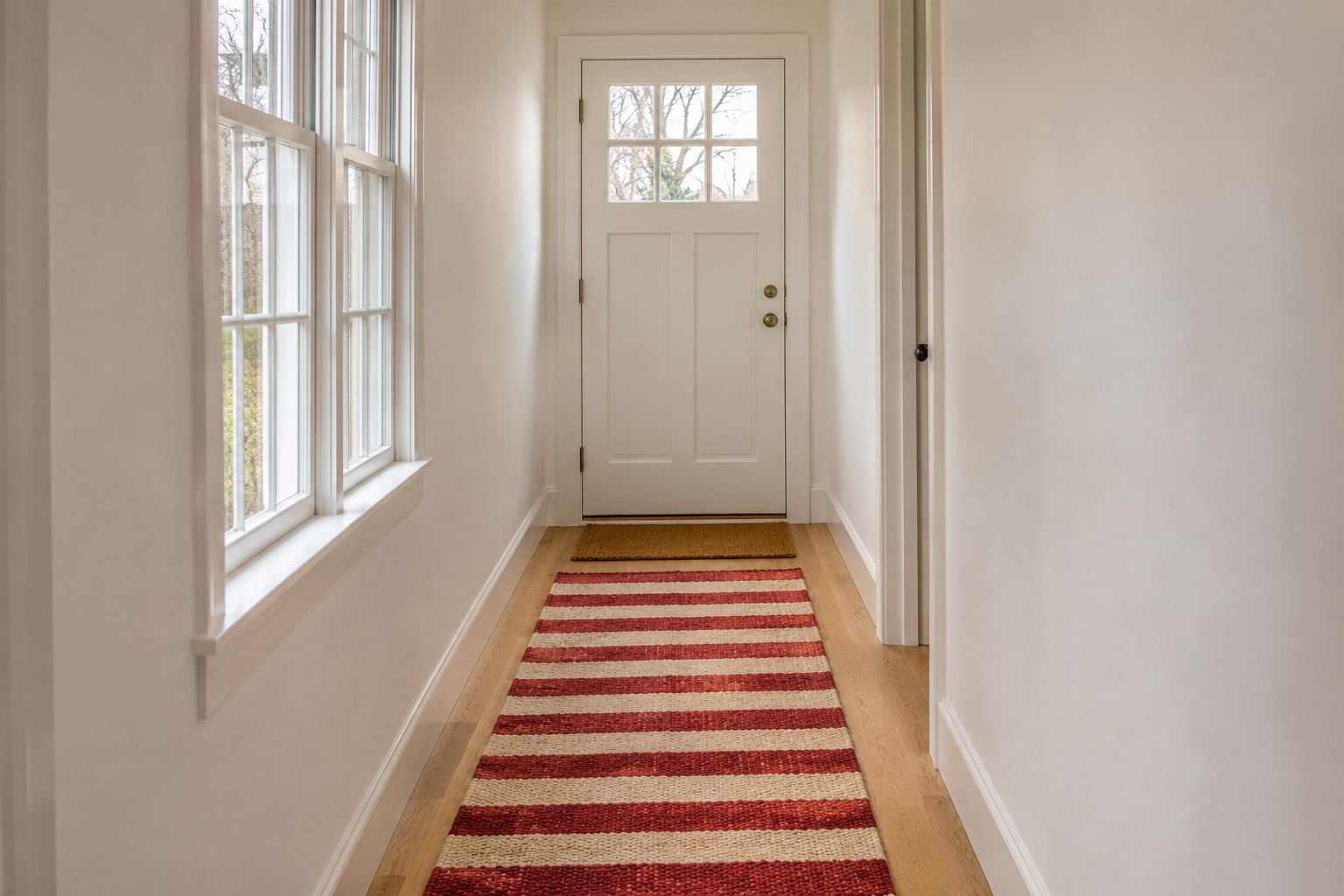
Swapping the everyday runner for a red and cream striped wool one changes the hall in a minute and goes back in January. The stripes run the eye from the door into the house, and a strong pattern hides the salt and grit that winter boots bring in better than a plain pale runner does.
A coarse coir mat just inside the door takes most of that grit first. Sized like any hallway runner, with a few inches of floor showing on each side, the seasonal one sits where the everyday one did.
A Boot Tray and a Basket for Gloves
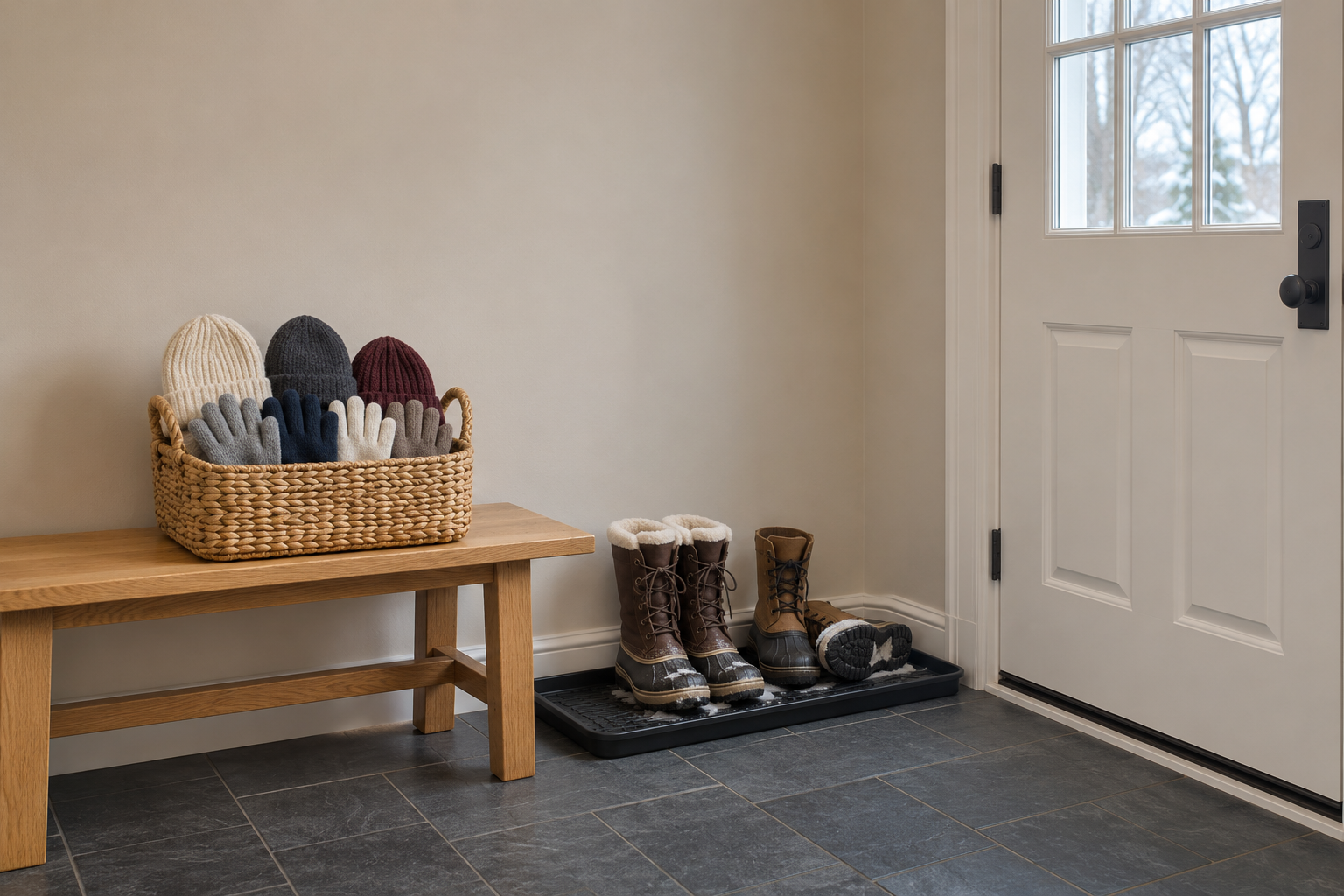
Snow and slush come into the house on boots, and in December they come in several times a day. A rimmed rubber tray by the door holds the wet boots and the water that melts off them, so the floor and the runner stay dry and the boots are there to step into on the way out.
A basket on the bench takes the hats, gloves, and scarves that otherwise end up on the console or the floor. It also holds the spare pair someone leaves behind after a visit, until it’s collected.
A Lit Garland Over the Inner Doorway
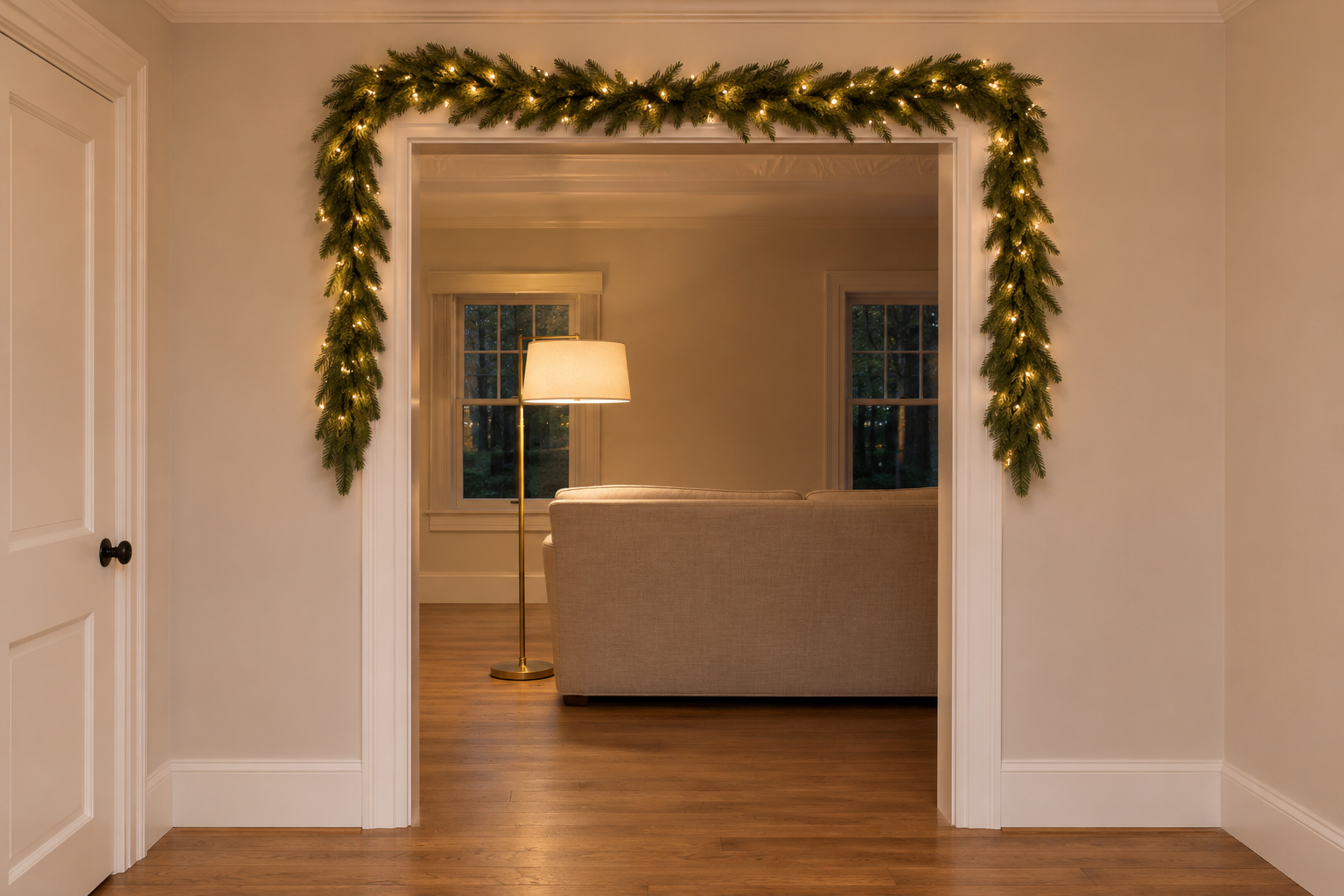
A garland across the top of the doorway from the hall into the next room, wound with warm white lights, frames the view into the house. Seen from the front door in the evening, the lit opening draws the eye past the coats and boots to the room beyond. On an arched opening, the garland follows the curve.
Small cup hooks along the top of the casing hold it. The ends can hang down the wall beside the trim, outside the opening itself, where shoulders and bags passing through are less likely to catch them. Plug-in lights need an outlet near the doorway and the cord run along the baseboard, never across the floor.
Sleigh Bells on the Door Handle
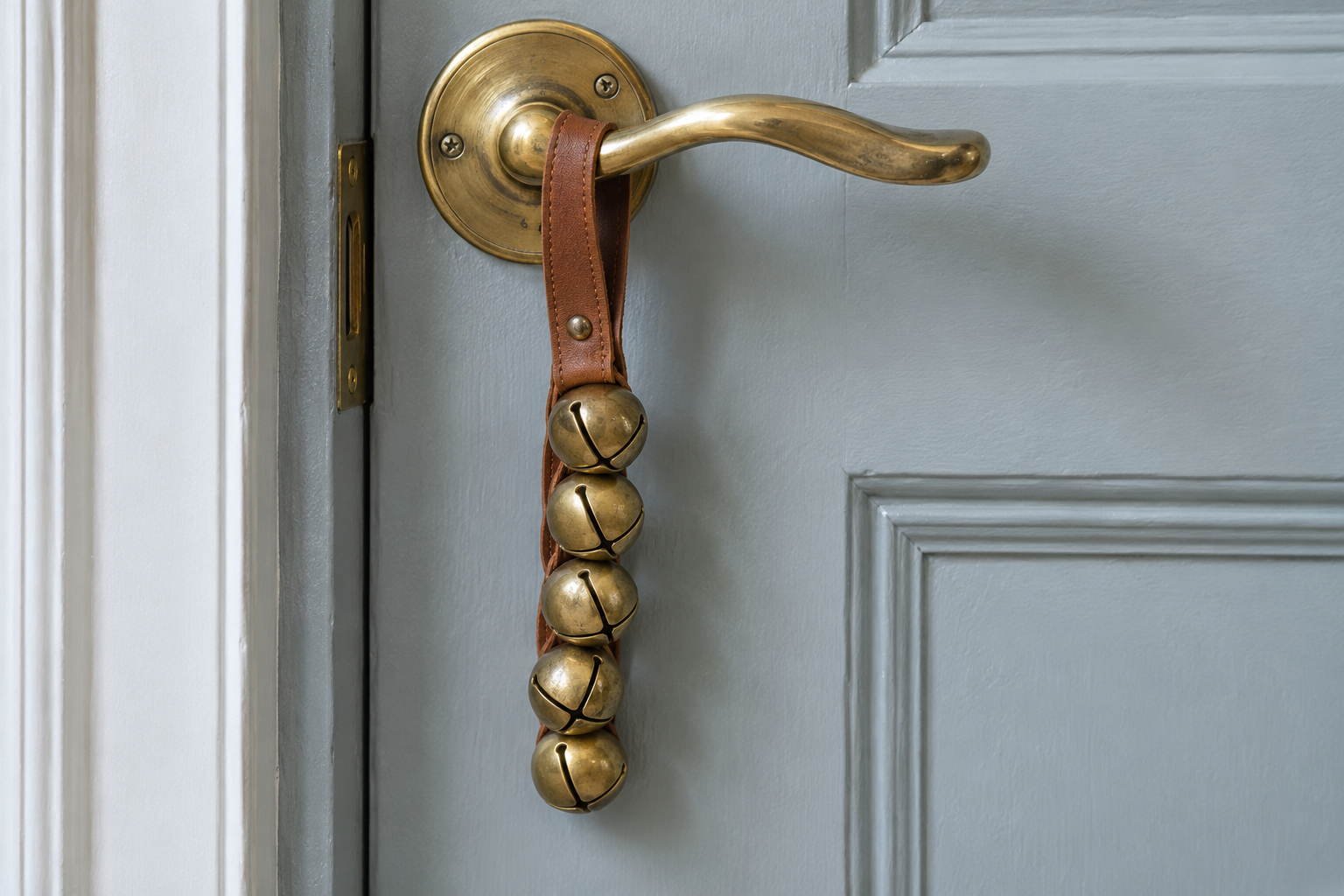
A short strap of brass sleigh bells hung from the inside handle of the front door rings each time the door opens. It’s a decoration that is heard before it’s seen, announcing each arrival to the rest of the house, which suits a December of visitors and deliveries.
A short loop keeps the bells close under the handle, where they swing less and are less likely to knock against the paint as the door moves.
A Rail for Guests’ Coats
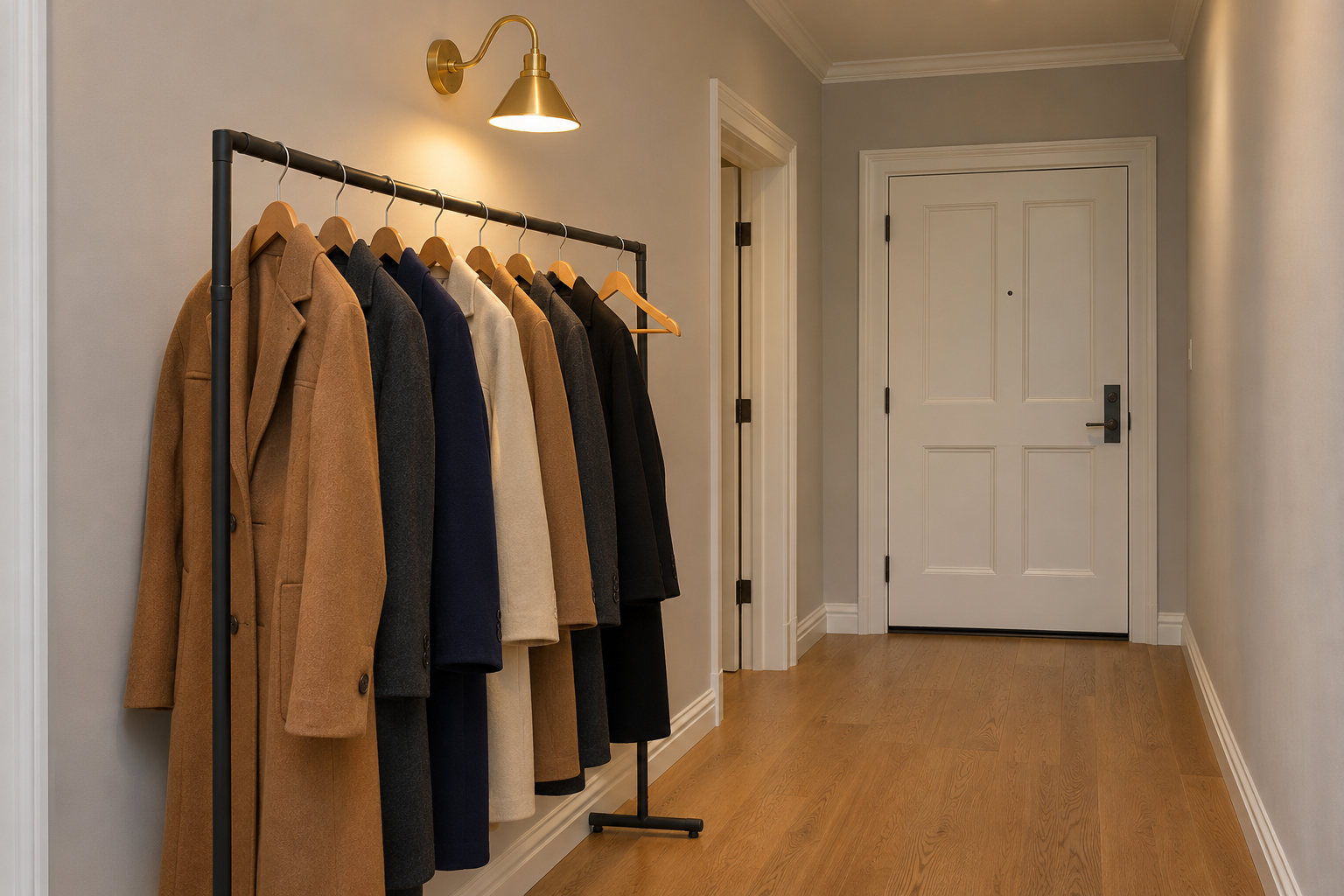
At a December party, the coat hooks are full within minutes, and the rest of the coats go on a bed or over the back of a chair. A freestanding clothes rail with wooden hangers, set against the side of the hall for the season, gives every coat a hanger and keeps them near the door they’ll leave by.
Stand it along a wall, out of the path to the door, so arriving and departing guests can pass while others are collecting their coats. A few spare hangers left empty make it obvious where the next coat goes.
Garland Along a Picture Rail
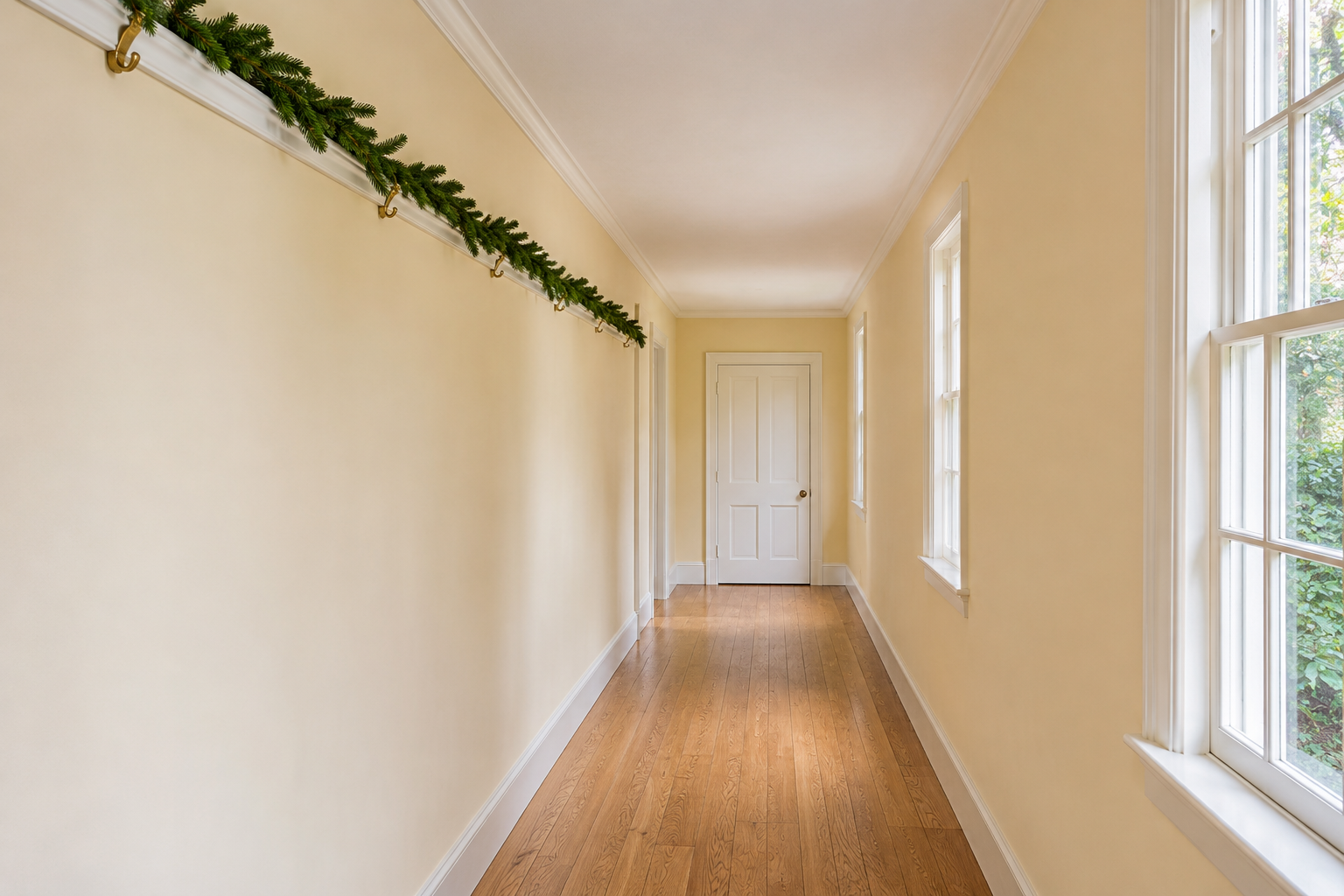
An older house with a picture rail has a ready-made ledge running the length of the hall. A slim garland laid along it, held at intervals by the same hooks that hang pictures from the rail, draws a line of green from the front door into the house, high above coats and heads.
A long hall can take more garland than a mantel, so measure the rail before buying. A thin garland suits it, since the rail is narrow and a heavy one pulls on the hooks.
A Wreath in the Vestibule
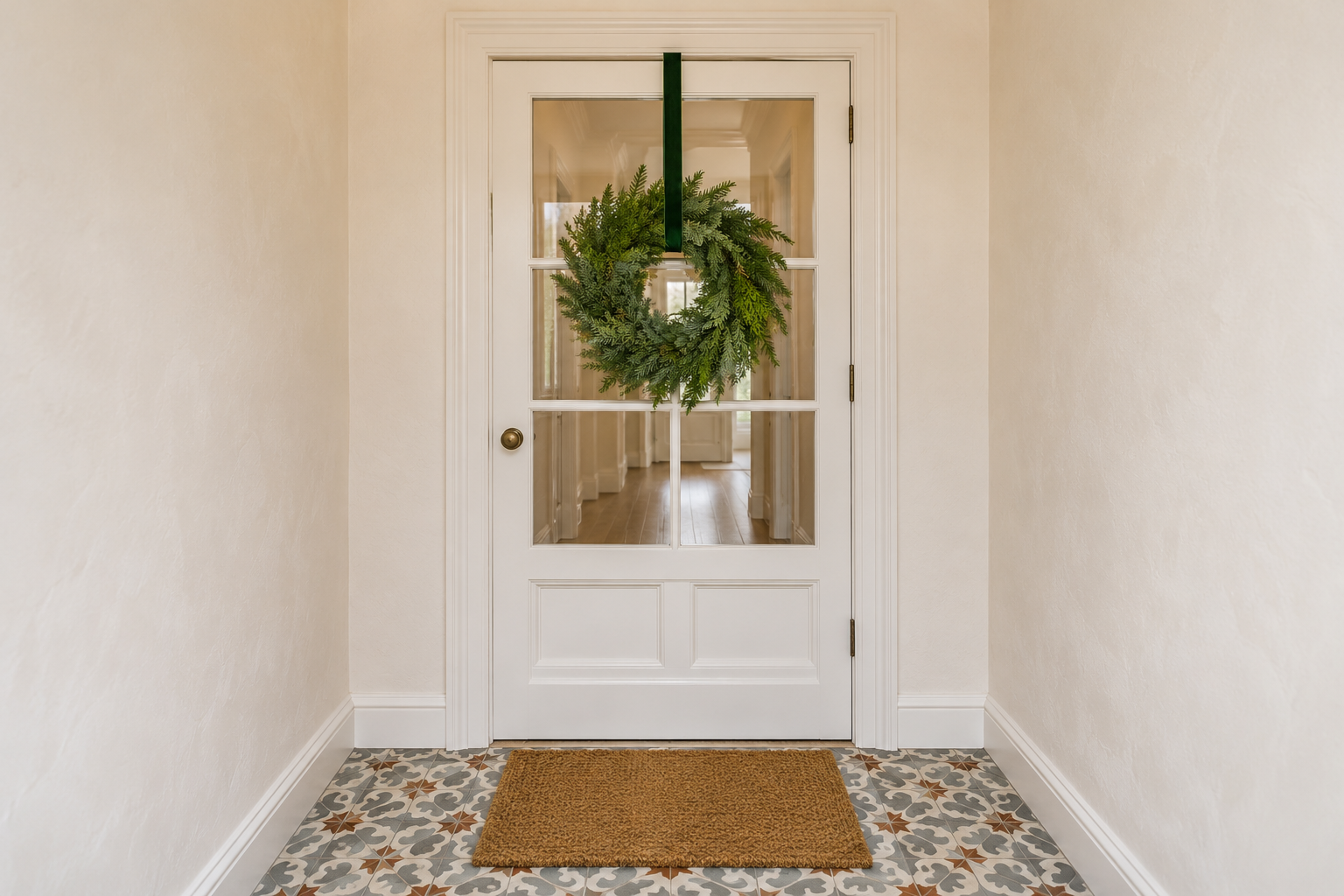
A house with a vestibule, the small space between the outer front door and an inner glazed one, has a room that guests stand in first and that stays close to the temperature outside. A wreath on the glass of the inner door faces anyone stepping in from the street, and from the hall side it is seen through the glass against the light.
The cold suits cut greens, which last longer here than anywhere else in the house. It doesn’t suit a houseplant, and a poinsettia left in a vestibule overnight in December can drop its leaves.
An Entry Marked in an Open Room
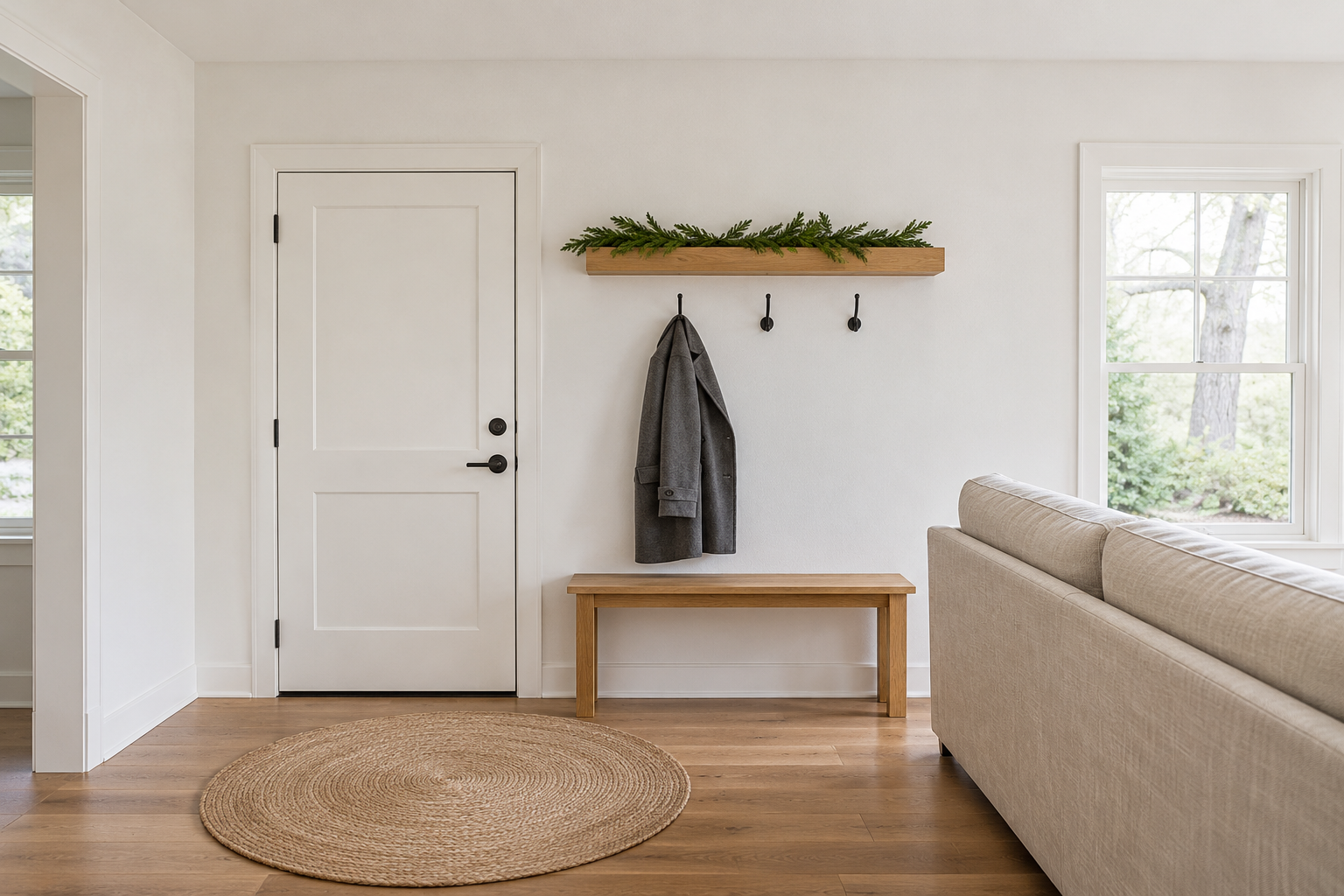
Where the front door opens straight into the living room, there is no hall to decorate, only the few feet inside the door. A round rug, a narrow bench, and a shelf with hooks beneath it mark that strip as the place where coats and boots stop, and a short cedar garland along the shelf gives it a Christmas decoration of its own.
Keeping the decoration to the shelf leaves the living room’s own Christmas, the tree and whatever is on the mantel, as the room’s main event, with the entry as a small, separate one beside the door.
A Poinsettia Back From the Door
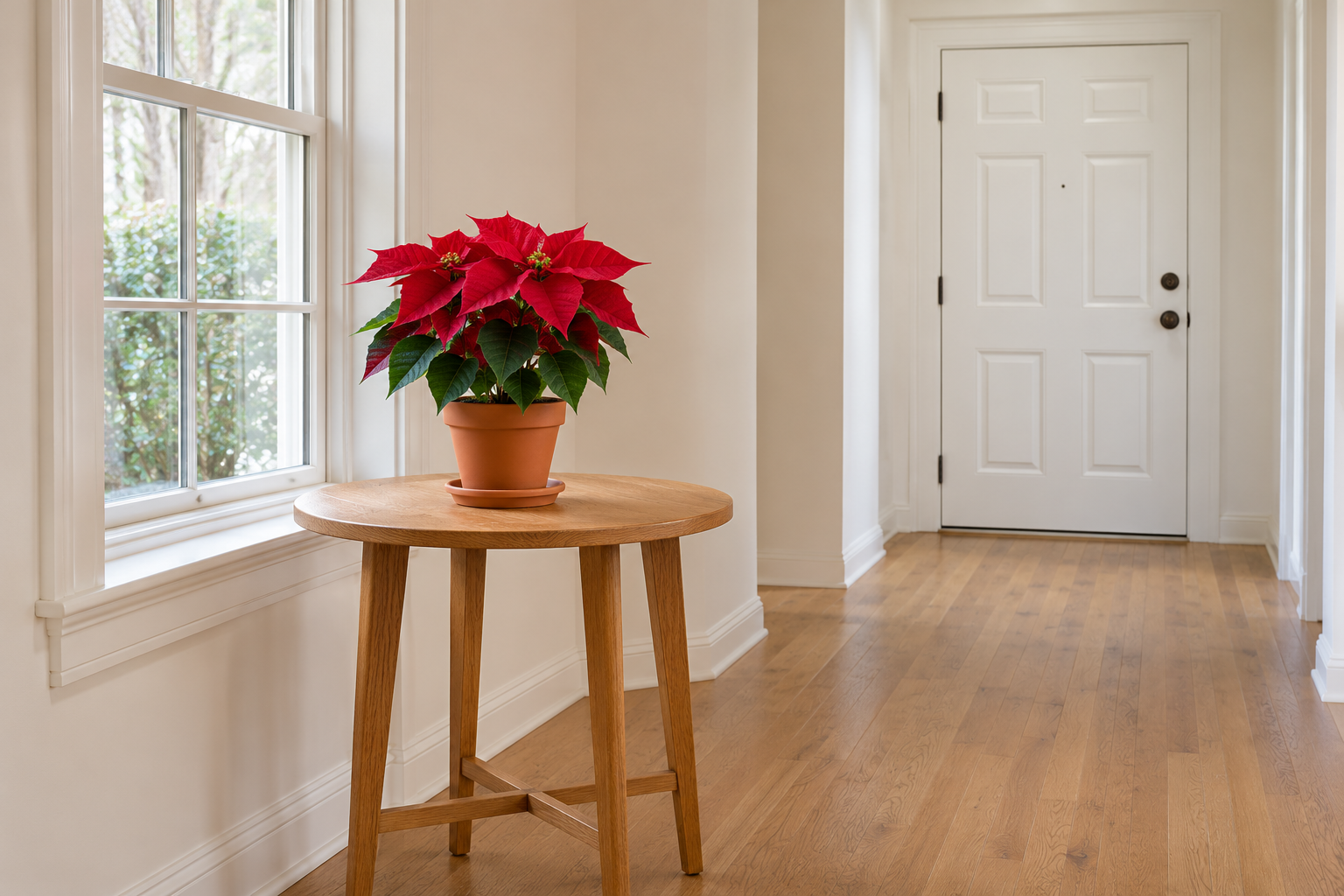
A poinsettia is the plant most often brought home in December, and a hall often doesn’t suit it. Cold drafts from the door, and hot air from a heating vent, can make it drop its leaves, so it does better on a table well back from the door, in bright light from a window but out of direct sun on the glass.
Its milky sap can irritate skin, and a pet that chews the leaves may get an upset stomach. Keep it where a dog or a cat can’t reach, and wash hands after pinching off a damaged leaf.