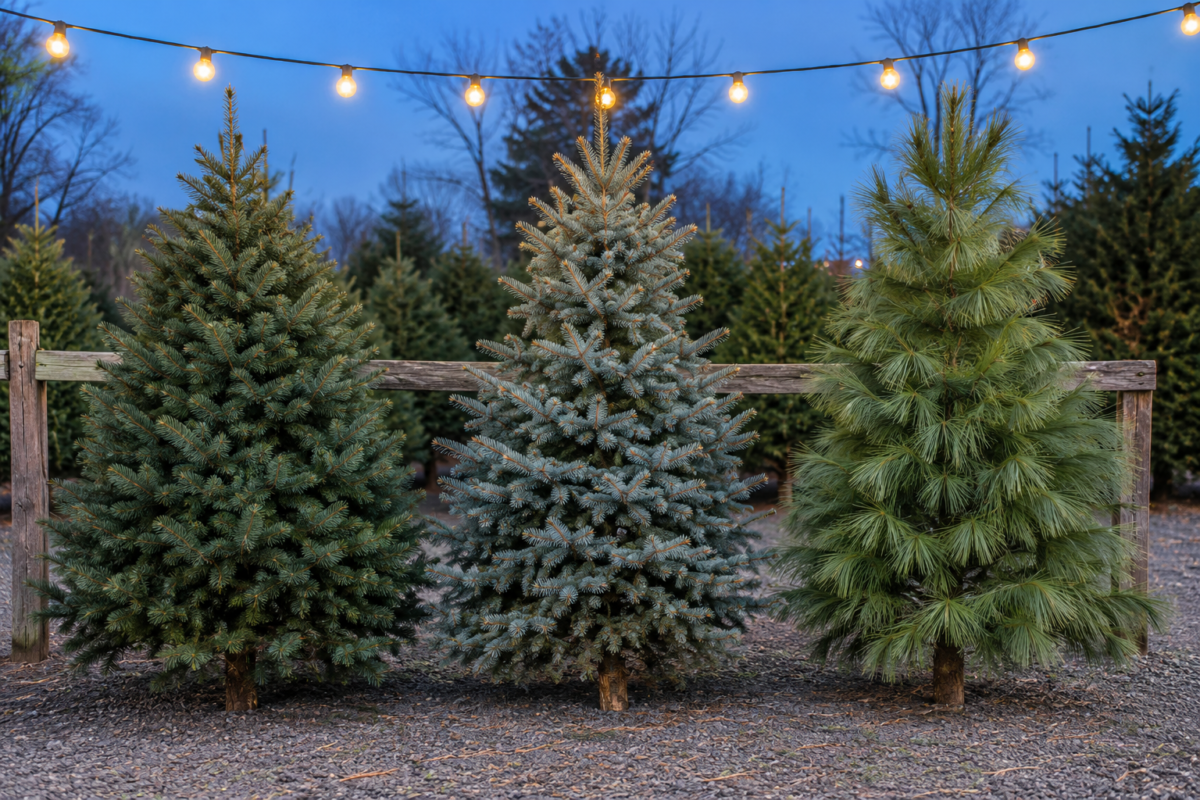
A Christmas tree lot usually sells four or five kinds of tree, under names that mean little until the trees stand side by side. They differ in more than color. The needles can be soft or sharp to the hand, the branches stiff enough for heavy glass or soft enough to bend under it, and the scent strong, faint, or, in one case, unpleasant when a needle is crushed. They also keep their needles for different lengths of time in a heated house.
Nearly every tree on a lot is a fir, a spruce, or a pine. The needles tell the three apart in a few seconds, which is useful for checking a label, or for choosing when there isn’t one.
Fir, Spruce, or Pine by the Needle
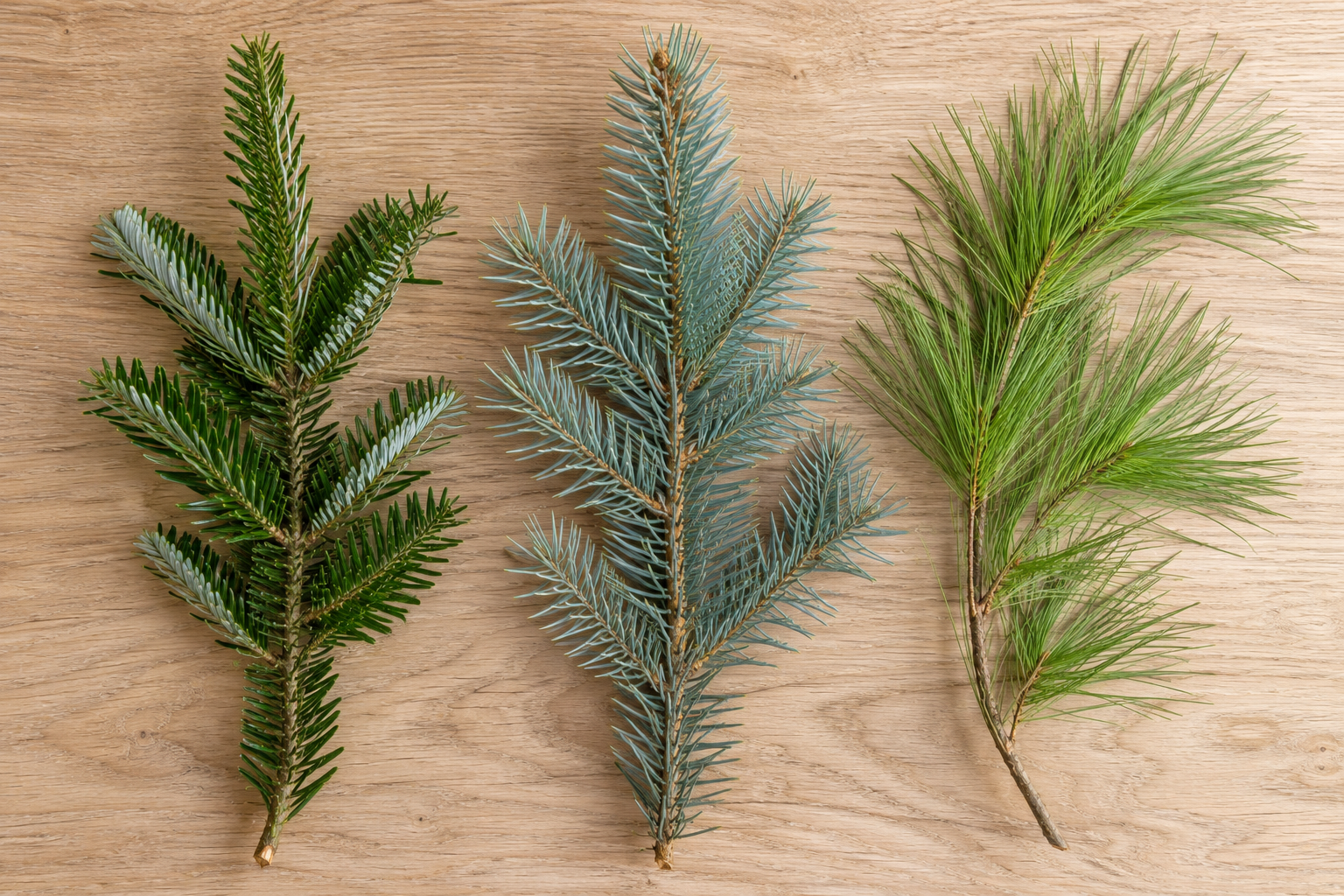
Run a hand along a branch, from the trunk toward the tip. Fir needles grow one at a time from the twig, short, flat, and soft, and on several firs, Fraser and noble among them, they have a silvery underside. Spruce needles also grow one at a time, but they’re stiff and end in a sharp point, so a handful of spruce prickles. Pine needles grow in bundles, two to a bundle on a Scotch pine and five on a white pine, and they’re longer than either.
Douglas fir is the one name that misleads. It isn’t a true fir, but its needles are soft and single, and on the lot it handles like one.
The Firs
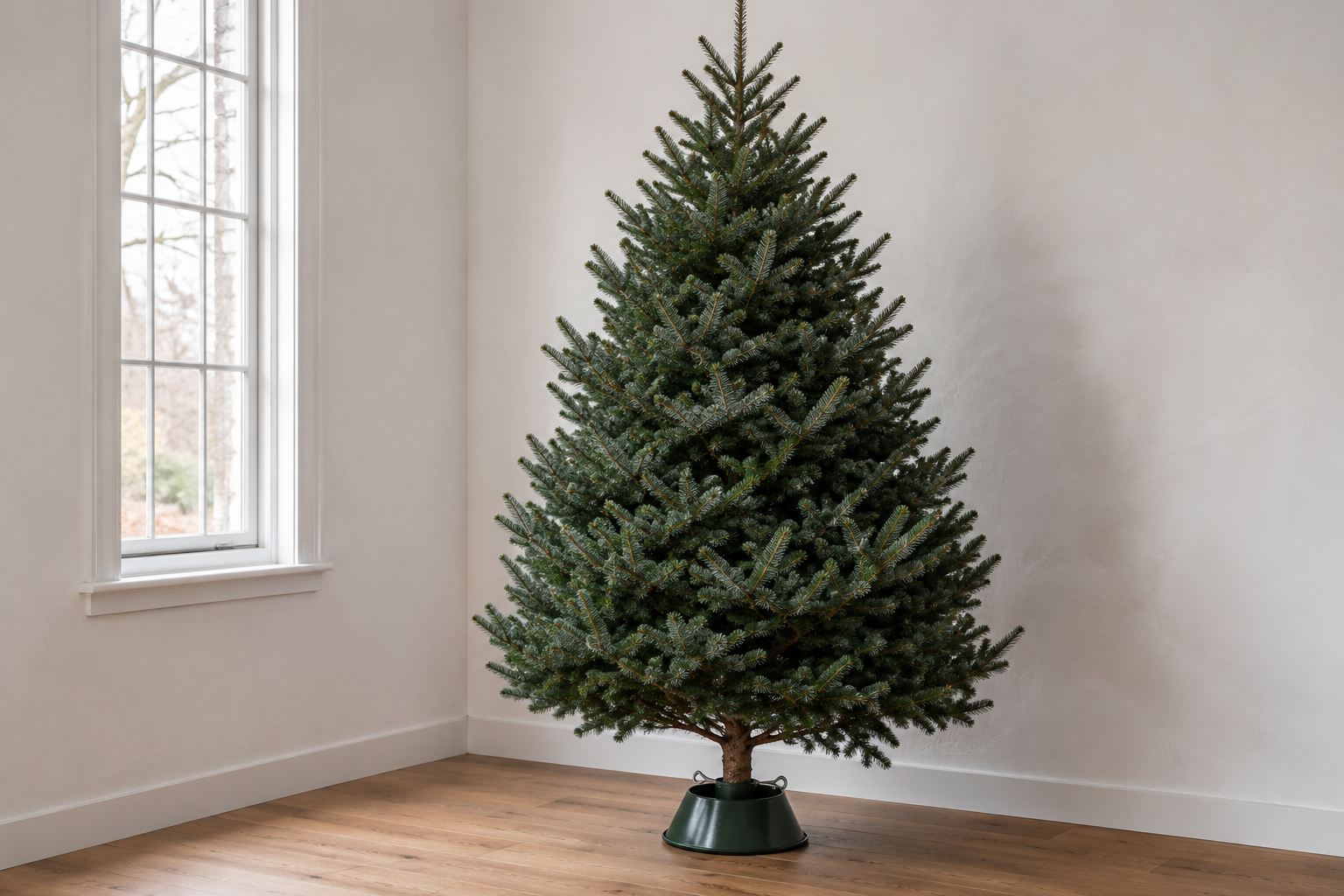
Firs are the family most lots carry the most of, and as a group they keep their needles, color, and scent better than spruces or pines. They differ from one another mainly in scent and in how stiff their branches are.
| Fir | Needles | Scent | Branches |
|---|---|---|---|
| Fraser | Short, dark blue-green, silver below | Good | Stiff |
| Balsam | Dark green, dense | Strong | Flexible |
| Canaan | Dark green, silver below | Strong | Stiff |
| Noble | Dark green, silver below, turned upward | Good | Stiff, in open tiers |
| Concolor (white fir) | Soft, dull blue-green | Citrus when crushed | Stiff |
| Douglas | Soft, radiating around the twig | Sweet | Bend under weight |
Fraser and balsam look much alike from a distance. A Fraser’s needles show more silver when the branch is turned, and its branches turn slightly upward. Balsam is the more fragrant of the two. Canaan fir sits between them, close to both in looks. Douglas fir keeps its needles well when it’s kept watered, but its branches bend under heavy ornaments.
Spruces
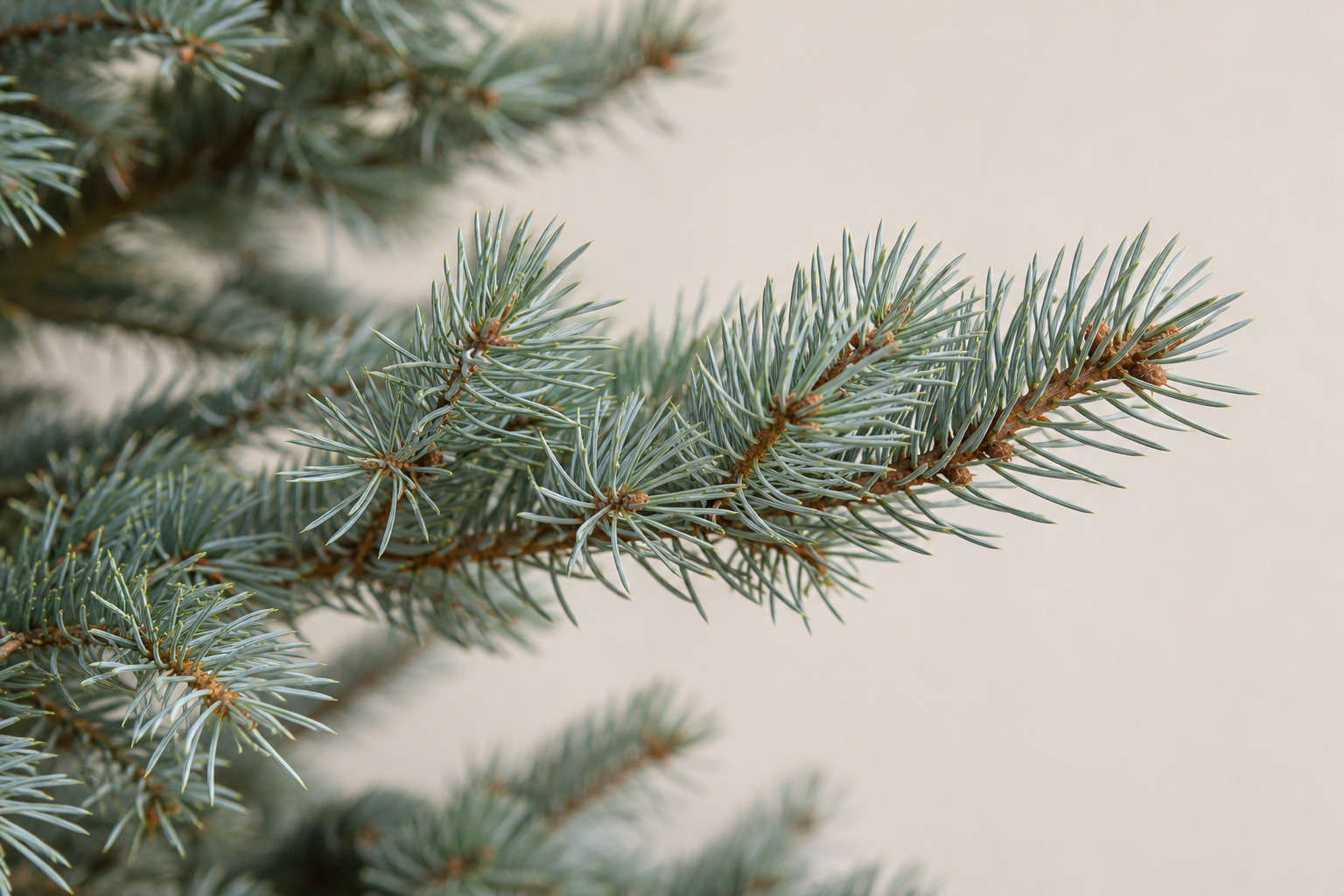
Blue spruce is grown for its silvery-blue color and a stiff, even shape. Its branches will carry a lot of weight. Its needles are sharp enough that dressing it is a job for gloves, and in a house with small children or pets a fir is the softer choice.
White spruce has short, stiff needles and strong branches, but crushed needles give off an unpleasant smell, which is noticeable when the tree is carried in and set up. As a group, spruces keep their needles for less time indoors than firs do, and a spruce bought for the house is better brought home closer to Christmas than at the start of December.
Pines
Scotch pine has bright green needles about an inch long, stiffer than a fir’s, and it keeps them even after it has dried out. That makes it tidy, but it also means a dry Scotch pine doesn’t warn anyone by dropping needles, so its stand needs checking every day all the same.
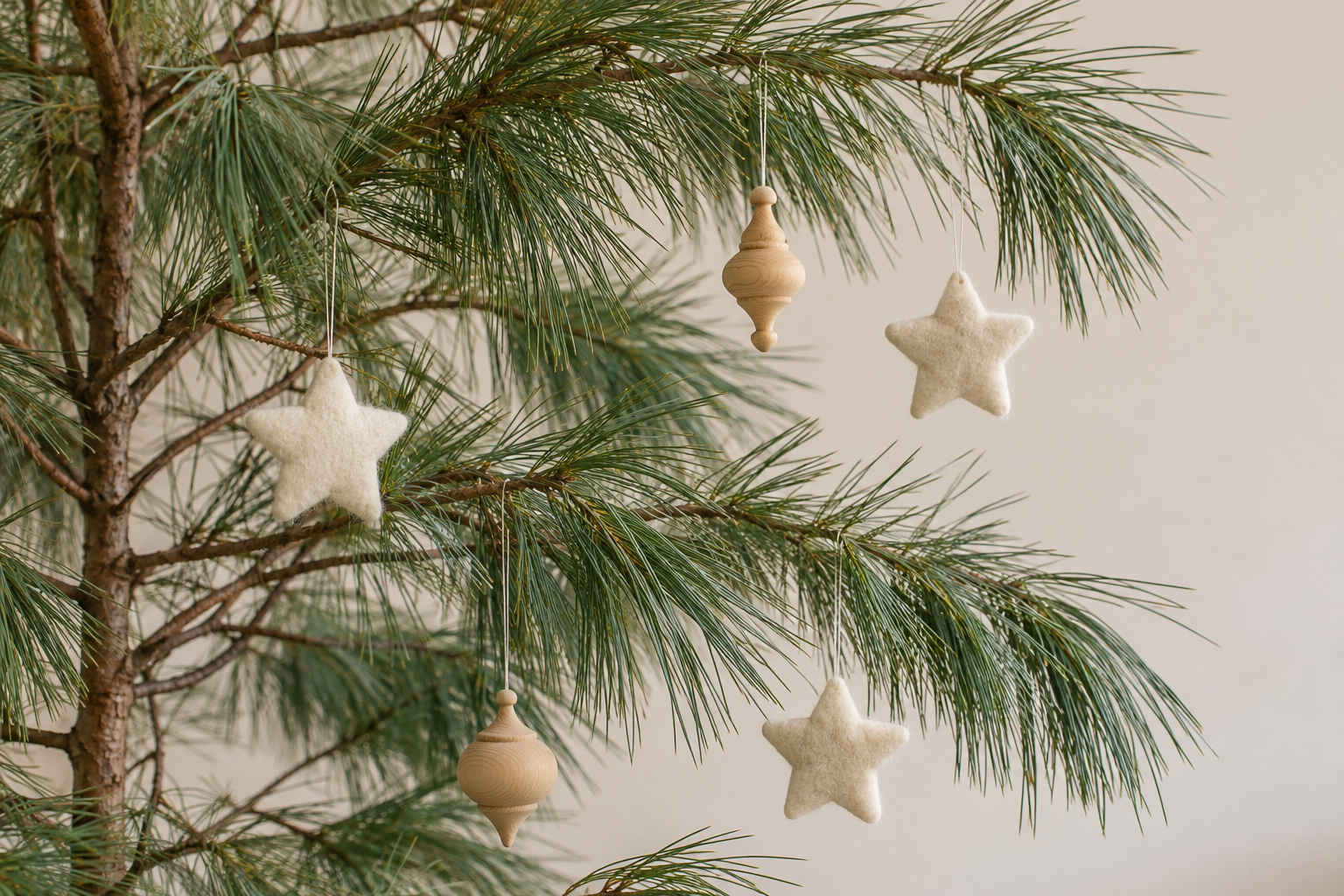
White pine looks entirely different, with long, soft, blue-green needles that droop from the branch. It has little scent, which suits a household that finds a balsam too strong, and its branches are too soft for heavy ornaments. Felt, paper, wood, and small lights suit it.
Branches Strong Enough for Glass
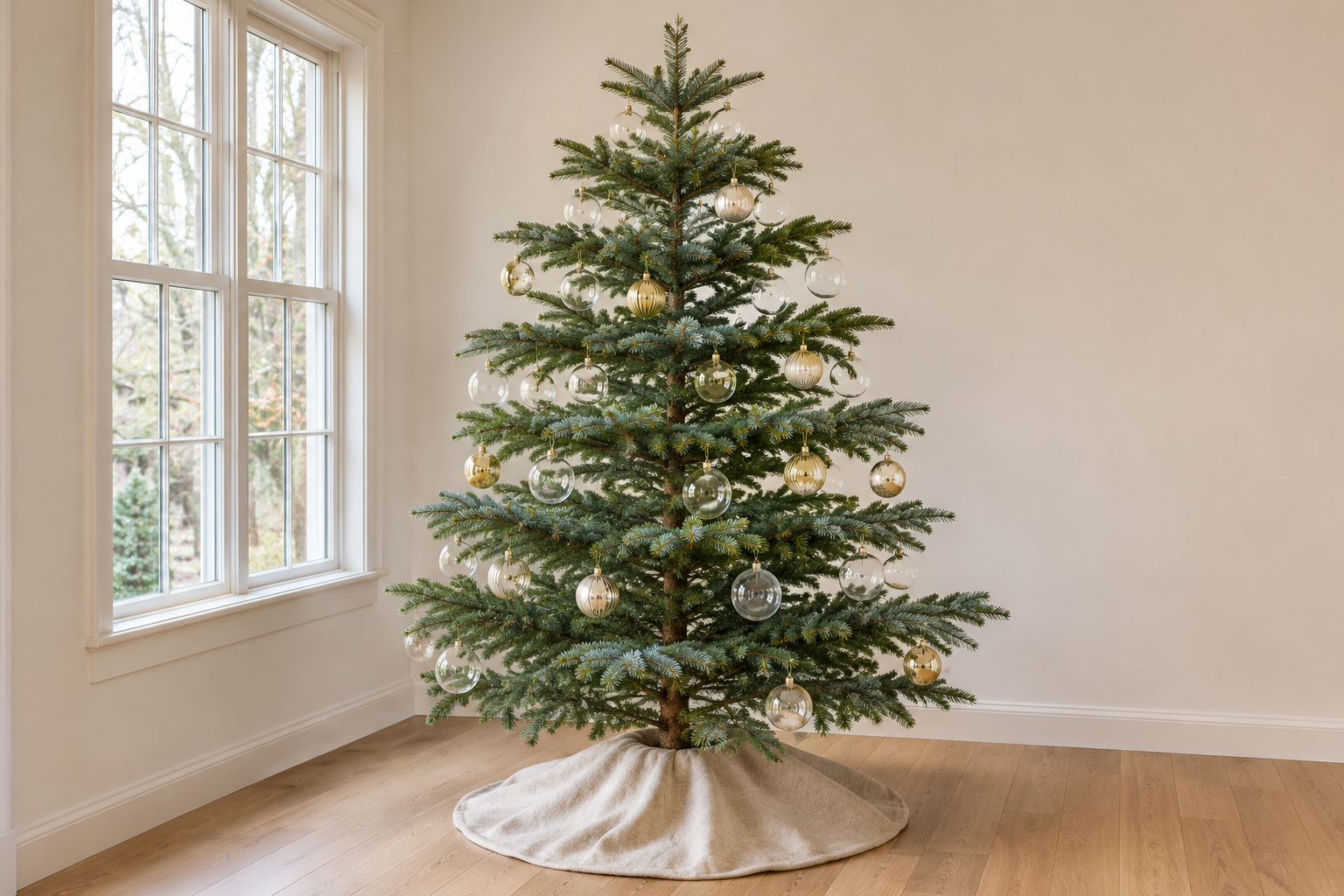
Heavy glass ornaments need stiff branches that stay level under the weight. Fraser, noble, Canaan, and concolor firs and blue spruce hold them. Balsam and Douglas fir bend under heavy pieces, and white pine more so, so lighter ornaments suit them, or the heavy ones go close to the trunk where the branch is thickest.
The shape matters too. A noble fir grows in tiers with open space between them, so an ornament hangs in the gap and shows from across the room. A dense Fraser or balsam holds ornaments close to the surface of the tree, where they sit among the needles and show at the front. That changes how many ornaments a tree looks full with, and the open tree usually needs fewer.
Scent, and Needles in a Warm Room
Balsam and Canaan fir carry the strongest scent of the common trees, Fraser and noble a little less, and concolor has a citrus note when a needle is crushed. Spruces and white pine have little scent, and white spruce smells unpleasant when crushed. Every tree’s scent fades as it dries.
How long a tree keeps its needles depends on its kind, but more on how fresh it is when bought and whether the stand is kept full. A fir cut weeks before it reached the lot can drop needles sooner than a spruce cut a few days ago. At the lot, pull a branch tip gently through a loose hand. The needles should bend rather than snap, and stay on the twig.