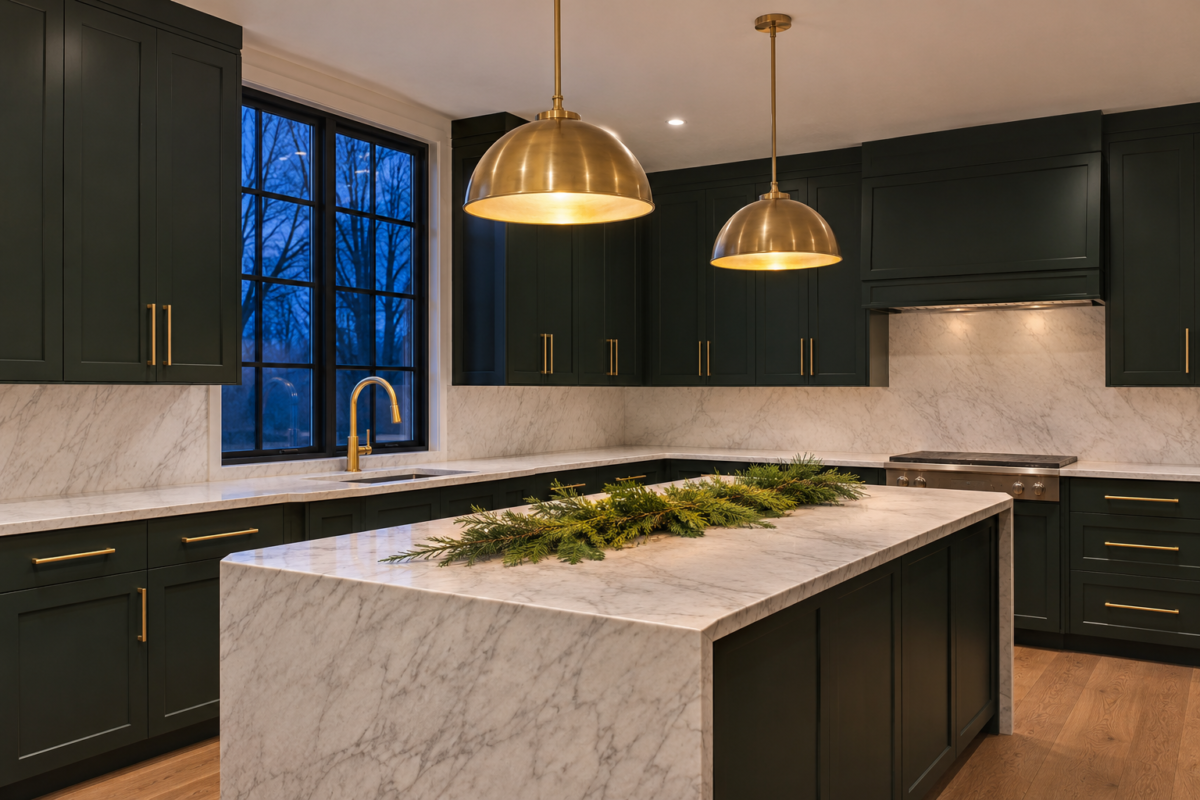
In December the kitchen is the warmest room in the house and the busiest. The oven runs for hours at a stretch, the kettle goes on whenever someone comes in from the cold, and guests who were shown to the living room end up leaning on the island anyway. Anything put up in there lives with steam, wet hands, and a counter that has to be cleared every time there’s pastry to roll.
That narrows down where decorations can go. The cabinet tops, the doors, the shelves, and the doorway all sit above or beside the work. The things a kitchen already uses, the dishes, the tea towels, a bowl of fruit, can carry the season without taking any room from it. Cut greens last longest away from the oven, and anything that lights up is worth a timer, since the kitchen is usually the first room lit in the morning and one of the last to go dark at night.
Garland Along the Tops of the Upper Cabinets
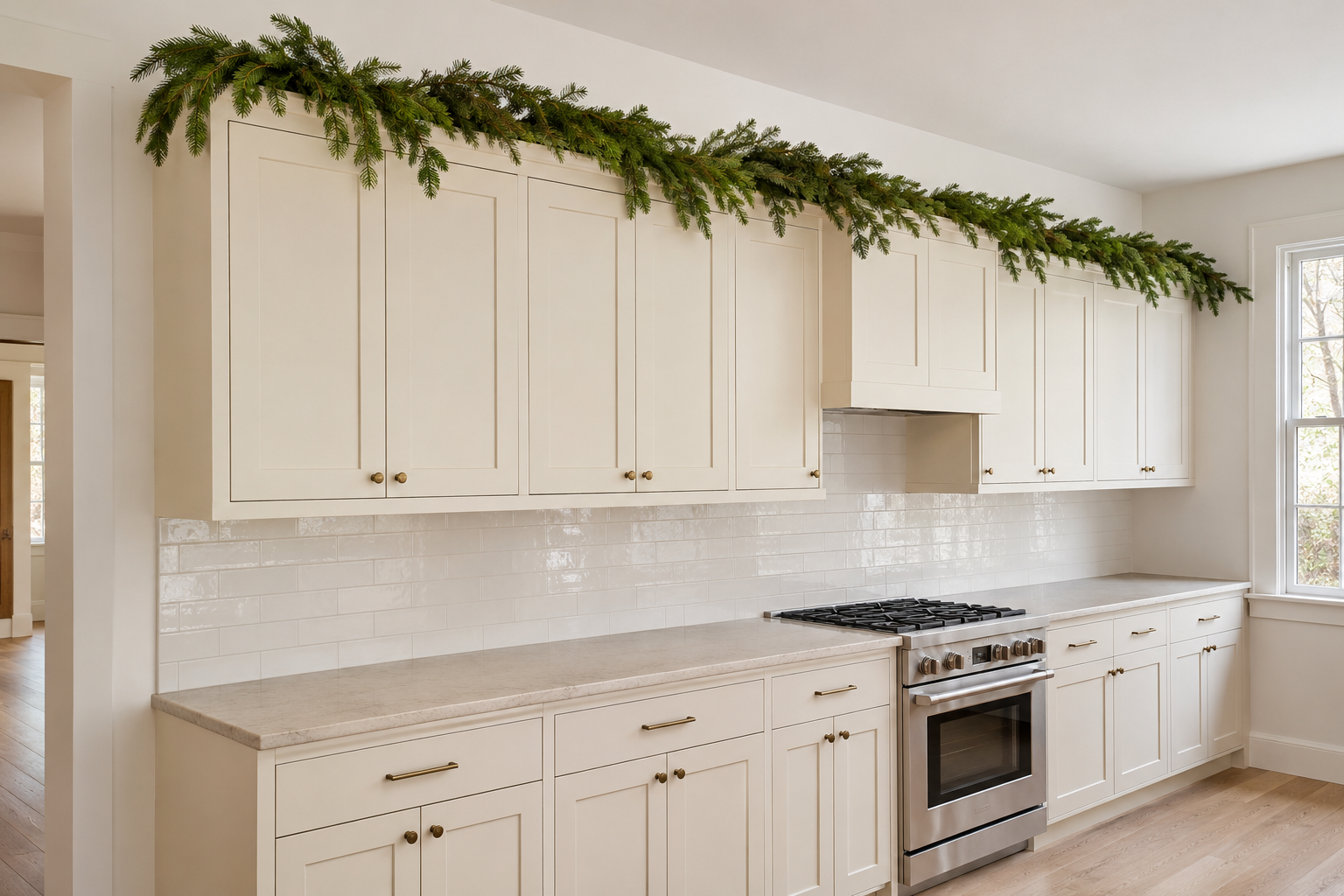
Upper cabinets that stop short of the ceiling leave a flat strip along their tops that nobody uses. In December it can take a garland laid along its length, with a little of it hanging over the front edge, so a line of greens runs the whole kitchen at a height nobody has to work around.
Fir and cedar both lie flat and keep their shape. Warm air collects near the ceiling, and cut greens dry out faster in warm air, so a garland put up in the first week of December may need replacing before Christmas. Stop it short of the cabinets on either side of the cooktop.
Boxwood Wreaths on the Cabinet Doors
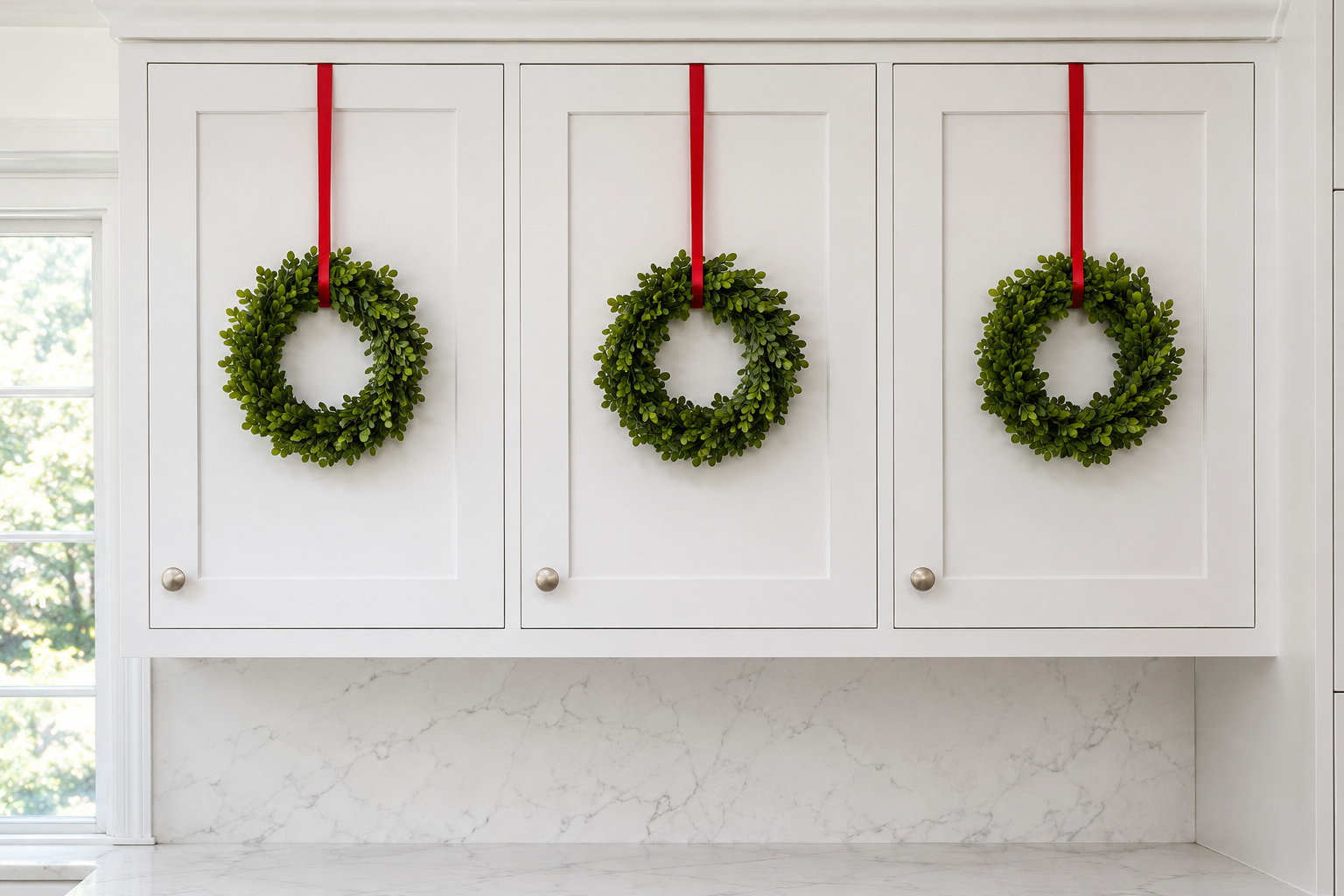
Small boxwood wreaths hung on the upper cabinet doors do what a door wreath does at the front of the house, at a size that suits a kitchen. Each one hangs from a ribbon tied over the top of its door, so it swings with the door and the cupboard stays in use.
Keep the ribbon thin. A wide velvet one bunched over the top edge can stop a door from closing flush. A wreath about 10 inches across fits inside the center panel of many shaker doors, so measure the panel before buying.
The Christmas Dishes on Open Shelves
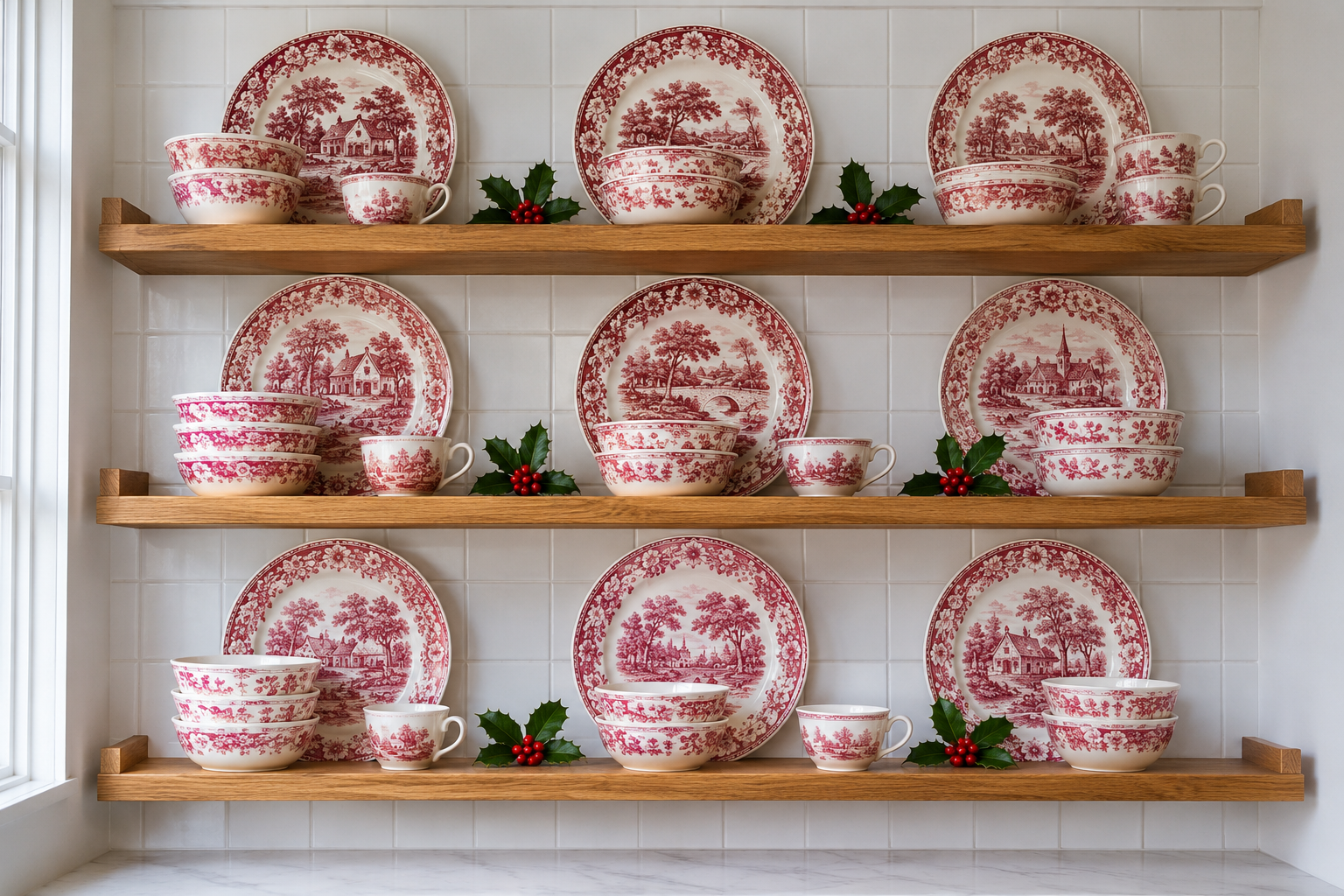
Open shelves are already on display, so the simplest change is to bring the Christmas dishes forward. Red and white transferware plates stood upright at the back of each shelf, with the bowls stacked in front of them, put a pattern on the wall that shows from across the room. The plates come down for a meal and go back up afterward.
A plate stood on its edge needs a groove or a small lip at the front of the shelf to keep it from sliding forward. A few sprigs of holly between the stacks are all the greenery the shelves need.
A Bowl of Clementines on the Island
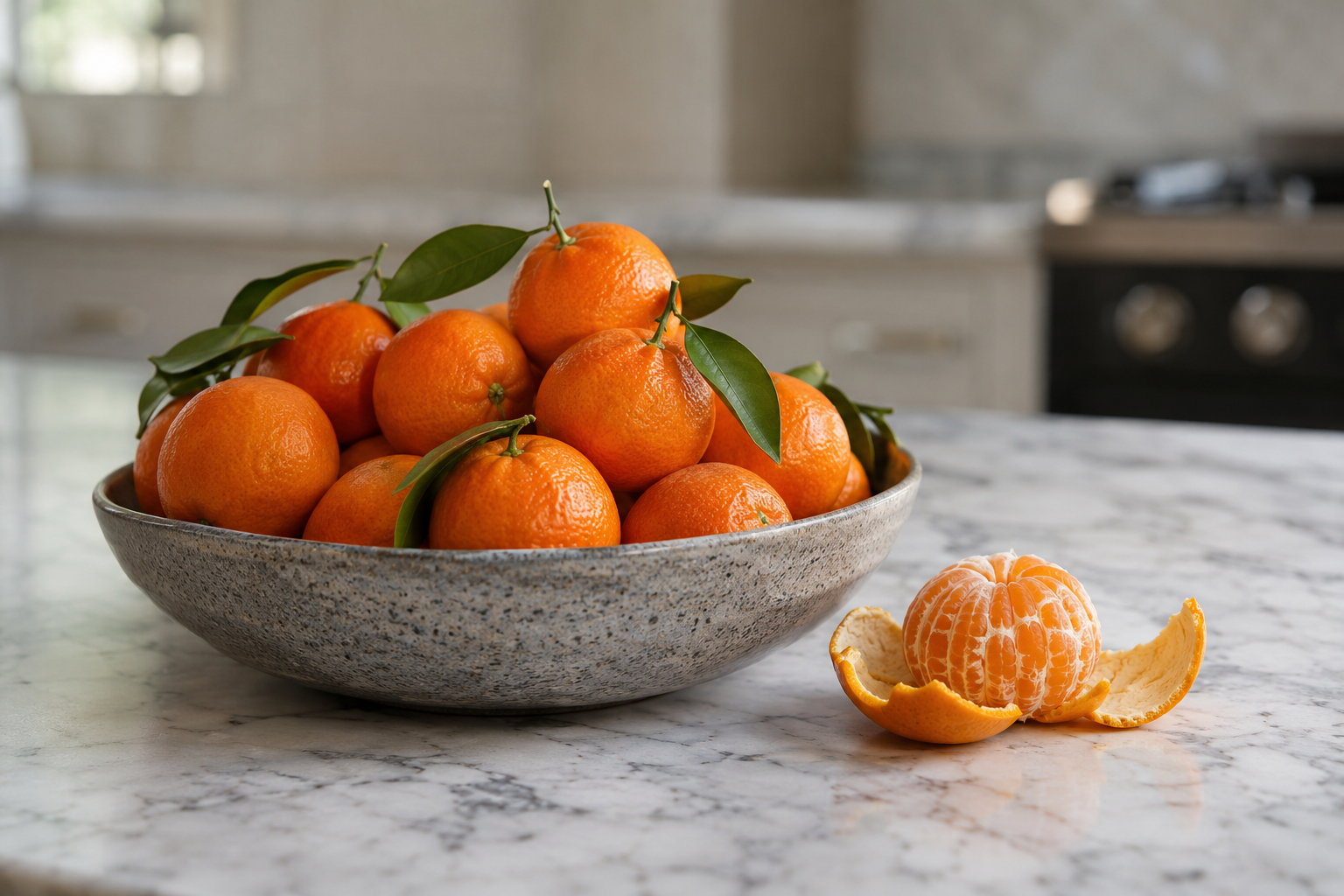
Clementines come into season as the weather turns cold, and a wide stoneware bowl heaped with them puts orange on the island that people help themselves to as they pass. It’s emptied and refilled through the month, so it never needs a cleared space around it the way an untouchable centerpiece does.
Fruit sold with a few leaves still on the stems brings a dark green in among the orange, and the bowl needs nothing else. A low, wide bowl suits an island better than a tall one, because it leaves the view clear to whoever is on the other side.
A Small Tree in the Corner of the Counter
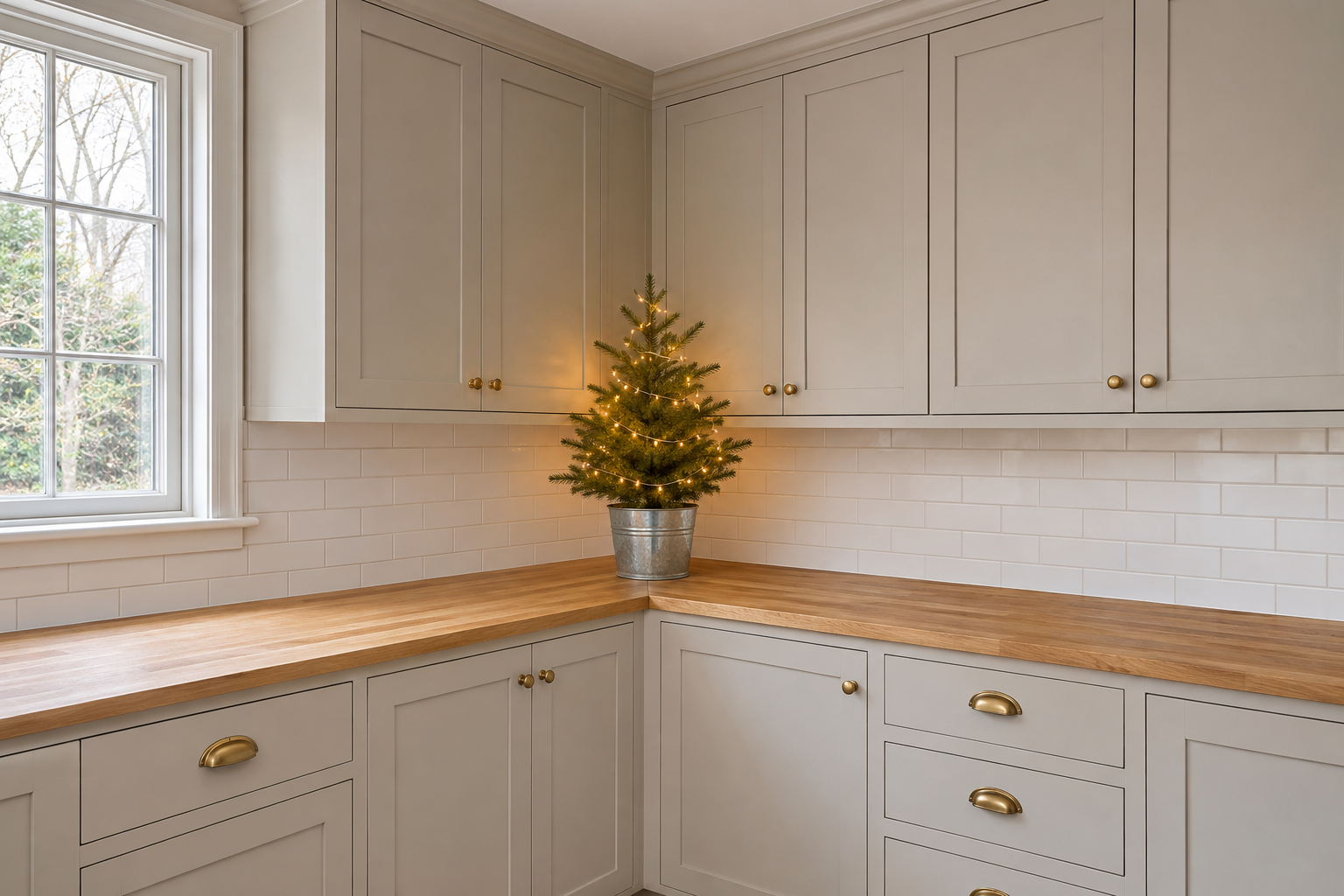
Where two runs of counter meet, the inside corner is deep and awkward to work in, and it usually ends up holding the toaster or nothing at all. A tree about 2 feet tall in a galvanized pail fits there and leaves the work surface on either side free.
A potted dwarf spruce, sold in many garden centers at this time of year, needs its soil kept damp and the corner farthest from the oven. A short string of lights on a battery pack keeps a cord from running across the counter.
Glass-Front Cabinets Lit From Inside
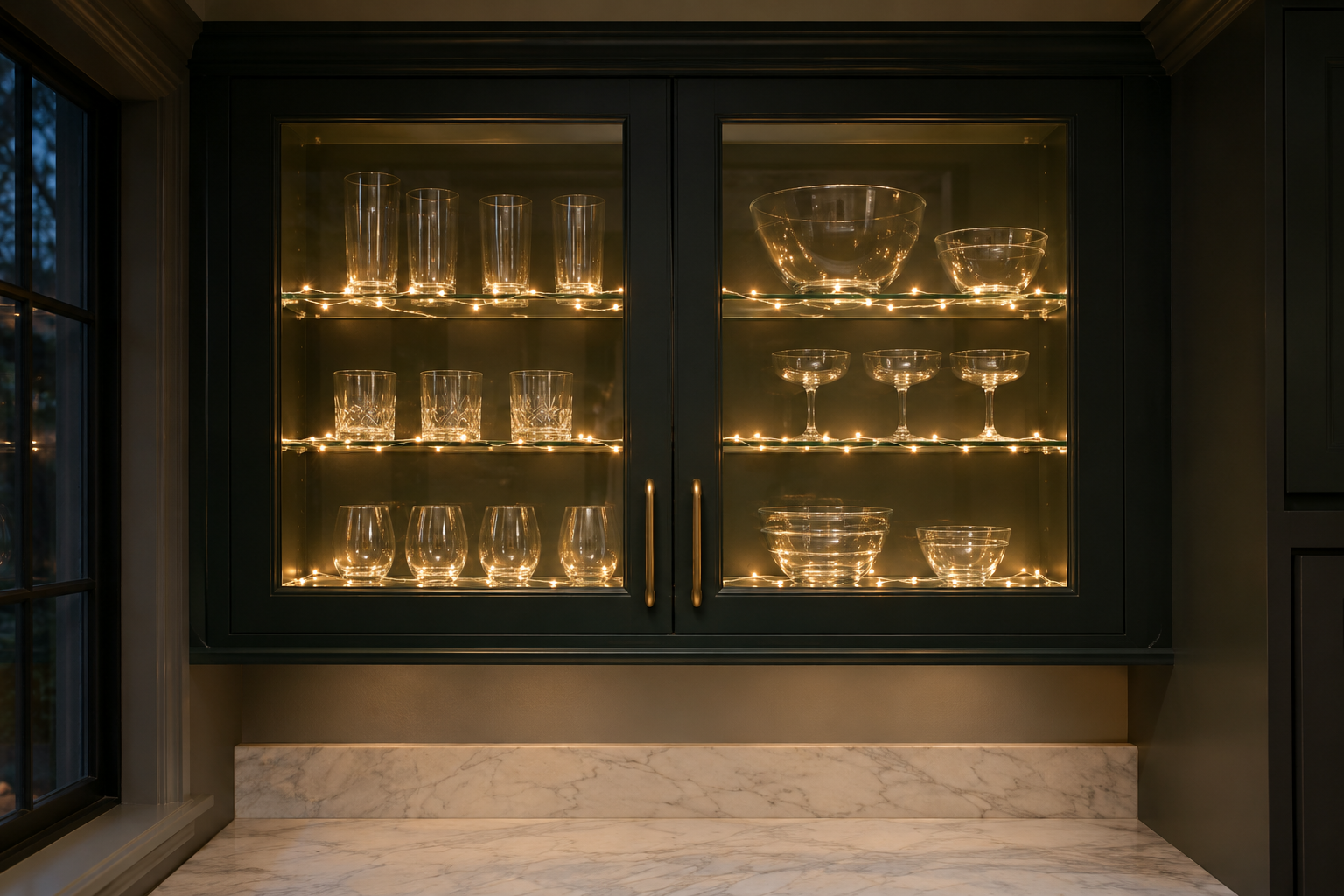
A string of tiny warm white lights laid along each shelf of a glass-front cabinet lights the glassware from within. After dark, with the main lights off and someone still talking at the island, the cabinet glows on the wall like a lantern.
A battery string with a timer avoids running a cord through the door, and LED bulbs give off very little heat beside the glasses. Clear and pale glass carry the light best. A cabinet full of opaque or colored dishes keeps most of it in.
Ornaments Hung From the Pot Rail
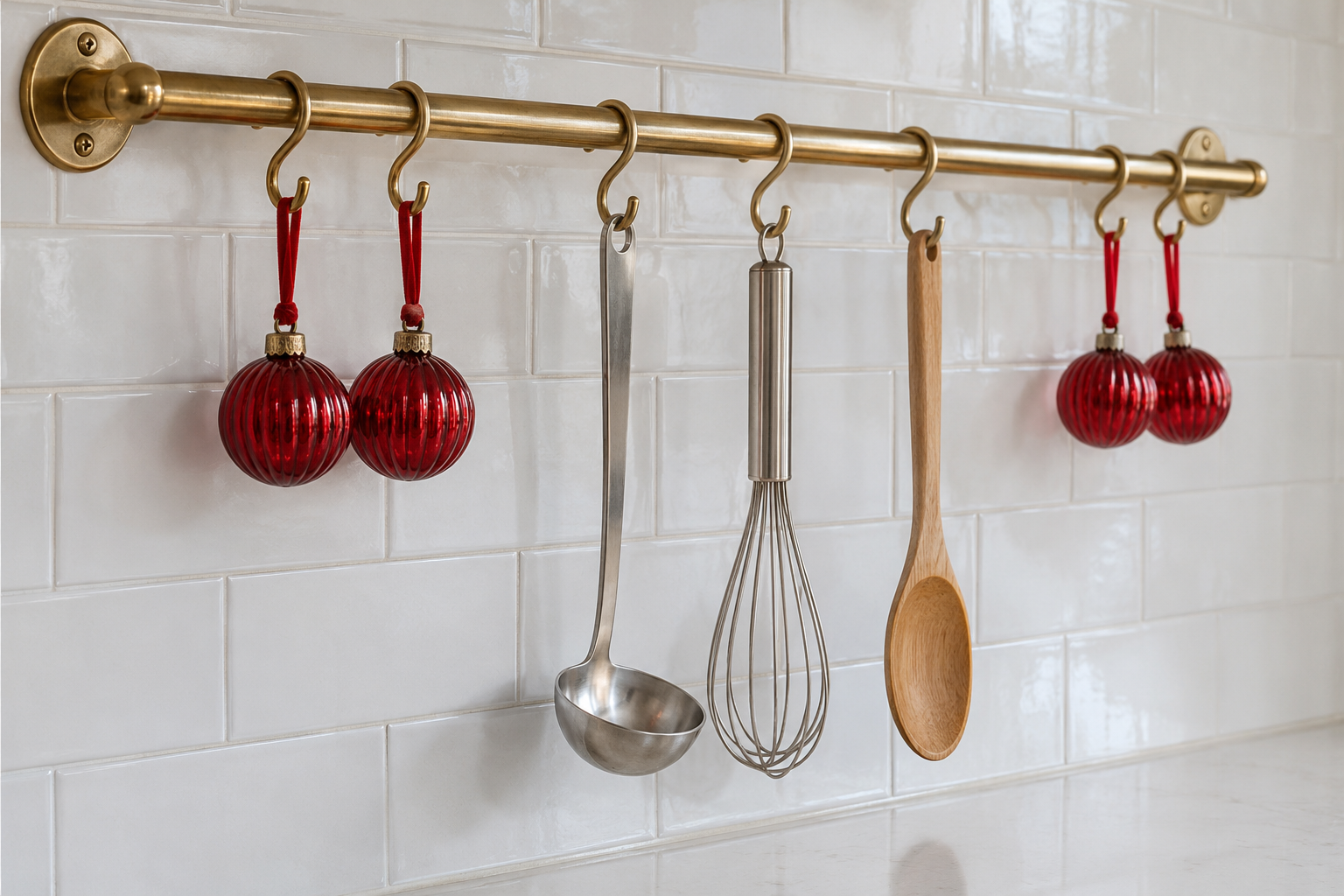
A rail along the backsplash already holds a ladle and a whisk on S-hooks. A few red glass baubles on short ribbons, hung from hooks of their own near the ends of the rail, turn it into a garland that the cook doesn’t have to reach past.
Keeping the baubles to the ends leaves the middle of the rail for the tools used most. Above a stone counter, shatterproof ornaments are the better choice.
A Kissing Ball in the Kitchen Doorway
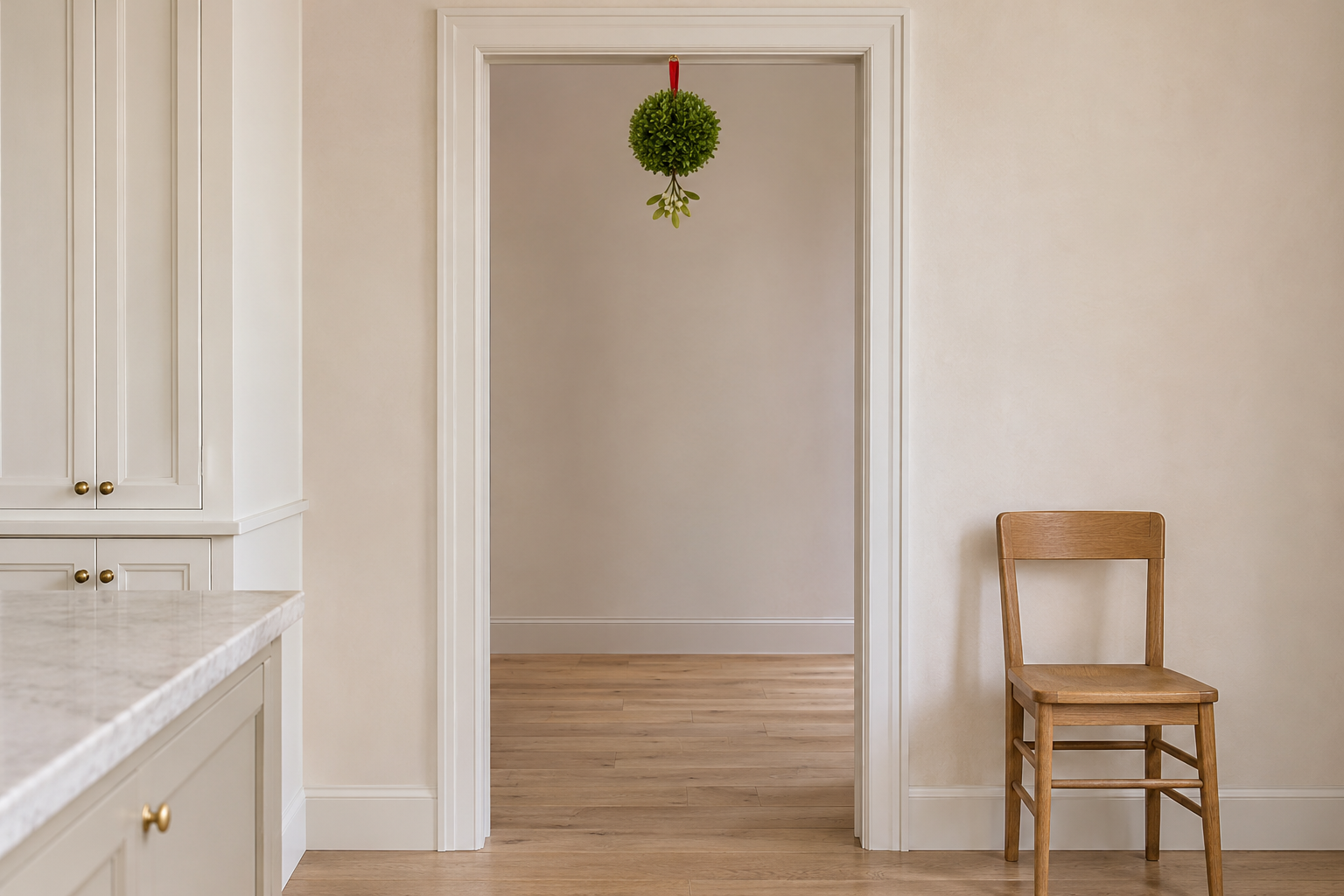
A ball of boxwood hung on a ribbon in the doorway between the kitchen and the hall is the one decoration in the room placed for people passing through, not for the cook. The kissing ball, a ball of greens with mistletoe tied beneath it, is a long-standing Christmas custom, and in a doorway it’s seen from both rooms.
Hang it from a small hook in the top of the frame, high enough that the tallest person in the house walks under it without ducking. Mistletoe is toxic to cats and dogs, so in a house with pets an artificial sprig is the safer choice.
A Hot Chocolate Tray Set Out for December
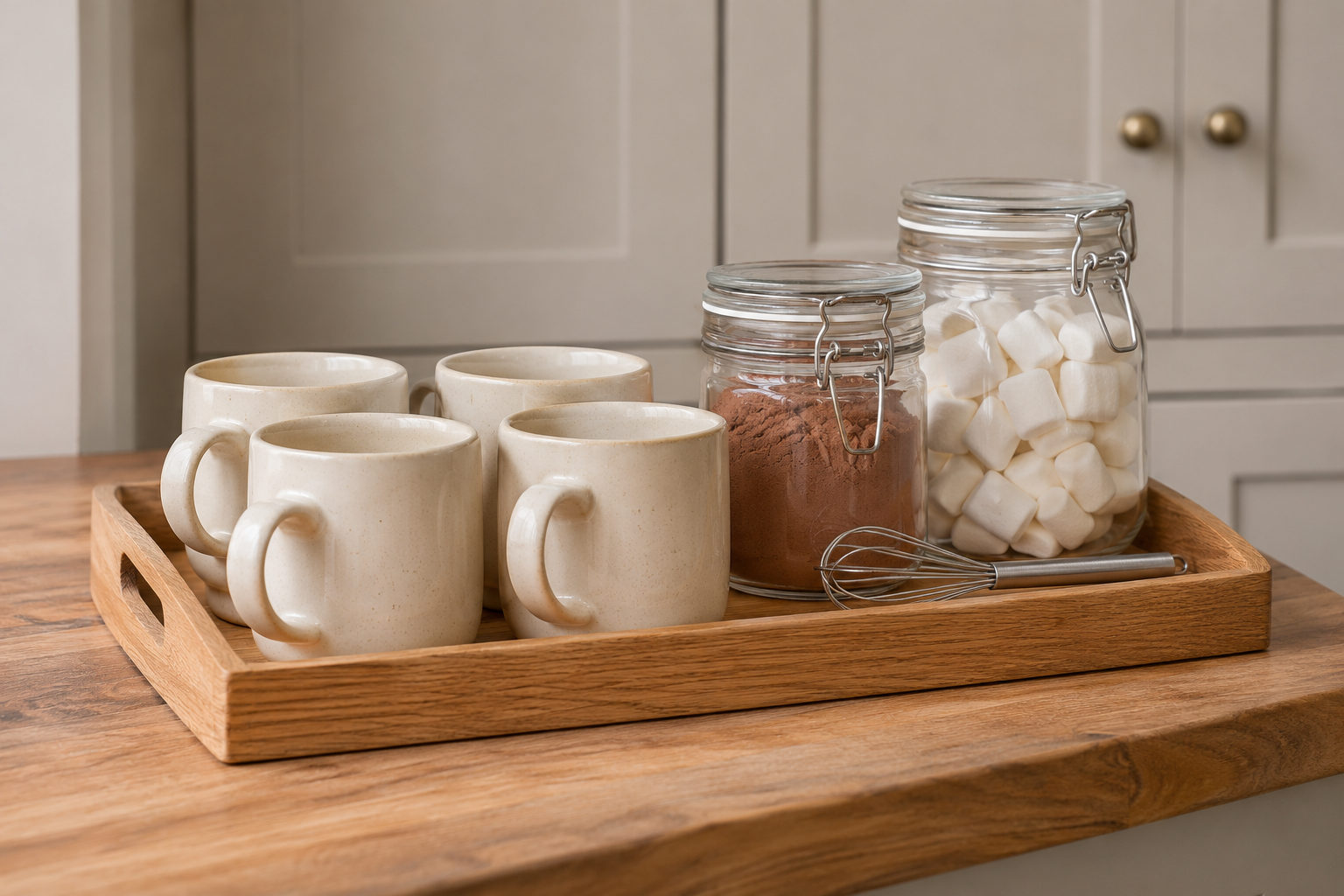
A wooden tray at the end of the counter with four mugs, a jar of cocoa, a jar of marshmallows, and a small whisk sets the kitchen up for the drink everyone wants after coming in from the cold. Left out for the month, it’s a decoration that gets used every day, and it keeps the makings together instead of in three different cupboards.
Put it near the kettle or the stove and away from the space used for chopping and rolling, so it can stay where it is through the busiest days of cooking.
Red Tea Towels for the Season
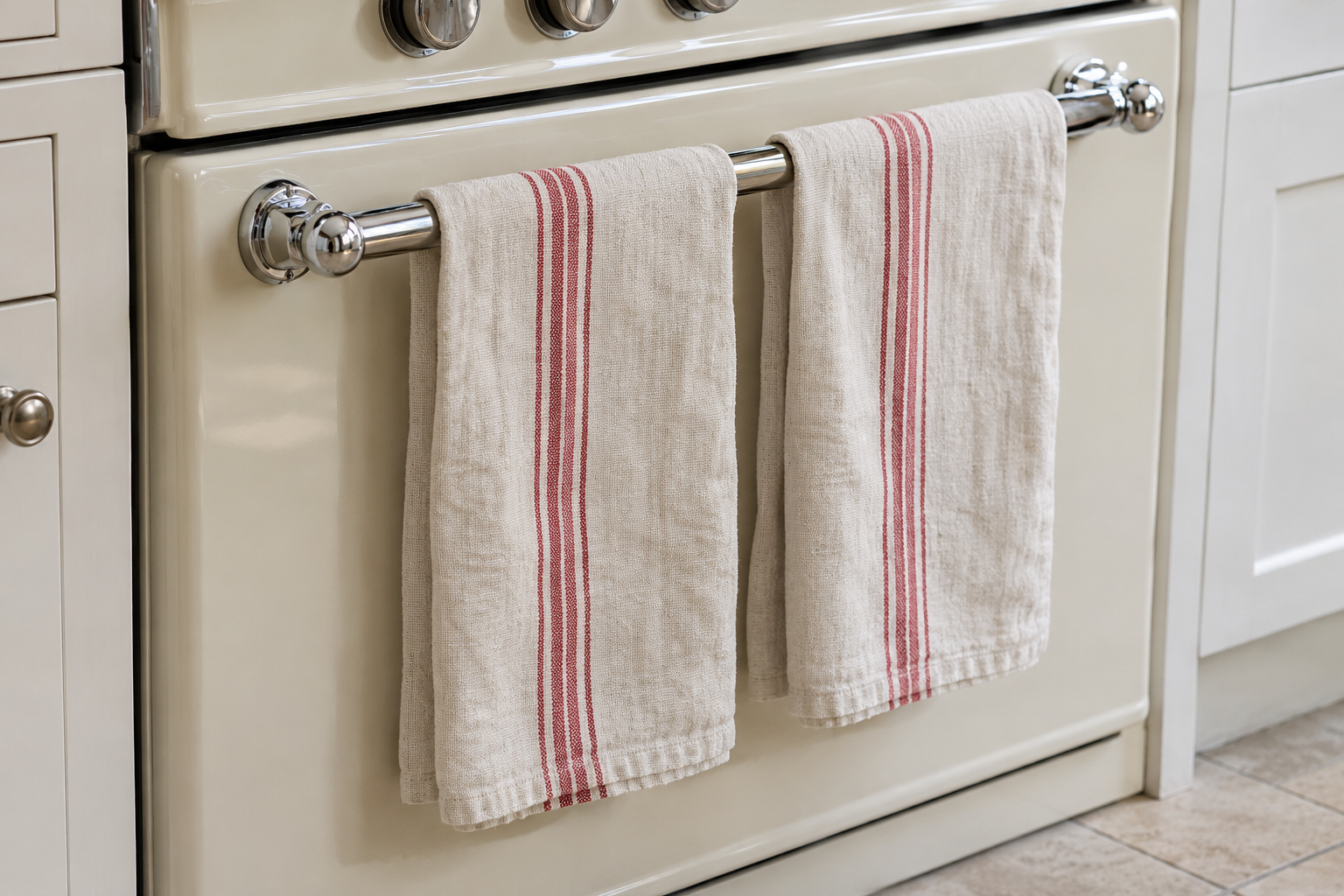
Swapping the everyday tea towels for red striped linen ones is about the smallest change a kitchen can take for December. They hang on the oven door bar and the dishwasher handle, the two places the eye lands first in most kitchens, and they get used like any other tea towel.
Linen leaves little lint on glasses, so the seasonal set is no step down for drying.
A Baking Shelf Ready for Cookies
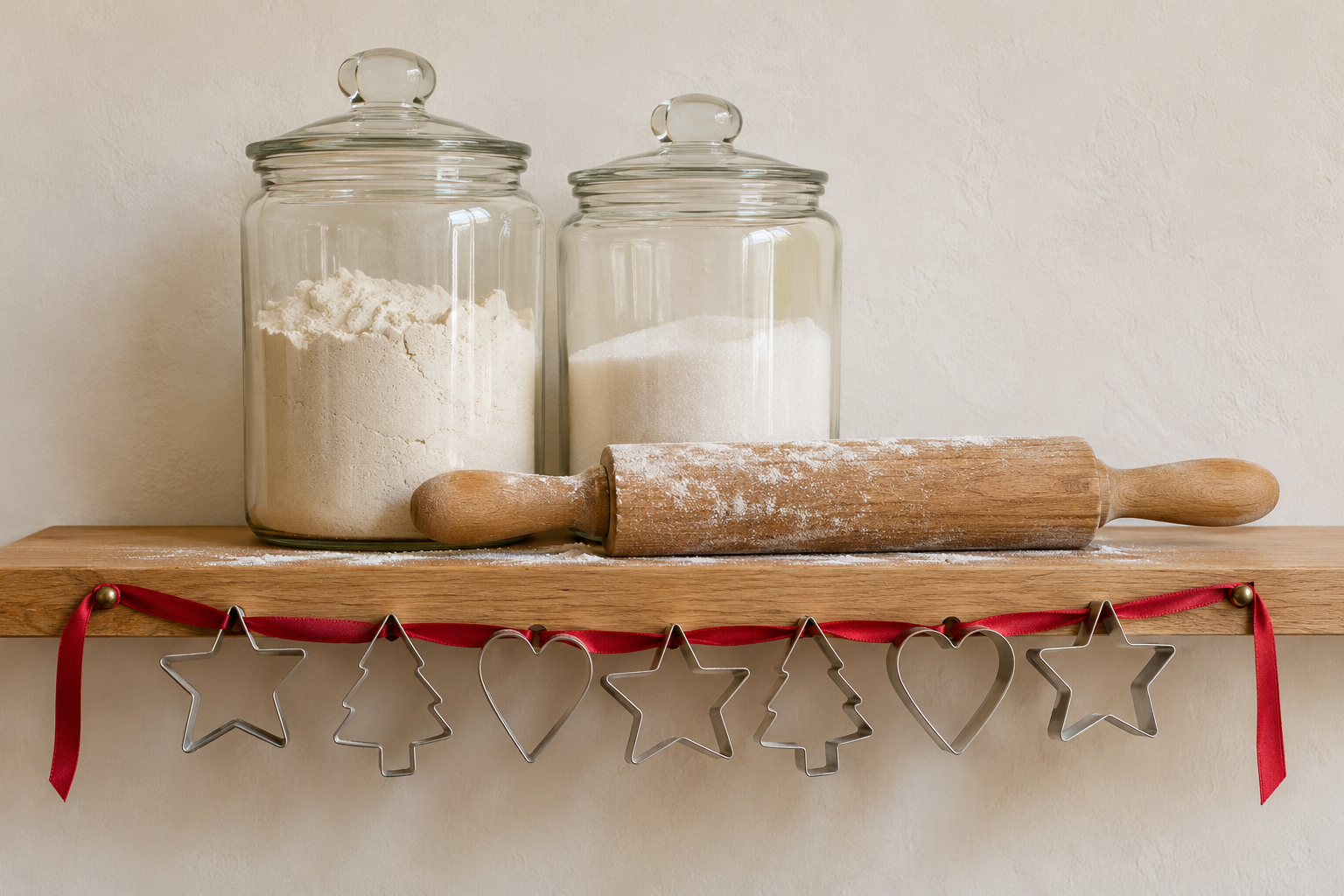
December is a baking month in a lot of houses, so one open shelf set up for it earns its space twice. Flour and sugar in clear glass jars, a rolling pin laid along the front, and the cookie cutters strung on a red ribbon along the shelf edge put everything for a batch within one reach.
The cutters on the ribbon are the decoration. Tin stars, trees, and hearts catch the light from the window, and lifting one off the ribbon is quicker than digging through a drawer of them.
A Gingerbread House on a Cake Stand
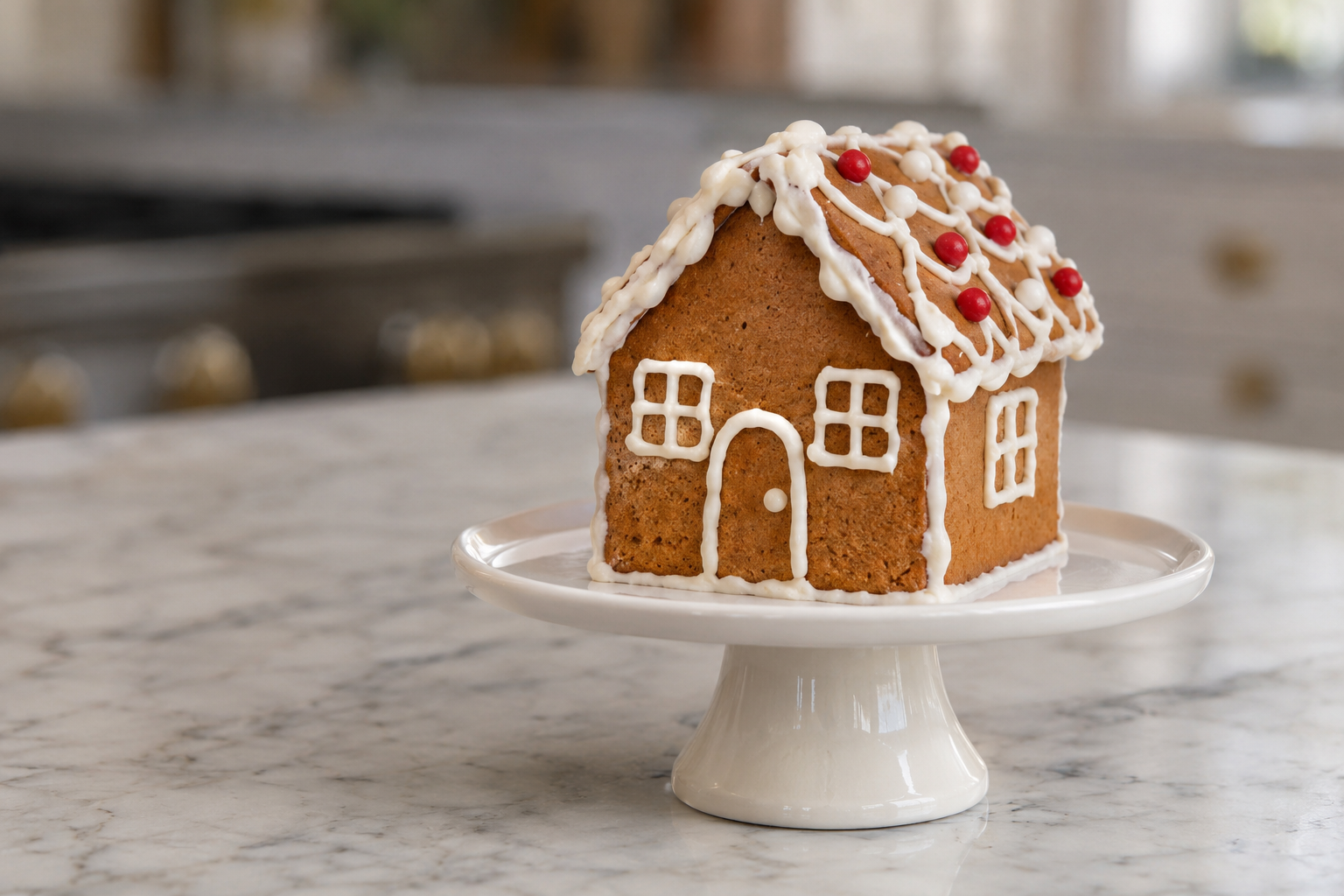
A gingerbread house made in the kitchen can stay there as its centerpiece. On a white cake stand it sits clear of the counter’s clutter, it can be turned to show its best side, and it’s out of the way of anyone rolling dough beside it.
Royal icing dries hard and holds the walls together, and the house stays standing long after anyone would want to eat it. Keep it away from the steam of the sink and the kettle, which softens gingerbread.
Cut Branches in a Crock by the Back Door
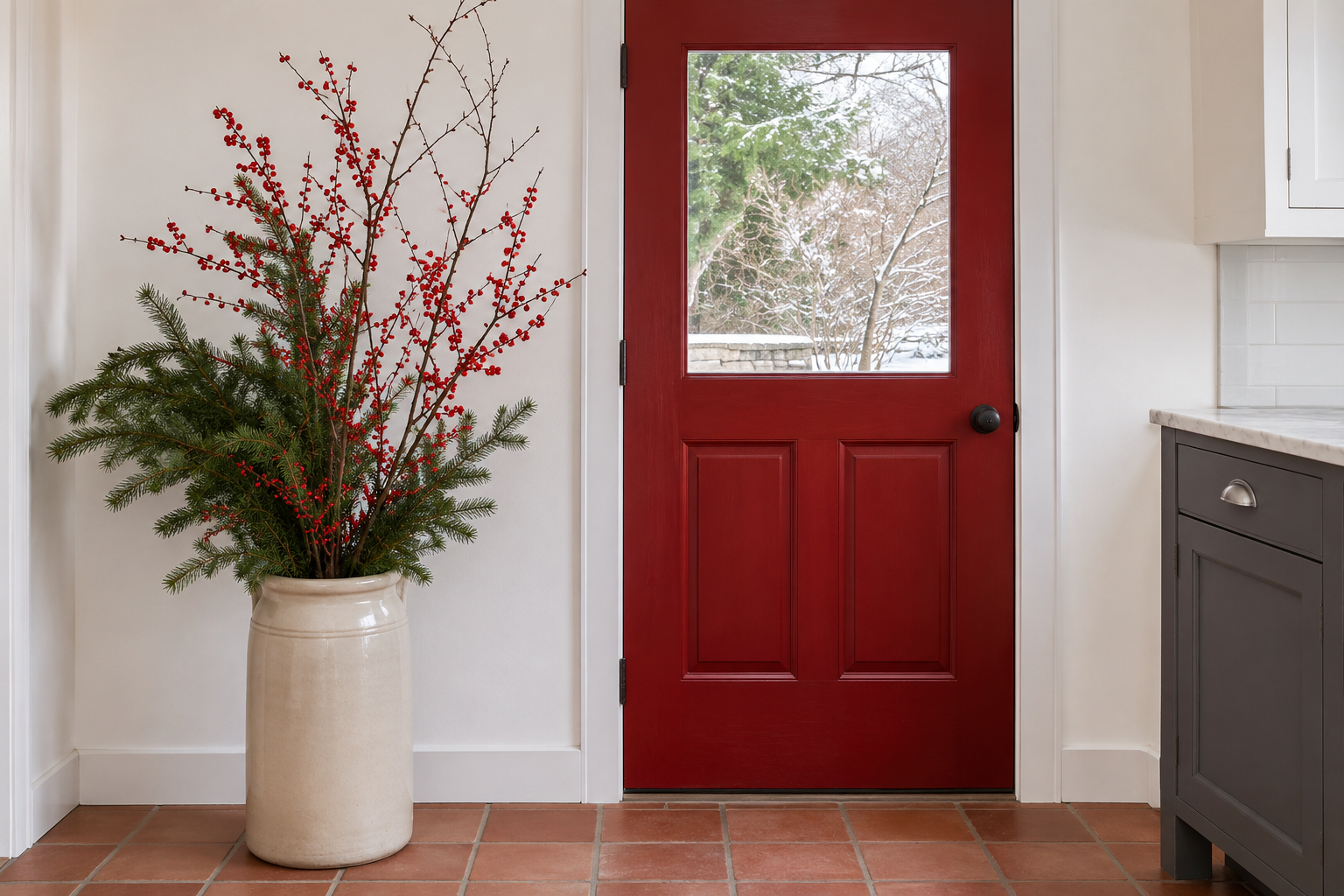
A tall stoneware crock on the floor by the back door, filled with cut fir and red winterberry, is the first thing seen coming in from the garden. Standing on the floor, it takes nothing from the counters, and at that height the branches can run 3 or 4 feet long without the crock looking top-heavy.
The back door is often the coolest corner of a kitchen, which suits cut greens. Water in the crock keeps the fir fresh, and winterberry dries with its berries still on.
Christmas Cards Pegged Down the Pantry Door
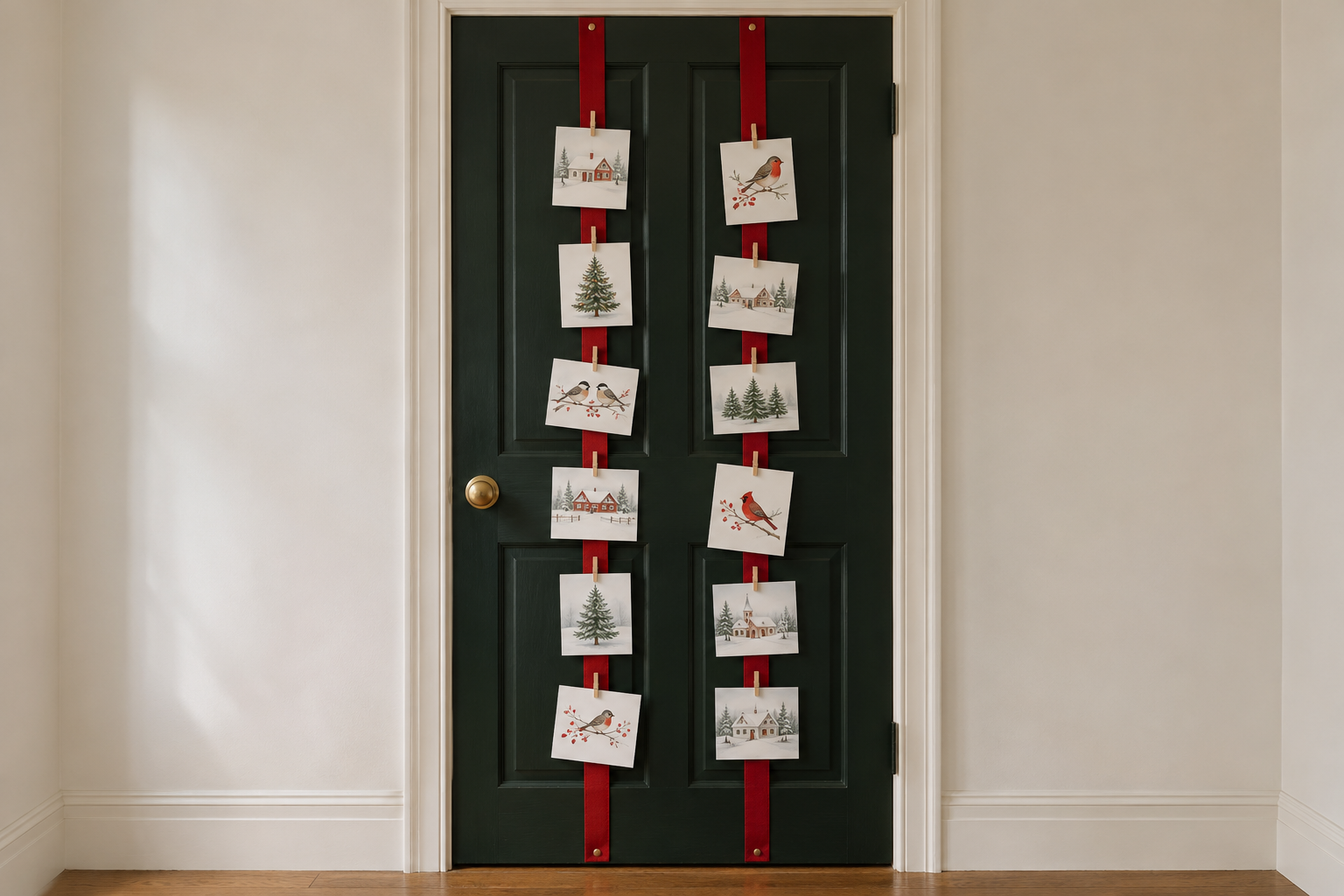
The kitchen is where the mail gets opened, and the cards that arrive through December need somewhere to go that isn’t the counter. Two lengths of red ribbon run down the pantry door, with small wooden pegs clipping the cards along them, make a display that grows as the month goes on.
Pin the ribbons at the top and bottom of the door, on the face seen from the room, and leave the area around the handle clear. In January the whole thing comes down in one go, ribbon and all.