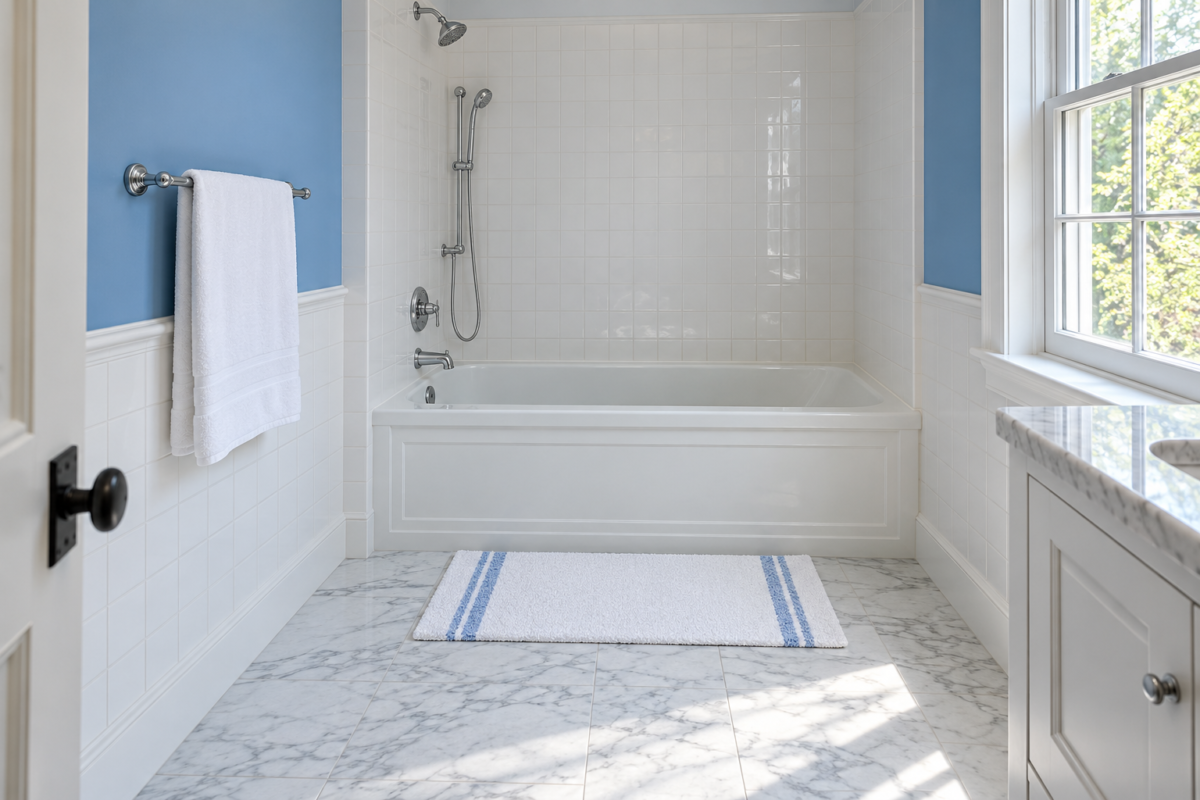
Most of the water on a bathroom floor comes off wet feet in the first step out of the tub or shower, or while someone stands at the sink, and those are the places a mat belongs. Its size comes from the fixture beside it, and the fixtures in a bathroom are close enough together that a mat too big for its spot ends up under a door or in front of the toilet.
Most mats are sold in a handful of sizes, and those cover almost every bathroom:
| Size, inches | Where it fits |
|---|---|
| 17 x 24 | A small shower or a narrow spot |
| 20 x 30 or 20 x 32 | A shower, a single sink |
| 21 x 34 | A tub, a single sink |
| 24 x 40 | A larger tub or an open floor |
| 24 x 60 runner | A double vanity, or the length of a tub |
In Front of the Tub
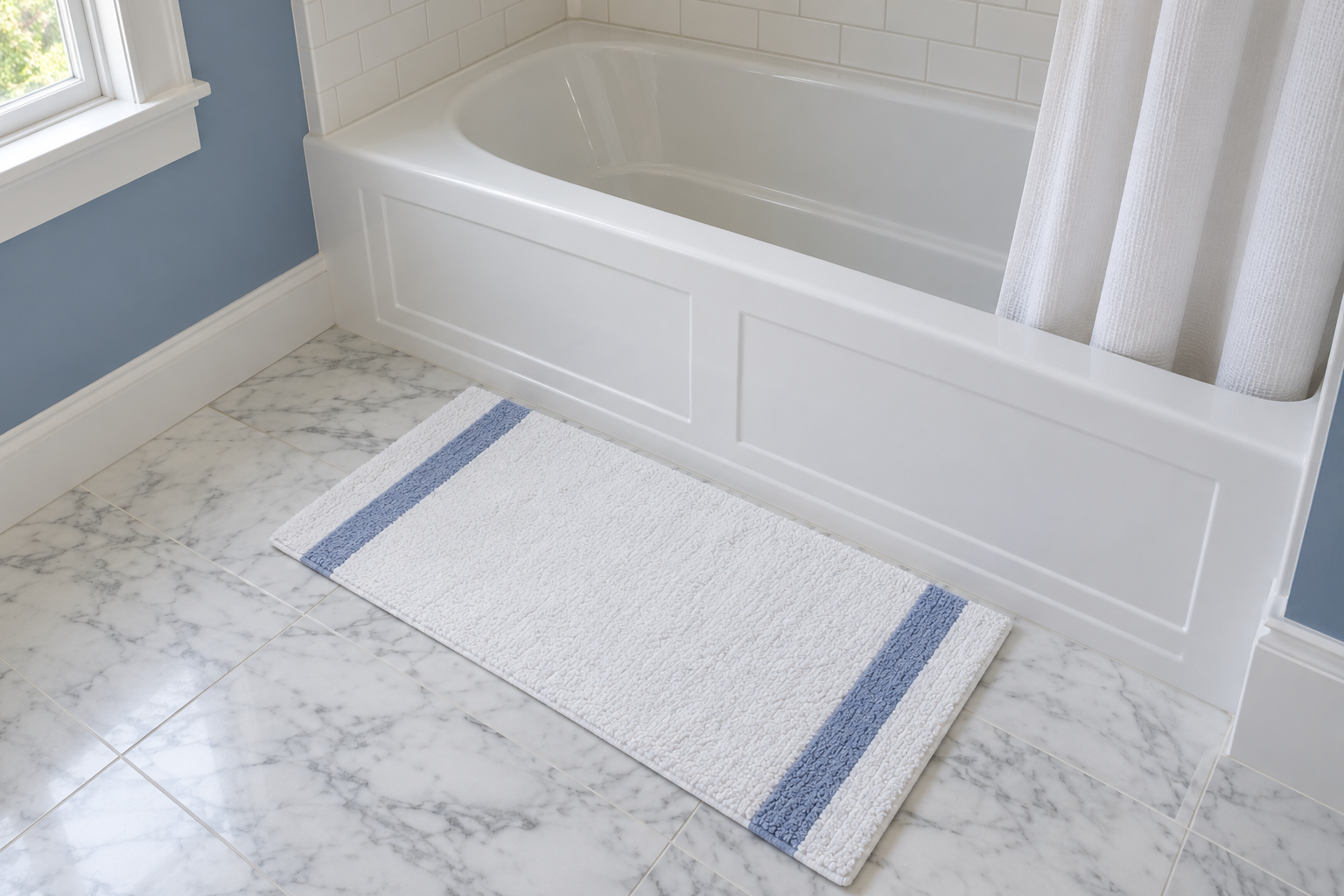
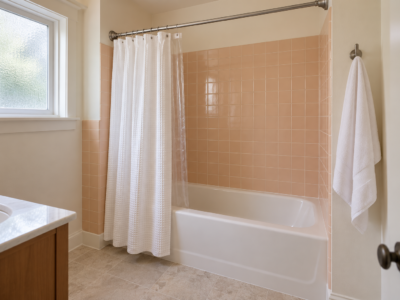
Lay the mat with its long side against the tub, at the point where people climb out, which is usually the middle or the end away from the taps. A 21 x 34 inch mat suits a standard 60 inch tub and leaves floor showing at both ends, so it doesn’t look like a carpet laid against the bath.
A runner the tub’s full length looks neat but gets wet along its whole length every time. A mat where the feet land dries faster and can be lifted and hung over the tub’s edge after a bath.
Outside the Shower
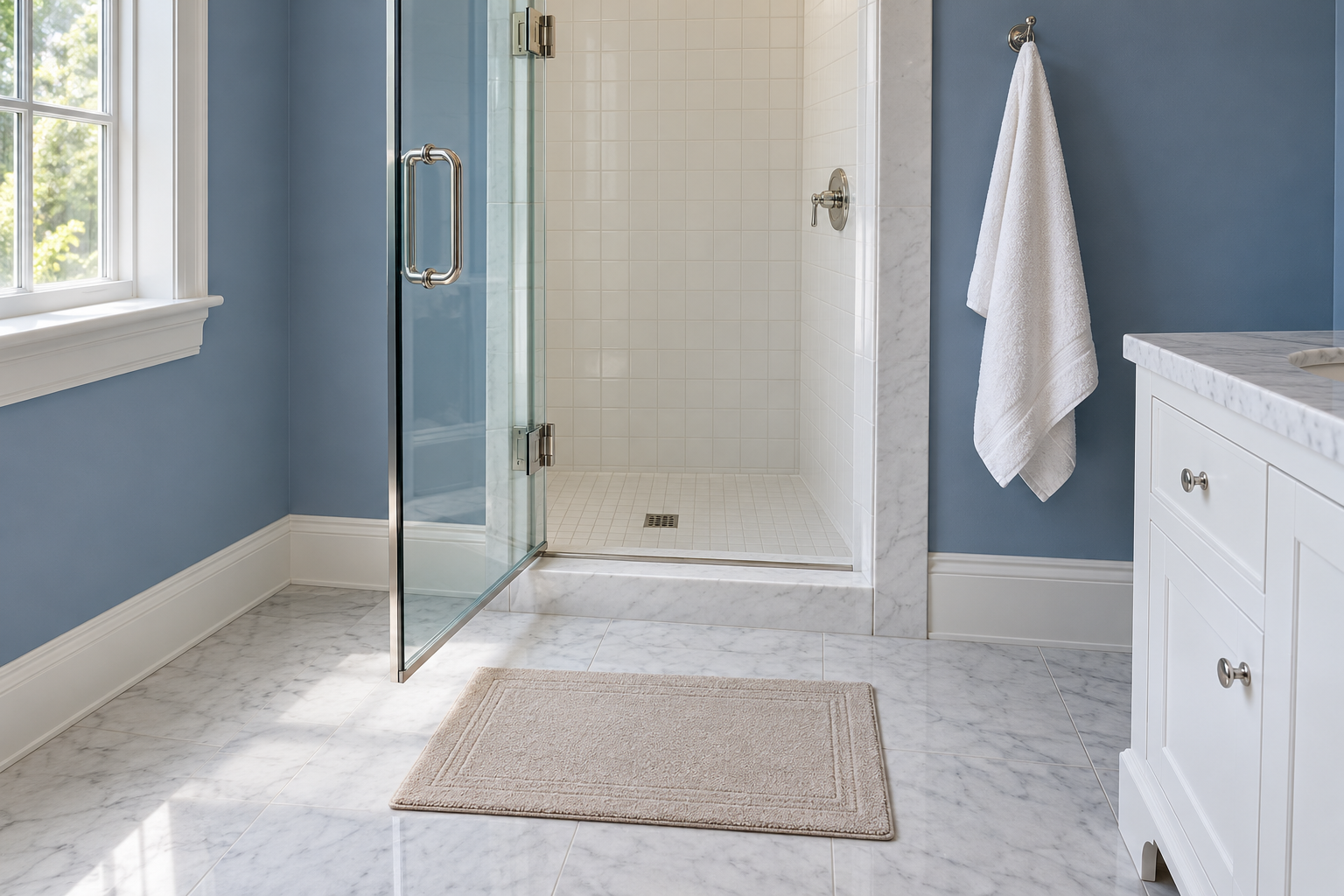
Put the mat at the shower opening, where the first step lands, and check the shower door’s swing first. A hinged door that opens outward sweeps a quarter circle of floor, and a mat inside that arc catches on the glass’s bottom edge every time it opens, so the mat goes just beyond it.
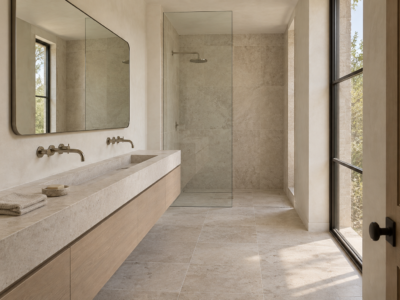
A 20 x 30 inch mat suits most showers. A curbless or walk-in shower with no door can take a slightly larger one, since nothing has to swing over it.
At the Vanity
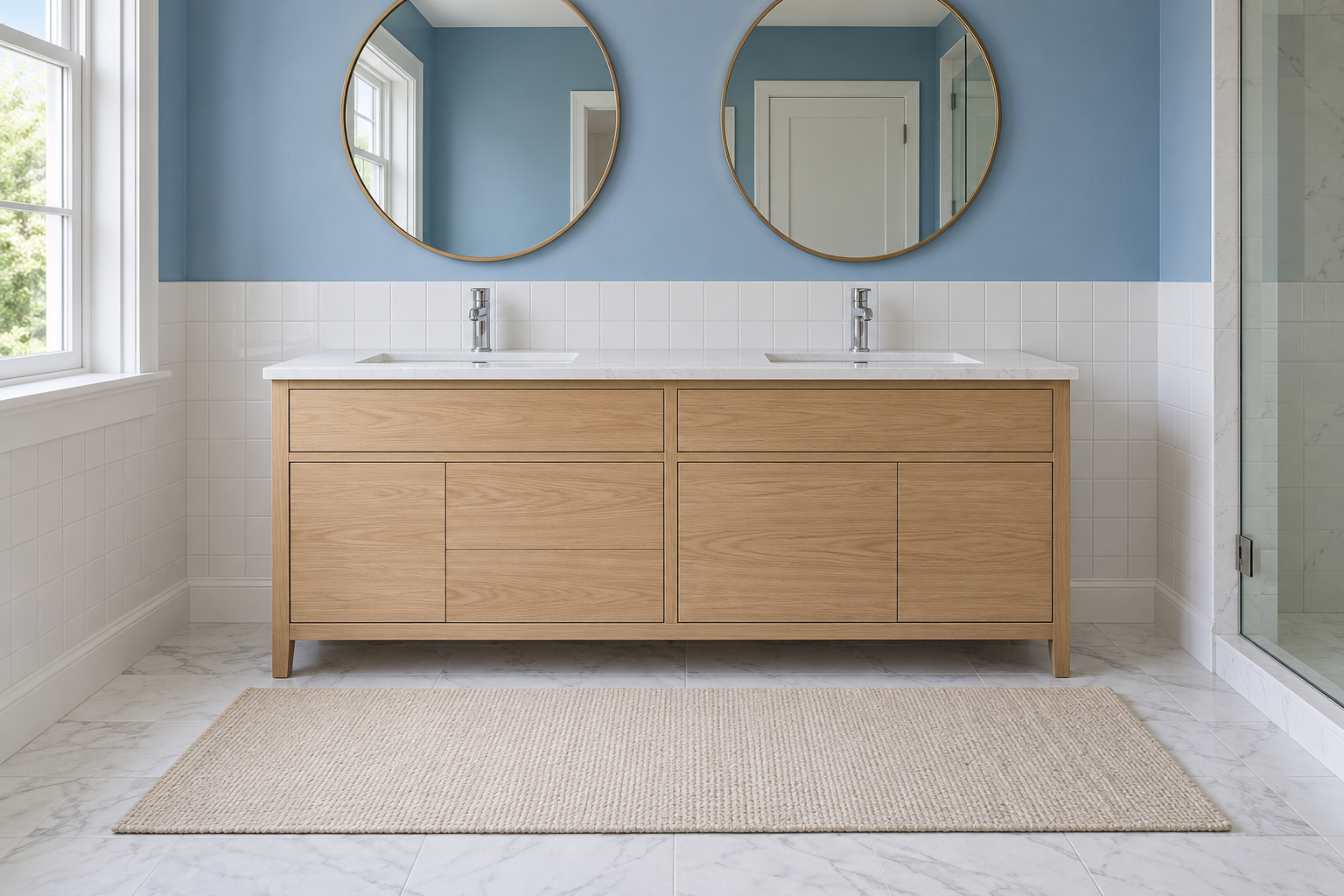
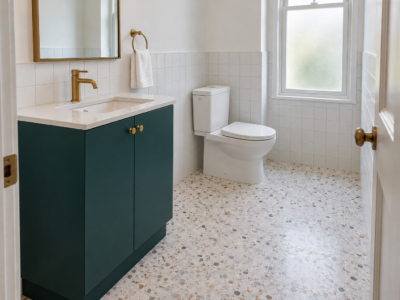
At a single sink, a 20 x 30 or 21 x 34 inch mat in front of the cabinet catches drips from hands and faces and gives bare feet something warmer than tile to stand on. At a double vanity, one runner in front of both basins usually works better than two mats. At a 60 inch vanity, a 24 x 60 inch runner covers the floor at both sinks without a gap between two mats to collect dust and hair.
On a longer vanity, 72 inches or more, the basins stand far enough apart that two separate mats, one at each, look intended and leave the middle clear.
The Door Has to Clear It
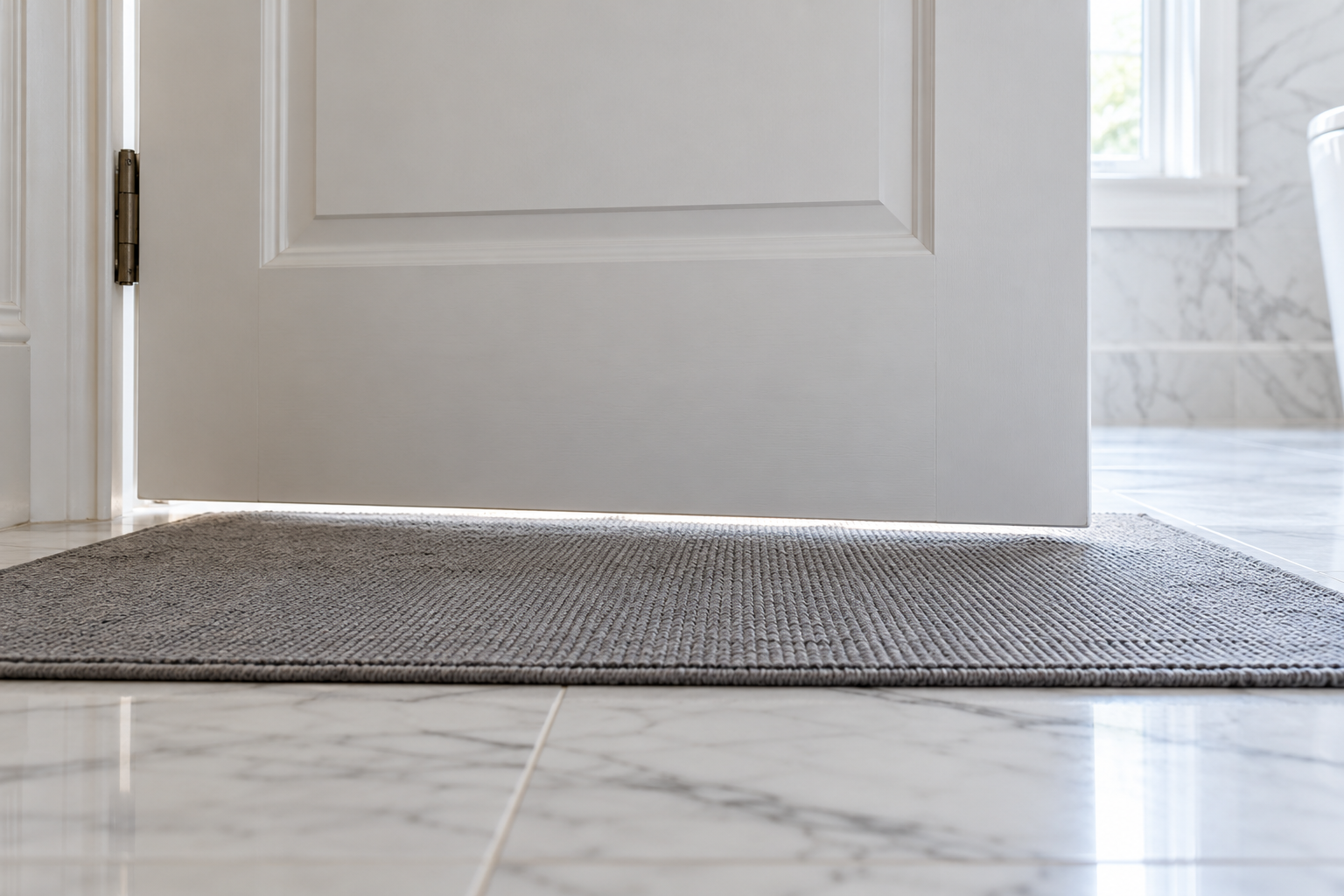
The gap under an interior door is often only about half an inch to three quarters of an inch, and a thick, fluffy mat in the door’s path stops the door or drags under it until the mat ends up folded against the wall. Close the door, measure the gap from the floor to the bottom edge, and compare it with the mat’s stated thickness, not its plush look in the listing.
Where the door has to swing over the mat, a thin, flat woven or low-pile mat that sits under the gap with room to spare is the one to choose. A thicker mat works fine anywhere outside the door’s arc.