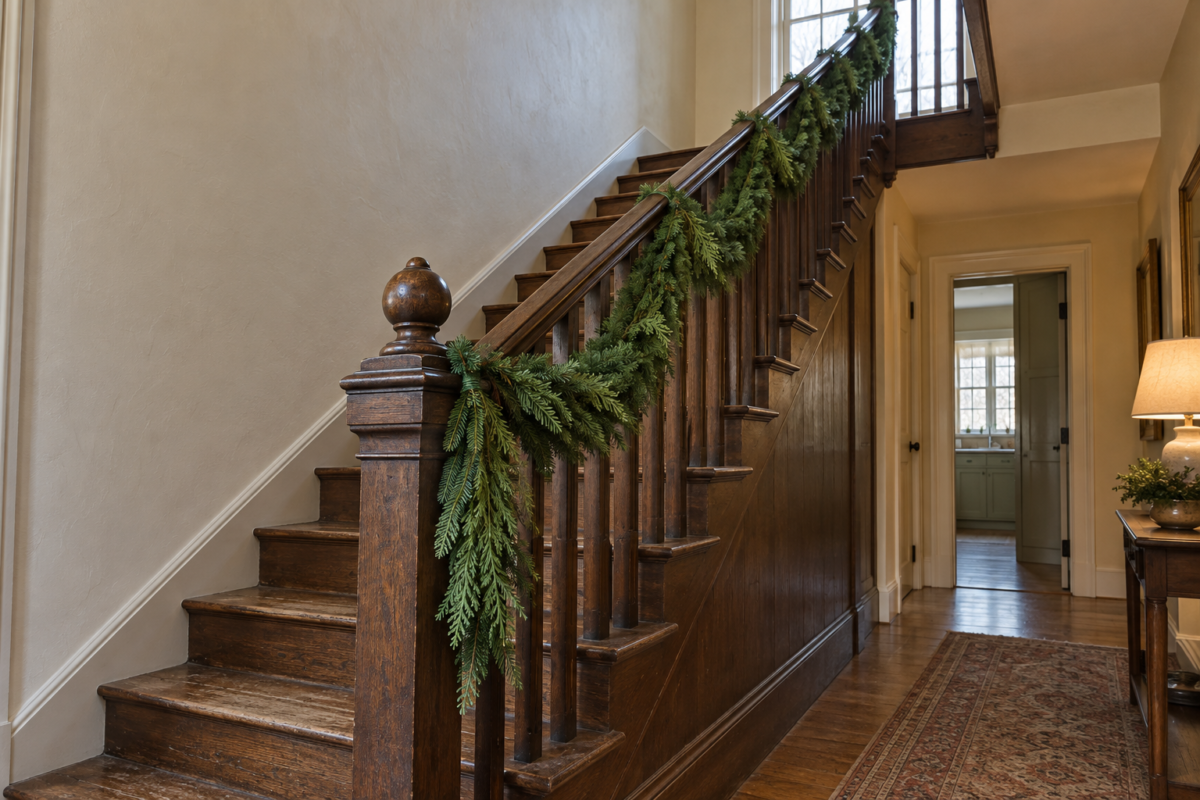
Garland is measured from the thing it follows, a shelf, a handrail, a door frame, and then lengthened by whatever it does beyond that: the part that falls off the end of a mantel, the dip of each swag on a banister, the run up both sides of a door. Those additions are where a garland bought by eye turns out short, and each is easy to work out with a tape measure.
As a guide, a 5 foot mantel takes about 9 feet of garland, a 12 foot banister hung in swags about 18 feet, and a single front door about 20 feet. The sections below show where each figure comes from, so it can be changed for a different shelf, rail, or look.
On the Mantel, Add What Falls at Each End
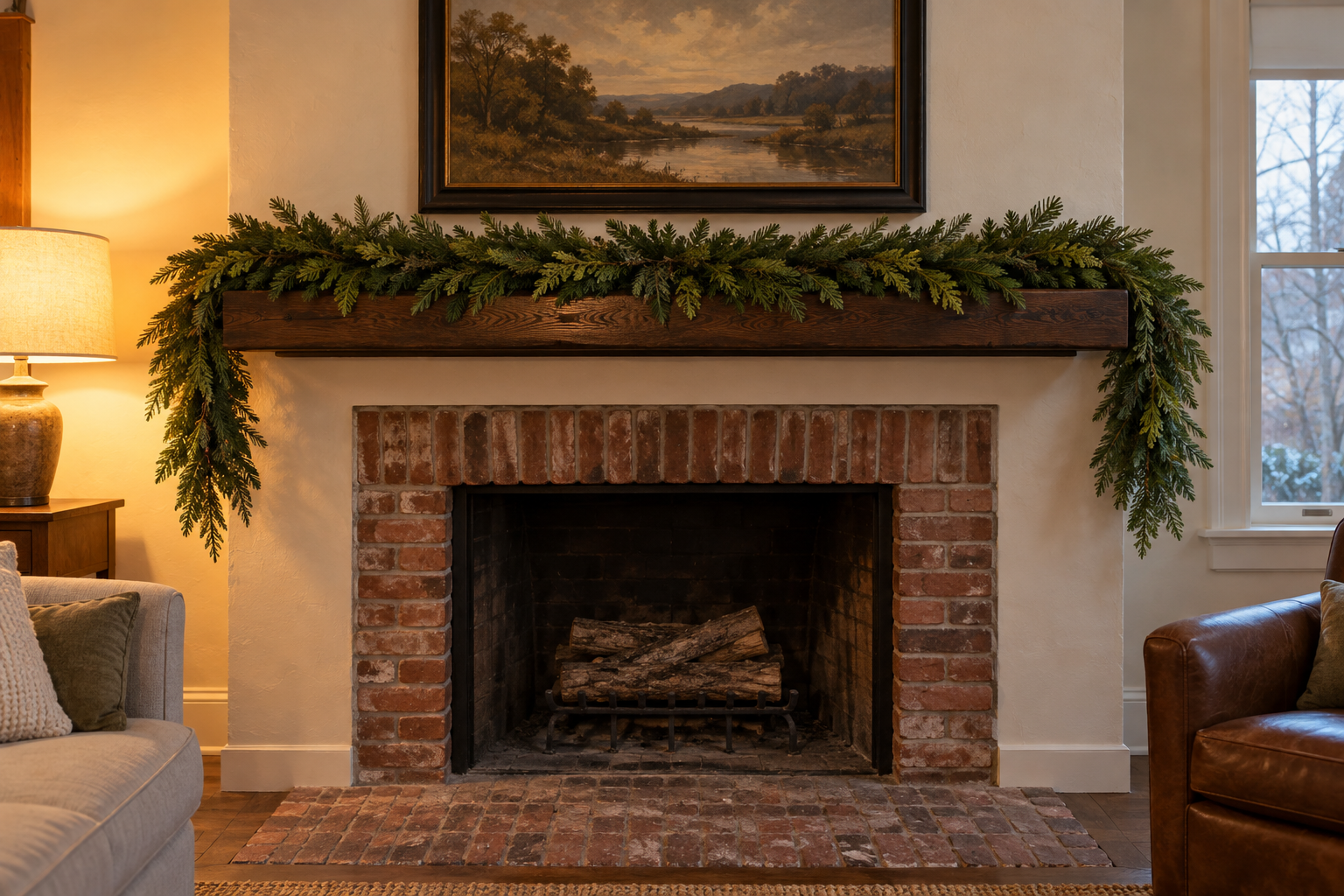
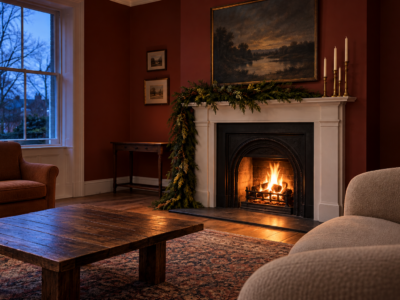
Measure the shelf along its front edge, end to end. A garland that only lies on the shelf needs that length and a few inches more, enough to turn down over each end. Many mantels look better with more, a fall at each end that hangs down the sides of the fireplace.
Add the length of each fall to the shelf. A 5 foot shelf with a foot and a half falling at each end takes 8 feet, so one 9 foot garland covers it with a little to spare. Falling off one end only, all the way to the hearth from a shelf about 54 inches up, the same shelf takes roughly 9 feet as well, with the extra length going into the long side.
Keep the falls clear of the fireplace opening if the fire is used. Greenery dries out quickly in the warmth above a fire, and a fall that hangs beside the firebox is the part most likely to catch.
On the Banister, Allow Half Again for Swags
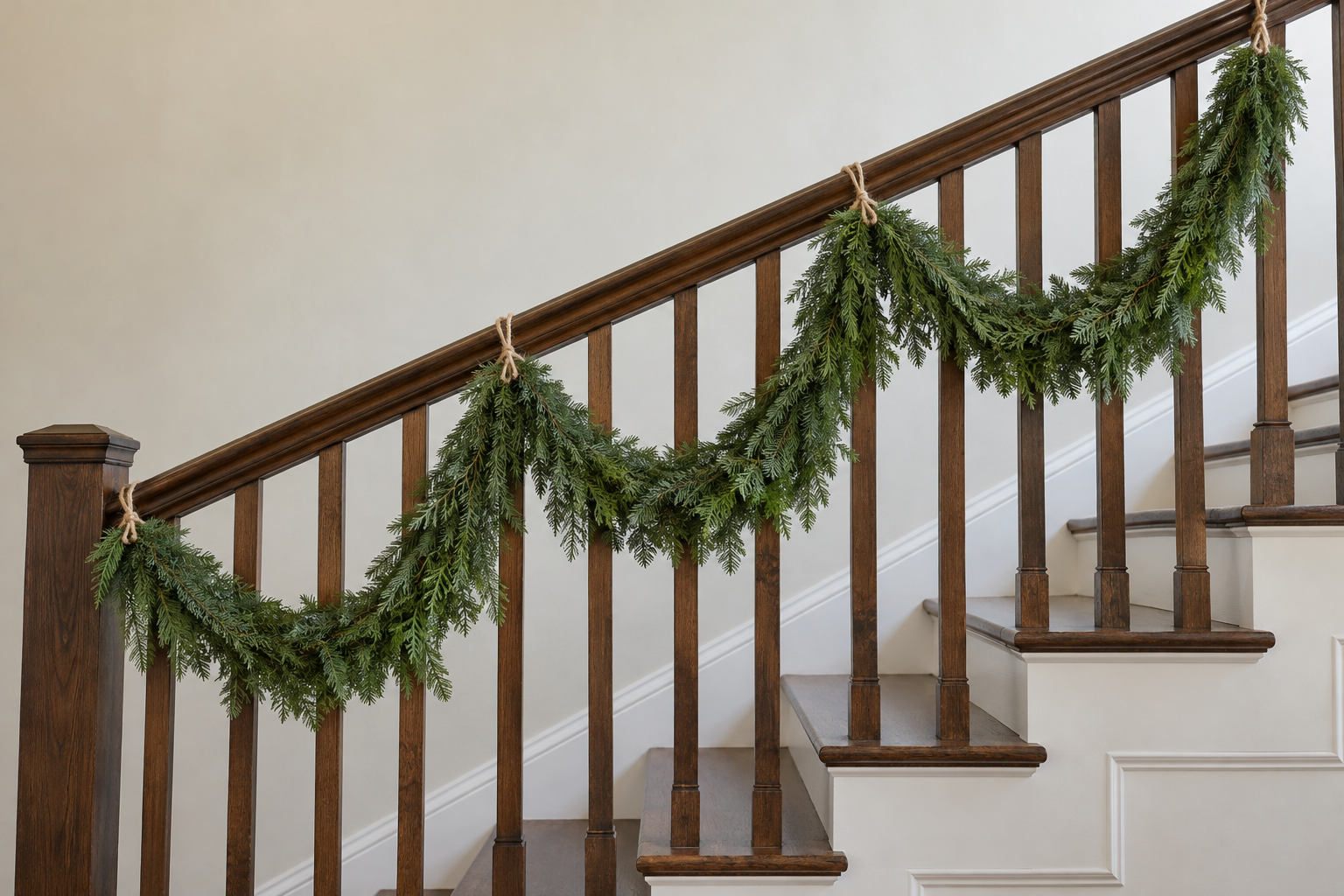
Measure along the top of the handrail, following the slope, from the newel post to where the garland should stop. A garland hung in swags needs about one and a half times that length. One wrapped in a spiral around the rail needs about twice. A 12 foot handrail therefore takes about 18 feet in swags, two 9 foot lengths, or about 24 feet wrapped.
The spacing of the ties decides how deep the swags hang. With one and a half times the rail length and a tie every 2 feet, each swag dips about a foot below the rail. With a tie every 3 feet, it dips about a foot and a half, which starts to reach the lower ends of the balusters on many stairs. To keep the swags shallow without buying less, tie more often. To make them deeper, tie less often or buy more.
A full fresh garland is heavier than it looks, and a long run on a banister hangs from the ties alone, so tie it at every swag and at both ends. One continuous run from bottom to top looks better than separate pieces with gaps between them.
Around the Door, Go Up, Across, and Down
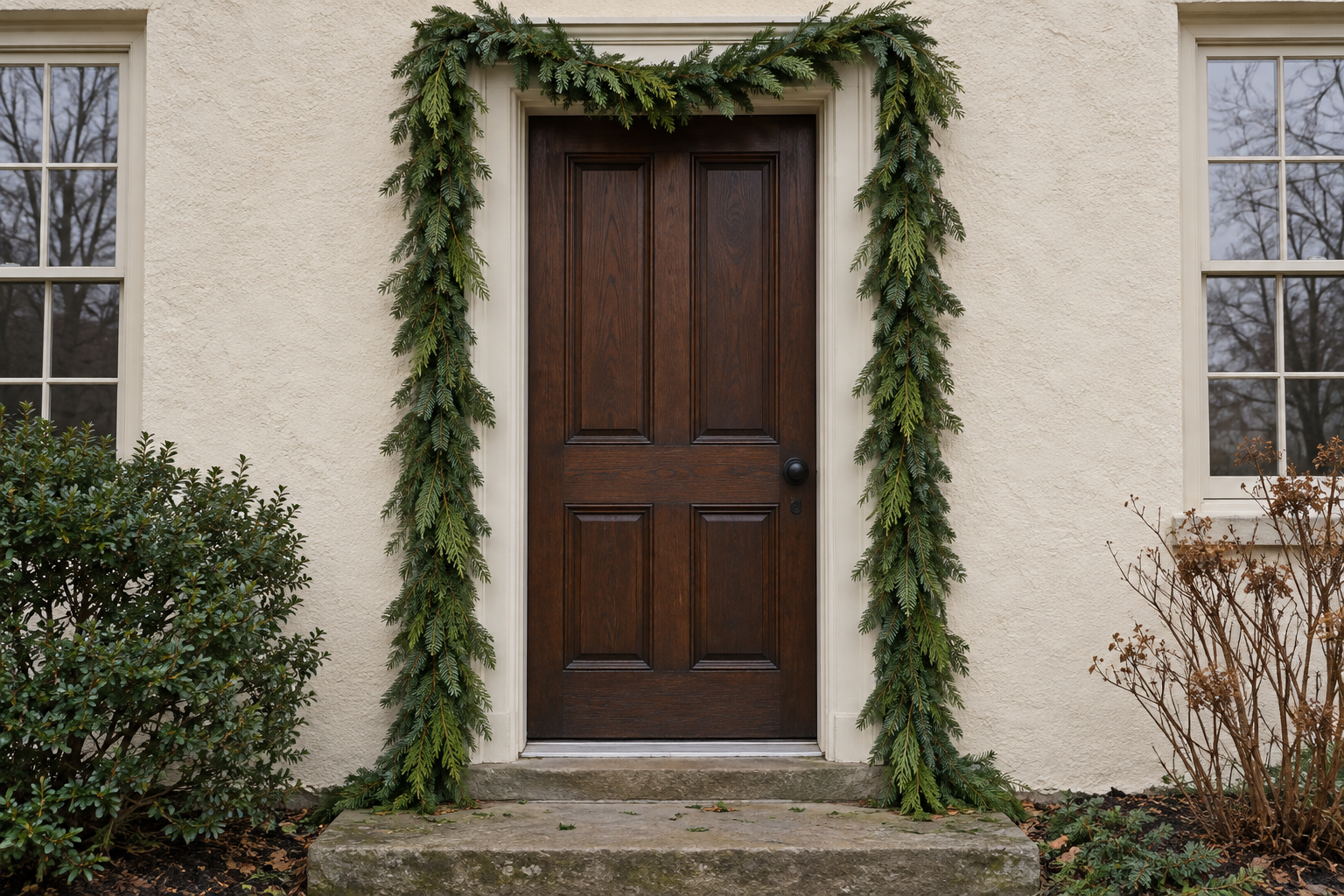
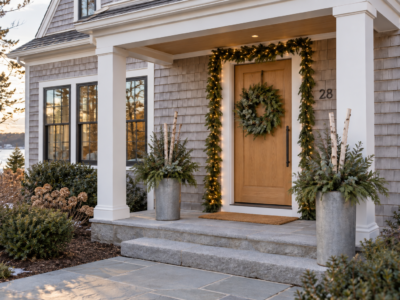
Measure up the outside of the casing on one side, across the top, and down the other side. On a standard single front door with ordinary trim, that comes to 17 or 18 feet. Buy 20, which allows a slight dip across the top and a little extra at the bottom where the garland meets the step.
Double doors, or a door with sidelights, add their extra width across the top only, since the two sides stay the same height. A door with a transom adds the transom’s height to each side.
Outside, fresh garland lasts longest on a door that faces away from the afternoon sun and out of drying wind. A door under a deep porch roof can keep its garland green for weeks. One on an exposed wall facing south may need replacing before the end of the season, or an artificial base with fresh cuttings tucked into it.
Round Up to the Lengths You Can Buy
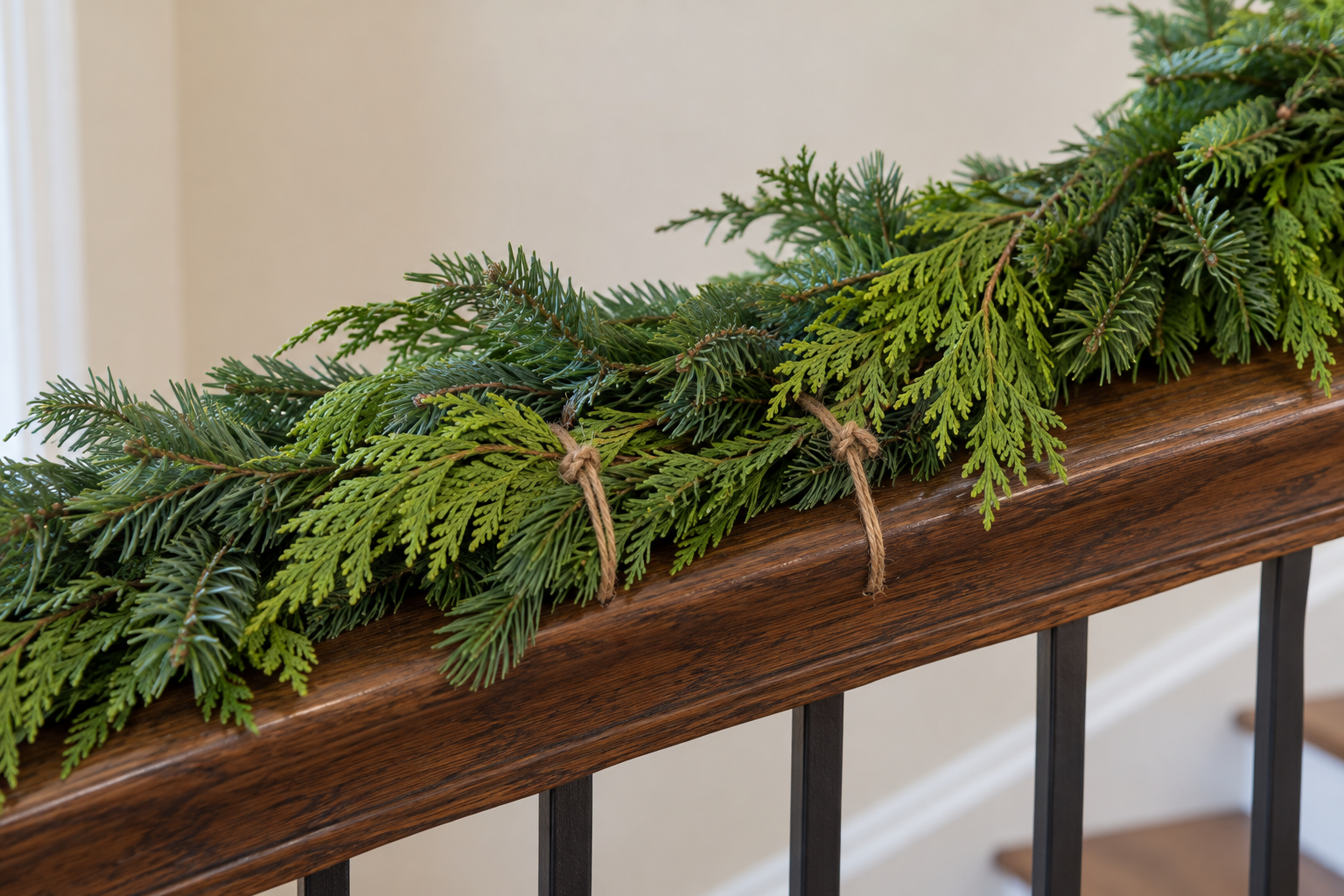
Garland is sold mostly in 6 and 9 foot lengths, with longer pieces from some sellers. Turn each total into whole lengths, and allow about 6 inches of overlap at every join, since two ends have to lie over each other to be tied without a gap.
| Place | Measure | Add | Example | Lengths |
|---|---|---|---|---|
| Mantel, falls at both ends | Shelf, end to end | Each fall | 5 feet + 1.5 + 1.5 = 8 feet | One 9 foot |
| Mantel, falling to the hearth at one end | Shelf, end to end | The drop to the hearth | 5 feet + about 4 = 9 feet | One 9 foot |
| Banister, swagged | Handrail, along the slope | Half again | 12 feet × 1.5 = 18 feet | Two 9 foot |
| Banister, wrapped | Handrail, along the slope | The same again | 12 feet × 2 = 24 feet | Three 9 foot |
| Single front door | Up, across, and down the casing | About 2 feet for the dip | 17 to 18 feet, buy 20 | Two 9 foot and one 6 foot |
Joins take a little length. Two 9 foot pieces joined with a 6 inch overlap make 17 feet 6 inches, half a foot short of 18 on the banister. On a rule this rough that hardly matters, and tying a little more often brings the swags back to the same depth. Around a door it matters more, since the garland has to reach the step on both sides, which is why the door row has a third, shorter piece.
A garland with lights in it needs one more measurement, the distance from where its plug ends up to the nearest outlet. On a staircase that is often the bottom of the newel post, and an extension cord run along the baseboard is easier to hide than one run across the hall.