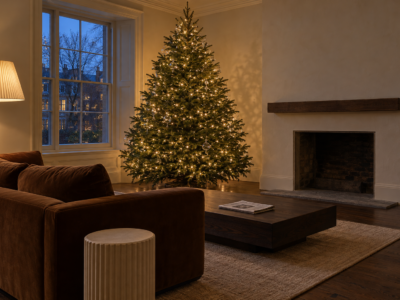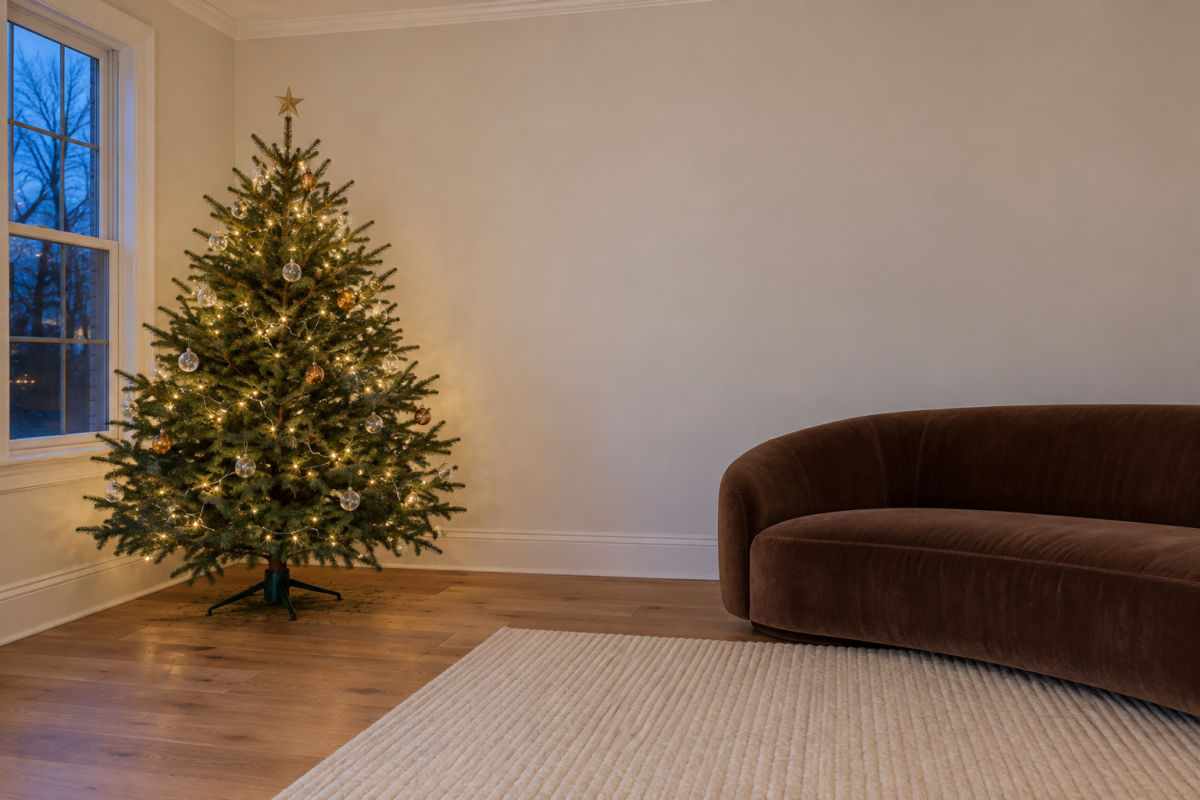
Buy a tree about a foot shorter than the ceiling. Under an 8 foot ceiling that means 7 feet, or 7.5 at the most. The foot goes to the topper and to a visible strip of wall above it.
Height is the measurement everyone takes. Width is the one that causes trouble in December, when a tree that cleared the ceiling turns out to cover the radiator and half a doorway. Measure both before leaving the house, and write them down.
Take About a Foot Off the Ceiling
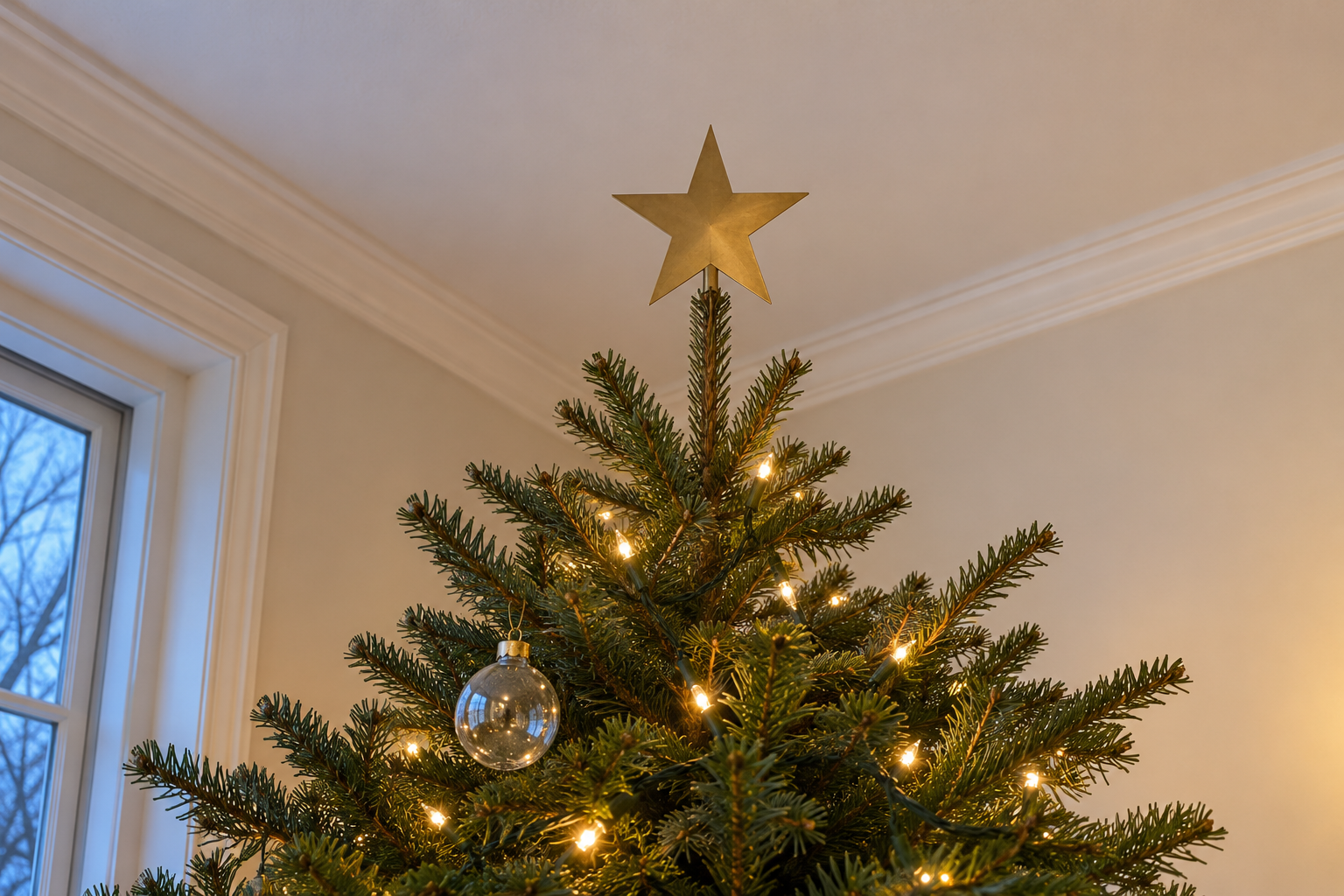
Measure from the floor to the ceiling at the spot where the tree will stand. A beam, a soffit, or a ceiling fan above that spot counts as the ceiling.
| Ceiling height | Tree height, floor to tip |
|---|---|
| 8 feet | 7 to 7.5 feet |
| 9 feet | 8 to 8.5 feet |
| 10 feet | 9 feet |
| 12 feet | 11 feet |
These are typical recommendations, and they leave 6 to 12 inches above the tip. Which end of that to use depends on the topper. A star that sits over the top shoot adds little height, and 6 inches is enough. A tall finial or an angel standing on the tip can add 8 or 10 inches of its own, and wants the shorter tree.
Check what the stated height includes. An artificial tree is measured with its stand, from the floor to the tip, so a 7.5 foot tree stands 7.5 feet. A cut tree is sold by its length from the sawn end to the tip. In the stand, the trunk sits an inch or two off the floor, and a thin slice comes off the base when it’s cut fresh, so the two roughly cancel. A cut tree has a single long shoot at the top, which can be trimmed by a few inches if the fit is close.
Mark the Width on the Floor
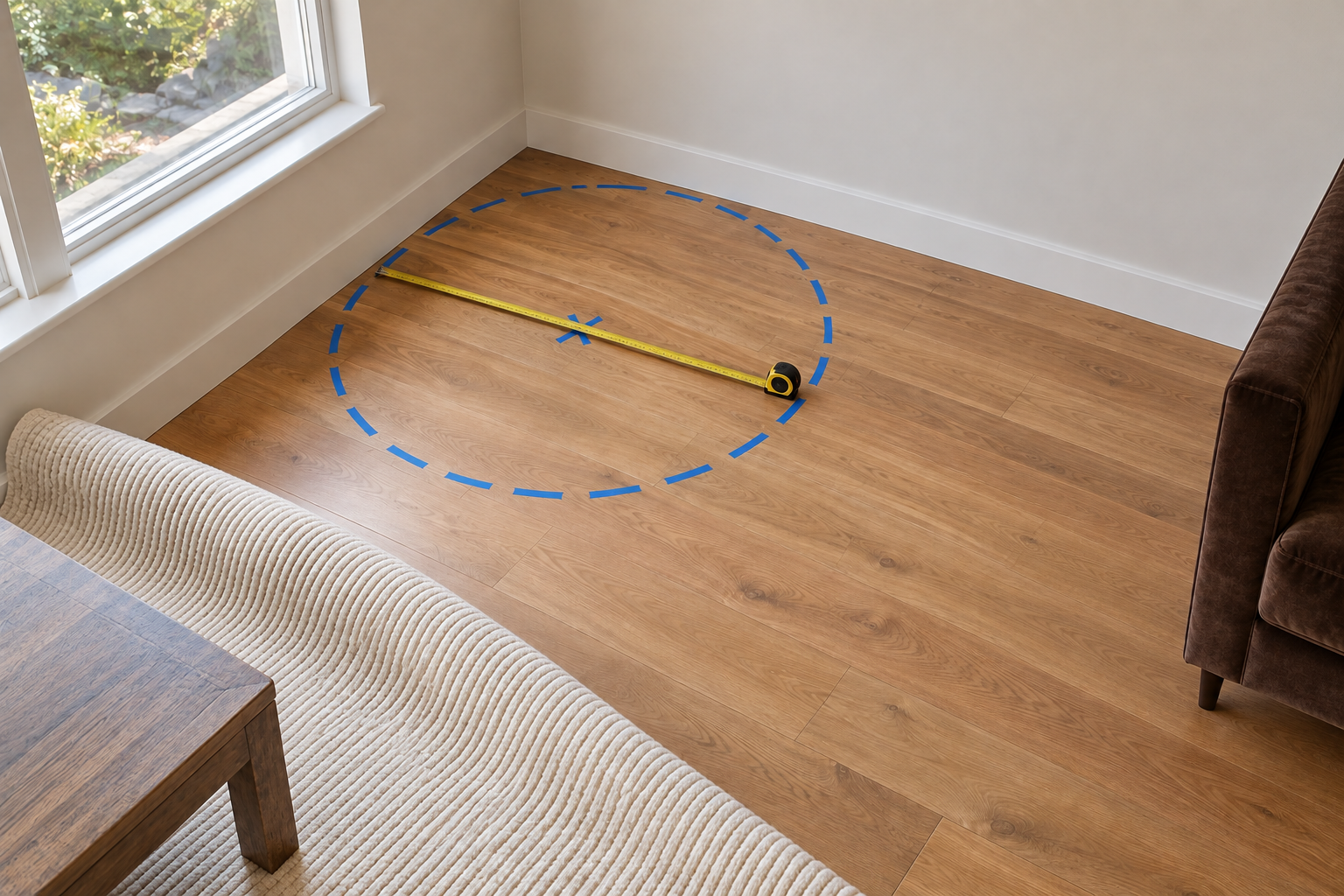
A full tree is a little over half as wide as it is tall. At 7 to 7.5 feet, expect 4 to 5 feet across the lowest branches. A slim tree of the same height is around 3 to 3.5 feet across, and a pencil tree 2 to 2.5.
Mark that circle on the floor with painter’s tape before buying. A tree in a corner can have its branches close to both walls, so the center of a tree 4.5 feet wide stands a little over 2 feet out from each. On every side where people walk, leave about 3 feet between the tape and the nearest furniture. If the tape circle covers a doorway or leaves a path a foot wide past the sofa, the room is asking for a slimmer tree at the same height, and a shorter one won’t solve it. A slim tree also takes fewer lights.
Where It Can’t Stand
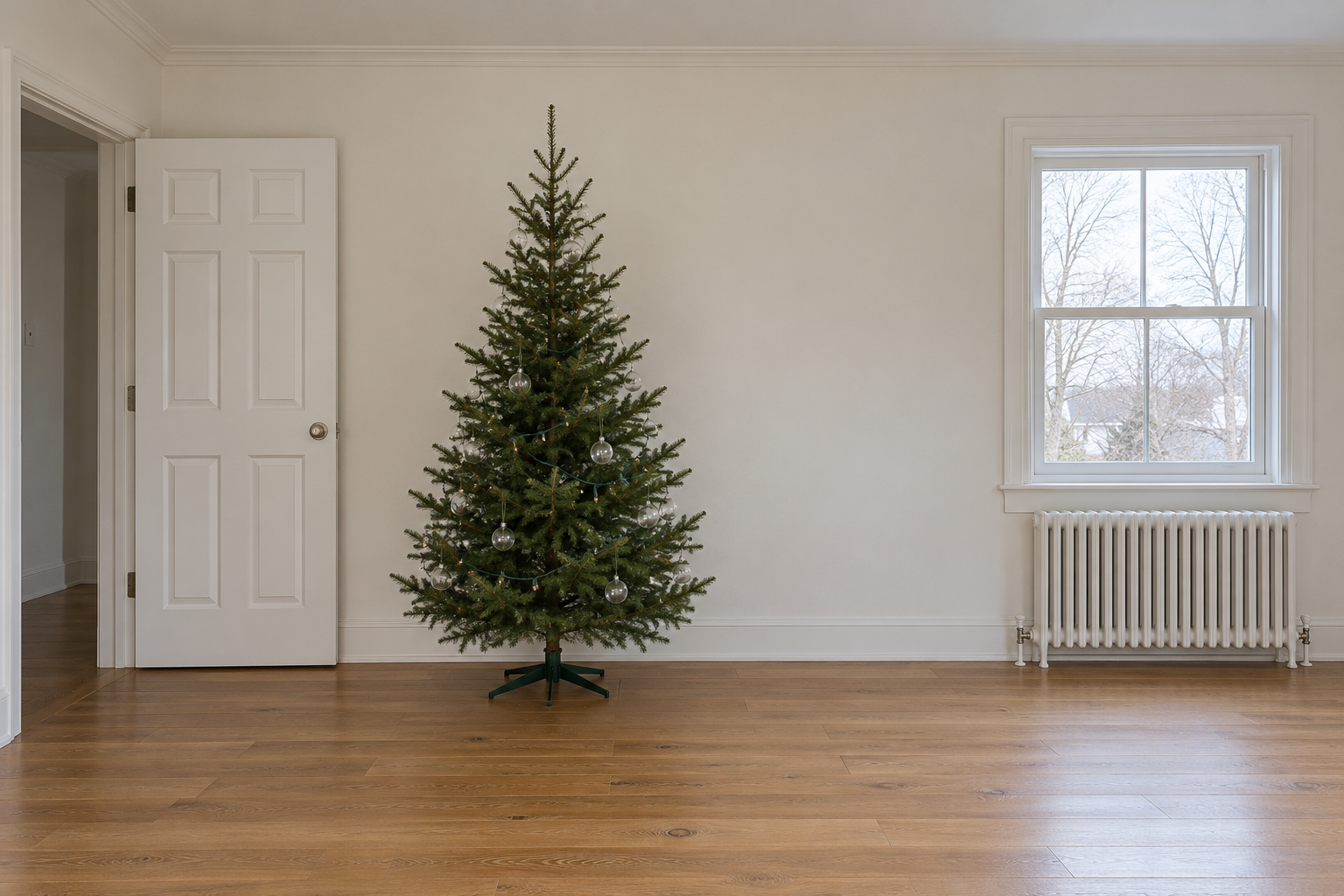
Three things rule out a spot even when the tape circle fits.
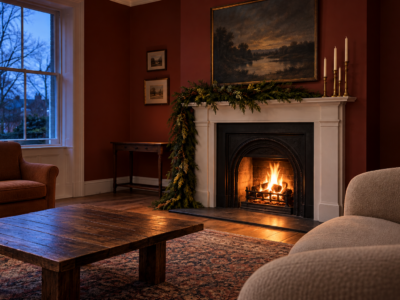
Heat is the first. Fire safety guidance is to keep a tree at least 3 feet from a fireplace, a radiator, a heating vent, or any other source of heat. A cut tree dries faster in warm air as well, so the same distance keeps it fresh longer.
Doors are the second. Open every door near the spot all the way and check that it clears the tape, and that the tree won’t narrow the way out of the room.
The third is the outlet. The lights need one within reach of their lead, without a cord crossing a walkway.
Getting a Cut Tree Indoors
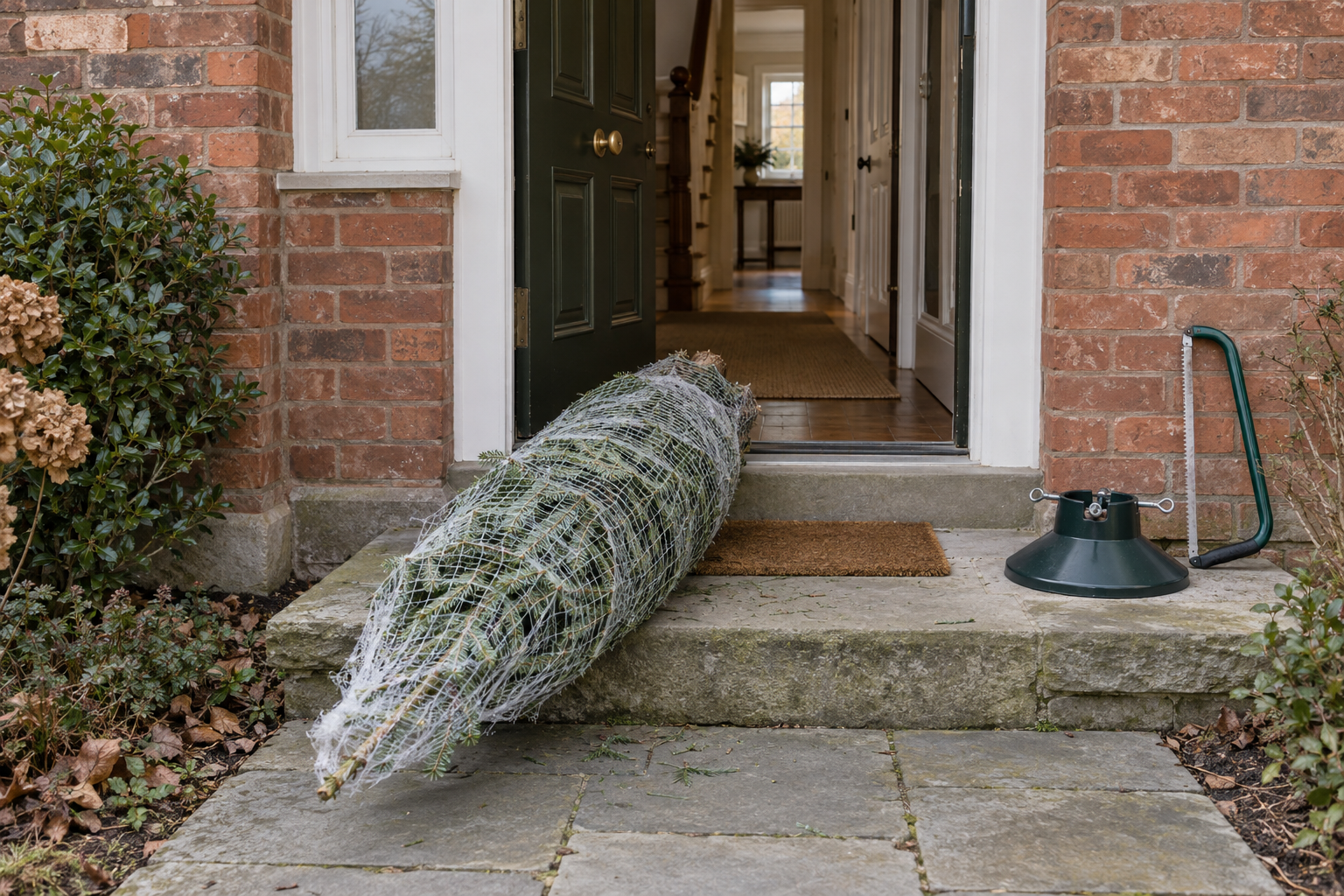
A tree lot has no ceiling, and under an open sky a 9 foot tree can look about the size the living room needs. Take the tape measure and the two numbers, and measure the tree itself, from the cut end to the tip and across the widest branches.
Ask for it to be netted. A full tree 5 feet across comes down to a bundle narrow enough for an ordinary doorway. Carry it in trunk first, so the branches fold back in the direction they grow.
Before it goes up, check the trunk against the stand. Every stand has a largest trunk it will hold, given on its box, and the trunk shouldn’t be whittled down to fit, since the outer layers of wood take up most of the water. Cut a thin slice off the base, set the tree in the stand, and fill the stand with water before the lights and decorations go on.