A cut Christmas tree keeps drinking long after it leaves the field. How long it stays green comes down to two things, whether water can still get into the trunk and how fast the air in the room draws it back out through the needles.
Both can be managed with very little effort. Plain water is all the tree needs. The work is in keeping the trunk able to take it up, from the lot until the tree comes down.
Choosing a Tree That Is Still Fresh
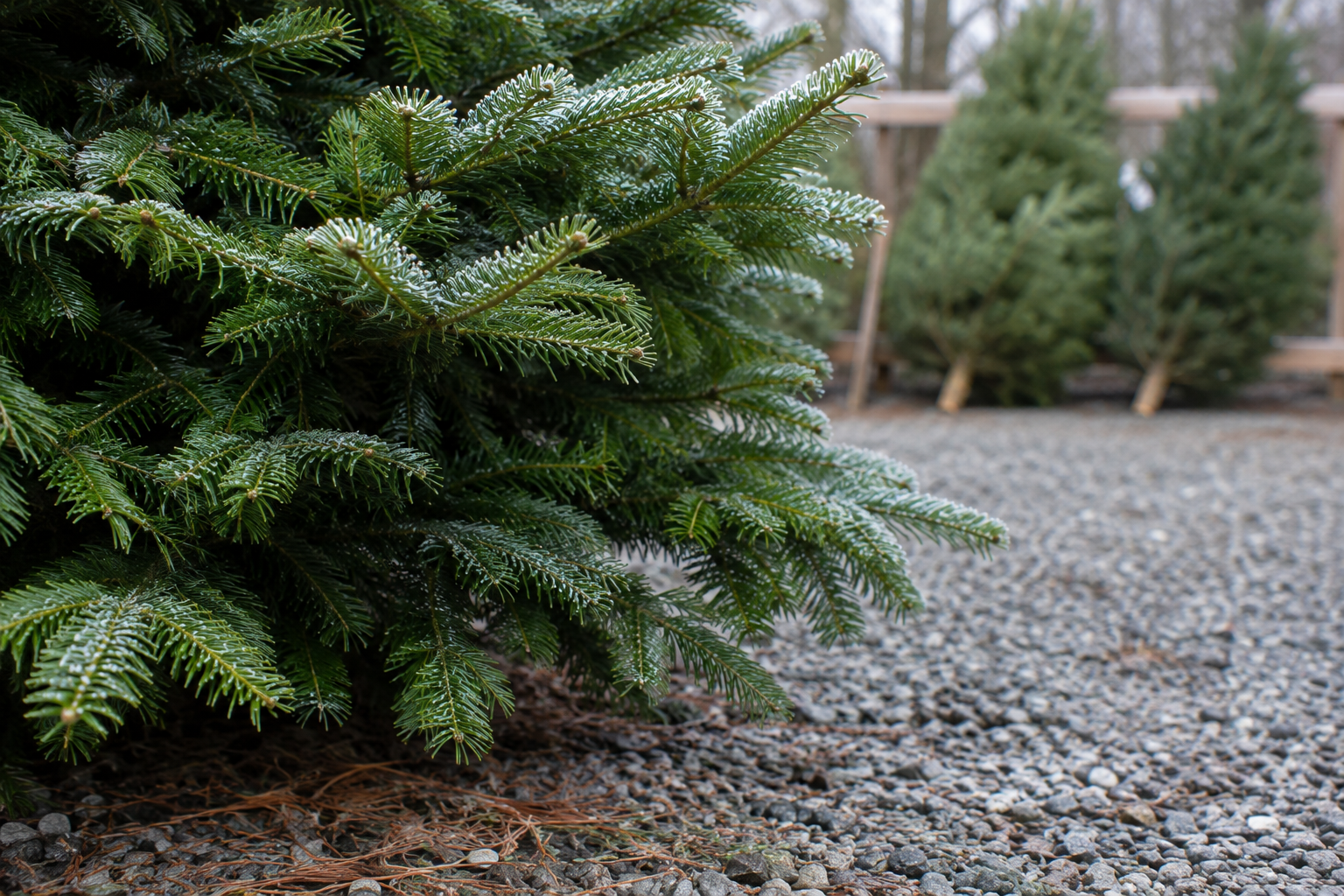
Freshness starts on the lot. Run a hand gently along a branch toward you. On a fresh tree the needles bend and stay on, and only a few come away. Needles that snap or drop at a touch mean the tree has already dried, and no amount of care at home brings that back.
A few brown needles falling from deep inside the tree are normal, since a tree sheds its oldest inner needles. Green needles falling from the outer branches mean the tree is drying. Ask, too, when the trees arrived, because a tree cut long before it reached the lot has had longer to dry out.
A Fresh Cut Before It Goes in the Stand
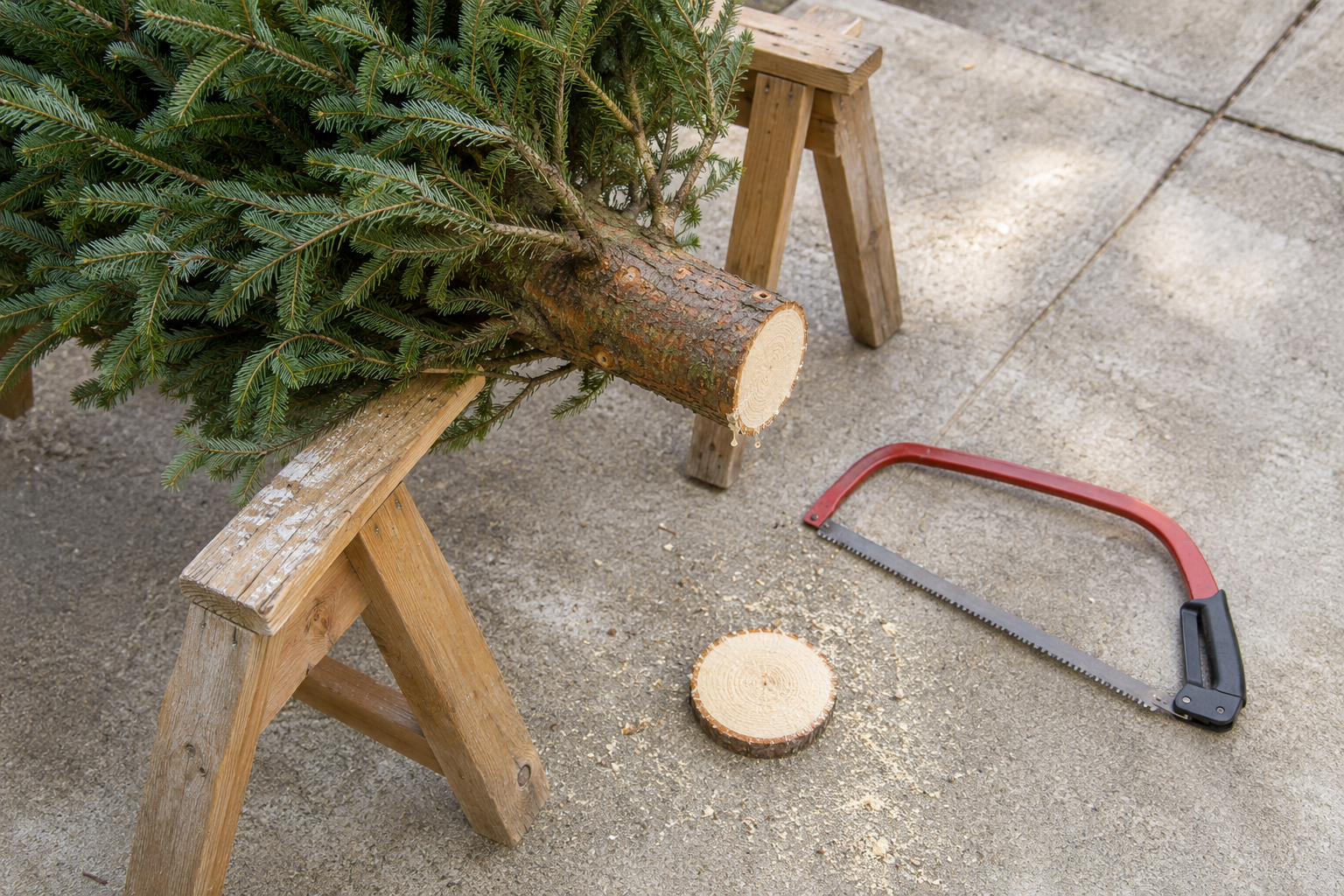
Soon after a tree is cut, sap seals over the end of the trunk, and a sealed trunk takes up little water. So before it goes into the stand, cut about half an inch off the base, straight across rather than at an angle or in a V, and get it into water within half an hour or so.
If the tree has to wait a day or two in a garage or on a porch, stand its base in a bucket of water and cut it again just before bringing it in. Don’t trim the bark off the sides to make a trunk fit a stand. The outer layers of wood carry most of the water, and a trunk too wide for its stand needs a bigger stand.
A Stand That Holds Enough Water
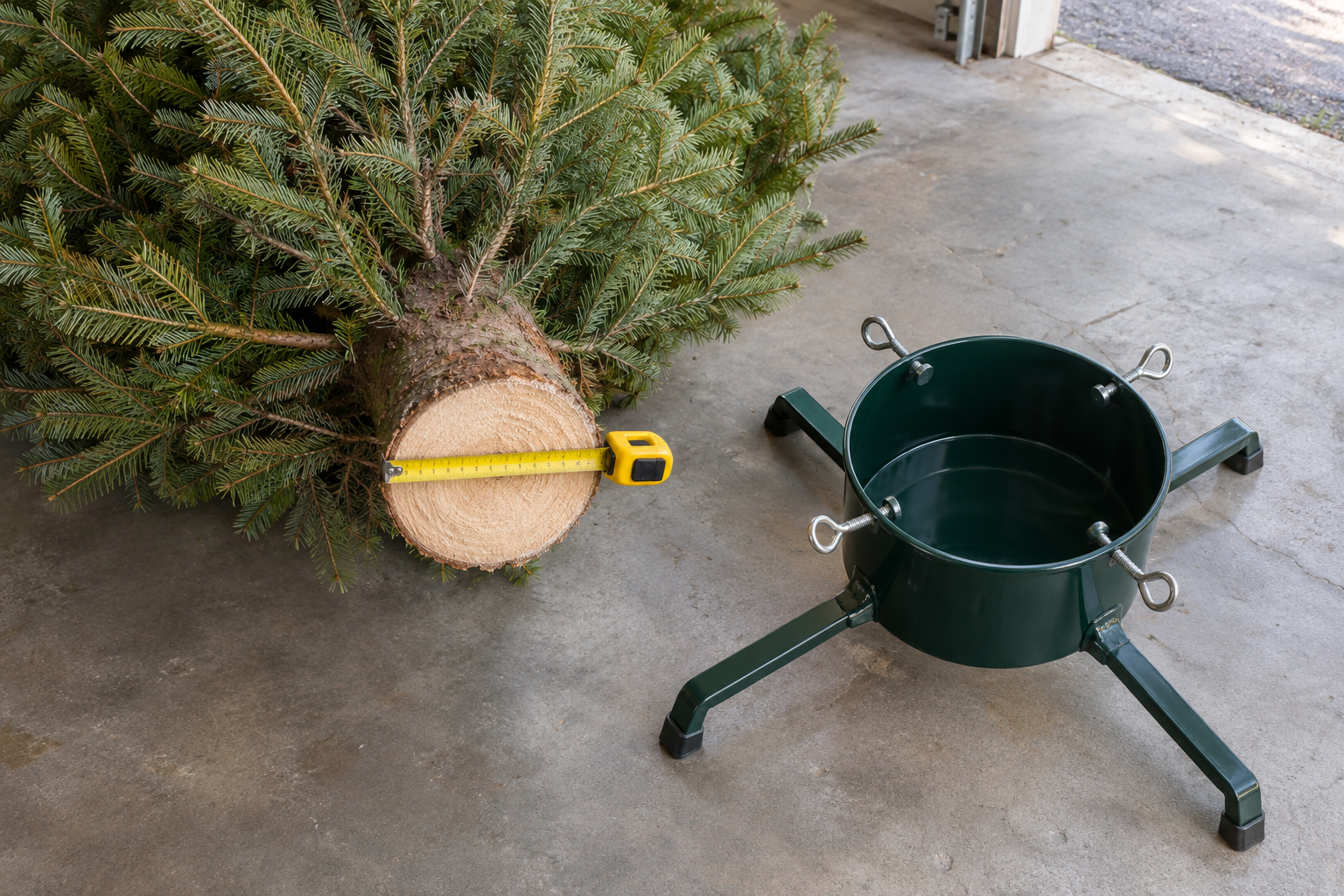
A stand should hold about a quart of water for every inch across the trunk. Measure the cut end before buying one. A trunk 4 inches across needs a stand that holds at least a gallon, and a trunk 6 inches across needs six quarts, a gallon and a half.
The trunk takes up part of the bowl once it’s in, so a stand holds less with the tree standing in it than it does empty. A stand only just big enough for its trunk runs dry quickly in the first days.
Water Every Day, and Twice at First
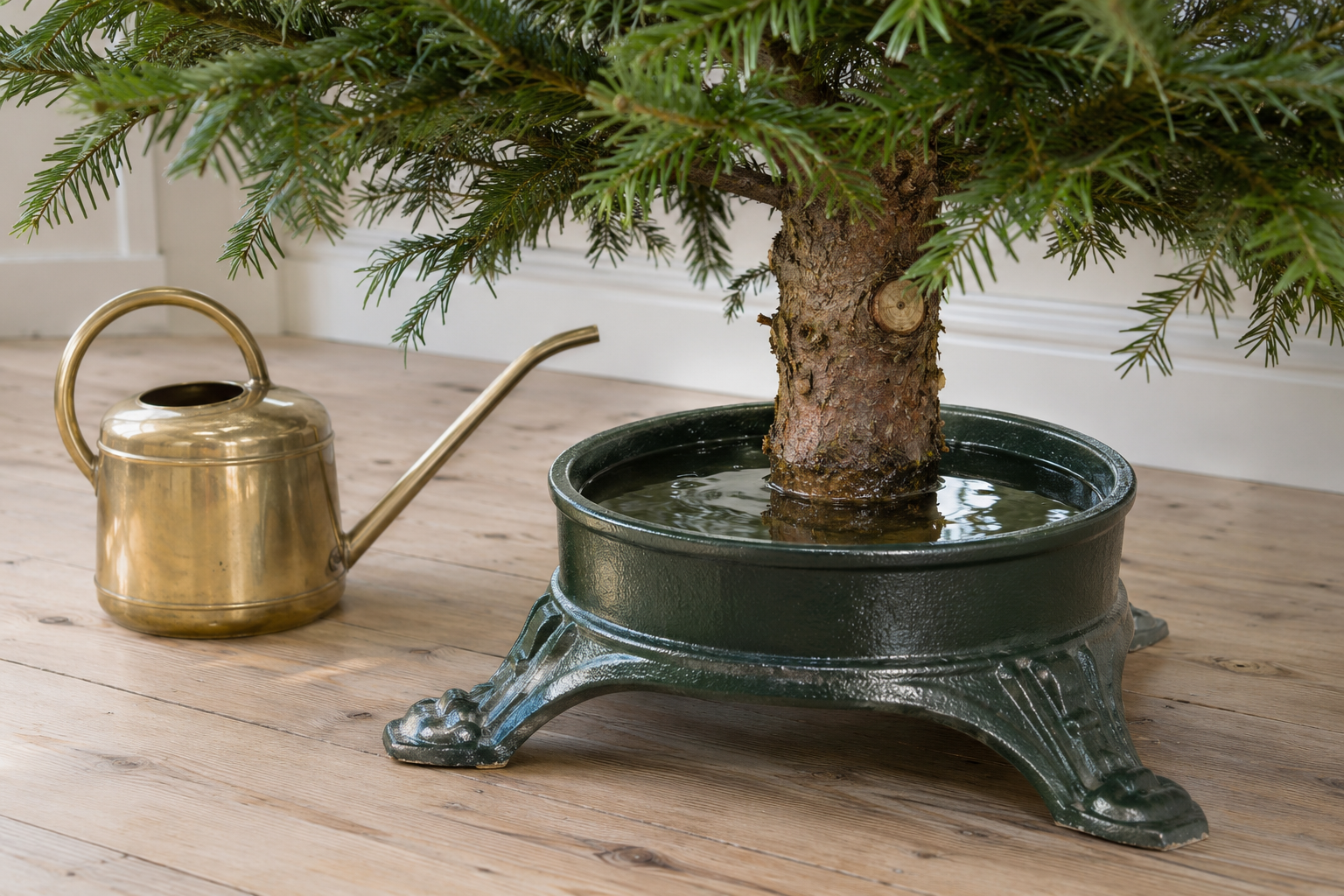
A fresh tree drinks the most in its first few days indoors. One with a 4 inch trunk can take up around a gallon a day at the start, so check the water twice a day for the first two days and once a day after that. With a skirt or collar around the base, lift it far enough to see the water.
The level should never fall below the cut end. Once the base is out of water, the cut seals over again and the tree stops drinking even after the stand is refilled, and the only remedy is another fresh cut, which means taking the tree out of its stand. Plain tap water is all it needs. Sugar, aspirin, bleach, and commercial additives aren’t necessary.
Away From Heat, in a Cool Room
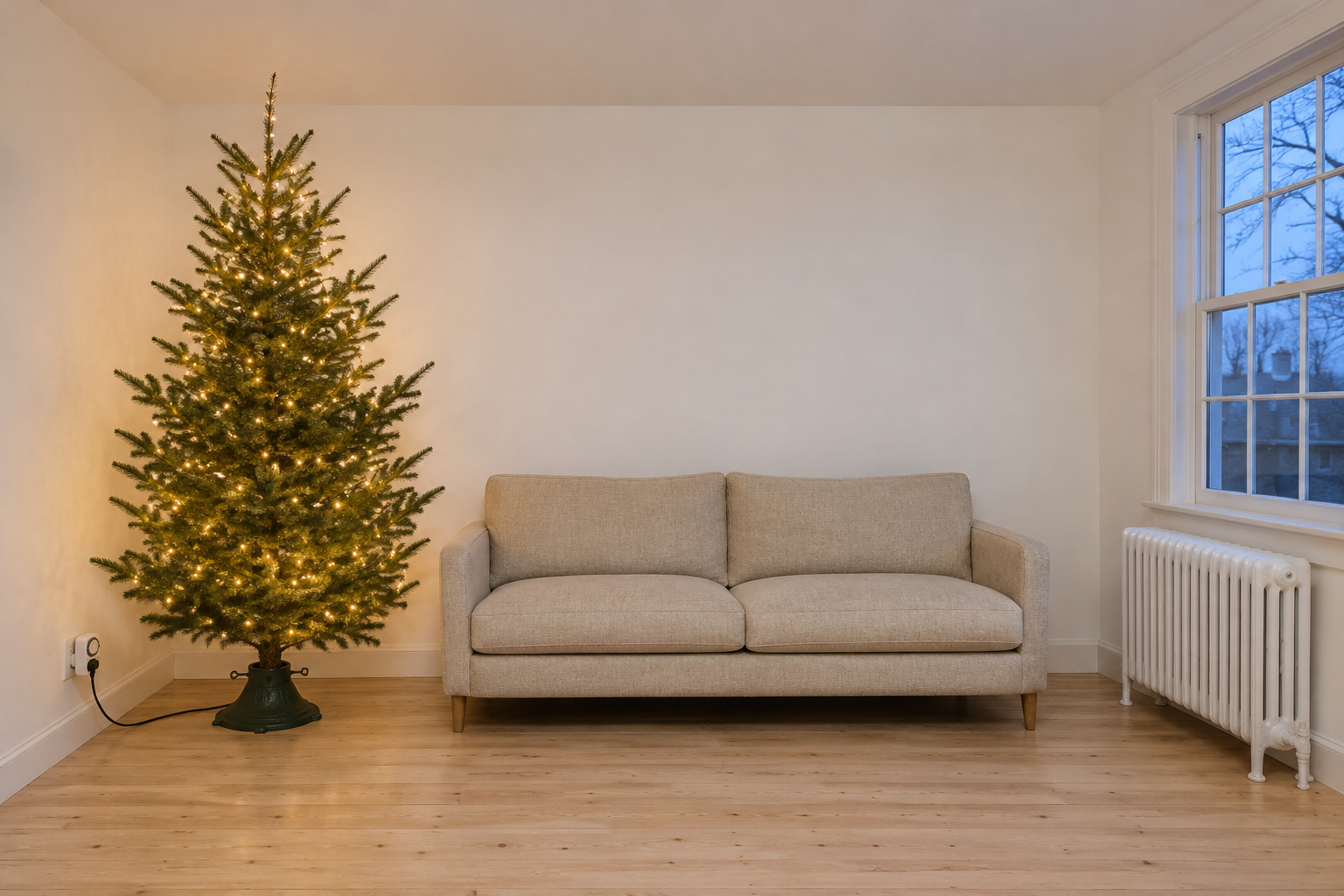
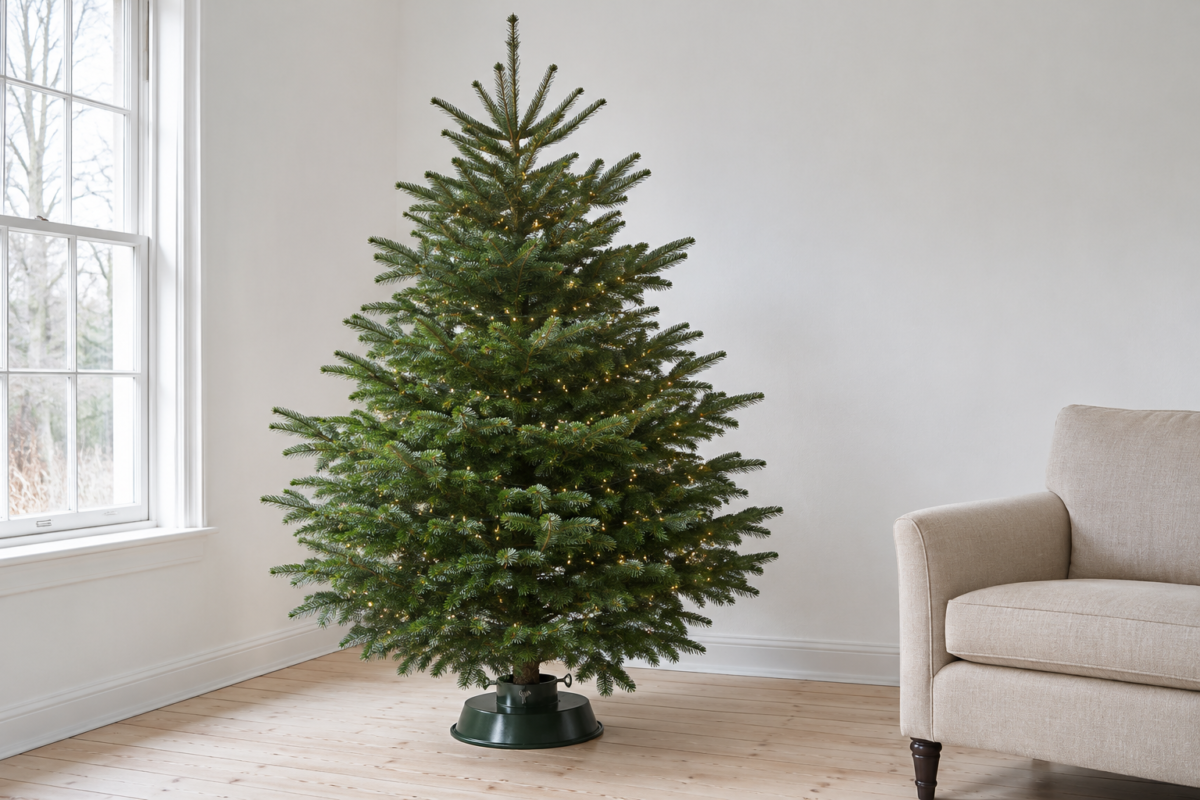
Warm, dry air pulls water from the needles faster than the trunk can replace it. Stand the tree at least three feet from a radiator, a heating vent, a fireplace, or a wood stove, and out of the direct sun of a south-facing window. A cooler room helps too, and a room kept between about 60 and 72 degrees Fahrenheit dries a tree more slowly than a warmer one.
LED lights give off far less heat than old incandescent strings. A plug-in timer that switches them off overnight and when no one is home is worth having, as much for safety as for the tree.
When the Tree Has Dried Out
With a fresh start and steady water, a cut tree typically stays fresh indoors for about three to four weeks. After that, or sooner if the stand ever ran dry, test it the way you did on the lot. Needles that snap or fall at a touch mean the tree has dried out, and a dry tree catches fire far more easily than a watered one. That’s the time to take it down, even if it’s before Christmas.
The timing is worth thinking about when you buy. A tree brought home the weekend after Thanksgiving is near the end of that span by Christmas, while one bought in the second week of December can last into the new year.